
Off Broadway
A Walk on the Moon Explores Love, Liberation and Longing During a Summer That Changed America


There are moments in history when society collectively begins to question the values it once held sacred. The summer of 1969 was one such period. America watched astronauts land on the moon, Woodstock redefined music and culture, the Vietnam War divided generations, women’s rights gained momentum, and the sexual revolution challenged long-established ideas about marriage, family, and identity.
A Walk on the Moon, now playing at the Laura Pels Theatre in a limited engagement, places one family directly within that cultural upheaval.
Adapted by the film’s original screenwriter Pamela Gray, who provides the book and additional lyrics, the musical revisits her acclaimed 1999 film, exploring what happens when personal longing collides with responsibility, tradition, and the consequences of choice.

Cast Photo by Joan Marcus
Pearl Kantrowitz, portrayed with warmth and vulnerability by Talia Suskauer, spends every summer at Dr. Fogler’s Bungalows (Tovah Feldshuh,the voice of Mrs. Fogler); in the Catskills alongside her husband Marty, their children Alison and Danny, and Marty’s mother Lillian. Having become pregnant with Alison at sixteen, Pearl quickly married Marty and settled into a life that, by 1969, she increasingly feels was chosen for her rather than by her.
During one summer season, Pearl encounters Walker Jerome, known as the Blouse Man, a charismatic traveling salesman played with easy charm by Sam Gravitte. With Marty absent for much of the week, Pearl embarks upon an affair that serves as the catalyst for the show’s central conflict.
Yet despite Suskauer’s committed and often luminous performance, Pearl remains a difficult character to embrace.

Talia Suskauer, Sam Gravitte Photo by Joan Marcus
The musical clearly intends her journey to be one of awakening—a woman realizing she sacrificed dreams and opportunities in order to become a wife and mother. However, the adaptation often asks audiences to view Pearl almost exclusively through the lens of her dissatisfaction, giving comparatively less attention to the sacrifices made by those around her.

Cast Photo by Joan Marcus
Marty, portrayed with remarkable sensitivity by Max Chernin, emerges as the evening’s true emotional center. Through Lillian, beautifully played by Andrea Burns, we learn that Marty once dreamed of becoming a scientist before abandoning those ambitions in order to provide for his family. It is a revealing moment that deepens our understanding of a man who consistently places the needs of others ahead of his own.
Ironically, Pearl’s anthem, “Not Willing to Lose,” underscores this imbalance. The song is intended to capture her fears of losing herself, but it might have resonated more deeply had it acknowledged that marriage and parenthood involve mutual sacrifice. Instead, the number emphasizes Pearl’s own frustrations while overlooking the reality that Marty surrendered dreams of his own.

Sophie Pollono, Oscar Williams Photo by Joan Marcus
At the same time, their fifteen-year-old daughter Alison ( a layered and powerful Sophie Pollono) is navigating her own summer of firsts—first love, first kisses, and the possibility of becoming sexually active with Ross (Oscar Williams, someone to keep your eyes on).—while her mother’s affair slowly dismantles the family’s foundation.
As written, Pearl can occasionally appear less like a woman reclaiming her identity and more like someone singularly focused on her own desires, unable to fully recognize the emotional cost borne by her husband and children.
Fortunately, the production finds its greatest emotional truth in Marty.
Chernin’s performance is layered, compassionate, and quietly heartbreaking. He never presents Marty as a victim, but rather as a man whose sense of duty has become inseparable from his identity. He loves deeply, gives generously, and continues to protect the people around him, even as his world begins to fracture.
AnnMarie Milazzo’s score is emotionally accessible and filled with hooks that linger long after leaving the theatre. The nineteen songs possess a musical sensibility reminiscent of I Love My Wife, capturing the transitional energy of an era when traditional expectations surrounding marriage, sexuality, and personal fulfillment were rapidly evolving. While not strictly period pastiche, the score evokes the late 1960s through its melodic warmth, contemporary theatricality, and emotional immediacy.
Alison’s songs carry hints of Joni Mitchell’s introspective folk sound, serving as an effective musical touchstone for a young woman beginning to discover both herself and a rapidly changing world.
The evening’s standout number is undoubtedly “We Made You,” sung by Marty to Alison after she begins to question whether she herself was somehow a mistake in the wake of her mother’s affair. It is a tender, deeply moving moment that reminds audiences that love is often measured not by what we seek for ourselves, but by what we willingly sacrifice for others.
In that moment, Marty becomes the character most invested in preserving family, dignity, and connection.
Milazzo’s melodies are undeniably appealing, though too many songs are staged as if each were intended to be a showstopper. Under Sheryl Kaller’s direction, emotional subtlety occasionally gives way to theatrical flourish. In a story built upon intimacy, quiet revelations, and internal conflict, the most powerful moments often emerge through restraint.
Not every emotion needs to soar. Not every revelation requires a crescendo. Sometimes the moon’s beauty lies not in its fullness, but in the softer light it casts.
A Walk on the Moon succeeds in capturing a nation in transition, a period when social expectations were being challenged and new possibilities were emerging. Yet its most compelling insight may be an unintended one: liberation and self-discovery can carry profound consequences for those left behind.
By evening’s end, the musical asks audiences an intriguing question. How do we honor our own dreams without diminishing the dreams that others surrendered for us? The answer may be far more complex than a walk on the moon itself.
A Walk on the Moon: The Laura Pels Theatre at the Harold and Miriam Steinberg Center for Theatre, 111 West 46th Street, through August 22


Music
Midnight: Todrick Hall Has Created a Musical Masterpiece That Broadway Cannot Afford to Ignore
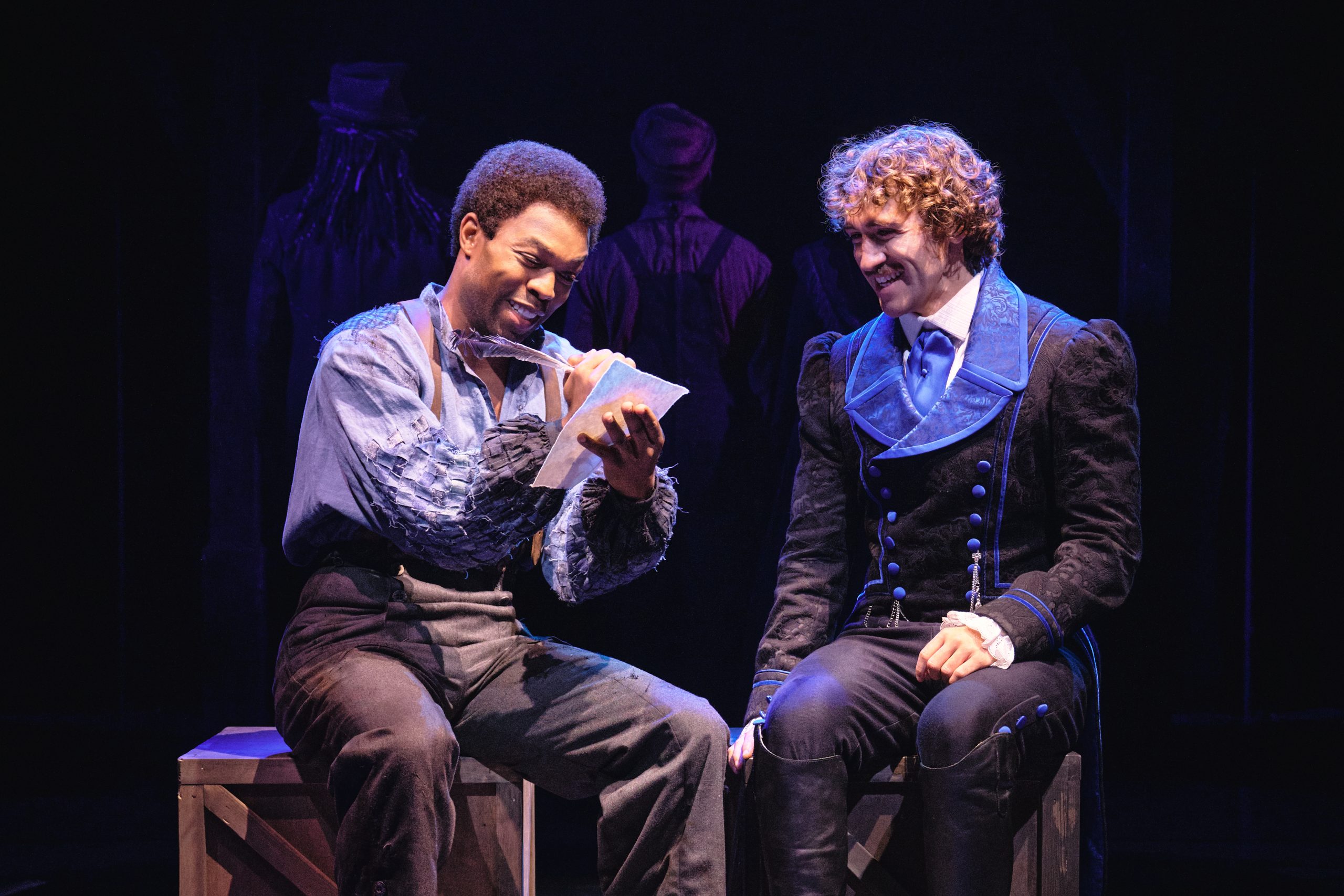
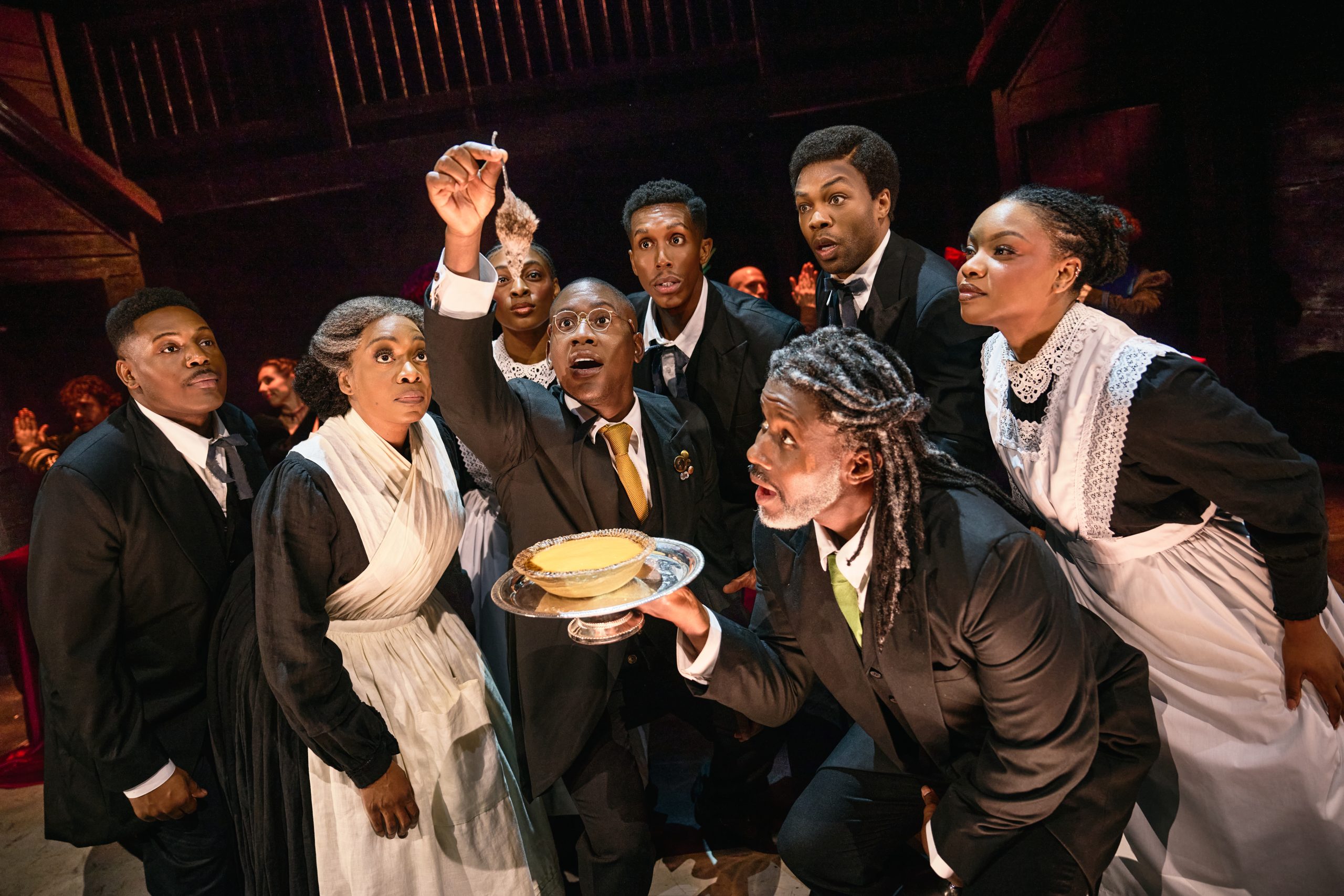
The Company of Midnight Photo by Valerie Terranova
Every so often, a musical comes along that reminds me why I fell in love with theater in the first place. Not because it is perfect, not because it follows the rules, but because it possesses that rare, electrifying combination of originality, extraordinary talent, emotional intelligence, and sheer theatrical audacity. Midnight, written, directed, choreographed, and starring Todrick Hall, is that musical. Currently playing at the Daryl Roth Theatre, it is, hands down, the best new musical I have seen this season. Frankly, I cannot imagine what could possibly surpass it.
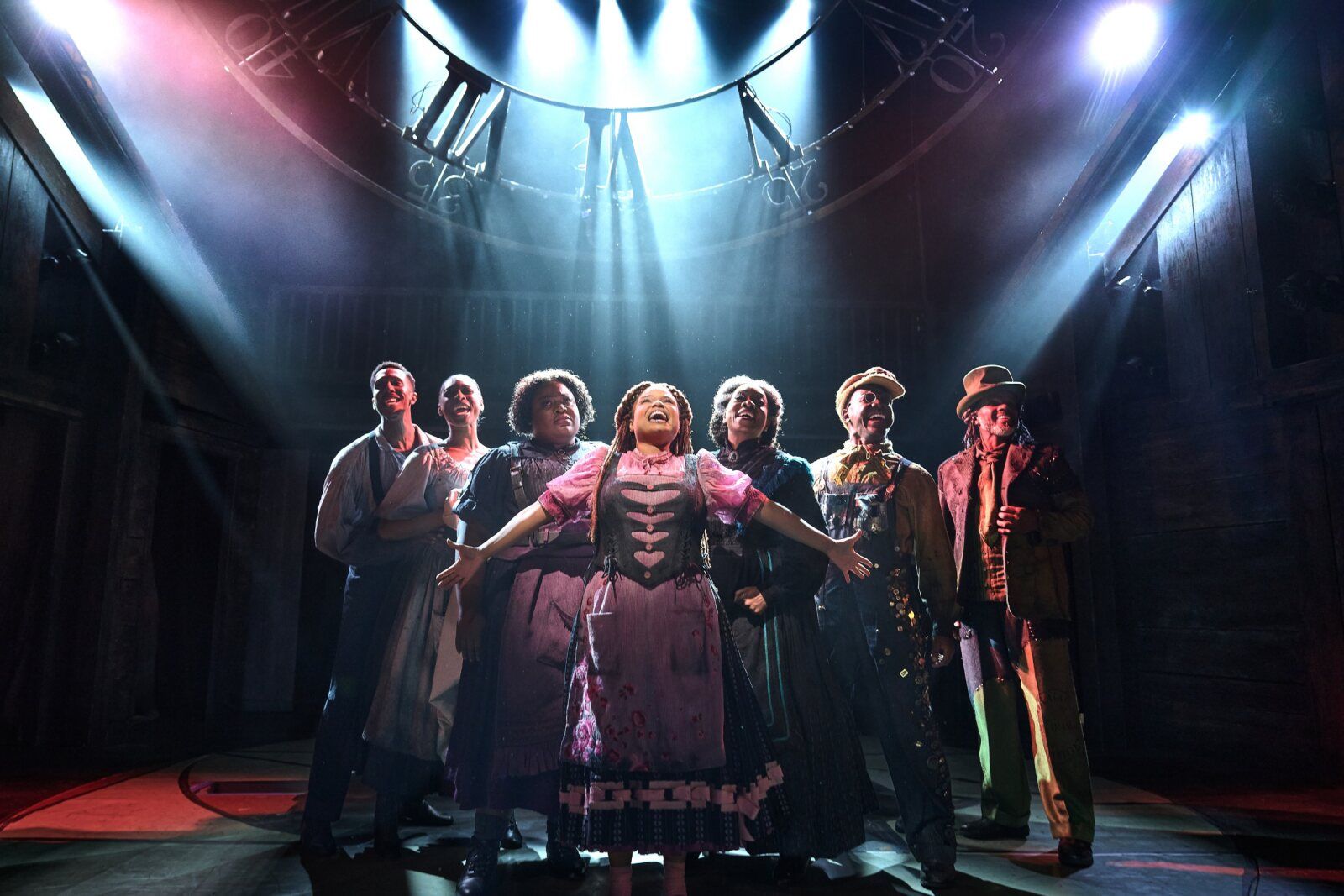
Charlotte Odusanya and the Company Of Midnight Photo by Valerie Terranova
I have been a fan of Hall’s since his brilliantly inventive Beauty and the Beat video. His imagination, musicality, humor, and ability to transform popular culture into something uniquely his own have always fascinated me. But nothing, and I mean nothing, prepared me for what is happening at 101 East 15th Street.
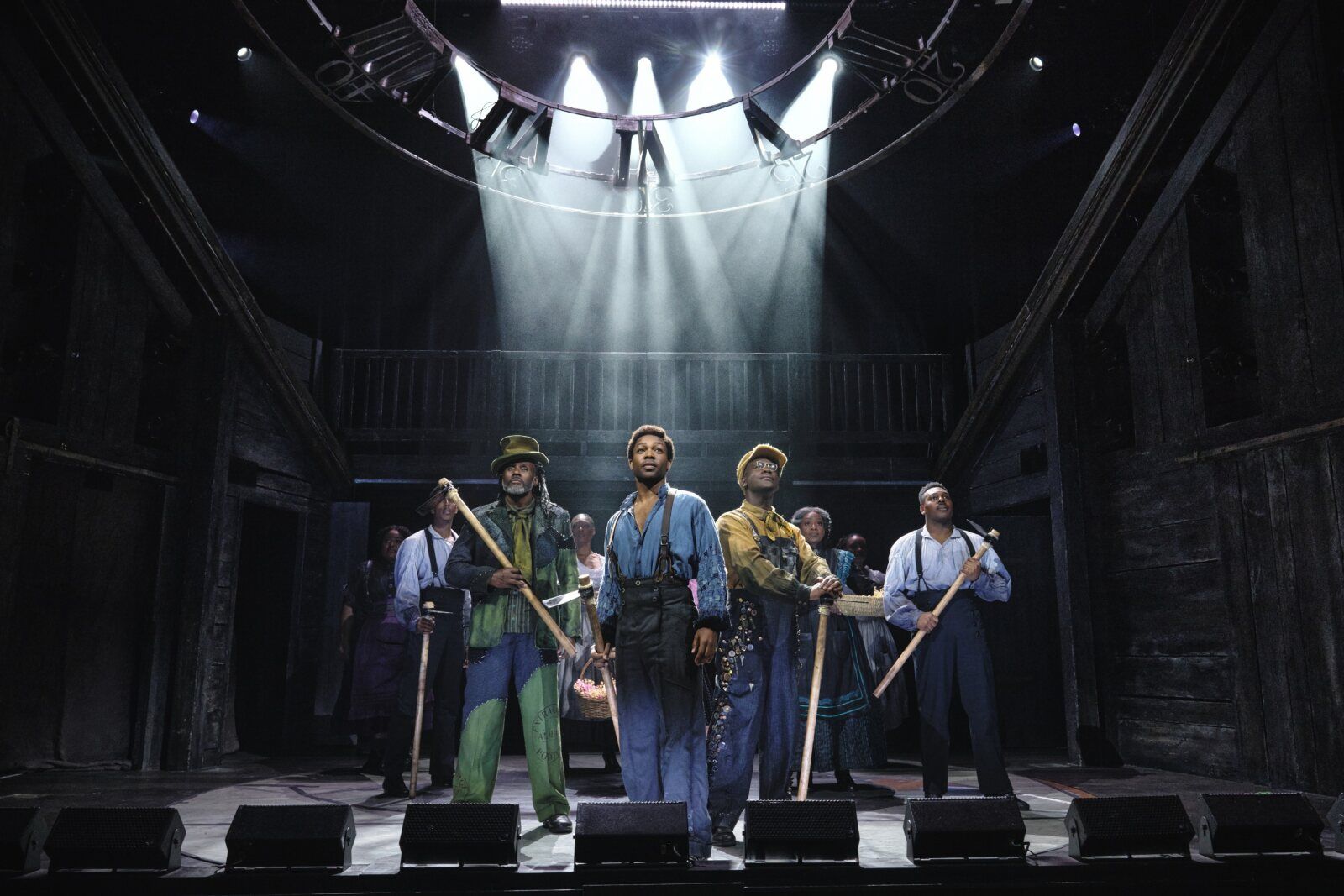
Todrick Hall and. the Company Of Midnight Photo by Valerie Terranova
First, there is the score. Gospel, rhythm and blues, soul, pop, rock, folk, and even opera collide in a glorious explosion of musical styles. This is a sung-through musical, with no spoken dialogue, and the vocal and instrumental arrangements are nothing short of extraordinary. Multiple harmonies overlap, voices soar into unexpected intervals, and riffs build upon riffs until the entire theater seems to vibrate with sound. The musical sophistication is staggering. I found myself sitting there in a state of absolute bliss, wondering how Hall had managed to assemble so many extraordinary voices in one production.
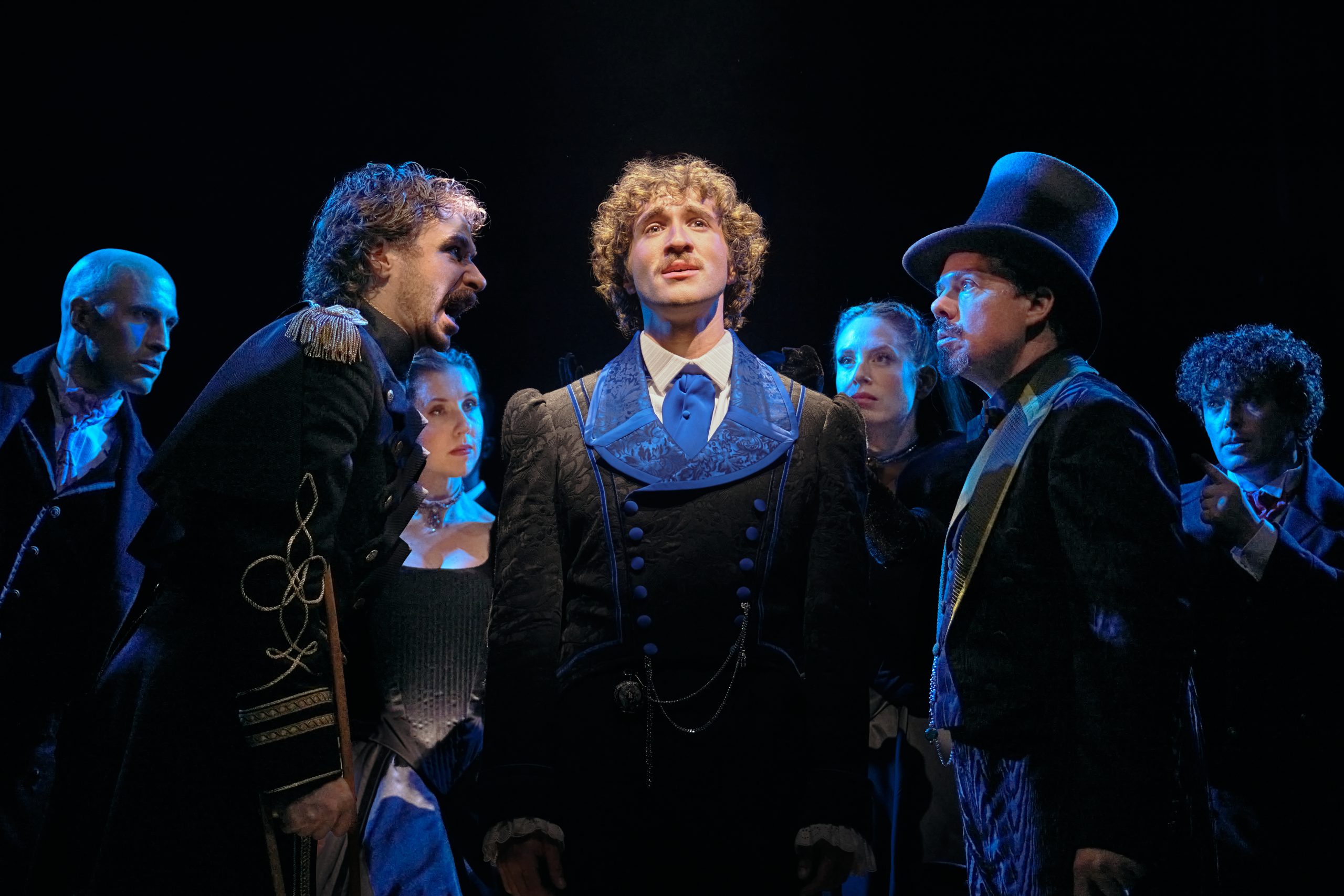
Jimmy Brewer, Jeremy Beloate and Ciarán McCarthy The Company of Midnight photo by Valerie Terranova
Set in the nineteenth-century American South, Midnight follows twelve interconnected characters, six Black and six white, whose lives are defined by race, class, power, identity, and the complicated nature of love. At its center is Rail, a young enslaved Black man portrayed by Hall, whose emotional world becomes increasingly complicated by Lily Rose, played with irresistible sweetness by Charlotte Odusanya affection, and his forbidden attraction to Richard, a wealthy white neighbor portrayed by the phenomenally gifted Jeremy Beloate.
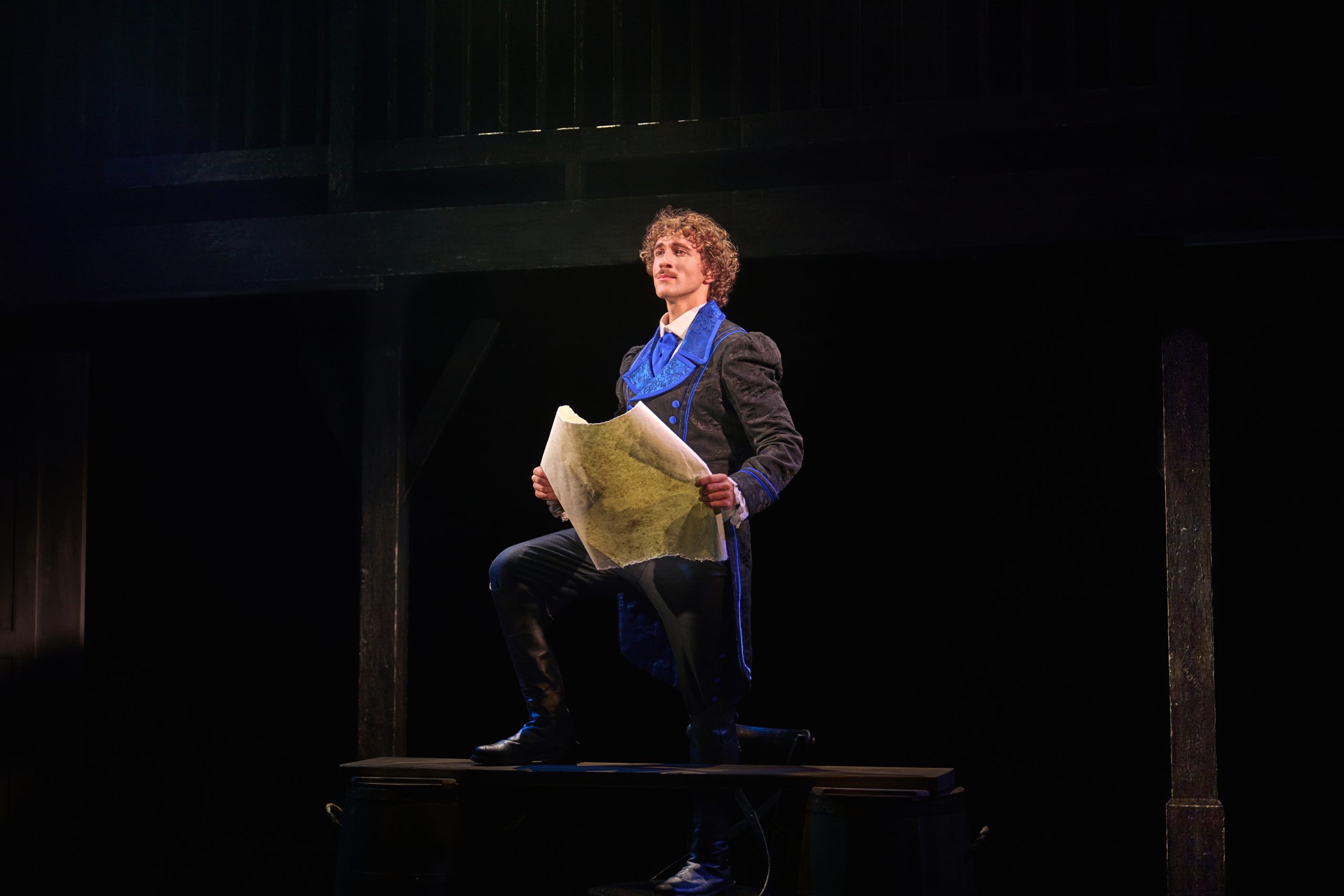
Jeremy Beloate photo by Valerie Terranova
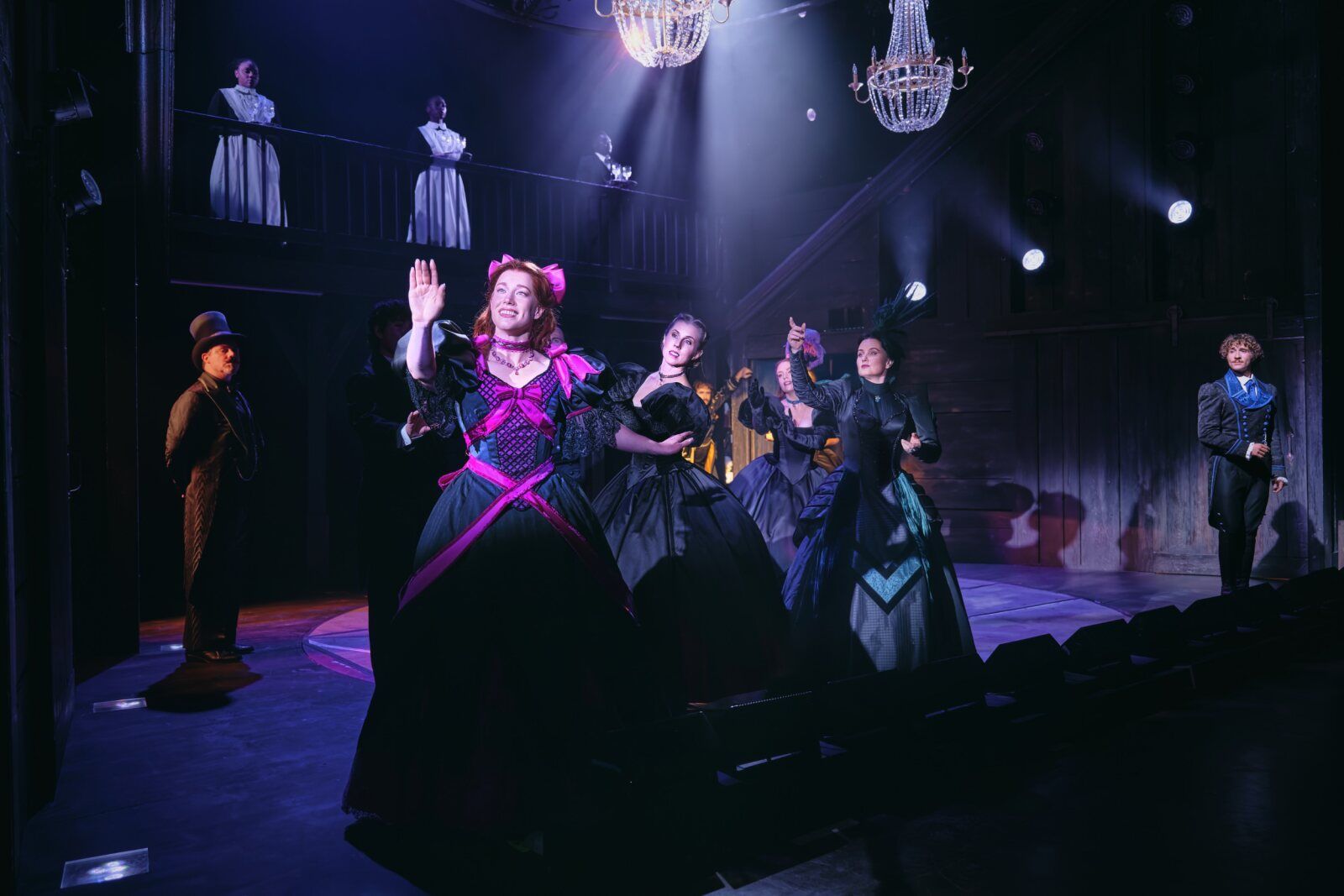
Kennedy Caughell and the company of midnight Photo by Valerie Terranova
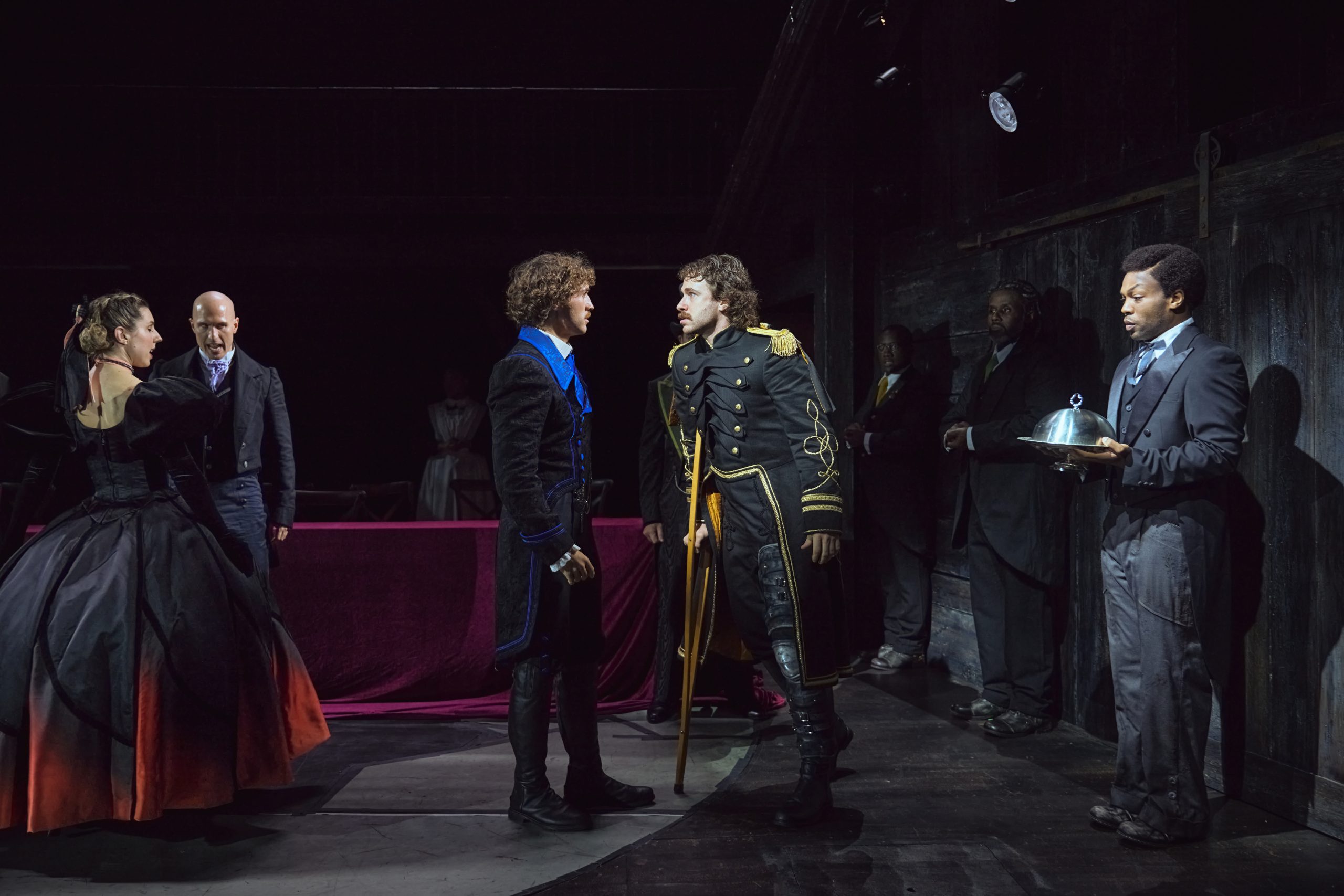
Jimmy Brewer, Jeremy Beloate, Todrick Hall Photo by Valerie Terranova
What makes this so effective is that Hall does not simply ask us to imagine injustice. He makes us watch familiar characters experience it from the opposite side. The reversal exposes the arbitrary cruelty of a system in which one person’s humanity is determined by another person’s authority. It is bold, unsettling, and theatrically ingenious.
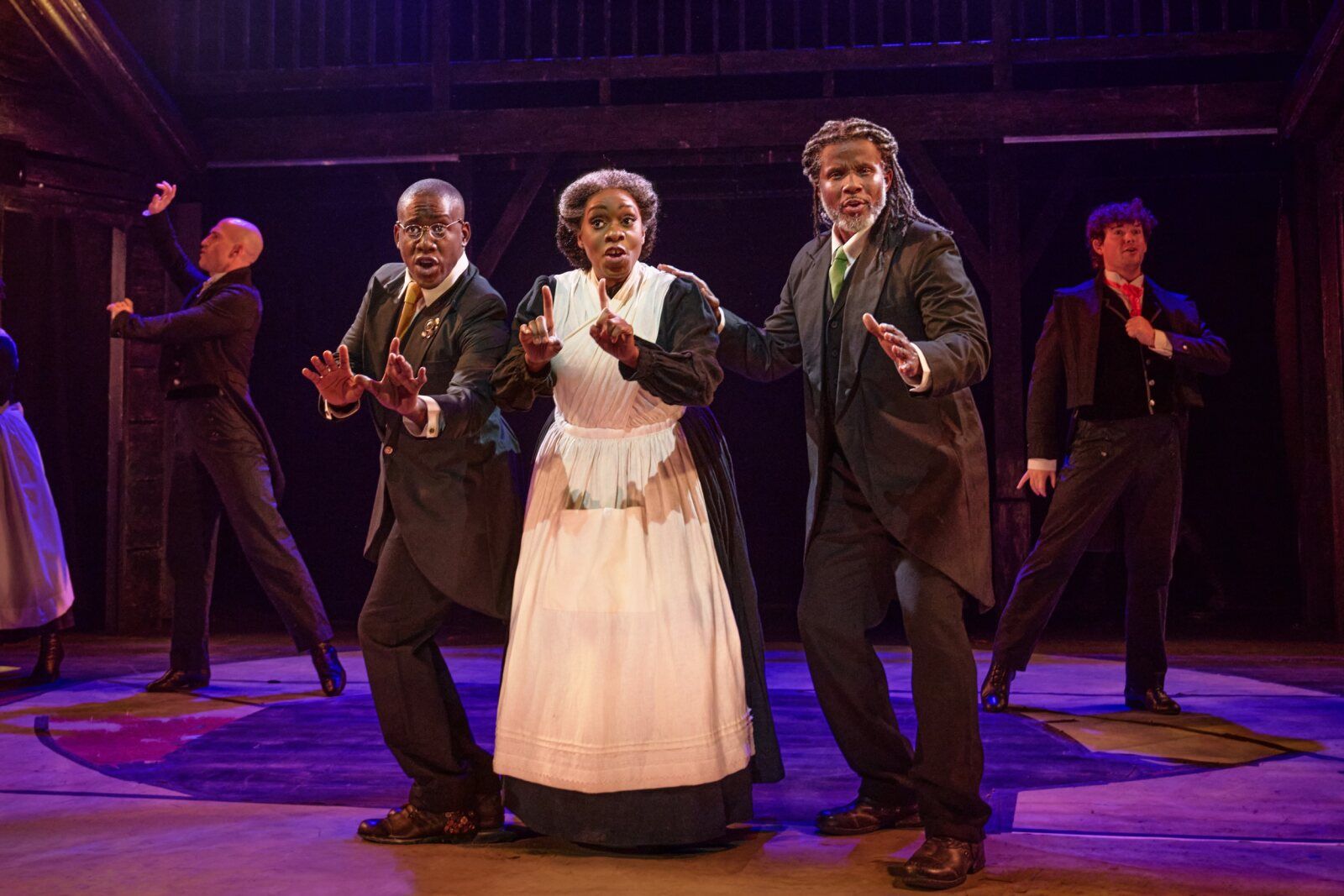
Sidney Dupont, Ayana George, and Dwayne Clark Photo by Valerie Terranova
Ayana George, as Ethel, serves as one of the musical’s principal narrators, and her voice is simply magnificent. She possesses the kind of vocal authority that makes an audience surrender from the first note. There is richness, power, and emotional command in everything she sings, and she anchors the production with remarkable assurance.
Charlotte Odusanya brings warmth and charm to Lily Rose, making her far more than a romantic counterpoint to Rail’s complicated desires. There is an innocence to her performance, but also an emotional intelligence that keeps the character from becoming sentimental.
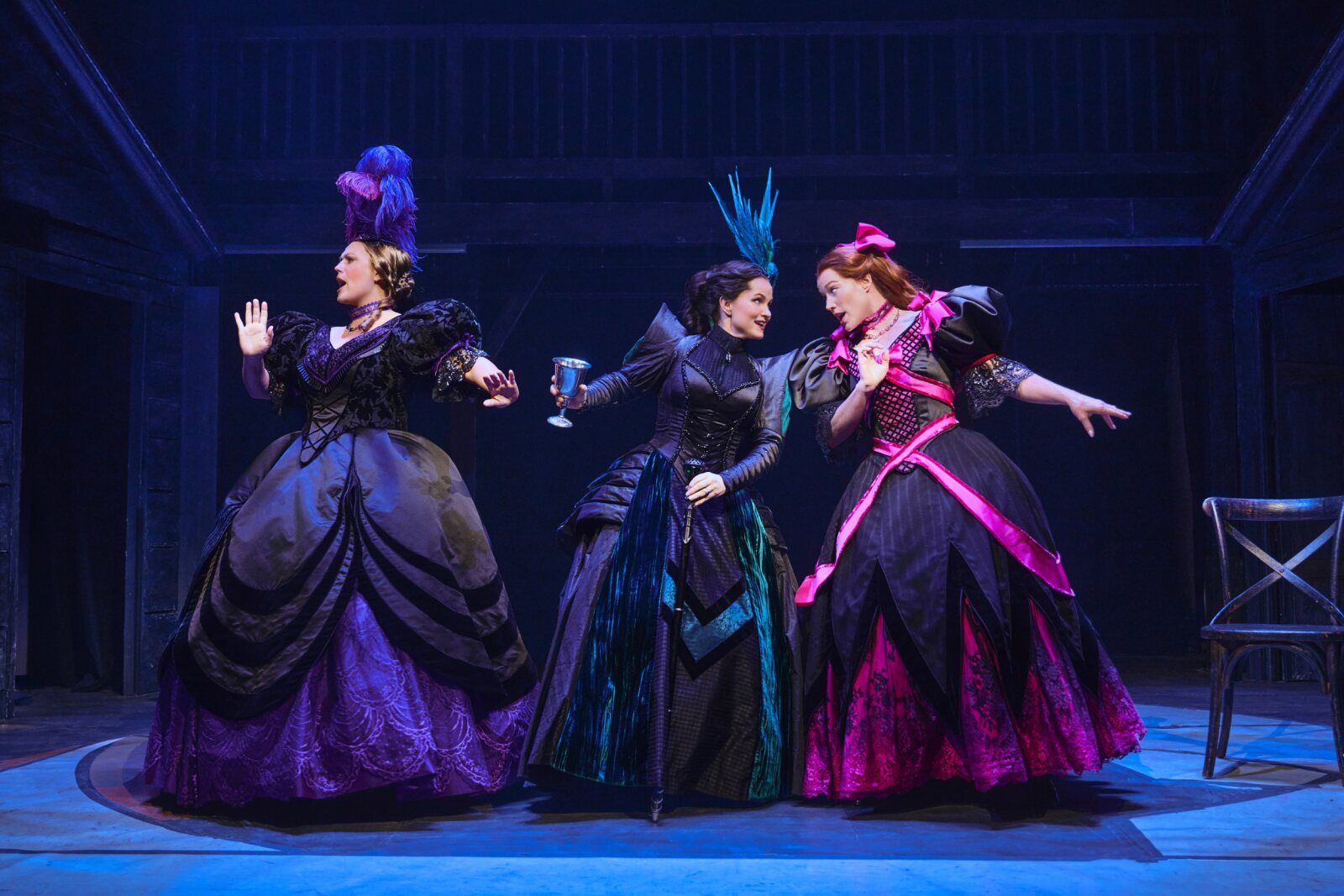
Bella Coppola, Autumn Hurlbert and Kennedy Caughell Photo by Valerie Terranova
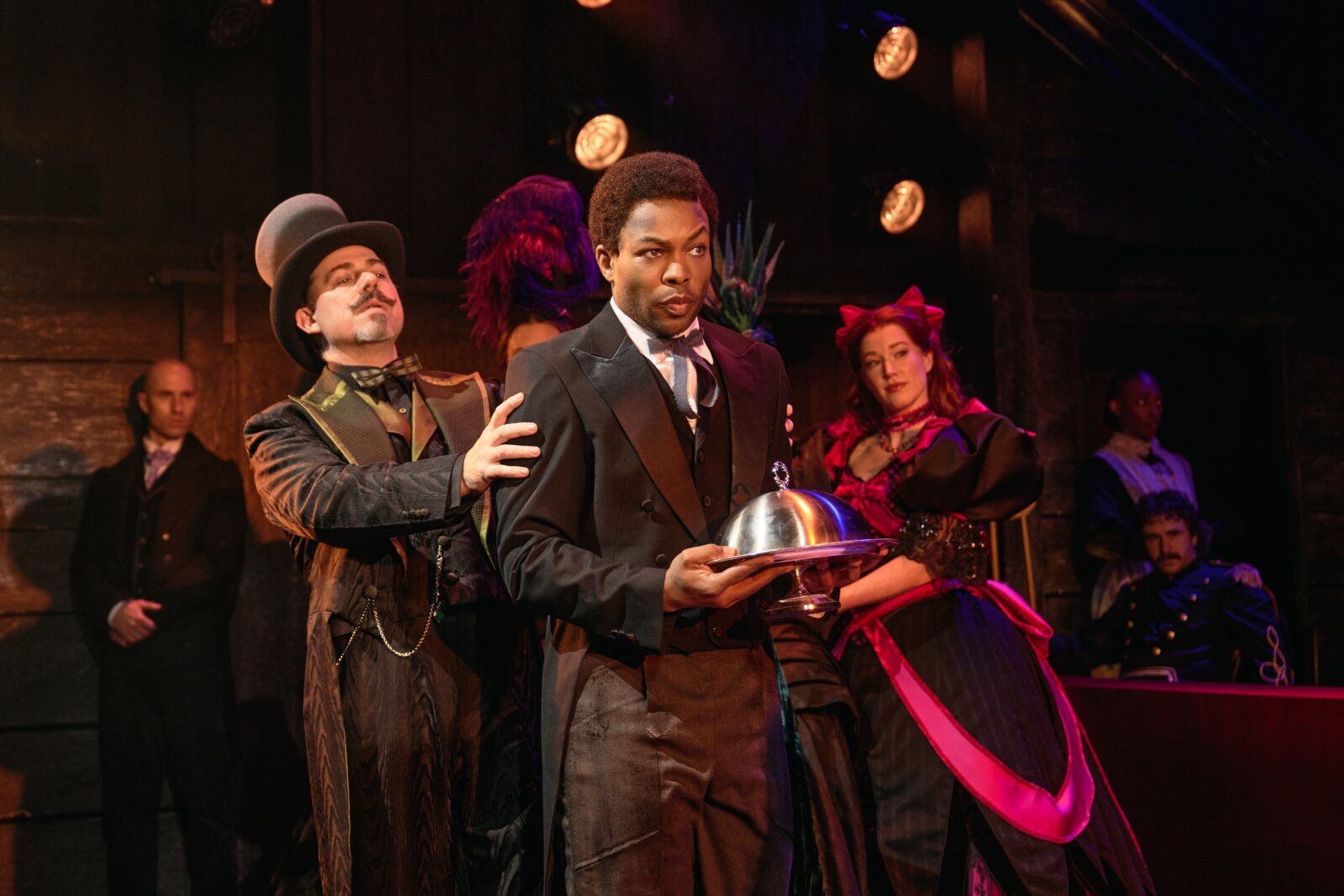
Ciaran McCarthy, Todrick Hall, Kennedy Caughell and the company of midnight Photo by Valerie Terranova
What Hall has accomplished vocally is especially impressive because the musical demands so much more than beautiful singing. The performers must negotiate complicated harmonies, shifting musical styles, demanding choreography, and emotionally charged storytelling without the relief of spoken dialogue. There is nowhere to hide. Every thought, every confrontation, and every revelation must be communicated through music and movement. My only criticism is diction.
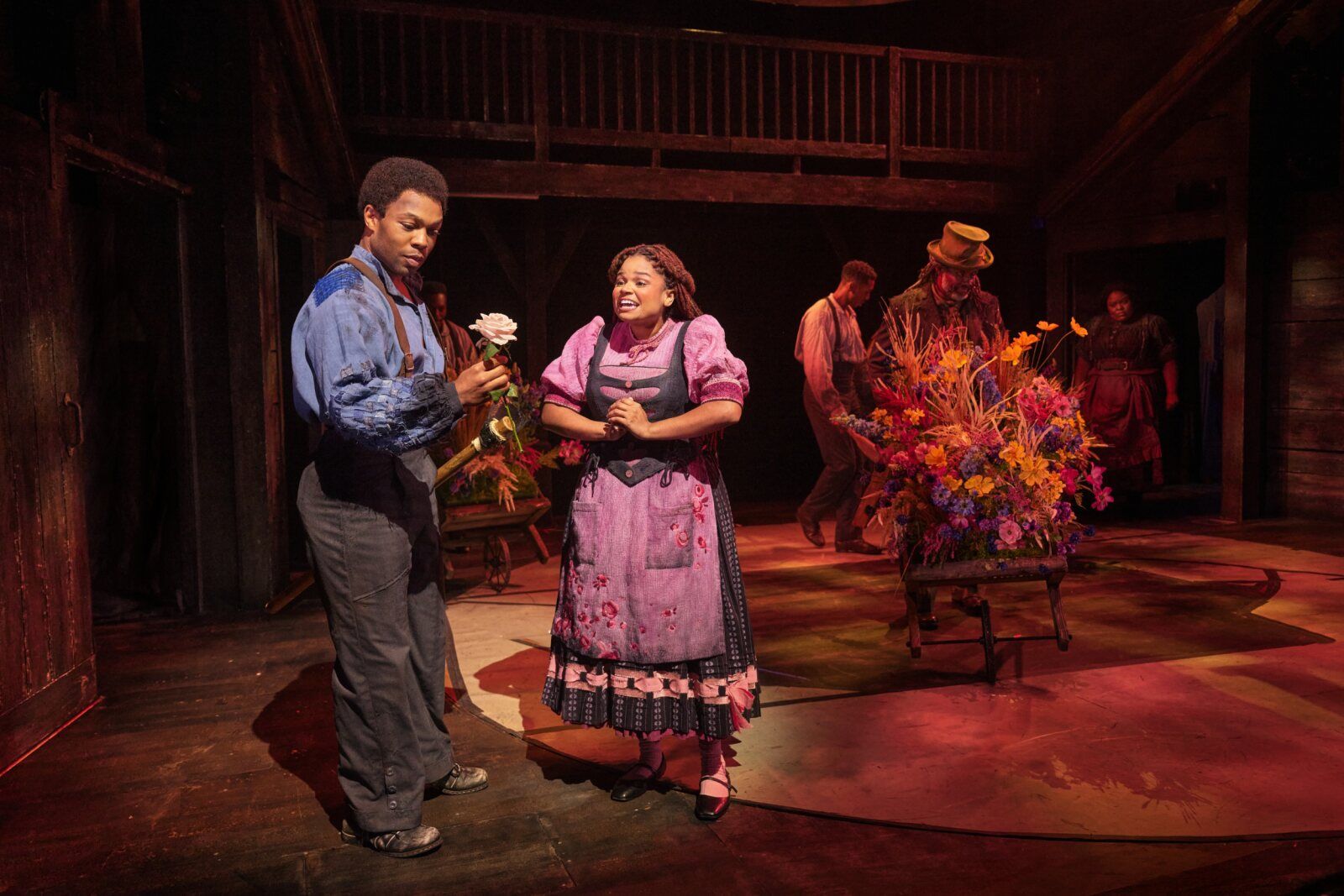
Todrick Hall and Charlotte Odusanya and the Company of Midnight Photo by Valerie Terranova
Hall himself is a magnetic performer, bringing charisma, vulnerability, humor, and tremendous physical energy to Rail. He commands the stage with the confidence of someone who knows precisely what he wants his audience to experience. Yet he is also the one person who might benefit most from an editor. Sometimes less really is more.
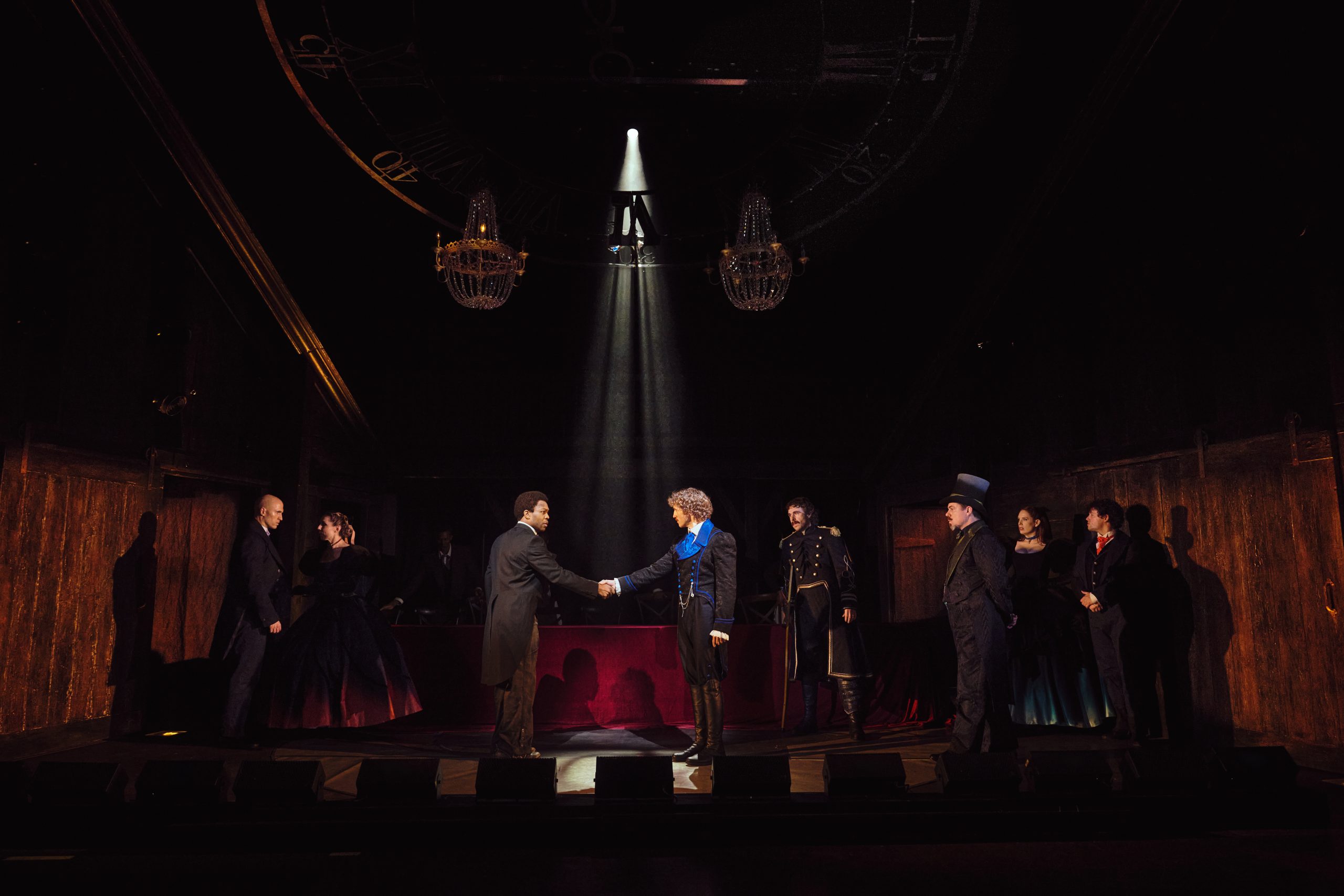
Todrick Hall, Jeremy Beloate and the Company of Midnight Photo by Valerie Terranova
Morgan Large’s scenic design provides a theatrical environment capable of moving between historical realism and the production’s increasingly surreal landscape. Beck Jones’s costumes establish the divisions of class and status that become so essential to the story, while Jake DeGroot’s lighting gives the production both its visual grandeur and its darker emotional textures.
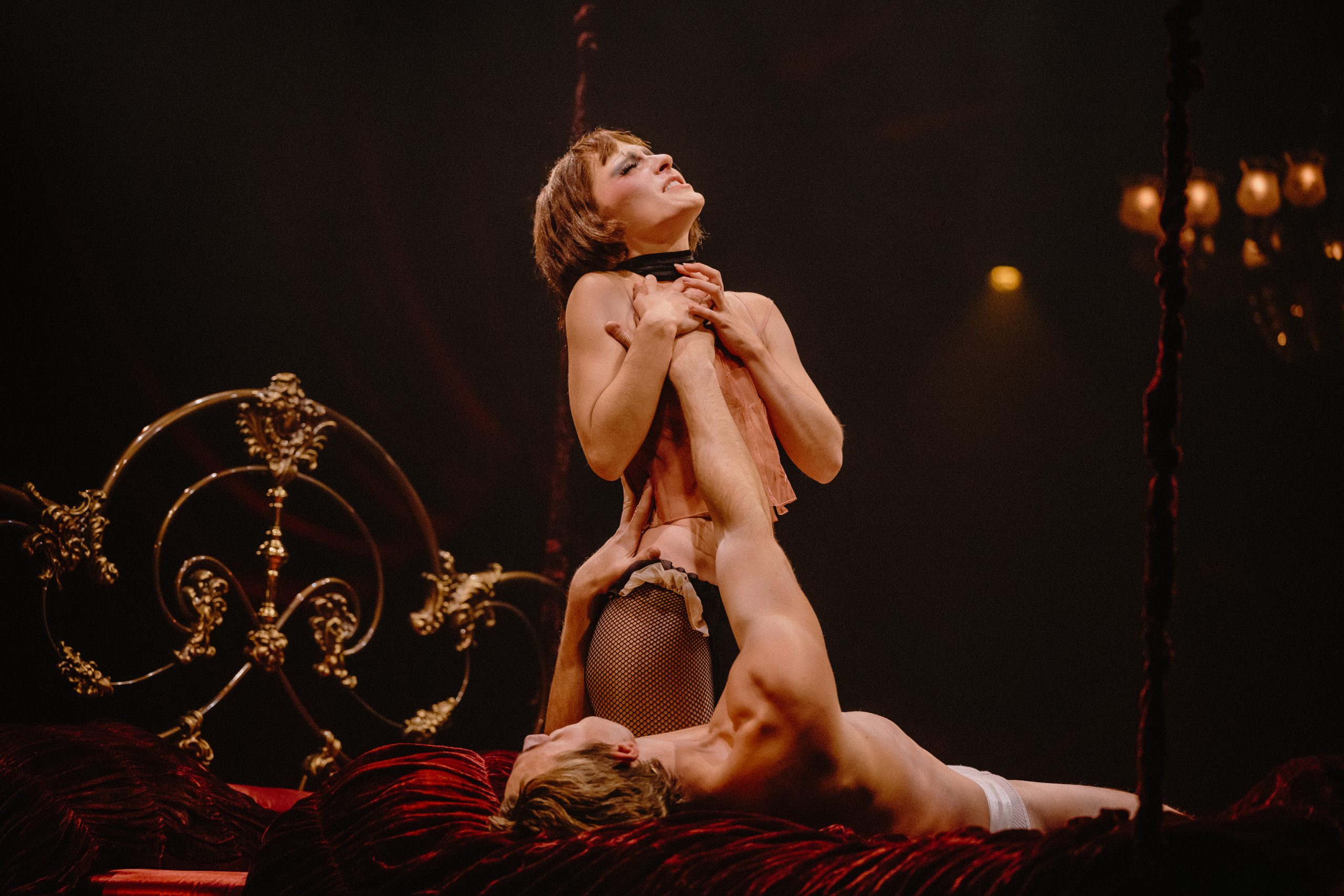
Sophia Anne Caruso delivers a mesmerizing performance in Duncan Sheik’s haunting new musical, where exquisite beauty conceals a far more disturbing reality.
There is something particularly poignant about watching Memoirs of Amorous Gentlemen, one of Duncan Sheik’s final theatrical works, arriving onstage in the shadow of his death. The composer who helped redefine contemporary musical theater with Spring Awakening has left us another haunting score, one whose melodic beauty and emotional darkness seem all the more affecting now that its creator is gone.
Now playing at The Night Egg at The Culture Club, 530 West 27th Street. Imagine the immersive seduction of Sleep No More, filtered through the eroticism of a Parisian brothel, and you begin to understand the atmosphere. This is a production that invites you to look, encourages you to linger, and then makes you question precisely what you have been watching.
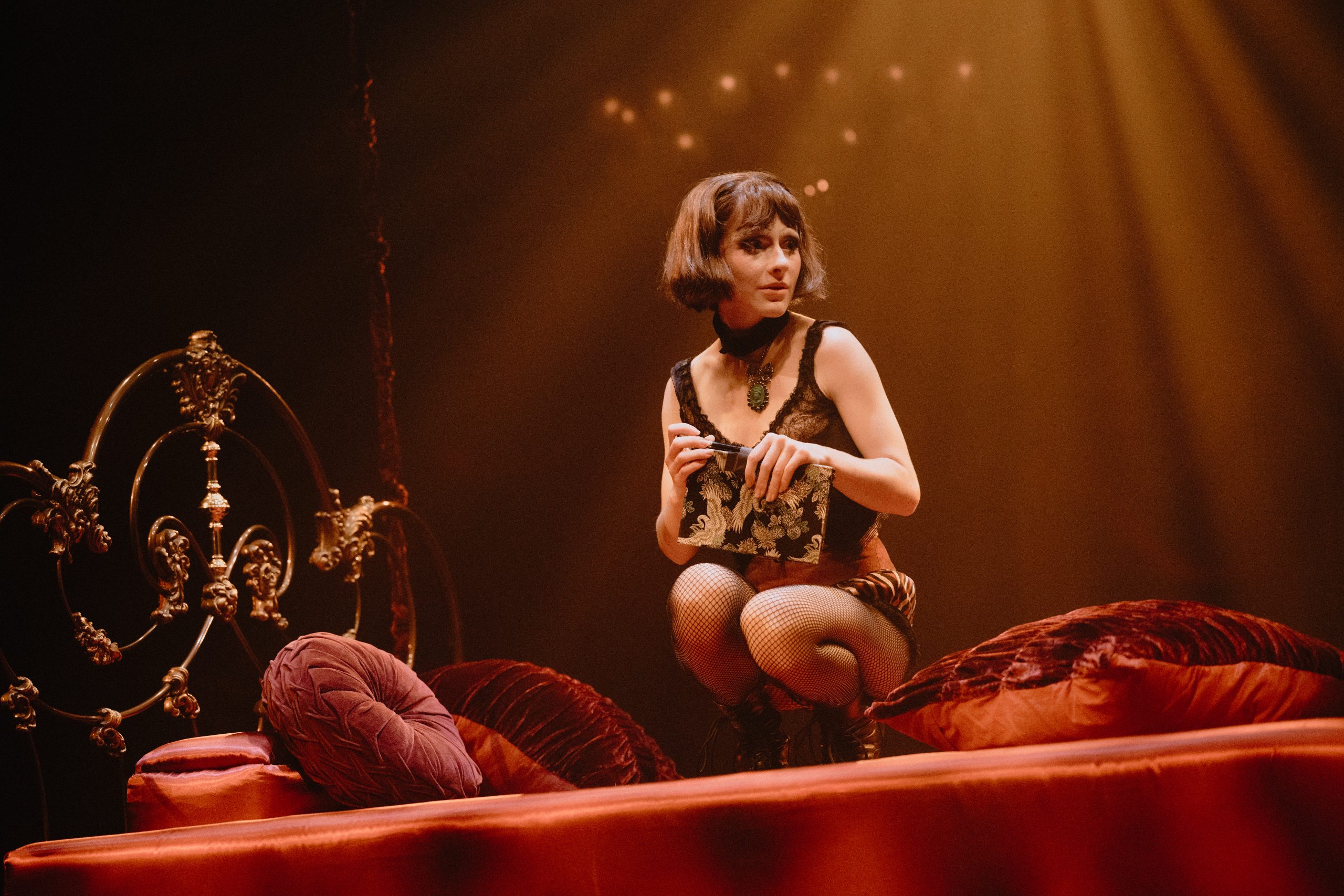
Sophia Anne Caruso photo by Andy Henderson
Make no mistake, this is essentially beautiful soft pornography onstage, wrapped in some of the most exquisite theatrical design currently on display. It is also a production with a frustratingly familiar story, an insufficiently developed book, and one extraordinary young actress who makes the entire evening worth experiencing.
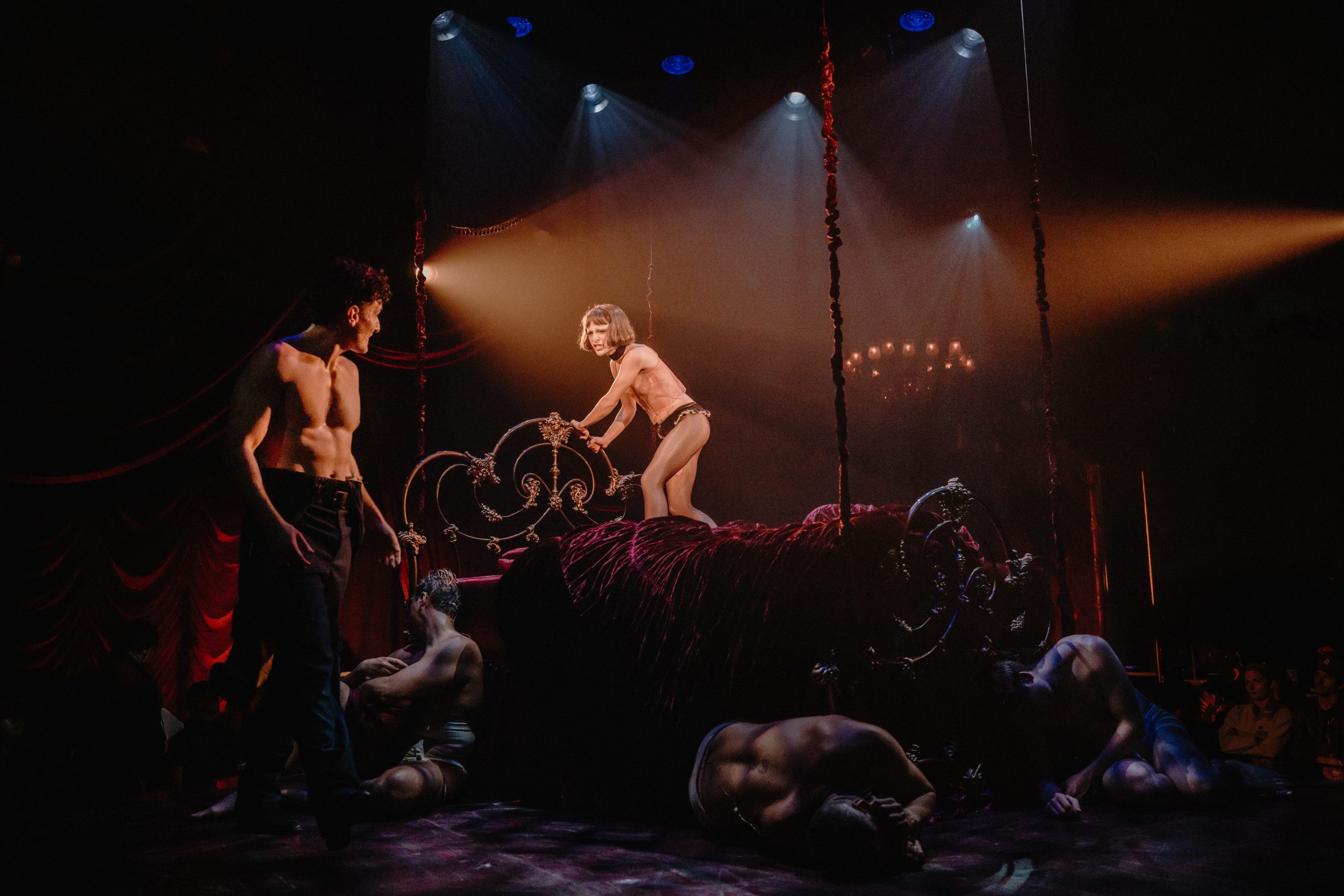
Cory Jeacoma and Sophia Anne Caruso photo by Andy Henderson
Based on Moyoco Anno’s award-winning Japanese manga, with a book by Leah Nanako Winkler, Memoirs of Amorous Gentlemen transports us to a decadent Parisian maison close known as the Night Egg. Here, desire is currency, intimacy is transactional, and the women who inhabit this seductive underworld survive by learning the difference between what men want and what men are willing to give.
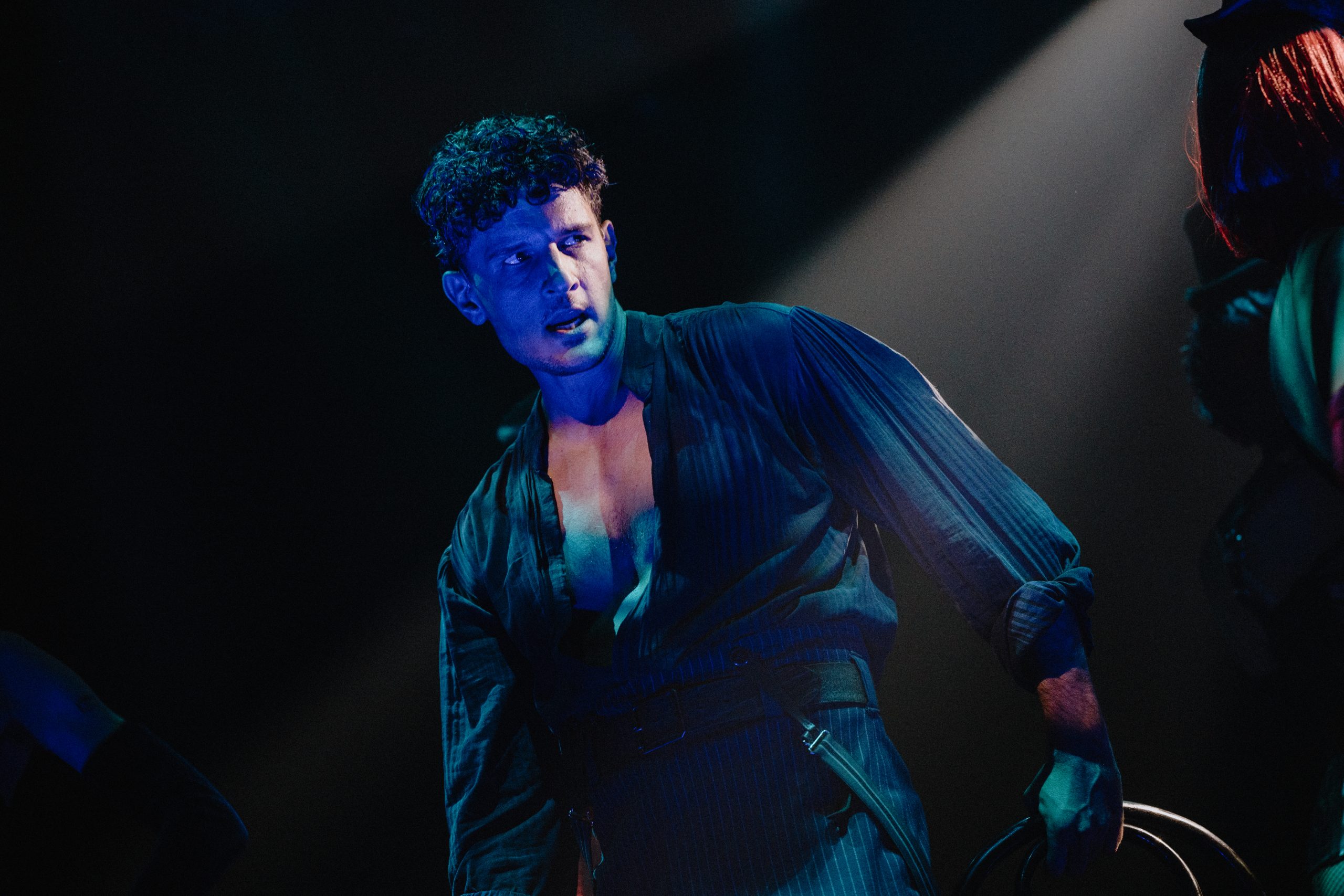
Cory Jeacoma photo by Andy Henderson
At its center is Colette, a young aspiring writer portrayed by the astonishing Sophia Anne Caruso. Colette works within this elaborate world of fantasy while remaining emotionally entangled with Léon (a rake that Cory Jeacoma makes you want o hear more of), her childhood love, a man whose affections prove considerably less dependable than her devotion.
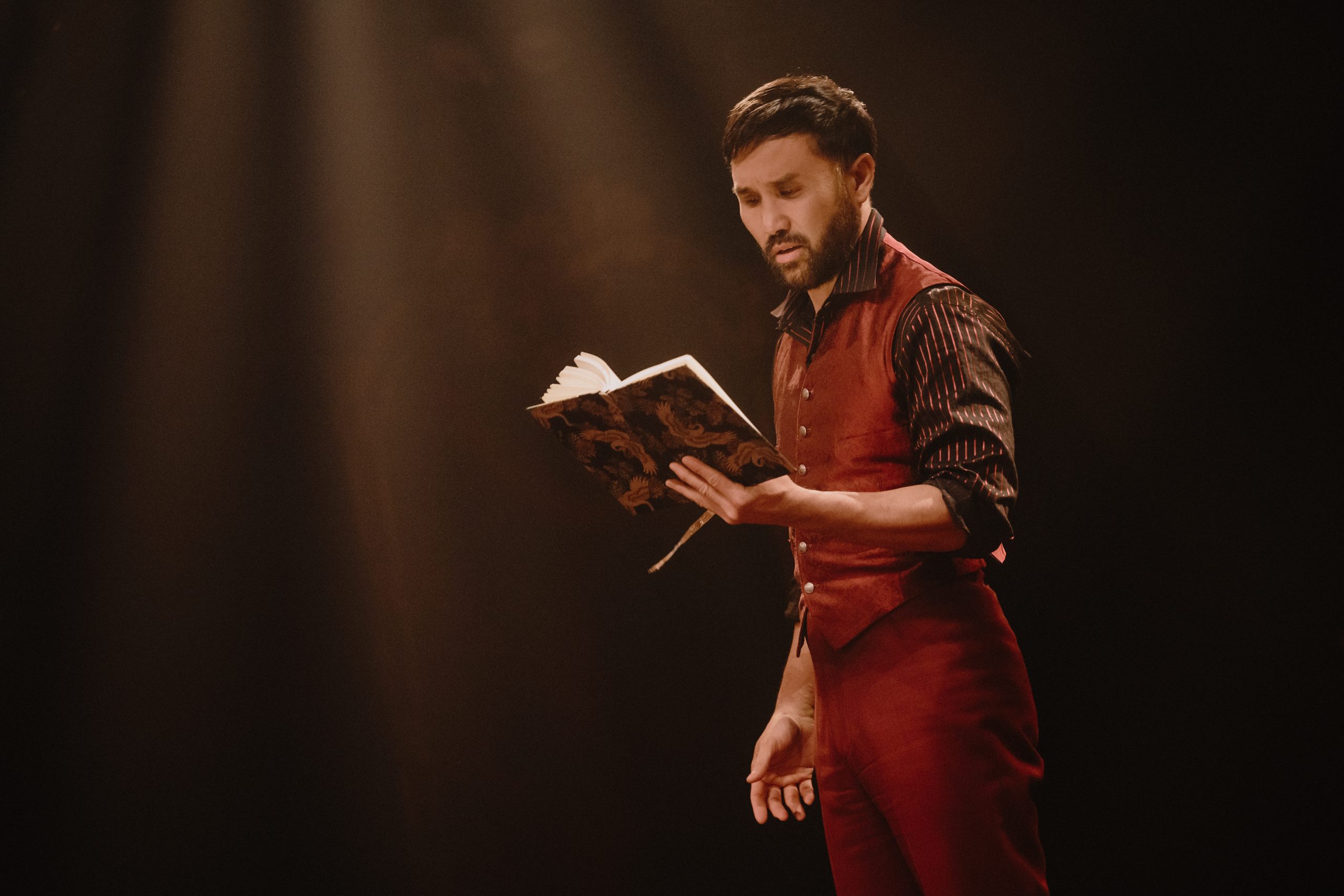
Marc delaCruz photo by Andy Henderson
When a client, Sakae (Marc delaCruz), encourages Colette to put pen to paper, she begins recording the intimate confessions, peculiar fantasies, and private sorrows of the men who frequent the establishment. Through writing, she discovers a means of reclaiming her identity. No longer merely someone to be observed, she becomes the observer, transforming the perversions of others into art.
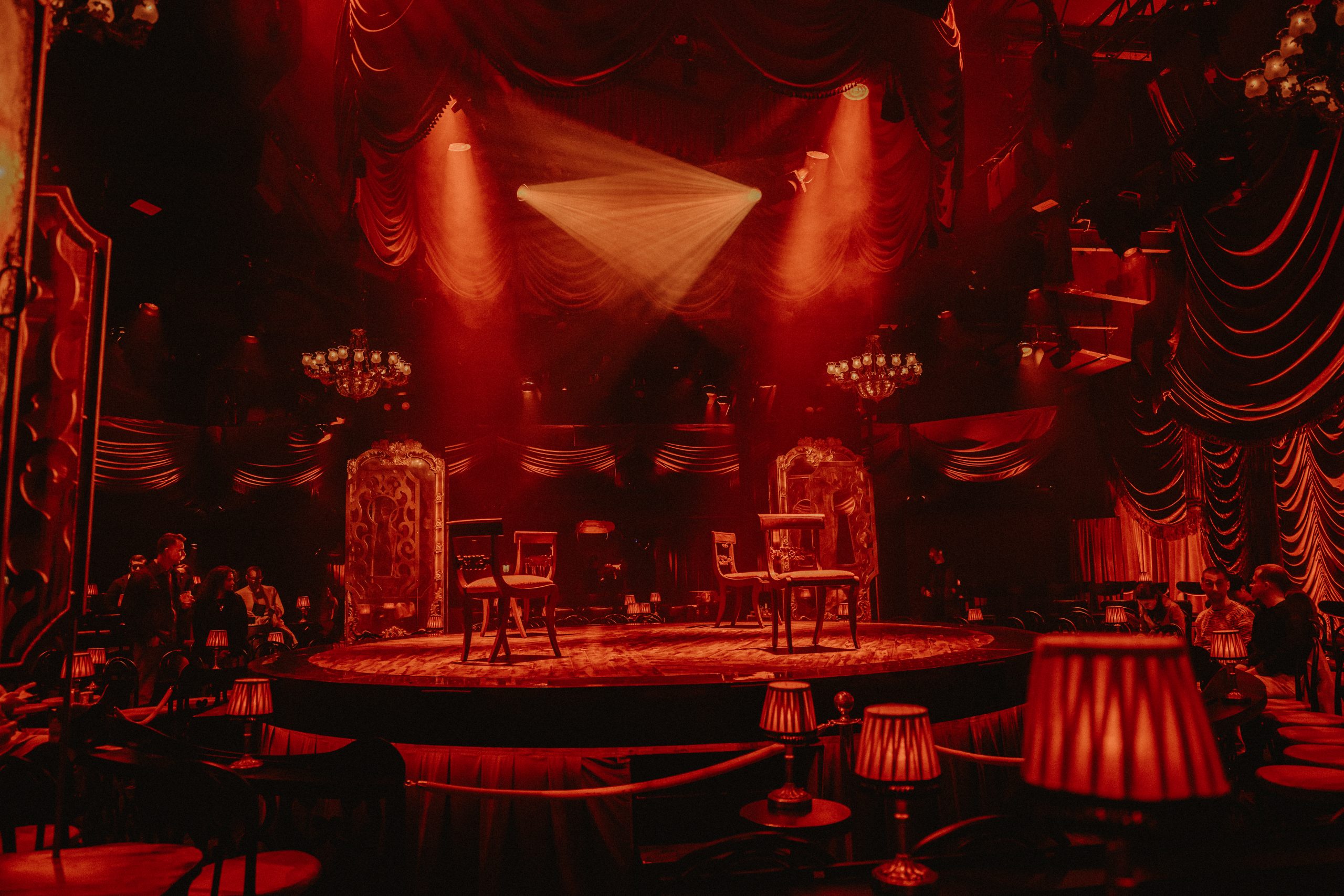
The Night Egg at the Culture Club photo by Andy Henderson
It is a promising premise, but one that feels distressingly familiar. The prostitute with a literary soul, the emotionally unavailable lover, the exploitation masquerading as affection, and the eventual discovery of personal agency are all recognizable dramatic territory. Winkler’s book never quite finds the originality or psychological complexity necessary to elevate these elements into something genuinely revelatory.
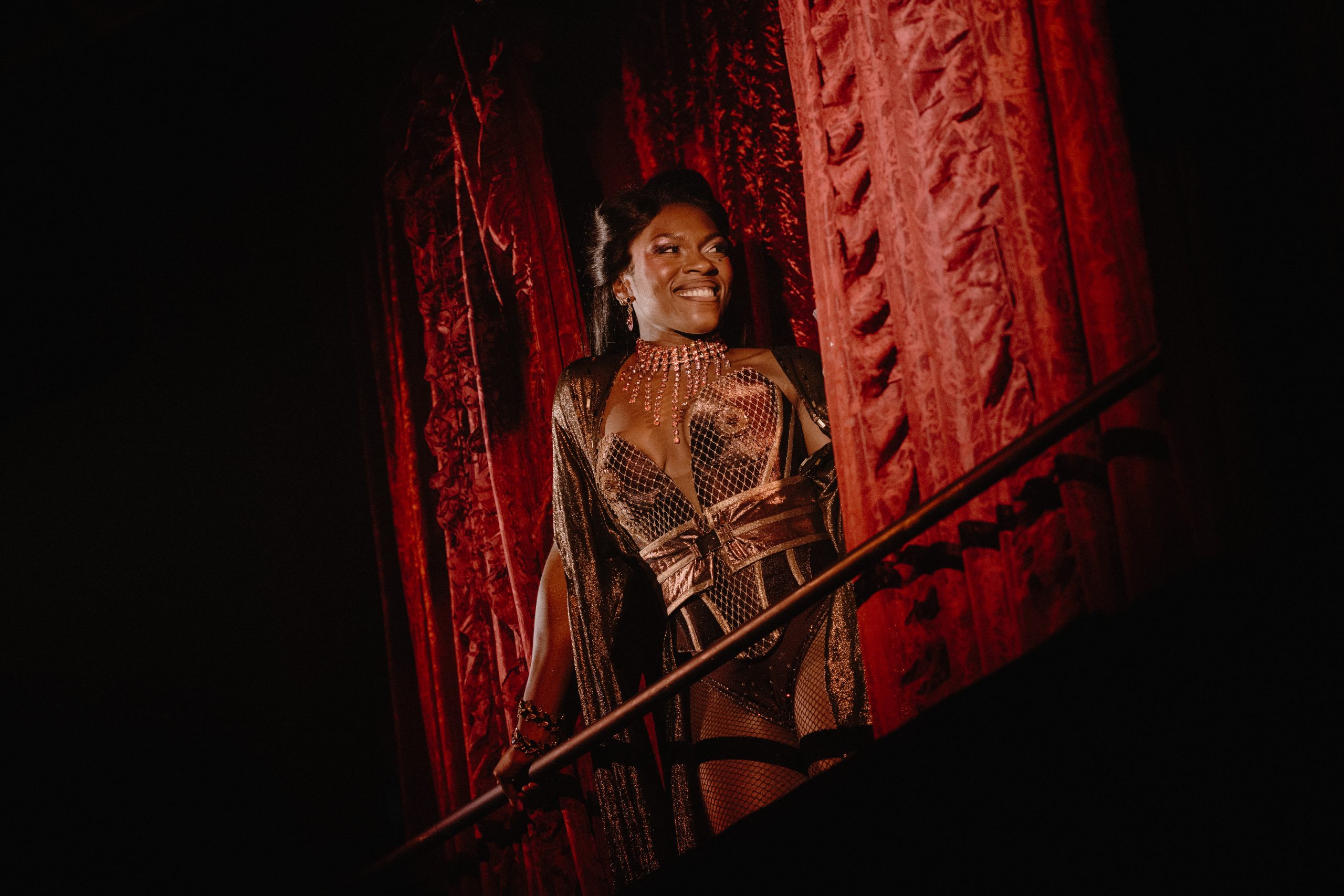
Nkeki Obi-Melekwe photo by Andy Henderson
Léon, meanwhile, exploits Colette’s devotion while directing his money and attention toward Nana, played by Nkeki Obi-Melekwe of Tina: The Tina Turner Musical. Colette continues believing in him long after the audience has recognized the futility of that belief. There is emotional truth in such self-deception, but the writing does not explore it deeply enough to make the relationship as compelling as it should be.
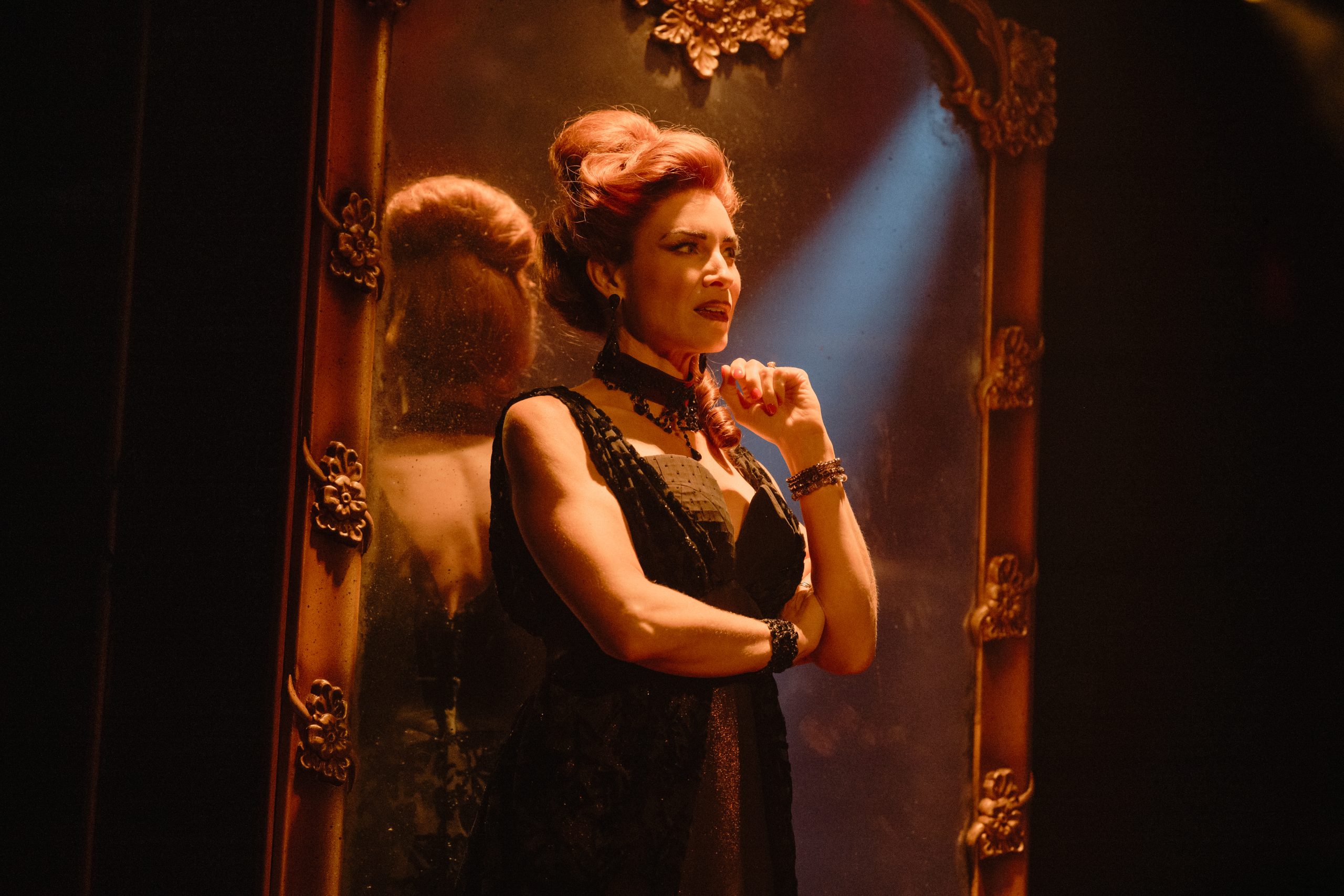
Jenny Powers photo by Andy Henderson
Jenny Powers brings an appropriately chilling authority to Madame, whose coldhearted management of the establishment reminds us that beneath the elaborate costumes and seductive rituals lies a business built upon the commodification of human desire.
What makes the production so compelling is the extraordinary visual and musical world constructed around this underdeveloped narrative.
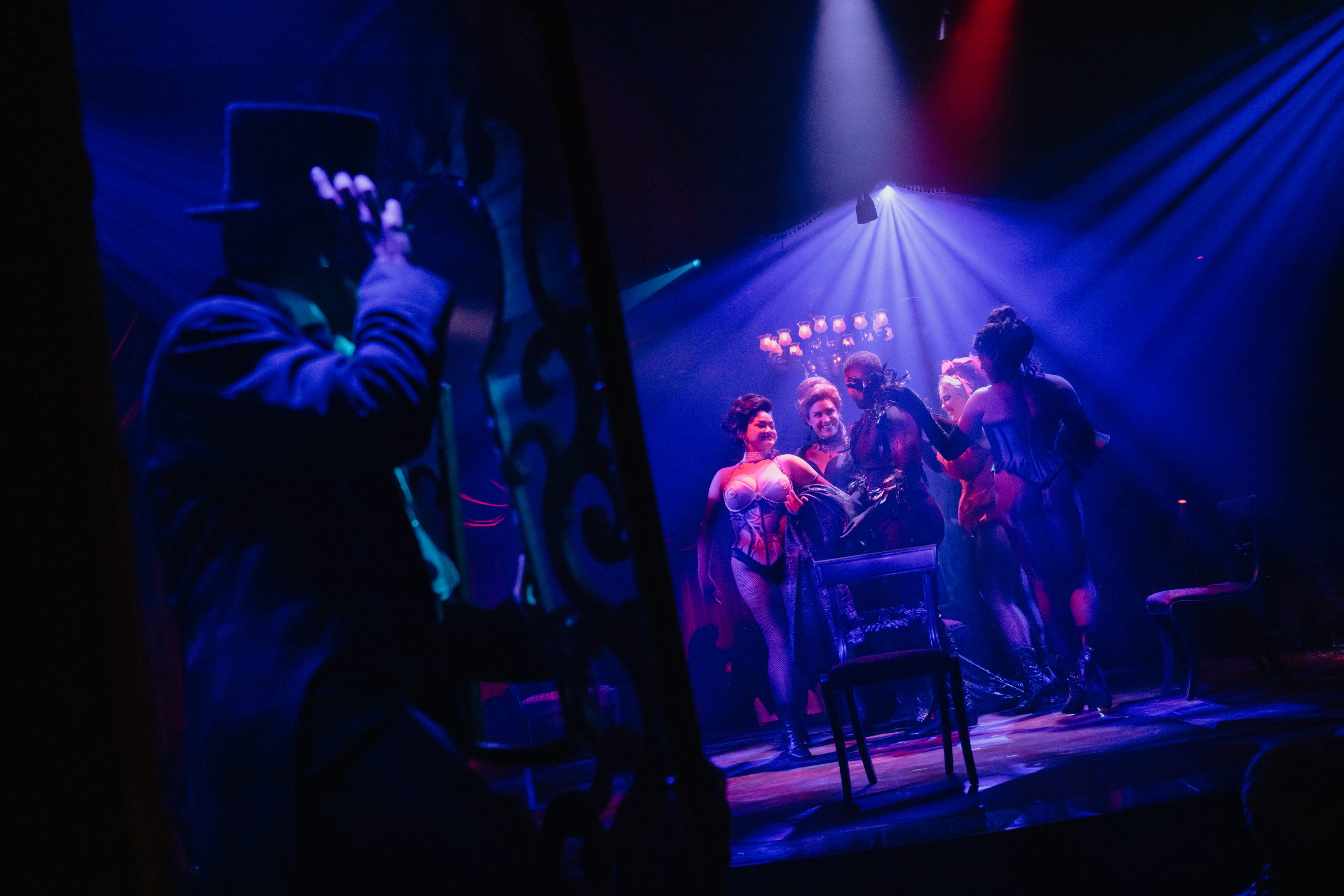
photo by Andy Henderson
Director and choreographer Rob Ashford understands seduction as a theatrical language. His staging is fluid, sensual, and meticulously composed, creating an atmosphere in which movement becomes as expressive as dialogue. The choreography is not simply decorative; it is part of the establishment’s machinery, drawing the audience into a world where beauty and exploitation exist in disturbing proximity.
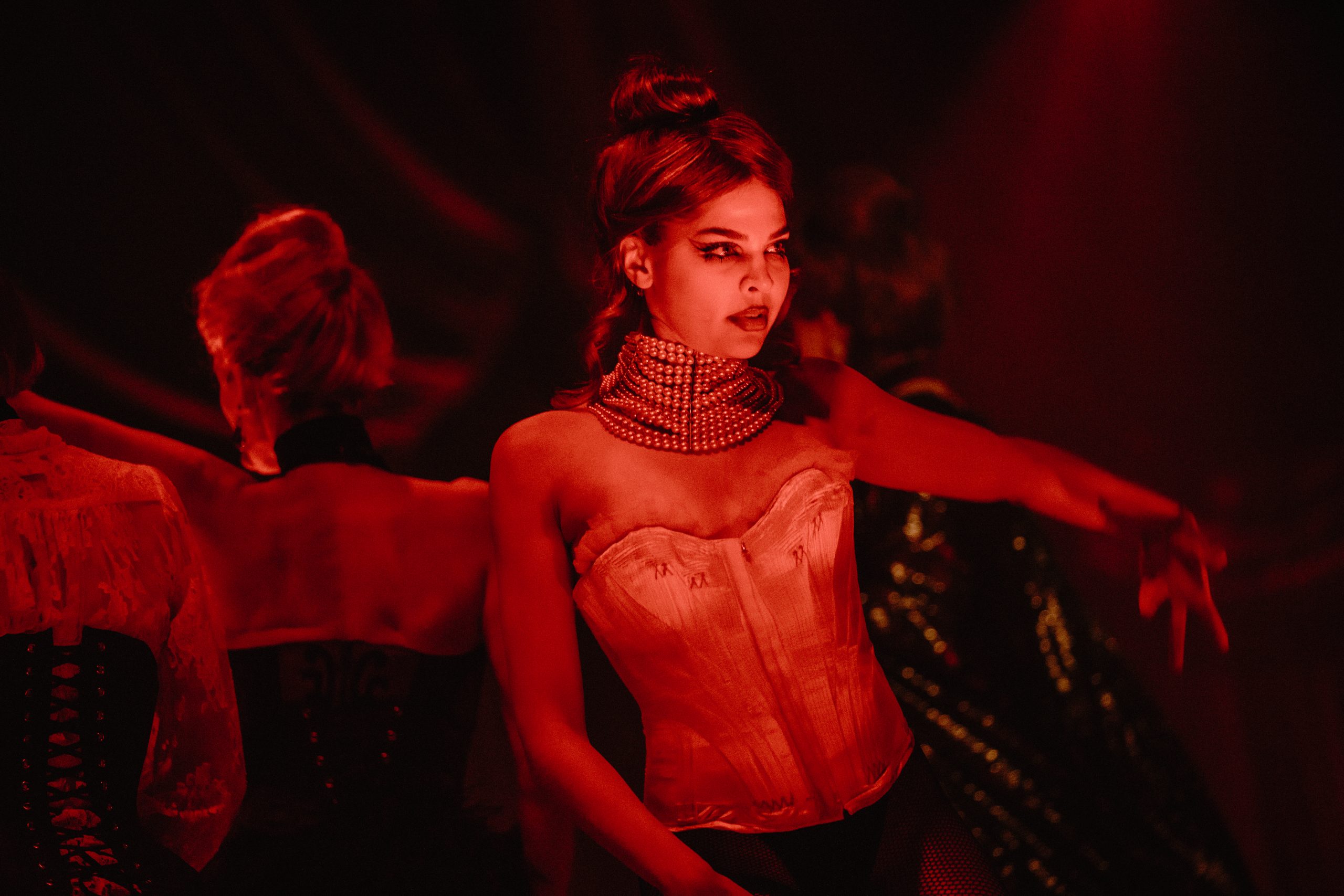
Nika Lindsay photo by Andy Henderson
Scott Pask’s scenic design transforms the space into a decadent Parisian playground, while Catherine Zuber’s costumes are so ravishing that I found myself wanting to purchase practically the entire wardrobe. The textures, silhouettes, and sensual extravagance create a visual feast. If the production occasionally feels more invested in its appearance than its narrative, it is difficult to complain while looking at something this gorgeous.
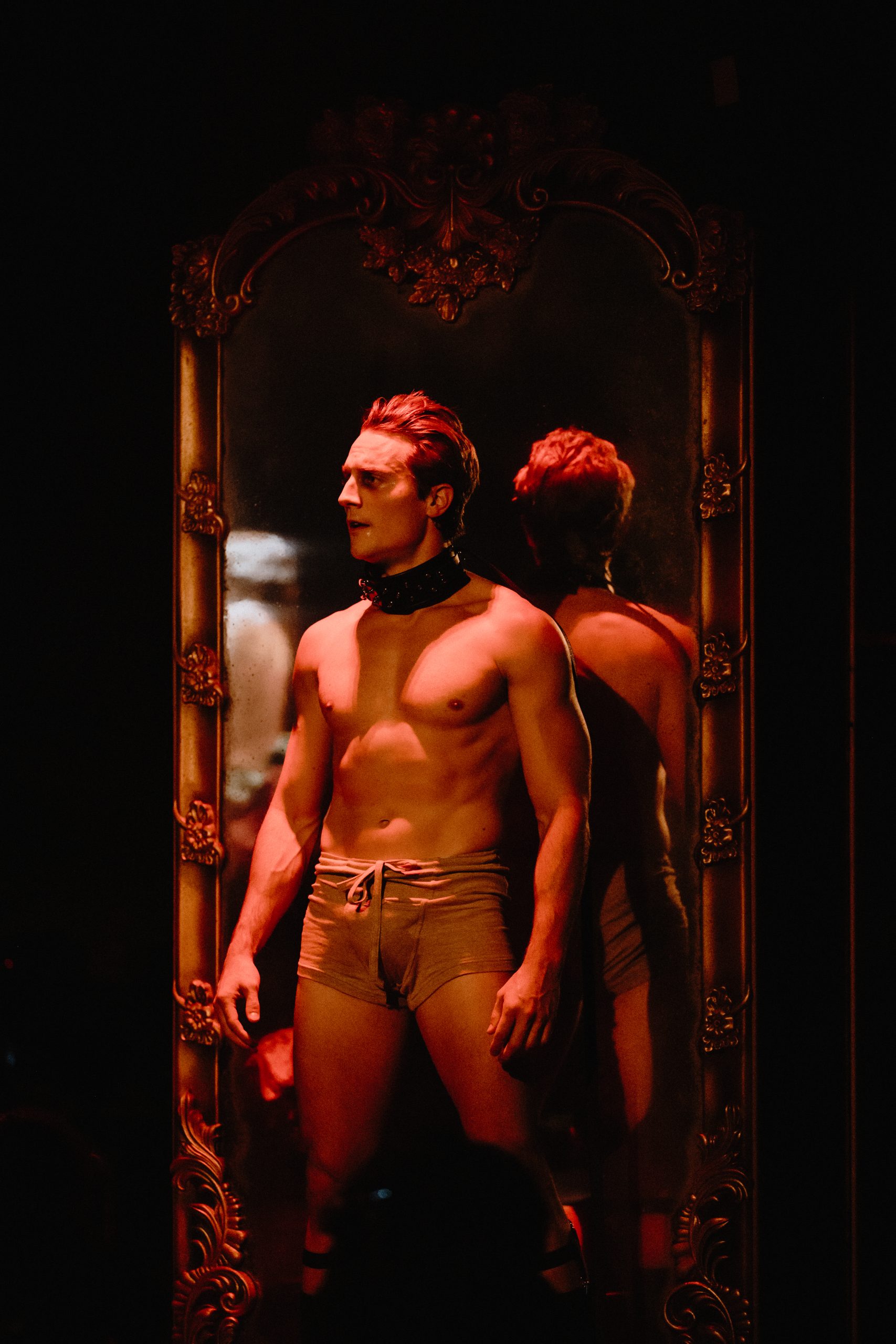
Michael Starr photo by Andy Henderson
Yet that beauty is also the point. The Night Egg is designed to conceal the ugliness of what takes place within its walls. Look from a distance, and everything glitters. Look too closely, and the illusion begins to decay.
Duncan Sheik’s music and lyrics provide the evening with its most haunting dimension. Melodic, atmospheric, and often achingly beautiful, the score has a hypnotic quality that recalls, in spirit, Stephen Sondheim’s Passion. Both works explore the unsettling territory where love becomes obsession and desire slips into emotional captivity.
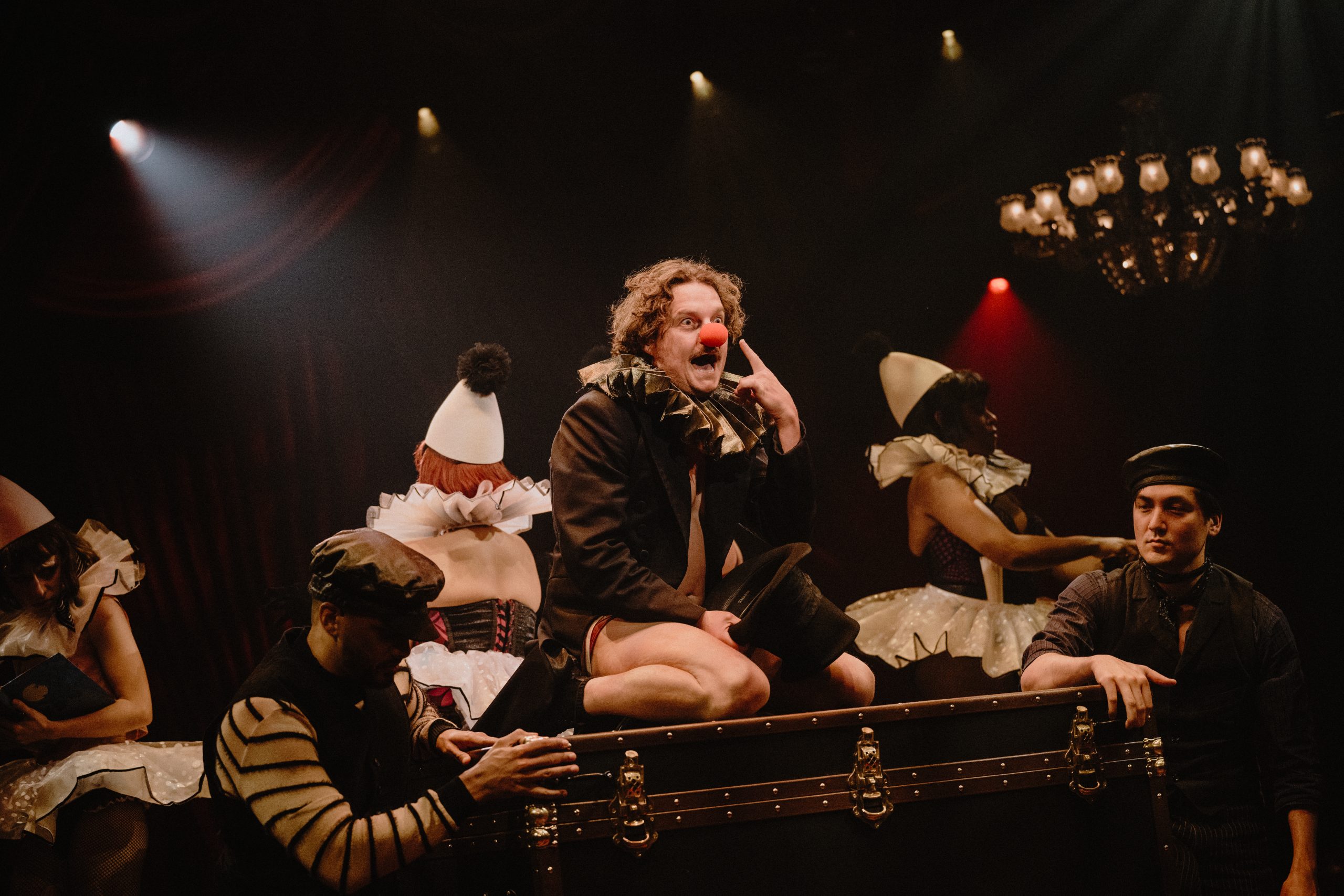
Austin Lesch photo by Andy Henderson
Sheik’s music does not merely accompany the story. It seems to seep through the walls of the Night Egg, making the establishment itself feel alive. There is something almost witchlike about the combination of music, singing, and movement. The melodies draw us inward, creating a seductive spell that makes the eventual recognition of the characters’ suffering all the more unsettling.
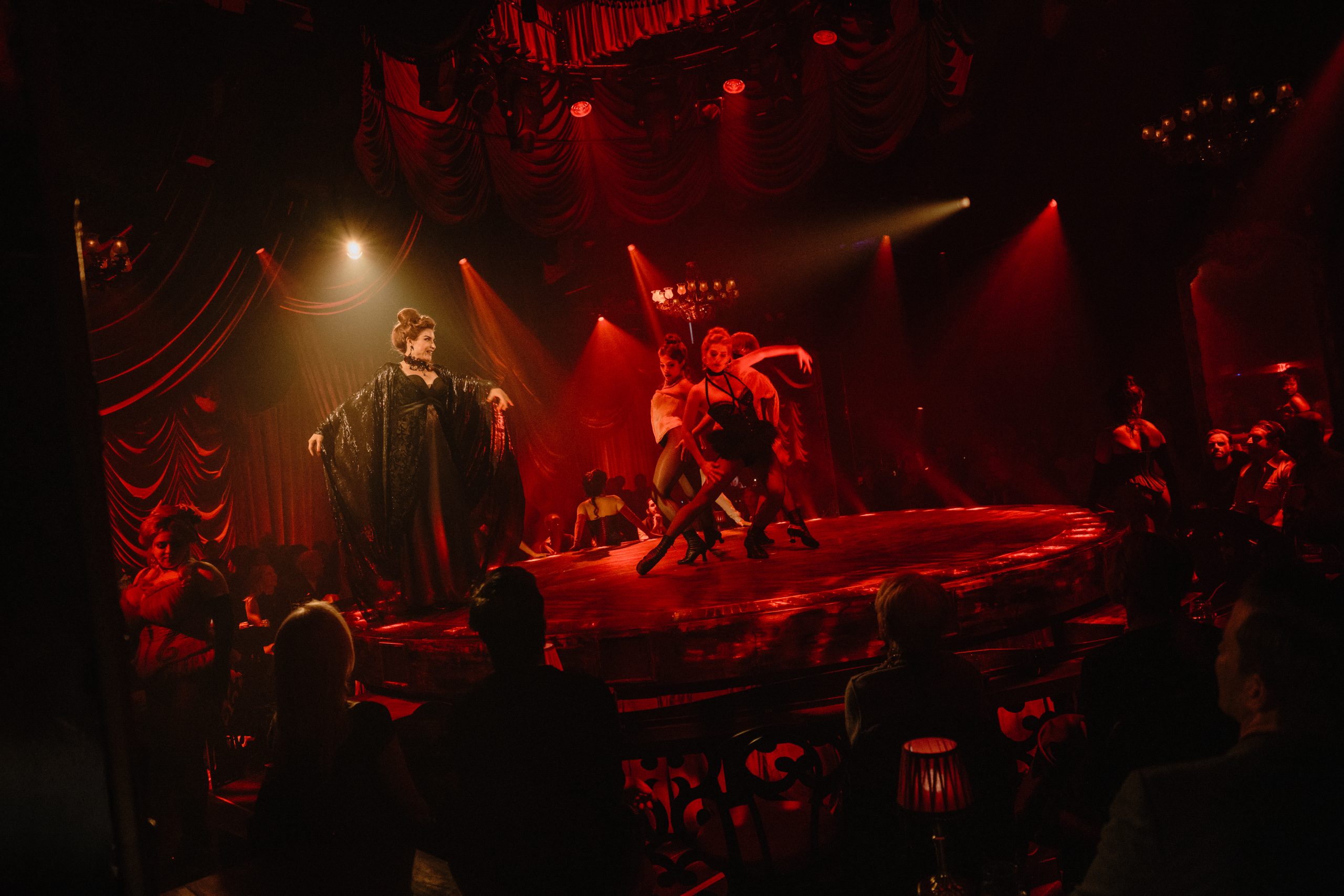
Jenny Powers photo by Andy Henderson
The score is considerably more sophisticated than the book surrounding it. One wishes the writing possessed the same emotional depth and complexity as the music.
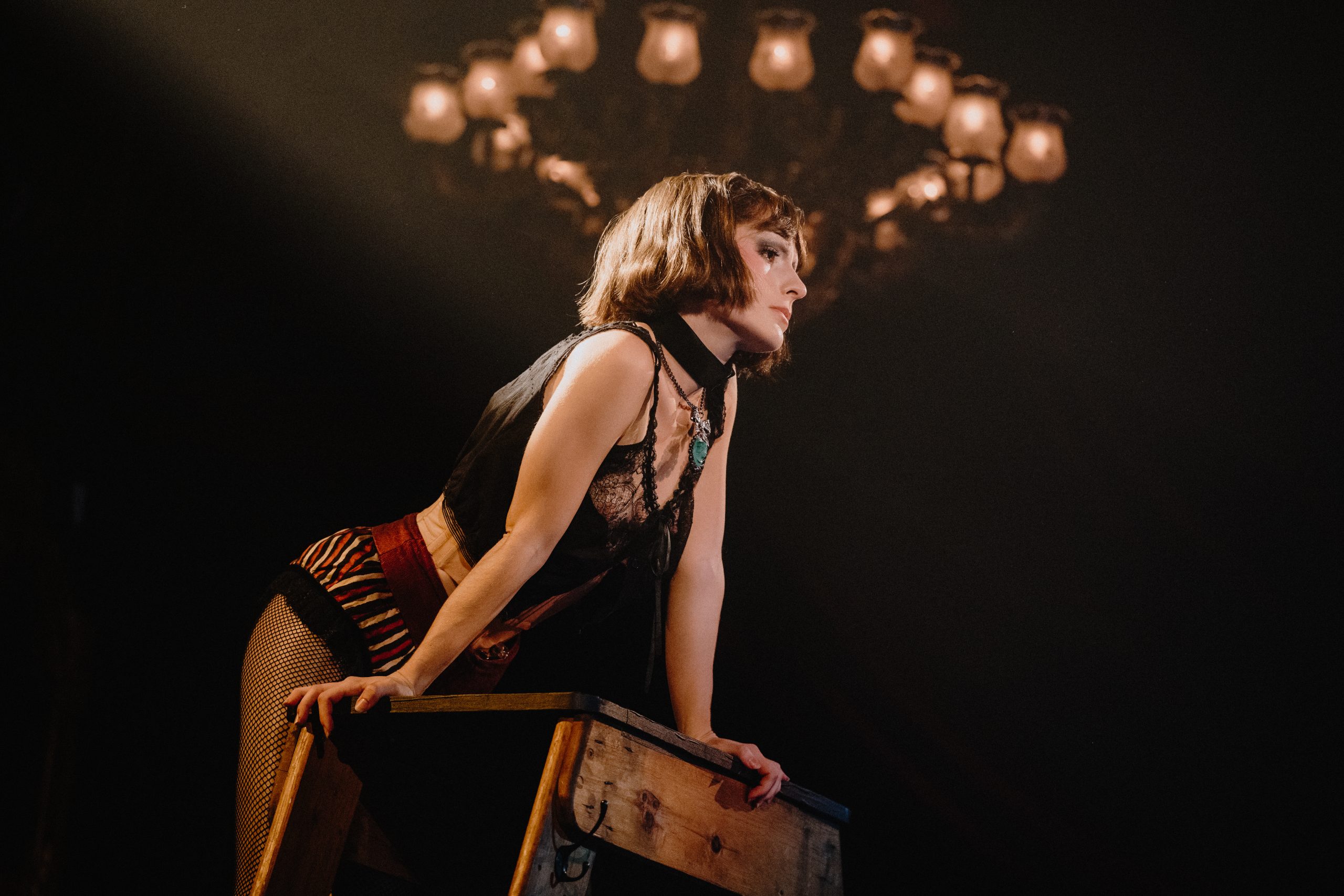
Sophia Anne Caruso photo by Andy Henderson
Then there is Sophia Anne Caruso.
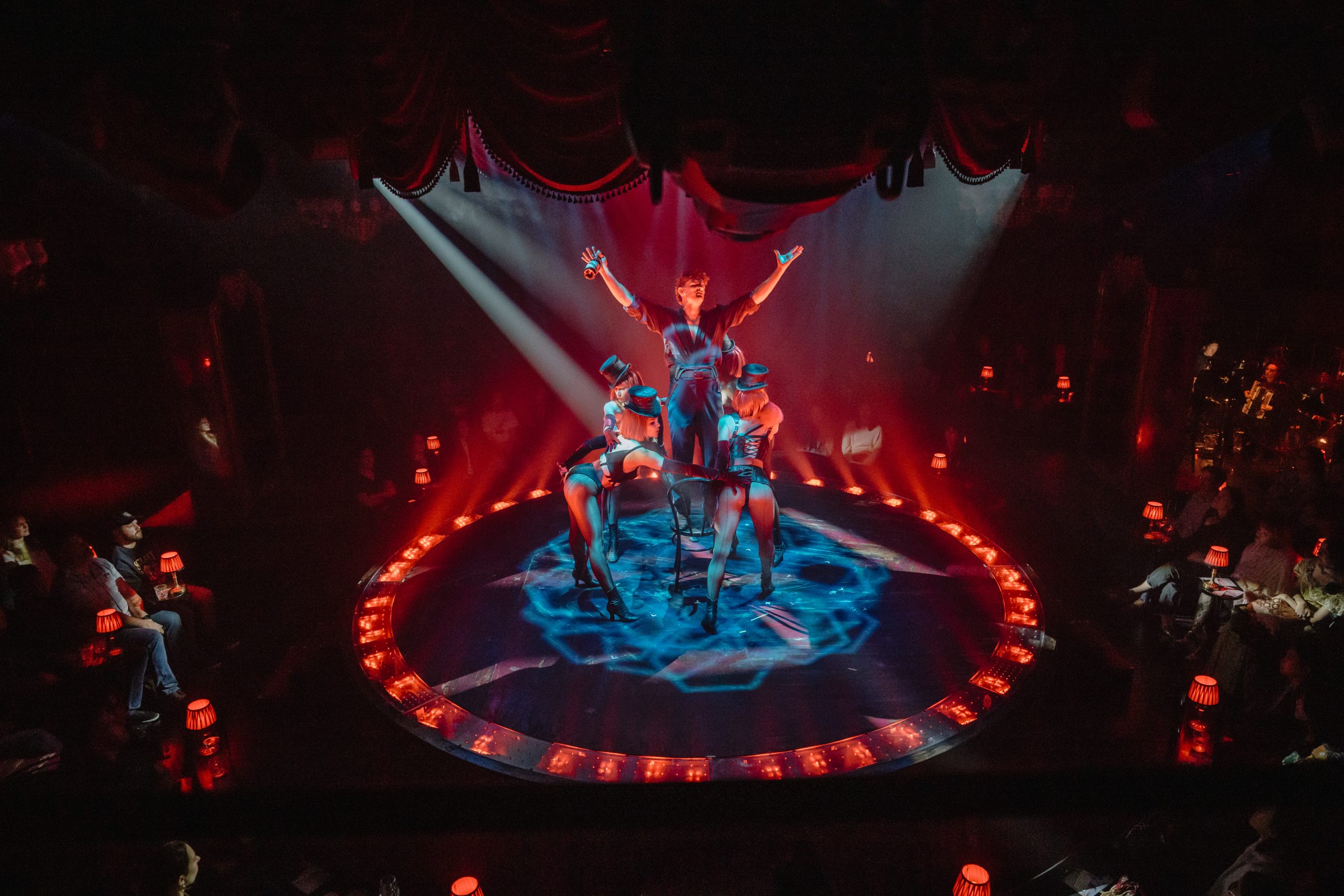
Cory Jeacoma photo by Andy Henderson
I have followed Caruso’s career for years, dating back to The Nether, and watching her artistic development has been a remarkable experience. She has always possessed an arresting theatrical presence, but what she brings to Colette confirms something I have believed for a long time: this young woman is a genuine star.
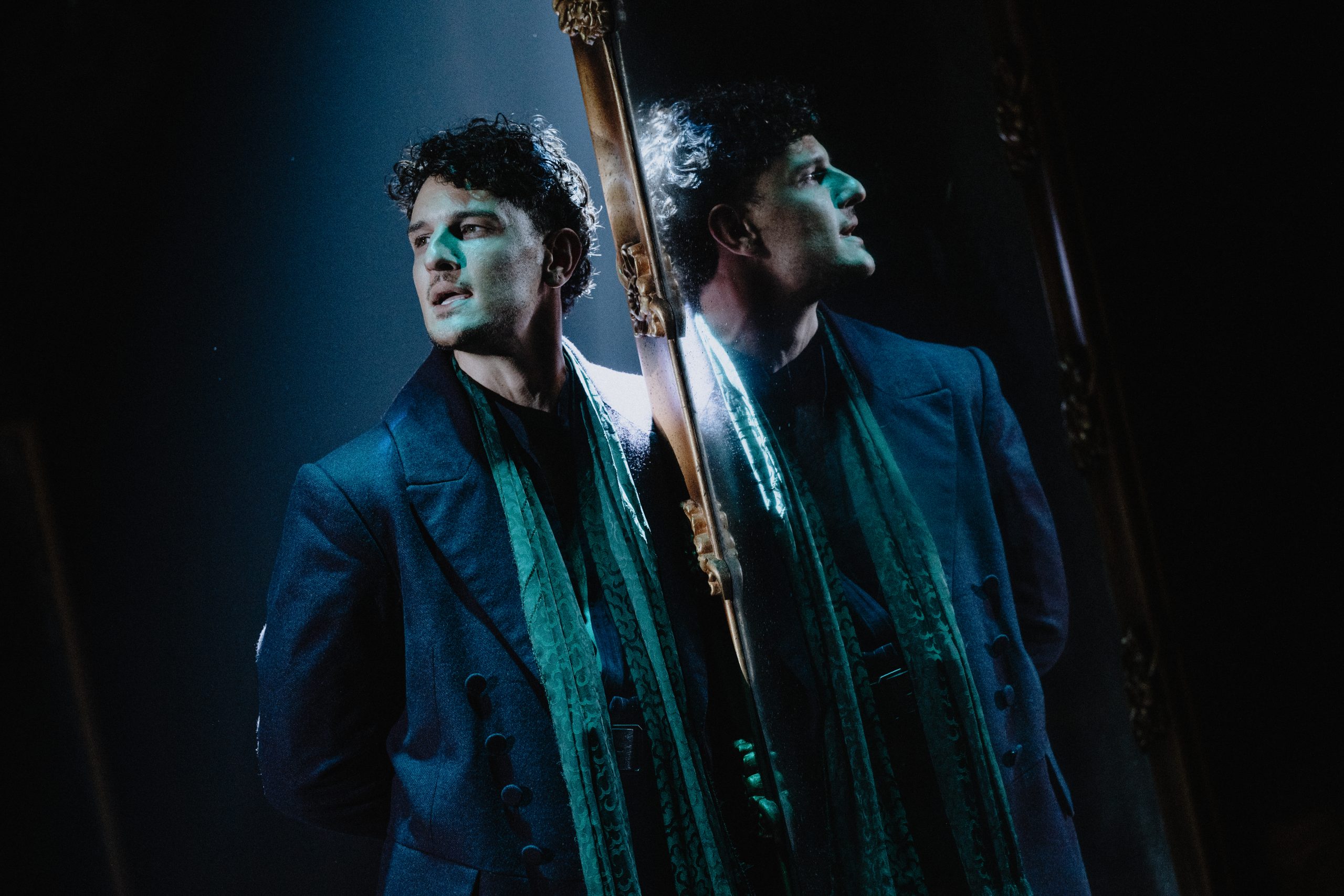
Cory Jeacoma photo by Andy Henderson
Her voice is extraordinary, rich, powerful, and capable of cutting through Sheik’s lush musical landscape with startling emotional clarity. But it is not simply the voice that distinguishes her. It is her acting.
Caruso possesses that rare combination of vulnerability and underlying strength that cannot be manufactured. She can appear almost painfully exposed one moment and reveal an astonishing inner resilience the next. Even when the writing fails to provide the emotional progression her character deserves, she supplies it through the smallest shifts in expression, posture, and vocal color.
There is nothing generic about her performance. She inhabits Colette with an intelligence and emotional honesty that give the character dimensions the book only begins to suggest. Her vulnerability never feels like weakness; it becomes the very source of her strength.
Quite simply, Sophia Anne Caruso is the reason to see Memoirs of Amorous Gentlemen.
And I wish she had been given a better book.
That is ultimately the frustration of this production. Ashford has created a seductive theatrical experience, Pask and Zuber have fashioned a world of extraordinary beauty, Sheik has supplied a haunting score, and Caruso delivers a performance of genuine star quality. Yet the central story never achieves the originality or dramatic force necessary to match these accomplishments.
For all its sensuality, Memoirs of Amorous Gentlemen is less provocative than it believes itself to be. Voyeurism is not inherently revelation, and exposing the private lives of men does not automatically produce insight into the women whose bodies and emotions they consume.
Still, there is something undeniably compelling about this strange, gorgeous evening. The music lingers, the imagery seduces, and Caruso’s performance refuses to fade from memory.
Memoirs of Amorous Gentlemen is a beautiful illusion with something rotten beneath its surface. Its greatest achievement is not making us believe in the illusion, but allowing us to glimpse the darkness behind it.
Sheik’s death lends this production an unexpected poignancy. His music remains its most haunting achievement, a reminder of a composer who understood that desire, longing, and emotional devastation often speak most eloquently through melody. The book may fail to match the sophistication of his score, but the music is unmistakably his: seductive, intelligent, and achingly human.
Memoirs of Amorous Gentlemen: The Night Egg at The Culture Club, 530 West 27th Street, between Tenth and Eleventh Avenues through January 3, 2027.

Live From The Hotel Edison Times Square Chronicles Presents, is filmed from the Hotel Edison and is a podcast extension of T2C. We are back after a small hiatus.
Today on Live From The Hotel Edison Times Square Chronicles Presents Our Sinatra’s Christopher Gines. Our Sinatra, a Musical Celebration brings back the original creators/performers – Eric Comstock, Christopher Gines and Hilary Kole. This trio reunites after a quarter century after performing Our Sinatra at the Oak Room in December 1999
Gines has released solo music including his album The Way It Goes, featuring classic standards and theater tunes. Beyond singing, he has worked as an author, playwright, show creator, and nightclub promoter/owner in New York
See Christopher in Our Sinatra at the Marjorie S. Deane Little Theatre running through November 29th.
I am so grateful to Christopher Gines for his conversation, his candidness and his art that captures the imagination.
We are so proud because the show and our guests are featured on the TV screens in the lobby and the hotel rooms.
Thank-you Magda Katz for videoing and creating the content to go live, Rommel Gopez and The Hotel Edison for their kindness and hospitality, Broadway HD and Dr K and at 200 West 54th Street for giving me back my health and my smile.
We have been named by Variety Entertainment News as one of Summer’s Best Picks in the category of Best Television, Radio, Podcasts. The company we are in, has made us so humbled, grateful and motivated to continue.
“The Daily Geek Report” named host Suzanna Bowling on the list of Most Engaging Hosts.
You can catch us on the following platforms:
Spotify:
Apple Podcasts:
Off Broadway
Ethan Hawke, Anthony Rapp and Jeff Tweedy Are Coming to Christmas Dinner—Thornton Wilder Style


Thornton Wilder’s holiday classic gets a nationwide celebration, with more than 30 organizations joining a theatrical feast that spans 90 years in just 40 minutes.
Forget the turkey, the awkward family conversations and the relative who insists on bringing up politics before dessert. This Christmas, Thornton Wilder is inviting America to a dinner that lasts ninety years, and some rather extraordinary guests are pulling up chairs.

Thortan Wilder
The Thornton Wilder Estate has announced The Long Christmas Dinner Festival, a nationwide celebration of Wilder’s beloved 1931 one-act play, with more than 30 theatres, schools, colleges and independent bookstores presenting the work throughout November and December. The ambition is as charming as it is audacious: to make The Long Christmas Dinner a holiday tradition alongside A Christmas Carol, The Nutcracker and Handel’s Messiah. Considering how many of us already spend the holidays revisiting the same beloved stories, there is something wonderfully appealing about adding another place at the table.
The festivities begin Monday, November 2, at New York City’s Public Theater, where Ethan Hawke and Jose Llana will be among the performers bringing Wilder’s extraordinary little play to life. Joining them is Tappan Wilder, the playwright’s nephew and managing member of the Wilder Family LLC, making this particular family gathering rather more authentic than most. Additional casting will be announced.
Chicago is getting its own star-studded dinner at the Goodman Theatre, with original RENT cast member Anthony Rapp and Wilco frontman Jeff Tweedy joining the celebration. It’s not every day that a Broadway original and an alternative-rock icon find themselves seated at the same theatrical Christmas table, but Wilder has always had a way of bringing seemingly different worlds together.
And what a remarkable piece of theatre this is. First produced in 1931, The Long Christmas Dinner takes place during one continuous holiday meal, yet somehow carries its audience through ninety years of a family’s existence. Generations arrive, grow older, fall in love, quarrel, celebrate, disappear and are replaced by those who follow. The dining table remains, but the people around it change. In a mere forty minutes, Wilder captures the comedy, tenderness, absurdity and heartbreak of being human.
It is a theatrical conceit of astonishing simplicity, and one that feels particularly appropriate for the holidays. After all, Christmas dinner is rarely just about the people sitting at the table. It is also about those who once occupied the empty chairs, the traditions we inherited without remembering who began them, and the children who will eventually become the keepers of those same memories. Wilder understood that a family gathering is never really confined to a single day. Every holiday carries the ghosts of Christmases past and the promise of those still to come.
What makes this festival especially intriguing is its refusal to confine Wilder to the grand theatrical institutions. The first wave of participants includes 31 organizations across 20 states, stretching from Alaska to Florida and California to Maine. Alongside such distinguished companies as The Public Theater, Goodman Theatre, Seattle Rep, Miami New Drama, Pasadena Playhouse and Rude Mechs are high schools, colleges and independent bookstores. Vassar and Yale are also participating, with Yale holding a particularly meaningful connection to the work: students there collaborated on its original 1931 premiere.
That mixture is precisely what gives the festival its heart. Wilder’s work has never depended on elaborate scenery or theatrical machinery to reveal something profound. His genius lies in stripping away the unnecessary until the audience is left confronting the things that matter: time, love, mortality, family and the extraordinary significance of ordinary life. A school auditorium or bookstore can become as fitting a home for this play as a celebrated professional stage.
There is also something rather refreshing about a holiday theatrical event that doesn’t require a sleigh, a dancing snowflake or a miser visited by three ghosts. Wilder gives us something at once simpler and more unsettling: the realization that life moves with breathtaking speed, even when the days themselves seem endless. One moment we are children waiting impatiently for Christmas morning; the next, we are the adults remembering the people who made those mornings magical.
The Wilder Estate’s hope is that this nationwide celebration will become an annual tradition, encouraging families and friends to experience the play together and discover something new in it as their own lives change. That is an especially lovely idea for a work whose entire meaning deepens with the passage of time. The person who sees The Long Christmas Dinner at twenty will not experience quite the same play at fifty, and certainly not at eighty.
With its combination of celebrated performers, community participation and a story that has quietly endured for nearly a century, The Long Christmas Dinner Festival offers an unusually thoughtful addition to the holiday season.
And unlike most family Christmas dinners, this one promises to take only forty minutes, cover ninety years of family history and leave you with something considerably more lasting than leftovers.
Cabaret
Live From The Hotel Edison Times Square Chronicles Presents American Idol Contestant and Going Bacharach’s Alyssa Wray

Live From The Hotel Edison Times Square Chronicles Presents, is filmed from the Hotel Edison and is a podcast extension of T2C. We are back after a small hiatus.
Today on Live From The Hotel Edison Times Square Chronicles Presents, we meet Alyssa Wray. Alyssa is a singer, actor, artist, and extremely clumsy romcom enthusiast from small town Kentucky, currently residing in NYC. You may have seen her in 2021 on ABC’s “American Idol” where she was a finalist (Top 9). Her regional credits include: Rocky Horror Picture Show (Magenta) at Bucks County Playhouse, Rent (Maureen) at the Palace Theatre, Murder Ballad (Narrator) at Prima Theatre, Songs for a New World (Woman 1) at the Gateway Playhouse. Other favorite performing credits include her New York City debut solo show at 54 Below, Alyssa Wray: Songs that Speak to Me. She is extremely grateful for her agents at DGRW, Sarah & Dave at Creative Talent Company, Link ’21, and my entire family and community back home as always.
See Alyssa in Going Bacharach at the Marjorie S. Deane Little Theatre running through November 29th.
I am so grateful to Alyssa Wray for her conversation, her joy of life and his art that captures the imagination.
 We are so proud because the show and our guests are featured on the TV screens in the lobby and the hotel rooms.
Thank-you Magda Katz for videoing and creating the content to go live, Rommel Gopez and The Hotel Edison for their kindness and hospitality, Broadway HD and Dr K and at 200 West 54th Street for giving me back my health and my smile.
We have been named by Variety Entertainment News as one of Summer’s Best Picks in the category of Best Television, Radio, Podcasts. The company we are in, has made us so humbled, grateful and motivated to continue.
“The Daily Geek Report” named host Suzanna Bowling on the list of Most Engaging Hosts.
You can catch us on the following platforms:
Spotify:
Apple Podcasts:


Midnight: Todrick Hall Has Created a Musical Masterpiece That Broadway Cannot Afford to Ignore

Memoirs of Amorous Gentlemen: A Beautifully Decadent World With a Star at Its Center

Billy Crystal and Whoopi Goldberg Bring Laughter, Love and a Lifetime of Memories to PaleyFest NY

Prince Mario-Max Schaumburg-Lippe Champions Animal Rescue

Retail Sales Are Rising. That Doesn’t Mean Customers Are Buying More.

High Society, Higher Stakes: The Gilded Age Takes Center Stage at PaleyFest NY

Live From The Hotel Edison Times Square Chronicles Presents The Day With No End a Film Directed by Portrait Photographer Alistair Morrison

The Glorious Corner
Midnight: Todrick Hall Has Created a Musical Masterpiece That Broadway Cannot Afford to Ignore
Memoirs of Amorous Gentlemen: A Beautifully Decadent World With a Star at Its Center
Billy Crystal and Whoopi Goldberg Bring Laughter, Love and a Lifetime of Memories to PaleyFest NY
Prince Mario-Max Schaumburg-Lippe Champions Animal Rescue
Retail Sales Are Rising. That Doesn’t Mean Customers Are Buying More.
High Society, Higher Stakes: The Gilded Age Takes Center Stage at PaleyFest NY
Live From The Hotel Edison Times Square Chronicles Presents The Day With No End a Film Directed by Portrait Photographer Alistair Morrison
The Glorious Corner
-

 Cabaret5 days ago
My View: HER HEART BELONGS TO BROADWAY ANDREA McARDLE HOLDS COURT At The Laurie Beechman Theatre in Times Square
-

 Art4 days ago
Haring Under Glass: Monaco Meets Manhattan in Memory Of Places
-

 Entertainment4 days ago
Prince Mario-Max Schaumburg-Lippe & Mariel Padilla – Hollywood & Philippines Movie Stars Receive Honors By UN Icon Ambassador Monica Sanchez At A Tablet For Dream Gala In NYC!
-

 Cabaret4 days ago
Hello, Macon! A Musical Tribute to Jerry Herman
-

 Business4 days ago
Amazon Built Its Tablet Business on Cheap. Now It Wants Customers to Pay More.
-

 Broadway4 days ago
Falsettos Is Having a Love Affair With Its Audience—and Now It’s Going International
-

 Events3 days ago
Zohran Mamdani, Mayor of New York—Terms and Conditions Apply
-

 Celebrity3 days ago
The Glorious Corner