
Celebrity
As A Troubled Therapist Dealing with Increasing Trauma, Actor Rose Byrne Gives a Career-Elevating Performance, Gaining Awards + Oscar Nomination


In “If I had Legs, I’d Kick You,” Australian actor Rose Byrne’s presence is extraordinary. The 46-year-old possesses energy that drives a performance traversing between the real and the surreal, full of physicality and emotion. This career-defining role has been garnering her praise, awards and a Oscar nomination.
 The film had its world premiere at the 2025 Sundance Film Festival in January, 2025. At the 75th Berlin International Film Festival, Byrne won the Silver Bear for Best Leading Performance. Later in the year, she won the Best Actress award at the 58th Sitges Film Festival for the same role.
It received a domestic release by A24 in October and got positive reviews. Byrne’s performance received universal acclaim and nominations for a Golden Globe Award and Critics’ Choice Award for Best Actress.
Written and directed by Mary Bronstein, the film stars Byrne, Conan O’Brien, Danielle Macdonald, Christian Slater and A$AP Rocky. Byrne, as Linda, plays a therapist stretched to her limits while caring for her daughter, who is suffering from a pediatric disorder. The daughter must be fed through a PEG tube each night, and her demands add to Linda’s immense stress.
Renowned for her versatility across film and television, Byrne has been recognized for her leading roles in blockbuster comedies, independent dramas, and horror films. Her previous accolades include two AACTA Awards, a Silver Bear and a Volpi Cup, in addition to nominations for two Primetime Emmy Awards and three Golden Globe Awards.
Byrne’s performance as this troubled mother has again put a spotlight on her. She spoke at a recent screening where, answering questions from a moderator, she offered insight into the challenges she grappled with in playing such a complex part.
Q: You spent a lot of time with director Mary Bronstein before the shoot to discuss the screenplay, explore the character, and rehearse. Talk about that process.
Rose Byrne: Absolutely. Mary and I had a period of about five weeks where I went to her apartment in Chelsea. I’d dropped my kids off at school or camp. It was over the holidays [so] we worked three days a week, and sat at her kitchen table. We went through the script from page one, word one, and would talk, go off topic, and share our own horror stories. The story of Linda, or the experience she’s going through, is based on something Mary Bronstein went through in her life.
Obviously, she doesn’t act like Linda, but it’s an expression of something she’s spoken about quite openly, so it was like comparing her to a play. It was very rare. We shot the film in 27 days, so it was quick with some ambitious sequences in the film. Everything is practical. There’s a tiny bit of CGI on her stomach, but that’s it. Everything else, [including] the hamster.
Q: I don’t remember the hamster.
Rose Byrne: Well, the hamster in the screenplay is described as [being like] Jack Nicholson from “The Shining.” It’s much stricter than that. When I read that bit, I was like, “Oh, that’s fabulous.” I was laughing a lot. The humor you see in the film is very much reflected in what I read. The screenplay was truly the same expression in a way I’ve never experienced before as an actress, so I was quite blown away when I read it.
Q: This film’s very personal to the director. How did you insert your own interpretation? You have made this film your own, and it’s hard to imagine anyone else playing this role.
Rose Byrne: There is, of course, a sense of responsibility, and it’s such a heavy story. It’s a personal crisis and this is Mary’s story, so it’s open back to her. But at a certain point, you have to jump off. Once you’re on set, it becomes something else. Mary was very collaborative. It was never, mine, mine, mine. It’s ours from day one. It was like, “We’re collaborating on this, we have a creative dialogue,” and I brought my questions to the table.
My obsession was, who was this character before we met her? Because there’s no information you can remember. Who was she before this crisis? Like, she was a person, and she used not to be a mother or a wife. Who is she? Can we reverse engineer? That’s the actor’s homework. You don’t see that written all over, because it’s boring, but you want it to feel lived in. And that’s what we talked about a lot, she and I.
Q: You appear in pretty much every single scene; the camera is on you relentlessly. There’s nowhere for the character –– and also for you, the actor –– to escape or to hide. What was it like to be so exposed?
Rose Byrne: It was the tensest technical assignment in many ways. It stretched me, technically, in ways I’ve not experienced before. I did a television show where I put it all together after I had to look at the map box for a long time. I’ve done some more sophisticated kind of camera work that was the language of the camera, but this was really pushing it to the extremes. And the first day was the hardest, because [that’s when] we shot the first scene in the film. That’s always stressful anyway.
You’re anxious, you’re establishing so much, you get to know everybody. I was working with Mary, the director, who plays Dr. Spring, and the camera just got closer and closer and closer. I could hear it going, “drr, drr, drr, drr, drr, drr” so this shot was like on 35 (indecipherable) and she was like, “mm-hmm, mm-hmm, okay.” I didn’t ask again after that. I just … it’s my job to figure it out. But it stretched me and changed me, the experience of working like that. Because what they need, and also what they don’t need, is more of a question when you’re that close. So it was a challenge, but it was fun, Yeah.
 Q: You and Conan O’Brien have incredible chemistry on screen.
Rose Byrne: I’m a bad therapist right there.
Q: You both bring sharp comedic instincts to this film. What’s really fascinating is that there’s nothing inherently funny about those therapy sessions, or even the conversations where your character shares some of her darkest thoughts during therapy. She talks about how she got rid of the wrong child, and she’s not supposed to be a mother. Talk about juxtaposing comedy with the darkest and most painful human experiences?
Rose Byrne: It’s a great question. That’s something I’m interested in in life. I think there’s always a tragic balance every day, waking up and being a person. This film rides a tightrope of that, the whole way, of too much … of the trap of something that is one note. It’s just a hysterical woman and there’s no nuance.
The other way [to see it] is that it’s too comical, that it has no weight and is silly. It was the fine tightrope we were trying [to walk] — the tone that Mary had written and was trying to go for in the scenes. And obviously Conan is a national treasure, and so funny. But he was very strict about it. He was very much playing somebody entirely the opposite of him, playing this gregarious man who is also a reserved person with a lot of boundaries who was very strict.
You might really see the relationship between the therapist and the mirror as the love story of the film. It’s the bitter end of the relationship, where they just have contempt for one another, and they’re both misbehaving. Then when he doesn’t actually break up with her, the film ends, but that’s the end of it. Ten minutes later she’s running into the ocean. She has no guardrails after that, but his intelligence shines through in his performance. He was very nervous too; he tried to get out of doing it.
Q: He’s really good.
Rose Byrne: He’s an awesome actor. Mary really wanted to think outside the box for the casting, she didn’t want to do the more typical, expected casting for the role. At the same time, he shot that before he shot the Spike Lee movie, so I think it was his first or second acting job, yeah.
Q: When you were reading this screenplay, did it occur to you that it was also a comedy and not just a dramatic film about a woman’s breakdown?
Rose Byrne: It did occur to me — I can see the humor. When you’re reading the script and when it’s revealed that she’s a therapist, I thought that can’t be true. Then when I go back, she’s walking down the hall and is kind of indifferent. I was like, “Oh my.” I thought that was such a joke.
To me it’s such a reveal: you put therapists on this pedestal, and it’s such an isolated experience. You have them –– you don’t know anything about them –– and then, one of my favorite moments is when they see each other in the little kitchenette. It’s so awkward. It’s that moment, right, where you’re just like, “mm-hmm.” It’s that weird, awkward thing when you see someone out of context, but I felt the script throughout.
Mary describes it well, that the film lives between the worst thing that’s ever happened to you in your life, and the worst thing that’s happened to you today. It’s sort of between those two worlds, because of these grievances that Linda came up with. Whether it’s the parking attendant, or the gentleman that isn’t fixing her roof, or the hamster, or these grievances day-to-day that become monumental.
Q: There are two women who are suffering in this film, two mothers –you and Danielle Macdonald. She’s great in the film, playing your patient, Caroline. She’s also in the middle of a crisis, for similar reasons, but not exactly the same. The film portrays the two characters very differently, giving nuances to depression and mental breakdown. Despite your character’s circumstances, she provides her patient with care, and even gives her advice. How did you, Danielle and Mary, discuss the portrayals of these two mothers?
Rose Byrne: That’s a great question, Danielle [MacDonald] was brilliant. She actually came into the film later, and had very difficult scenes. She has spoken about this. She spoke to friends who had suffered from postpartum [depression] and were going through that sort of thing. Mary and I also talked to a therapist along with many women who had suffered from postpartum [depression] … women with children with special needs.
We did research in that world too, but I think how Mary presents it in the film is very interesting. There’s also a bit where Linda is looking in the computer about Andrea Yates — that horrible case of a woman who killed her kids. She’s looking at real footage of Andrea. Then shortly after that, Caroline, her patient, leaves the baby and runs off.
I think when you zoom out, it feels a bit like her patient didn’t get the help she needed, because Linda was experiencing burnout, and couldn’t really help this woman. Linda’s not getting the help she needs, as a mother who’s not quite coping, because her therapist isn’t giving her the right advice. It seems like these women are being short-changed, and they eventually just become something you click on, like they didn’t get the help they needed.
Why would Andrea Yates just become another item that you click on? And that feels like when Caroline runs away, she’s going to become that next article you read about. We never saw her again — did something horrible happen? So if that makes sense, it feels like there’s a thought about the lack of help that women need in these postpartum phases, or a mother in crisis in a situation like that.
Q: There are many scary moments in this film, and the scariest is when the character repeatedly runs toward the waves on the beach. That moment really centers her. Talk about the making of that scene, and also what it meant to you at that moment?
Rose Byrne: The scene was one of the hardest sequences to build; it was an extremely rough ocean at night. The cinematographer went out at one point, and I had to go get him. Then Mary was like, “Did you see that?” She was checking if I’d seen it or not. I’m from Australia, so I have a lot of respect for the ocean. You grow up very young swimming. 87% of the population is on the coast, so basically you learn to swim as soon as you’re born. That helped me in a sense. I knew when to say I needed help, but I also knew when I didn’t want to go either. I knew how to get in and how to get out. It was really scary, it was rough. I think the scene is actually extraordinary when you see it.
When I saw that sequence put together, it’s very moving. It feels to me, again, like she’s trying to escape. With the whole film, she’s trying to escape. I think she’s trying to escape herself, like her biggest demon is her trauma inside. It’s that thing inside that we all are trying to escape from. I feel like the ocean literally spits her back out and says “No, you’re not going to escape.” I feel that seeing the daughter’s face at the end, to me, feels wonderful. And she does finally say, “I’ll do better, I promise.”
Then you end with a child, and a child is hope, you know? You see her face and you haven’t seen this face the whole film. That’s in the screenplay, that she says you never see the daughter’s face. Mary’s spoken to this as well, but it’s kind of a two-pronged thing that she describes. As soon as you put a child on the screen, your empathy will go with the child, as it should. So she took that away from the audience, just with the mother. And also, I think, Linda can’t see the child at that point. She’s just become a caretaker. She’s not even really a mother anymore. She’s not enjoying being … there’s no joy there at this point. So it feels like, to me, the film ends with some hope.
Q: That it feels like it’s a hopeful moment, but I don’t believe everything can be resolved so easily.
Rose Byrne: It’s been so interesting how the film plays … it’s kind of a magic trick. I’ve had some audience members go, was A$AP Rocky real? Was he just in your imagination? Some people think that he’s not real, or Danielle’s character’s not real. I can’t lie: it’s fascinating. It plays like a horror [film]. At the New York Film Festival, it plays very much like a comedy. People were laughing straight away. It was a very sophisticated crowd. In Toronto, it was more like a college crowd, so it played more like a horror film. It’s been fun to see that.
Q: This film will forever be a super highlight in your bio. It has taken you to all different extremes. Did you discover something new in yourself as an actor? And what are the new challenges you want to take in the future?
Rose Byrne: I think it has changed me, creatively. I’m stretched to my limit of everything, and it was a great role in that sense. I don’t know if I met all of those challenges in every moment, in every scene, but I certainly gave 1000 percent. Every day after work, I’d be like, “Did I do this?” I was very obsessed with it and found it hard, the separation anxiety from Mary Bronstein after every day. And going through everything in my head. But it has changed me. I’m not sure what I’ll do next. With something like this, that’s this extreme, you have to kind of breathe out. I can’t anticipate what will be even close to this.


Broadway
Billy Crystal and Whoopi Goldberg Bring Laughter, Love and a Lifetime of Memories to PaleyFest NY

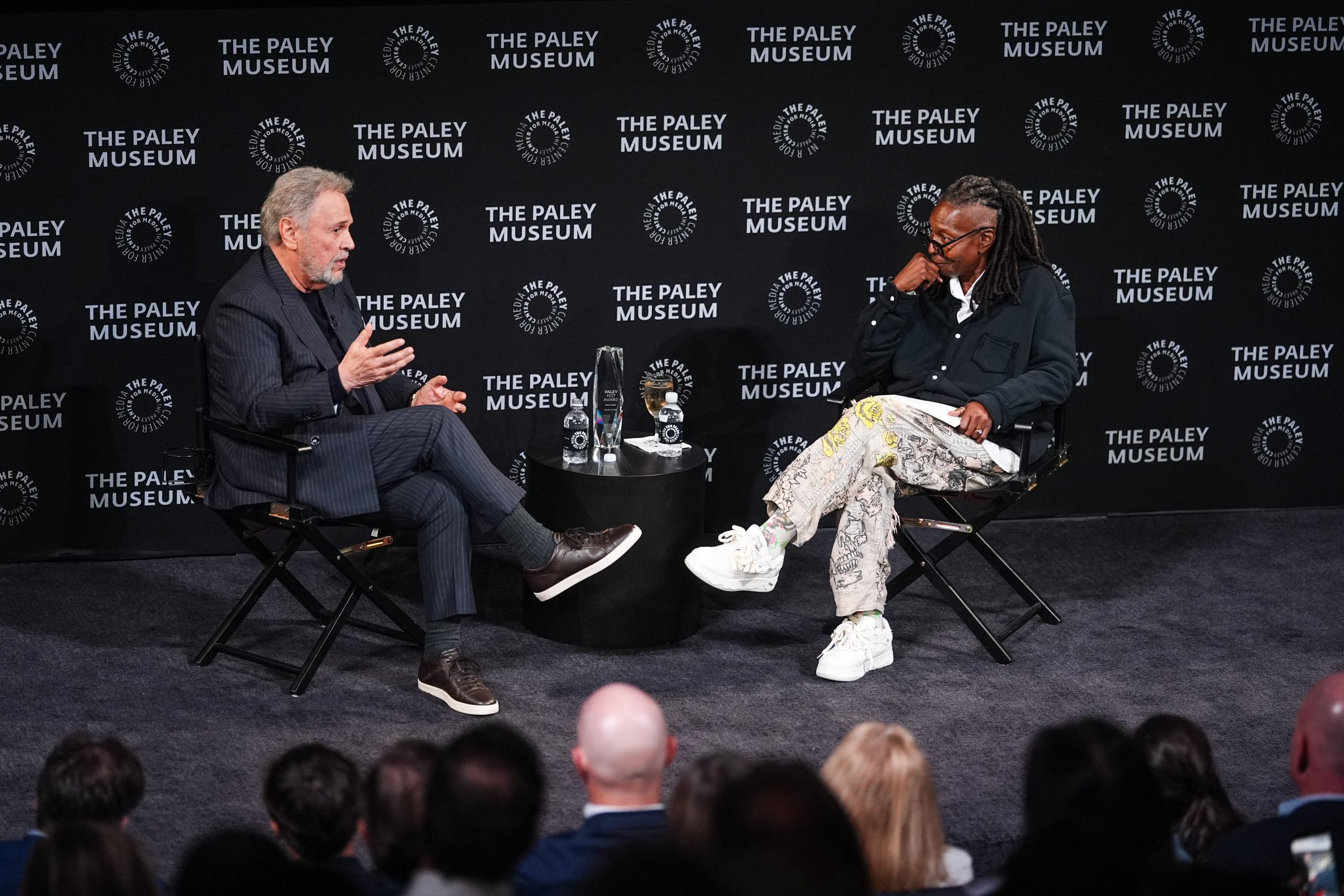
Two entertainment legends, one sold-out theater, and an evening that proved the greatest comedians understand something profound about life: sometimes laughter is the only way through.
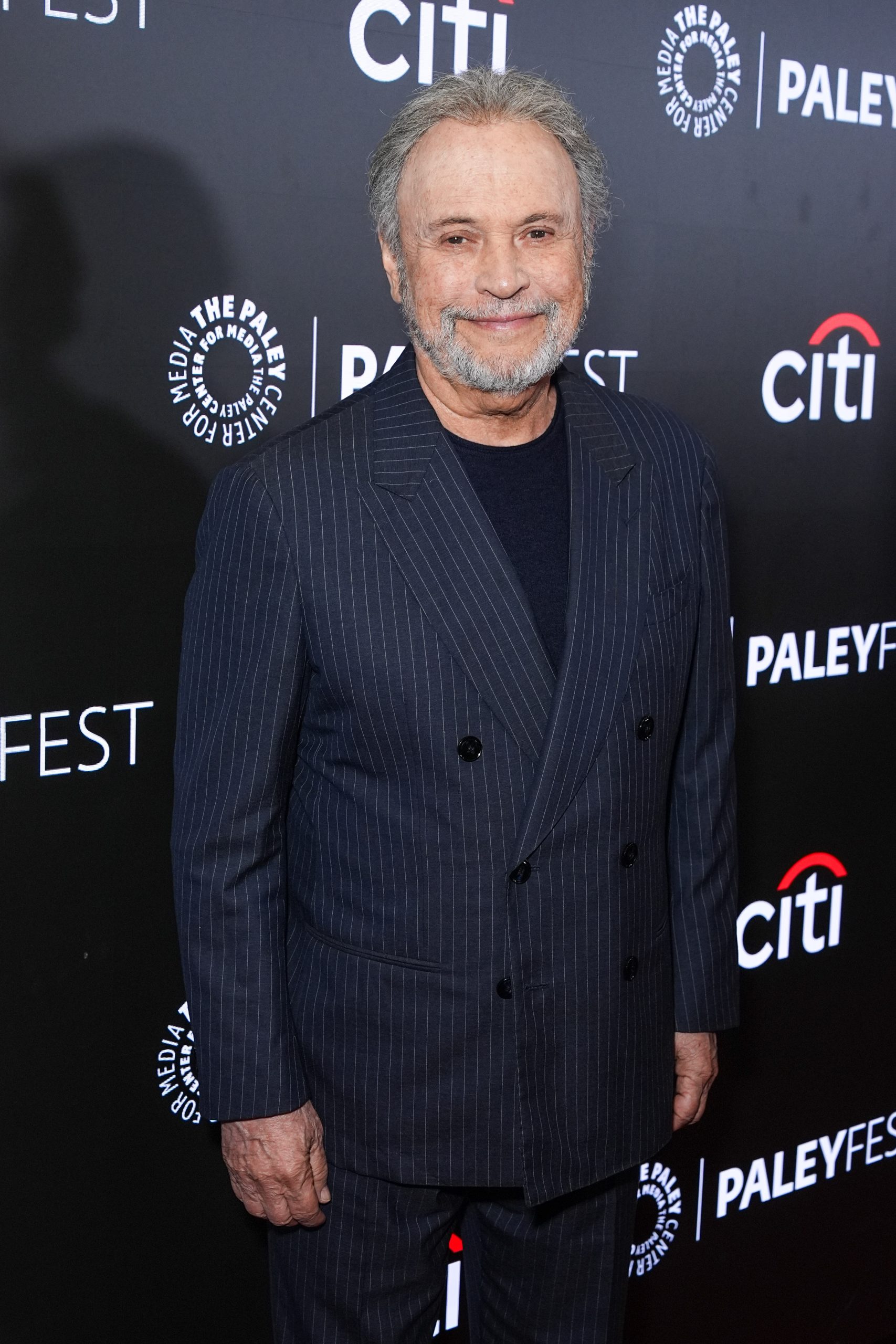
Billy Crystal- Courtesy of The Paley Museum
There are friendships in show business, and then there are friendships that have become part of entertainment history. When Billy Crystal and Whoopi Goldberg share a stage, there is no need for manufactured chemistry, rehearsed spontaneity, or carefully orchestrated charm. Their affection is genuine, their timing impeccable, and their shared history provides enough material to keep an audience entertained for hours.
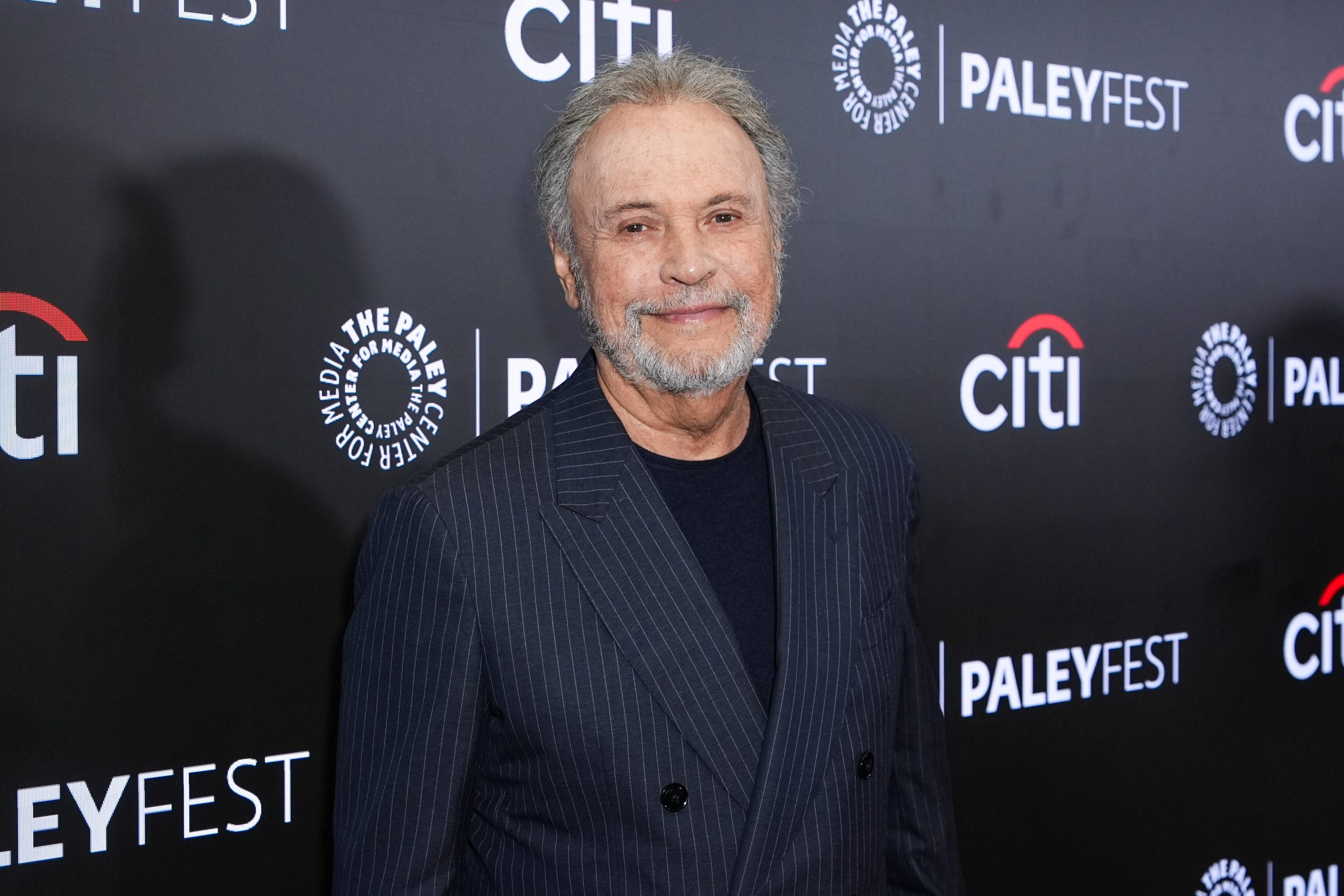
Billy Crystal- Courtesy of The Paley Museum
Such was the atmosphere at The Paley Center for Media’s annual fall festival, PaleyFest NY, where Crystal took center stage for an intimate, frequently hilarious, and unexpectedly moving conversation moderated by Goldberg. The sold-out evening at the Bennack Theater, presented with support from Citi, celebrated Crystal’s extraordinary career and his latest Broadway venture, 860.

Maureen J. Reidy and Frank A. Bennack, Jr. present the PaleyFest award to Billy Crystal at PaleyFest NY at The Paley Museum Courtesy of The Paley Museum
The evening also marked the inaugural year of the PaleyFest Award, a new honor recognizing excellence in media, television, and entertainment, presented to participating shows. It was an appropriate occasion to celebrate a performer whose career has effortlessly crossed the boundaries between stand-up comedy, television, film, Broadway, writing, producing, and directing.
Crystal has spent decades making audiences laugh, but what distinguishes him from so many comedians is his understanding that humor is not the opposite of heartbreak. Quite often, it is heartbreak’s most eloquent companion.
Goldberg, herself a formidable theatrical and cinematic presence, understood exactly where to take the conversation. Rather than simply retracing a succession of career highlights, she explored the personal experiences that have shaped Crystal’s work and his enduring love affair with live performance.
“I’m so enjoying your love of being on stage,” Goldberg told him, before offering an observation that every theater professional understands: “Live performance you get what you get. Not everybody can do it.”
Indeed, they cannot. There is an extraordinary difference between performing for a camera, where a moment can be captured again and again, and standing before a live audience, where everything happens in real time. The laughter, the silence, the unexpected emotional connection, and the occasional misstep are all part of the experience. Crystal has always understood how to make that immediacy work in his favor.
His latest Broadway project, 860, draws upon deeply personal experiences, and Crystal spoke candidly about the emotional demands of bringing such material to the stage. “Bringing that to the stage was really cathartic,” he admitted. Yet he was quick to emphasize that the work is not simply an examination of grief. “It’s not just about loss. It’s about a family coming together and it’s about renewal,” he explained, adding, “It’s not just starting over, it’s moving forward.”
That distinction is particularly revealing. Starting over suggests erasing what came before. Moving forward acknowledges that the past remains part of us, even as life insists upon continuing.
Crystal’s reflections became especially poignant when he discussed the experience of watching a community face devastation, recalling the terrifying responsibility of explaining an unfolding disaster to children.
“When you’re watching your town burn down and you know it’s coming and the kids are there and they’re young… the responsibility you feel is alright, I gotta be real with them. If I’m gonna cry, I’m gonna cry and if I’m gonna hold onto this, I’m gonna hold on to it.”
It was a moment of striking vulnerability from a man whose public identity has so often been associated with impeccable comic timing. There was no attempt to disguise fear behind a punchline or transform suffering into an easy inspirational message.
Instead, Crystal spoke about the necessity of honesty, particularly within a family confronting circumstances beyond its control.
“We were fortunate to still have each other,” he reflected. That simple acknowledgment carried considerable weight. For all the possessions, memories, and familiar surroundings that can disappear in an instant, the relationships that survive become the foundation upon which life is rebuilt. Family has always occupied a central place in Crystal’s work, and the conversation naturally turned to memories of his father, whose influence continues to resonate throughout his career.
“He had a great sense of humor. He was quiet but he loved us [the boys]… he worked so hard,” Crystal recalled.
It was a lovely glimpse into the origins of a comic sensibility that has never depended solely upon jokes. Crystal’s best work has always been rooted in observation, affection, nostalgia, and an acute understanding of the small human moments that become our most enduring memories.
Of course, no evening celebrating Billy Crystal would be complete without revisiting some of the wonderfully unpredictable turns of his career.
One of the most entertaining recollections concerned the inaugural episode of Saturday Night Live on October 11, 1975. Crystal had been scheduled to appear, only to find himself cut from the broadcast. For a young performer attempting to establish himself, the experience was devastating.
“I blew it, my career is over, Lorne cut me from the show and this is over,” he remembered thinking as he returned home.
There is something delicious about hearing that story fifty-one years later, knowing what followed. The young comedian who believed one missed television appearance had destroyed his future would go on to become one of the most recognizable entertainers in America.
If ever there were an argument against allowing a single disappointment to define an entire career, Crystal’s journey provides it.
His eventual association with Saturday Night Live would become an important chapter in that career, but the larger lesson is one that extends far beyond entertainment: rejection and failure are rarely the final verdicts we imagine them to be.
Goldberg also steered the conversation toward Crystal’s working relationship with his wife, producer Janice Crystal. The couple’s longstanding partnership provided an irresistible opportunity for a little Hollywood mischief.
“You know I’m sleeping with the producer,” Crystal deadpanned. “An age-old Hollywood story.”
It was vintage Billy Crystal: affectionate, mischievous, and delivered with the effortless timing of a man who has spent a lifetime understanding exactly how long to let a joke breathe.
What made the evening particularly satisfying was the interplay between Crystal and Goldberg. These are two performers who have nothing left to prove, and that freedom creates a rare kind of conversation. They can tease one another, wander into memories, acknowledge disappointments, and speak openly about life’s more painful passages without sacrificing the humor that first brought them together.
Goldberg did not approach Crystal as a distant interviewer examining a celebrated subject. She approached him as a friend who knows the man behind the public persona, and that familiarity allowed the conversation to move naturally between comedy and confession.
It also revealed something essential about Crystal’s longevity.
His career has never been built exclusively upon the ability to make people laugh. It has been built upon his ability to make them recognize themselves. Whether recalling childhood, navigating marriage, confronting loss, or celebrating friendship, he understands that the most universal stories are often the most personal.
That understanding has carried him from television to film to Broadway and back again, without diminishing his enthusiasm for the next creative challenge.
At a time when entertainment is increasingly driven by spectacle, algorithms, and the relentless pursuit of attention, there was something wonderfully refreshing about watching two accomplished artists simply sit together and talk.
No elaborate production was necessary. No manufactured controversy. Just intelligence, affection, extraordinary comic instincts, and the accumulated wisdom of lives spent entertaining millions.
PaleyFest NY provided the setting, but Billy Crystal and Whoopi Goldberg supplied the magic.
And if the evening offered one lasting reminder, it was that the best comedians do considerably more than make us laugh. They help us understand why, even in the most difficult moments, laughter remains worth finding.


G.H. Harding
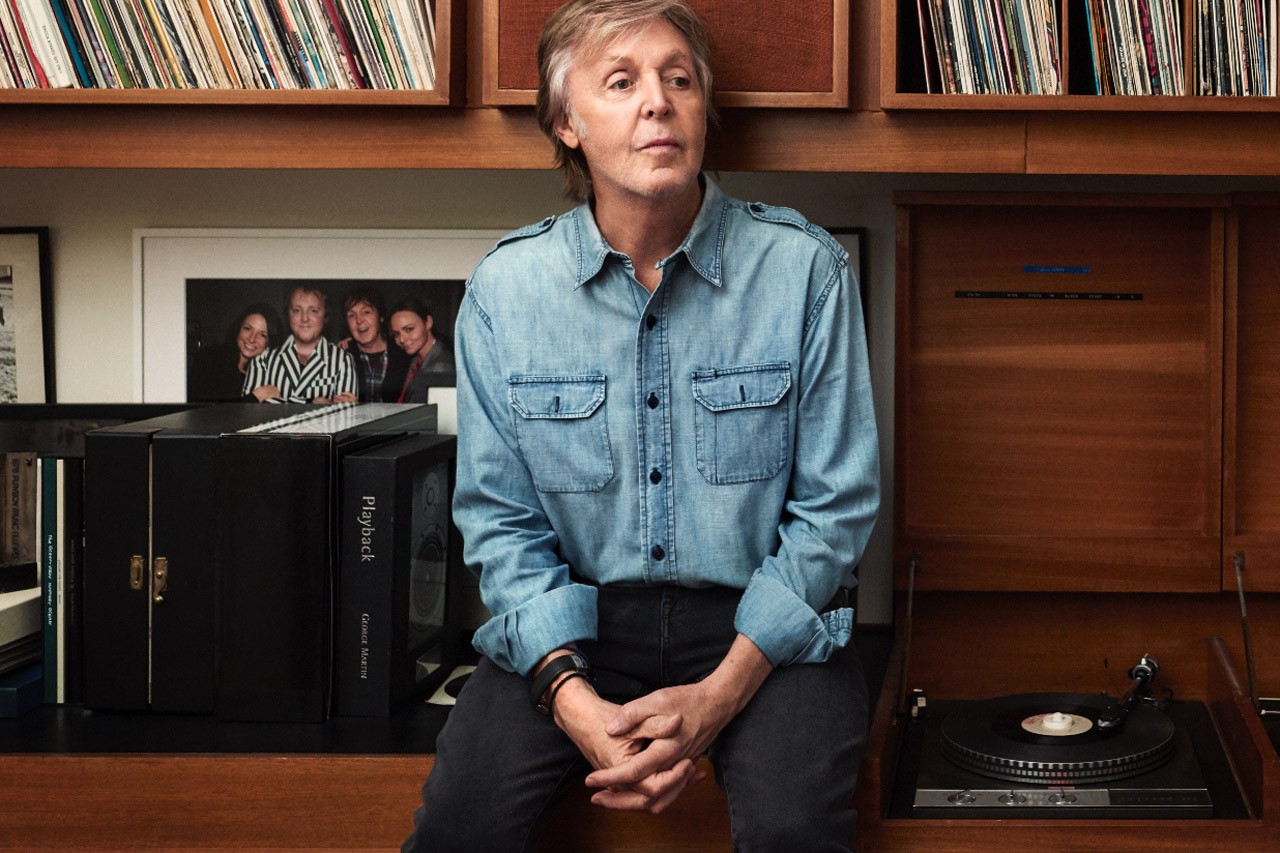
MACCA SPEAKS, AGAIN — Paul McCartney’s promotional efforts for his latest album The Boys of Dungeon Lane, has been really remarkable. Between his efforts and the PR for the Michael Douglas and Sylvester Stallone memoirs, it’s been quite the fall so far. Even though Todd Rundgren in his now infamous interview in Vulture, claimed that “McCartney would go to a mall opening,” but I think what he’s done has been really good.
Credit manager Scott Rodger for the spirited jaunt.

Amy Poehler
But today I heard today what unquestionably must be one of the best interviews he’s ever done and that’s the Good Hang podcast with Amy Poehler.
I never been a huge fan of Poehler, but I must say, her efforts on this really knocked me out, as she covered everything from John, George and Ringo to Linda and got McCartney to talk a lot about his kids. Even 2009’s Nowhere Boy and the forthcoming Sam Mendes movies were referenced. It was McCartney, in a totally different light … a reflective and relaxed light for sure.
I know it seems like everyone and their mother has a podcast right now, but this one was extra-special.
I was knocked out. Take a listen
 X FILES — (Via Deadline) Ryan Coogler’s long-gestating The X-Files reboot starring Emmy nominee Himesh Patel (The Odyssey, Station Eleven) and Danielle Deadwyler (The Bell Jar, The Chaperones), has been ordered to series at Hulu.
From Onyx Collective and 20th Television, the reimagining of Chris Carter’s classic series follows two highly decorated but vastly different FBI agents, played by Deadwyler and Patel, who form an unlikely bond when they are assigned to a long-shuttered division devoted to cases involving unexplained phenomena.
Sinners filmmaker Coogler wrote, directed and executive produced the pilot.
Like the Miami Vice reboot, currently in production, I don’t see it as a success. I mean, how can you do the X-Files with Mulder or scully? But we’ll see.
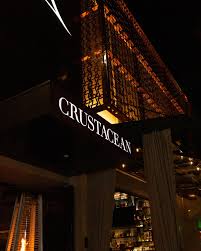
Crustacean
SHORT TAKES — One of my favorite restaurants in LA is closing, Crustacean on Bedford Drive in Beverly Hills. Fish-centric, but just a great, great spot. Been going for a decade. Very sad … Whatever happened to a follow-up date for John Cafferty at NYC’s Cutting Room? We’d love to see him there again … SIGHTING: PR-pasha David Salidor at Din in Brooklyn Heights … Sad to read about Mike Love’s recent health struggles. Here’s hoping for all the best … Maximum Pleasure Guaranteed will be back for another go-round. Apple TV announced Wednesday that it has renewed the dark comedy thriller for a second season. A writers room is underway, we hear, with Season 2 production slated for the first half of 2027. Starring Emmy winner Tatiana Maslany …There’s another trailer for the Blade Runner series on Prime. Take a peak:
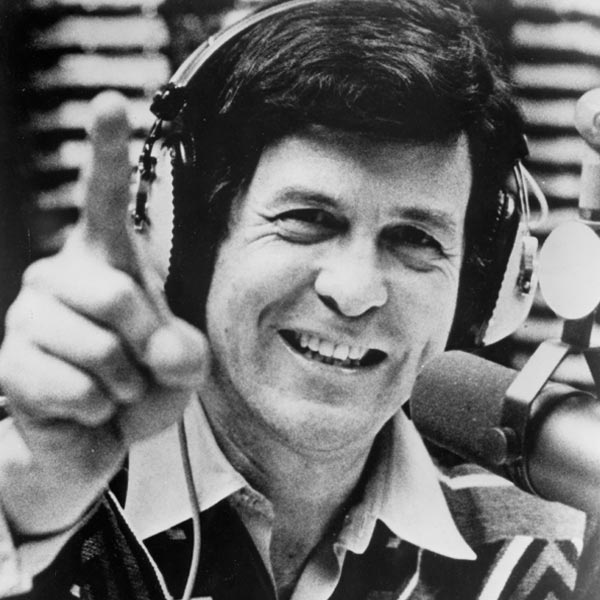
Bruce Morrow
Happy 91 to radio’s Cousin Bruce Morrow. An icon for sure!
NAMES IN THE NEWS — Daryl Hall; Raspin Stuwart; Roy Trakin; John Hughes; Lorne Michaels; Robert Funaro; Ken Sharp; John Sykes; Tom & Lisa Cuddy; Sharon Bush; Anthony Pomes; Chris Carter; Max Sabrin; Michael Domino; Harrison Jordan; Steve Leeds; Steve Walter; Moe Kaplan; Dianna O’Neill; Jacqueline Boyd; Judy Kaufman; Chuck Pulin; Bob Gruen; Markos Papadatos; and CHIP!
Images on this page have been licensed under the Creative Commons Attribution-Share Alike 4.0 International license.

G.H. Harding
VICE 2028 — When Michael Mann tried to reboot his series Miami Vice in 2006, it was a commercial and critical disappointment. Miami Vice 85, the latest reboot, is well underway with a most impressive cast, including Austin Butler and Michael B. Jordan as the series lead characters Crockett and Tubbs.

Austin Butler and Michael B. Jordan
When Vice first hit TV screens in September of 1984, audiences had rarely seen anything as ambitious or creative. Mann -and Anthony (Buffalo Club) Yerkovich- hit on something new for the small screen. NBC’s head-honcho at the time Brandon Tartikoff, called them “MTV cops.”

Anthony Yerkovich
MTV was approaching its peak (27 million households) and this TV-show captured not only that, but both the angst and joy of the go-go 80s.
It propelled Don Johnson to mega-stardom, as well as Philip Michael Thomas. The two even recorded albums, which were not bad, but never fully realized.
One major key to the show’s success was the endless streaming of hit music -from Phil Collins; Dire Straits; Steve Jones; to INXS on down. This was before music supervisors came into play and it was often the label’s PR-people that propelled songs and artists to major success. The show also employed various music stars (like Collins and Franz Zappa) as guests stars and often, they were great. Zappa, as a cool-drug merchant on a yacht was great.
PR-man David Salidor was handling PR for The Funhouse, one of the key-clubs of the time, and remembers bringing producer Michael Attanasio down to the club. “They wanted something authentic and since they were going to be shooting in NY for the second season, the club was a perfect fit.”
I was a fan and remain a fan, and even when I watched the episodes now, they’re a bit dated, buy the symbiosis of what’s on the screen and the music remain pretty outstanding.
I honesty doubt whether Mann can do it again, but interest remains high … very high. See you in 2028 Miami Vice!
Read more here: https://www.hollywoodreporter.com/movies/movie-news/miami-vice-85-austin-butler-michael-b-jordan-1236727734/
And here’s a great take from Yerkovich on the creation: https://intelligentcollector.com/miami-vice-creator-anthony-yerkovich-on-the-style-packed-pilot-that-changed-tv-forever/
 SHORT TAKES — I watched the 1998 movie Deep Impact over the weekend and the basic plot was an asteroid was about the hit the Earth and one of the plans President Morgan Freeman came up with was to build immense silos in the mountains. Sounds a tad like the TV-showParadise, right? Amazing …

Sheryl Crow
Sheryl Crow says she’s losing major money on her new album. Interetsing article from Female First. Take a read: https://www.femalefirst.co.uk/music/musicnews/sheryl-crow-says-losing-ton-money-latest-album-reflects-fame-cancer-ageing-radio-1451871.html … Great interview on Rory Kennedy’s The Trial of Alec Baldwin. Check it out: https://deadline.com/2026/10/the-trial-of-alec-baldwin-director-rory-kennedy-interview-1237154646/ … Happy Bday Daryl Hall.
NAMES IN THE NEWS — Bill Maher; Chuck LaBella; David Bowie; Steve Walter; Frank Ucciardo; Thomas Jay; Mark Biggs; Tugg Putt; Tom & Lisa Cuddy; Race Taylor; Chuck Nolan; Bill Evans; Dan Zelinski; David Foster; Michael Hutchinson; Walter Egan; Bill McCuddy; Eppy; Joe Lynch; Linda Wnek; and ZIGGY!
Images on this page have been licensed under the Creative Commons Attribution-Share Alike 4.0 International license.
Celebrity
Dexter Has Never Looked So Good: PaleyFest NY Celebrates 20 Years of Television’s Favorite Serial Killer

Jack Alcott, Kadia Saraf, Marcos Siega, Clyde Phillips, Michael C. Hall, James Remar, Uma Thurman, Bokeem Woodbine, and Scott Reynolds attend Dexter: Resurrection & 20th Anniversary of Dexter at PaleyFest NY at The Paley Museum in New York City on October 9.

Dexter Cast and EPs_Panel
Michael C. Hall, Uma Thurman and the cast of Dexter: Resurrection bring a little delicious darkness to The Paley Center for Media.

Michael C. Hall
Twenty years, countless victims and more lives than the proverbial cat. Television’s most compelling serial killer is still making audiences root for the man they should probably be running from. On Friday evening, The Paley Center for Media embraced the darker side of television with a sold-out PaleyFest NY celebration marking the 20th anniversary of Dexter and offering a tantalizing look at the second season of Dexter: Resurrection.

Uma Thurman
The evening, presented with support from Citi, brought a decidedly glamorous collection of television’s morally compromised to the red carpet. Michael C. Hall, the man who made Dexter Morgan an unlikely cultural icon, was joined by Uma Thurman, James Remar, Jack Alcott, Bokeem Woodbine and Kadia Saraf, along with showrunner Clyde Phillips and executive producers Scott Reynolds and Marcos Siega.

EPs_Marcos Siega_Michael C. Hall_Clyde Phillips_Scott Reynolds
Inside the Bennack Theater, fans were treated to an advance screening of the Dexter: Resurrection Season 2 premiere, followed by a conversation moderated by Deadline Associate TV Editor Rosy Cordero. The celebration was also part of a milestone year for PaleyFest NY, which introduced the inaugural PaleyFest Award, recognizing excellence in media and entertainment among its participating programs.

Bokeem Woodbine
For Hall, the enduring fascination with Dexter remains something of a surprise. “Twenty years later it’s mind blowing,” he admitted. “I had no anticipation it would be as broadly appealing.”

Jack Alcott
Yet the appeal is hardly mysterious. Dexter accomplished something few television series dare attempt: it invited audiences into the mind of a murderer and made them care about his survival. Beneath the blood, the carefully controlled rituals and the infamous code lies a character perpetually wrestling with identity, inheritance and the uncomfortable distance between what people are and what they pretend to be.

James Remar
Remar, who plays Dexter’s father Harry Morgan, offered a succinct explanation for the show’s longevity. “It’s complex but it’s believable,” he observed. “There’s a reason why we’re sitting here so fully engaged with these characters.”

Kadia Saraf
That complexity is no accident. Phillips acknowledged that the writers deliberately create seemingly impossible situations, explaining, “We paint ourselves into a corner on purpose.” The objective, naturally, is to keep viewers perpetually off balance. Woodbine credited the writing itself, noting that “what appeals to people is the level of intelligence of the script.”
While murder may provide the spectacle, family remains the franchise’s most intriguing psychological battlefield. Reynolds suggested that each season explores something fundamentally relatable, and Phillips revealed that the new chapter places particular emphasis on the father-son relationship between Dexter and Harrison.
Alcott, who portrays Harrison, sees a young man grappling with an inheritance considerably more disturbing than an awkward family resemblance. Harrison has “got a propensity for violence,” he explained. “He’s nowhere near his father, but there’s something there.”
It is a fascinating premise. Can a father’s darkness become a son’s destiny, or is recognizing that darkness the first opportunity to escape it? For a franchise built around a killer’s elaborate moral code, the question of what passes from one generation to the next feels especially appropriate.
The new season also promises complications for the characters surrounding Dexter. Woodbine hinted at unexplored dimensions of Captain Mixon, acknowledging a darkness within the character that he has yet to fully understand. Saraf, who portrays Detective Claudette Wallace, promised considerably heightened stakes and a season that would be both compelling and unexpectedly affecting.
Thurman, meanwhile, brings her formidable screen presence to Charley Brown, a woman whose conscience may prove as troublesome as her decisions. “Charley is burned by having a conscience and she’s made compromises that she thought she could square away,” she explained, describing the character as “exciting” and “morally ambiguous.”
Morally ambiguous, of course, might as well be the official dress code of the Dexter universe.
Hall offered an equally intriguing glimpse into his character’s evolution. When audiences first encounter Dexter in Resurrection, he explained, the character has recommitted himself to the code that has governed his actions for so long. Unfortunately, “that doesn’t prove to be enough.”
For a man who has spent two decades attempting to impose rules upon his darkest impulses, that admission suggests the most dangerous confrontation may not be with another killer, but with the limitations of his own carefully constructed morality.
There is also a new leading character in the franchise: New York City itself. Siega explained that the creative team wanted to embrace the city’s visual character, declaring there was no “better place to shoot.” With its shadowy streets, restless energy and endless possibilities for disappearing into a crowd, New York provides a particularly seductive playground for a character who has always depended upon remaining unnoticed.
What makes Dexter such an enduring television phenomenon is not simply its willingness to explore violence, but its understanding of the contradictions that make human beings fascinating. Its characters are capable of affection and brutality, loyalty and betrayal, conscience and calculated cruelty. The audience is continually asked to reconsider whom it trusts, whom it condemns and why.
Twenty years after Dexter Morgan first appeared on television, those questions remain disturbingly entertaining. The blood may be fictional, but the moral dilemmas have never been entirely comfortable.
Cordero concluded the evening by congratulating the team on its latest incarnation, apologizing in advance for the inevitable pun: “I’m sorry for the pun but, you’ve killed it.”
For once, nobody needed to investigate the confession.
And judging by the enthusiasm inside the Bennack Theater, Dexter Morgan’s next resurrection may be his most deliciously complicated yet.

G.H. Harding
THE TRIAL OF ALEC BALDWIN — The wattage on Alec Baldwin has definitely simmered down. I saw him a few weeks back in the Hamptons, but other than that, he’s been under the radar. The film Rust, which interrupted everything is out; was minimally shown in May in about 115 theaters and was released on various on-demands. But the powers that be have kept it basically under wraps. Ironically, the few reviews I read noted how good it looked, rather than dwell on the tragic incidents that occurred.
Now, from documentarian-Rory Kennedy comes the film The Trial of Alec Baldwin. Both stories which I’ve posted below say the very first thing you see is a statement saying that Baldwin had no input into the making of the film. I haven’t seen it, but I think everything I need to know has always been disclosed.
Baldwin made himself a target and whatever did really happen; he was in the bulls-eye for certain. I’m sure I’ve relayed this story before, but I had an unfortunate incident with him, but several months later had a conversation with him, at his El Dorado Films, and he couldn’t have been more receptive. Acting? Who knows, but I was suitably charmed.
Don’t forgot, Baldwin is one hell of an actor. Check out his astonishing scene in Glengarry GlenRoss:
What happened was awful, but awful things happen every day, and the truth remains perhaps we’ll never know the truth.
 TCM LIVES — Turns out that so far there’s one golden-nugget from the Skydance takeover and that’s is the fact that the TCM channel will remain. Spielberg and Scorsese jumped onboard the channel a few years back and they’ll stay very much involved along with Michael De Luca and Pam Abdy.
I don’t know about you, but I don’t watch everything on TCM, but more often than not they’ll have a gem on.
Clearly Ellison didn’t want tor rattle-the-cages too soon. I’m sure that will come, but just not now. Take a read from Deadline on the story: https://deadline.com/2026/10/turner-classic-movies-skydance-film-group-1237150281/

actor Michael Douglas promo image from his Netflix show The Komisky Method
SHORT TAKES — The Michael Douglas book PR-engine moves ever forward. I just checked Facebook and there were 3 postings from Douglas and his pub-company Grand Central Publishing. As I said last column, I think you can save $46.00 buying the book and just read and listen to everything that’s out. He did Diane Sawyer for ABC; The View; Morning Joe; Jimmy Kimmel; the 92 Street Y; CBS Sunday Morning; LA Times; andDeadline (where ghost-writer Mike Fleming, Jr. in an editor) … what else is left? Actually, as I was leaving my apartment I turned on the Today Show to see Catherine Zeta-Jones plugging her latest TV-movie (Killing Jackie)and she plainly said, she had no plans to read the book. Smart gal …

David Zaslav
David Zaslav, aka Zaz The Butcher, will receives about $600 million, for the Warner Bros sale.

Mandy Patinkin
Amazing … (Via Deadline) Mandy Patinkin really digs Digger. In an effusive video message, posted soon after watching Digger in a theater, the Homeland star implored his followers to ignore the haters and watch Tom Cruise’s ecological disaster movie. Patinkin described Alejandro G. Iñárritu-directed Digger as an “instant classic” and said it was “one of the greatest pieces of film I have ever seen in my entire life.” “This is an incredible piece of work. It puts the heart and soul back into the cinema. Everything we all love about cinema, this is it. Please, please, please, run! Don’t walk, run, and see this film,” he continued. You just know, the tide will turn .. Just in: Pershing Square bar at Grand Central in NYC will close after 3 decades in business. Sad as it was a great spot to wait for Metro North! … Who hasn’t spent time in a good, old-fashioned diner? 200 have closed in the metropolitan area so far. Check out this article on them from the New York Post: https://nypost.com/2026/10/08/lifestyle/nycs-evolving-love-affair-with-diners-enters-a-new-era/?utm_source=facebook&utm_medium=social&utm_campaign=nypost_trending&fbclid=IwY2xjawU15FlleHRuA2FlbQIxMABwZG9mBWJyaWQRMURwUUx2UHRmME9oT05xeTBzcnRjBmFwcF9pZBAyMjIwMzkxNzg4MjAwODkyAAEeDhyVr1Rp_BbBfebFdI2ovl87xm3BGk7uwgnerZv-kSYKIYz3gK6c5kDqN90_aem_az9ap3hQOvpiIueQ9aC-Vg
NAMES IN THE NEWS — Shane Salerno; Andrew Sandoval; Piper Smite; Tony King; John Hughes; Tony Seidel; Bruce Haring; Jane Blunkell; George Harrison; Mal Evans; Dan Zelinski; Steve Walter; Eppy; Tom & Lisa Cuddy; Peter Bart; Judd Bernard; Lush Ice; Chuck Taylor; Elizabeth Neff; and BELLA!
Images on this page have been licensed under the Creative Commons Attribution-Share Alike 4.0 International license.


Jesse Eisenberg’ s A24’s The Debut Sends a Housewife’s Community Theatre Dreams Gloriously Off the Rails

Good Time Charlie Knows Everyone Loves a One-Act Play

Paws, Claws and Haute Dog Couture: The East Village Goes to the Dogs This Halloween

Prince Mario-Max Schaumburg-Lippe: How The Balanchine Ball Shows Ballet is Trending!

Temu’s Low Prices Come With Another Business Question: Customer Data

My View: Backstage at the Cabaret Convention

Midnight: Todrick Hall Has Created a Musical Masterpiece That Broadway Cannot Afford to Ignore

Memoirs of Amorous Gentlemen: A Beautifully Decadent World With a Star at Its Center
Jesse Eisenberg’ s A24’s The Debut Sends a Housewife’s Community Theatre Dreams Gloriously Off the Rails
Good Time Charlie Knows Everyone Loves a One-Act Play
Paws, Claws and Haute Dog Couture: The East Village Goes to the Dogs This Halloween
Prince Mario-Max Schaumburg-Lippe: How The Balanchine Ball Shows Ballet is Trending!
Temu’s Low Prices Come With Another Business Question: Customer Data
My View: Backstage at the Cabaret Convention
Midnight: Todrick Hall Has Created a Musical Masterpiece That Broadway Cannot Afford to Ignore
Memoirs of Amorous Gentlemen: A Beautifully Decadent World With a Star at Its Center
-

 Celebrity3 days ago
The Glorious Corner
-

 Celebrity5 days ago
The Glorious Corner
-

 Events5 days ago
Zohran Mamdani, Mayor of New York—Terms and Conditions Apply
-

 Business5 days ago
Hackers Aren’t Just Stealing Data. They’re Spoiling the Food.
-

 Events5 days ago
The Algonquin Hotel Thinks Pink: A Toast to Hope, Broadway and Breast Cancer Awareness
-

 Cabaret3 days ago
My View: Backstage at the Cabaret Convention: OPENING NIGHT
-
 Entertainment5 days ago
Prince Mario-Max Schaumburg-Lippe: Leandro and Denise Rizzuto Shine at New York’s Columbus Day Celebration!
-
 Broadway4 days ago
Tom Hiddleston and Hayley Atwell Are Bringing Shakespeare’s Battle of the Sexes to Broadway