
Broadway
Ashton And Me By Ronald “Smokey” Stevens


I remember waking to the news on July 22, 2013, that my friend, associate, and the man responsible for my Broadway career, Mr. Ashton Springer, had died.

Let me tell you about … Ashton Springer.
Ashton Springer was one of Broadway’s first major African American producers. He was responsible for shepherding shows to Broadway, including “Bubbling Brown Sugar,” “Eubie,” Author Fugard’s” Lesson’s From Aloes,” as well as the Pulitzer prize-winners “No Place To Be Somebody,” “Whoopee” and the revival of “Guys and Dolls.”
As a man, Ashston was quick to laugh and he loved any theatrical moment that he found amusing. He was also very strict when it came to dollars and cents. You were not going to get any more than the Equity contract called for, not one dime more. Negotiations were out the question…unless he’d worked with you before. He was extremely conscientious about providing jobs for us performers. He’d even go so far as to loan money to you,if there was a need.
Approachable, extremely savvy as a business man, extremely generous and loving, and sometimes a father figure to chorus girls dancers who were away from home for the first time– he was equally these as well.
Let me tell you about … Ashton and me.

It was May of 1976. My girlfriend Kiki, a dancer, and I drove to NYC in my old 1967 Pontiac to audition for the National Touring Company of the hit Broadway musical “Bubbling Brown Sugar.” It was my first audition for a Broadway show and I was nervous the entire ride to NYC because I did not know what to expect. Once at the audition, I was surprised to see so many people were auditioning. We were broken up into groups of ten males in each group. There must have been ten or more groups. All Broadway auditions require you to dance first, then sing if the people auditioning you are interested in you.

After several hours all the groups had been whittled down to just ten men and I was one of the ten. We were then called and asked to sing eight bars from an up-tempo song. I didn’t have any sheet music to hand to the pianist, so I asked him if he knew the Schaefer Beer Song — to my surprise, he did. I incorporated singing the Schaefer Beer song with the choreography that had just been taught to me, and the people auditioning me screamed with laughter as I began to perform the song and dance. The loudest of them all was this high-pitched, loud, thoroughly amused laugh coming from Ashton Springer. He called me off stage down to the group, all the while laughing, asked my name–told me to go sit over there–and said, “I want him in this show.” And with those five words, my Broadway career was off to a flying start

Ashton hired me as the swing dancer in “Bubbling Brown Sugar,” a chorus dancing role. I didn’t mind; I was happy being in my first Broadway production. I soon learned ALL the male dancing roles as the tour began. One of the great moments Ashton gave me while being a swing dancer out on the road was being driven from Boston, in an emergency, by the Musical Director, the late Danny Holgate, to cover for one of the NY production dancers who was out. Smokey, the swing dancer, was rushed in to save the day because Ashton loved my work! I eventually moved into the show, out of the chorus, to assume the part of “The Time Man,” a role created by the late Charles “Honi” Coles and Vernon Washington. Ashton made sure that I was cast in three more Bubbling Brown Sugar companies from 1977 thru 1979, including a company starring Cab Calloway.

As theater goes, all shows close eventually, and so did the excellent production of “Bubbling Brown Sugar.” It was a good run. While driving a yellow cab in the city a few years later, I received a call from Ashton Springer directly. He was moving a hit production from The Billie Holliday Theater in Brooklyn to Broadway. He asked me to come, meet the other producers, and read from the script. Man, I was so happy to receive that call — that cab was hurting, lol. After five or so readings with other actors, I was given by Ashton the opportunity to create my first Broadway role, Pretty Pete–The Pimp, in “Inacent Black” starring Melba Moore. It put me back on Broadway again, this time creating my first role — which is no small thing. We had a fantastic but short run.

I left NYC in 1983 after performing in the Broadway production of “Dreamgirls,” moving to Chicago after getting married and having my one son. While there, my wife and I created a production entitled “Shoot Me While I’m Happy” at The Victory Gardens Theater in 1986. My late partner, Jaye Stewart, and I then created “Rollin’ With Stevens and Stewart,” a tribute to the last days of Black Vaudeville which ran nationally to 1992.

In 1998, after my partner Jaye Stewart’s passing, I submitted the video of our production of “Rollin’ With Stevens and Stewart” to Ashton Springer, who was my producer from years earlier. He’d heard about our show and was seeking a small vehicle to mount our comeback on the New York stage. Ashton loved entertainment history, as evidenced by BBS and Eubie, so my production on Black Vaudeville was what he wanted.

I’m back — collaborating with my old buddy — but this time as a show creator of a revue about the early days of black vaudeville. It was an homage to the talented performers who, in the early 20th century, lit up the black vaudeville circuit and soldiered on despite broken promises from the T.O.B.A. (Theatre Owners’ Booking Agency, renamed by the performers as Tough On Black Asses). The production was initially produced at a small church on 50th Street as a backer’s audition. Ashton raised enough money to produce an Equity workshop production at Amas Musical theater on 42nd Street before moving the production down to The Billie Holliday Theater. It was here that he and I clashed for the very first time.

The Amas production and The Billie Holliday production were used to develop the script further because Ashton wanted me to add a female character. I did, but Ashton was uneasy with me wearing the hats of co-creator/director, choreographer and star. He decided to bring in a white writer to relieve me of some of my duties and rewrite my production. I disagreed with his changes and Ashton Springer, my friend, my associate, FIRED ME FROM MY PRODUCTION. I fought like hell as he hired others to replace me, but there was nothing I could do. He thought he could do it without me. As the previews began, it became undeniable that a terrible mistake had been made by replacing me with others who knew nothing about Black vaudeville. After deliberations between the producers and me, I was reinstated and the rest is history. One would think that our disagreement had sullied our relationship, but the bond of making a hit and a successful show became our agreed-upon strategy. We both wanted the same thing.

After receiving rave reviews from all the major NY Press, the show was in previews at The 47th Street Theater. We agreed to take that momentum and move the production to a Broadway Theater. That was the plan that everyone was excited about: we were moving to Broadway. And that’s where the wheels came off the train. Two critical things occurred subsequently.

First, on the night of our Broadway Opening, the owner and the lessee of the Kit Kat Klub in The Henry Miller Theater got into “a landlord-tenant dispute”and an injunction was placed on our production, stopping ” Rollin’ on The T.O.B.A.” from opening. Ashton and I suffered through an agonizing three days before the injunction was lifted and we were able to open. The delay cost $100,000 and total losses for the show were estimated at $500,000 when the second, and mortal, blow landed. The Tony Administration Committee ruled the show ineligible because it was not being performed in a Tony-eligible Broadway theater. This was despite the fact that the year before, the revival of “Cabaret” at the Kit Kat Klub had been deemed eligible and “Rollin’ on the T.O.B.A.” was paying full Broadway scale to its actors, stagehands, musicians and box office treasurers. Ashton maintained that the dispensation given to the Roundabout for “Cabaret” was not given to him out of politics, that he was treated as an outsider.

The Tony ruling was the death kneel, the “straw that broke the camel’s back,” the unrecoverable event that brought “Rollin’ on the T.O.B.A.” to its final curtain! Shortly following that heartbreaking event, Aston Springer’s health began to decline. In spite of that, he had hopes of producing my current production, “I Just Want To Tell Somebody.” In Spring of 2013, he and a group of investors came to Washington DC to see my first presentation. Unfortunately, time took its course, and Mr. Ashton Springer joined the heavenly angels on July 22, 2013. I will forever be indebted to this great man, who enabled so many to have Broadway careers. Ashton, I thank you for giving me mine. My shows will forever be dedicated to you.

“I Just Want To Tell Somebody” will have its New York premiere January 6 to 23, presented by Theater for the New City, 155 First Ave., directed by Stephen Byrd. Info: www.theaterforthenewcity.net
Smokey Stevens (https://www.smokeystevens.com), one of Broadway’s great song-and-dance men, has adapted his autobiographical novel, “I Just Want to Tell Somebody: The Autobiography of Ronald Smokey Stevens,” into a one-man, two character theater production. The play dramatizes Stevens’ lifelong battle with drugs in which he, at long last, prevailed. “Smokey” plays both himself and his nemesis, a sarcastic doppelganger called “D MAN.” The play ushers us through modern moments of theater history that were Smokey’s triumphs and the journey through drug usage that was nearly his undoing. Theater for the New City will present the New York premiere of the work January 6 to 23, 2022, directed by Stephen Byrd.
Mr. Stevens earned a place on Broadway thanks to raw talent and his wits, becoming a featured ensemble member of such productions as “Bubbling Brown Sugar,” “Inacent Black,” “Dreamgirls,” his own musical, “Rollin’ on the T.O.B.A.,” and tours of “One Mo’ Time” and “Ain’t Misbehavin.” His films include “The Wiz” (as one of the Crows performing with Michael Jackson), “The Cotton Club” and “Times Square.” He danced with such greats as tap master Charles “Honi” Coles, Lucille Ball, Cab Calloway and Gregory Hines, to name a few. He’s now Artistic Director of Capital City Readers Theatre in Washington, DC, recipient of The @NAACP 11th Annual Theater Arts Award, and a documentary filmmaker.
Stevens also co-conceived the vaudeville musical, ”Shoot Me While I’m Happy,” which ran at Victory Gardens Theater in Chicago. While in New York he also produced “The Sho ‘Nuff Variety Revue” at The Village Gate, “The Rising Stars Cabaret” and productions at The Children’s Theater of Harlem.
In an archival video clip, you can see Stevens performing “The Hop Scop Blues” from “Rollin’ on the T.O.B.A.” (1999). That production was a salute to the genius of the entertainers who toured the black vaudeville circuit known as T.O.B.A.– Theatre Owners’ Booking Association–in the 1920’s and 30’s. It was both a champion and a destroyer of Black Vaudeville.
A native of Washington DC, he began his professional training and career at The D.C. Black Repertory Co., where he studied and performed in repertory for six years. After these studies, he performed in “Showdown Times” on The National Black Touring Circuit.
He adapted his first published book, “I Just Want To Tell Somebody, the Autobiography of Ronald Smokey Stevens,” into a one man stage production of the same title and performed a developmental version of it at Woolly Mammoth Theatre Company in Washington DC in February, 2011.
He is a graduate of The Community Film Workshop of Chicago, where he produced two 16mm short films. He received a 2011 Heritage Project Grant sponsored by The DC Humanities Council for his first documentary, “Preserving Ledroit Park.” For DCTV, he co-produced a documentary on The Arc, a humanitarian mall serving the community east of the Anacostia River in Washington, DC. His other documentaries are “America: An Immigration Nation,” “Dancing Destinations: The Story of DC Hand Dance” and “Black Broadway at The Village Gate.”
He recently published his second book, “The First 60 Years, The History of Afro-American Musical Theater and Entertainment 1865-1930.”
Direction and set design are by Stephen Byrd. Lighting design is by Alexander Bartenieff. Multimedia is by Larry Law.
Director/Set Designer Stephen Byrd hails from Washington, D.C., where he began his theater career at 16 in the Ted Shine production of “Mrs. Patterson,” where he met and performed with Ronald “Smokey” Stevens. He studied Drama at Howard University (BFA cum laude) and trained in acting with James W. Butcher, Glenda Dickerson, and Linda Gravatt and directing with Vera J. Katz and Davey-Marlin Jones. As a matter of personal mission, he has written and directed 18 shows to-date for audiences in non-traditional venues including prisons, nursing homes, shelters for battered women, half-way houses, hospice facilities, homeless shelters, and drug rehab centers. He produced, wrote and directed “Teddy Bear Blues Don’t Last” for the D.C. Black Theatre Festival in Washington, D.C. His acting credits include the lead in Bill Gunn’s Emmy award winning drama “Johnnas” on NBC and the King in the Folger Shakespeare Theater’s educational workshop’s production of “Love’s Labour’s Lost.”
Ronald “Smokey” Stevens writes, “Getting a show mounted in N.Y.C. is not an easy task. I want to thank Ms Field for her mission and vision . I am extremely grateful to her ,and to Theater for the New City, for providing me with the opportunity to share my newest work in such a prestigious historic environment.


Broadway
Billy Crystal and Whoopi Goldberg Bring Laughter, Love and a Lifetime of Memories to PaleyFest NY

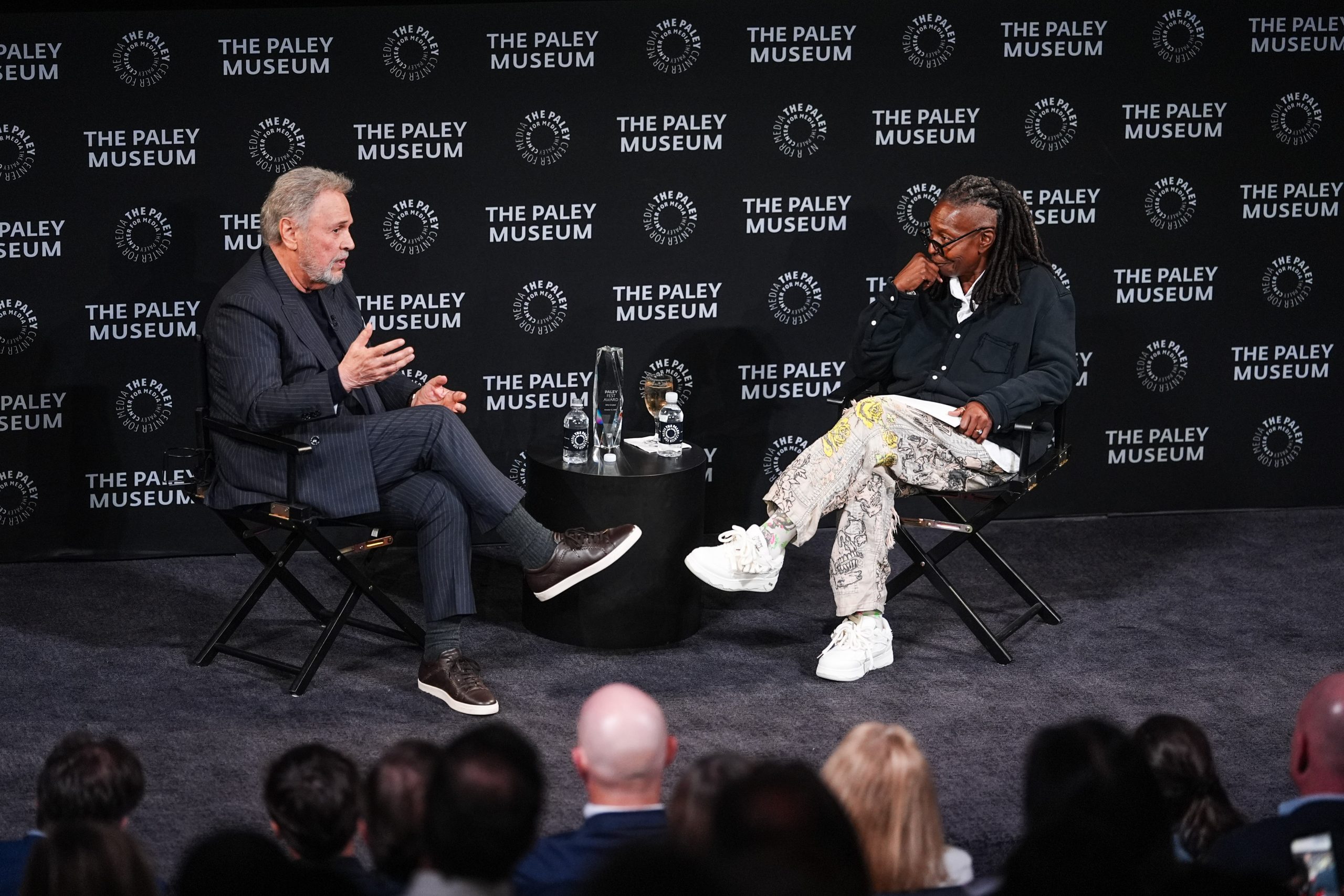
Two entertainment legends, one sold-out theater, and an evening that proved the greatest comedians understand something profound about life: sometimes laughter is the only way through.
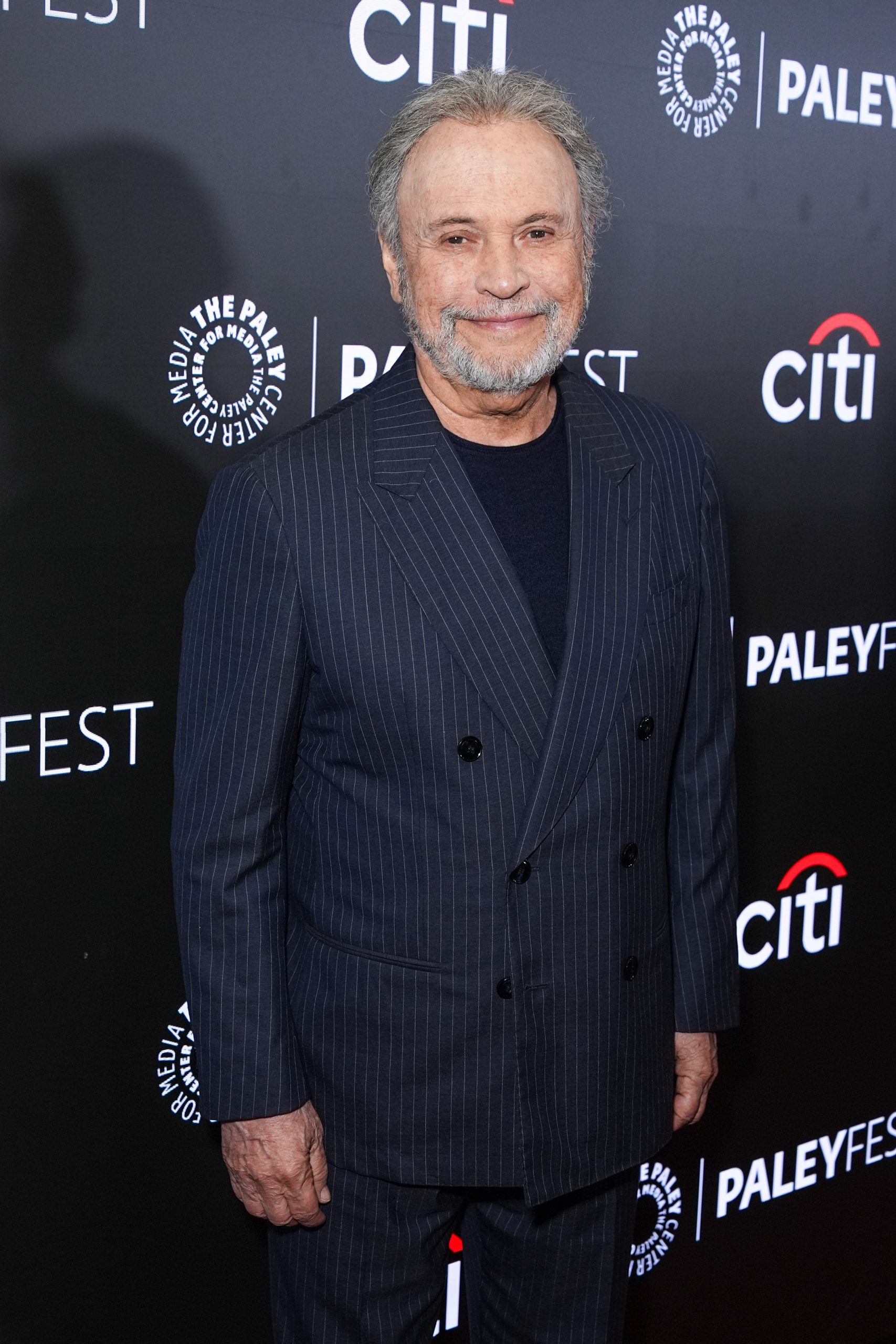
Billy Crystal- Courtesy of The Paley Museum
There are friendships in show business, and then there are friendships that have become part of entertainment history. When Billy Crystal and Whoopi Goldberg share a stage, there is no need for manufactured chemistry, rehearsed spontaneity, or carefully orchestrated charm. Their affection is genuine, their timing impeccable, and their shared history provides enough material to keep an audience entertained for hours.
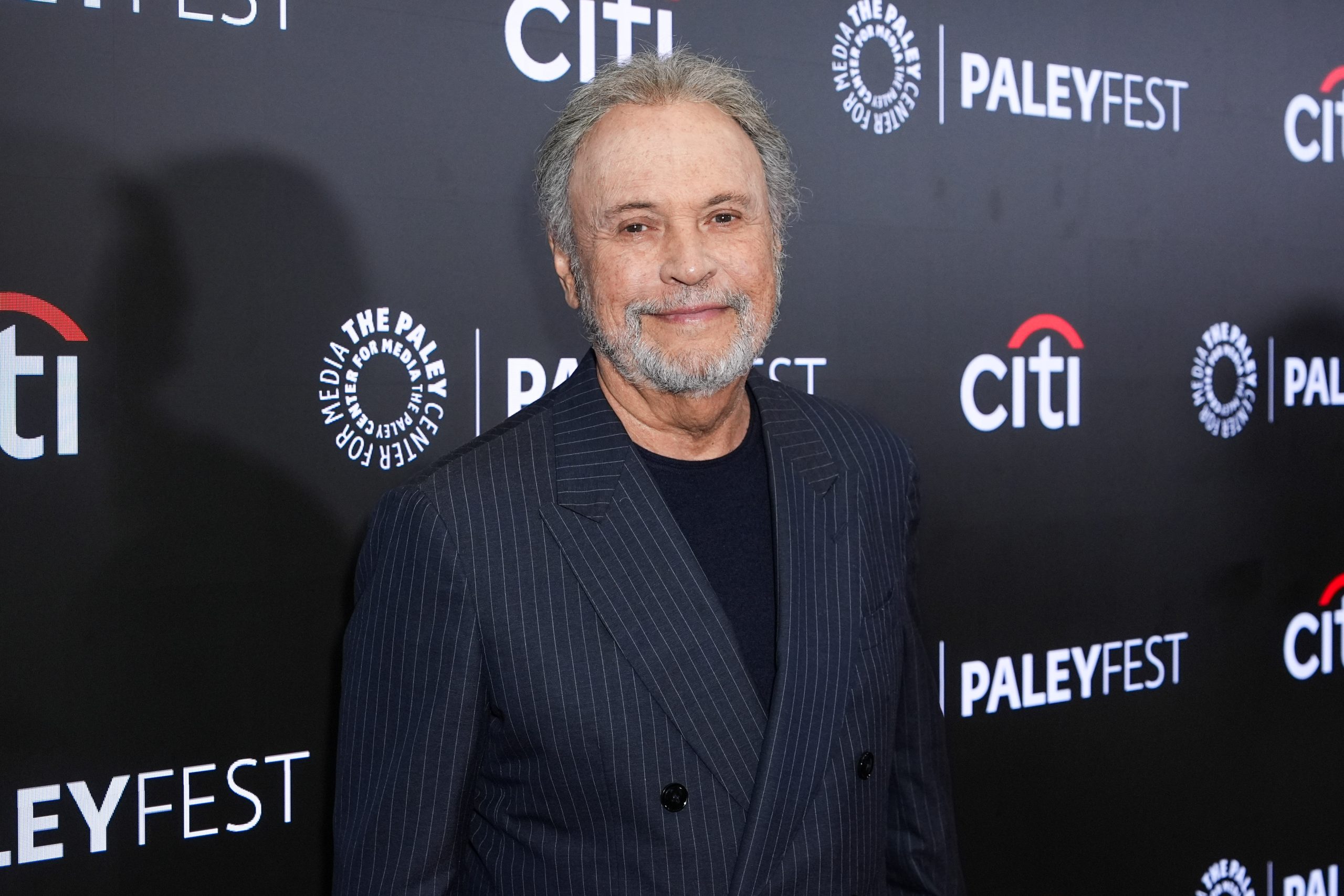
Billy Crystal- Courtesy of The Paley Museum
Such was the atmosphere at The Paley Center for Media’s annual fall festival, PaleyFest NY, where Crystal took center stage for an intimate, frequently hilarious, and unexpectedly moving conversation moderated by Goldberg. The sold-out evening at the Bennack Theater, presented with support from Citi, celebrated Crystal’s extraordinary career and his latest Broadway venture, 860.
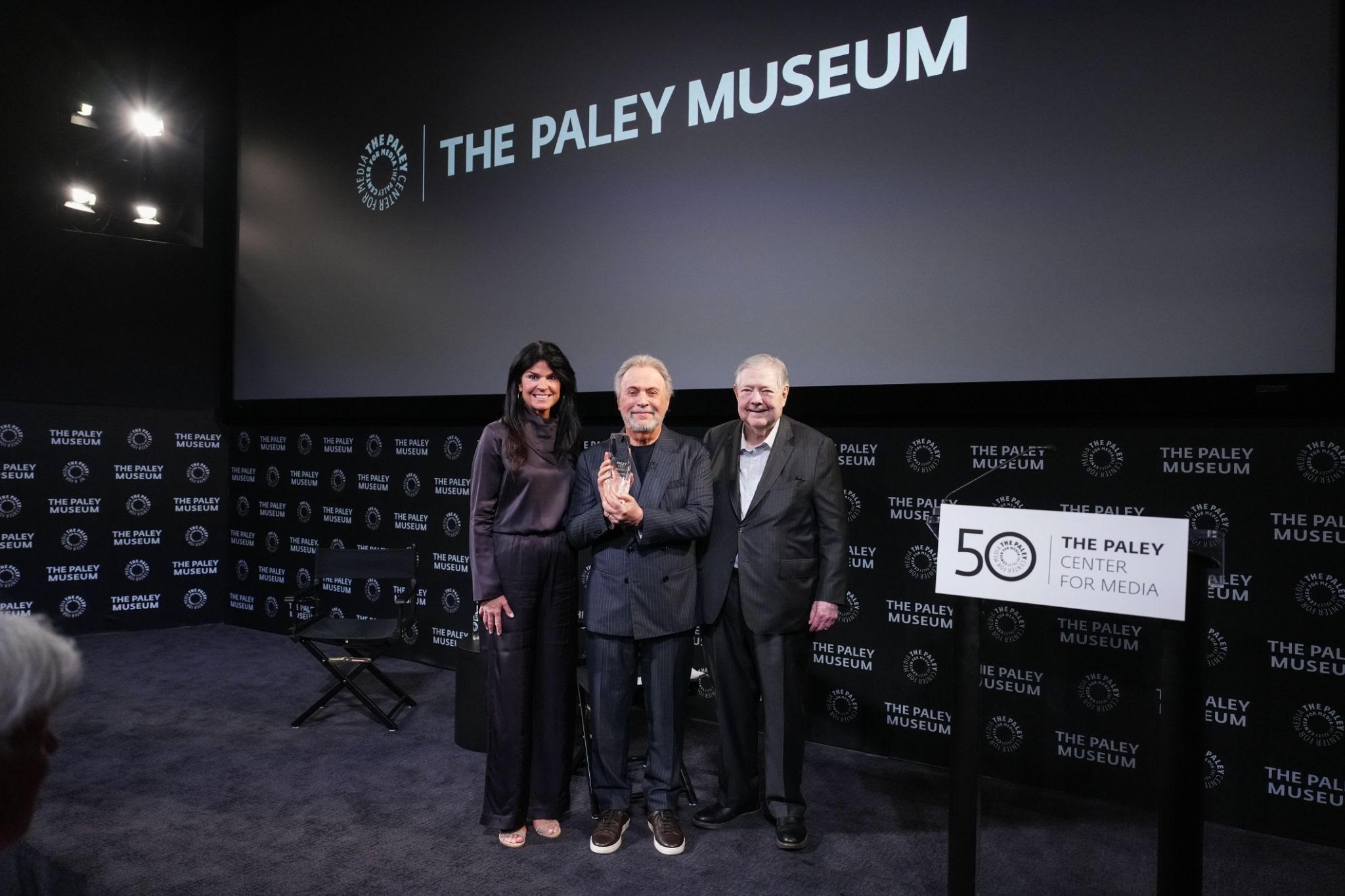
Maureen J. Reidy and Frank A. Bennack, Jr. present the PaleyFest award to Billy Crystal at PaleyFest NY at The Paley Museum Courtesy of The Paley Museum
The evening also marked the inaugural year of the PaleyFest Award, a new honor recognizing excellence in media, television, and entertainment, presented to participating shows. It was an appropriate occasion to celebrate a performer whose career has effortlessly crossed the boundaries between stand-up comedy, television, film, Broadway, writing, producing, and directing.
Crystal has spent decades making audiences laugh, but what distinguishes him from so many comedians is his understanding that humor is not the opposite of heartbreak. Quite often, it is heartbreak’s most eloquent companion.
Goldberg, herself a formidable theatrical and cinematic presence, understood exactly where to take the conversation. Rather than simply retracing a succession of career highlights, she explored the personal experiences that have shaped Crystal’s work and his enduring love affair with live performance.
“I’m so enjoying your love of being on stage,” Goldberg told him, before offering an observation that every theater professional understands: “Live performance you get what you get. Not everybody can do it.”
Indeed, they cannot. There is an extraordinary difference between performing for a camera, where a moment can be captured again and again, and standing before a live audience, where everything happens in real time. The laughter, the silence, the unexpected emotional connection, and the occasional misstep are all part of the experience. Crystal has always understood how to make that immediacy work in his favor.
His latest Broadway project, 860, draws upon deeply personal experiences, and Crystal spoke candidly about the emotional demands of bringing such material to the stage. “Bringing that to the stage was really cathartic,” he admitted. Yet he was quick to emphasize that the work is not simply an examination of grief. “It’s not just about loss. It’s about a family coming together and it’s about renewal,” he explained, adding, “It’s not just starting over, it’s moving forward.”
That distinction is particularly revealing. Starting over suggests erasing what came before. Moving forward acknowledges that the past remains part of us, even as life insists upon continuing.
Crystal’s reflections became especially poignant when he discussed the experience of watching a community face devastation, recalling the terrifying responsibility of explaining an unfolding disaster to children.
“When you’re watching your town burn down and you know it’s coming and the kids are there and they’re young… the responsibility you feel is alright, I gotta be real with them. If I’m gonna cry, I’m gonna cry and if I’m gonna hold onto this, I’m gonna hold on to it.”
It was a moment of striking vulnerability from a man whose public identity has so often been associated with impeccable comic timing. There was no attempt to disguise fear behind a punchline or transform suffering into an easy inspirational message.
Instead, Crystal spoke about the necessity of honesty, particularly within a family confronting circumstances beyond its control.
“We were fortunate to still have each other,” he reflected. That simple acknowledgment carried considerable weight. For all the possessions, memories, and familiar surroundings that can disappear in an instant, the relationships that survive become the foundation upon which life is rebuilt. Family has always occupied a central place in Crystal’s work, and the conversation naturally turned to memories of his father, whose influence continues to resonate throughout his career.
“He had a great sense of humor. He was quiet but he loved us [the boys]… he worked so hard,” Crystal recalled.
It was a lovely glimpse into the origins of a comic sensibility that has never depended solely upon jokes. Crystal’s best work has always been rooted in observation, affection, nostalgia, and an acute understanding of the small human moments that become our most enduring memories.
Of course, no evening celebrating Billy Crystal would be complete without revisiting some of the wonderfully unpredictable turns of his career.
One of the most entertaining recollections concerned the inaugural episode of Saturday Night Live on October 11, 1975. Crystal had been scheduled to appear, only to find himself cut from the broadcast. For a young performer attempting to establish himself, the experience was devastating.
“I blew it, my career is over, Lorne cut me from the show and this is over,” he remembered thinking as he returned home.
There is something delicious about hearing that story fifty-one years later, knowing what followed. The young comedian who believed one missed television appearance had destroyed his future would go on to become one of the most recognizable entertainers in America.
If ever there were an argument against allowing a single disappointment to define an entire career, Crystal’s journey provides it.
His eventual association with Saturday Night Live would become an important chapter in that career, but the larger lesson is one that extends far beyond entertainment: rejection and failure are rarely the final verdicts we imagine them to be.
Goldberg also steered the conversation toward Crystal’s working relationship with his wife, producer Janice Crystal. The couple’s longstanding partnership provided an irresistible opportunity for a little Hollywood mischief.
“You know I’m sleeping with the producer,” Crystal deadpanned. “An age-old Hollywood story.”
It was vintage Billy Crystal: affectionate, mischievous, and delivered with the effortless timing of a man who has spent a lifetime understanding exactly how long to let a joke breathe.
What made the evening particularly satisfying was the interplay between Crystal and Goldberg. These are two performers who have nothing left to prove, and that freedom creates a rare kind of conversation. They can tease one another, wander into memories, acknowledge disappointments, and speak openly about life’s more painful passages without sacrificing the humor that first brought them together.
Goldberg did not approach Crystal as a distant interviewer examining a celebrated subject. She approached him as a friend who knows the man behind the public persona, and that familiarity allowed the conversation to move naturally between comedy and confession.
It also revealed something essential about Crystal’s longevity.
His career has never been built exclusively upon the ability to make people laugh. It has been built upon his ability to make them recognize themselves. Whether recalling childhood, navigating marriage, confronting loss, or celebrating friendship, he understands that the most universal stories are often the most personal.
That understanding has carried him from television to film to Broadway and back again, without diminishing his enthusiasm for the next creative challenge.
At a time when entertainment is increasingly driven by spectacle, algorithms, and the relentless pursuit of attention, there was something wonderfully refreshing about watching two accomplished artists simply sit together and talk.
No elaborate production was necessary. No manufactured controversy. Just intelligence, affection, extraordinary comic instincts, and the accumulated wisdom of lives spent entertaining millions.
PaleyFest NY provided the setting, but Billy Crystal and Whoopi Goldberg supplied the magic.
And if the evening offered one lasting reminder, it was that the best comedians do considerably more than make us laugh. They help us understand why, even in the most difficult moments, laughter remains worth finding.
Broadway
Tom Hiddleston and Hayley Atwell Are Bringing Shakespeare’s Battle of the Sexes to Broadway
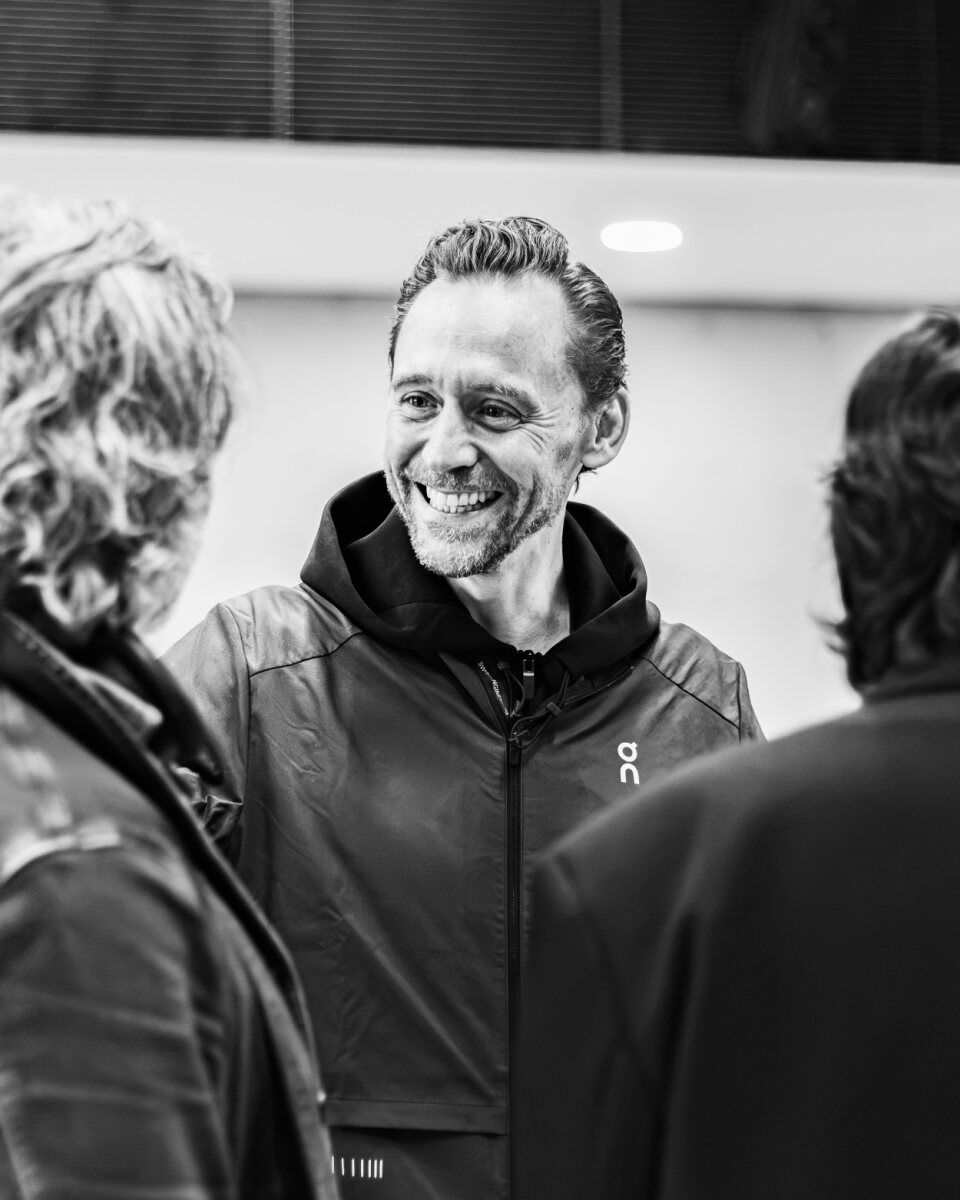
Jamie Lloyd’s Much Ado About Nothing begins rehearsals in London before its hotly anticipated New York engagement at the Winter Garden Theatre.
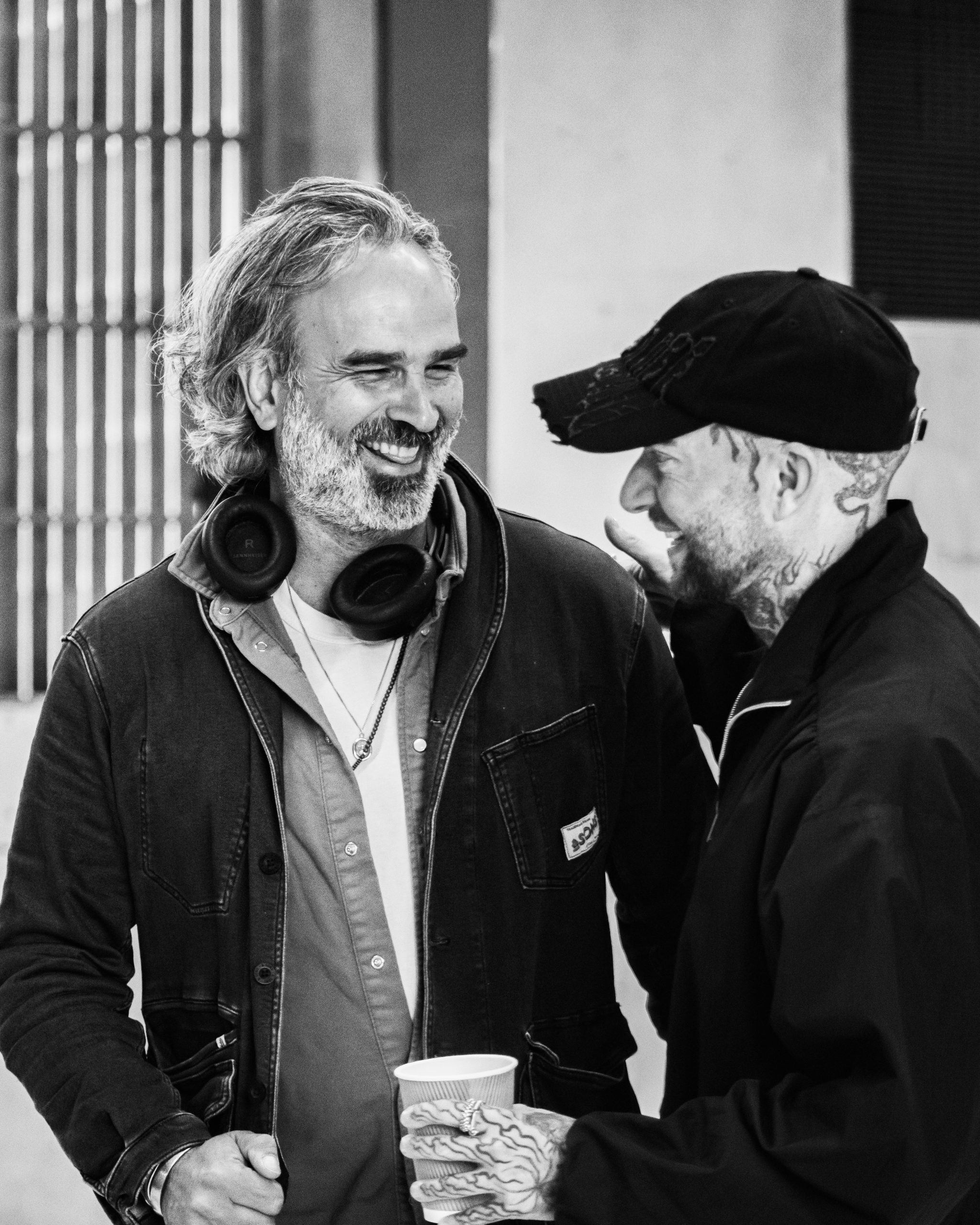
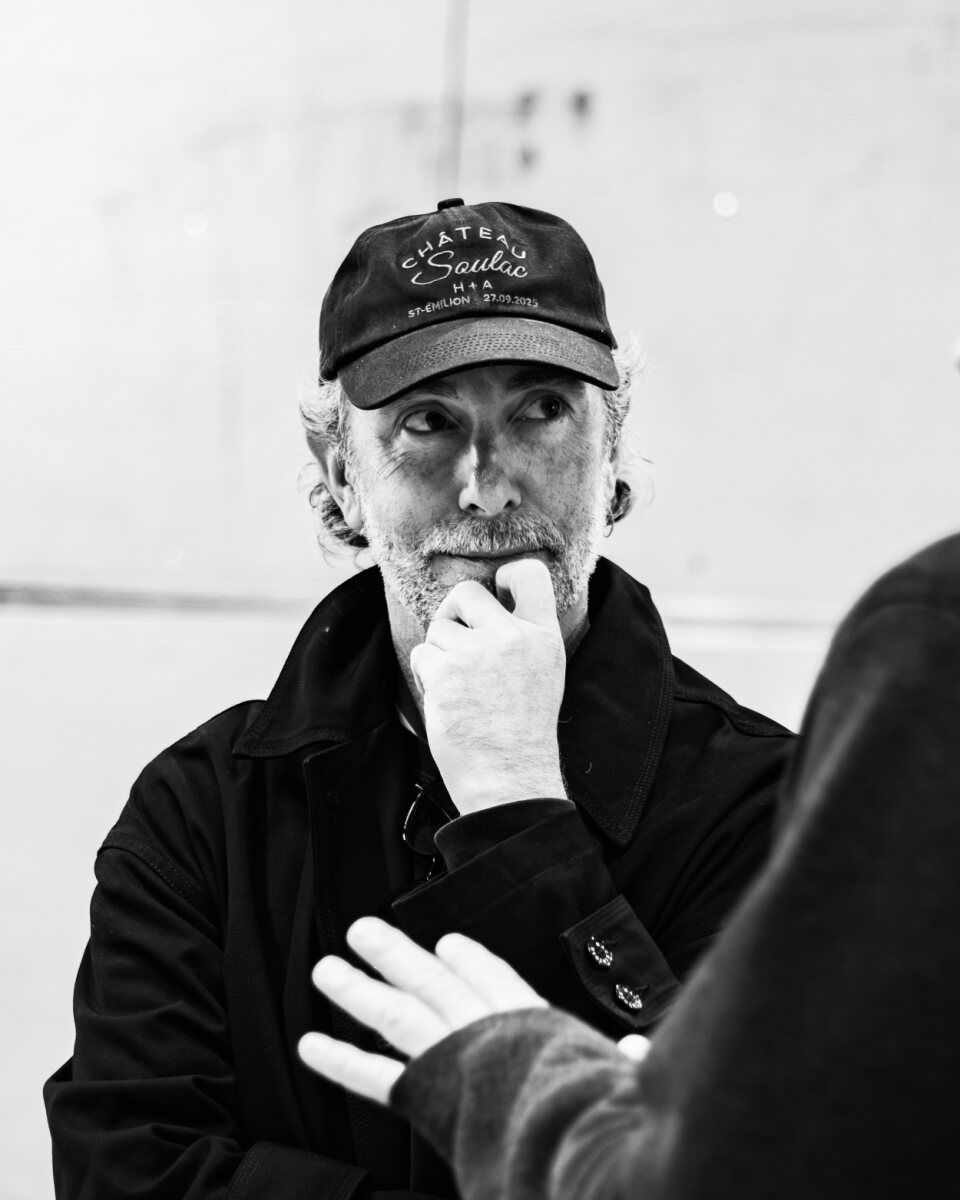
Gerald Kyd, Jamie Lloyd Photo by Justine Matthew
Broadway is about to get a delicious dose of Shakespearean sparring, and the combatants are rather irresistible.
Tom Hiddleston photo by Justine Matthew
Tom Hiddleston
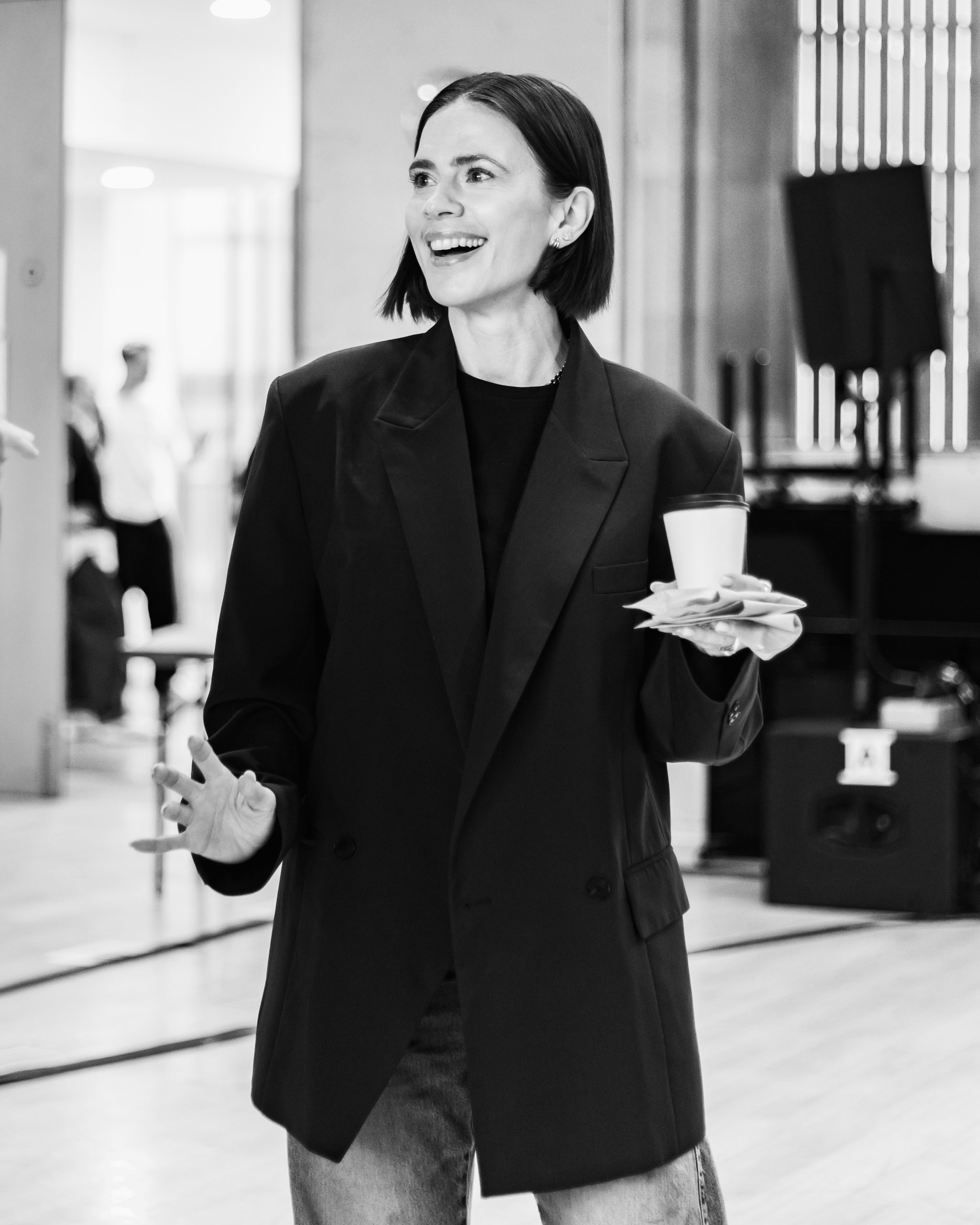
Hayley Atwell Photo by Justine Matthew
and Hayley Atwell are preparing to go head-to-head in Much Ado About Nothing, bringing two formidable British talents, considerable star power and what promises to be some spectacular verbal warfare to the Winter Garden Theatre.
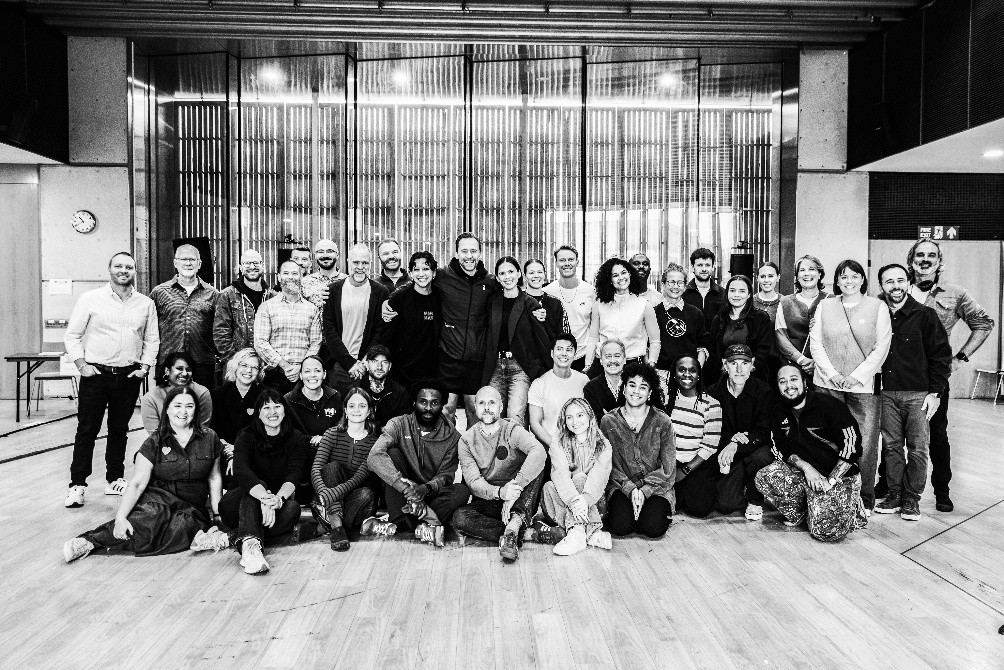
Cast and crew photo by Justine Matthew
Under the direction of the ever-provocative Jamie Lloyd, rehearsals are officially underway in London for the strictly limited Broadway engagement, which begins previews October 31, opens November 19 and runs through January 10, 2027.
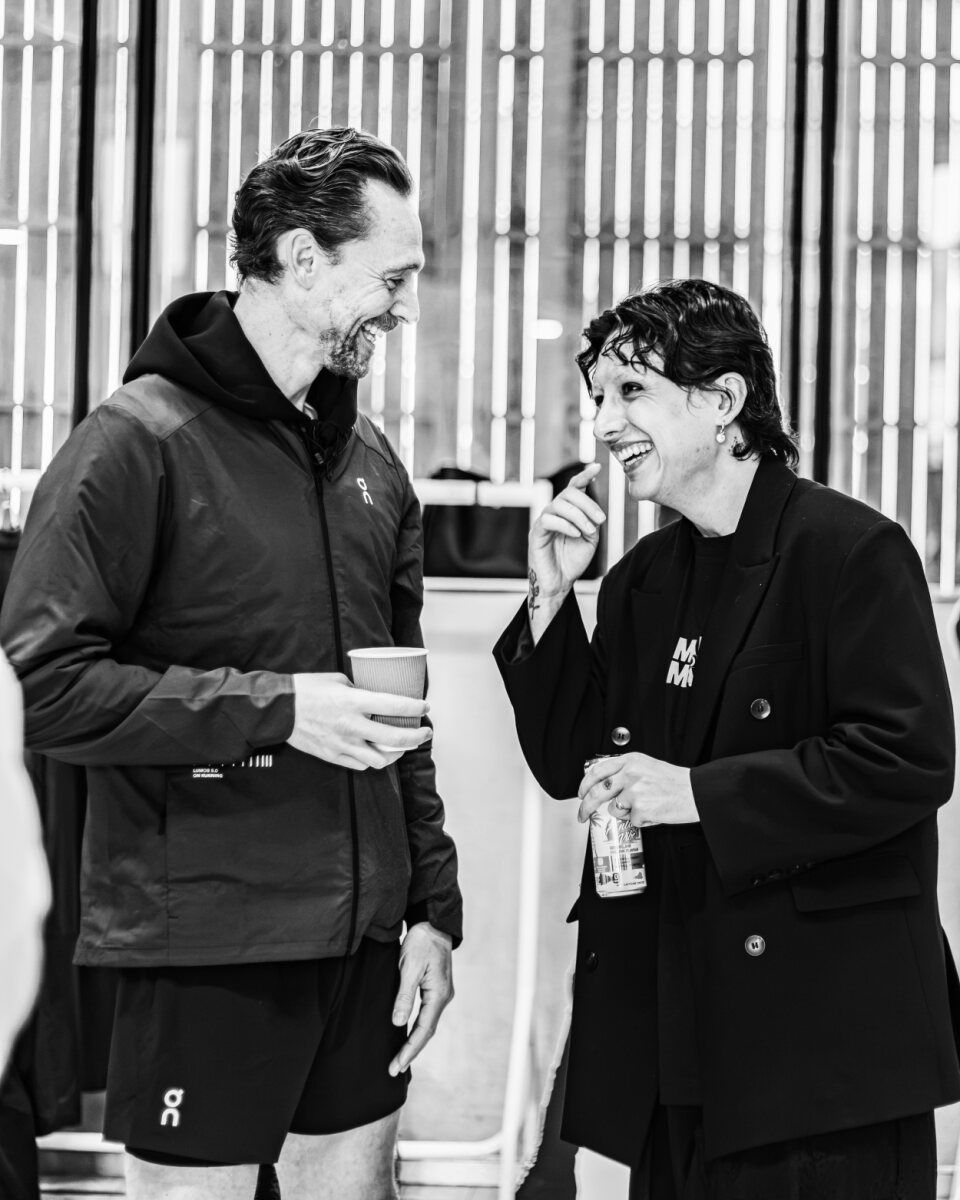
Tom Hiddleston, Mason Alexander Park photo by Justine Matthew
Frankly, who better to play Shakespeare’s most gloriously argumentative couple?
Hiddleston, whose effortless sophistication and mischievous charm have made him equally compelling on stage and screen, takes on Benedick, the confirmed bachelor who considers himself far too clever to fall in love. Audiences know him as Marvel’s deliciously unpredictable Loki, but theatre devotees know that beneath the cinematic charisma is a classically trained actor with serious Shakespearean credentials. An Olivier Award winner, Tony nominee and Golden Globe winner, Hiddleston has the intelligence, precision and impeccable comic instincts to make Benedick’s verbal gymnastics particularly entertaining.
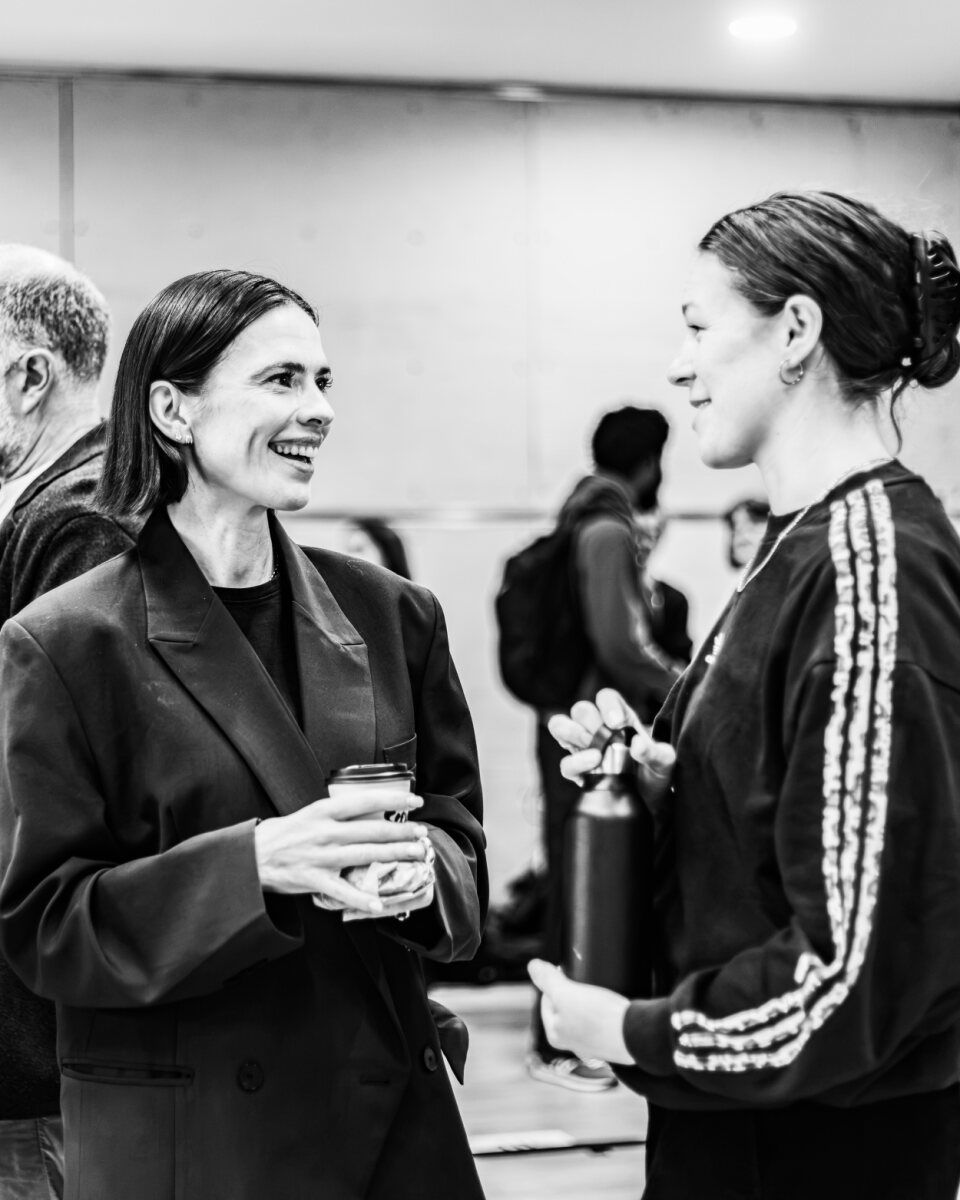
Hayley Atwell photo by Justine Matthew
Opposite him is Hayley Atwell, making her Broadway debut as Beatrice, one of Shakespeare’s most brilliantly outspoken women. Best known internationally for her portrayal of Peggy Carter in the Marvel universe, Atwell is also a three-time Olivier Award nominee whose theatrical career has demonstrated a remarkable combination of emotional depth, razor-sharp wit and commanding presence. Beatrice requires an actress who can turn a cutting remark into an art form while revealing the vulnerability beneath the bravado. Atwell seems particularly well suited to the challenge.
Then there is the irresistible prospect of seeing these two Marvel veterans trading Shakespearean insults instead of saving the universe. One suspects their weapons of choice will be considerably more entertaining than anything found in an Avengers arsenal.
For the uninitiated, Much Ado About Nothing revolves around Benedick and Beatrice, two fiercely independent personalities who insist they have absolutely no interest in romance, particularly with each other. Naturally, everyone around them knows better. Their friends conspire to bring them together, setting off a cascade of misunderstandings, romantic intrigue, wounded pride and some of the most dazzling dialogue Shakespeare ever wrote.
Beneath the comedy lies a surprisingly modern examination of reputation, public humiliation, deception and the dangerous ease with which appearances can be mistaken for truth. In an age of social media, instant judgment and reputations destroyed at breathtaking speed, Shakespeare’s observations about human behavior feel remarkably contemporary.
That tension between sparkling comedy and darker emotional undercurrents should prove fertile territory for Jamie Lloyd, whose theatrical imagination has made him one of the most talked-about directors working today. A Tony Award winner and multiple Olivier Award recipient, Lloyd is known for stripping familiar classics down to their emotional essentials, creating productions that challenge expectations while placing extraordinary demands on their performers.
His approach to Much Ado About Nothing is likely to make this far more than a conventional evening of Elizabethan romance. With Lloyd at the helm, the question is not simply whether Benedick and Beatrice will fall in love, but how their pride, defenses and carefully constructed identities will survive the experience.

Mara Huf photo by Justine Matthew
Joining Hiddleston and Atwell is an accomplished ensemble featuring Mara Huf as Hero
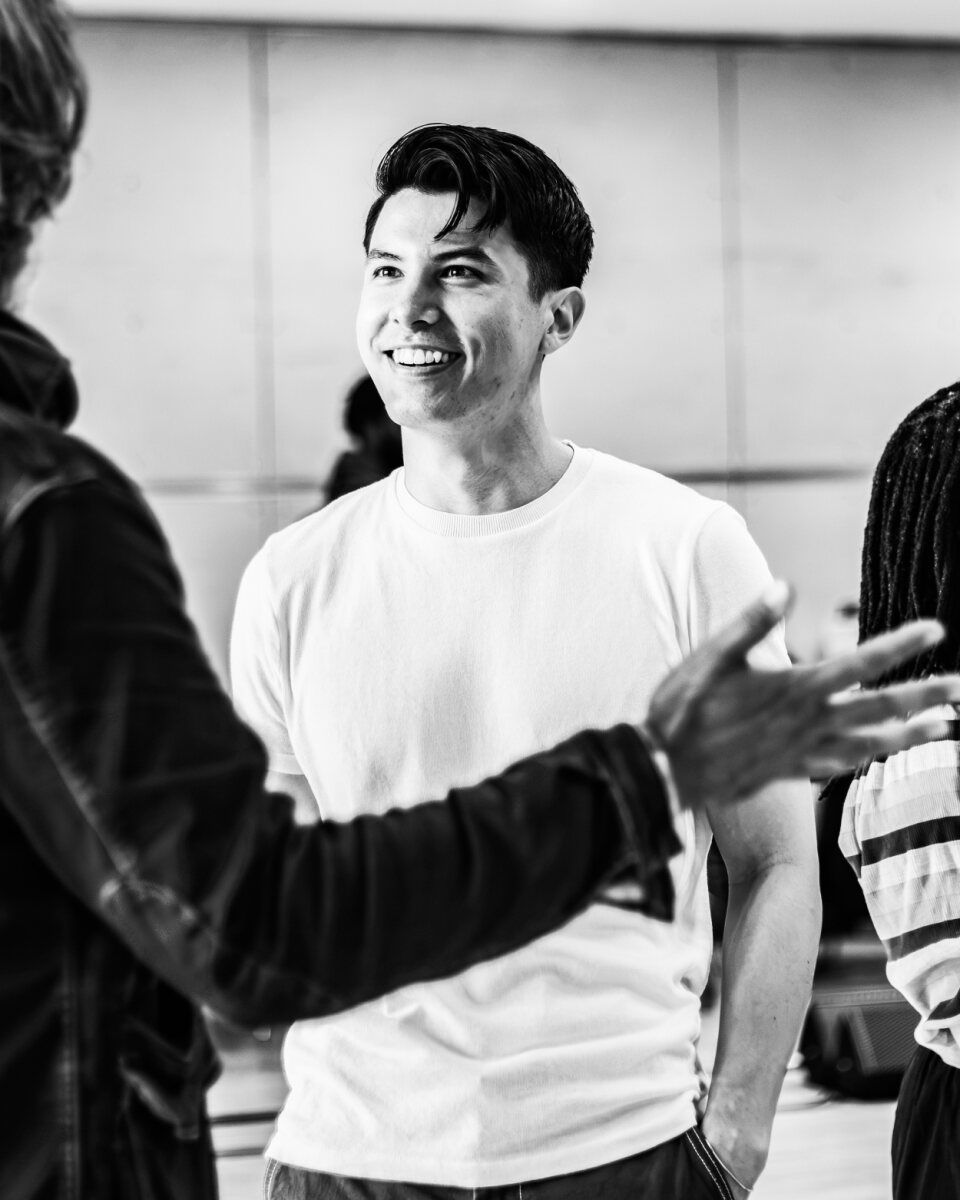
James Phoon photo by Justine Matthew
James Phoon as Claudio, Gerald Kyd as Don Pedro, Forbes Masson as Leonato, Tim Steed as Don John, Mika Onyx Johnson as Borachio,
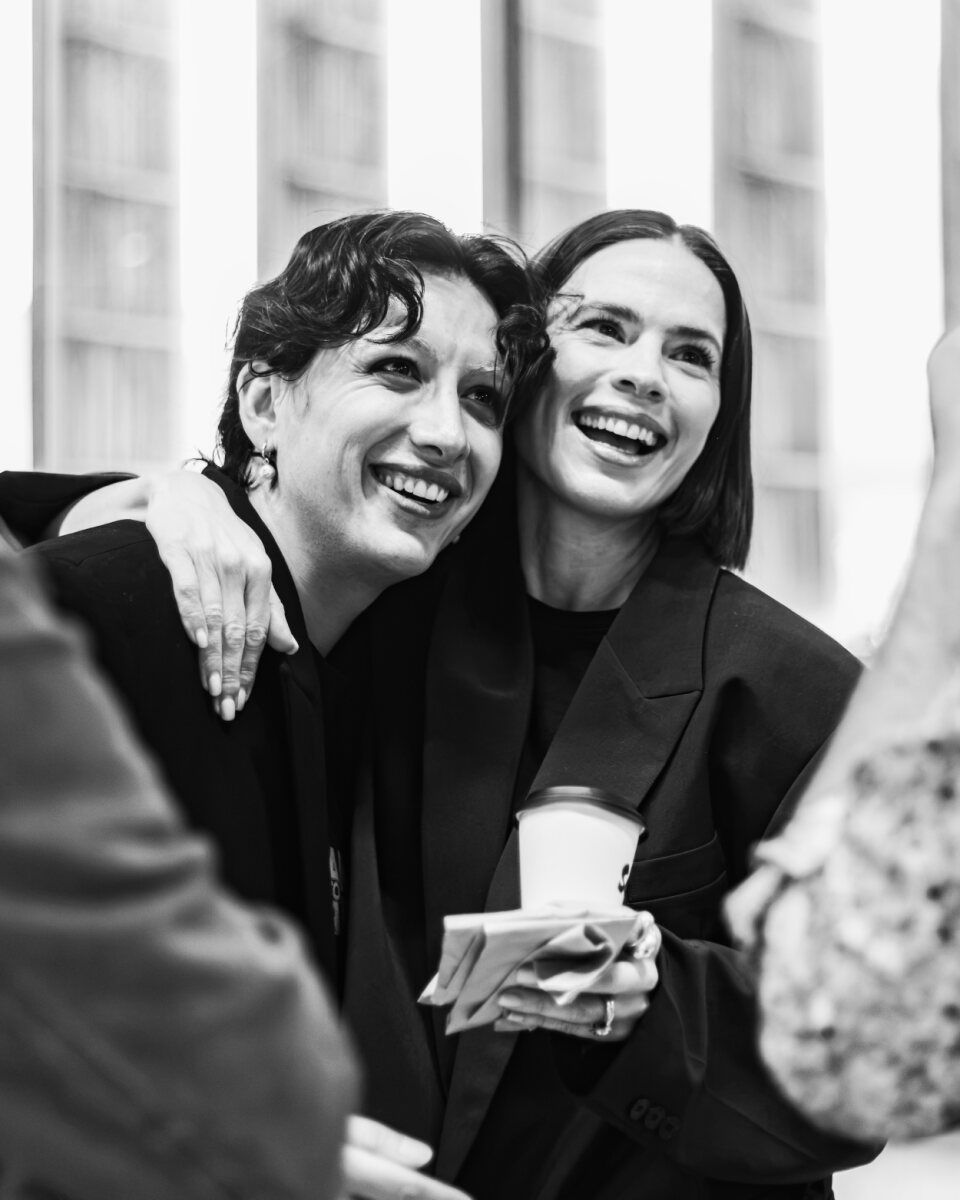
Mason Alexander Park, Hayley Atwell photo by Justine Matthew
Mason Alexander Park as Margaret
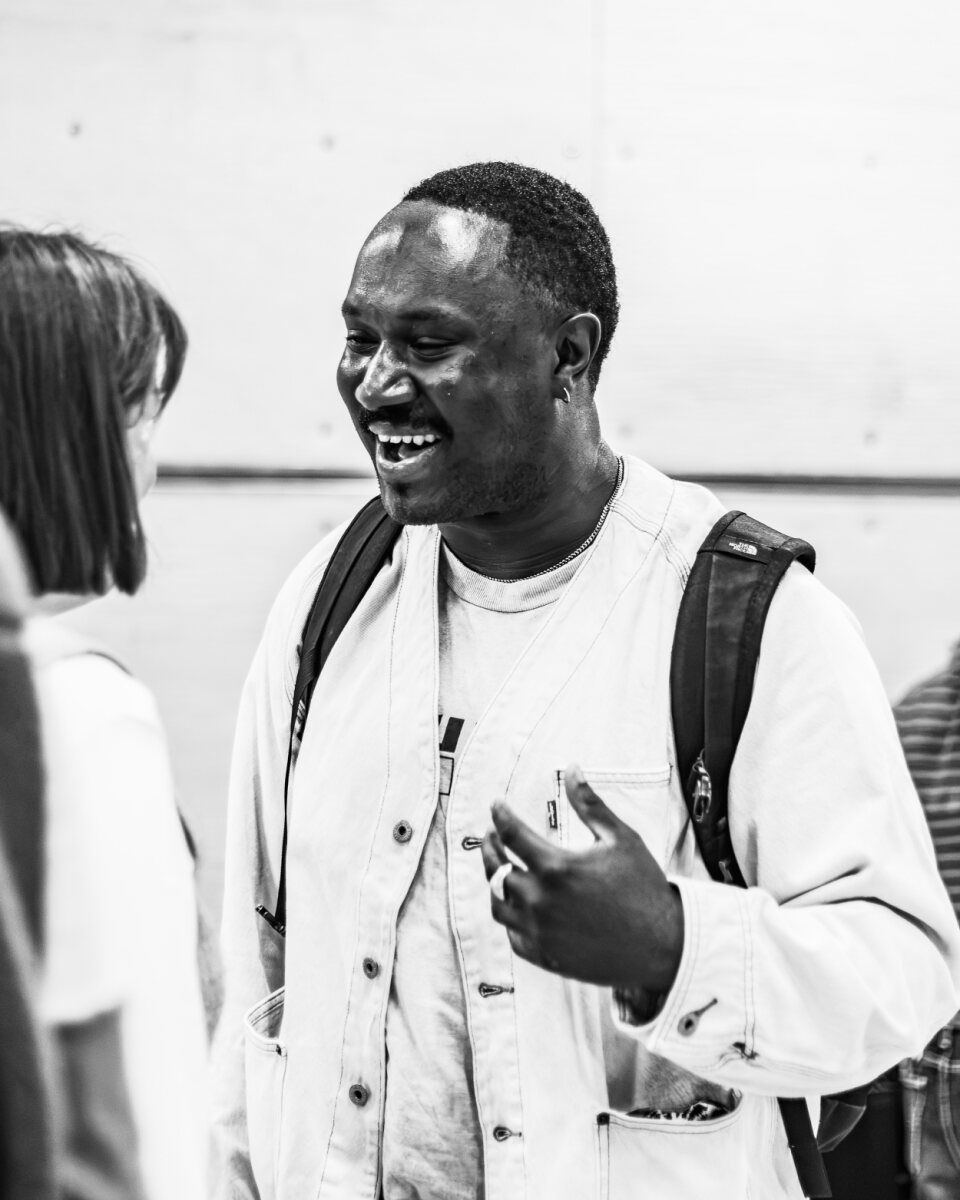
Phillip Olagoke photo by Justine Matthew
and Phillip Olagoke as Friar Francis. Newly announced understudies include
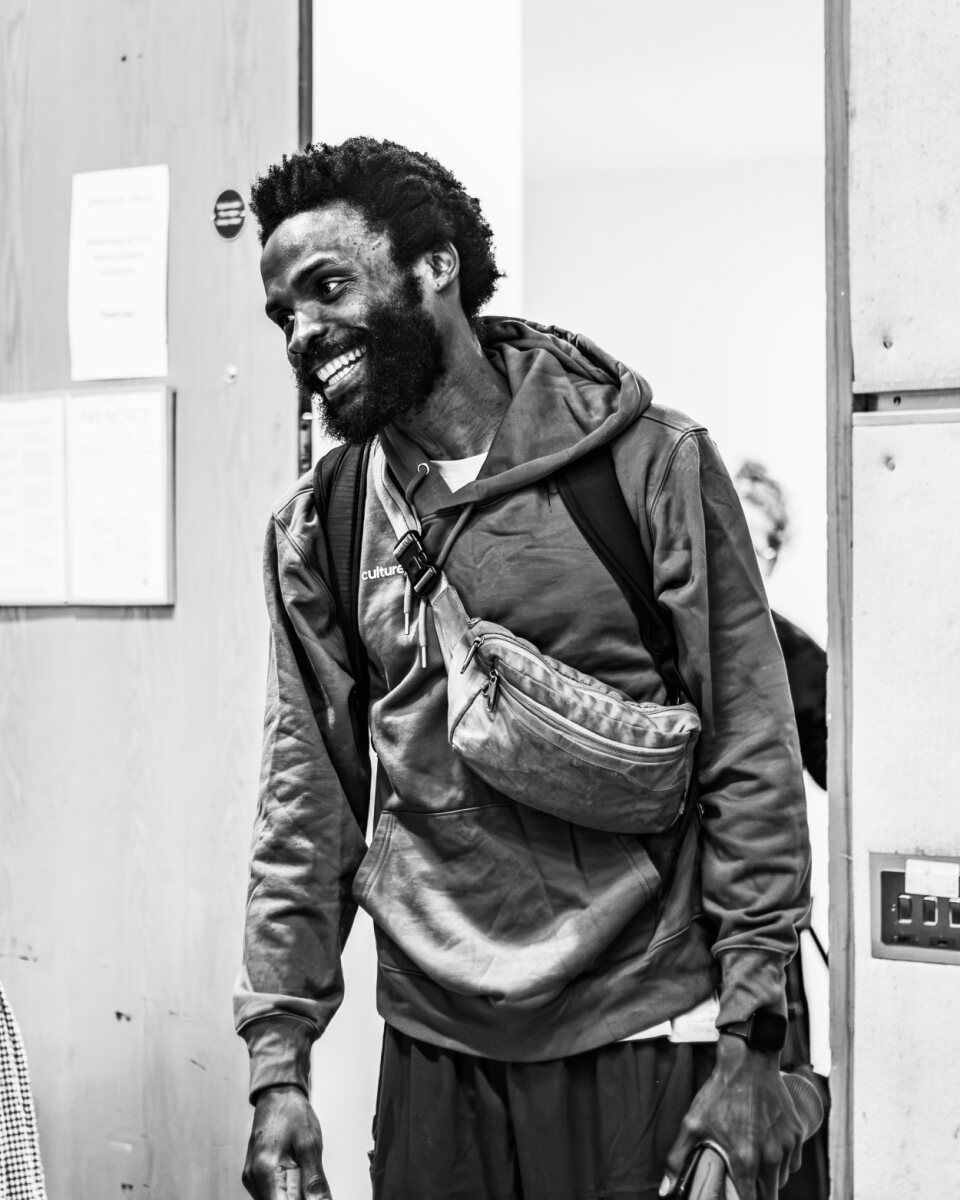
Franklin Bongjio photo by Justine Matthew
Franklin Bongjio
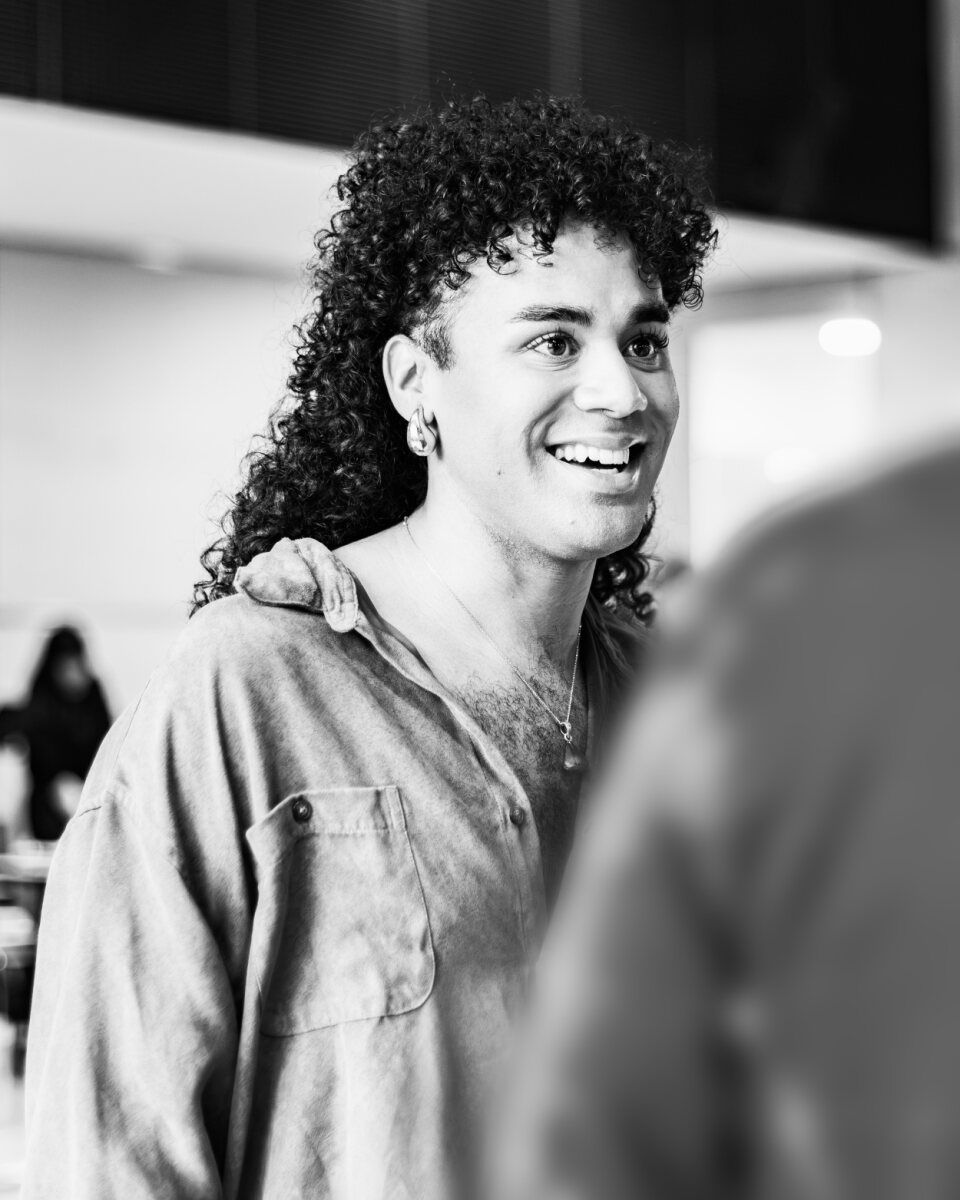
Michael Iván Carrier photo by Justine Matthew
Michael Iván Carrier
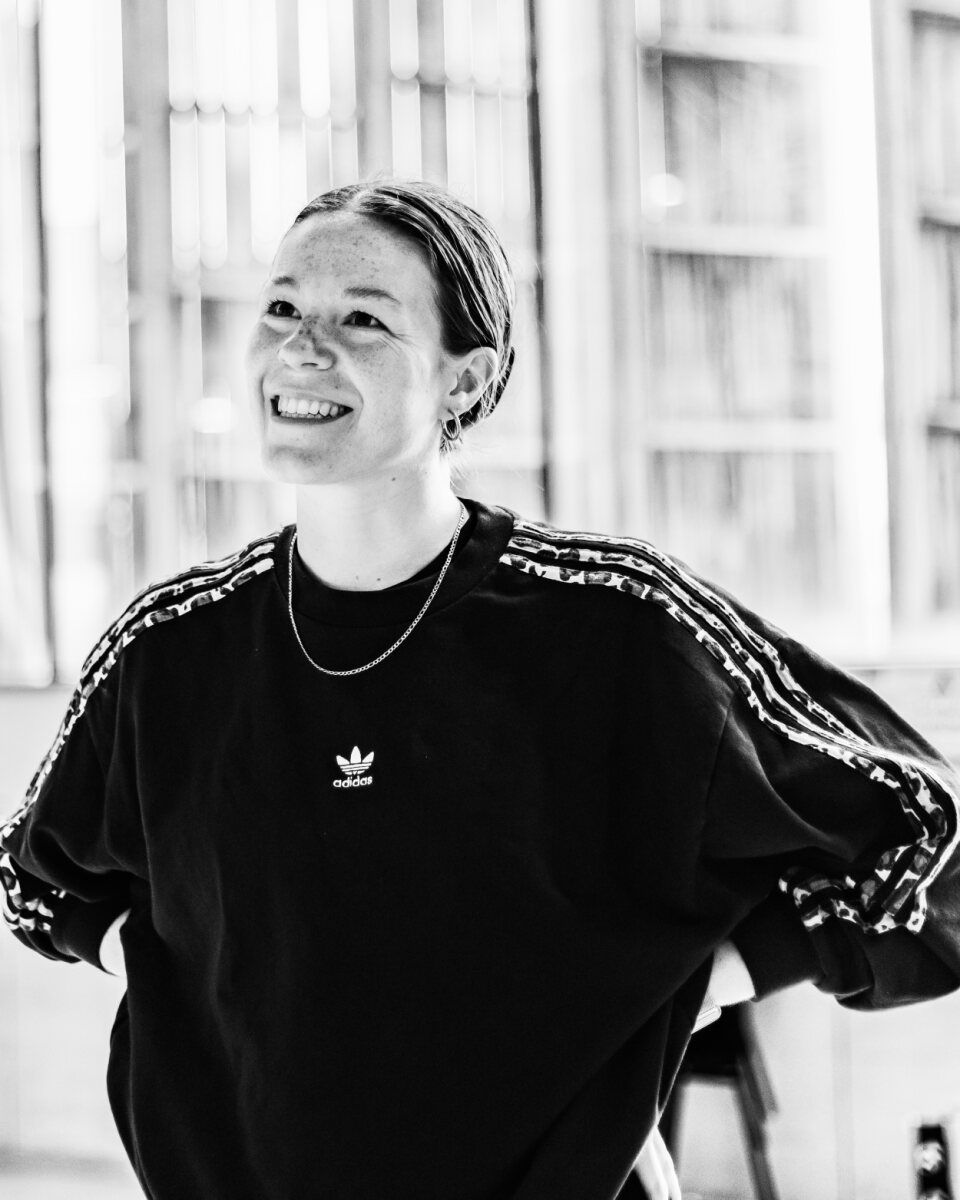
Beth Elliott photo by Justine Matthew
Beth Elliott, Marlon Alexander Vargas
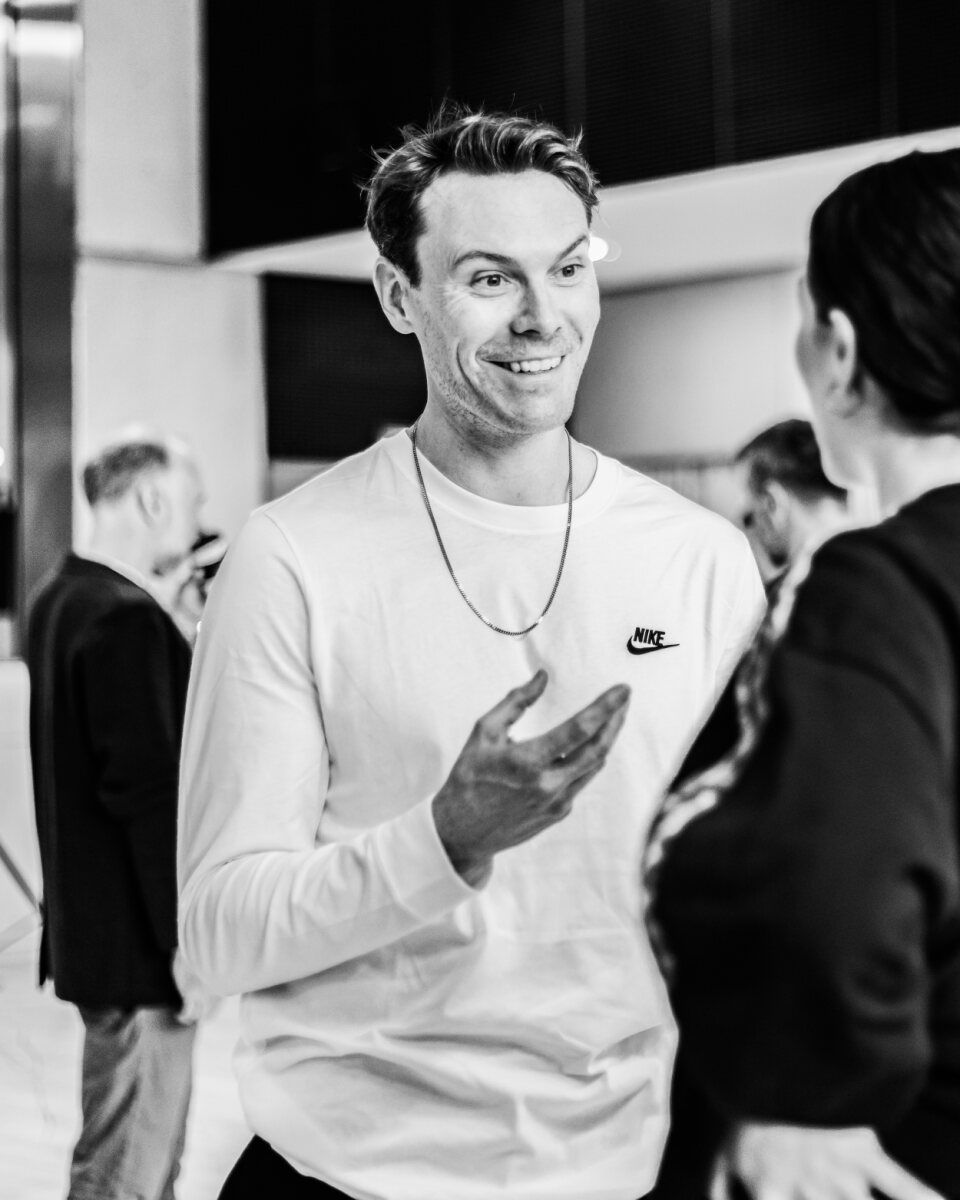
Ed White photo by Justine Matthew
and Ed White.
The first rehearsal photographs, captured in London by Justine Matthew, offer an early glimpse of the company coming together ahead of what is certain to be one of Broadway’s most closely watched fall openings.
There is something especially appealing about a production that reunites Hiddleston and Atwell within Shakespeare’s universe of wit, romance and emotional warfare. Both possess the kind of intelligence and theatrical confidence that can make a familiar text feel spontaneous, and Much Ado About Nothing depends upon precisely that quality. Benedick and Beatrice must appear capable of outthinking everyone in the room, even as they remain spectacularly incapable of understanding their own hearts.
Broadway has no shortage of love stories, but few offer the delicious pleasure of watching two people argue themselves into romance.
With Tom Hiddleston and Hayley Atwell leading the charge, this particular battle of the sexes may be worth every insult.
Much Ado About Nothing begins previews October 31 at Broadway’s Winter Garden Theatre, 1634 Broadway, officially opens November 19 and continues through January 10, 2027, only.

Christian Borle, Stephanie J. Block, Brandon Uranowitz, Andrew Rannells, Betsy Wolfe, Tracie Thoms in 2026 – Photo Credit Jenny Anderson
Two sold-out Carnegie Hall concerts lead to a third performance and a London Palladium engagement for the beloved original revival cast.

Falsettos 2016 cast Photo by Joan Marcus
Apparently, one night with Falsettos was never going to be enough. What began as a single 10th anniversary reunion concert at Carnegie Hall has blossomed into something considerably more ambitious, with a third New York performance and a transatlantic engagement at London’s legendary Palladium. For a musical about love, family, heartbreak and the complicated business of being human, the response has been nothing short of extraordinary.
The original cast of the acclaimed 2016 Broadway revival will reunite for an additional performance on Monday, February 8, 2027, at 7 p.m. at Carnegie Hall’s Stern Auditorium/Perelman Stage. The company will then cross the Atlantic for three performances at the London Palladium on February 23 and 24, bringing William Finn and James Lapine’s groundbreaking musical to another of the world’s great stages.

Betsy Wolfe, Andrew Rannells, Christian Borle, Tracie Thoms in Falsettos 2016 Photo Credit Joan Marcus
What a company it is. Tony Award winners Stephanie J. Block, Christian Borle and Brandon Uranowitz will be joined by Tony nominees Andrew Rannells and Betsy Wolfe, along with Emmy nominee Tracie Thoms. It is a remarkable gathering of performers whose chemistry helped make the 2016 revival one of Broadway’s most emotionally affecting productions.
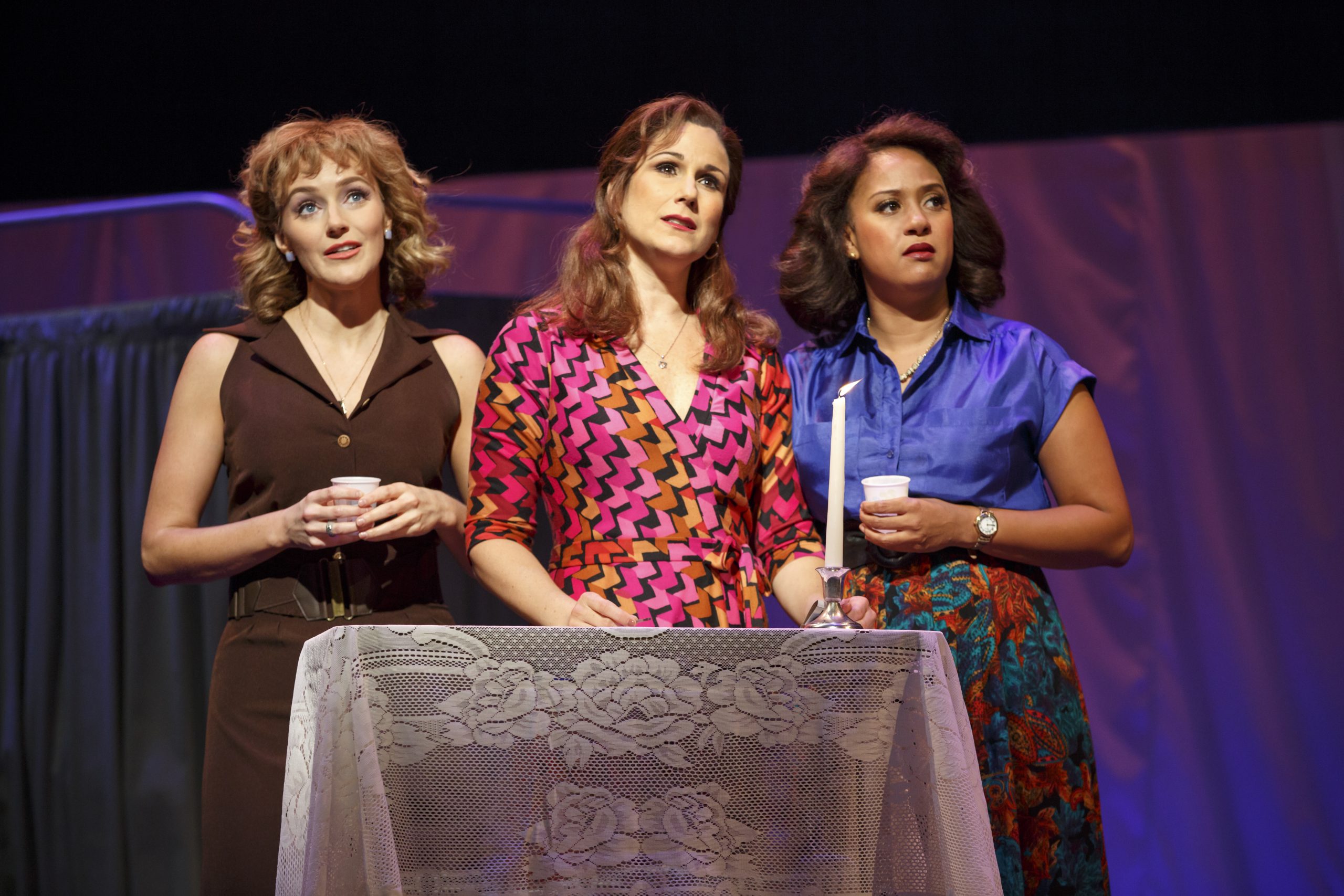
Betsy Wolfe, Stephanie J Block, Tracie Thoms in Falsettos 2016 Photo Credit Joan Marcus
The demand has been almost comically enthusiastic. The original October 18, 2026, benefit concert sold out in fewer than two hours. A second performance, scheduled for November 2, disappeared even faster. Now a third Carnegie Hall date has been added, and London is getting its own opportunity to fall in love with this extraordinary cast.
Tony-nominated director and choreographer Ellenore Scott, who served as assistant choreographer on the 2016 revival, will direct the additional performances. Vadim Feichtner returns as music director and conductor, leading a band featuring many of the revival’s original musicians. This is not simply a concert of familiar songs performed by an impressive cast; it is a reunion of artists who helped give this particular production its identity.
For Wolfe, who is also among the producers bringing the reunion to the stage, the experience has become something far more personal than an anniversary celebration.
“Falsettos found all of us at such a pivotal moment, and we’ve had the extraordinary privilege of watching one another grow, as artists and as friends in the decade since,” she reflected. “I always believed there was more life in this piece and hoped we might one day return to it together.”
That hope has now grown from one night at Carnegie Hall into three New York performances and a London engagement, a development Wolfe describes as extraordinary. “Ten years later, it turns out there’s still more of this story for us to tell.”
Few musicals have examined the beautifully imperfect architecture of family with the wit, intelligence and emotional honesty of Falsettos. Through Marvin, Whizzer, Trina and the wonderfully unconventional family they create, Finn and Lapine explore relationships that refuse to fit into comfortable definitions. The musical’s humor is razor-sharp, its characters gloriously flawed and its heartbreak devastating precisely because the love at its center is so recognizable.
The work’s origins stretch back to Finn’s In Trousers in 1979, followed by March of the Falsettos in 1981 and Falsettoland in 1990. The latter two works were combined into Falsettos, which opened on Broadway in 1992. Set against the changing social landscape of the early 1980s and the emergence of the AIDS crisis, the musical transformed an intimate family story into something with profound cultural resonance.
When the revival opened at the Walter Kerr Theatre on October 27, 2016, it introduced the work to another generation, earning five Tony Award nominations, including Best Revival of a Musical. Its subsequent filming for PBS’s Live from Lincoln Center ensured that audiences beyond Broadway could experience the production’s exceptional performances.
A decade later, the affection has clearly not diminished. If anything, time has deepened the musical’s emotional resonance. What once felt like a groundbreaking examination of unconventional family relationships now stands as both a period piece and a remarkably enduring portrait of love, loss and the families we choose.
The February 8 Carnegie Hall performance will also give something back, with a portion of its proceeds benefiting the TDF Wendy Wasserstein Project, which introduces New York City students to live theatre and helps cultivate the next generation of theatregoers.
The concerts are presented by Betsy Wolfe, Colleen Cook and Cynthia Rose for Table for Three Productions, with the London engagement produced in association with Darren Bell Productions and QUBE Theatricals.
Presale registration is now open, with tickets available to registered patrons beginning Wednesday, October 14, at 11 a.m. Eastern. General sales begin Friday, October 16, at 11 a.m. Eastern. New York presale registration is available at falsettosreunion.com, while London registration is available through Darren Bell Productions. Tickets for the February Carnegie Hall performance will also be available through Carnegie Hall, by telephone at (212) 247-7800 or at the box office.
There is something wonderfully appropriate about a musical devoted to the complicated endurance of love inspiring such an enthusiastic reunion. The actors have grown, the world has changed, and the songs have acquired another decade of meaning. Yet the desire to gather in a theatre and experience this story together remains as powerful as ever.
It seems Falsettos has discovered that the only thing more difficult than saying goodbye is convincing its audience to let go.
Broadway
Dolly Parton’s Broadway Dream Lives On: DOLLY: A True Original Musical Announces Full Cast and a Birthday Opening

The St. James Theatre will welcome Dolly’s life story this December, with opening night set for what would have been the legend’s 81st birthday.
Broadway has always loved a star, but few stars have possessed the combination of talent, wit, generosity, determination and sheer individuality that made Dolly Parton a cultural institution. Now, as Broadway prepares to bring her extraordinary life to the stage, the occasion carries a poignancy nobody originally anticipated. As was Dolly’s wish, DOLLY: A True Original Musical will begin previews December 7 at the St. James Theatre, with its official opening scheduled for January 19, 2027, what would have been her 81st birthday.
The show must go on, and in this case, those words carry considerably more meaning than the familiar theatrical expression. Dolly was not merely the subject of this musical. She helped create it, wrote new songs specifically for the production and collaborated with Emmy Award-winning writer Maria S. Schlatter on the book. This is her story told through her own music, her own humor and her own understanding of the remarkable journey that took a little girl from the Smoky Mountains of Tennessee to international superstardom.

Crystal Kellogg
The producers have now announced the complete Broadway company, with Crystal Kellogg joining the principal cast as Judy Ogle, Dolly’s best friend since the third grade. It is an especially meaningful role in a musical about a woman whose fame never completely severed her connection to the people and places that shaped her.

Katie Rose Clarke
Kellogg, whose credits include Finding Neverland, School of Rock and the national tour of & Juliet, joins Katie Rose Clarke and Carrie St. Louis, who will portray Dolly at different stages of her life, with Norah Nunes appearing as Little Dolly. John Behlmann takes on the role of Carl Dean, Dolly’s famously private husband, while Gabriel Ebert portrays Porter Wagoner, the country music star whose professional partnership with Parton became one of the defining chapters of her early career.

Carrie St. Louis
There is rich theatrical material in those relationships. Dolly’s marriage to Dean endured for decades despite her very public career and his determination to remain outside the spotlight. Her association with Wagoner helped introduce her to a national audience, but their eventual professional separation also became part of her extraordinary journey toward artistic independence. It was that separation that inspired one of her most enduring compositions, “I Will Always Love You,” a song whose emotional generosity has often obscured the remarkable strength behind its creation.

Norah Nunes
Under the direction of Tony Award winner Bartlett Sher, the musical promises to explore the woman behind the rhinestones rather than simply assemble a parade of greatest hits. The score includes “Jolene,” “Coat of Many Colors,” “9 to 5” and “I Will Always Love You,” alongside new material written by Parton for the stage. With a catalog containing more than 3,000 songs, the challenge is hardly finding enough music. It is choosing which songs best illuminate the life that produced them.

John Behlmann
And what a life it was. Born into poverty in rural Tennessee, Parton built a career that crossed musical genres, generations and cultural boundaries. She became a country music legend, a successful actress, a businesswoman, a philanthropist and one of the rare celebrities whose appeal extended far beyond the audience that first made her famous. Beneath the wigs, the elaborate costumes and the perfectly delivered jokes was a songwriter with an extraordinary gift for expressing complicated emotions in language anyone could understand.

Gabriel Ebert
That gift is precisely what makes her story so promising for musical theatre. Dolly understood character, conflict, longing and the power of a memorable refrain. Her songs frequently tell complete stories in a matter of minutes. The challenge for this production will be to weave those individual stories into a theatrical portrait that reveals something more than audiences already know.
The company surrounding the principal cast is substantial, with Piper Allen, Bill Army, Josh Canfield, Lincoln Cohen, Ryan Demoville, Haley Fish, Sarah Hunt, Erin Kei, Evan Kinnane, Ryland J. Mar, Jenny Mollet, James Moye, Julian Ramos, Larkin Reilly, Maddie Robert, Alex Ross and Quinn VanAntwerp completing the ensemble. Sarah Bockel, Sadie Daniels, Tiffany Engen, Michael Milkanin and Rixey Terry will serve as swings. The company brings together established Broadway performers, returning members of the Nashville production and artists making their Broadway debuts.
Behind the scenes, Sher has assembled a formidable creative team. Mandy Moore provides choreography, Derek McLane designs the scenery, Jennifer Moeller creates the costumes, Donald Holder handles lighting and Peter Hylenski designs the sound. Nathan Amzi and Joe Ransom are responsible for video design, with Robert Pickens overseeing hair and Studio Pickens creating makeup. Stephen Oremus serves as music supervisor, Charity Wicks as music director and John Clancy as orchestrator. Longtime Parton collaborators Richard Dennison, Gregg Perry and Kent Wells bring an invaluable connection to the musical world she created.
The production arrives on Broadway following its world premiere in Nashville at Belmont University’s Fisher Center for the Performing Arts. The sold-out engagement became the most successful production in the venue’s history, establishing an enthusiastic foundation for the show’s New York debut. Broadway, of course, is another matter entirely. It will be interesting to see how a musical conceived with its subject’s personal involvement evolves into a lasting theatrical tribute.
In true Dolly fashion, the producers are also finding a way to make the celebration accessible to fans. On Monday, November 9, when the St. James Theatre box office opens at 10 a.m., the first 100 people in line will have the opportunity to purchase two tickets for just $9.25 each for select performances between January and May 2027. The offer is available exclusively in person, and the price is a playful nod to Dolly’s beloved 9 to 5. Fans who turn out that morning will also receive a complimentary cup of her new Cup of Ambition coffee.
It’s difficult to imagine a more fitting promotion. Dolly built an empire without ever losing her appreciation for the ordinary people who helped make it possible. A Broadway ticket priced at $9.25, accompanied by a cup of coffee, feels like the kind of gesture she would have enjoyed immensely.
But the emotional center of this production remains its opening date. January 19 was meant to be a birthday celebration. It will now be something more complicated and, in many ways, more moving: an opportunity for the Broadway community to celebrate an artist whose creative imagination continued expanding long after she had conquered virtually every other corner of the entertainment industry.
There will undoubtedly be tears mixed with the laughter, and an unmistakable sense of absence amid the rhinestones and music. Yet there is also something wonderfully appropriate about honoring Dolly Parton not with silence, but with a Broadway musical filled with the songs she gave the world.
Dolly spent her life refusing to be limited by other people’s expectations. She turned what others dismissed as excess into an unmistakable signature, transformed personal experiences into universal songs and built a career on the conviction that being a true original was worth far more than fitting comfortably into someone else’s idea of success.
Now Broadway gets to tell that story.
While Dolly herself will not be standing in the wings on opening night, her fingerprints will be everywhere: in the music, in the characters, in the humor, in the heart and, undoubtedly, in every rhinestone that catches the light.
The curtain will rise on January 19. The birthday girl will be missing, but the celebration she dreamed of will go on.
DOLLY: A True Original Musical begins previews December 7, 2026, and officially opens January 19, 2027, at the St. James Theatre, 246 West 44th Street. Tickets are available at dollymusical.com, with the initial booking period running through November 21, 2027.


Well, yes, he was in Paris, at 54 Below’s presentation of Ben Franklin in Paris, the 1964 musical by Mark Sandrich, Jr. and Sidney Michaels, with two additional songs by Jerry Herman. James Woods was a superb music director, while Walter Willison did the heavy lifting here, as producer and director, and then tackled the title role.

Walter Willison
This outing, celebrating the 250th anniversary of our nation’s independence, was a welcome addition to the many tributes popping up to mark the occasion, and hats off to 54 Below for bringing this musical to the forefront if only for one evening.
(Video by Magda Katz)
The year 1964 was a big one in Broadway history, with Hello, Dolly!, Funny Girl, and She Loves Me all vying for attention. Coming off two Tony wins was Robert Preston, who took on the role of our gout-ridden Founding Father. Sadly, no Tony nomination this time around (the award went to Bert Lahr for Foxy).

Ann Kittredge
Franklin was in Paris seeking financial support for the revolution being waged back home and not meeting with much success. An old flame, Diane, portrayed beautifully by Ann Kittredge, does not succumb to Franklin’s persuasive charm, leaving him in a somewhat frantic muddle. Playing several roles in this dilemma is Ron Spivak, whose deep baritone voice and comedic talent brought a natural charm to the proceedings.

Ron Spivak
Franklin’s was not the only romance afoot here. His son, played by Keaton Miller, is in his own pursuit of love, expressed beautifully in the song “When I Dance with the Person I Love.” Supporting cast included Keith Crowningshield, Timothy Jerome, Zoë Parrish, Melinda Hopkins and Sheila Wormer.
It is difficult to believe that amid Hello, Dolly! fever and excitement, Jerry Herman found the time to write two songs for this show. Done by Willison and Kittredge, ”Too Charming” and “To Be Alone with You” were standouts. Willison has retained the voice and charm that earned him a Tony Nomination at the beginning of his career. Kittredge certainly matched him in the voice/charm department and had the added advantage of being beautifully coiffed and dressed, with a French accent that was delicate and alluring.
 A highlight came at the end in Franklin’s speech about future generations valuing the sacrifices made on their behalf to achieve freedom. It was a poignant moment that gave one pause amidst all the frivolity.


My View: We’re All Gonna Go On The Road With John Lloyd Young

My View: The Day Barbra Streisand Came To Lunch At The Dutch Treat Club

The Glorious Corner

Live From The Hotel Edison Times Square Chronicles Presents Musical Director, Pianist and Arranger Tedd Firth.

Verticals: What Does It Cost, What Can You Make, and How Do You Sell One?

Prince Mario-Max Schaumburg-Lippe: Why New York City Has the Best Architecture in America!

Meta, Sierra, Walmart, Stripe and Shopify Back a Shared Standard for AI Shopping Agents. Here Is What Businesses Should Do Now

My View: Jason Robert Brown Receives William Finn Award at Barrington Stage Co. Gala
My View: We’re All Gonna Go On The Road With John Lloyd Young
My View: The Day Barbra Streisand Came To Lunch At The Dutch Treat Club
The Glorious Corner
Live From The Hotel Edison Times Square Chronicles Presents Musical Director, Pianist and Arranger Tedd Firth.
Verticals: What Does It Cost, What Can You Make, and How Do You Sell One?
Prince Mario-Max Schaumburg-Lippe: Why New York City Has the Best Architecture in America!
Meta, Sierra, Walmart, Stripe and Shopify Back a Shared Standard for AI Shopping Agents. Here Is What Businesses Should Do Now
My View: Jason Robert Brown Receives William Finn Award at Barrington Stage Co. Gala
-

 Entertainment5 days ago
Prince Mario-Max Schaumburg-Lippe: How The Balanchine Ball Shows Ballet is Trending!
-

 Events4 days ago
The Plaza Is Closing for Four Years. Can New York Afford to Lose Its Grandest Hotel?
-

 Film5 days ago
Jesse Eisenberg’ s A24’s The Debut Sends a Housewife’s Community Theatre Dreams Gloriously Off the Rails
-

 Events5 days ago
Paws, Claws and Haute Dog Couture: The East Village Goes to the Dogs This Halloween
-

 Entertainment4 days ago
Prince Mario-Max Schaumburg-Lippe: The Desirable Piarist Ball NYC Season Opens With An Elegant Pákh Patron Reception In Manhattan
-

 Business4 days ago
Restaurant Discounts Are Becoming Another Monthly Subscription
-

 Celebrity4 days ago
The Glorious Corner
-
 Cabaret2 days ago
My View: Jason Robert Brown Receives William Finn Award at Barrington Stage Co. Gala