
Fashion and High Society
BONJIL Believes Beautiful Skin Begins With a Calm Mind


For years, the beauty industry has promised younger-looking skin through better ingredients, stronger serums, and more advanced technology. BONJIL believes everyone has been starting in the wrong place.
At an elegant celebration introducing its newest Madison Avenue boutique at 790 Madison Avenue between 66th and 67th Streets, guests stepped into a beauty experience that wasn’t centered on skincare alone. It was centered on something far more elusive: stress. music, prosecco, delicate sweets, and thoughtfully curated sensory experiences welcomed visitors into BONJIL‘s world, where the company is challenging one of skincare’s biggest assumptions—that treating the skin alone is enough.

Suzanna Bowling, Prince Mario-Max Schaumburg-Lippe
Their philosophy is refreshingly different. Stress changes how skin behaves. BONJIL was created to respond to that shift. Rather than immediately reaching for creams and serums, every treatment begins by calming the nervous system itself. At the center of the experience is BONJIL‘s signature Music Box, a carefully designed neurosensory ritual that uses sound before anything ever touches the skin. The concept is simple but compelling.
When stress becomes chronic, the body releases elevated levels of cortisol. While cortisol serves an important purpose in short bursts, prolonged elevation weakens the skin barrier, accelerates collagen breakdown, increases inflammation, and contributes to dullness, dehydration, and premature aging.

Michael Glowoski, Kellie Chen, Prince Mario-Max Schaumburg-Lippe
BONJIL believes skincare should begin where the stress response begins. The Music Box opens. The melody starts. The nervous system begins to settle. Only then does the skincare ritual unfold through touch, scent, sight, and texture, each element intentionally designed to complement the body’s return to calm. The ritual concludes just as the final notes of the melody fade away with BONJIL‘s YouthGlow Collagen Jelly, creating a surprisingly emotional ending that feels less like the completion of a facial and more like emerging from a brief meditation. It is skincare choreographed with remarkable precision.
Guests also received a preview of BONJIL‘s La Signature Au Caviar collection, powered by French caviar, firming peptides, chicory root, Alpine plant stem cells, and Coenzyme Q10. The three-step ritual—Lotion, Serum, and Cream—is designed to visibly firm, smooth, hydrate, and restore radiance while supporting the skin’s natural resilience against everyday stress. Coverage of the complete La Signature Au Caviar ritual will follow in a future feature after experiencing the treatment firsthand.
Adding another memorable dimension to the evening was a beautiful musical performance by fourteen-year-old Iolanta Mamatkazina, affectionately known as Lana. The blind singer, songwriter, and disability advocate captivated guests with remarkable poise and an extraordinary voice. Named after the blind princess in Tchaikovsky’s opera Iolanta, Lana lost her sight at just nine months old following retinal cancer. Her performance transformed the boutique into something more intimate than a retail launch, reminding guests that beauty often begins with resilience.
A gifted violinist further enhanced the evening, filling the boutique with elegant melodies that perfectly reflected BONJIL‘s emphasis on slowing down, breathing deeply, and reconnecting with the senses.
In a city that rarely stops moving, BONJIL offers something increasingly rare. Permission to pause, perhaps that is the most beautiful treatment of all.


Only in New York would it make perfect sense to take Monet, Klimt, Redon and Cross out of the museum and put them in your makeup bag.
Two decidedly New York institutions have come together for the limited-edition Bobbi Brown x The Met Collection, pairing the beauty brand born in New York City with The Metropolitan Museum of Art and transforming details from some of its celebrated works into objects considerably more portable than a masterpiece. The result is part makeup collection, part miniature art exhibition—and considerably easier to take home from The Met.
The collaboration draws upon works by Henri-Edmond Cross, Gustav Klimt, Odilon Redon and Claude Monet, translating their colors and imagery into packaging that makes opening an eyeshadow palette feel just a little more decadent. It is an inspired pairing because cosmetics and painting have always shared a language: color, shadow, light, texture and the occasional illusion.
At the center of the collection is an eight-well eye shadow palette filled with golds, bronzes and browns in matte and shimmering finishes—the sort of shades that can move easily from an understated New York afternoon to an evening when understated has left the building. A three-in-one Brightening Blush offers that elusive lit-from-within flush, while the Luxe Eye Shadow provides multidimensional shimmer for anyone who believes eyelids deserve their own little work of art.
The lips haven’t been neglected. Bobbi Brown’s Luxe Lipstick gets the museum treatment with skincare-infused color and a pressed, canvas-inspired bullet, while the Extra Lip Tinted Balm delivers a sheer, pH-reactive wash of color with plumping hydration. In other words, one can now contemplate great art while simultaneously wondering whether one needs another lipstick. We know how that usually ends.
The cleverness of the collaboration lies in the packaging. Rather than simply stamping The Met’s name onto a cosmetics case and calling it culture, the collection brings actual works from the museum’s holdings onto the pieces themselves. The compacts become tiny canvases, turning something normally destined for the bathroom counter into something you may be reluctant to throw away once you’ve hit pan.
There is also something wonderfully New York about the entire enterprise. The Met has spent more than 150 years collecting objects of beauty from across civilizations. Bobbi Brown built its reputation on a distinctly modern idea of beauty. One hangs masterpieces on Fifth Avenue; the other gives us the tools to create our own faces before heading out the door.
High art and highlighter were probably destined to meet eventually. The limited-edition Bobbi Brown x The Met Collection is available now through Bobbi Brown Cosmetics.
You may not be able to hang a Monet in your apartment, but apparently you can now keep a little piece of The Met on your vanity.

Madison Avenue turned decidedly pink Thursday night as Alice + Olivia founder Stacey Bendet brought together fashion, cocktails, music and a little retail temptation for something considerably more important than another fashionable New York soirée: the opening of Breast Cancer Awareness Month and a monthlong initiative benefiting the Breast Cancer Research Foundation.

Stacey Bendet, Emily Rockefeller Photo BFA
Bendet hosted the evening at Alice + Olivia’s Madison Avenue flagship alongside Emily Rockefeller and Dr. Elizabeth Comen, with Jenny Mollen, BCRF’s Donna McKay, Jennifer Rubio, Julie Macklowe, Sofia Karvela, Natalie Mackey, Dani Stahl, Ebony Wiggins, Carolyn Angel and Aqua Parios among those joining the celebration. Cancer survivor, philanthropist and advocate Quiana Parks supplied the music, giving the evening a particularly personal connection to the cause.

Stacey Bendet Photo BFA
Because philanthropy needn’t be dreary, there was plenty to play with. Guests could customize purchases with embroidery, head to the charm bar to create pink phone charms, sip Bricoleur Vineyards Isla Rose Brut Rosé, LALO Tequila cocktails and The Macklowe Pink Manhattans, and indulge in appropriately pink sweets. If Breast Cancer Awareness Month has an official color, Bendet clearly saw no reason not to run with it.

Photo BFA
The evening was more than pink for pink’s sake. Fifteen percent of net proceeds benefited BCRF and its work supporting breast cancer research, while the party launched Alice + Olivia’s larger October campaign. Through October 31, customers who donate to BCRF at an Alice + Olivia boutique or online will receive 15 percent off a purchase.

Photo BFA
Bendet has also given two Alice + Olivia favorites a limited-edition pink treatment for the campaign. The signature Willa Blouse arrives in blush silk crepe de chine with vivid hot-pink detailing, while the Dollie Cardigan also gets its own pink moment. Twenty dollars from the sale of each piece will benefit BCRF. The Willa, priced at $395, is particularly clever: polished enough to survive long after October, while still making its point.

Eleanor Chromy Photo BFA
New York is only the beginning. The initiative heads next to Chicago with Giuliana Rancic before moving west, where Bendet will be joined by Paris Hilton and Kathy Hilton for the Los Angeles celebration. For the Hiltons, the partnership carries an especially personal meaning: Kathy Hilton’s mother, Kathleen Richards, died from breast cancer in 2002.

Stacey Bendet, Julie Macklowe Photo BFA
There is always a danger during Breast Cancer Awareness Month that the pink ribbon becomes so familiar we stop seeing what it represents. That is where an evening like this works best. The fashion gets people through the door, the cocktails keep things festive and the shopping makes participation easy—but the money goes toward research into a disease that continues to alter families everywhere.

Eleanor Chromy, Jennifer Rubio, Johanna Stitt Photo BFA
On Thursday night, however, there was no reason purpose couldn’t arrive wearing fabulous clothes.
Shop pink. Give back. And if you’re going to make a statement, Madison Avenue isn’t a bad place to make it.

During Climate Week NYC, New York is awash in conversations about saving the planet. There are panels and pledges, statistics and speeches, dire predictions and ambitious promises. But at the heart of The Footprint of Life Gala, held September 24 at CORE Club, was a considerably more personal question: What are you going to leave behind?
 Hosted by Green Vision Foundation co-founders Amy Green and Gary Green, the annual black-tie evening brought together environmentalists, philanthropists, athletes, scientists, business leaders, artists and advocates around the idea that influence carries responsibility. We all leave a footprint. The question is whether that footprint simply records where we have been or actually improves what remains after us.
That distinction gave the evening its purpose. The Footprint of Life was created to harness the collective power of its guests to protect the planet, transform lives and create a lasting legacy for generations to come. This year, its focus expanded the conversation by bringing together sport, philanthropy and global leadership—not as separate worlds, but as forces capable of moving people in ways institutions alone often cannot.

Amy Green

Adam Mett, Amy Green
The evening honored Adam Met, founder and executive director of Planet Reimagined, whose rather unusual résumé makes perfect sense in this context. Musician, educator and climate advocate, Met has taken the reach afforded him by one world and applied it to another. Through Planet Reimagined, he has brought researchers, advocates, policymakers and partners together with the goal of moving climate ideas beyond conversation and into scalable, actionable solutions.
The second honoree came from an entirely different arena. Legendary big-wave surfer Garrett McNamara was recognized for using sport as a force for change, accepting the honor on behalf of Laureus Sport for Good. As a Laureus Ambassador, McNamara represents an organization built around the premise that sport can be far more consequential than competition. Laureus works with children and young people around the world, using sport to help overcome violence, discrimination and disadvantage.
That partnership also made an intriguing point about environmentalism. We tend to separate issues into convenient categories—climate over here, poverty over there, education somewhere else, human rights in another room entirely. Real life isn’t nearly so tidy. Environmental degradation affects communities. Poverty affects opportunity. The health of oceans affects livelihoods. The future of children cannot really be separated from the future of the world they will inherit. The Footprint of Life placed those connections at the center of the evening rather than treating conservation as an isolated cause.
“The Footprint of Life is about recognizing that every one of us leaves an impact—and deciding together what we want that impact to be,” Amy Green told guests. “By bringing extraordinary people into one room, we had an opportunity to turn conversation into collaboration and individual influence into collective action. This evening was ultimately about the world we leave behind and the lives we have the power to change now.”
And it was quite a room.
Among those gathering for the black-tie dinner was legendary oceanographer and Mission Blue founder Dr. Sylvia Earle, whose presence alone provided a living connection to decades of ocean conservation. She was joined by philanthropist and Giving Back Foundation founder Meera Gandhi, television personality Melissa Gorga, former New York City Mayor Eric Adams, Lava for Good founder and CEO Jason Flom, Bank of America Executive Vice Chair Julian Mylchreest, MLB All-Star Joey Votto, former NBA player and coach M.L. Carr, and human-rights advocate Ilwad Elman.

my Green

Amy Green
Fashion and design were represented by Alejandra Alonso Rojas, Andrew Kwon and Nicole Fuller, while actor and filmmaker Randall Batinkoff, environmental justice advocate Saad Amer, We The Planet founder Kunal Sood, real estate developer and entrepreneur Tony Cho, and Laureus U.S. Ambassador Kely Nascimento were among the evening’s other guests.
It made for the kind of eclectic guest list that could only really happen in New York: oceanographers beside athletes, fashion designers beside human-rights activists, financiers beside environmentalists. Yet that was precisely the point. Solving enormous problems requires people who don’t normally inhabit the same rooms to begin talking to one another.
There is always a danger with galas devoted to serious causes that the glamour overwhelms the reason everyone has gathered. Champagne is considerably easier than climate change. A beautiful dinner is easier than conservation. A photograph beside a step-and-repeat is certainly easier than changing the way we live.
But glamour and purpose don’t have to be enemies. A room filled with people who possess money, visibility, expertise, access or influence is also a room filled with resources. The real measure comes afterward: what happens when everyone goes home?
The Footprint of Life is built around that question. Not whether we leave a footprint—we have no choice about that—but what kind of footprint it will be.
Because legacy isn’t ultimately what we say we cared about.
It is what is different because we were here.
 The Footprint of Life was presented in partnership with Laureus Sport for Good and supported by Cerity Partners, The Twenty Five, Privé and Worth Magazine.

Ahead of Climate Week, Amy Green unveiled Vegetable Cashmere® at The Core Club, bringing fashion, innovation and environmental philanthropy together in one very stylish room.

Amy Green Photo BFA
Luxury has always been about desire. Amy Green would like to add responsibility to the equation.

GIADA Vegan Cashmere Launch Photo BFA
On Sunday, September 20, activist, entrepreneur and environmental advocate Amy Green gathered an intimate group at The Core Club for the unveiling of GIADA, her new luxury fashion brand built around an intriguing proposition: what if the sumptuous feel we associate with cashmere could be created without cashmere at all?

Amy Green, Melissa Gorga Photo BFA
At the heart of the collection is Vegetable Cashmere®, a plant-based fiber made entirely from soybeans and designed to mimic the extraordinary softness and hand of silk and traditional cashmere. The material is 100 percent biodegradable, offering an alternative to animal-derived cashmere while maintaining the tactile pleasure that makes luxury, well, luxurious.

Alisa Roever, Candace Bushnell Photo BFA
That distinction matters. Sustainability in fashion has too often arrived with the unspoken expectation that consumers must sacrifice beauty, comfort or sophistication in order to make a more responsible choice. GIADA is attempting something considerably more interesting: removing the sacrifice from the conversation.

Amy Green, Ramona Singer Photo BFA
“GIADA was created from a mother’s love for her children and my belief that future generations deserve a kinder, more thoughtful world,” Green said. “I wanted to create something that proves elegance and ethics do not have to exist separately. Luxury can be beautiful, functional and desirable while still reflecting compassion for animals, people and our planet.”

Photo BFA
The inspiration for the line and creation was her daughter Giada Viola. The debut collection centers on beautifully conceived vests marrying soft-touch vegan materials with plush vegan shearling, creating pieces intended to move easily between practicality and polish. Thoughtful details include dedicated iPhone and lip-gloss pockets—because sustainability needn’t mean abandoning the realities of how women actually live—and the collection even includes matching “mommy and me” styles.

Photo BFA
There is another smart layer to the concept. Rather than feeding fashion’s relentless appetite for newly manufactured material, GIADA transforms existing in-stock materials into limited pieces. Each vest is handmade in New York by skilled women artisans, placing craftsmanship and longevity back at the center of the luxury equation.

Photo BFA
That makes the collection less about seasonal disposability and more about intention. In an industry built around convincing us that last season is already obsolete, there is something refreshing about creating fewer pieces, making them well and expecting people to keep them.
Amy Green, Ramona Singer Photo BFA

Caroline Alt, Ramona Singer, Amy Green, Kari Wells, Candace Bushnell Photo BFA
The luncheon itself reflected Green’s ability to bring together seemingly disparate worlds. Melissa Gorga, Ramona Singer, Scarlet Rose Stallone, Caroline Alt, Candace Bushnell, Jackie Siegel and Natalie De’Banco were among the guests gathered for the intimate presentation, with special gifting from Re-Q Health and LashnSpice.

Jackie Siegel, Amy Green Photo BFA

Caroline Alt, Jackie Siegel Photo BFA
But the timing of GIADA’s unveiling is hardly incidental.

Photo BFA

Photo BFA
The launch arrives just ahead of Climate Week and leads directly into Green’s Footprint of Life Gala on Thursday, September 24, where leaders from entertainment, fashion, sports, philanthropy and environmental advocacy will gather for an intimate evening honoring Adam Met and Planet Reimagined.

Amy Green Photo BFA
This is where the story becomes considerably larger than a vest. Green has long understood something that can get lost in the enormous language surrounding climate change: ideas accomplish very little sitting alone in a room. Innovation needs advocates. Conservation needs funding. Environmental movements need people capable of opening doors, creating alliances and turning concern into action.

Photo BFA
GIADA applies that philosophy to fashion.

Photo BFA
It is also why Green has committed 15 percent of GIADA’s proceeds to conservation initiatives through The Green Vision, her organization supporting wildlife, biodiversity, oceans, forests and the ecosystems upon which all of them depend. The purchase therefore becomes connected to something beyond the garment itself.

Photo BFA
There is, of course, an enormous amount of work still to be done around fashion’s environmental footprint. No single fabric or collection solves an industry’s problems. But innovation rarely begins by solving everything. It begins by asking whether something we have accepted as necessary actually is.

Photo BFA
Do luxury fibers have to come from animals? Does sustainable fashion have to look overtly sustainable? Does environmental responsibility have to exist outside glamour, celebrity and aspiration?

Amy Green Photo BFA
Green’s answer is clearly no.

Candace Bushnell, Cindy Karen Photo BFA
Caroline Alt, Ramona Singer, Amy Green, Kari Wells, Candace Bushnell Photo BFA
What she unveiled at The Core Club wasn’t an argument against luxury. It was an argument for redefining what luxury means.

Photo BFA
Perhaps the most modern luxury isn’t simply possessing something beautiful. It is knowing that beauty did not have to come at quite so great a cost.

Presley Gerber was beautiful. Almost startlingly so. He had the genetics of two models, the face of his famous mother, Cindy Crawford, and an entrance into a world most people spend their lives trying to reach. He was born into money, fame, access and extraordinary privilege. He became a model himself, working for major fashion houses.

Kaia and Presley Walker Gerber
His sister, Kaia Gerber, became one of the most recognizable models of her generation. From the outside, the Gerber family seemed to possess the kind of life our culture continually tells us is the prize.

Rande Gerber, Cindy, Kaia and Presley Gerber
Presley Gerber died Sunday at 27 years old. According to the Los Angeles County Medical Examiner, he died at a rehabilitation facility. His family has confirmed his death and asked for privacy during what their representative described as a “very difficult and painful time.” As of this writing, no cause of death has been determined.

Rande Gerber, Cindy, Kaia and Presley Gerber
That last fact matters. We do not know what killed Presley Gerber, and his death should not become an invitation for strangers to diagnose him after the fact. What we do know is what he chose to tell us while he was alive. Presley had spoken publicly about depression and his struggles with mental health. He created “Mental Health Mondays,” using his social-media platform to discuss those struggles and try to help other people experiencing their own. Years earlier, he tattooed the word “misunderstood” across his face, later explaining that he chose it because that was how he had felt throughout his life.
 In December 2025, his disclosures became considerably more troubling. He spoke publicly about panic attacks, loss and the medications he was taking. He also expressed fear about medication withdrawal and frustration that, after seeing numerous psychiatrists, he felt he needed more direction in managing what he had been prescribed. He told followers that he was speaking because he hoped someone listening would realize that they were not alone.
There is something heartbreaking about that now.
We live in a culture that is very good at measuring what somebody has and remarkably bad at understanding what somebody carries. Presley Gerber had beauty. He had famous parents. He had money. He had access. He had opportunities most aspiring models could only dream about. None of those things tells us what it felt like to wake up inside his mind every morning.
That may be the hardest thing for people to understand about suffering. Pain does not conduct a financial background check before entering the room.
Money can buy excellent doctors. It can buy treatment, privacy, beautiful surroundings and opportunities unavailable to millions of other people. Those advantages are real and should not be romanticized away. But money cannot guarantee peace. Beauty cannot guarantee self-worth. Fame cannot guarantee that somebody feels seen. Loving parents cannot climb inside an adult child’s mind and repair everything hurting there. Sometimes the people who appear to have been handed the entire world are fighting battles invisible to everyone looking at them.
Presley’s life also reminds us how little a photograph tells us. We look at beautiful people standing on red carpets and unconsciously complete the rest of the story ourselves. Beautiful means happy. Wealthy means safe. Famous means fulfilled. Successful means whole. None of those equations is reliable.
Perhaps that is why the word Presley once chose to put on his face feels so haunting today: misunderstood. We cannot know everything he meant by it, and we shouldn’t pretend that we do. But we know that a young man surrounded by enormous privilege nevertheless felt misunderstood strongly enough to write the word across the face the world considered so beautiful. There is an uncomfortable lesson in that.
We spend enormous amounts of our lives chasing the things we imagine will finally make us safe from unhappiness. More money. A better body. A beautiful face. Recognition. Connections. The right family. The right address. The right career. We look at people who possess those things and think they have somehow crossed an invisible border into a life where ordinary human suffering cannot reach them. There is no such border.
Presley Gerber was someone’s son. He was someone’s brother. He was a young man who struggled, talked publicly about those struggles and tried to turn some of what he had experienced into something that might help another person. Whatever the medical examiner ultimately determines about how he died, that deserves to be remembered alongside the photographs, the famous surname and the headlines.
Twenty-seven is terribly young. And somewhere tonight, behind all the celebrity attached to this story, there is a mother and father who have lost their son and a sister who has lost her brother. Fame does not protect them from that grief either.
You can be gorgeous. You can be famous. You can be born into money, prestige and opportunity. You can seemingly have the world waiting at your feet. And you can still hurt.
Perhaps Presley Gerber’s life asks us to stop assuming we know who has everything.
Sometimes everything we can see has absolutely nothing to do with what is happening inside.


Jesse Eisenberg’ s A24’s The Debut Sends a Housewife’s Community Theatre Dreams Gloriously Off the Rails

Good Time Charlie Knows Everyone Loves a One-Act Play

Paws, Claws and Haute Dog Couture: The East Village Goes to the Dogs This Halloween

Prince Mario-Max Schaumburg-Lippe: How The Balanchine Ball Shows Ballet is Trending!

Temu’s Low Prices Come With Another Business Question: Customer Data

My View: Backstage at the Cabaret Convention

Midnight: Todrick Hall Has Created a Musical Masterpiece That Broadway Cannot Afford to Ignore

Memoirs of Amorous Gentlemen: A Beautifully Decadent World With a Star at Its Center
Jesse Eisenberg’ s A24’s The Debut Sends a Housewife’s Community Theatre Dreams Gloriously Off the Rails
Good Time Charlie Knows Everyone Loves a One-Act Play
Paws, Claws and Haute Dog Couture: The East Village Goes to the Dogs This Halloween
Prince Mario-Max Schaumburg-Lippe: How The Balanchine Ball Shows Ballet is Trending!
Temu’s Low Prices Come With Another Business Question: Customer Data
My View: Backstage at the Cabaret Convention
Midnight: Todrick Hall Has Created a Musical Masterpiece That Broadway Cannot Afford to Ignore
Memoirs of Amorous Gentlemen: A Beautifully Decadent World With a Star at Its Center
-

 Celebrity2 days ago
The Glorious Corner
-

 Celebrity4 days ago
The Glorious Corner
-

 Events4 days ago
Zohran Mamdani, Mayor of New York—Terms and Conditions Apply
-

 Business4 days ago
Hackers Aren’t Just Stealing Data. They’re Spoiling the Food.
-

 Events4 days ago
The Algonquin Hotel Thinks Pink: A Toast to Hope, Broadway and Breast Cancer Awareness
-
 Entertainment4 days ago
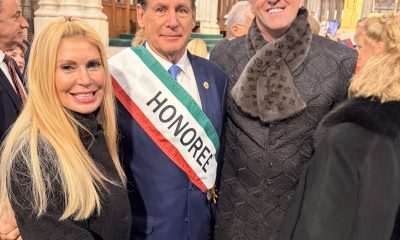
Prince Mario-Max Schaumburg-Lippe: Leandro and Denise Rizzuto Shine at New York’s Columbus Day Celebration!
-

 Cabaret3 days ago
My View: Backstage at the Cabaret Convention: OPENING NIGHT
-

 Broadway3 days ago
Tom Hiddleston and Hayley Atwell Are Bringing Shakespeare’s Battle of the Sexes to Broadway