
Stephanie J. Block (Star), Teal Wicks (Lady), Micaela Diamond(Babe), Jarrod Spector (Sonny Bono), Michael Berresse (Bob Mackie/Robert Altman/Frank), Michael Campayno (Rob Camilletti/Lee), and Matthew Hydzik (Gregg Allman/John Southall) joined BroadwayCon to shed some insight.

The Host

Stephanie J Block

Micaela Diamond

Teal Wicks

Matthew Hydzik

Michael Campayno

Stephanie J Block

Micaela Diamond

Teal Wicks

Matthew Hydzik

Stephanie J Block

Matthew Hydzik

Teal Wicks


There are actors who command attention by raising their voices, and then there was Tom Skerritt, who could command an entire scene simply by walking into it. With his rugged good looks, unmistakable voice, and effortless authority, Skerritt became one of Hollywood’s most dependable and respected performers, equally at home in a military cockpit, a small-town sheriff’s office, or aboard a doomed spacecraft.
 Skerritt, whose remarkable career spanned more than six decades and included MASH*, Alien, Top Gun, Steel Magnolias, and the Emmy-winning television series Picket Fences, died Wednesday, October 21, of natural causes. He was 93.
 Born August 25, 1933, in Detroit, Michigan, Skerritt served in the United States Air Force before pursuing acting. He studied at UCLA and made his film debut in the 1962 war drama War Hunt, alongside another young actor destined for stardom, Robert Redford. What followed was a career that defied the usual Hollywood categories. Skerritt possessed leading-man looks but developed the instincts of a consummate character actor, bringing intelligence, humor, and an unmistakable sense of humanity to virtually everything he touched.
His breakthrough came with Robert Altman’s irreverent 1970 masterpiece MASH, in which he portrayed Captain Augustus Bedford “Duke” Forrest alongside Donald Sutherland and Elliott Gould. The film’s anarchic humor and anti-establishment spirit helped redefine American cinema, and Skerritt’s performance established him as an actor capable of balancing comedy with a more grounded, masculine presence.
In 1977, he appeared opposite Shirley MacLaine and Anne Bancroft in The Turning Point, the acclaimed drama exploring the sacrifices and rivalries of the ballet world. Two years later, he became part of cinematic history as Captain Arthur Dallas in Ridley Scott’s Alien. As commander of the Nostromo, Skerritt brought a reassuring authority to a film in which reassurance proved increasingly impossible. His character’s fate became one of the unforgettable moments in a science-fiction classic that continues to influence filmmakers nearly half a century later.
For an entirely different generation, Skerritt will forever be Commander Mike “Viper” Metcalf, the seasoned flight instructor who helped guide Tom Cruise’s Maverick in the 1986 blockbuster Top Gun. While the younger stars supplied the adrenaline, Skerritt supplied the gravitas. He understood that authority on screen is most convincing when it doesn’t have to announce itself.
He brought that same understated quality to Herbert Ross’s Steel Magnolias in 1989, playing Drum Eatenton, the good-natured husband of Sally Field’s M’Lynn. Surrounded by a powerhouse female ensemble that included Shirley MacLaine, Dolly Parton, Olympia Dukakis, Daryl Hannah, and Julia Roberts, Skerritt knew exactly when to step forward and when to let the women command the room. His performance offered warmth and gentle humor without competing with the film’s emotional center.
Other memorable film appearances included Robert Redford’s A River Runs Through It and Robert Zemeckis’s Contact, in which he portrayed the ambitious Dr. David Drumlin opposite Jodie Foster. Whether playing a sympathetic father, a military authority, or a calculating bureaucrat, Skerritt understood the value of restraint.
Television brought him one of his greatest triumphs with David E. Kelley’s Picket Fences, which aired on CBS from 1992 to 1996. As Sheriff Jimmy Brock, Skerritt anchored the eccentric residents of the fictional town of Rome, Wisconsin, navigating an extraordinary assortment of moral dilemmas, social controversies, and decidedly unusual crimes. The series allowed him to demonstrate the full range of his abilities, combining authority, vulnerability, humor, and compassion. In 1993, he won the Primetime Emmy Award for Outstanding Lead Actor in a Drama Series.
Although best known for his film and television work, Skerritt also made his mark on the stage. In 2004, he appeared as the Stage Manager in Thornton Wilder’s Our Town at Seattle’s Intiman Theatre. Then, at the age of 80, he made his Broadway debut in A Time to Kill, the stage adaptation of John Grisham’s bestselling novel.
Adapted by Rupert Holmes and directed by Ethan McSweeny, A Time to Kill opened at Broadway’s John Golden Theatre on October 20, 2013, and ran through November 17, 2013. Skerritt portrayed Lucien Wilbanks, the disbarred, hard-drinking former civil rights attorney who mentors young lawyer Jake Brigance, played by Sebastian Arcelus. The cast also included John Douglas Thompson, Patrick Page, Tonya Pinkins, Ashley Williams, and Fred Dalton Thompson.
It was a particularly fitting Broadway role for Skerritt. Lucien was a man whose professional reputation had suffered but whose intelligence, experience, and understanding of human nature remained invaluable. The character required precisely the combination of world-weariness, humor, and quiet authority that had distinguished Skerritt’s screen career. His Broadway appearance proved that even after half a century before the cameras, he still had another theatrical chapter to explore.
Beyond performing, Skerritt devoted considerable energy to nurturing the next generation of storytellers. He helped establish TheFilmSchool in Seattle, an organization dedicated to teaching the craft of cinematic storytelling. He also co-founded the Red Badge Project, which uses writing and storytelling to help military veterans process their experiences and find their voices.
It was a meaningful extension of his own life. Having served in the Air Force, Skerritt understood the importance of giving veterans a way to express experiences that are often difficult to articulate. For him, storytelling was more than entertainment; it was a means of connection, understanding, and healing.
In announcing his death, his family remembered not simply the celebrated actor but the man behind the performances: someone devoted to humor, curiosity, wisdom, generosity, creativity, veterans, the natural world, and helping others tell their stories.
Skerritt is survived by his wife, Julie Tokashiki, five children, five grandchildren, and two great-grandchildren.
Hollywood has always celebrated its larger-than-life personalities, but Tom Skerritt belonged to a different and increasingly rare tradition. He was an actor who understood that the most compelling presence in a scene is not necessarily the loudest or the flashiest. Sometimes it is the man who listens, considers, and delivers a single line with such conviction that everyone else seems to fall silent.
From the operating tents of MASH* to the Nostromo, from the skies of Top Gun to the Broadway courtroom of A Time to Kill, Tom Skerritt gave audiences something that cannot be manufactured by celebrity or spectacle: authenticity.
That is a legacy worth remembering.

There is a curious phenomenon on Broadway. When a beloved television star makes their theatrical debut, audiences and critics often seem prepared to bow before the performance has even begun. Star power is a wonderful thing for the box office, but it does not automatically translate into theatrical credibility. Julia Louis-Dreyfus, making her Broadway debut in Jon Robin Baitz’s Other Desert Cities, is a brilliant comedian and a formidable television presence. Unfortunately, neither quality makes her right for Polly Wyeth, the formidable matriarch at the center of this family drama.

Lily Rabe, Ed Harris, Julia Louis-Dreyfus Photo by Emilio Madrid
Under the direction of John Benjamin Hickey, this first Broadway revival feels as though five different directors have been working with five different actors, none of whom has been told what play they are in. The result is an oddly disconnected evening in which an impressive collection of talent never quite becomes a family. Worse, a play built upon decades of grief, resentment, political division, and devastating secrets is repeatedly played for laughs that simply aren’t there.
Set in Palm Springs, California, Other Desert Cities brings together the wealthy, conservative Wyeth family for a holiday reunion that rapidly becomes an emotional battleground. Polly (Louis-Dreyfus) and her husband Lyman (Ed Harris), a former actor with political connections, have built a comfortable life around their Republican convictions and carefully guarded past. Their daughter Brooke (Lily Rabe), a writer living in New York, has returned after six years away, bringing with her a manuscript that threatens to dismantle everything her parents have spent years protecting.

Allison Janney, Julia Louis-Dreyfus Photo by Emilio Madrid
Also present is Polly’s sister Silda (Allison Janney), a recovering alcoholic and outspoken liberal whose relationship with Polly is complicated by professional rivalry, political differences, and a lifetime of accumulated grievances. The sisters once collaborated on MGM comedies, but whatever affection remains between them has been buried beneath decades of resentment.
Brooke’s manuscript is a memoir about her brother Henry, whose involvement with a radical group and an attack on a military recruitment center ended in his apparent suicide. For Brooke, the book represents an attempt to understand the tragedy that shattered her family and contributed to her own emotional collapse. For Polly and Lyman, its publication threatens to expose a history they have fought desperately to keep private.
Baitz’s writing requires the audience to feel the weight of what remains unspoken. The characters’ political arguments are only the surface of something far more painful. Their disagreements are not simply about liberalism and conservatism, but about guilt, loyalty, memory, and the lengths parents will go to protect their children and themselves.
Unfortunately, Hickey’s production never establishes the emotional foundation necessary to make any of this convincing.
Louis-Dreyfus has impeccable comic timing, but Polly is not Elaine Benes or Selina Meyer. She is a woman whose polished exterior conceals enormous suffering, and whose sharpness should emerge from years of protecting herself against unbearable truths. Here, the character’s brittle wit too often becomes an invitation to laugh rather than a glimpse of the pain beneath it. Louis-Dreyfus knows how to land a line, but the emotional life surrounding those lines remains frustratingly elusive. She dominates the stage without ever fully inhabiting the woman she is playing.
Harris, an actor capable of extraordinary emotional depth, fares little better. His Lyman should provide a counterweight to Polly’s formidable personality, a man whose apparent composure conceals his own terrible compromises. Instead, Harris frequently seems to be operating in a different register from the rest of the company. His attempts at humor further undermine the tension, and the marriage at the center of the play never acquires the intimacy or shared history it desperately needs.
Janney, another enormously gifted performer, also leans into the comedy. Silda’s caustic observations should carry the bitterness of a woman who has spent years watching her sister become someone she no longer recognizes. Instead, too many of her exchanges feel engineered for a response rather than rooted in genuine resentment. What should be a fascinating, wounded relationship between two sisters becomes a series of verbal volleys without sufficient emotional consequence.
Rabe faces perhaps the most difficult assignment as Brooke, whose memoir drives the action and whose anguish ultimately forces the family’s darkest secrets into the open. But she, too, seems disconnected from the emotional reality of the character. Brooke’s desperation should be apparent long before the final revelations. Instead, we are asked to accept the depth of her suffering without having been allowed to experience its gradual emergence.

Lily Rabe, Joe Keery, Allison Janney Photo by Emilio Madrid
Joe Keery, as Trip Wyeth, fares the best of the ensemble, bringing a welcome naturalness and ease to a production desperately in need of both. As the younger brother, Trip is the family’s observer, navigating the emotional minefield with humor and an instinct for self-preservation. Keery has an appealing stage presence and, unlike his fellow cast members, occasionally makes us believe he actually belongs to this family. Unfortunately, Hickey’s uneven direction undermines even his efforts, allowing moments that should reveal the character’s emotional intelligence to become little more than comic relief. Still, Keery comes closest to finding the humanity beneath Baitz’s dialogue, making him the evening’s most convincing performer.
This is the fundamental failure of the production. Nobody seems entirely believable as the person they are supposed to be, and nobody appears to share a convincing history with anyone else. The relationships never develop organically, the conflicts arrive without sufficient emotional preparation, and the actors seem to be responding to individual moments rather than participating in the same unfolding tragedy.
Act One is particularly tedious. Without an underlying sense of danger or emotional urgency, the family’s conversations become an extended exercise in exposition. The political sparring lacks bite, the humor feels misplaced, and the tension that should be gathering beneath the surface simply fails to materialize.
Act Two is considerably better. As the truth about Henry’s disappearance begins to emerge, the play finally finds some of the dramatic momentum it has been missing. The revelations concerning his involvement with the bombing, his parents’ desperate attempts to protect him, and the devastating deception surrounding his supposed suicide offer the actors material of genuine emotional consequence.
For a while, the company begins to come together. There are glimpses of the production this might have been, moments when the enormity of the family’s grief finally takes precedence over the delivery of individual lines.
But theater is cumulative. A devastating revelation cannot achieve its full impact when the preceding ninety minutes have failed to establish the relationships that make it devastating. By the time the emotional stakes become clear, the production has already squandered much of its audience’s investment.
Brooke’s anguish, the parents’ guilt, and the family’s final confrontation should be overwhelming. Instead, they feel manufactured. We understand intellectually what these people have endured, but we have never truly believed in them. And without belief, even the most painful confession becomes another piece of theatrical machinery.
Hickey has suggested that the play’s setting, more than two decades in the past, resonates with our current politically fractured moment. He is right about the relevance of Baitz’s material. The divisions between generations, the collision of political beliefs with personal loyalties, and the manipulation of family history remain painfully recognizable. But relevance alone does not create compelling theater. A production must illuminate those conflicts through human behavior, not simply present them as subjects for discussion.
There is a fine play here, one that understands how families construct their own versions of history and how fiercely they defend those narratives against the truth. It asks difficult questions about whether honesty is always an act of courage, whether protecting someone can become a form of betrayal, and whether the stories we tell about those we love belong entirely to us.
What is missing is the emotional authenticity to make those questions matter.
The irony is that this cast possesses more than enough talent to deliver a memorable revival. Louis-Dreyfus, Harris, Janney, and Rabe are accomplished performers. Yet talent, no matter how celebrated, is no substitute for casting that serves the material and direction that creates a cohesive ensemble.
Other Desert Cities should leave us contemplating the terrible price of family secrets. Instead, I left wondering how so many gifted actors could occupy the same stage and remain so emotionally distant from one another.
In the end, the greatest problem isn’t that this family is dysfunctional. It’s that I didn’t believe for a moment they were a family at all.
Other Desert Cities: Hudson Theater, 141 West 44th Street through January 17
Broadway
Billy Crystal and Whoopi Goldberg Bring Laughter, Love and a Lifetime of Memories to PaleyFest NY

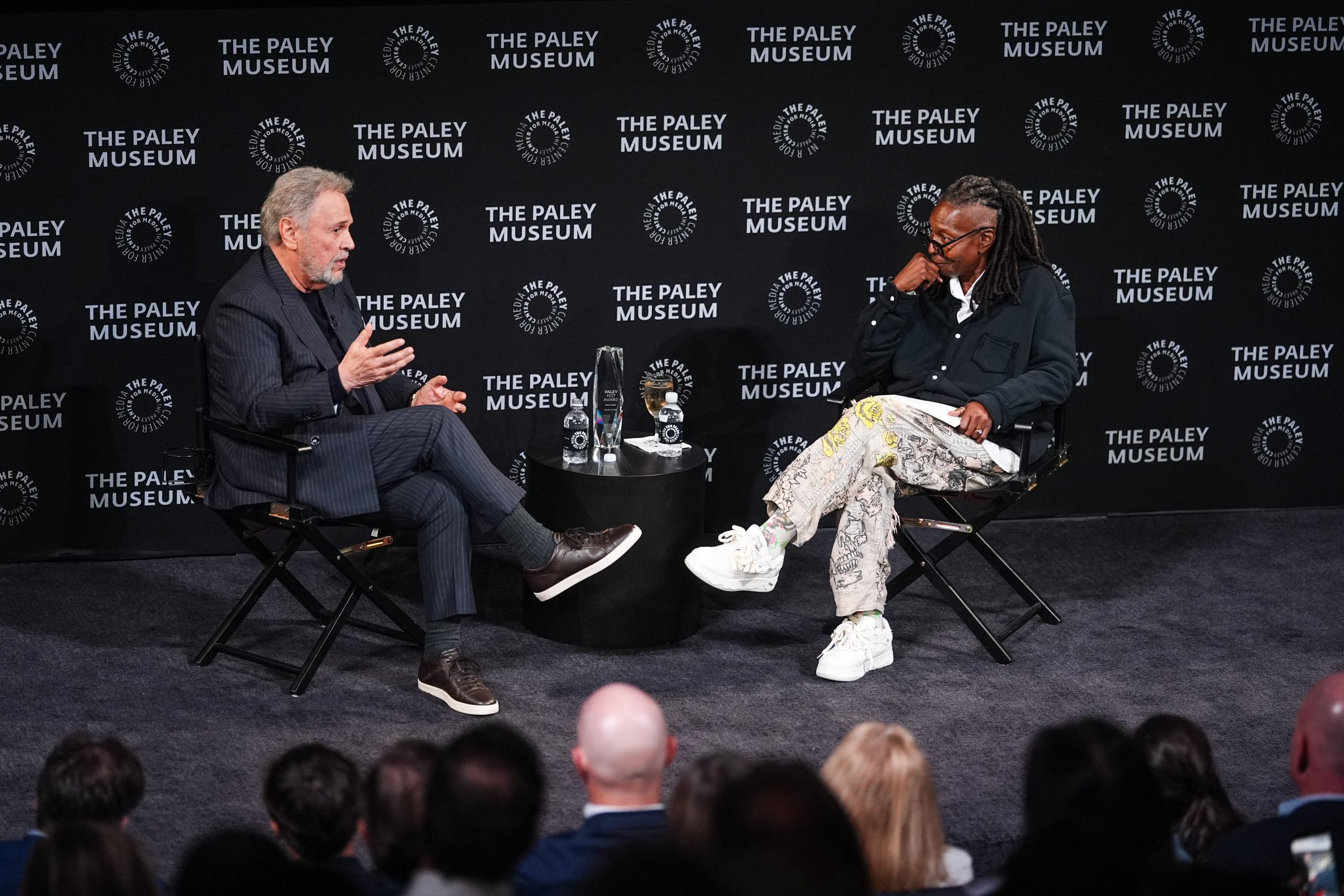
Two entertainment legends, one sold-out theater, and an evening that proved the greatest comedians understand something profound about life: sometimes laughter is the only way through.
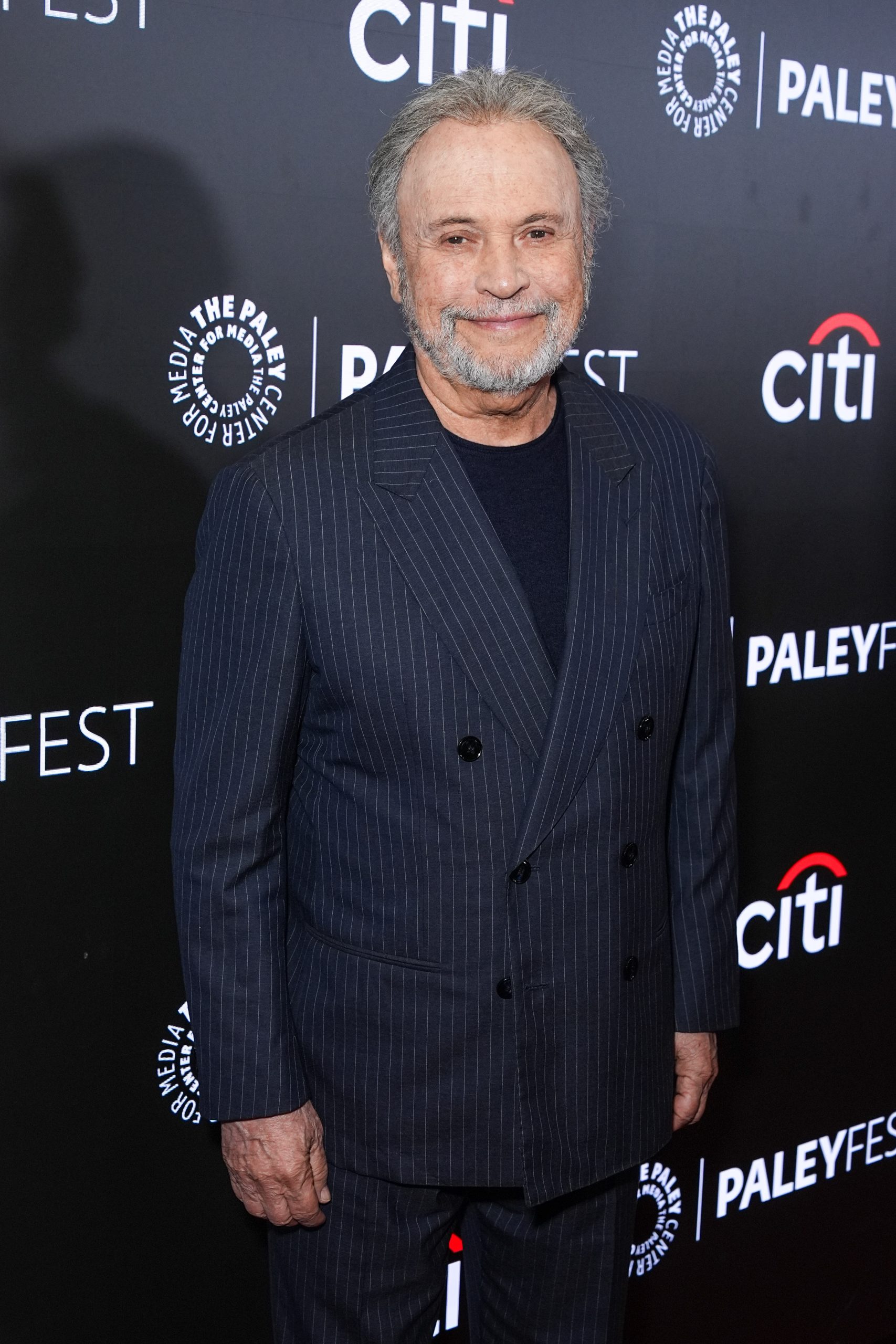
Billy Crystal- Courtesy of The Paley Museum
There are friendships in show business, and then there are friendships that have become part of entertainment history. When Billy Crystal and Whoopi Goldberg share a stage, there is no need for manufactured chemistry, rehearsed spontaneity, or carefully orchestrated charm. Their affection is genuine, their timing impeccable, and their shared history provides enough material to keep an audience entertained for hours.
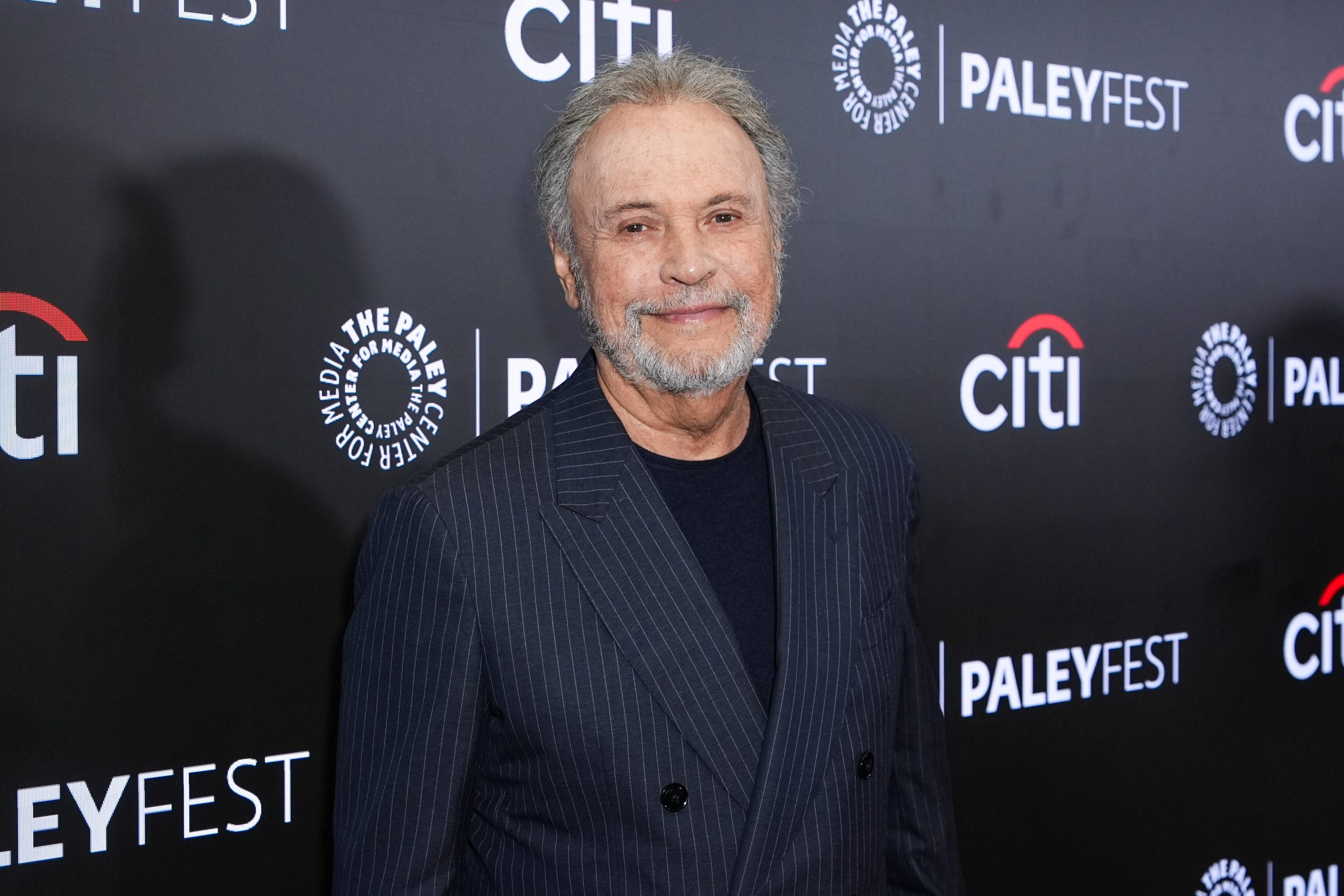
Billy Crystal- Courtesy of The Paley Museum
Such was the atmosphere at The Paley Center for Media’s annual fall festival, PaleyFest NY, where Crystal took center stage for an intimate, frequently hilarious, and unexpectedly moving conversation moderated by Goldberg. The sold-out evening at the Bennack Theater, presented with support from Citi, celebrated Crystal’s extraordinary career and his latest Broadway venture, 860.
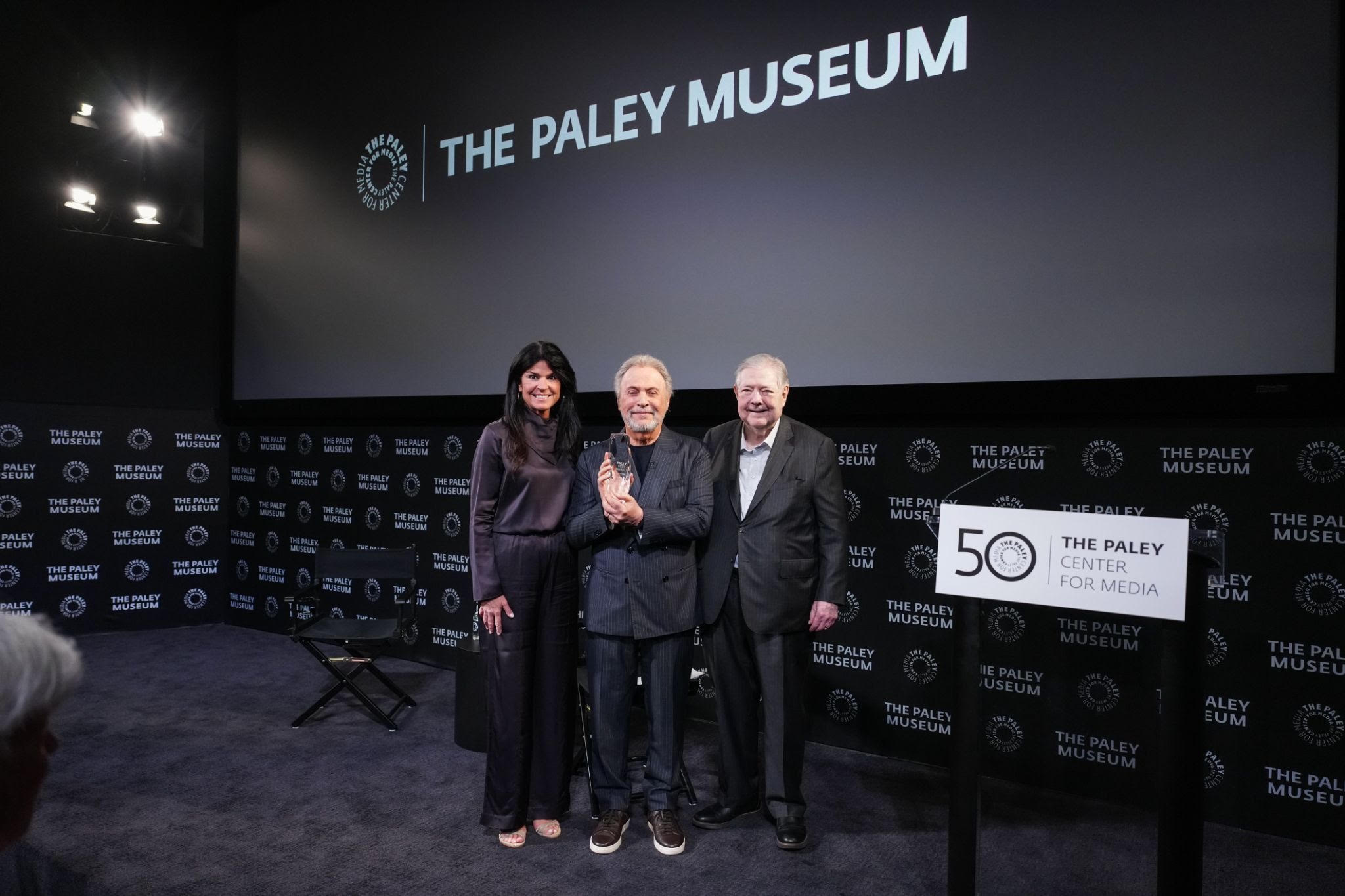
Maureen J. Reidy and Frank A. Bennack, Jr. present the PaleyFest award to Billy Crystal at PaleyFest NY at The Paley Museum Courtesy of The Paley Museum
The evening also marked the inaugural year of the PaleyFest Award, a new honor recognizing excellence in media, television, and entertainment, presented to participating shows. It was an appropriate occasion to celebrate a performer whose career has effortlessly crossed the boundaries between stand-up comedy, television, film, Broadway, writing, producing, and directing.
Crystal has spent decades making audiences laugh, but what distinguishes him from so many comedians is his understanding that humor is not the opposite of heartbreak. Quite often, it is heartbreak’s most eloquent companion.
Goldberg, herself a formidable theatrical and cinematic presence, understood exactly where to take the conversation. Rather than simply retracing a succession of career highlights, she explored the personal experiences that have shaped Crystal’s work and his enduring love affair with live performance.
“I’m so enjoying your love of being on stage,” Goldberg told him, before offering an observation that every theater professional understands: “Live performance you get what you get. Not everybody can do it.”
Indeed, they cannot. There is an extraordinary difference between performing for a camera, where a moment can be captured again and again, and standing before a live audience, where everything happens in real time. The laughter, the silence, the unexpected emotional connection, and the occasional misstep are all part of the experience. Crystal has always understood how to make that immediacy work in his favor.
His latest Broadway project, 860, draws upon deeply personal experiences, and Crystal spoke candidly about the emotional demands of bringing such material to the stage. “Bringing that to the stage was really cathartic,” he admitted. Yet he was quick to emphasize that the work is not simply an examination of grief. “It’s not just about loss. It’s about a family coming together and it’s about renewal,” he explained, adding, “It’s not just starting over, it’s moving forward.”
That distinction is particularly revealing. Starting over suggests erasing what came before. Moving forward acknowledges that the past remains part of us, even as life insists upon continuing.
Crystal’s reflections became especially poignant when he discussed the experience of watching a community face devastation, recalling the terrifying responsibility of explaining an unfolding disaster to children.
“When you’re watching your town burn down and you know it’s coming and the kids are there and they’re young… the responsibility you feel is alright, I gotta be real with them. If I’m gonna cry, I’m gonna cry and if I’m gonna hold onto this, I’m gonna hold on to it.”
It was a moment of striking vulnerability from a man whose public identity has so often been associated with impeccable comic timing. There was no attempt to disguise fear behind a punchline or transform suffering into an easy inspirational message.
Instead, Crystal spoke about the necessity of honesty, particularly within a family confronting circumstances beyond its control.
“We were fortunate to still have each other,” he reflected. That simple acknowledgment carried considerable weight. For all the possessions, memories, and familiar surroundings that can disappear in an instant, the relationships that survive become the foundation upon which life is rebuilt. Family has always occupied a central place in Crystal’s work, and the conversation naturally turned to memories of his father, whose influence continues to resonate throughout his career.
“He had a great sense of humor. He was quiet but he loved us [the boys]… he worked so hard,” Crystal recalled.
It was a lovely glimpse into the origins of a comic sensibility that has never depended solely upon jokes. Crystal’s best work has always been rooted in observation, affection, nostalgia, and an acute understanding of the small human moments that become our most enduring memories.
Of course, no evening celebrating Billy Crystal would be complete without revisiting some of the wonderfully unpredictable turns of his career.
One of the most entertaining recollections concerned the inaugural episode of Saturday Night Live on October 11, 1975. Crystal had been scheduled to appear, only to find himself cut from the broadcast. For a young performer attempting to establish himself, the experience was devastating.
“I blew it, my career is over, Lorne cut me from the show and this is over,” he remembered thinking as he returned home.
There is something delicious about hearing that story fifty-one years later, knowing what followed. The young comedian who believed one missed television appearance had destroyed his future would go on to become one of the most recognizable entertainers in America.
If ever there were an argument against allowing a single disappointment to define an entire career, Crystal’s journey provides it.
His eventual association with Saturday Night Live would become an important chapter in that career, but the larger lesson is one that extends far beyond entertainment: rejection and failure are rarely the final verdicts we imagine them to be.
Goldberg also steered the conversation toward Crystal’s working relationship with his wife, producer Janice Crystal. The couple’s longstanding partnership provided an irresistible opportunity for a little Hollywood mischief.
“You know I’m sleeping with the producer,” Crystal deadpanned. “An age-old Hollywood story.”
It was vintage Billy Crystal: affectionate, mischievous, and delivered with the effortless timing of a man who has spent a lifetime understanding exactly how long to let a joke breathe.
What made the evening particularly satisfying was the interplay between Crystal and Goldberg. These are two performers who have nothing left to prove, and that freedom creates a rare kind of conversation. They can tease one another, wander into memories, acknowledge disappointments, and speak openly about life’s more painful passages without sacrificing the humor that first brought them together.
Goldberg did not approach Crystal as a distant interviewer examining a celebrated subject. She approached him as a friend who knows the man behind the public persona, and that familiarity allowed the conversation to move naturally between comedy and confession.
It also revealed something essential about Crystal’s longevity.
His career has never been built exclusively upon the ability to make people laugh. It has been built upon his ability to make them recognize themselves. Whether recalling childhood, navigating marriage, confronting loss, or celebrating friendship, he understands that the most universal stories are often the most personal.
That understanding has carried him from television to film to Broadway and back again, without diminishing his enthusiasm for the next creative challenge.
At a time when entertainment is increasingly driven by spectacle, algorithms, and the relentless pursuit of attention, there was something wonderfully refreshing about watching two accomplished artists simply sit together and talk.
No elaborate production was necessary. No manufactured controversy. Just intelligence, affection, extraordinary comic instincts, and the accumulated wisdom of lives spent entertaining millions.
PaleyFest NY provided the setting, but Billy Crystal and Whoopi Goldberg supplied the magic.
And if the evening offered one lasting reminder, it was that the best comedians do considerably more than make us laugh. They help us understand why, even in the most difficult moments, laughter remains worth finding.
Broadway
Tom Hiddleston and Hayley Atwell Are Bringing Shakespeare’s Battle of the Sexes to Broadway
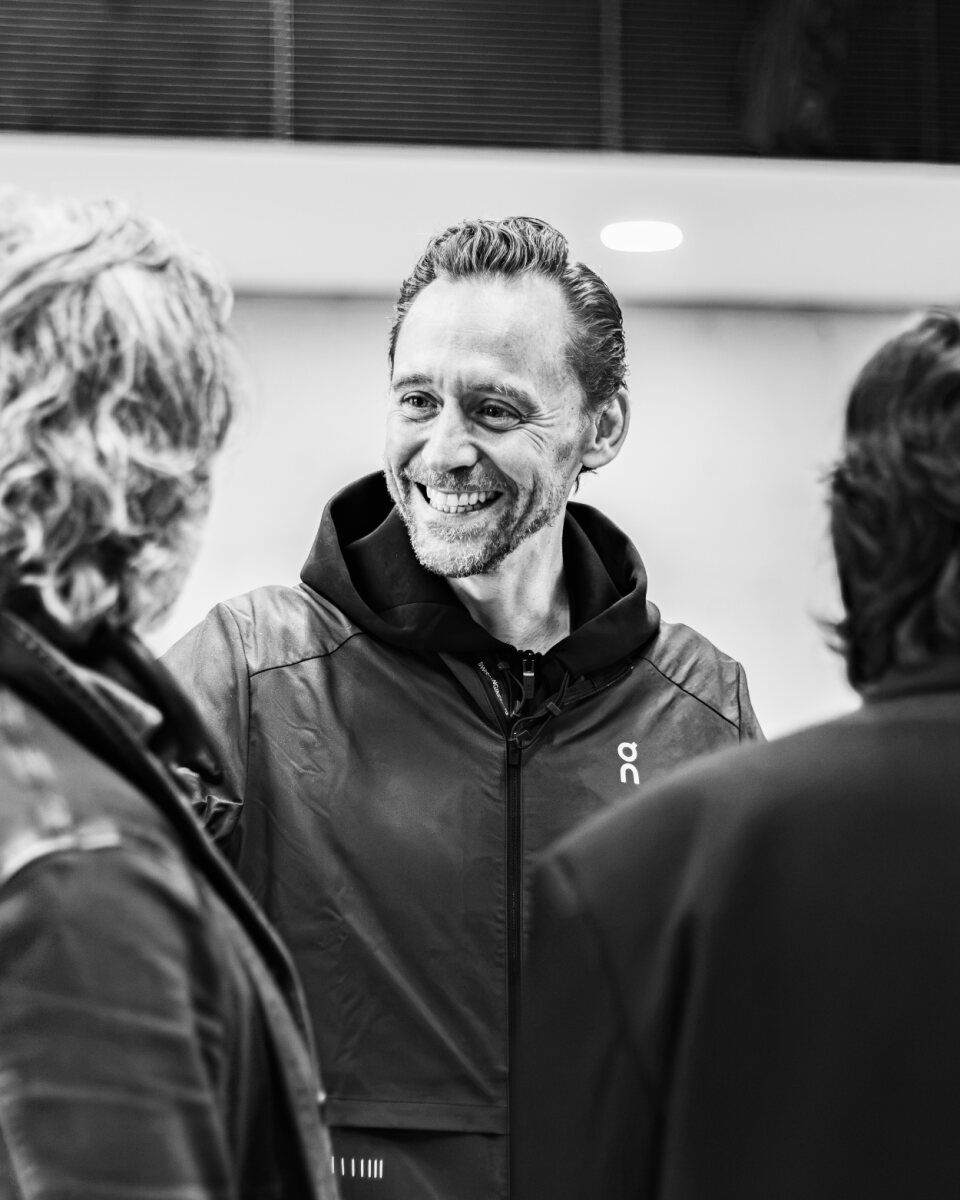
Jamie Lloyd’s Much Ado About Nothing begins rehearsals in London before its hotly anticipated New York engagement at the Winter Garden Theatre.
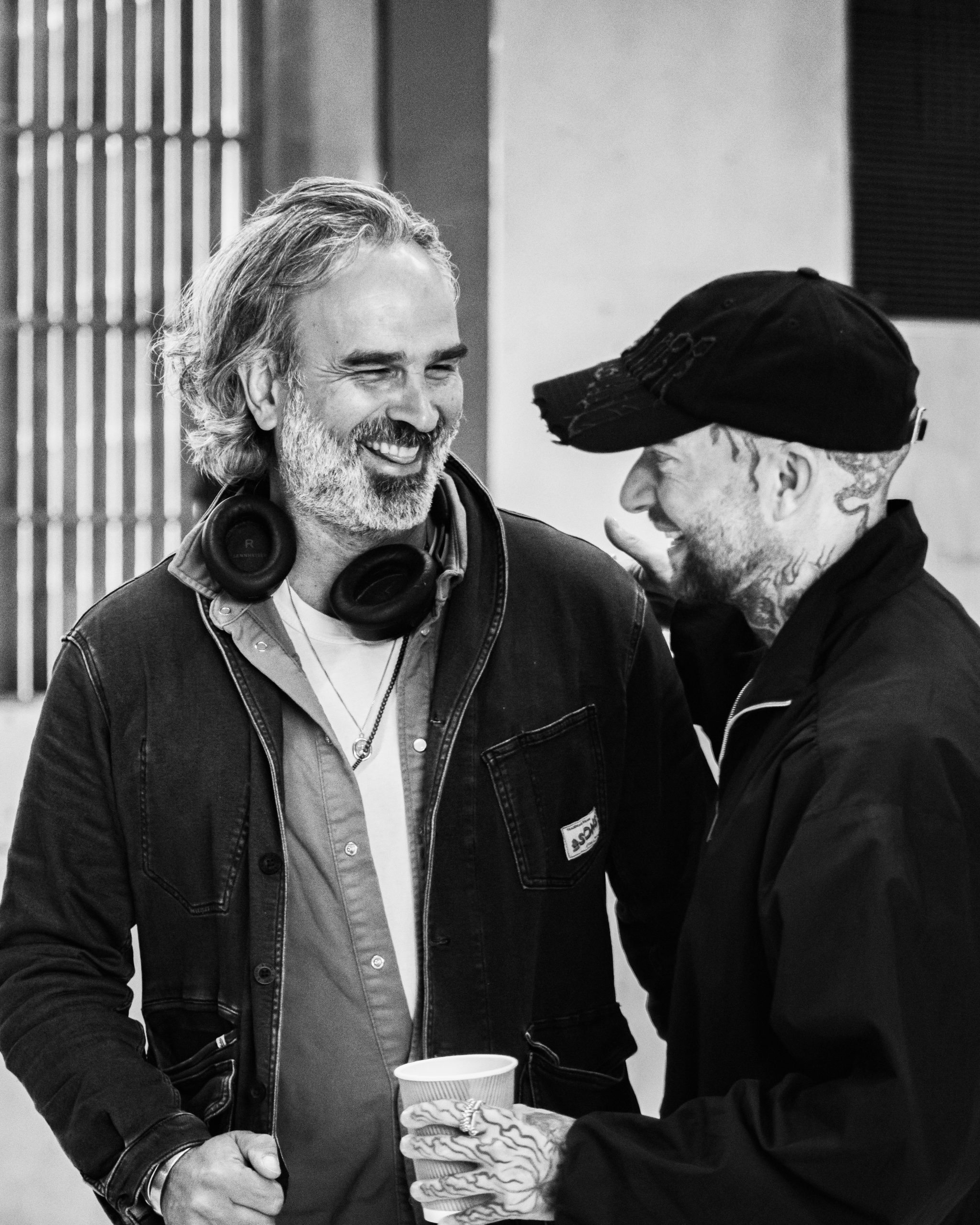
Gerald Kyd, Jamie Lloyd Photo by Justine Matthew
Broadway is about to get a delicious dose of Shakespearean sparring, and the combatants are rather irresistible.
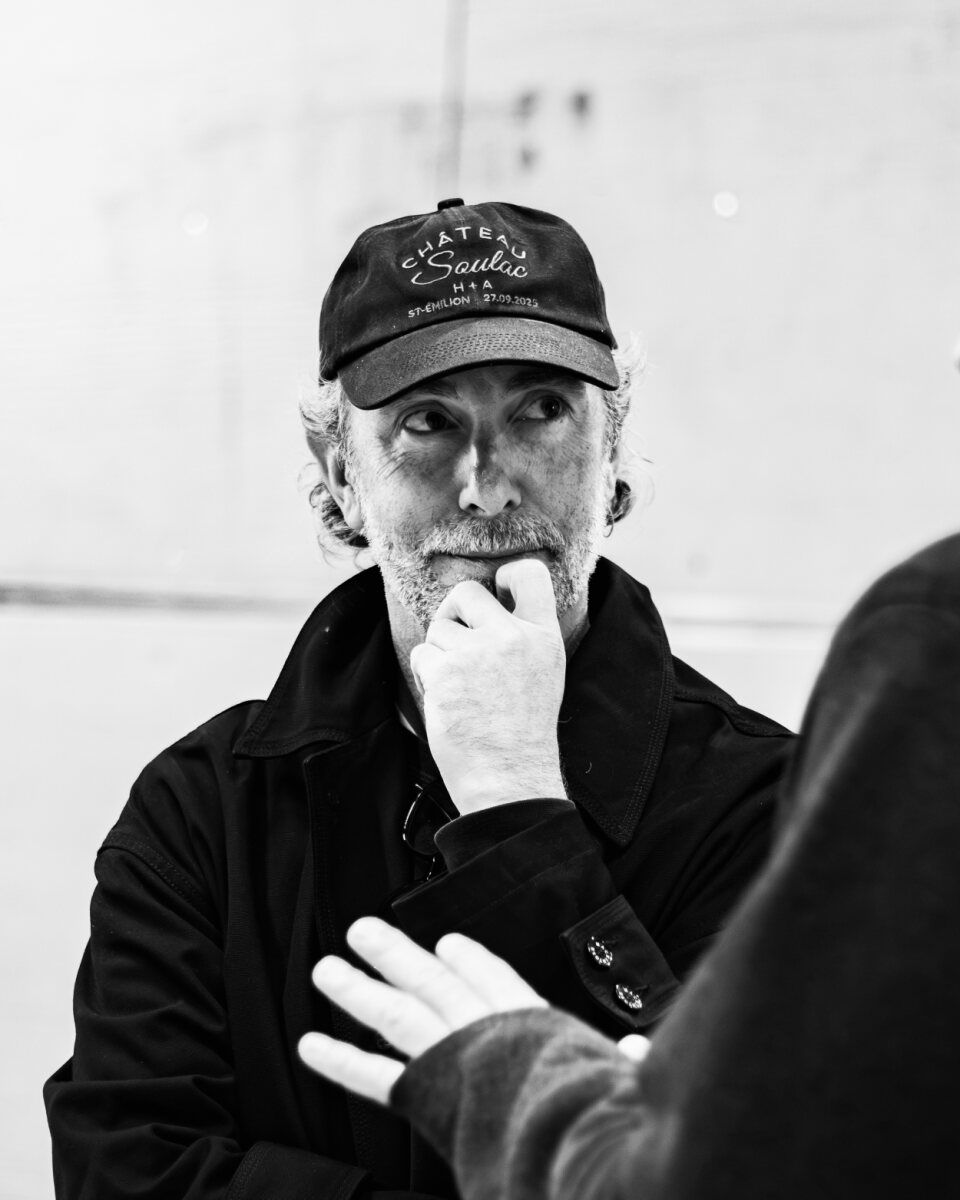
Tom Hiddleston photo by Justine Matthew
Tom Hiddleston
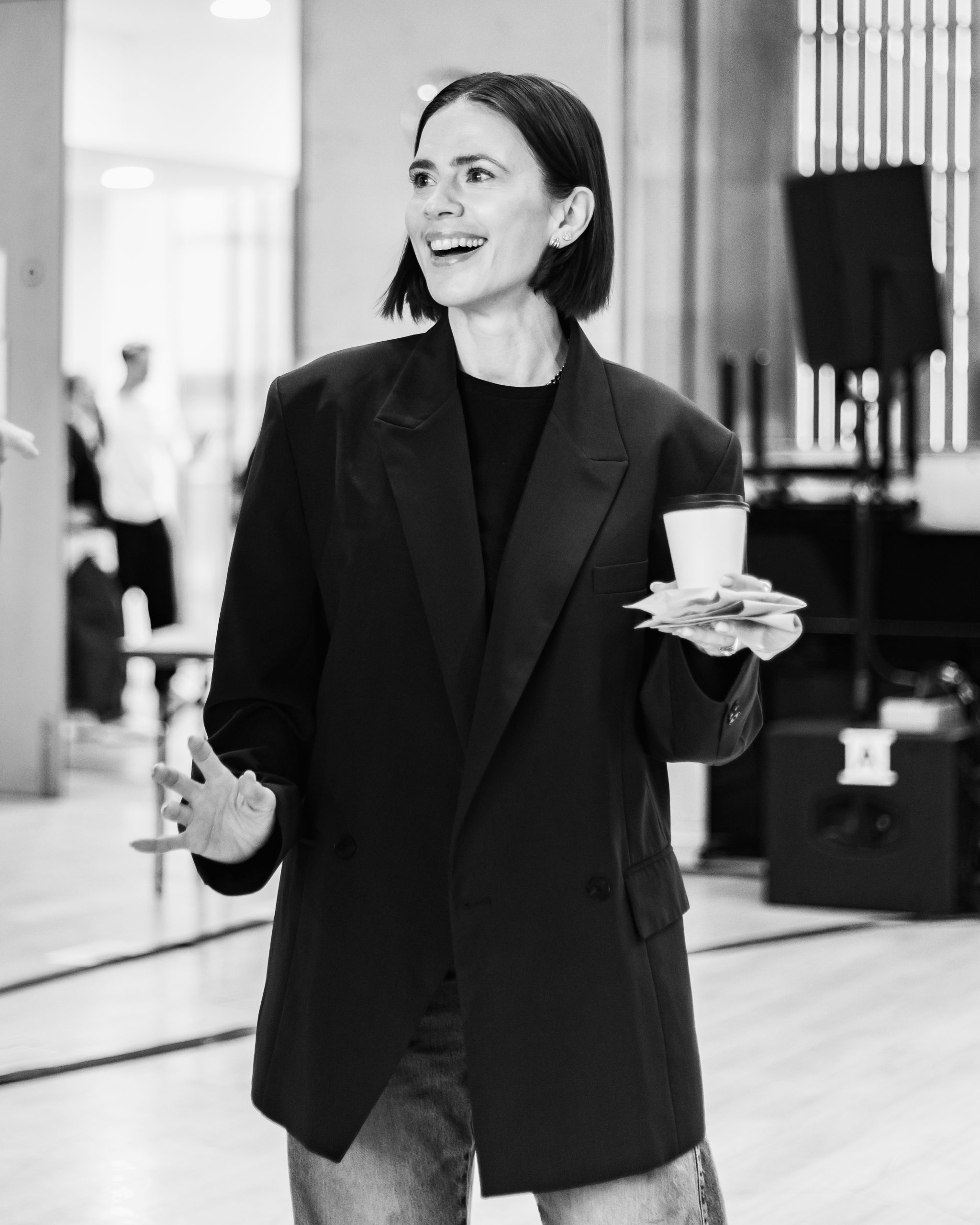
Hayley Atwell Photo by Justine Matthew
and Hayley Atwell are preparing to go head-to-head in Much Ado About Nothing, bringing two formidable British talents, considerable star power and what promises to be some spectacular verbal warfare to the Winter Garden Theatre.

Cast and crew photo by Justine Matthew
Under the direction of the ever-provocative Jamie Lloyd, rehearsals are officially underway in London for the strictly limited Broadway engagement, which begins previews October 31, opens November 19 and runs through January 10, 2027.
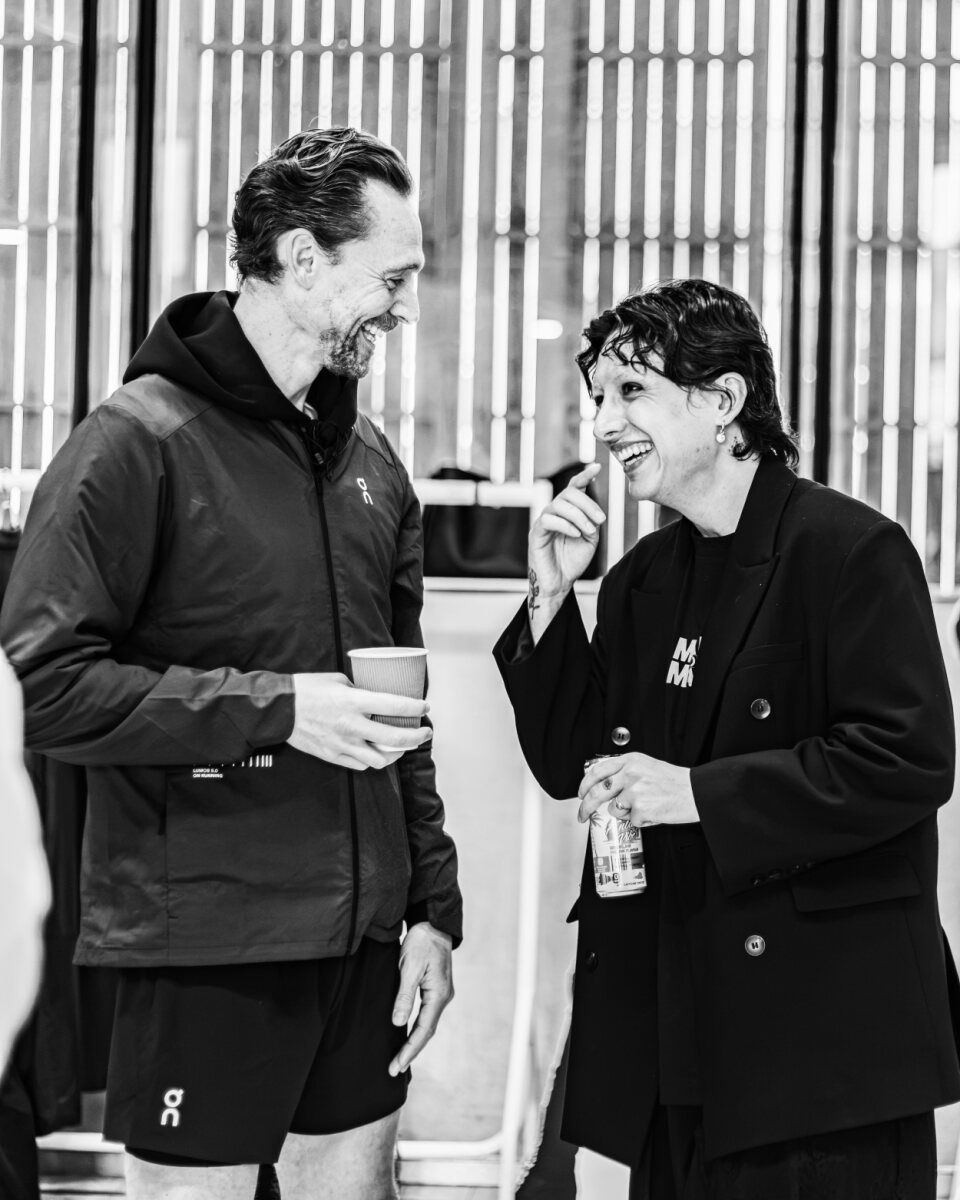
Tom Hiddleston, Mason Alexander Park photo by Justine Matthew
Frankly, who better to play Shakespeare’s most gloriously argumentative couple?
Hiddleston, whose effortless sophistication and mischievous charm have made him equally compelling on stage and screen, takes on Benedick, the confirmed bachelor who considers himself far too clever to fall in love. Audiences know him as Marvel’s deliciously unpredictable Loki, but theatre devotees know that beneath the cinematic charisma is a classically trained actor with serious Shakespearean credentials. An Olivier Award winner, Tony nominee and Golden Globe winner, Hiddleston has the intelligence, precision and impeccable comic instincts to make Benedick’s verbal gymnastics particularly entertaining.
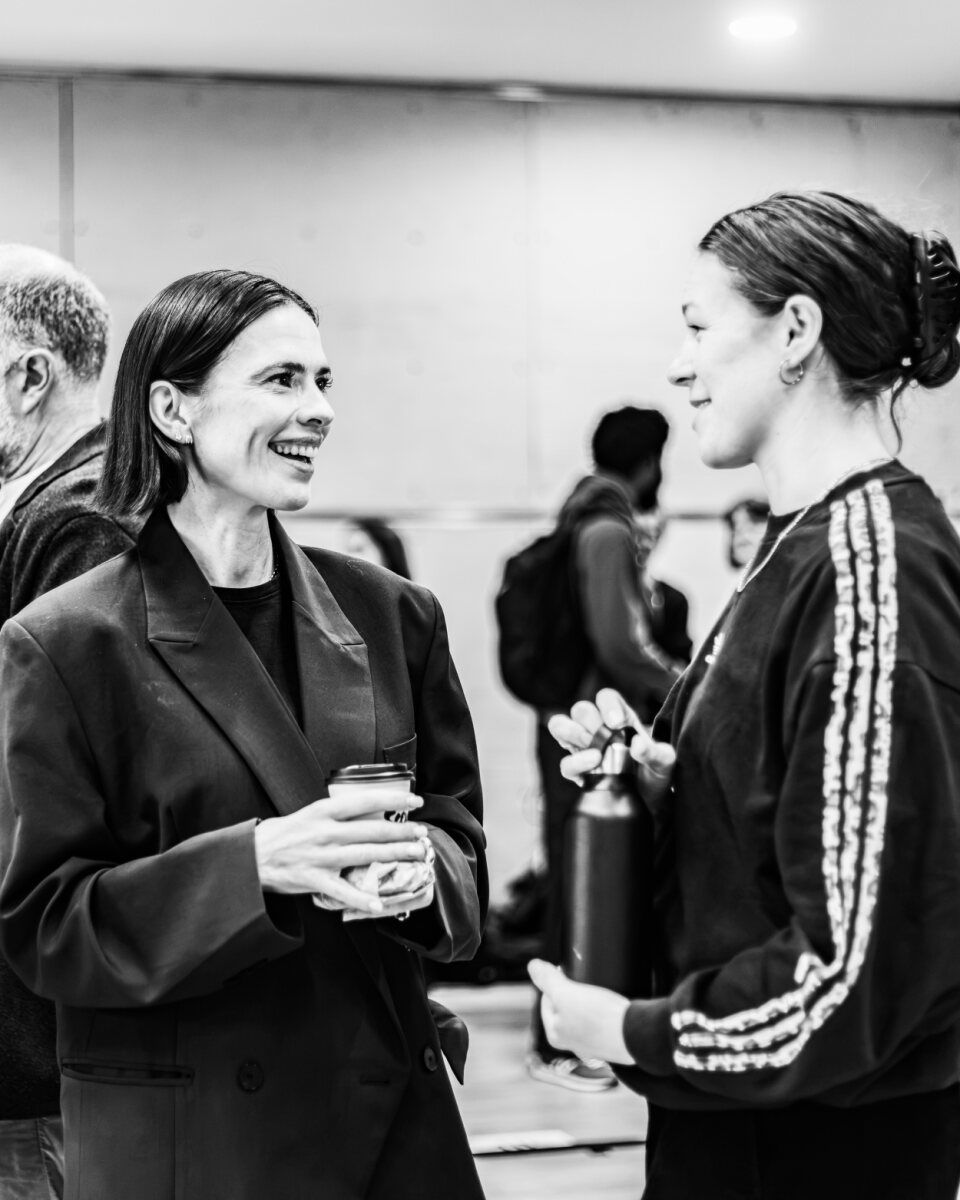
Hayley Atwell photo by Justine Matthew
Opposite him is Hayley Atwell, making her Broadway debut as Beatrice, one of Shakespeare’s most brilliantly outspoken women. Best known internationally for her portrayal of Peggy Carter in the Marvel universe, Atwell is also a three-time Olivier Award nominee whose theatrical career has demonstrated a remarkable combination of emotional depth, razor-sharp wit and commanding presence. Beatrice requires an actress who can turn a cutting remark into an art form while revealing the vulnerability beneath the bravado. Atwell seems particularly well suited to the challenge.
Then there is the irresistible prospect of seeing these two Marvel veterans trading Shakespearean insults instead of saving the universe. One suspects their weapons of choice will be considerably more entertaining than anything found in an Avengers arsenal.
For the uninitiated, Much Ado About Nothing revolves around Benedick and Beatrice, two fiercely independent personalities who insist they have absolutely no interest in romance, particularly with each other. Naturally, everyone around them knows better. Their friends conspire to bring them together, setting off a cascade of misunderstandings, romantic intrigue, wounded pride and some of the most dazzling dialogue Shakespeare ever wrote.
Beneath the comedy lies a surprisingly modern examination of reputation, public humiliation, deception and the dangerous ease with which appearances can be mistaken for truth. In an age of social media, instant judgment and reputations destroyed at breathtaking speed, Shakespeare’s observations about human behavior feel remarkably contemporary.
That tension between sparkling comedy and darker emotional undercurrents should prove fertile territory for Jamie Lloyd, whose theatrical imagination has made him one of the most talked-about directors working today. A Tony Award winner and multiple Olivier Award recipient, Lloyd is known for stripping familiar classics down to their emotional essentials, creating productions that challenge expectations while placing extraordinary demands on their performers.
His approach to Much Ado About Nothing is likely to make this far more than a conventional evening of Elizabethan romance. With Lloyd at the helm, the question is not simply whether Benedick and Beatrice will fall in love, but how their pride, defenses and carefully constructed identities will survive the experience.

Mara Huf photo by Justine Matthew
Joining Hiddleston and Atwell is an accomplished ensemble featuring Mara Huf as Hero
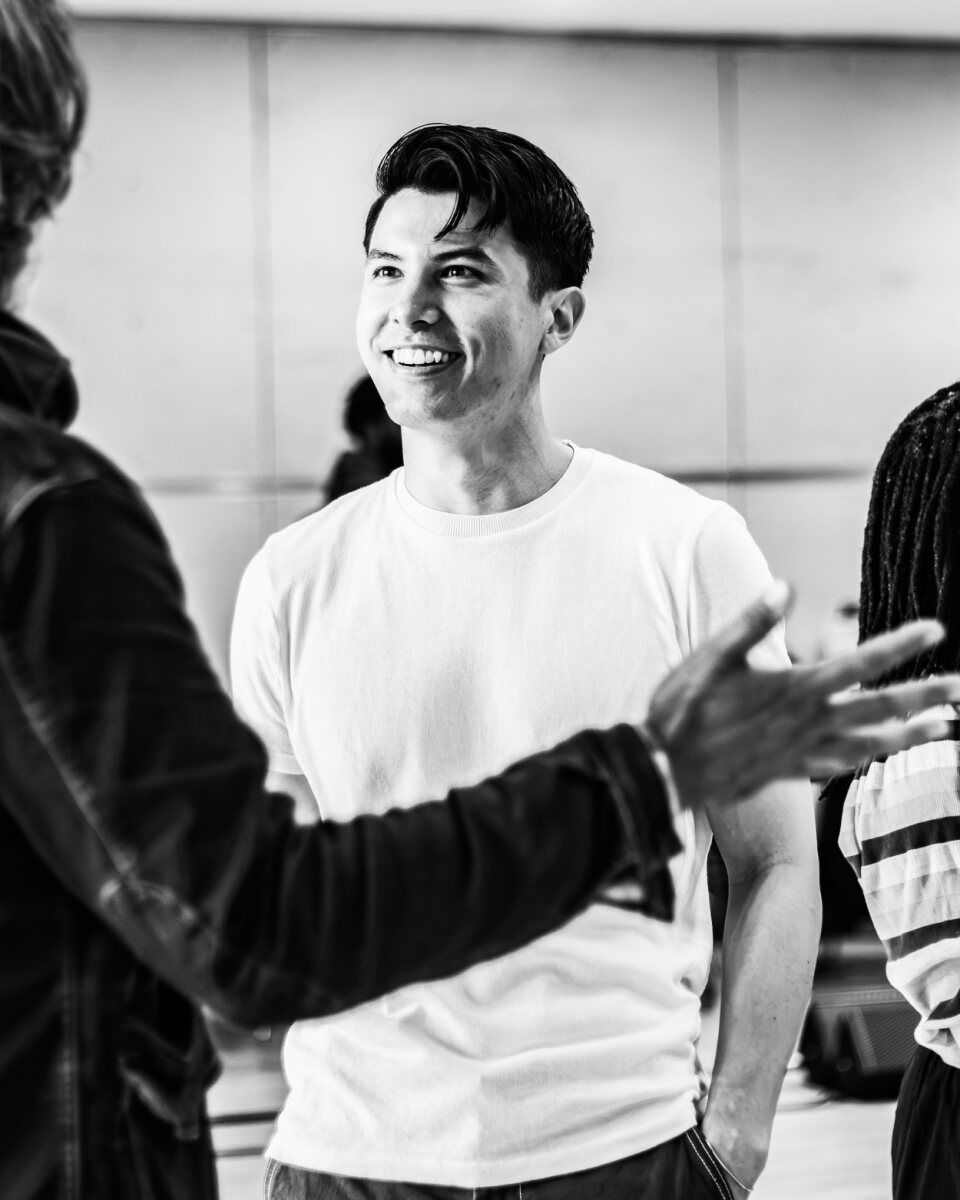
James Phoon photo by Justine Matthew
James Phoon as Claudio, Gerald Kyd as Don Pedro, Forbes Masson as Leonato, Tim Steed as Don John, Mika Onyx Johnson as Borachio,
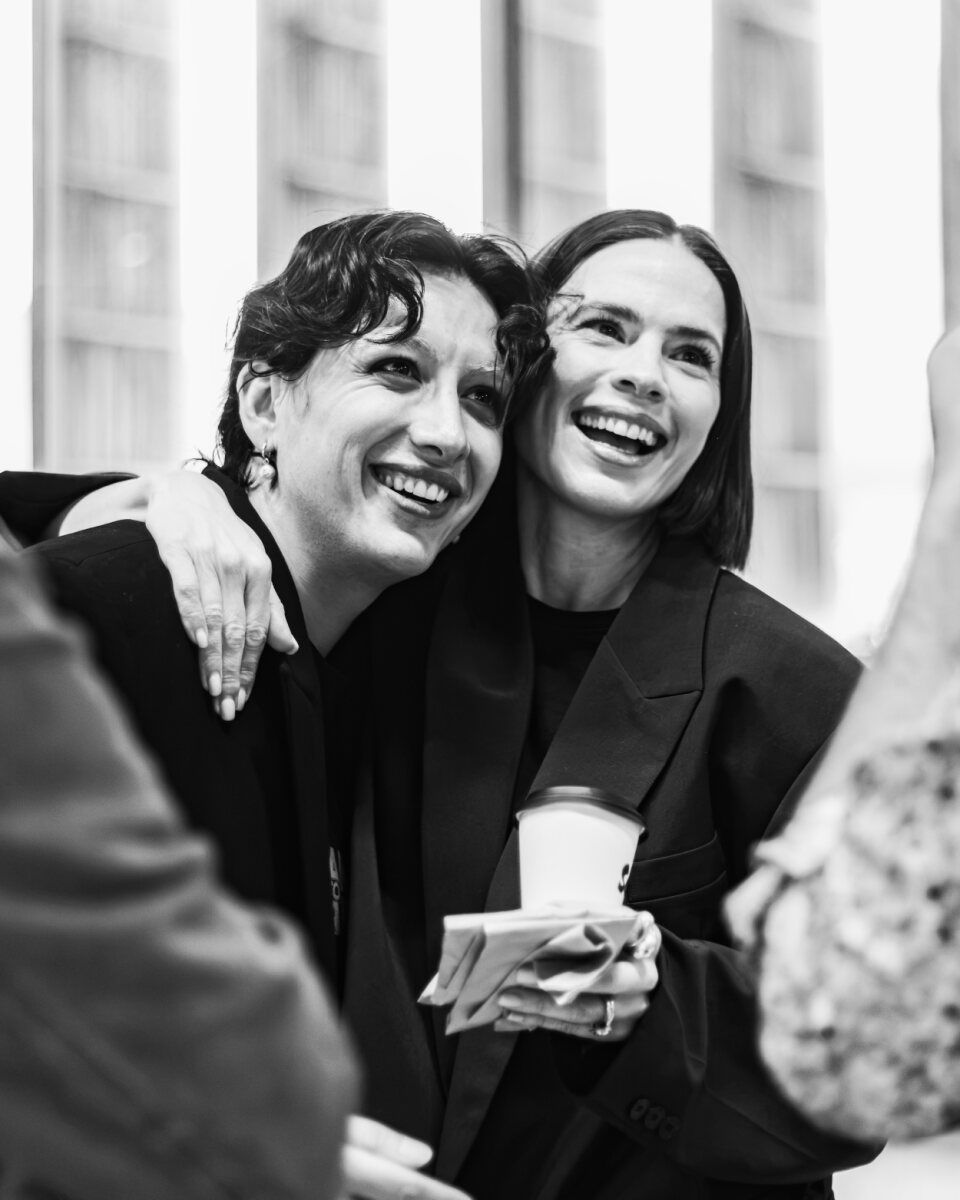
Mason Alexander Park, Hayley Atwell photo by Justine Matthew
Mason Alexander Park as Margaret
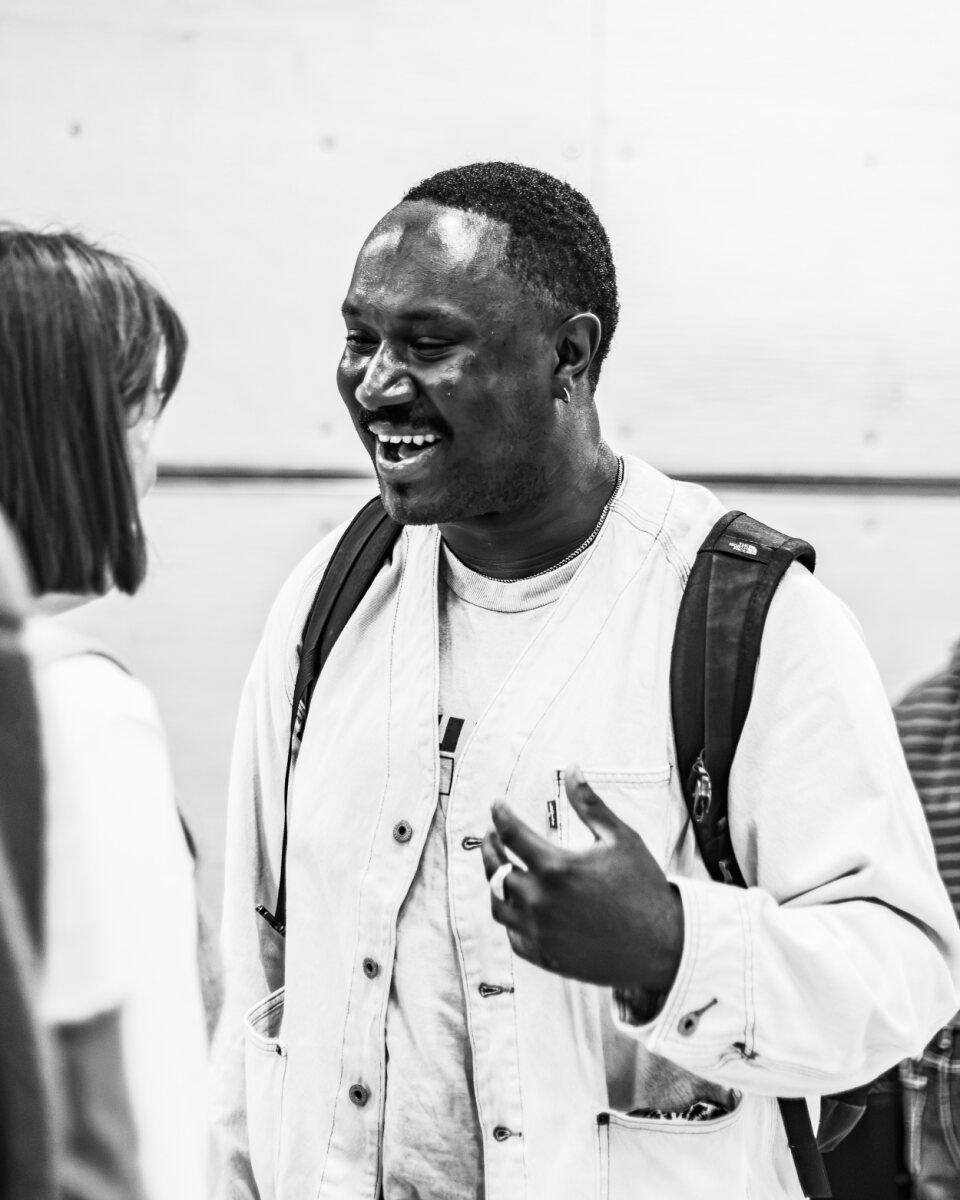
Phillip Olagoke photo by Justine Matthew
and Phillip Olagoke as Friar Francis. Newly announced understudies include
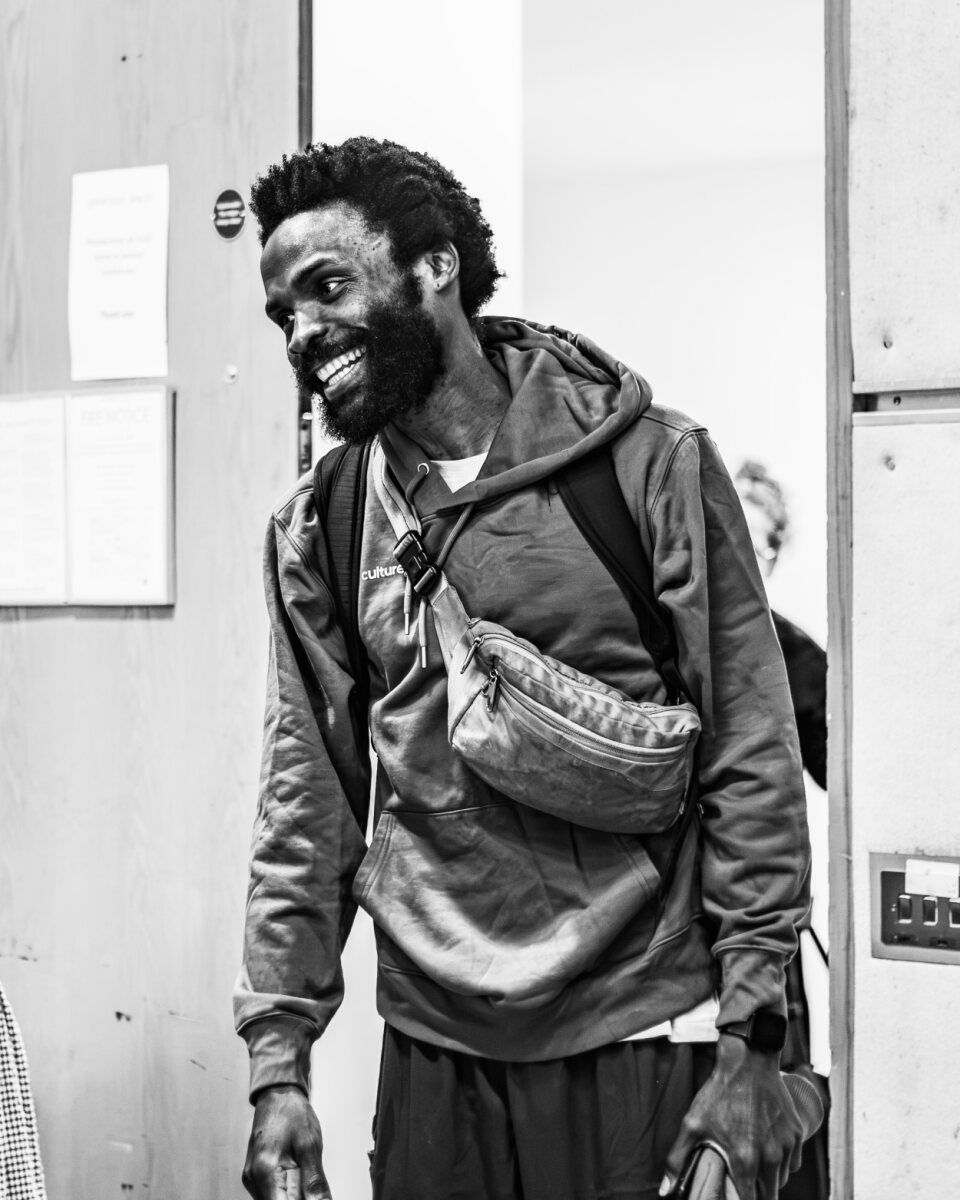
Franklin Bongjio photo by Justine Matthew
Franklin Bongjio

Michael Iván Carrier photo by Justine Matthew
Michael Iván Carrier
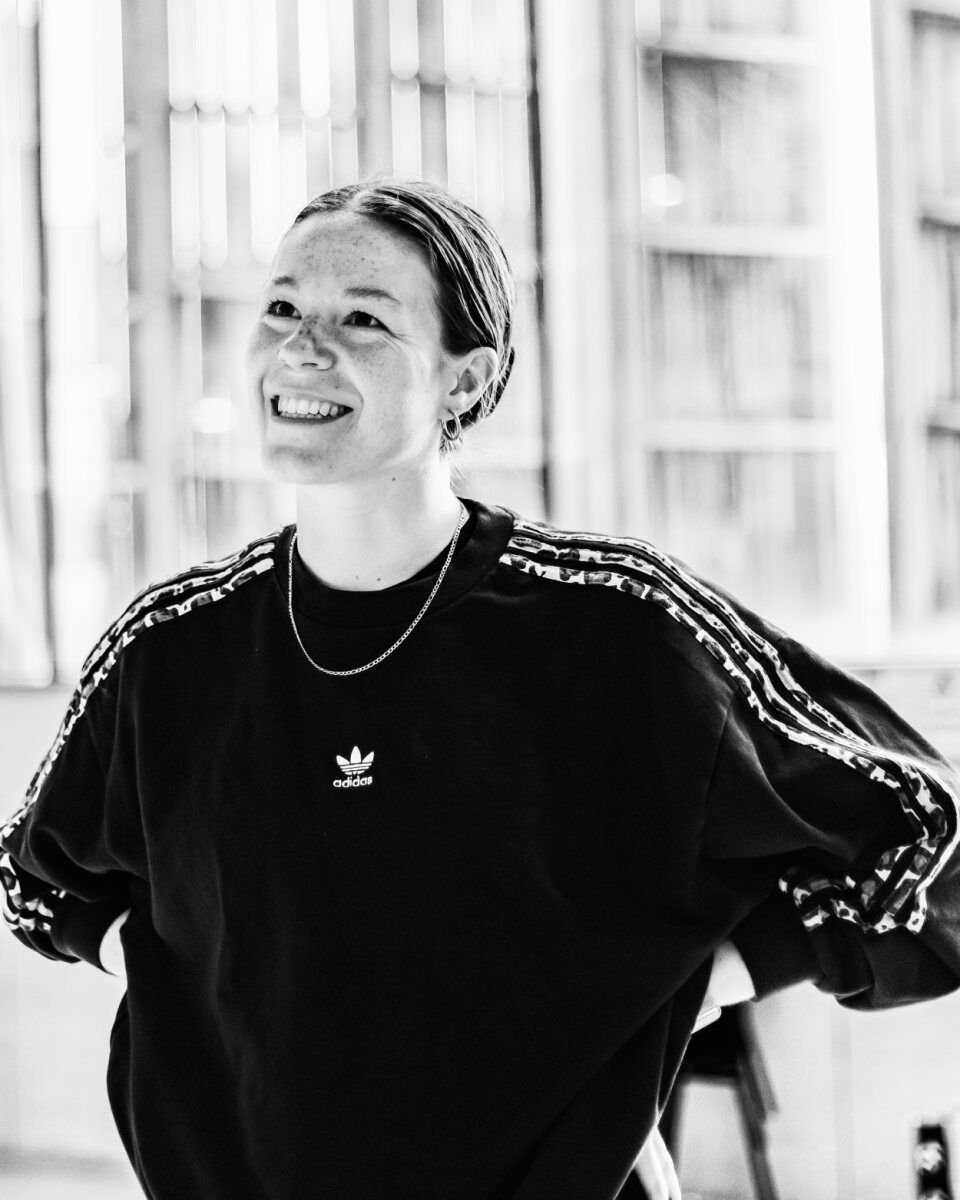
Beth Elliott photo by Justine Matthew
Beth Elliott, Marlon Alexander Vargas
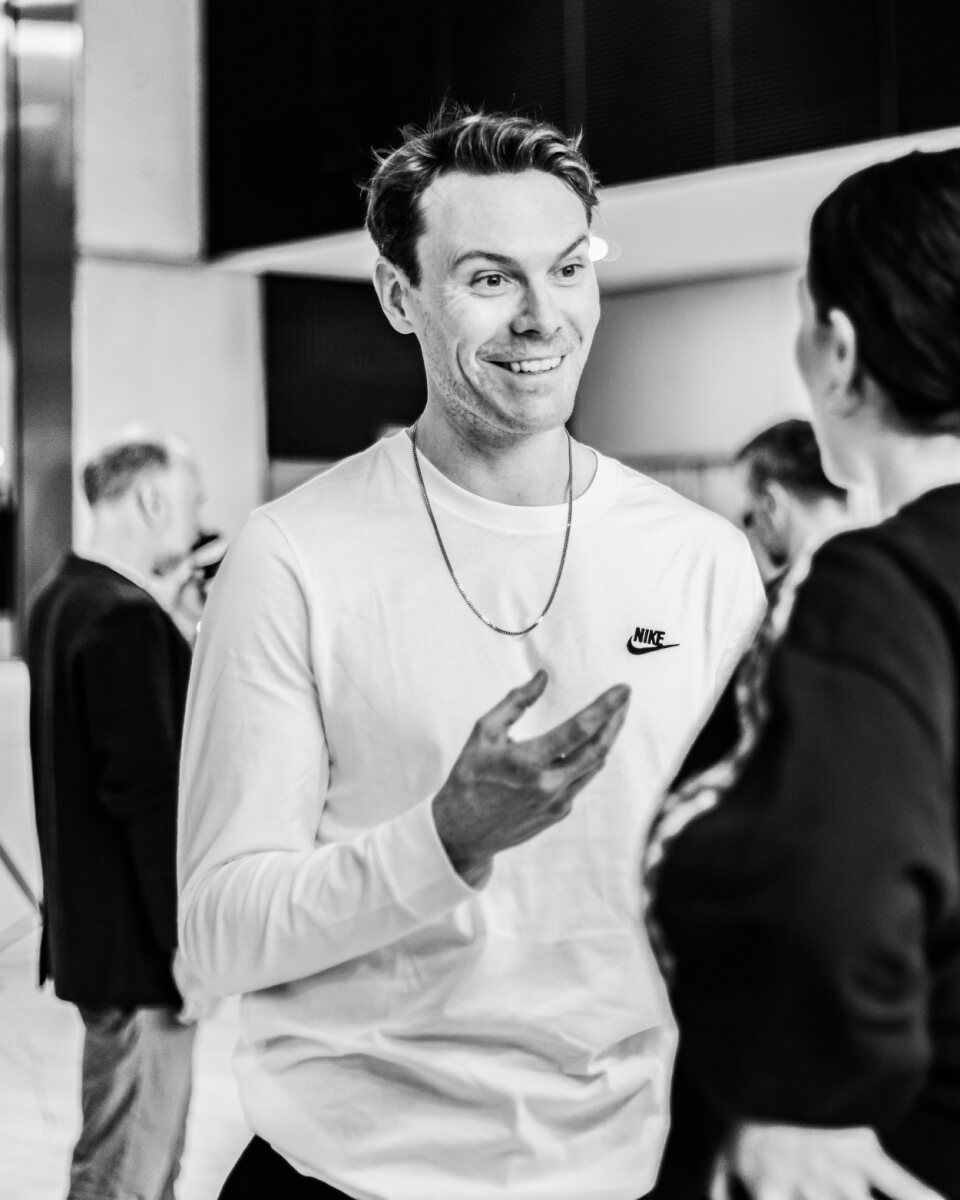
Ed White photo by Justine Matthew
and Ed White.
The first rehearsal photographs, captured in London by Justine Matthew, offer an early glimpse of the company coming together ahead of what is certain to be one of Broadway’s most closely watched fall openings.
There is something especially appealing about a production that reunites Hiddleston and Atwell within Shakespeare’s universe of wit, romance and emotional warfare. Both possess the kind of intelligence and theatrical confidence that can make a familiar text feel spontaneous, and Much Ado About Nothing depends upon precisely that quality. Benedick and Beatrice must appear capable of outthinking everyone in the room, even as they remain spectacularly incapable of understanding their own hearts.
Broadway has no shortage of love stories, but few offer the delicious pleasure of watching two people argue themselves into romance.
With Tom Hiddleston and Hayley Atwell leading the charge, this particular battle of the sexes may be worth every insult.
Much Ado About Nothing begins previews October 31 at Broadway’s Winter Garden Theatre, 1634 Broadway, officially opens November 19 and continues through January 10, 2027, only.

Christian Borle, Stephanie J. Block, Brandon Uranowitz, Andrew Rannells, Betsy Wolfe, Tracie Thoms in 2026 – Photo Credit Jenny Anderson
Two sold-out Carnegie Hall concerts lead to a third performance and a London Palladium engagement for the beloved original revival cast.

Falsettos 2016 cast Photo by Joan Marcus
Apparently, one night with Falsettos was never going to be enough. What began as a single 10th anniversary reunion concert at Carnegie Hall has blossomed into something considerably more ambitious, with a third New York performance and a transatlantic engagement at London’s legendary Palladium. For a musical about love, family, heartbreak and the complicated business of being human, the response has been nothing short of extraordinary.
The original cast of the acclaimed 2016 Broadway revival will reunite for an additional performance on Monday, February 8, 2027, at 7 p.m. at Carnegie Hall’s Stern Auditorium/Perelman Stage. The company will then cross the Atlantic for three performances at the London Palladium on February 23 and 24, bringing William Finn and James Lapine’s groundbreaking musical to another of the world’s great stages.

Betsy Wolfe, Andrew Rannells, Christian Borle, Tracie Thoms in Falsettos 2016 Photo Credit Joan Marcus
What a company it is. Tony Award winners Stephanie J. Block, Christian Borle and Brandon Uranowitz will be joined by Tony nominees Andrew Rannells and Betsy Wolfe, along with Emmy nominee Tracie Thoms. It is a remarkable gathering of performers whose chemistry helped make the 2016 revival one of Broadway’s most emotionally affecting productions.
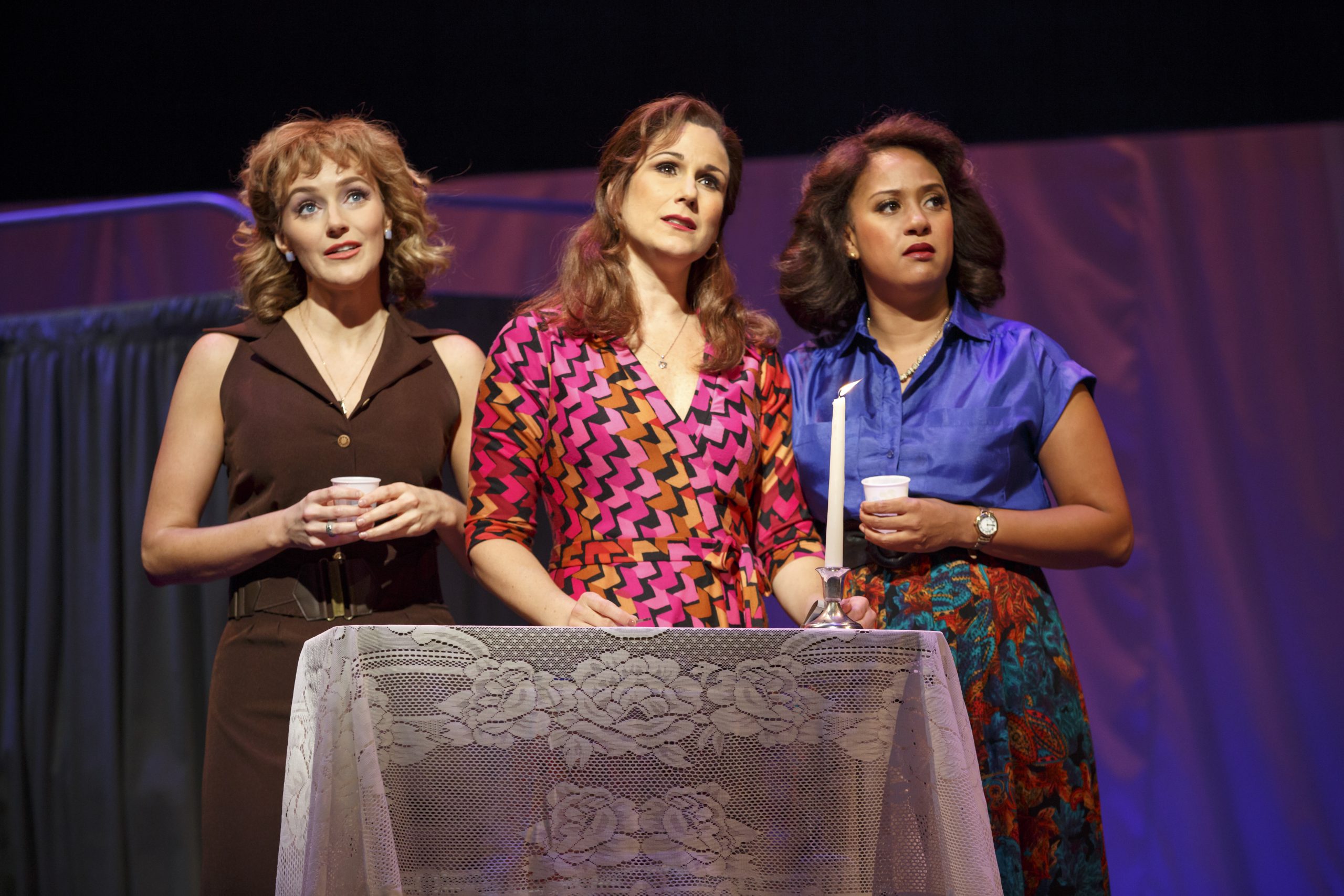
Betsy Wolfe, Stephanie J Block, Tracie Thoms in Falsettos 2016 Photo Credit Joan Marcus
The demand has been almost comically enthusiastic. The original October 18, 2026, benefit concert sold out in fewer than two hours. A second performance, scheduled for November 2, disappeared even faster. Now a third Carnegie Hall date has been added, and London is getting its own opportunity to fall in love with this extraordinary cast.
Tony-nominated director and choreographer Ellenore Scott, who served as assistant choreographer on the 2016 revival, will direct the additional performances. Vadim Feichtner returns as music director and conductor, leading a band featuring many of the revival’s original musicians. This is not simply a concert of familiar songs performed by an impressive cast; it is a reunion of artists who helped give this particular production its identity.
For Wolfe, who is also among the producers bringing the reunion to the stage, the experience has become something far more personal than an anniversary celebration.
“Falsettos found all of us at such a pivotal moment, and we’ve had the extraordinary privilege of watching one another grow, as artists and as friends in the decade since,” she reflected. “I always believed there was more life in this piece and hoped we might one day return to it together.”
That hope has now grown from one night at Carnegie Hall into three New York performances and a London engagement, a development Wolfe describes as extraordinary. “Ten years later, it turns out there’s still more of this story for us to tell.”
Few musicals have examined the beautifully imperfect architecture of family with the wit, intelligence and emotional honesty of Falsettos. Through Marvin, Whizzer, Trina and the wonderfully unconventional family they create, Finn and Lapine explore relationships that refuse to fit into comfortable definitions. The musical’s humor is razor-sharp, its characters gloriously flawed and its heartbreak devastating precisely because the love at its center is so recognizable.
The work’s origins stretch back to Finn’s In Trousers in 1979, followed by March of the Falsettos in 1981 and Falsettoland in 1990. The latter two works were combined into Falsettos, which opened on Broadway in 1992. Set against the changing social landscape of the early 1980s and the emergence of the AIDS crisis, the musical transformed an intimate family story into something with profound cultural resonance.
When the revival opened at the Walter Kerr Theatre on October 27, 2016, it introduced the work to another generation, earning five Tony Award nominations, including Best Revival of a Musical. Its subsequent filming for PBS’s Live from Lincoln Center ensured that audiences beyond Broadway could experience the production’s exceptional performances.
A decade later, the affection has clearly not diminished. If anything, time has deepened the musical’s emotional resonance. What once felt like a groundbreaking examination of unconventional family relationships now stands as both a period piece and a remarkably enduring portrait of love, loss and the families we choose.
The February 8 Carnegie Hall performance will also give something back, with a portion of its proceeds benefiting the TDF Wendy Wasserstein Project, which introduces New York City students to live theatre and helps cultivate the next generation of theatregoers.
The concerts are presented by Betsy Wolfe, Colleen Cook and Cynthia Rose for Table for Three Productions, with the London engagement produced in association with Darren Bell Productions and QUBE Theatricals.
Presale registration is now open, with tickets available to registered patrons beginning Wednesday, October 14, at 11 a.m. Eastern. General sales begin Friday, October 16, at 11 a.m. Eastern. New York presale registration is available at falsettosreunion.com, while London registration is available through Darren Bell Productions. Tickets for the February Carnegie Hall performance will also be available through Carnegie Hall, by telephone at (212) 247-7800 or at the box office.
There is something wonderfully appropriate about a musical devoted to the complicated endurance of love inspiring such an enthusiastic reunion. The actors have grown, the world has changed, and the songs have acquired another decade of meaning. Yet the desire to gather in a theatre and experience this story together remains as powerful as ever.
It seems Falsettos has discovered that the only thing more difficult than saying goodbye is convincing its audience to let go.
-

 Cabaret3 days ago
My View: Jason Robert Brown Receives William Finn Award at Barrington Stage Co. Gala
-

 Off Broadway4 days ago
Copperfield! The New Musical: A Dickens of a Cast, But Where Is David?
-

 Business4 days ago
Lindt Changed CEOs After Two Forecast Cuts. Even Premium Chocolate Can Lose Pricing Power.
-

 Entertainment5 days ago
Hollywood Turns Vertical: The Entertainment Revolution Happening Right in Your Hand
-

 Featured5 days ago
Sunday Brunch, New York Style: Blackbarn Brings Decadence to Madison Square Park
-

 Family5 days ago
Death by Teeth: The Resurrection
-

 Entertainment4 days ago
Lights, Camera, Vertical! How to Produce the Next Entertainment Sensation
-

 Business5 days ago
The Price Tag Is Getting Smarter. Customers Aren’t Sure They Like It.