
Breaking the Silence with Girl Be Heard, highlights a number of global issues faced by millions of women daily. Told through a series of monologues and songs from individual perspectives, the performances are based on fact and expose the greater universal truths. Human trafficking, child marriage, domestic violence, rape as a war crime, issues of refugees, the right to a voice and the right to ownership and education are some of the issues addressed. With a wonderful star cast from stage and cinema, the production is a spotlight on the work of Human Rights Watch, as the horrors continue to flourish in darkness and silence.
“Breaking the Silence with Girl Be Heard, is evidence that theatre’s healing power transcends borders. This ground-breading collaboration, between Girl Be Heard and Human Rights Watch, is elevating the stories of survivors to the global stage, by harnessing the voices of actors, activists and advocates from around the world. Together, we are breaking the cycle of silence that perpetuates gender-based violence,” said Jessica Morris, CEO of Girl Be Heard.
Successfully performed in Geneva 2013 and London 2014. Breaking the Silence with Girl Be Heard was selected for the closing ceremony for Ending Sexual Violence in Conflict hosted by William Hague and Angelina Jolie, and will be performed in The Hague April 2015. Premiering in New York Thursday the 19th to the 21st February 2015, to coincide with The World Day of Social Justice. The production opens two weeks after President Barack Obama announced his campaign “It’s On Us” to end violence against women and girls during the 2015 Grammy Awards.
The cast and writers from Trafficked and disPLACEd include: Aya Abdelaziz, Deanna Alexandra, Georgie Exniord, Noelia Mann, Betsy Perez, Tiff Roma, Melanie Thompson, Danielle Walker, and Sophie Walker. The cast and writers for selections from Breaking the Silence include: Gemma Aston, Susan Craig, Amelia Donker, Adam James, Fraser James, Charlotte Longfield, Katrina Syran, and guitarist Jad Azkoul.
Girl Be Heard is a non-profit theatre and educational program that provides a safe environment for girls to write, direct, and perform theatre productions under the guidance of professional directors, playwrights, actors, activists, and intellectuals. Join the movement at girlbeheard.org.
Human Rights Watch is a nonprofit, nongovernmental, human rights organization made up of roughly 400 staff members around the globe. They press for changes in policy and practice that promote human rights and justice around the world.
Breaking the Silence with Girl Be Heard: Soho Playhouse ,15 Vandam Street, Thursday, February 19, Friday, February 20, and Saturday, February 21 at 8:00PM. Tickets are $35 and are $20 for students and senior. Tickets are available by visiting http://girlbeheard.org/.


Film
Jesse Eisenberg’ s A24’s The Debut Sends a Housewife’s Community Theatre Dreams Gloriously Off the Rails


With “a five, six, seven, eight…” the music begins, and suddenly a song is stuck in my head, one so delicious that I suspect it will be keeping me company for quite some time. It is Bernadette Peters who ushers us into Jesse Eisenberg’s “The Debut” with a number about the bruising realities of a life in theatre, declaring that “the city may have chewed me out, but it hasn’t spit me out.” The song belongs to Nosy Neighbors, a community theatre musical about life in a shabby New York apartment building, and it becomes an unlikely anthem for Mona Friedman, played to fierce, funny, deeply affecting perfection by Julianne Moore (Pedro Almodóvar’s The Room Next Door). Peters plays Serena Cherry, the established performer who abandons the production because the role is just too small for someone of her stature, leaving Mona to step into the part. Mona is a timid suburban housewife and mother who has spent so much of her life attending to everyone else’s needs that the prospect of occupying even a small patch of the spotlight feels almost unimaginable. Yet that song asks Mona to find the heart of a woman who knows how to stand up for herself when she has spent years standing at the counter making pancakes for a family that barely notices her beyond what she puts on the table.
Mona lives her quiet life in suburban New Jersey with her husband, Howard, played solidly by Patrick Fabian, and their two college-aged children, whose attention seems largely reserved for whatever she can do for them. Howard’s treatment of his wife is particularly dismissive. He treats her as a bore and a nuisance, yet expects her to be available when he runs out of toilet paper while sitting on the john. There is a painful familiarity to Mona’s predicament, the way a person can become so essential to the daily functioning of a household that the people living in it barely seem to notice her. Her decision to audition for the community theatre production opens a door into a life that somehow surprisingly belongs to her, even if she has no idea what to do once she walks through it. The theatre’s director, Jerry, played magnificently by Paul Giamatti (“Sideways“), spots something like a spark in Mona and, with opening night approaching and Serena gone, decides, against his better judgment, to see whether he can bring it to the surface. He is a demanding, hard-headed taskmaster whose rehearsals are an ordeal even for experienced performers. The sweet and seasoned leading lady Stef, played by Halle Bailey (“The Little Mermaid“), warns Mona, “you’ll need a banana, cause Jerry pushes so hard” during rehearsals. It’s a wonderfully absurd warning, but it also signals the intensity of the process Mona is about to enter.
Director Eisenberg (“A Real Pain“), who also wrote the screenplay, mines the peculiar seriousness of community theatre for a rich vein of dark comedy. Every line reading, pause, and adjustment becomes a matter of enormous consequence, even when the production itself is a modest little community-theatre musical. Jerry is determined to get Mona to uncover the truth of her character. He is determined to drag her through “the shit and mud” until she finds something authentic beneath her timid delivery. Even music director Marty (K. Todd Freeman) pauses in panic when Mona’s first attempt falls so flat. When Mona finally speaks her first line in her first rehearsal after a large opening number, Jerry’s response is to halt everything, and “wait for the belt” to see what happens. The meekness of her performance is precisely what he wants to challenge, and he’s hoping her character’s prop will bring something out in her. Mona has spent years living without the kind of confidence this part needs, and the rehearsal room becomes a place where she must confront the habits that have kept her small. Paul Giamatti gives Jerry an absorbing and compelling mix of forcefulness and tenderness, making the director’s insistence on authenticity both exhilarating and troubling. He sees a possibility in Mona that she has barely allowed herself to imagine, even as his methods threaten to take her somewhere she may not know how to return from.
Moore is extraordinary as Mona, tracing the transformation of a woman who has been pushed aside by those closest to her and suddenly discovers the intoxicating possibility of being seen. She brings physical comedy, awkwardness, determination, and a startling desperation to the role, allowing Mona’s growing obsession to be hilarious while keeping the hurt beneath it firmly in view. The car ride with Giamatti’s Jerry is one of the most honest and devastating scenes I’ve seen in a movie in a long time. As Mona opens up about her life, we watch her reach Jerry in a way that feels pure and unapologetic. As she works to understand her character, she begins to absorb the musical’s world into her own, wondering whether every gesture and decision in her life should follow the logic of the part she is playing. Eisenberg wisely allows the comedy to grow increasingly strange and visually surreal, thanks to cinematographer Drew Daniels and production designer Anne Ross. Watching Mona embrace her emerging self with almost alarming enthusiasm is a spectacular experience, because the pleasure of seeing her finally claim some space comes with the uneasy awareness of how far she is willing to go to keep it.

Paul Giamatti and Julianne Moore in Jesse Eisenberg’s “The Debut.” Photo courtesy of A24.
“The Debut,” the A24-produced musical comedy, is about the unexpected places where a person might discover the courage to take up space, and about the complications that follow when the discovery arrives after years of being overlooked. Eisenberg finds tremendous comic possibility in Mona’s confusion, while Moore gives her a fierce and moving humanity that keeps us invested even when her devotion to the part becomes alarmingly zealous. The most touching thing about this film is its willingness to let the laughter catch in our throats, recognising the hurt that can sit beneath the mask of politeness, and the longing that can make a seemingly insignificant role feel essential. That opening song, though, is what stays with me. It is now sung with such spirit by a woman who once struggled to find her voice and has stepped forward into the spotlight. The words that first belonged to a character in a community-theatre musical have become unmistakably her own.

For more go to frontmezzjunkies.com

“Make ’Em Laugh” and “I Could Have Danced All Night” are the sort of movie-musical melodies that can transport us into that familiar movie-musical dream, where every backyard is a stage and every performance deserves an audience. In Ryan J. Haddad’s Good Time Charlie at The Public Theater, that dream takes shape in a lush Japanese garden, an unexpected and delightful setting for a play about the movie musicals that help shape a life. Ryan’s childhood performances at home, with his aunt and uncle taking lead roles in Brandy’s Cinderella, provide the opening scene for this tender two-act play. The Charlie at its centre is the younger Charlie, Charlie Jr., not Ryan’s Uncle Charlie, and Jonathan Raviv (ATC’s The Band’s Visit) gives him an infectious theatrical exuberance. Directed by Danny Sharron (PH’s Hold Me in the Water by Haddad), the play follows Charlie and Ryan across decades, celebrating the queer mentors who open doors to a world of show tunes, cultural icons, and the kind of education no school could provide.

Ryan J. Haddad and Jonathan Raviv in Public Theater’s Good Time Charlie. Photo by Joan Marcus.
Haddad is wonderfully, sometimes hilariously, aware that he is making a play, and Ryan keeps us in on the process. He addresses the audience, talks to the other actors, and tries to get everyone to perform the scenes as written, with decidedly mixed results. When Charlie launches into half a verse of “It’s Today” from Mame, Ryan interrupts to explain that they didn’t get the rights. Later, when a dysregulated Charlie no longer wants to continue a scene near the end of Act One, Ryan compassionately offers to stop the play right there, observing that “everyone loves a one act.” It’s a terrific moment of cheeky theatrical self-preservation. Haddad tells us early on that he is attempting a bigger, broader play than his usual one-person shows, and then cheerfully lets us watch him wrestle with the consequences. As Aunt Janice, Beth Malone (Transport Group’s The Unsinkable Molly Brown) gives the comedy another human centre in the LGBTQ+ alphabet, letting the humour land without making the characters feel like pawns in Haddad’s theatrical games.

Nael Nacer, Artemis Pebdani, and Ryan J. Haddad in Public Theater’s Good Time Charlie. Photo by Joan Marcus.
The production’s design gives Haddad’s shifting memories and theatrical interruptions a vivid visual and sonic world. The lush garden designed by Afsoon Pajoufar gives this family history an unexpectedly beautiful setting, while Enver Chakartash’s costumes help establish the people and periods the play moves through. Barbara Samuels’s lighting supports the shifts from comic recollection to the more vulnerable moments, and Ryan Gamblin’s sound design and composition help sustain a world in which movie-musical memories are woven into the characters’ lives. Jennifer Rias’s choreography helps carry the production between spoken recollection, musical moments, and Haddad’s playful interruptions. Together, these elements allow the play to move between memory, musical fantasy, and family history without losing sight of the people at its centre
Beneath all of Ryan’s theatrical mischief, Charlie’s family history delivers the play’s hardest blow. His parents repeatedly pressure him to change himself, with the rejection finally arriving in the words, “If you’re not going to change, your father doesn’t want to see you.” I find stories like this heartbreaking, particularly when rejection comes with the demand that someone change an essential part of themselves. The pain is especially sharp here because Ryan’s own coming-out experience in suburban Ohio in 2008 is relatively kind by comparison. Charlie and his partner Lou, played with grounded warmth by Tim Bagley (“Hacks“), spend years building a life together while waiting for Charlie’s family to accept them. The play gives this history the time it needs, allowing the hurt to register without rushing to smooth it over. Sheldon, played wonderfully by Michael Cristofer (Broadway’s A View from the Bridge), enters as the man who introduced Charlie, and later Ryan, to the world of movie musicals. His friendship with both men is one of the play’s most charming connections, and his love of movie musicals becomes part of the bond they share. The connection he helps create beautifully gives another important strand of family, one built through shared passions and affection rather than obligation.

Jonathan Raviv, Tim Badley, and Michael Cristofer in Public Theater’s Good Time Charlie. Photo by Joan Marcus.
Act Two hits a little harder. Well, a lot harder. Sheldon suffers a stroke and begins using a walker, and the decline of this beloved mentor and friend changes the emotional temperature of the play. The man who helped open the world of movie musicals to Charlie and Ryan now needs care himself, and the prospect of losing him is all the more alarming because we have seen how much he means to both. Ryan, who has cerebral palsy, must confront his own discomfort and uncertainty as Sheldon’s physical needs change. Haddad allows the subject to carry humour alongside genuine unease, opening difficult questions about disability, caregiving, and what happens when the people who once guided us need our help. The well-placed line, “I wish I could change the ending,” lands with a growing sense of dread. Cristofer brings a moving gravity to Sheldon, while Nael Nacer and Artemis Pebdani help create two family dynamics whose connections extend beyond any single scene. The play also makes room for older queer characters to remain loved and essential in a culture that can place far too much emphasis on youth and physical desirability.
Haddad’s warmth and metatheatrical mischief give Good Time Charlie much of its charm, even when its ambition to turn personal memories into a broader narrative leaves the plot feeling somewhat loose. Some scenes are beautifully done, with the other characters watching from the sidelines in open adoration, and those moments allow affection to register without the play needing to explain it. The movie-musical melodies may begin by inviting us into a familiar dream, but the relationships give that dream its emotional stakes. Charlie and Ryan inherit songs, stories, and a way of seeing themselves through the people who love them. As the mentors grow older and begin to need care, we must consider what we owe the people who first opened those doors for us. It is a tender, funny, sometimes uneven tribute to the family we find through shared passions, and to the difficult work of staying beside one another as life changes.

Ryan J. Haddad, Tim Badley, Beth Malone, Jonathan Raviv, and Michael Cristofer in Public Theater’s Good Time Charlie. Photo by Joan Marcus.
For more go to frontmezzjunkies.com


Balanchine Ball Honors New York City Ballet, and it is a record bringing night of artistic excellence…
New York City Ballet’s Young Patrons Circle brings together an exceptional new generation of ballet supporters for the Balanchine Ball, an elegant evening of performance, patronage, leadership, and cultural connection.
The Balanchine Ball stands as one of New York City Ballet’s most compelling young patron occasions, a night shaped by performance, purpose, and the steady commitment of a community invested in the future of ballet. Presented by the New York City Ballet Young Patrons Circle, the event gathers ballet enthusiasts ages 21 to 45 who share a commitment to the company and to the continued vitality of the art form.
Set for Friday, October 16, 2026, the Balanchine Ball pairs a 7:30 p.m. performance with a 10 p.m. party, giving the evening a structure that begins with the stage and continues through fellowship. The order matters. It places the work of New York City Ballet at the center, then allows the audience and supporters to gather afterward in recognition of the institution they have come to celebrate.
The Young Patrons Circle is presented as a vibrant community of ballet enthusiasts united by a shared commitment to New York City Ballet. Through advocacy, events, and engagement, its members play a vital role in cultivating the next generation of ballet supporters while enjoying exclusive benefits and curated experiences throughout the year.
That mission gives the Balanchine Ball its depth. The evening is social and stylish, but it is also rooted in stewardship. It reflects the belief that great cultural institutions endure because people choose to support them, introduce them to others, and understand the responsibility of keeping their work visible and well sustained.
The front of the event material features artwork from Paul Colin’s original poster Le Bal Fleuri from 1927, an elegant historical reference that gives the invitation a distinct visual identity. The figures in the artwork evoke dance, society, and occasion with graphic economy, linking the Ball to a longer tradition of performance culture and illustrated modernity.
A Circle of Patrons and Leaders
The event materials make that leadership visible through two key groups, the Young Patrons Circle Steering Committee and the Balanchine Ball Host Committee. Together, they represent the evening’s guiding force. Based on the program, they are among the most distinguished young patron leaders associated with this event, a carefully named group whose service places them at the forefront of New York City Ballet’s next generation of cultural support.
The Young Patrons Circle Steering Committee carries a central role in the life of the Young Patrons Circle. Its members are presented as the leaders helping shape advocacy, events, engagement, and community around New York City Ballet. Their position is significant because it connects them directly to the ongoing work of cultivating younger supporters for one of the city’s most important performing arts institutions.


Whitney Berger is named as a member of the Young Patrons Circle Steering Committee, placing her among the key supporters helping guide the community’s identity and momentum. In this role, Berger is part of the leadership group that gives structure to young patron engagement and helps sustain the bridge between ballet enthusiasts and the company they support.
Josh Cockream is named as a member of the Young Patrons Circle Steering Committee, a position that recognizes him as one of the young patron leaders associated with the Ball and the wider circle. His inclusion signals active service within a group charged with strengthening engagement and encouraging a new generation of ballet advocacy.
Ana Lorenza Colagrossi holds a particularly prominent place, named on both the Young Patrons Circle Steering Committee and the Balanchine Ball Host Committee. Her dual recognition makes her one of the evening’s most visible figures. She stands at the intersection of year-round leadership and event hospitality, a role that reflects exceptional commitment within the young patron community.
Damian Fernandez is named as a member of the Young Patrons Circle Steering Committee, joining the leadership body that supports the Young Patrons Circle’s mission. His position places him among the individuals helping New York City Ballet engage younger supporters through advocacy, events, and sustained participation.
Matilde Flores is named as a member of the Young Patrons Circle Steering Committee, marking her as part of the group helping define the Circle’s role in New York City Ballet’s broader patron ecosystem. Her presence contributes to the committee’s profile as a serious and organized body of cultural supporters.
Swapna Ghanta is named as a member of the Young Patrons Circle Steering Committee, joining the roster of leaders connected to the next generation of ballet patronage. Her role reflects participation in the advocacy and engagement framework that gives the Circle its purpose.
Sofia Horyn is named on both the Young Patrons Circle Steering Committee and the Balanchine Ball Host Committee, giving her dual prominence within the event’s leadership structure. That combined role identifies Horyn as one of the Ball’s most active young patron figures, someone connected to both the ongoing committee work and the immediate success of the evening.
Parker Hubbard is named as a member of the Young Patrons Circle Steering Committee, a position that places him within the leadership group responsible for strengthening the Young Patrons Circle’s community. His inclusion reflects the importance of individuals who help turn appreciation for ballet into organized support.
AJ Kiehner is named as a member of the Young Patrons Circle Steering Committee, joining the group that helps carry the Young Patrons Circle’s advocacy and engagement mission. His role places him among the emerging cultural stewards recognized by New York City Ballet in connection with the Ball.
Jennifer Mandelbaum Nitkin is named as a member of the Young Patrons Circle Steering Committee, giving her a leadership position within the young patron community. Her role connects her to the broader work of building support, visibility, and meaningful participation around New York City Ballet.
Andrew Nitkin is named as a member of the Young Patrons Circle Steering Committee, standing alongside Jennifer Mandelbaum Nitkin in the committee’s roster. His inclusion identifies him as part of the group helping shape the Young Patrons Circle’s relationship to the company and its future supporters.
Ashley Northcutt is named on both the Young Patrons Circle Steering Committee and the Balanchine Ball Host Committee, making her one of the event’s most distinguished young patron leaders. Her dual role reflects leadership across both the strategic and social dimensions of the Ball, placing her among the most prominent figures recognized in the program.
Juliana Roger is named as a member of the Young Patrons Circle Steering Committee, a role that places her within the group supporting the Circle’s mission of advocacy, events, and engagement. Her participation adds to the committee’s standing as a polished and purposeful leadership body.
Michelle Saney is named as a member of the Young Patrons Circle Steering Committee, joining the leaders helping cultivate the next generation of New York City Ballet supporters. Her position reflects the kind of committed cultural participation on which major arts institutions depend.
Eli Stewart is named as a member of the Young Patrons Circle Steering Committee, placing him among the individuals helping guide the Young Patrons Circle’s presence and programming. His role contributes to the committee’s strength as a network of young leaders invested in ballet.
Leandro Taveras is named as a member of the Young Patrons Circle Steering Committee, a position that recognizes him as part of the community advancing young patron engagement. His inclusion helps define the committee as a broad and active group of supporters.
Viviane Trinh is named as a member of the Young Patrons Circle Steering Committee, joining the roster of figures helping sustain the Circle’s advocacy and connection to New York City Ballet. Her role places her among the named leaders of the young patron community.
Christina Russell Zochowski is named as a member of the Young Patrons Circle Steering Committee, completing the steering roster as presented in the program. Her position identifies her as one of the young patron leaders helping uphold the Circle’s mission and deepen its relationship with the company.
The Balanchine Ball Host Committee gives the evening its formal hospitality and social reach. A host committee is essential to an event of this kind because it helps gather guests, signal prestige, and create the sense of welcome that turns a performance night into a signature cultural occasion. Within the Balanchine Ball, this group stands as the evening’s social vanguard.
Ana Lorenza Colagrossi, named as a member of the Balanchine Ball Host Committee and the Young Patrons Circle Steering Committee, holds one of the most elevated positions in the program through her dual service. Her presence in both leadership groups reflects a high level of engagement and places her among the Ball’s foremost committee figures.
Marina Deletic is named as a member of the Balanchine Ball Host Committee, recognizing her as one of the figures helping define the evening’s guest community and social presence. Her role contributes to the Ball’s standing as a cultivated gathering within New York City Ballet’s young patron world.
Tori Habuda is named as a member of the Balanchine Ball Host Committee, placing her among the hosts helping extend the reach and warmth of the event. Her inclusion reflects the importance of ambassadors who bring people into the orbit of ballet support.
Kristina Hadjipetkov is named as a member of the Balanchine Ball Host Committee, a role that identifies her as one of the evening’s recognized hosts. Her participation supports the Ball’s profile as a carefully assembled and socially meaningful occasion.
Sofia Horyn, named as both a Young Patrons Circle Steering Committee member and a Balanchine Ball Host Committee member, is one of the most prominent names connected to the event. Her dual role gives her an elevated standing within the Ball’s leadership, combining year-round patron service with event-specific hosting.
Celeste Hudson is named as a member of the Balanchine Ball Host Committee, joining the group responsible for helping make the Ball a distinguished gathering. Her role reflects the essential social leadership that supports cultural philanthropy at this level.
Gretchen Kron is named as a member of the Balanchine Ball Host Committee, placing her among the hosts who help shape the evening’s presence and guest experience. Her inclusion adds to the committee’s profile as a refined group of supporters associated with New York City Ballet.
Ashley Northcutt, named on both the Young Patrons Circle Steering Committee and the Balanchine Ball Host Committee, holds one of the most significant positions in the evening’s leadership structure. Her dual service identifies her as a leading figure in the Young Patrons Circle and one of the most distinguished names connected to the Ball.
Valerie Owolo is named as a member of the Balanchine Ball Host Committee, marking her as part of the group helping give the evening its social authority. Her role supports the Ball’s function as a gathering point for younger cultural patrons.
Adam Parchue is named as a member of the Balanchine Ball Host Committee, joining the roster of hosts who help extend the event’s reach and welcome. His participation reflects the collaborative work required to make a young patron benefit feel both personal and prominent.
Derin Sezercan is named as a member of the Balanchine Ball Host Committee, placing her among the hosts recognized for supporting the evening. Her role helps situate the Ball within a community of engaged arts patrons and friends of New York City Ballet.
Maya Shallcross is named as a member of the Balanchine Ball Host Committee, identifying her as part of the social leadership behind the event. Her inclusion contributes to the committee’s standing as a group of polished young supporters helping bring the Ball to life.
Emily Stripling is named as a member of the Balanchine Ball Host Committee, joining the hosts who help define the evening’s hospitality and cultural presence. Her role supports the event’s aim of gathering a community around performance and patronage.
Isabella Verga is named as a member of the Balanchine Ball Host Committee, completing the host roster as presented in the program. Her participation places her among the recognized hosts helping shape the Ball as a refined and purposeful young patron event.
A Distinguished Committee for a Defining Evening
The question of whether this is the most distinguished committee can be answered with careful precision. From the event materials, the Young Patrons Circle Steering Committee and the Balanchine Ball Host Committee are clearly presented as the principal named leadership groups for the Ball. They are the event’s distinguished committee structure, the people chosen to represent leadership, hosting, and next-generation support for New York City Ballet.
It would be too broad to claim that they are the most distinguished committee in all of New York society or even across every ballet event without additional context. What can be said with confidence is that, for this Balanchine Ball, they are the named standard bearers. They are the people the program elevates, recognizes, and places at the center of the evening’s public identity.
That distinction matters. In the world of cultural philanthropy, being named on a steering committee or host committee carries meaning. It reflects trust, visibility, engagement, and a willingness to contribute to the success of an institution. These roles are part of the architecture of patronage.
Together, Whitney Berger, Josh Cockream, Ana Lorenza Colagrossi, Damian Fernandez, Matilde Flores, Swapna Ghanta, Sofia Horyn, Parker Hubbard, AJ Kiehner, Jennifer Mandelbaum Nitkin, Andrew Nitkin, Ashley Northcutt, Juliana Roger, Michelle Saney, Eli Stewart, Leandro Taveras, Viviane Trinh, Christina Russell Zochowski, Marina Deletic, Tori Habuda, Kristina Hadjipetkov, Celeste Hudson, Gretchen Kron, Valerie Owolo, Adam Parchue, Derin Sezercan, Maya Shallcross, Emily Stripling, and Isabella Verga form the recognized leadership and host community around the Balanchine Ball.
The most elevated distinction belongs to the individuals named in both groups. Ana Lorenza Colagrossi, Sofia Horyn, and Ashley Northcutt appear on both the Young Patrons Circle Steering Committee and the Balanchine Ball Host Committee, giving them dual standing within the event. Their roles suggest especially deep involvement in both the continuing work of the Young Patrons Circle and the hospitality of the Balanchine Ball itself.
The steering committee members hold an enduring kind of distinction because their work is tied to the ongoing life of the Young Patrons Circle. They are connected to advocacy, events, engagement, and the cultivation of younger supporters throughout the year. Their role reaches beyond a single night and into the sustained relationship between New York City Ballet and its next generation of patrons.
The host committee members hold a more event-focused distinction, giving the Ball its social signature. They help gather the community, reinforce the event’s stature, and make the evening feel personal, polished, and inclusive. Their role is essential to the success of a benefit that depends on both artistic seriousness and a strong guest network.
A Performance First, A Celebration After
The 7:30 p.m. performance gives the Ball its artistic foundation. In a city where cultural calendars are crowded with benefit events, the Balanchine Ball distinguishes itself by beginning with the art form it exists to support. Guests gather first as an audience, then as patrons.
That sequence reflects the values of New York City Ballet. The company’s identity rests on repertory, dancers, musicians, choreographic inheritance, and a tradition of technical clarity. The Ball honors that identity by asking its guests to experience the work before stepping into the evening’s party.
The 10 p.m. party then extends the night into conversation and connection. It creates space for young patrons to meet, reconnect, and build relationships through shared enthusiasm for ballet. For a group dedicated to cultivating the next generation of supporters, that social dimension is essential.
The Young Patrons Circle gives younger supporters a clear way to participate in the life of New York City Ballet. Its members are invited into a year-round relationship with the company through advocacy, events, engagement, benefits, and curated experiences. The Ball becomes a signature expression of that relationship.
Such gatherings matter because ballet depends on continuity. Dancers train for years, performances require resources, and institutions need audiences who understand the value of sustained support. The Young Patrons Circle helps turn admiration into involvement, giving emerging patrons the structure to become long-term advocates.
The Balanchine name adds weight to the evening. George Balanchine remains central to the history and identity of New York City Ballet, and an event bearing his name naturally carries associations of artistic discipline, musicality, and institutional legacy. The Ball channels that legacy toward the future by centering a younger generation of supporters.
The use of Paul Colin’s Le Bal Fleuri artwork from 1927 enriches that sense of continuity. It places the event within a broader tradition of dance, design, society, and cultural gathering. The invitation’s imagery reinforces the idea that the Ball is both a contemporary New York event and part of a wider history of performance celebration.
The printed materials are direct and confident. New York City Ballet appears prominently, followed by the Young Patrons Circle and the Balanchine Ball title. The date, Friday, October 16, 2026, and the schedule, 7:30 p.m. performance and 10 p.m. party, are stated with clarity, giving the event the presence of a major cultural appointment.
The Role of Patronage in Cultural Life
Patronage has always been part of ballet’s story. The form requires years of training, daily discipline, live music, rehearsal time, stagecraft, costumes, lighting, and institutional stability. Every performance carries the work of many people, and every season depends on a network of support broad enough to sustain excellence.
The Young Patrons Circle addresses that need with a contemporary approach. By inviting supporters ages 21 to 45 into a dedicated community, it recognizes that arts loyalty is built through experience. A young person who attends a performance, joins a circle of peers, and begins to understand the financial and artistic needs of a company may become a lifelong advocate.
That is why events like the Balanchine Ball matter. They are social, but they are never only social. They translate enthusiasm into structure. They create a bridge between admiration and contribution. They allow an institution to welcome new supporters in a way that feels polished, informed, and meaningful.
The sponsor presence reflects the collaborative nature of the evening. The Balanchine Ball is generously sponsored by Travelers as global sponsor, lending corporate support to the event’s cultural purpose. The program also thanks Absolut, Bushmills Irish Whiskey, and Maestro Dobel Tequila for generously donating spirits for the evening.
These acknowledgments are part of the practical architecture behind a successful benefit. Cultural events are built through many forms of partnership, from institutional leadership and committee service to corporate sponsorship and in-kind support. Each contribution helps shape the guest experience while advancing the mission at the center of the evening.
For New York City Ballet, the involvement of the Young Patrons Circle speaks to a larger truth about the future of the performing arts. Audiences must be cultivated with care. Supporters must be invited into the story with respect. Institutions must create occasions that feel worthy of the art they serve.
The Balanchine Ball succeeds because its premise is direct. It gathers people around ballet, honors a defining artistic name, and offers a pathway for younger patrons to see themselves as part of the company’s future. In an era when cultural institutions are thinking carefully about renewal, that clarity is valuable.
The event also carries a distinctly New York sensibility. It is polished, compressed, and purposeful. A performance in the evening, a party afterward, a committee of hosts and supporters, a graphic reference drawn from historic poster art, and a young patron community centered on one of the city’s great companies all create a recognizable rhythm of metropolitan cultural life.
Yet the Ball’s importance reaches beyond the immediate glamour of the occasion. Its real significance lies in the way it builds continuity. Every person named on the steering committee and host committee becomes part of the institutional record of support. Every member who attends helps reinforce the idea that ballet remains a living art sustained by active participation.
The printed contact for the Young Patrons Circle, youngpatrons@nycballet.com, emphasizes the openness of the community. The invitation is clear. Those who wish to learn more have a direct way to engage. The Circle is presented as accessible, organized, and ready to welcome those who share its commitment.
That sense of welcome is essential to the evening’s success. Ballet can be revered for its discipline and difficulty, but patronage thrives when people feel invited rather than kept at a distance. The Young Patrons Circle frames support as a shared experience, one built through events, conversation, performance, and year-round involvement.
The Balanchine Ball also illustrates how visual culture and performing arts can work together. Paul Colin’s Le Bal Fleuri artwork brings a historical graphic language into the present, while the New York City Ballet name anchors the evening in one of the great American dance institutions. The result is an invitation that feels thoughtful and culturally literate.
As an event, the Ball is both formal and contemporary. It respects the seriousness of the art while understanding the importance of social connection. It gives younger patrons a setting in which enthusiasm can become commitment, and it gives the company a platform to recognize the people helping extend its reach.
The strongest cultural evenings often feel inevitable once all their elements are in place. The Balanchine Ball has that quality. The performance, the party, the committees, the sponsorship, the historic artwork, and the clear mission of the Young Patrons Circle come together in a way that feels coherent and confident.
For attendees, it offers a memorable night. For New York City Ballet, it strengthens a vital support community. For the broader cultural life of the city, it demonstrates that the next generation of ballet patronage is already organizing itself with energy, polish, and purpose.
The Balanchine Ball stands as a celebration of ballet, leadership, and the enduring value of gathering around live performance. It is a reminder that institutions are carried forward by artists onstage and by communities committed to ensuring that the stage remains bright, active, and open to generations to come.
New York City Ballet’s Young Patrons Circle has framed the Balanchine Ball around people who represent commitment as much as style. Whitney Berger, Josh Cockream, Ana Lorenza Colagrossi, Damian Fernandez, Matilde Flores, Swapna Ghanta, Sofia Horyn, Parker Hubbard, AJ Kiehner, Jennifer Mandelbaum Nitkin, Andrew Nitkin, Ashley Northcutt, Juliana Roger, Michelle Saney, Eli Stewart, Leandro Taveras, Viviane Trinh, Christina Russell Zochowski, Marina Deletic, Tori Habuda, Kristina Hadjipetkov, Celeste Hudson, Gretchen Kron, Valerie Owolo, Adam Parchue, Derin Sezercan, Maya Shallcross, Emily Stripling, and Isabella Verga are central to the story of the evening.
The Balanchine Ball is therefore more than an event of the year for New York ballet. It is a polished celebration of cultural leadership at a high level, a recognition of young patron service, and a statement of confidence in the future of New York City Ballet. Its committees are distinguished because they are visible, purposeful, and aligned with one of New York’s great artistic institutions. They are the named leaders of this occasion, and their collective presence gives the Ball its contemporary cultural force.
Music
Midnight: Todrick Hall Has Created a Musical Masterpiece That Broadway Cannot Afford to Ignore

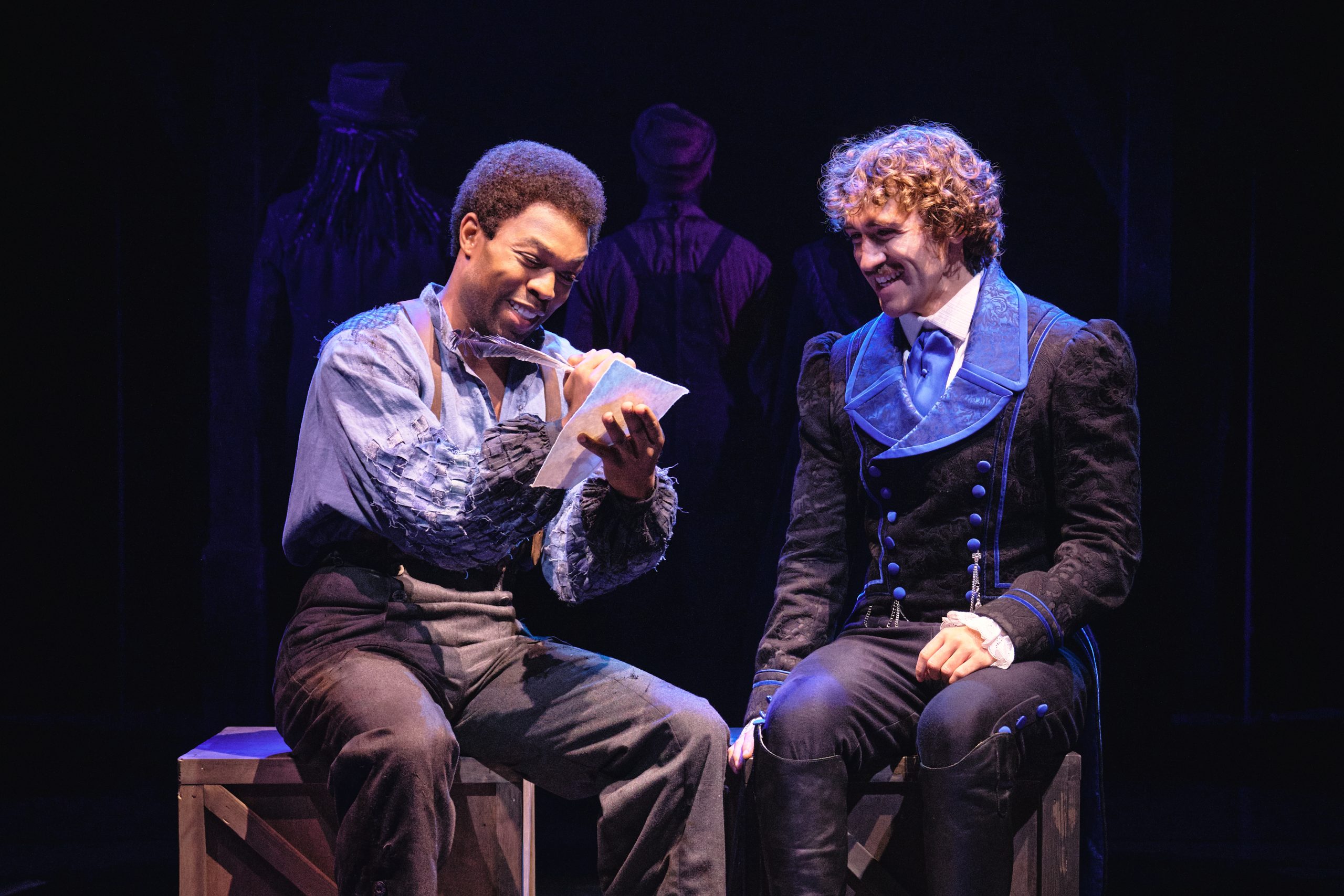
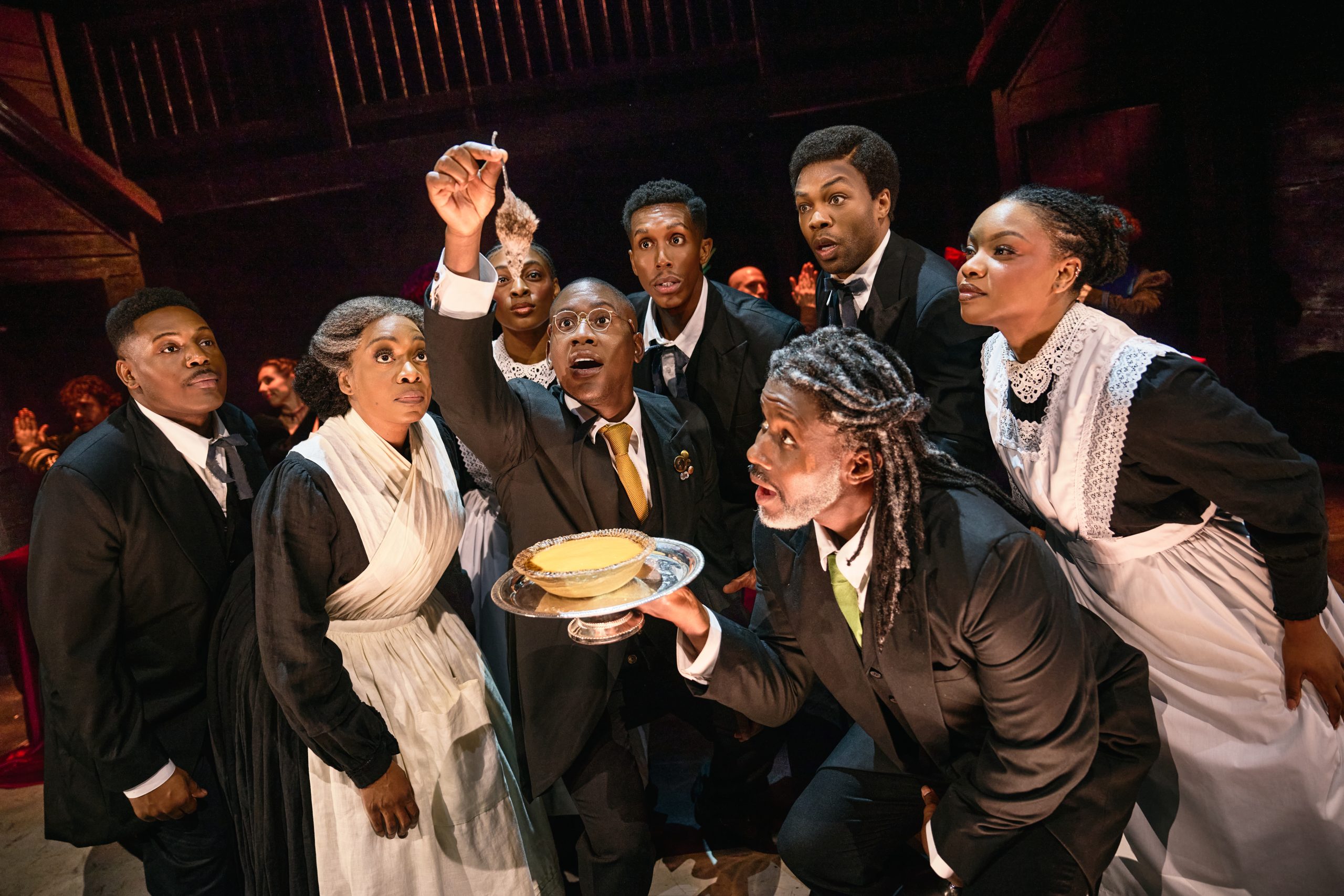
The Company of Midnight Photo by Valerie Terranova
Every so often, a musical comes along that reminds me why I fell in love with theater in the first place. Not because it is perfect, not because it follows the rules, but because it possesses that rare, electrifying combination of originality, extraordinary talent, emotional intelligence, and sheer theatrical audacity. Midnight, written, directed, choreographed, and starring Todrick Hall, is that musical. Currently playing at the Daryl Roth Theatre, it is, hands down, the best new musical I have seen this season. Frankly, I cannot imagine what could possibly surpass it.
Charlotte Odusanya and the Company Of Midnight Photo by Valerie Terranova
I have been a fan of Hall’s since his brilliantly inventive Beauty and the Beat video. His imagination, musicality, humor, and ability to transform popular culture into something uniquely his own have always fascinated me. But nothing, and I mean nothing, prepared me for what is happening at 101 East 15th Street.
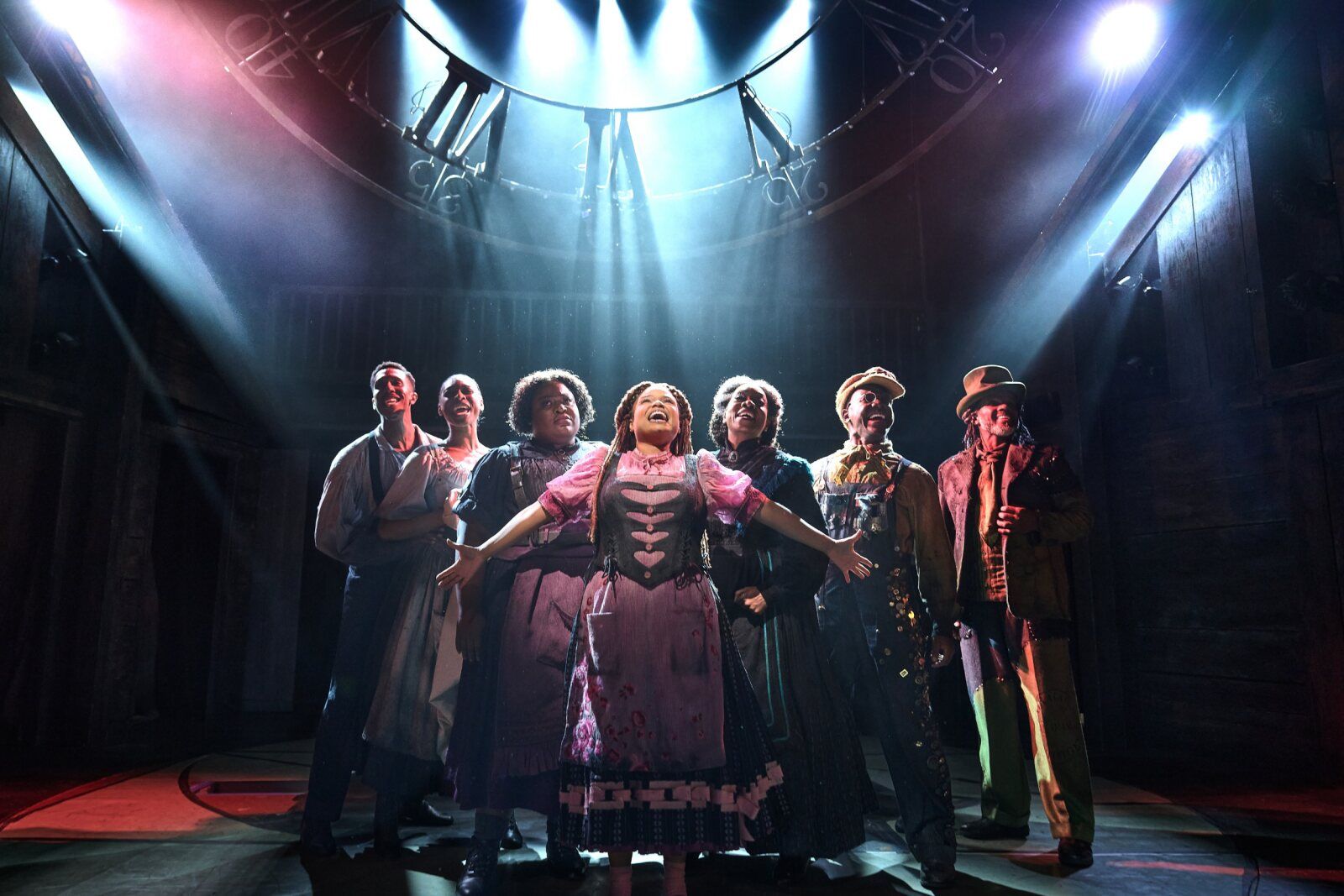
Todrick Hall and. the Company Of Midnight Photo by Valerie Terranova
First, there is the score. Gospel, rhythm and blues, soul, pop, rock, folk, and even opera collide in a glorious explosion of musical styles. This is a sung-through musical, with no spoken dialogue, and the vocal and instrumental arrangements are nothing short of extraordinary. Multiple harmonies overlap, voices soar into unexpected intervals, and riffs build upon riffs until the entire theater seems to vibrate with sound. The musical sophistication is staggering. I found myself sitting there in a state of absolute bliss, wondering how Hall had managed to assemble so many extraordinary voices in one production.
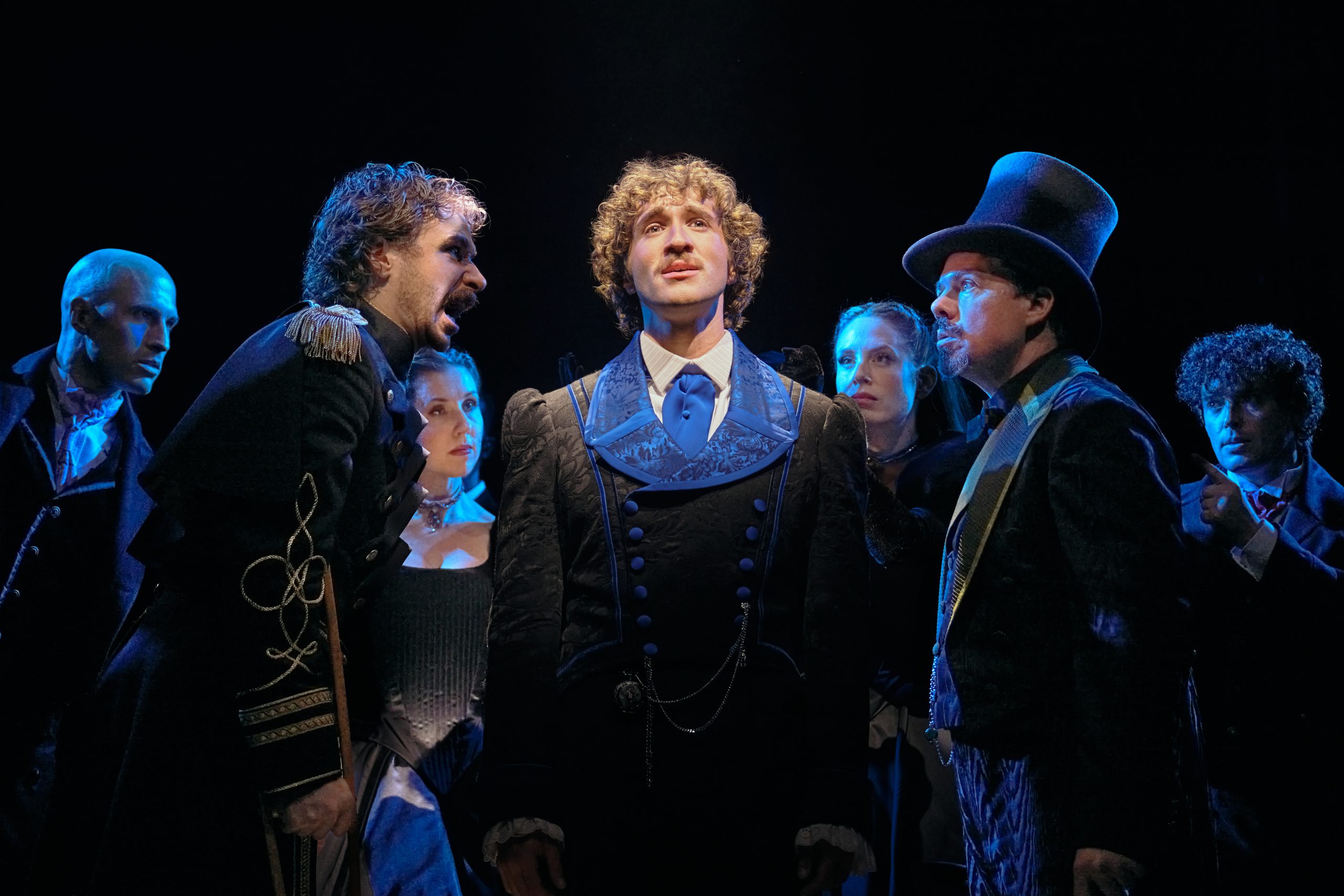
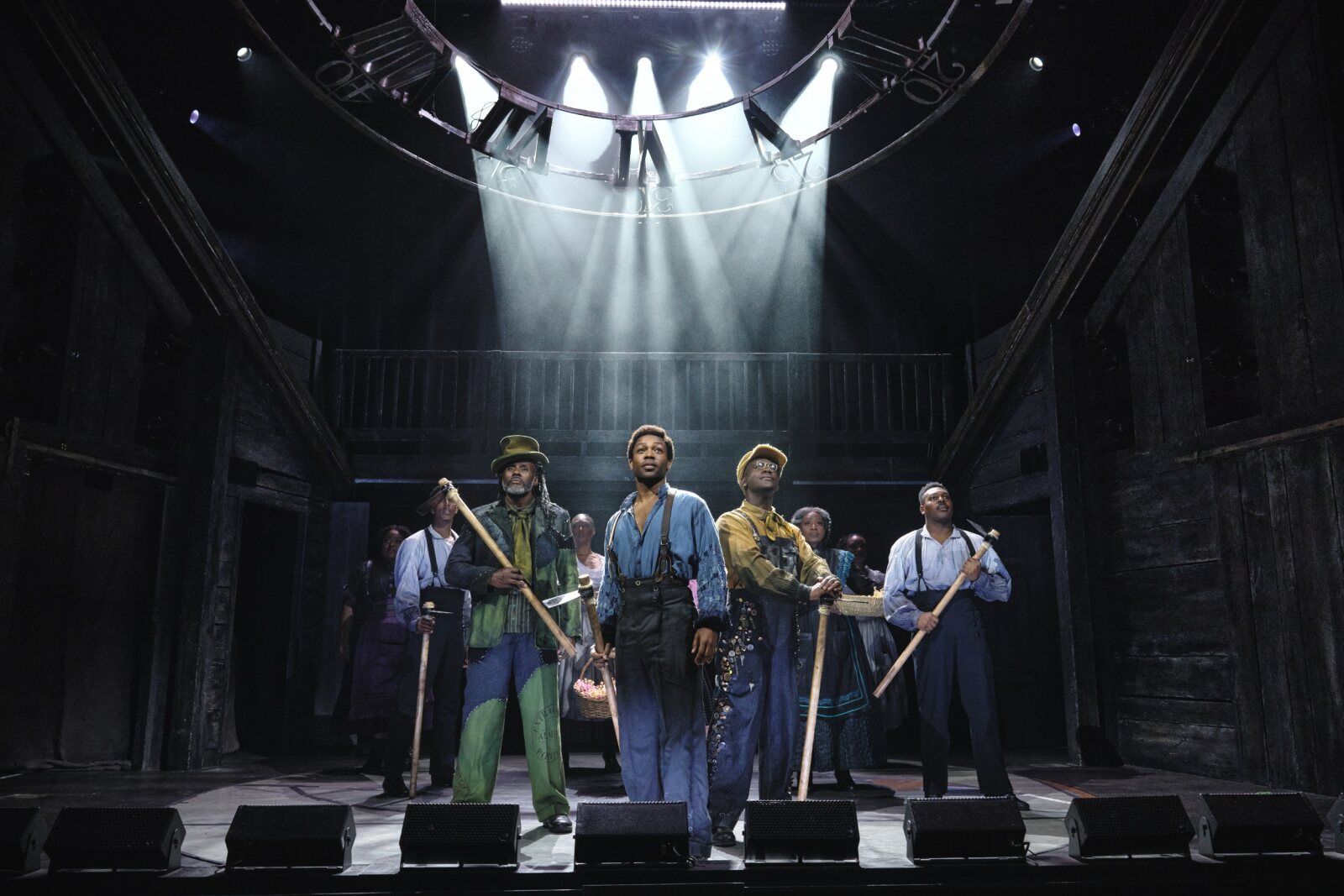
Jimmy Brewer, Jeremy Beloate and Ciarán McCarthy The Company of Midnight photo by Valerie Terranova
Set in the nineteenth-century American South, Midnight follows twelve interconnected characters, six Black and six white, whose lives are defined by race, class, power, identity, and the complicated nature of love. At its center is Rail, a young enslaved Black man portrayed by Hall, whose emotional world becomes increasingly complicated by Lily Rose, played with irresistible sweetness by Charlotte Odusanya affection, and his forbidden attraction to Richard, a wealthy white neighbor portrayed by the phenomenally gifted Jeremy Beloate.
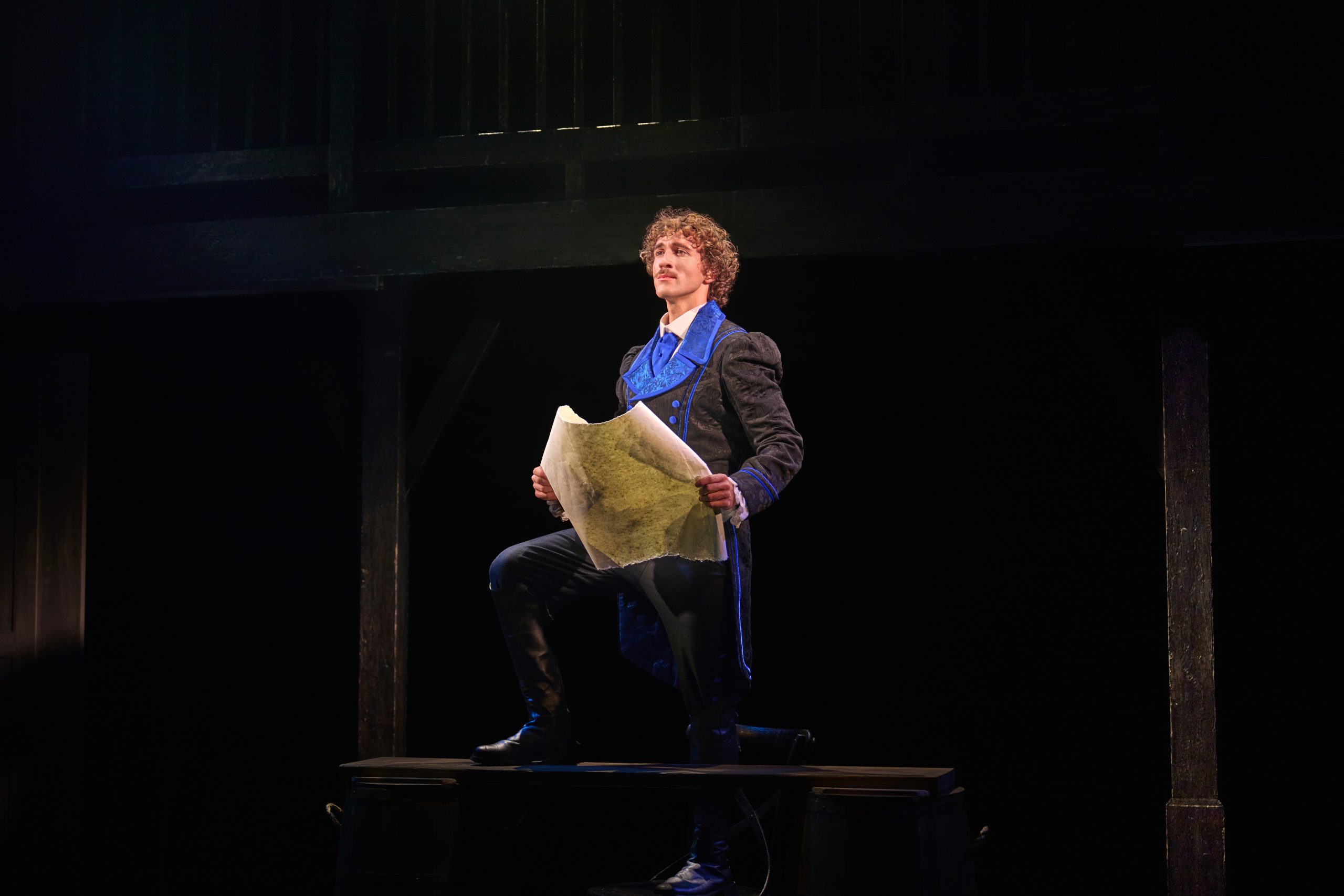
Jeremy Beloate photo by Valerie Terranova
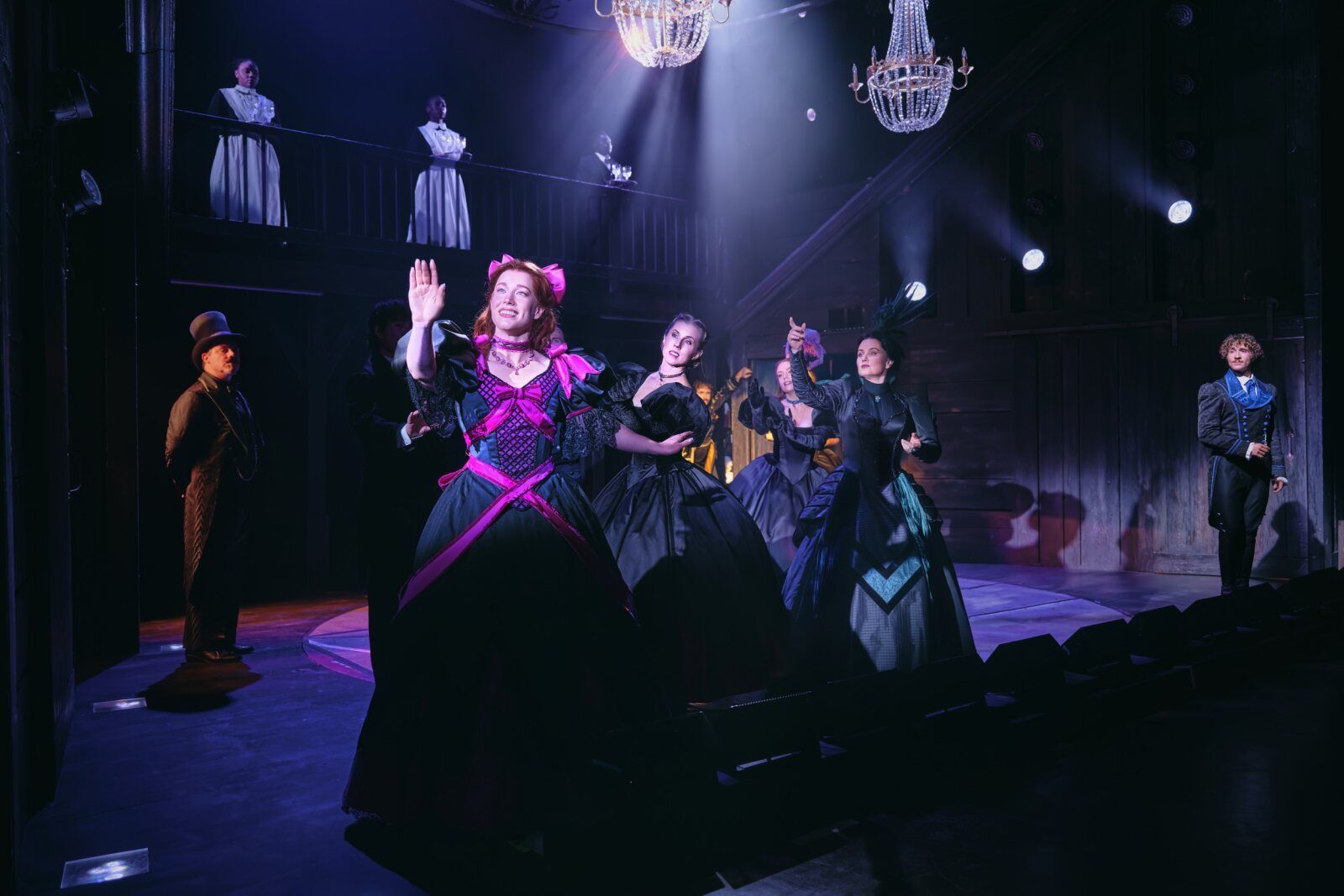
Kennedy Caughell and the company of midnight Photo by Valerie Terranova
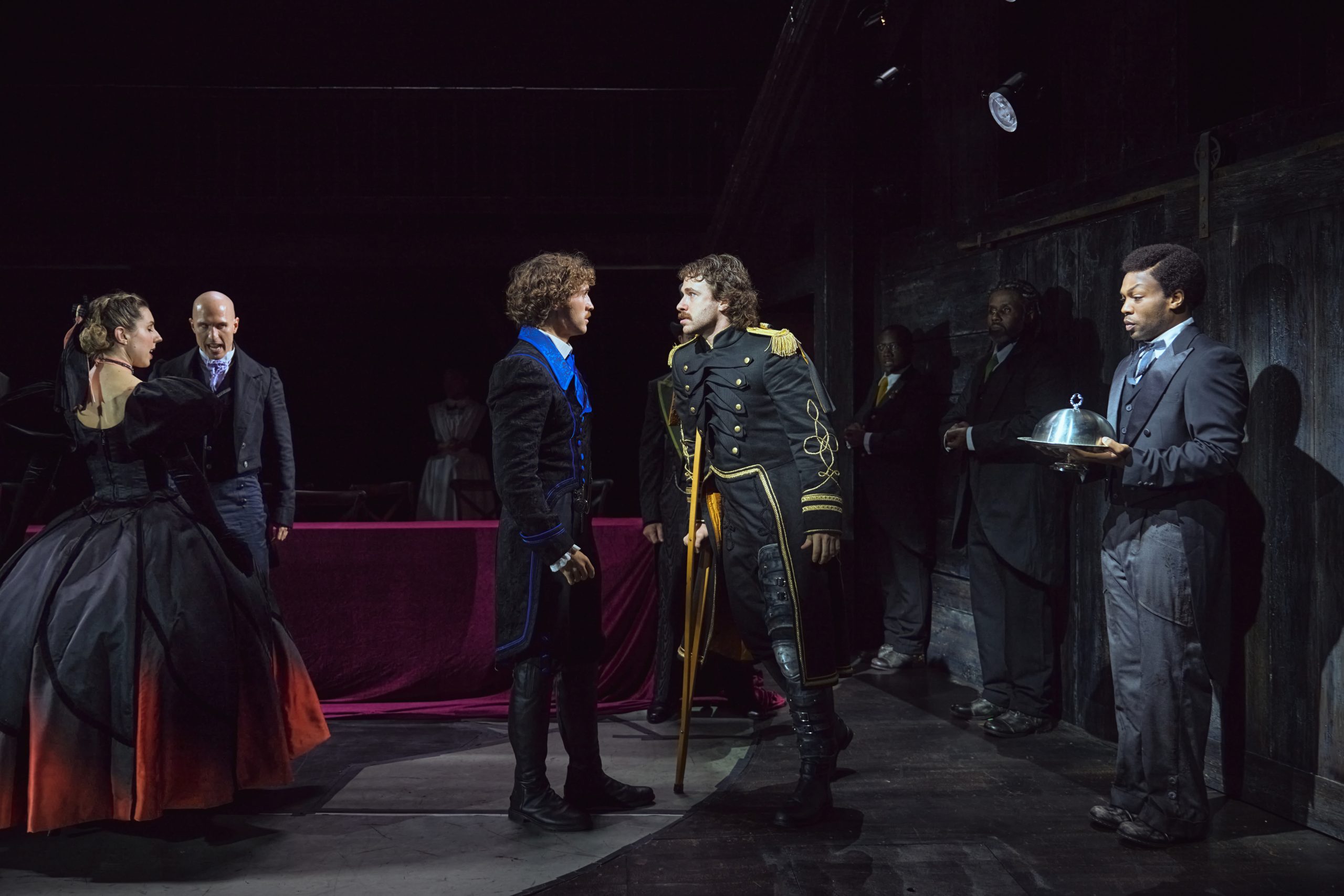
Jimmy Brewer, Jeremy Beloate, Todrick Hall Photo by Valerie Terranova
What makes this so effective is that Hall does not simply ask us to imagine injustice. He makes us watch familiar characters experience it from the opposite side. The reversal exposes the arbitrary cruelty of a system in which one person’s humanity is determined by another person’s authority. It is bold, unsettling, and theatrically ingenious.
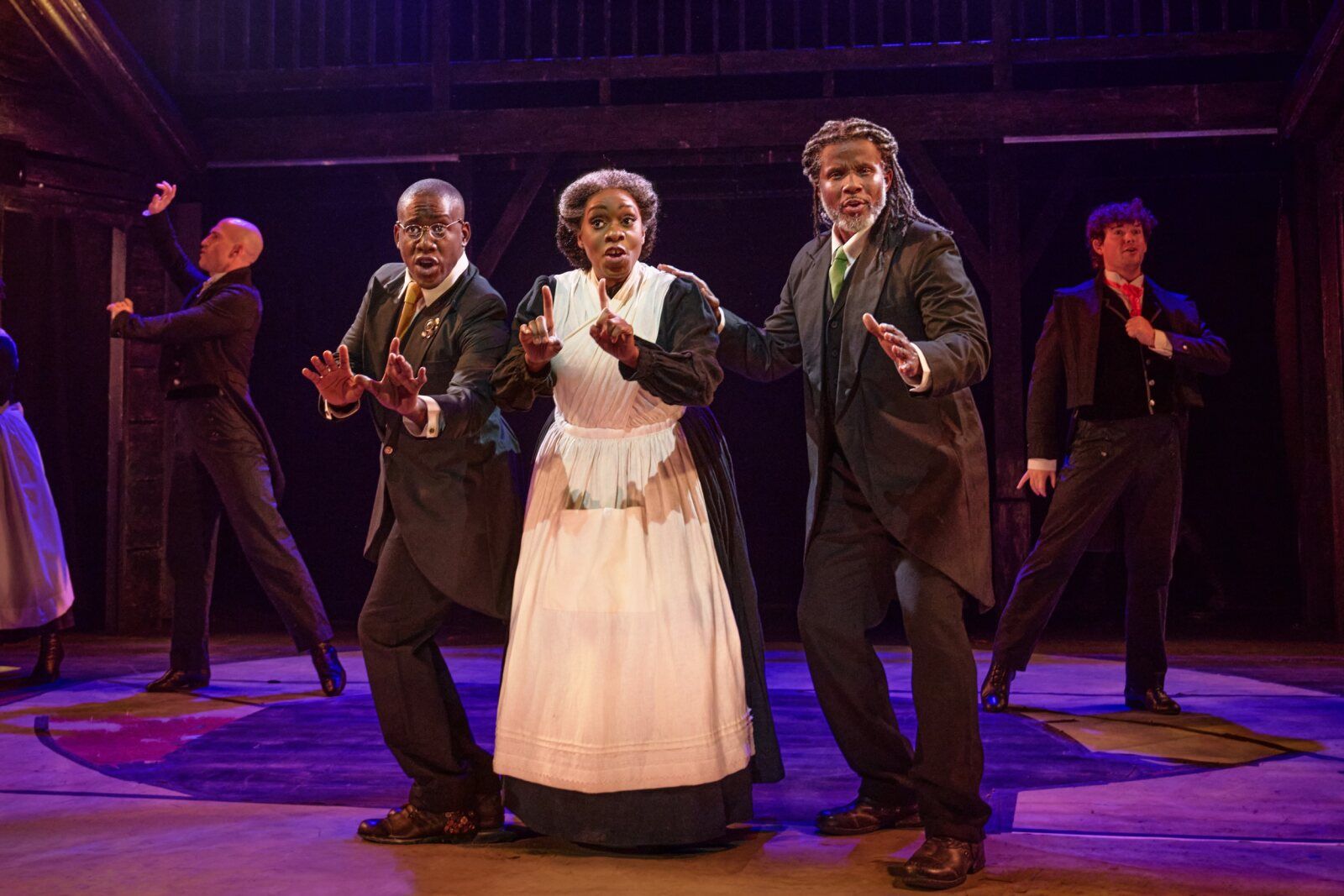
Sidney Dupont, Ayana George, and Dwayne Clark Photo by Valerie Terranova
Ayana George, as Ethel, serves as one of the musical’s principal narrators, and her voice is simply magnificent. She possesses the kind of vocal authority that makes an audience surrender from the first note. There is richness, power, and emotional command in everything she sings, and she anchors the production with remarkable assurance.
Charlotte Odusanya brings warmth and charm to Lily Rose, making her far more than a romantic counterpoint to Rail’s complicated desires. There is an innocence to her performance, but also an emotional intelligence that keeps the character from becoming sentimental.
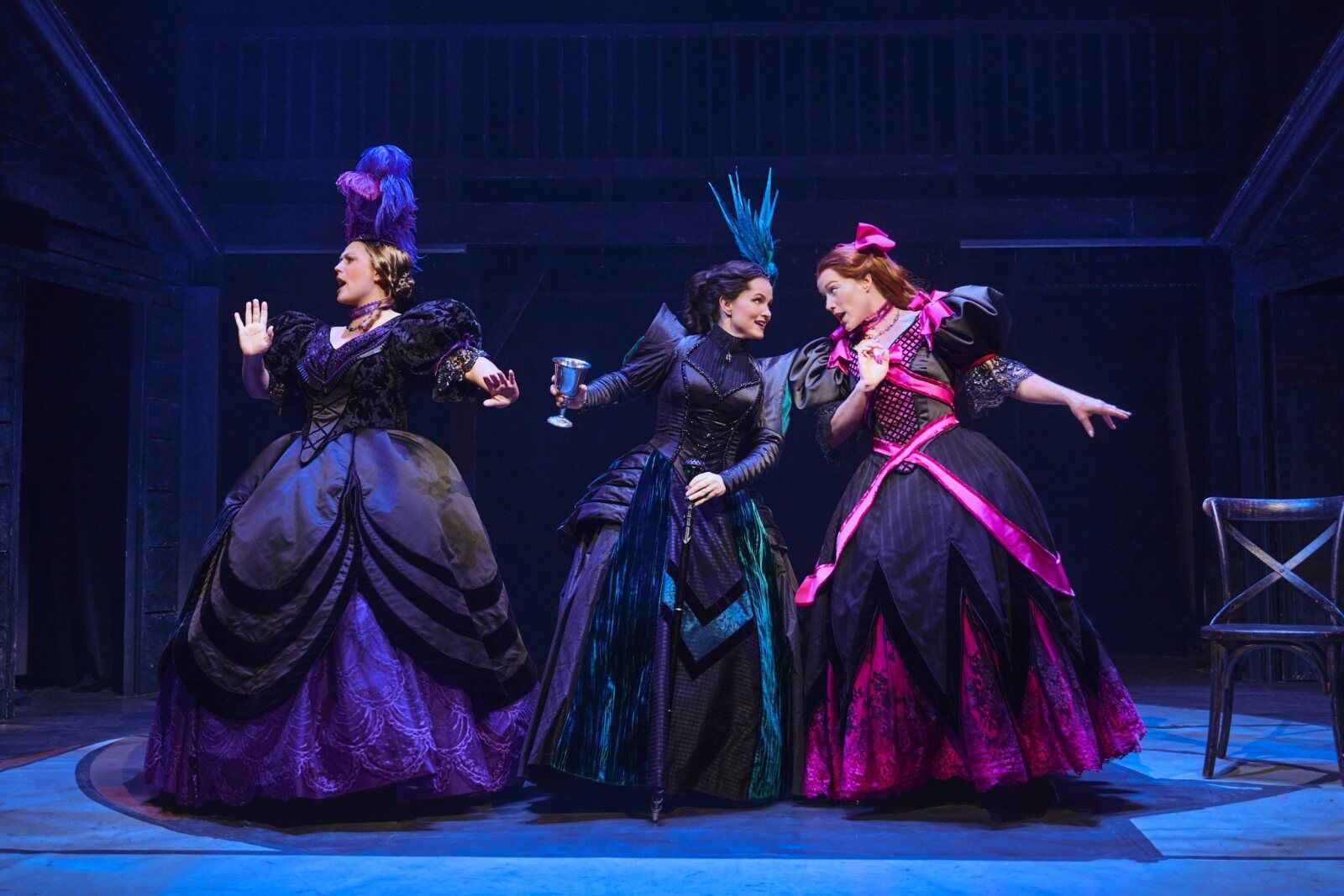
Bella Coppola, Autumn Hurlbert and Kennedy Caughell Photo by Valerie Terranova
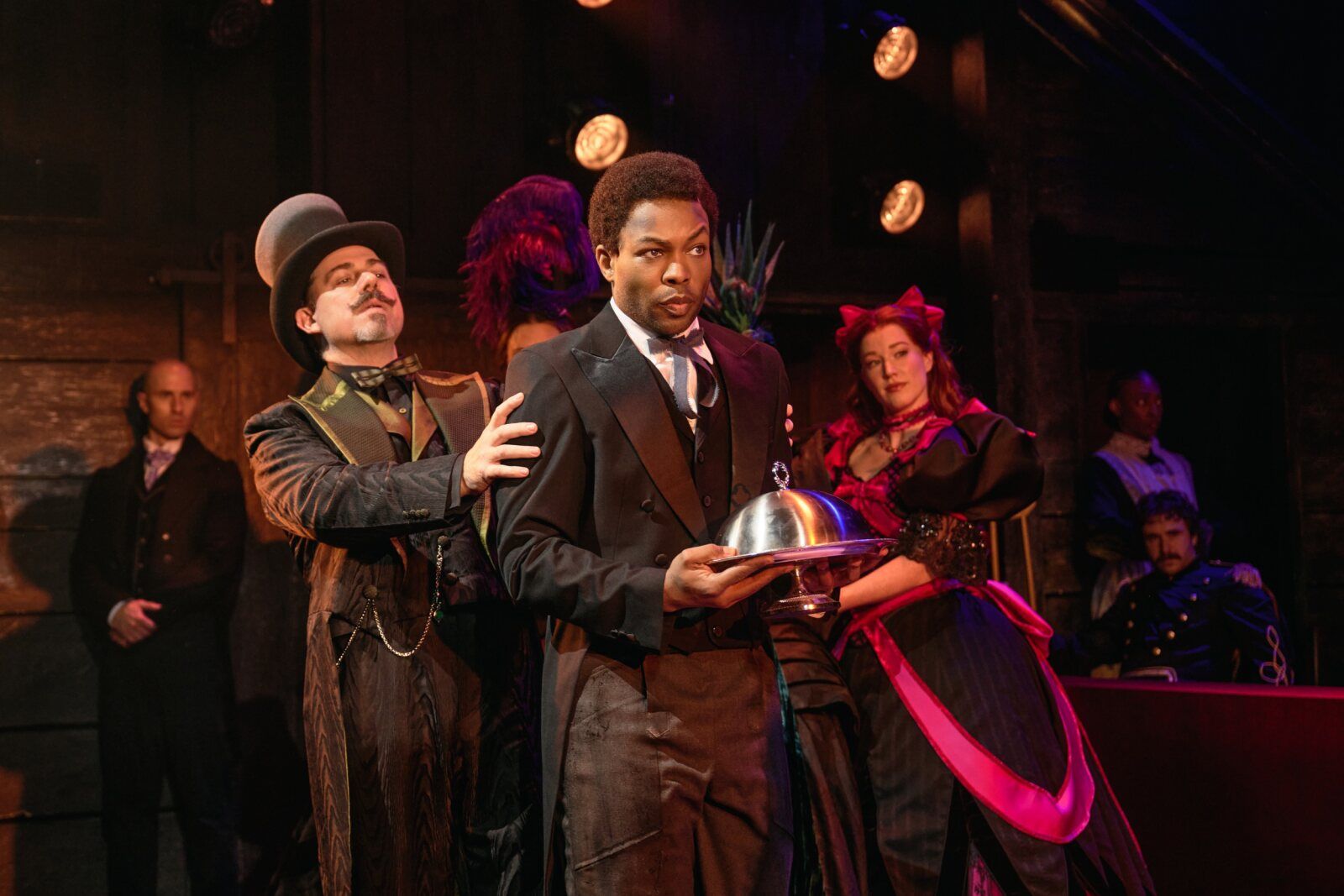
Ciaran McCarthy, Todrick Hall, Kennedy Caughell and the company of midnight Photo by Valerie Terranova
What Hall has accomplished vocally is especially impressive because the musical demands so much more than beautiful singing. The performers must negotiate complicated harmonies, shifting musical styles, demanding choreography, and emotionally charged storytelling without the relief of spoken dialogue. There is nowhere to hide. Every thought, every confrontation, and every revelation must be communicated through music and movement. My only criticism is diction.
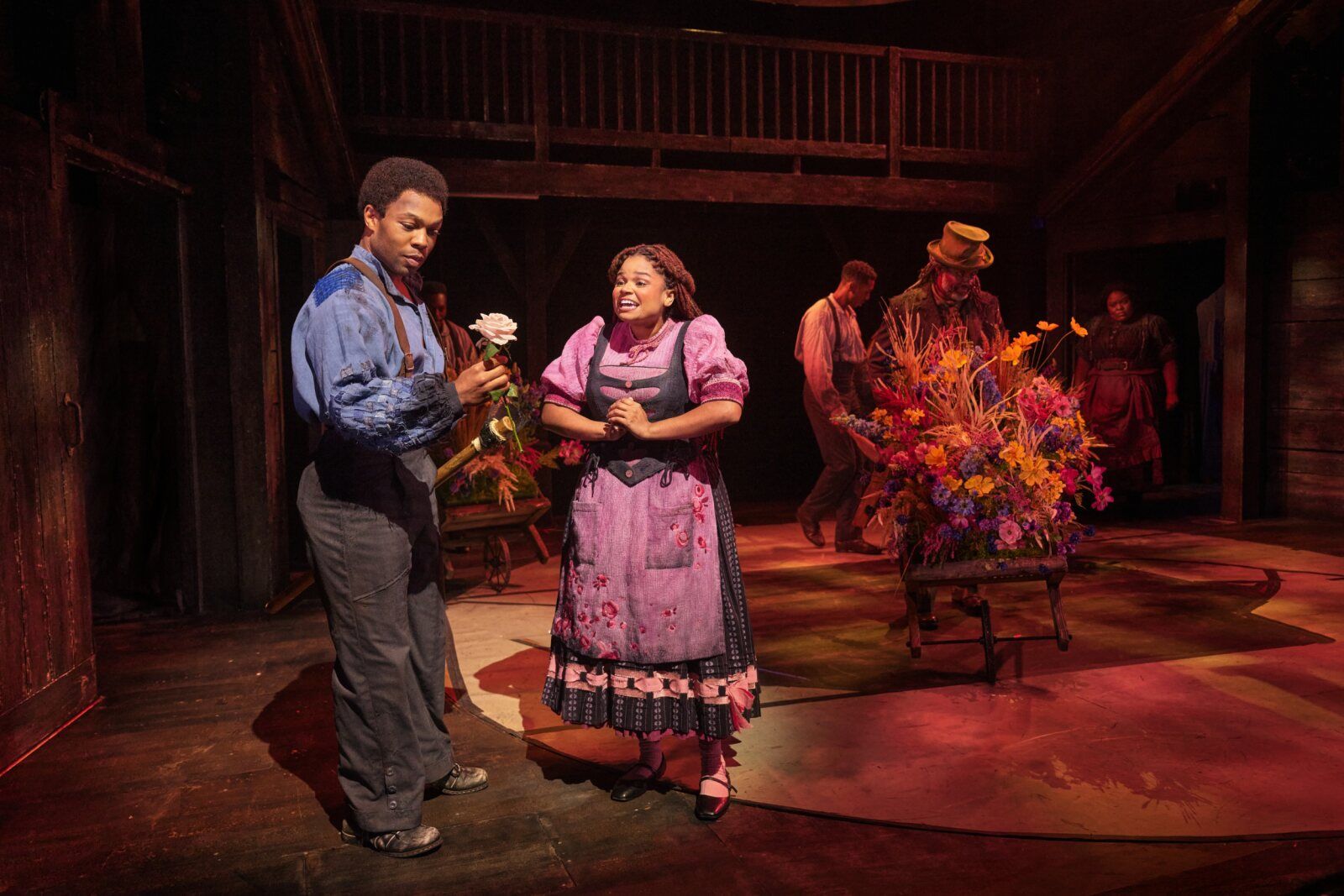
Todrick Hall and Charlotte Odusanya and the Company of Midnight Photo by Valerie Terranova
Hall himself is a magnetic performer, bringing charisma, vulnerability, humor, and tremendous physical energy to Rail. He commands the stage with the confidence of someone who knows precisely what he wants his audience to experience. Yet he is also the one person who might benefit most from an editor. Sometimes less really is more.
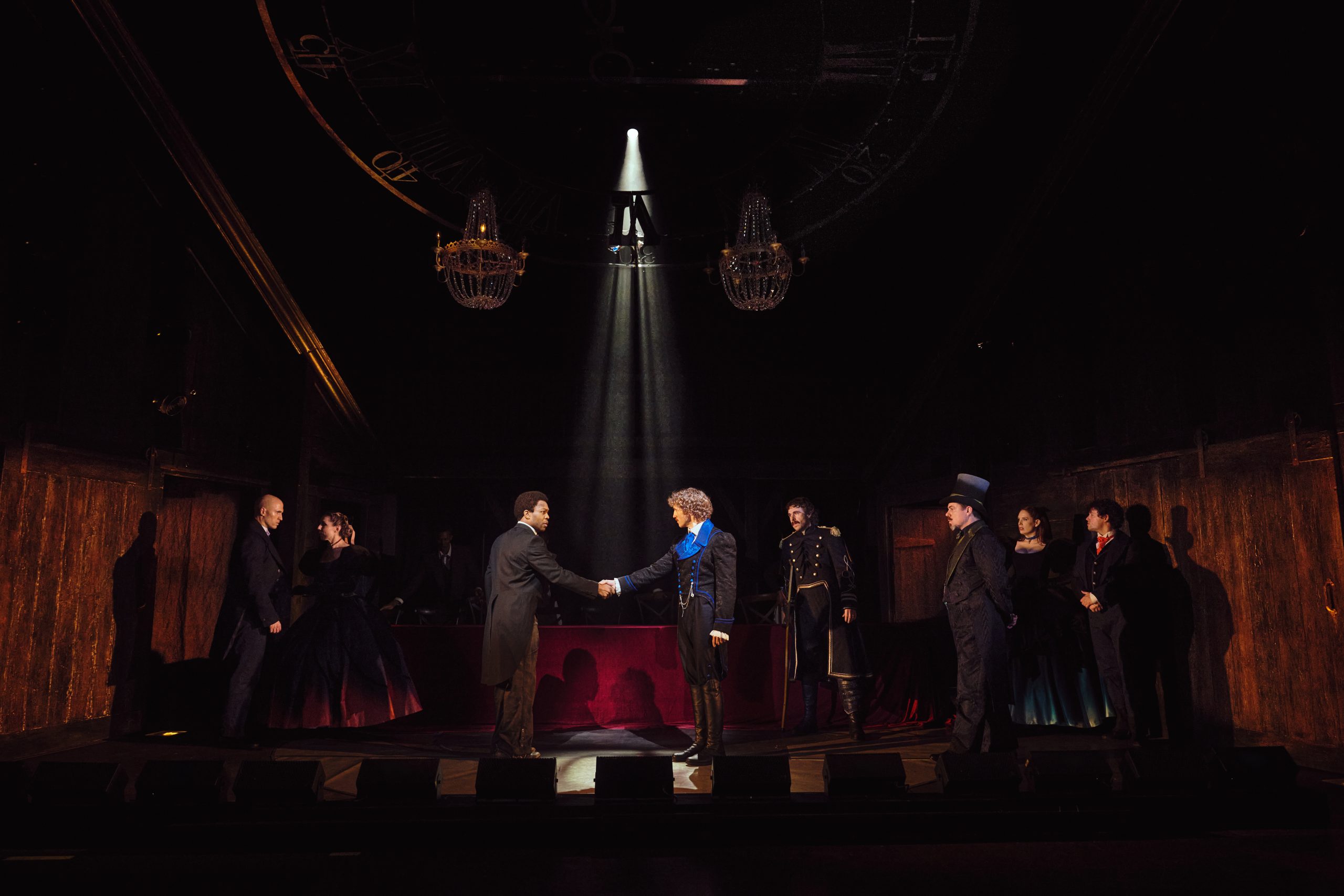
Todrick Hall, Jeremy Beloate and the Company of Midnight Photo by Valerie Terranova
Morgan Large’s scenic design provides a theatrical environment capable of moving between historical realism and the production’s increasingly surreal landscape. Beck Jones’s costumes establish the divisions of class and status that become so essential to the story, while Jake DeGroot’s lighting gives the production both its visual grandeur and its darker emotional textures.
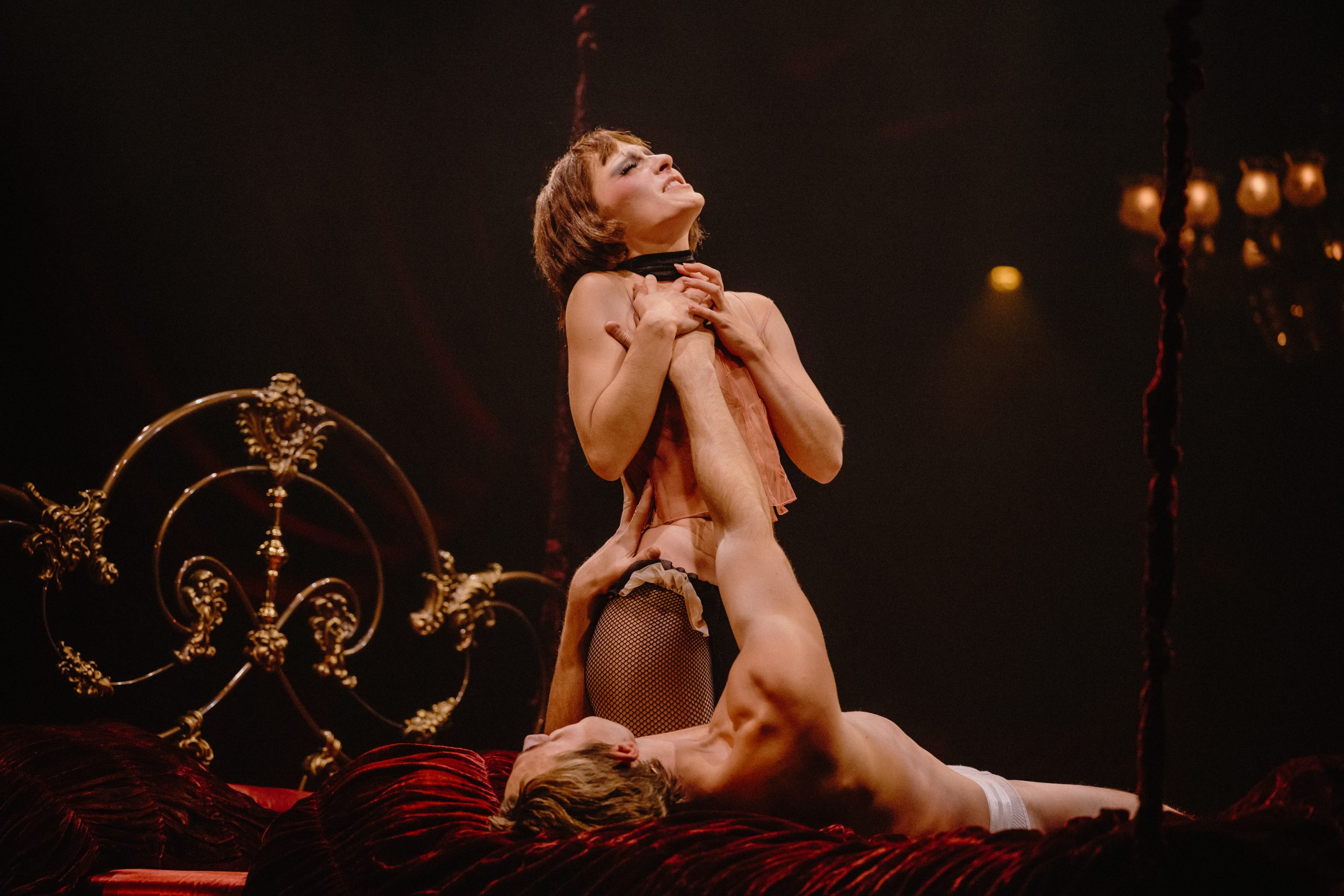
Sophia Anne Caruso delivers a mesmerizing performance in Duncan Sheik’s haunting new musical, where exquisite beauty conceals a far more disturbing reality.
There is something particularly poignant about watching Memoirs of Amorous Gentlemen, one of Duncan Sheik’s final theatrical works, arriving onstage in the shadow of his death. The composer who helped redefine contemporary musical theater with Spring Awakening has left us another haunting score, one whose melodic beauty and emotional darkness seem all the more affecting now that its creator is gone.
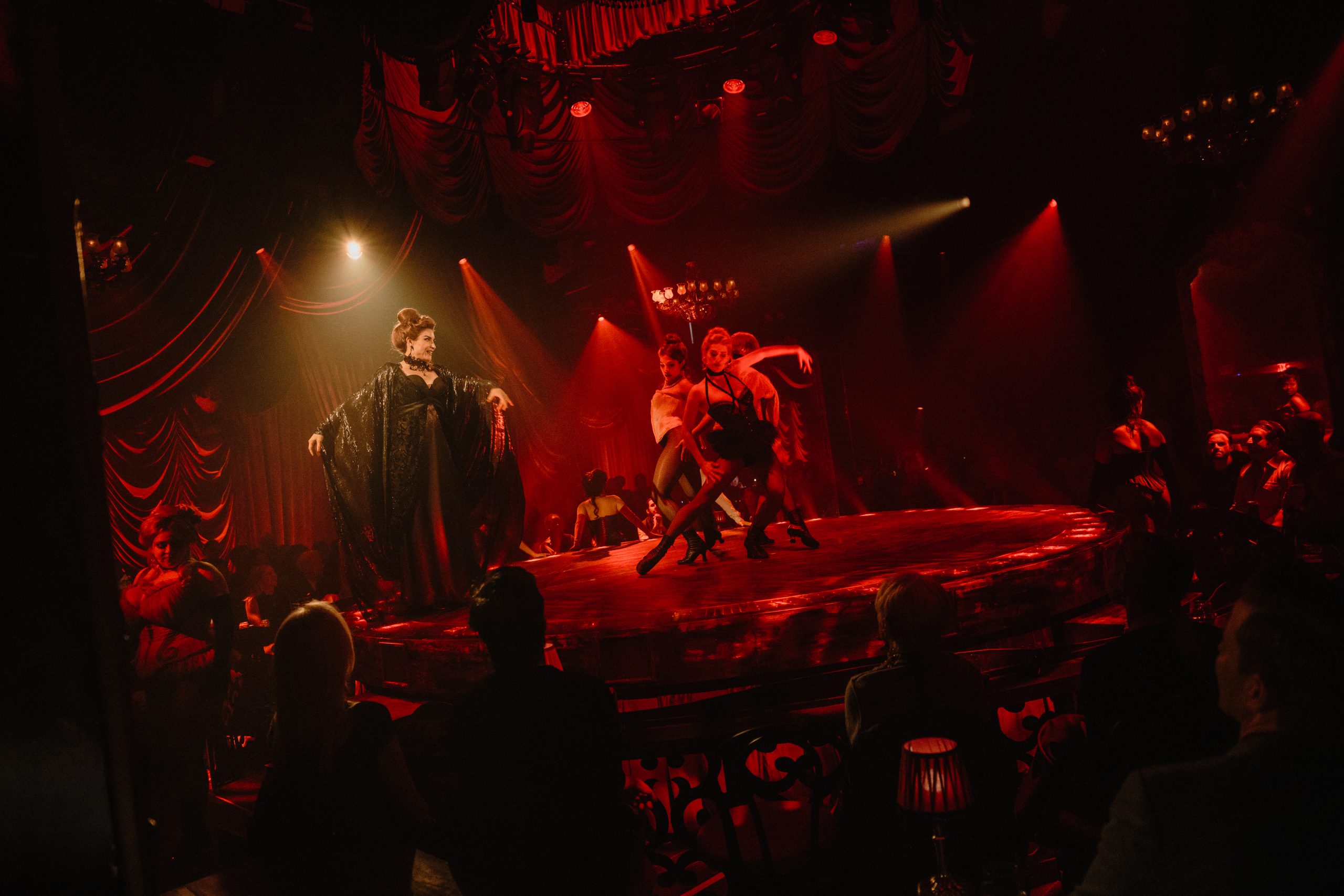
Now playing at The Night Egg at The Culture Club, 530 West 27th Street. Imagine the immersive seduction of Sleep No More, filtered through the eroticism of a Parisian brothel, and you begin to understand the atmosphere. This is a production that invites you to look, encourages you to linger, and then makes you question precisely what you have been watching.
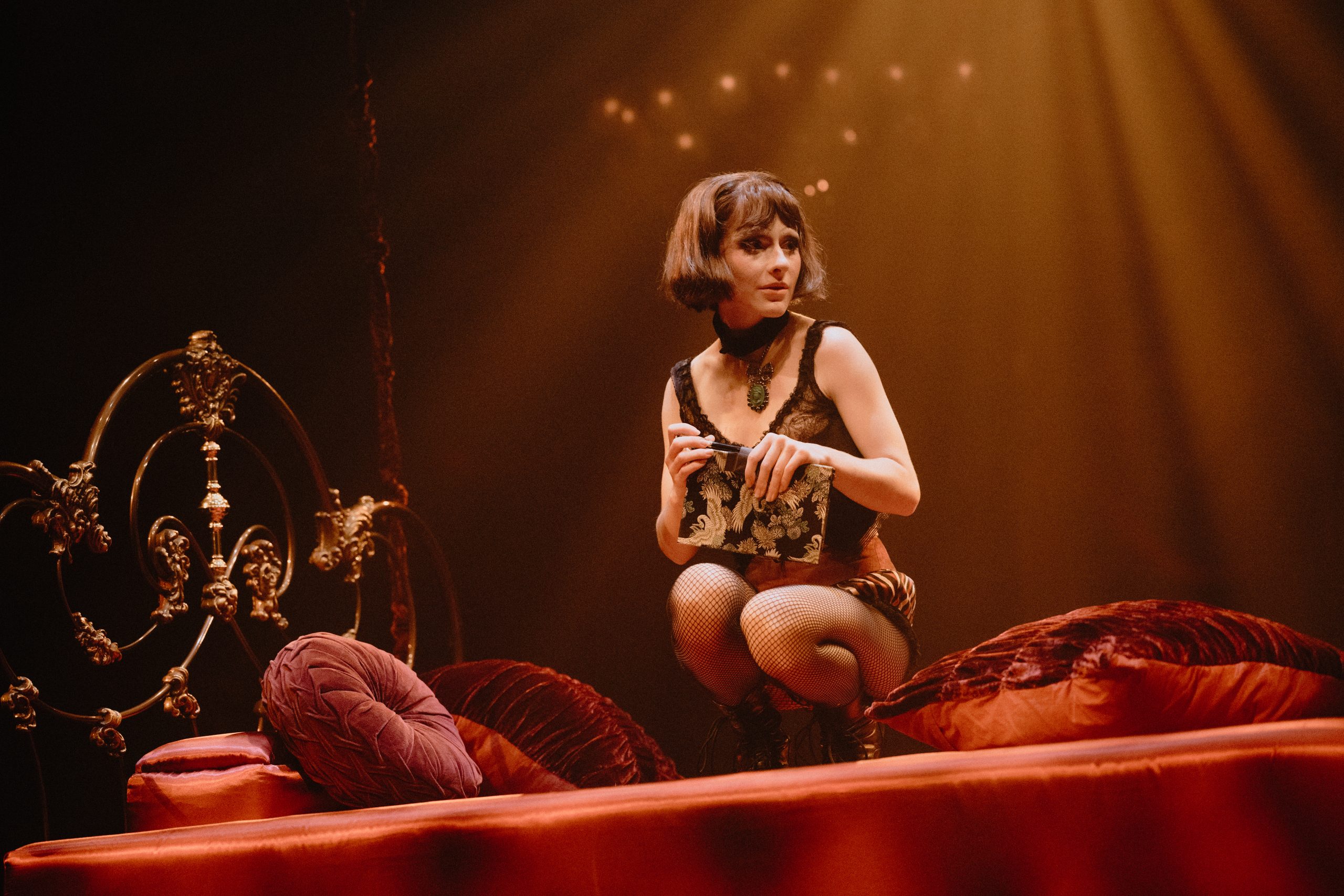
Sophia Anne Caruso photo by Andy Henderson
Make no mistake, this is essentially beautiful soft pornography onstage, wrapped in some of the most exquisite theatrical design currently on display. It is also a production with a frustratingly familiar story, an insufficiently developed book, and one extraordinary young actress who makes the entire evening worth experiencing.
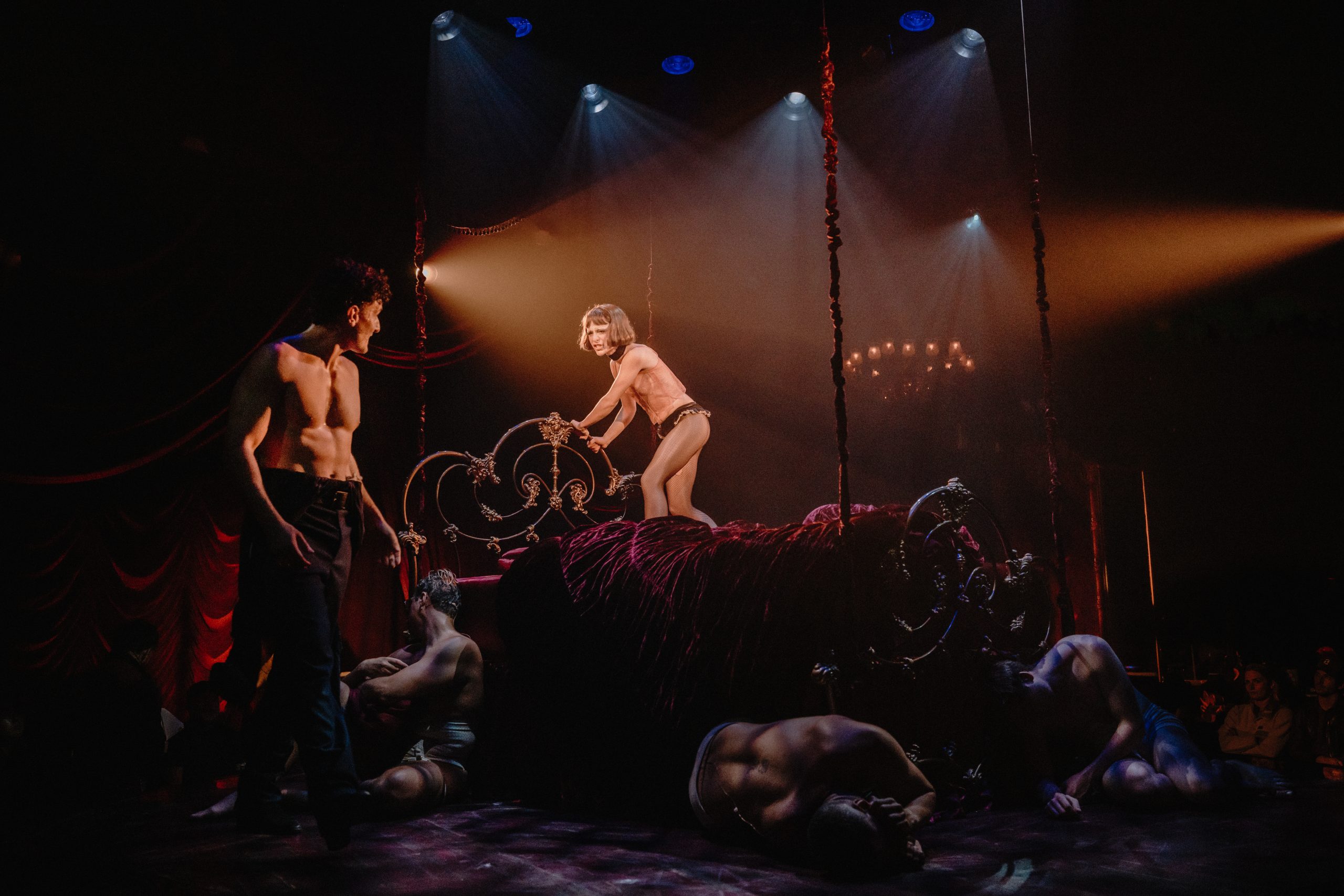
Cory Jeacoma and Sophia Anne Caruso photo by Andy Henderson
Based on Moyoco Anno’s award-winning Japanese manga, with a book by Leah Nanako Winkler, Memoirs of Amorous Gentlemen transports us to a decadent Parisian maison close known as the Night Egg. Here, desire is currency, intimacy is transactional, and the women who inhabit this seductive underworld survive by learning the difference between what men want and what men are willing to give.
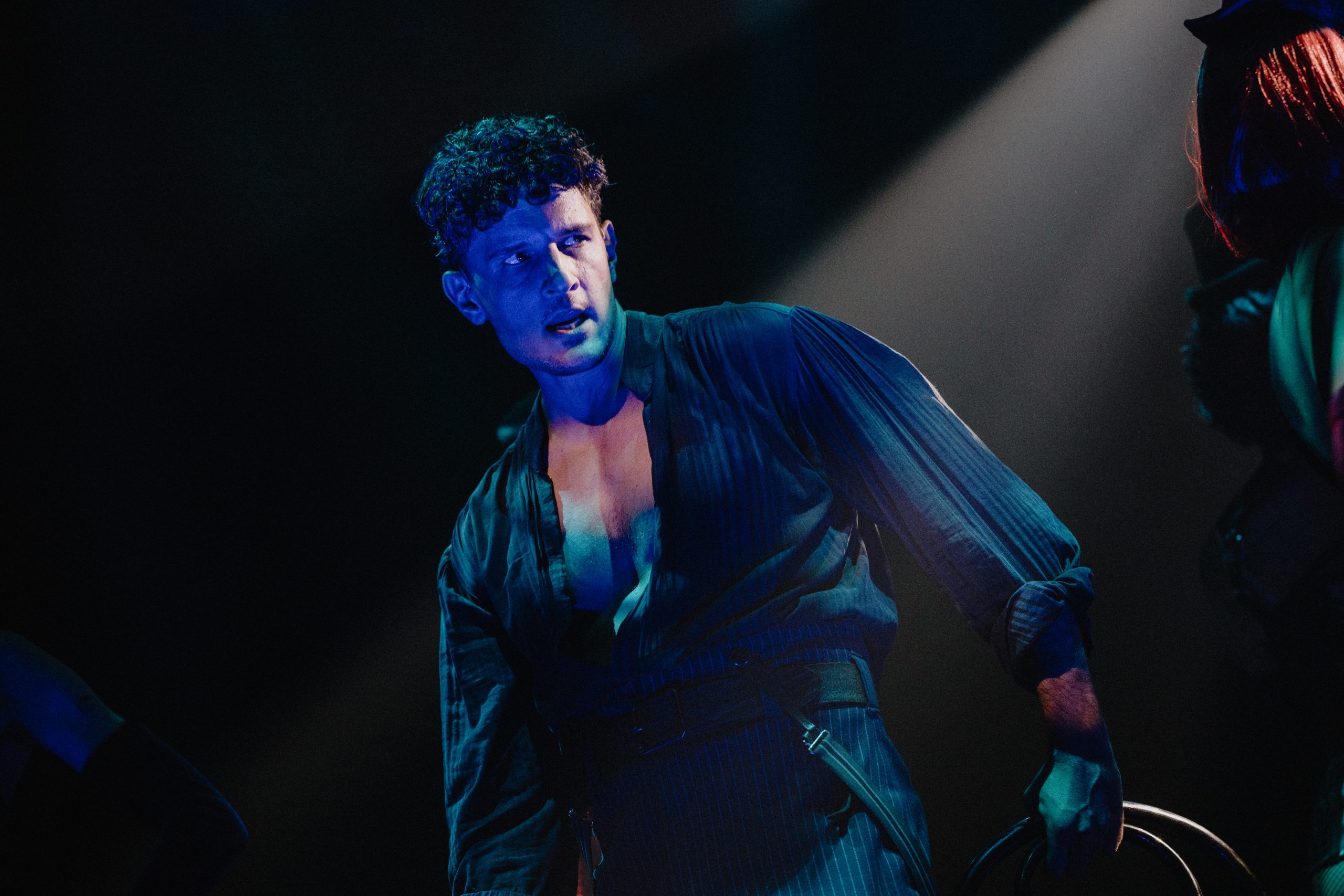
Cory Jeacoma photo by Andy Henderson
At its center is Colette, a young aspiring writer portrayed by the astonishing Sophia Anne Caruso. Colette works within this elaborate world of fantasy while remaining emotionally entangled with Léon (a rake that Cory Jeacoma makes you want o hear more of), her childhood love, a man whose affections prove considerably less dependable than her devotion.

Marc delaCruz photo by Andy Henderson
When a client, Sakae (Marc delaCruz), encourages Colette to put pen to paper, she begins recording the intimate confessions, peculiar fantasies, and private sorrows of the men who frequent the establishment. Through writing, she discovers a means of reclaiming her identity. No longer merely someone to be observed, she becomes the observer, transforming the perversions of others into art.
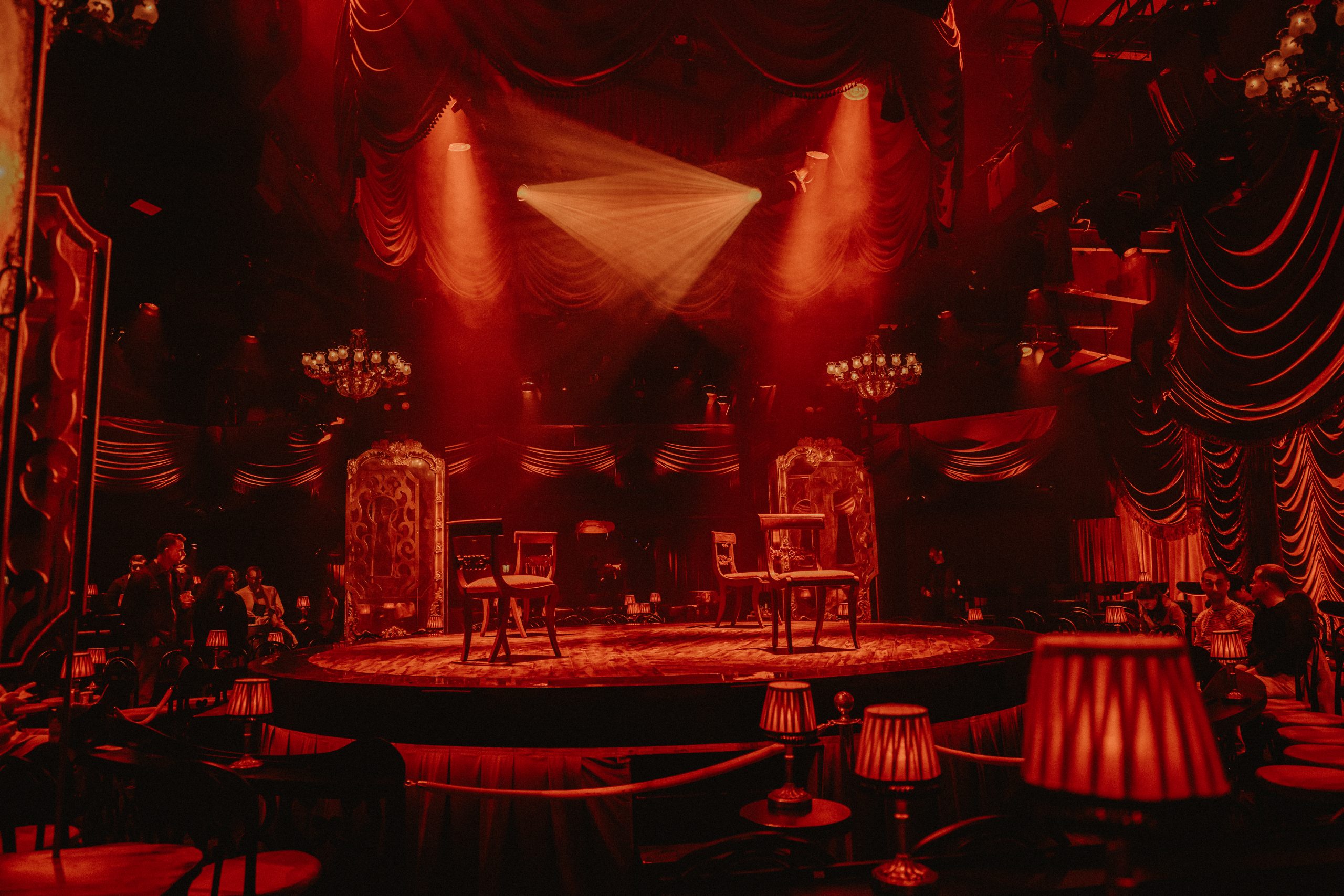
The Night Egg at the Culture Club photo by Andy Henderson
It is a promising premise, but one that feels distressingly familiar. The prostitute with a literary soul, the emotionally unavailable lover, the exploitation masquerading as affection, and the eventual discovery of personal agency are all recognizable dramatic territory. Winkler’s book never quite finds the originality or psychological complexity necessary to elevate these elements into something genuinely revelatory.
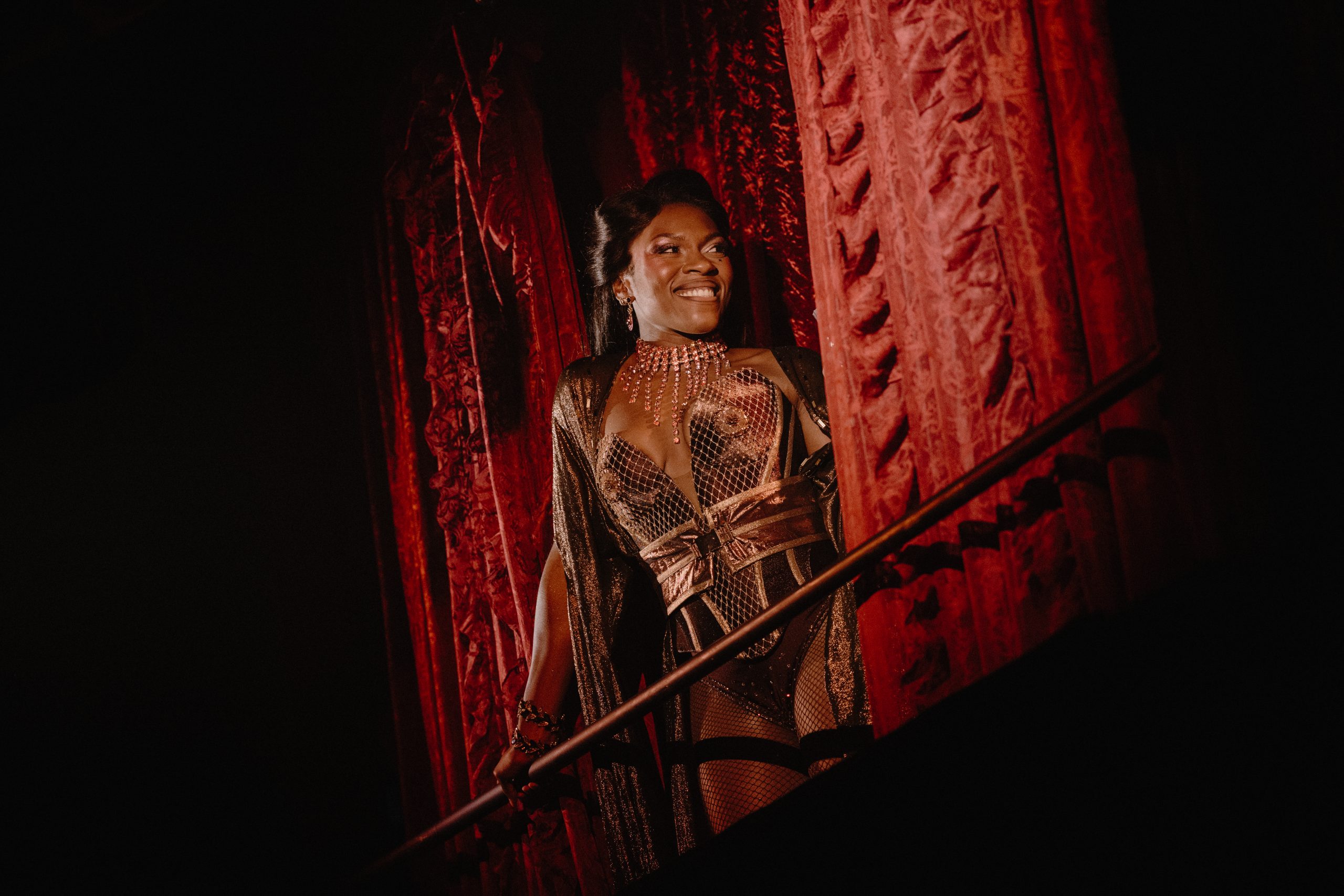
Nkeki Obi-Melekwe photo by Andy Henderson
Léon, meanwhile, exploits Colette’s devotion while directing his money and attention toward Nana, played by Nkeki Obi-Melekwe of Tina: The Tina Turner Musical. Colette continues believing in him long after the audience has recognized the futility of that belief. There is emotional truth in such self-deception, but the writing does not explore it deeply enough to make the relationship as compelling as it should be.
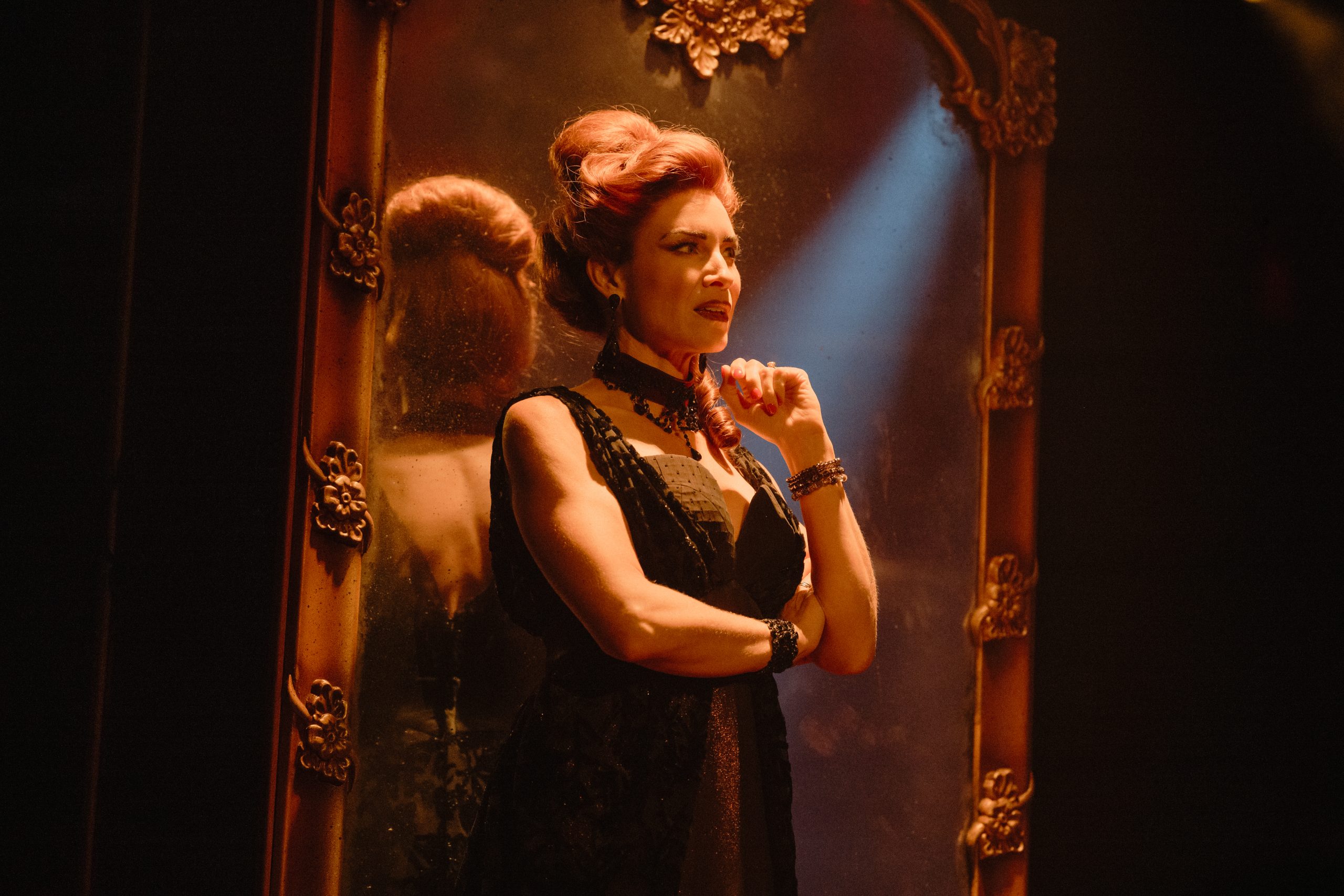
Jenny Powers photo by Andy Henderson
Jenny Powers brings an appropriately chilling authority to Madame, whose coldhearted management of the establishment reminds us that beneath the elaborate costumes and seductive rituals lies a business built upon the commodification of human desire.
What makes the production so compelling is the extraordinary visual and musical world constructed around this underdeveloped narrative.
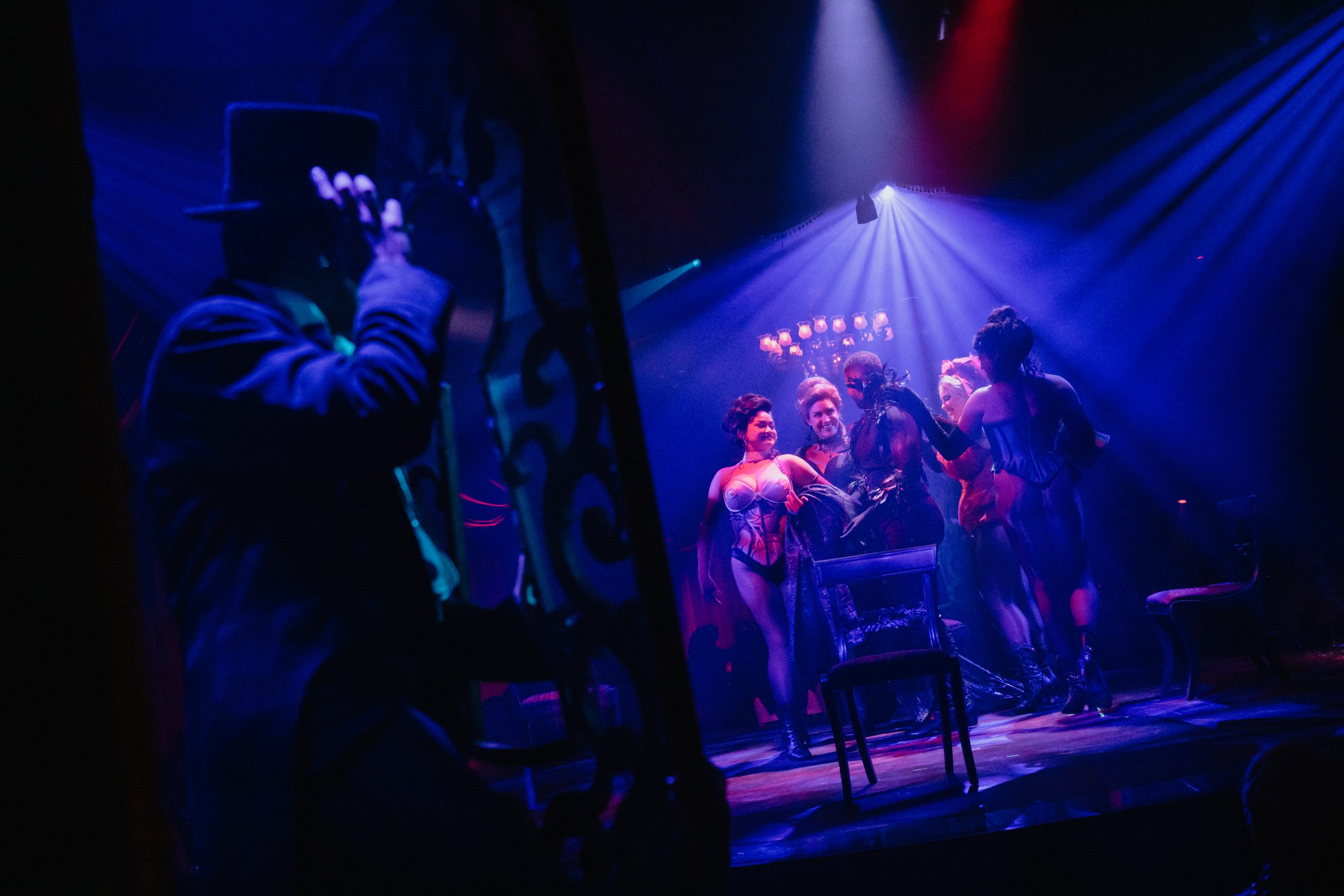
photo by Andy Henderson
Director and choreographer Rob Ashford understands seduction as a theatrical language. His staging is fluid, sensual, and meticulously composed, creating an atmosphere in which movement becomes as expressive as dialogue. The choreography is not simply decorative; it is part of the establishment’s machinery, drawing the audience into a world where beauty and exploitation exist in disturbing proximity.
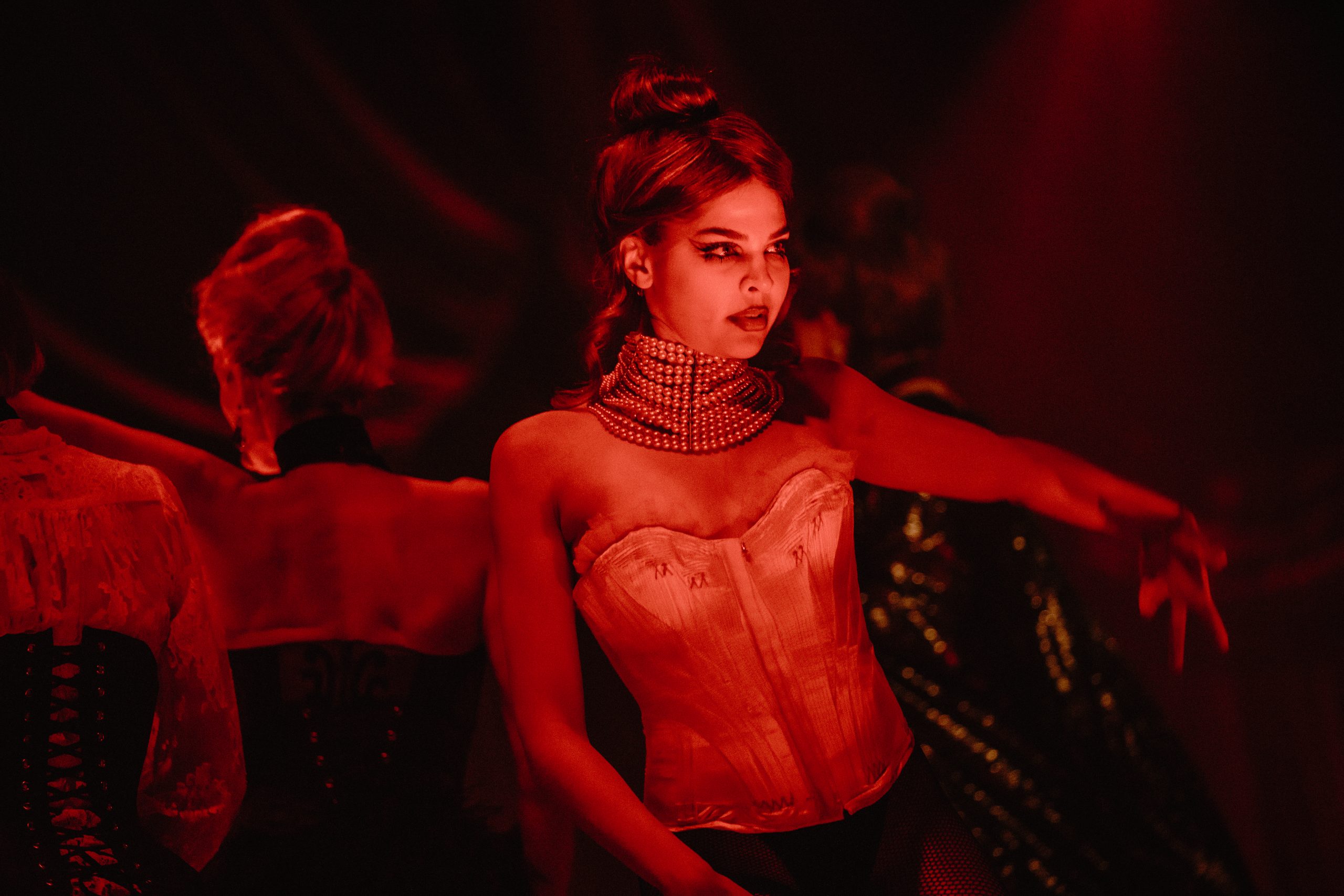
Nika Lindsay photo by Andy Henderson
Scott Pask’s scenic design transforms the space into a decadent Parisian playground, while Catherine Zuber’s costumes are so ravishing that I found myself wanting to purchase practically the entire wardrobe. The textures, silhouettes, and sensual extravagance create a visual feast. If the production occasionally feels more invested in its appearance than its narrative, it is difficult to complain while looking at something this gorgeous.
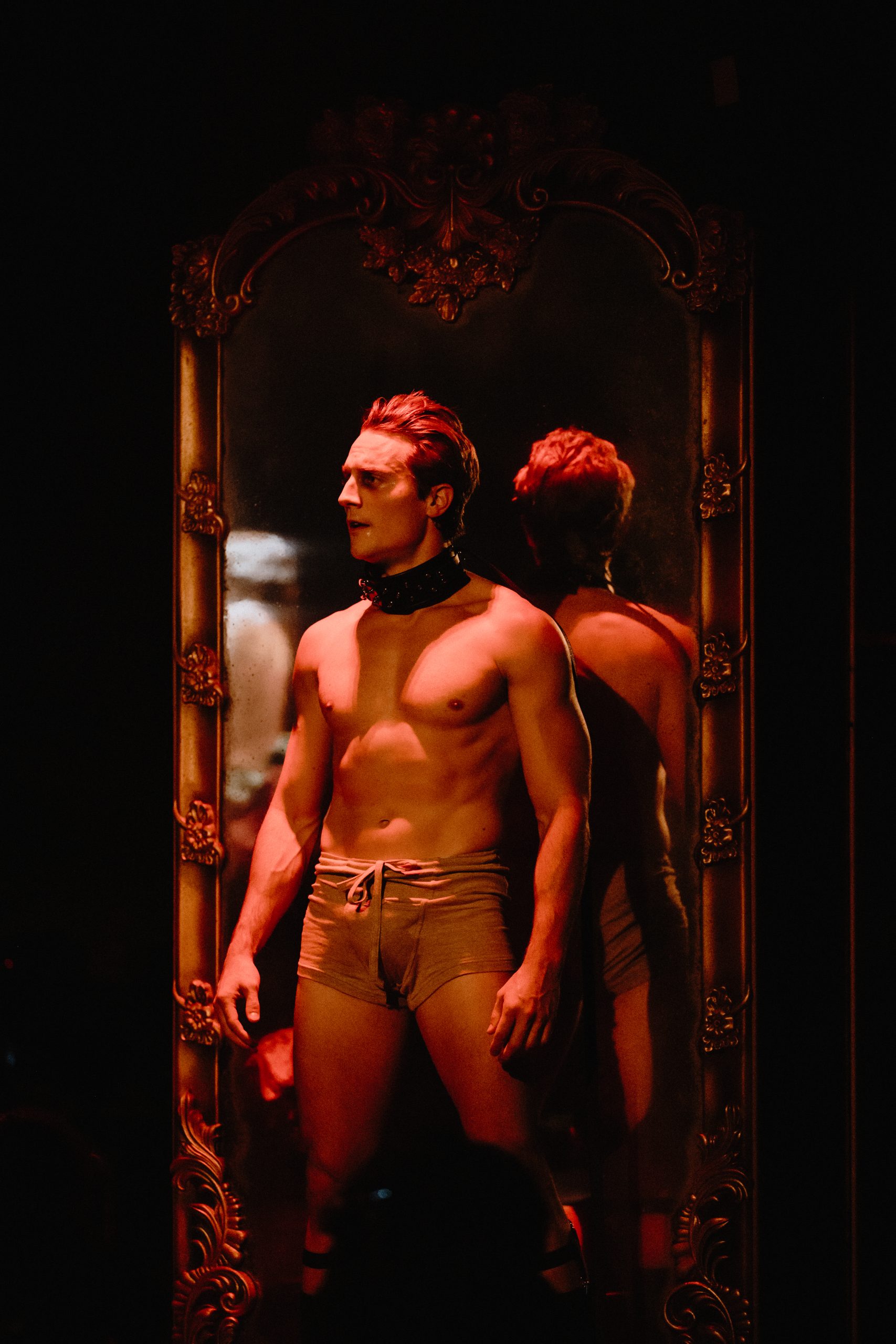
Michael Starr photo by Andy Henderson
Yet that beauty is also the point. The Night Egg is designed to conceal the ugliness of what takes place within its walls. Look from a distance, and everything glitters. Look too closely, and the illusion begins to decay.
Duncan Sheik’s music and lyrics provide the evening with its most haunting dimension. Melodic, atmospheric, and often achingly beautiful, the score has a hypnotic quality that recalls, in spirit, Stephen Sondheim’s Passion. Both works explore the unsettling territory where love becomes obsession and desire slips into emotional captivity.
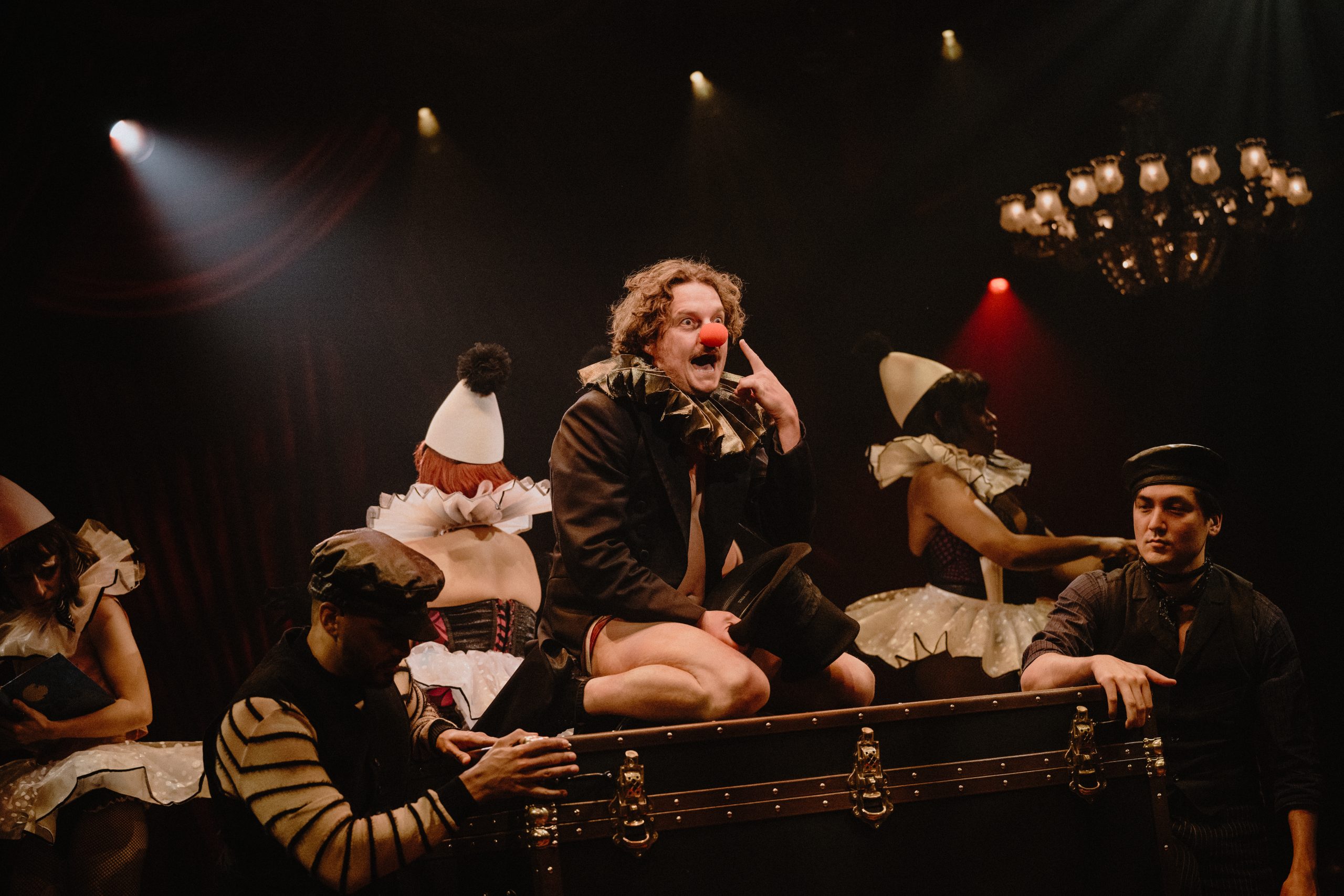
Austin Lesch photo by Andy Henderson
Sheik’s music does not merely accompany the story. It seems to seep through the walls of the Night Egg, making the establishment itself feel alive. There is something almost witchlike about the combination of music, singing, and movement. The melodies draw us inward, creating a seductive spell that makes the eventual recognition of the characters’ suffering all the more unsettling.
Jenny Powers photo by Andy Henderson
The score is considerably more sophisticated than the book surrounding it. One wishes the writing possessed the same emotional depth and complexity as the music.
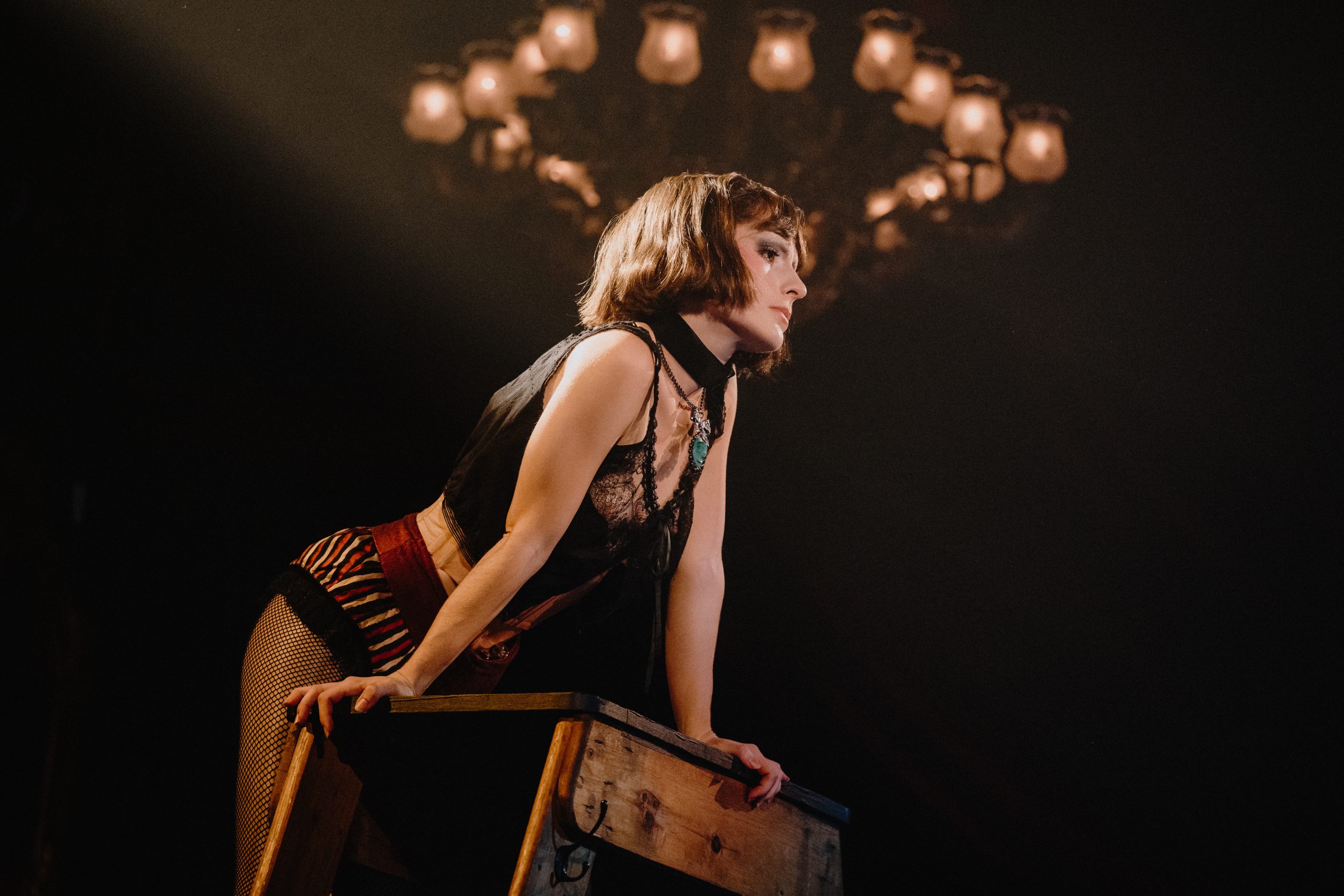
Sophia Anne Caruso photo by Andy Henderson
Then there is Sophia Anne Caruso.
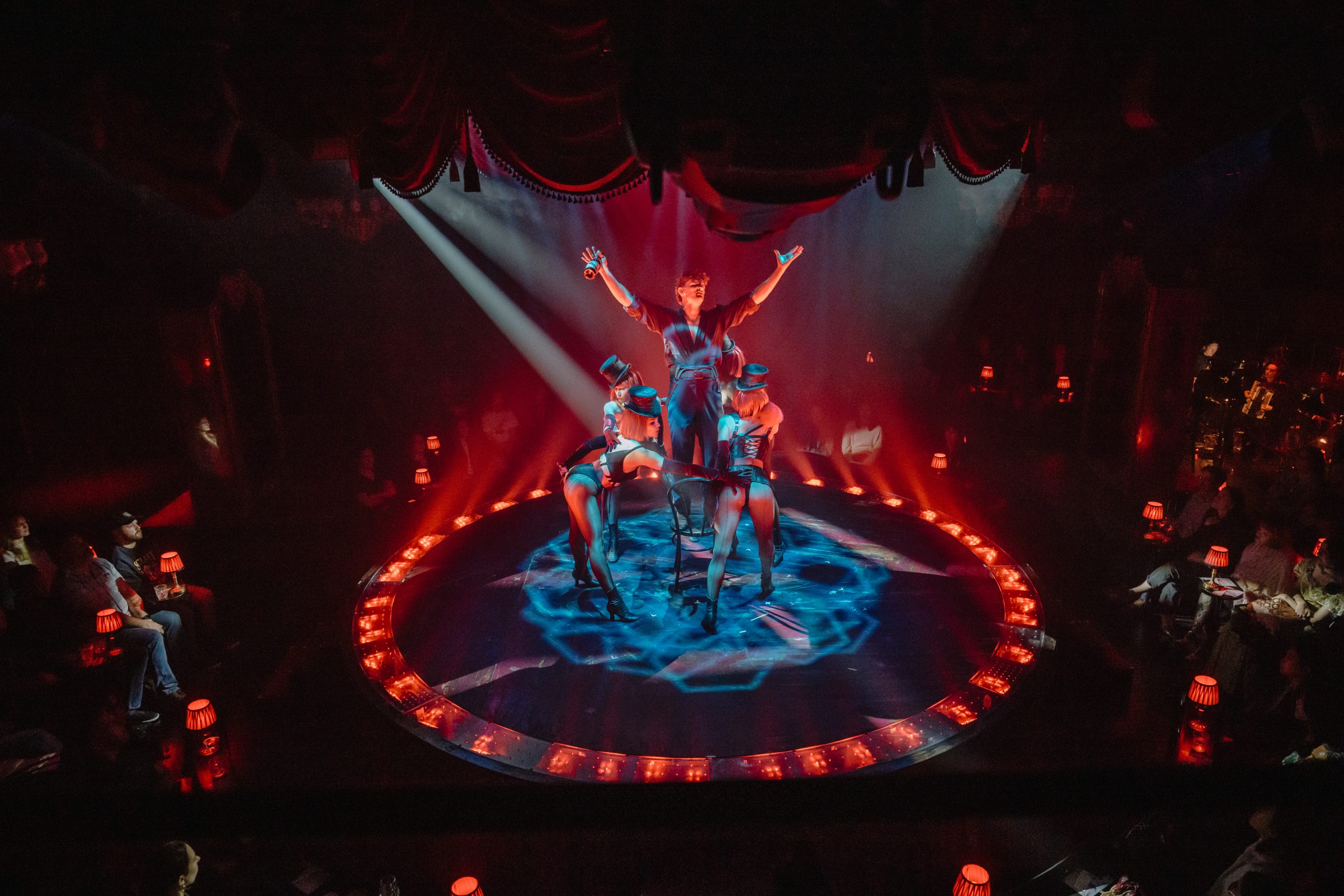
Cory Jeacoma photo by Andy Henderson
I have followed Caruso’s career for years, dating back to The Nether, and watching her artistic development has been a remarkable experience. She has always possessed an arresting theatrical presence, but what she brings to Colette confirms something I have believed for a long time: this young woman is a genuine star.
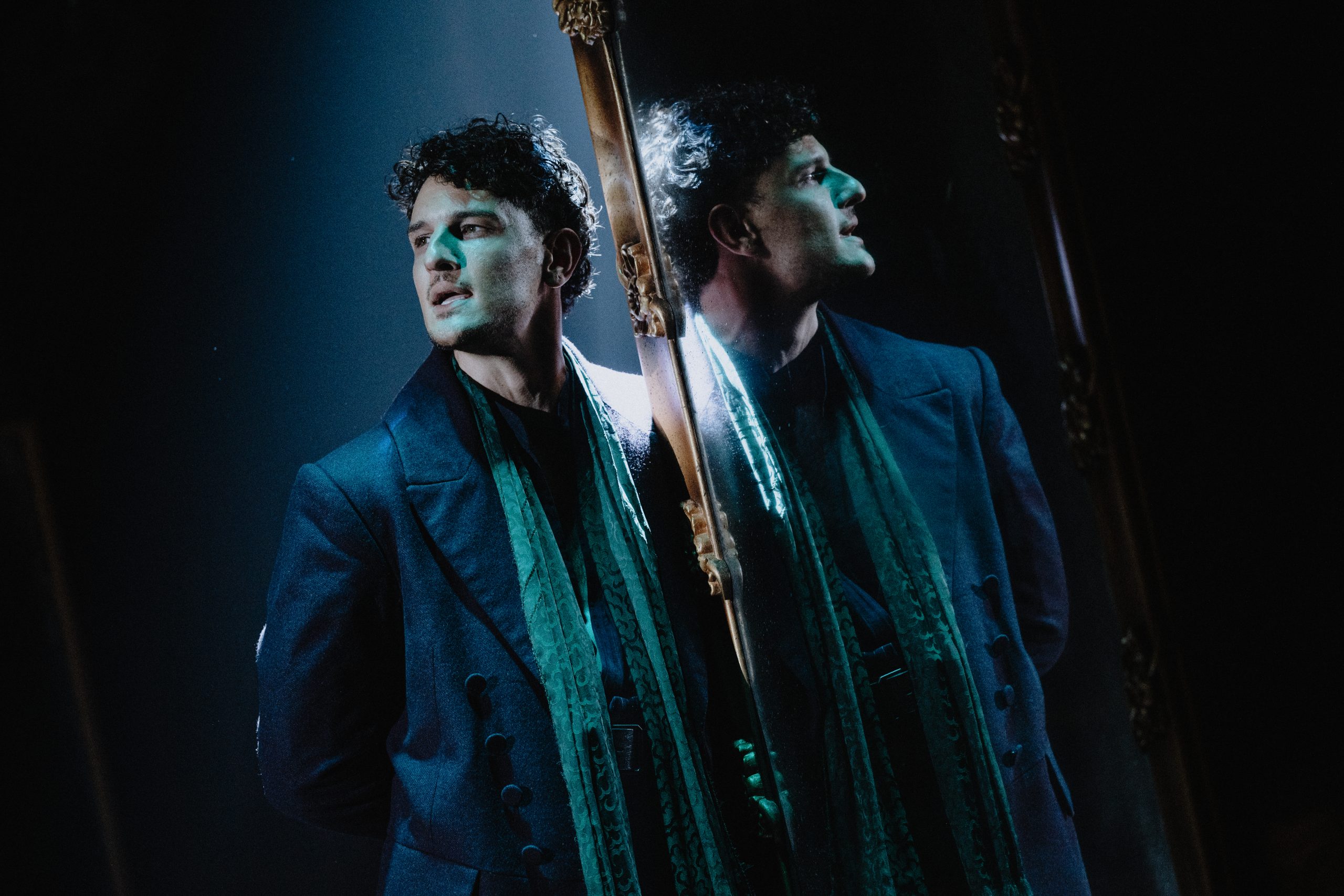
Cory Jeacoma photo by Andy Henderson
Her voice is extraordinary, rich, powerful, and capable of cutting through Sheik’s lush musical landscape with startling emotional clarity. But it is not simply the voice that distinguishes her. It is her acting.
Caruso possesses that rare combination of vulnerability and underlying strength that cannot be manufactured. She can appear almost painfully exposed one moment and reveal an astonishing inner resilience the next. Even when the writing fails to provide the emotional progression her character deserves, she supplies it through the smallest shifts in expression, posture, and vocal color.
There is nothing generic about her performance. She inhabits Colette with an intelligence and emotional honesty that give the character dimensions the book only begins to suggest. Her vulnerability never feels like weakness; it becomes the very source of her strength.
Quite simply, Sophia Anne Caruso is the reason to see Memoirs of Amorous Gentlemen.
And I wish she had been given a better book.
That is ultimately the frustration of this production. Ashford has created a seductive theatrical experience, Pask and Zuber have fashioned a world of extraordinary beauty, Sheik has supplied a haunting score, and Caruso delivers a performance of genuine star quality. Yet the central story never achieves the originality or dramatic force necessary to match these accomplishments.
For all its sensuality, Memoirs of Amorous Gentlemen is less provocative than it believes itself to be. Voyeurism is not inherently revelation, and exposing the private lives of men does not automatically produce insight into the women whose bodies and emotions they consume.
Still, there is something undeniably compelling about this strange, gorgeous evening. The music lingers, the imagery seduces, and Caruso’s performance refuses to fade from memory.
Memoirs of Amorous Gentlemen is a beautiful illusion with something rotten beneath its surface. Its greatest achievement is not making us believe in the illusion, but allowing us to glimpse the darkness behind it.
Sheik’s death lends this production an unexpected poignancy. His music remains its most haunting achievement, a reminder of a composer who understood that desire, longing, and emotional devastation often speak most eloquently through melody. The book may fail to match the sophistication of his score, but the music is unmistakably his: seductive, intelligent, and achingly human.
Memoirs of Amorous Gentlemen: The Night Egg at The Culture Club, 530 West 27th Street, between Tenth and Eleventh Avenues through January 3, 2027.
-

 Celebrity2 days ago
The Glorious Corner
-

 Celebrity4 days ago
The Glorious Corner
-

 Events4 days ago
Zohran Mamdani, Mayor of New York—Terms and Conditions Apply
-

 Business4 days ago
Hackers Aren’t Just Stealing Data. They’re Spoiling the Food.
-

 Events4 days ago
The Algonquin Hotel Thinks Pink: A Toast to Hope, Broadway and Breast Cancer Awareness
-

 Entertainment4 days ago
Prince Mario-Max Schaumburg-Lippe: Leandro and Denise Rizzuto Shine at New York’s Columbus Day Celebration!
-

 Cabaret3 days ago
My View: Backstage at the Cabaret Convention: OPENING NIGHT
-

 Broadway3 days ago
Tom Hiddleston and Hayley Atwell Are Bringing Shakespeare’s Battle of the Sexes to Broadway