
Off Broadway
He Says: The Cake is MTC Sweet but Under Baked


It’s a sweetly baked kind of issue play, sifted with enough laughs and winks at the audience, that the conflict, ripped from the political headlines of the day, doesn’t feel that heavy or overstuffed. But sugar, as one of the characters states quite rightly, is both addictive and dangerous to our health, and when just a little too much is added, as it is in Manhattan Theatre Club‘s off-Broadway production of Bekah Brunstetter’s The Cake, the important issues of equality and human rights becomes cute and dishearteningly charming, easily to brush off and forgotten at the end of the day. The topic has complexity and weight, and the playwright valiantly tries to present the conflict with humanity and heart in the form of Debra Jo Rupp. It succeeds, mostly, as a comedy of character and Southern hospitality, in all its different shades of kindness, bigotry, and colored frosting, but ultimately, this devilish dark angel food Cake is not substantial, nutritional, or delicately and intrinsically tasteful as a slice of political commentary should or could be. It leaves us hanging a bit, buzzingly high on sugar, but not satiated or enlightened.

Solidly staged with comic sharpness by director Lynne Meadow (MTC’s Linda) on an elaborate, although oddly side-heavy set designed with artificial flavoring by John Lee Beatty (Broadway/LCT’s Junk), with spot on lighting by Philip S. Rosenberg (Broadway’s Pretty Woman), and strong original music and sound design by John Gromada (Broadway’s Torch Song), Brunstetter (The Oregon Trail), this comic commentary frosts his sweet confection mainly because of the wonderfully fun Debra Jo Rupp (Broadway’s Cat on a Hot Tin Roof). Rupp dutifully and joyfully plays Della, a effervescent and joyful baker of cakes, who comes face to face with a moralistic dilemma that plasters her in between love and religion like icing on a two layered cake. The set up is straight from the headlines of our current news cycle and Supreme Court ruling, with Della basking in her cake shop, excitingly recounting the news of being invited to be a contestant on the American version of that famous British Baking competition show. Della is bubbling old school at its finest, breathing in the tried and true ideals of following baking directions precisely with the exact right amount of cheer and joy sprinkled on top. It’s a delicious and delightful characterization, pulling us in with her enthusiastic kindness, even when she comes up against the sugar-free and gluten-free savvy of the well connected Macy from New York City, played with passion by Marinda Anderson (Public’s Teenage Dick), Della’s sunny edge is flummoxed but not dimmed by Macy, even when the young woman won’t take one bite of the delicious looking speciality sliced out for us all to desire with mouth-watering hunger. It’s astounding to all that she can restrain herself, but it’s a tried and true setup, this collision of opposites, that is just waiting for the timer to ring and the bite to be taken.

It’s only when Della, dressed to cute perfection by costume designer Tom Broecker (MTC’s Our Mother’s Brief Affair), comes face to face with her good friend’s daughter, the sweet faced young Jen, well played by Genevieve Angelson (Broadway’s Vanya and Sonia and…), that the conflict of The Cake is fully presented in all its topical, although somewhat stereotypical, glory. “How is arguing a skill” she asks, but when Jen returns home from NYC to plan her wedding, a social debate centered on “fallen women” and gay marriage is set in motion. Jen wants to get married exactly in the “full fat” kinda way she and her recently deceased mother always had dreamed of, with Della making the wedding cake surrounded by all their friends and family from her small town Southern upbringing. The part that wasn’t foreseen was that the other half of the wedding party is not a man, but Macy, a black lesbian woman who just can’t understand why Jen is willing to put up with and brush off the small town homophobia that Della serves up on a pretty dessert plate. Della isn’t alone in her religious stance, she gets a strong bigoted assist from her husband, Tim, played wisely by Dan Daily (Mint Theatre’s Days to Come) who has a few issues of his own to contend with, sexually speaking. That side bar is illuminating, but oddly unimportant to the center aisle, and if the playwright is trying to make an even comparison, that leaves an even more bitter taste in my mouth. It’s bad enough that the two lovebird ladies have to sleep separately at Jen’s cousin’s place, a plot point, like many others, that doesn’t quite feel authentic with the politically savviness of Macy’s character, but to keep coming back for more, regardless of how good that cake is, begs a few bigger questions for Jen and the problematic artificially sweetened scenario.

The voice of the Baking God (also Dan Daily) is at first festive and fun, leading us down an inventive aisle with a skip and a smile, but quickly the schema becomes over-baked and pointless, just like the heterosexual discombobulations that distract from the real battle of folding dry with the wet as directed to get full flavor and rise. It’s clear Brunstetter, who is one of the producers on NBC’s “This is Us“, wanted to give us something funny and engaging while also delivering strongly on the goods, but he ends up baking and serving up the equivalent of a funny sitcom-worthy treat, full of sweet hop up and down smiles and laughs without any solid layers or structured thought. It fails to do the dynamic and topical recipe justice and is, in a way, a disservice to the true flavor of LGBTQ rights and bigotry making the key ingredient such an adorable character. Rupp, who is delightfully perky just like her solid work on “That 70’s Show“, is the perfect baker to mix and fold the ingredients together, bathing in her smiling child-like stance and serving up complicated confections without adding any complex calories for content. “You can’t pick and choose the bible” which is something that could be said to all, and although Della is quick to admit to watching and liking “The Birdcage”, she gets off the hook with relative ease blinding us with her perkiness to the darkness of the cake served. She gives the most authentic moment with her ‘wanting‘ speech, but within this conflict, the answer remains allusive and somewhat discarding along with the broken layer that dropped on the floor. I must admit it would feel too artificially sweet if The Cake ended with a kind super-positive life-affirming flower creation on its one layered top level, but the comedic play also shouldn’t conclude as complicated as a Supreme Court decision. Brunstetter tries hard to find a balance that serves up understanding without selling out to the sugar high. She almost succeeds, but with the last mouthful, I didn’t feel satisfied nor did I feel hungry for more. The empty calories of The Cake left a slight artificial aftertaste in my mouth that I couldn’t quite get rid of as quickly as I would have liked. Even with a quick cup of Della’s Maxwell House.


There are musicals that entertain, musicals that move us, and occasionally a musical that takes a subject you would never imagine belonging onstage and makes you wonder why nobody thought of it sooner. Roundabout Theatre Company’s extraordinary new musical The Heart, which opened last night at the Laura Pels Theatre, accomplishes precisely that. Its subject is organ transplantation, a process in which one person’s death becomes another person’s chance at life. It sounds like the premise for a medical documentary or an exceptionally sophisticated public service announcement. Instead, it is a thrilling, emotionally charged, 90-minute musical propelled by one of the most exhilarating electronic scores I’ve heard in quite some time.
I first heard about The Heart when it played La Jolla, California, where I was emphatically told that this was a show I needed to see. Had someone suggested that a musical about organ donation would have me riveted, I would have questioned their judgment. Never say never. With a book and additional lyrics by Kait Kerrigan and music and arrangements by the married creative team of Anne Eisendrath and Ian Eisendrath, The Heart transforms the complex medical, logistical and emotional journey of an organ transplant into a work of remarkable theatrical imagination.
The story unfolds over 24 hours, beginning with a 19-year-old California surfer, played with youthful warmth by Nick T. Daly, whose carefree existence is shattered by a car accident. The sounds of Pacific waves give way to the urgent rhythms of an emergency room, where medical monitors deliver the devastating news that the young man is brain-dead. Because he never registered as an organ donor, the decision to donate his organs falls to his divorced parents, portrayed with extraordinary emotional restraint by Jason Tam and Joaquina Kalukango.
Their grief is neither tidy nor predictable. Tam and Kalukango approach the impossible decision from different emotional directions, allowing us to witness the confusion, resistance and unbearable weight of a choice that must be made while their son’s body is still warm. The musical understands that organ donation, however miraculous its outcome, begins with someone’s unimaginable loss.
From there, Kerrigan’s book moves through an intricate network of lives: nurses, physicians, transplant coordinators, donor-network personnel, technicians, grieving relatives and the strangers whose futures depend upon decisions being made hundreds of miles away. Every minute matters, and the production finds a theatrical equivalent for the extraordinary coordination required to move a human heart from one body into another.

Drew Gehling, Wren-Rivera Photo Joan Marcus
What makes the show so compelling is the seamless marriage of storytelling and music. Anne and Ian Eisendrath have created a dynamic, pulsating electronic score whose rhythmic urgency mirrors the ticking clock of the transplant process. The music is sophisticated, contemporary and astonishingly effective, shifting between driving dance rhythms and moments of almost unbearable tenderness. Rather than interrupting the action, the songs become part of its momentum, as essential to the narrative as the medical procedures themselves.

Joaquina Kalukango, Jason Tam Photo by Joan Marcus
Bre Jackson, portraying a compassionate nurse who sings to her unresponsive patient, delivers one of the evening’s most beautiful moments with “Right Now.” Her gorgeous voice brings humanity to a room dominated by technology, reminding us that behind every monitor and medical protocol is a person whose life matters. The number is deeply affecting without resorting to sentimentality.
 Heidi Blickenstaff is equally impressive in contrasting roles. Initially appearing as a stern emergency-room administrator, she later becomes a middle-aged writer who has resigned herself to dying, only to receive the astonishing news that a donor heart has become available. Blickenstaff captures the complicated collision of hope, disbelief and terror that accompanies the possibility of survival. Receiving a new heart is not simply a happy ending. It means confronting a future one had already surrendered, knowing that its arrival is inseparable from another family’s grief.
Drew Gehling, Lincoln Clauss, Max McKenna and Wren Rivera bring tremendous energy and distinction to an ensemble in which performers repeatedly transform into new characters. Every actor assumes multiple identities, sometimes moving from an anonymous member of the medical system to someone whose individual story suddenly becomes central. The transitions are so fluid that the nine-member company frequently appears to contain three times as many performers.
Much of that accomplishment belongs to director Christopher Ashley, whose work here is exceptional. Ashley understands that a production dealing with such complicated information cannot afford to lose its audience in exposition. He keeps the narrative clear and the action moving with precision, allowing the score, movement and design to convey what pages of dialogue would otherwise be required to explain.
Mandy Moore’s choreography is integral to that achievement. Her movement patterns, frequently mechanical and almost robotic, evoke the intricate coordination of the medical system while creating the illusion of a vast network of people working simultaneously. The choreography is not decorative. It is storytelling, transforming logistical procedures into kinetic theatrical sequences.
Robert Brill’s adaptable scenic design provides a neutral environment capable of suggesting hospitals, distant locations and the spaces between them. Lucy Mackinnon’s complex video design gives visual dimension to the movement of information, bodies and time, while Amanda Zieve’s dramatic lighting establishes the shifting emotional temperature of each scene. Gareth Owen’s excellent sound design delivers the necessary medical atmosphere while maintaining exceptionally crisp vocal clarity, no small achievement with a score of this intensity. Sarafina Bush’s costumes allow the company to move effortlessly among its many identities.
The result is a production that feels almost cinematic in its scope while remaining unmistakably theatrical.
Ashley also knows when to let the relentless momentum ease. A brief, wonderfully unexpected glimpse of technicians amusing themselves with a medieval-themed video game provides a welcome moment of humor amid the intensity. Such details remind us that the people performing these extraordinary tasks are still human beings, capable of exhaustion, distraction and absurdity.
Several musical numbers, including “I Will Never Let You Go” and “Nobody Gets Out Alive,” possess the emotional power to become conventional showstoppers. Wisely, Ashley resists the temptation to manufacture applause breaks. The music flows directly into the continuing action, preserving the urgency of a story in which time cannot stop simply because a song has ended.
The production builds toward an extraordinary climax as a heart is removed from one body and brought back to life in another. By this point, we have witnessed the countless people, decisions and emotions that make the procedure possible. What could have been a clinical demonstration becomes a profoundly theatrical expression of human interdependence.
There is no escaping the fact that The Heart advocates for organ donation. In less accomplished hands, the evening could easily have become an elaborate educational presentation with a few songs attached. But Kerrigan, the Eisendraths and Ashley understand that the most persuasive theater does not lecture. It allows an audience to experience the human consequences of a subject and arrive at its own emotional understanding.
The musical also refuses to separate the miracle from its cost. One family loses a son. Another person receives the possibility of a future. Medical science connects these events, but it cannot erase the grief that makes the second possible.
That contradiction gives The Heart its extraordinary emotional force.
At a time when new musicals often struggle to find a distinctive musical language, The Heart arrives with a sound, structure and theatrical identity entirely its own. Its electronic score is sensational, its ensemble superb and Christopher Ashley’s direction a master class in turning complicated material into gripping theater.
I went in wondering how anyone could make organ transplantation into a musical. Ninety minutes later, I was wondering how long it would take Broadway to recognize what Roundabout has on its hands.
The Heart is a remarkable, pulse-pounding achievement, as inventive as it is moving. I fully expect this production to have a Broadway future. See it now, while you can still experience it in the intimacy of the Laura Pels Theatre.
The Heart opened October 29, 2026, at the Laura Pels Theatre and runs through December 6. Tickets and information: roundabouttheatre.org.
Off Broadway
Who Let the Dogs Talk? Scott Adsit, Julia Murney and More Join David Javerbaum’s The Dog Show


A rotating pack of Broadway favorites is heading to The Triad Theater, where man’s best friend finally gets the last word.
Anyone who has ever looked into a dog’s eyes and wondered what was going on behind that innocent expression is about to get an answer. Whether it’s an answer we actually want is another matter entirely.
Thirteen-time Emmy winner and two-time Grammy winner David Javerbaum, the deliciously irreverent mind behind The Daily Show with Jon Stewart, the wildly popular @TheTweetOfGod and Broadway’s An Act of God, starring Jim Parsons, has turned his attention from divine intervention to canine contemplation. His latest comedy, The Dog Show: Come. Sit. Stay., gives our four-legged companions something they’ve been denied for centuries: the opportunity to tell us exactly what they think.
Now the production is adding some serious theatrical pedigree to its rotating pack. Scott Adsit (30 Rock, Veep), Todd Cerveris (South Pacific, Let Me Spell It Out For You), Danielle Ferland (Into the Woods, Sunday in the Park with George) and Julia Murney (Wicked, The Wild Party) are joining the company at The Triad Theater on Manhattan’s Upper West Side.
They join an already impressive roster that includes Broadway favorite and SiriusXM personality Seth Rudetsky, Jordan Matthew Brown (The Book of Mormon, Into the Woods), Gizel Jiménez (Wicked), Angela Reed (Harry Potter and the Cursed Child, A Doll’s House, Part 2) and Tony nominee A.J. Shively (Paradise Square, Bright Star).
The premise is wonderfully absurd. Through a series of monologues delivered entirely from a dog’s perspective, Javerbaum imagines the private thoughts, opinions and peculiar obsessions of creatures who have spent thousands of years observing humanity without being invited into the conversation.
What do dogs really think about baths? Is sticking one’s head out of a moving car window the ultimate expression of freedom? How does a police dog feel about having an actual job? And why, in the name of everything civilized, is sniffing another dog’s backside considered an acceptable form of introduction?
Under the direction of Richard Israel, whose credits include Violet and A Very Brady Musical, these canine confessions promise a mixture of sharp comedy and affectionate observation. Beneath the jokes lies something rather touching: our tendency to recognize our own desires, insecurities and capacity for unconditional devotion in the animals who share our lives.
Of course, anyone who lives with an animal knows that unconditional love does not necessarily mean unconditional obedience. Sometimes the creature running the household is the one with four legs.
Produced by Mark F. Kaplan of 30 Minutes From Broadway Entertainment in association with Julius Gaudio, The Dog Show features casting by Stephanie Klapper, C.S.A., with general management by Aidan Cleary and Labhaoise Magee of Fair Play Productions.
The Dog Show: Come. Sit. Stay. plays The Triad Theater, 158 West 72nd Street. Because the cast rotates, audiences should consult www.DogShowNYC.com for individual performance dates, casting schedules and tickets.
After all, Broadway has given us singing cats, dancing mice and more theatrical animals than one could reasonably count. It seems only fair that the dogs finally get their say.
Knowing Javerbaum, they’re unlikely to be particularly polite about it.
Broadway
Pasek & Paul, Lin-Manuel Miranda and Sara Bareilles Headline Three Intimate Evenings Celebrating the Future of Musical Theater.

Broadway has always been an art form built on reinvention, with each generation of composers finding new ways to tell stories through music. Now Lincoln Center Theater is bringing some of musical theater’s most influential contemporary voices together with the artists who may shape its next chapter.
The inaugural Composer Series, presented at the Vivian Beaumont Theater, will feature three one-night-only events headlined by Tony, Grammy and Academy Award-winning songwriting duo Benj Pasek and Justin Paul on November 30, Lin-Manuel Miranda on December 14, and Sara Bareilles on June 21, 2027. Rather than traditional concerts devoted exclusively to established hits, these evenings will pair celebrated songwriters with emerging composers they have personally selected, offering audiences an unusual opportunity to hear musical theater’s present and future in the same room.
It is an intriguing proposition. Broadway has never lacked talented young writers, but developing a new musical requires far more than a memorable melody. It takes mentorship, opportunity, financial support and, perhaps most importantly, someone willing to recognize a distinctive voice before the industry has decided what to do with it. The Composer Seriesplaces that relationship at the center of the evening.
The series opens Monday, November 30, at 8 p.m. with Pasek & Paul, whose work on Dear Evan Hansen, The Greatest Showman, La La Land and A Christmas Story has helped redefine the relationship between Broadway songwriting and contemporary popular music. Joining them are five emerging artists whose backgrounds reflect just how dramatically the musical theater landscape is evolving: Barlow & Bear, Marie Dresselhuis, Joriah Kwamé, Oliver Richman and Jaheem King Toombs.
Among the most recognizable are Abigail Barlow and Emily Bear, the Grammy-winning duo who turned a social media phenomenon into The Unofficial Bridgerton Musical Album. Their subsequent work on Disney’s Moana 2 established them as significant voices in film songwriting, while their ability to move between classical composition, pop and theatrical storytelling represents a generation less concerned with traditional artistic boundaries. Barlow also returns to Broadway in SIX this November.
Joriah Kwamé brings an equally compelling trajectory. His viral song Little Miss Perfect became the foundation for a stage musical that premiered at Olney Theatre Center in 2026. He previously collaborated with Pasek & Paul on “Top of the World” for Lyle, Lyle, Crocodile and is now working with Siedah Garrett on the Broadway-bound Polly: The Musical, with direction and choreography by Debbie Allen. His honors include a Jonathan Larson Grant and the 2026 Stephen Schwartz Award.
Canadian singer-songwriter Marie Dresselhuis approaches storytelling through a distinctive blend of gospel, classical and contemporary influences, having shared stages with artists including Jacob Collier and Jensen McRae. Oliver Richman, a 2022 NYU Tisch graduate, has taken a more unconventional route, writing more than 1,000 songs through a self-imposed daily songwriting practice. His subjects range from the wonderfully absurd to the anxieties of finding human connection in an increasingly artificial world.
Jaheem King Toombs represents another increasingly important crossover between television, film and theatrical songwriting. Having begun his career as a performer on Nickelodeon’s 100 Things to Do Before High School, he has since contributed music to Disney projects including Zombies 4 and High School Musical: The Musical: The Series. He is currently developing the stage adaptation of Zootopia with Disney Theatrical Group, alongside his original musical Oakwood.
What makes this first evening particularly appealing is the diversity of its participants. These are not five composers following an identical career path. Some emerged through social media, others through television, recording studios or traditional musical theater development. Their common denominator is an understanding that songwriting must communicate something personal, regardless of the platform on which it is first heard.
The series continues December 14 at 8 p.m. with Lin-Manuel Miranda, whose In the Heights and Hamilton transformed Broadway’s musical vocabulary while introducing new audiences to the possibilities of contemporary musical storytelling. Miranda’s ability to combine theatrical structure with hip-hop, Latin rhythms and densely layered lyricism makes him an especially fascinating figure to lead an evening devoted to artistic mentorship.
Sara Bareilles takes the stage June 21, 2027, at 8 p.m., bringing the melodic sophistication and emotional directness that made Waitress such an important addition to the contemporary musical theater canon. Her transition from successful recording artist to Broadway composer offers another perspective on how musical theater continues to expand beyond its traditional borders.
The emerging composers and additional guest performers for the Miranda and Bareilles evenings will be announced at a later date.
At its best, musical theater is a conversation between generations. Rodgers and Hammerstein did not write like the composers who preceded them. Sondheim challenged the conventions he inherited. Jonathan Larson helped open another door, and the writers who followed have continued reshaping what a musical can sound like and whose stories it can tell.
The significance of The Composer Series lies in its recognition that the next generation deserves more than applause after it has already succeeded. It deserves an opportunity to be heard while its artistic identity is still taking shape.
And for audiences, there is something irresistible about the prospect of discovering tomorrow’s Broadway composers before their names become familiar above the marquee.
Tickets for the November 30 Pasek & Paul performance go on sale to Lincoln Center Theater members Monday, November 2, at 10 a.m., and to the general public Tuesday, November 3, at 10 a.m. Tickets are available through LCT.org, by calling 212-239-6200, or at the Lincoln Center Theater box office. Ticket information for the Miranda and Bareilles performances will be announced subsequently.
The Composer Series is presented by special arrangement with Creative Partners Productions, with Lincoln Center Theater season support from Daryl Roth and American Airlines.
Off Broadway
Good Time Charlie: A Tender Portrait of the Man Who Made Room for Someone Else’s Dreams

There are people who change our lives without ever realizing the magnitude of their influence. They encourage a talent, open a door, introduce us to a world we never knew existed, or simply make us feel that who we are is enough. In Good Time Charlie, receiving its world premiere at The Public Theater, playwright and performer Ryan J. Haddad pays tribute to one such person: his beloved Uncle Charlie, a man whose own theatrical ambitions were discouraged but who made certain his nephew’s would not suffer the same fate.
Haddad, a 34-year-old gay man with cerebral palsy whose previous autobiographical work has explored identity, sexuality and disability with considerable candor, plays himself in this affectionate comedy-drama. Set primarily in a backyard garden in suburban Ohio, the play moves between generations, revealing how two gay men within the same family experienced radically different degrees of acceptance. The result is a heartfelt examination of family, missed opportunities, unexpected happiness and the people who help us become ourselves.

Nael Nacer, Artemis Pebdani, Ryan J. Haddad, and Jonathan Raviv Photo by Joan Marcus
Jonathan Raviv brings warmth and an appealing lack of self-pity to Charlie, a man some thirty years older than Ryan who adores movies, theater and everything connected to the performing arts. As a young man, Charlie dreamed of studying theater, but his parents, Charlie Sr. and Joan, played by Nael Nacer and Artemis Pebdani, had other plans. Their son would pursue a respectable profession, and dentistry became his career. When Charlie’s sexuality became known, the same parents who had already dictated his professional future withdrew their acceptance of him.
Ryan J. Haddad, Beth Malone, Photo by Joan Marcus
The contrast with Ryan’s upbringing is striking. His parents, Bob and Judy, also played by Nacer and Pebdani, embrace their son’s identity, and his coming out is treated with such casual acceptance that the moment becomes amusing rather than traumatic. His gay aunt Janice, played by Beth Malone, adds another layer of familial support. There is an inherent unfairness in watching one generation receive the understanding denied to another, although the play might have explored that disparity with greater complexity. Families do change, but the emotional consequences of their earlier decisions do not simply disappear.
Charlie, however, refuses to be defined by what he was denied. A natural caretaker, he builds a fulfilling life and discovers love with Lou, played by Tim Bagley, a divorced film studies professor twenty years his senior. Their relationship offers Charlie companionship and an expanded world of artistic friendships. Through Lou, he meets Sheldon, portrayed by Michael Cristofer, who operates an art-house cinema and becomes Charlie’s closest friend and another important figure in Ryan’s extended family of gay mentors.

Ryan J. Haddad, Tim Bagley, Beth Malone, Jonathan Raviv, and Michael Cristofer Photo by Joan Marcus
Cristofer is particularly wonderful, bringing a wonderfully dry wit, intelligence and emotional depth to Sheldon. He knows how to land a line without announcing the joke, and his presence gives the production an additional level of theatrical sophistication. Bagley is equally engaging as Lou, while Raviv makes Charlie’s generosity feel entirely natural rather than saintly. Under Danny Sharron’s direction, the ensemble works beautifully together, creating the sense of a family whose connections have developed over decades rather than over the course of a rehearsal period.

Jonathan Raviv Photo by Joan Marcus)
One of the play’s greatest pleasures is its affection for show business. References to Mame, A Star Is Born and Fun Home provide amusing little rewards for theater lovers, while a recurring device in which the characters question and revise Haddad’s script adds a playful layer of self-awareness. These moments allow the production to acknowledge its own construction without sacrificing its emotional sincerity. They also remind us that memory is never entirely objective. We shape the stories of our lives each time we tell them.
Haddad is an engaging presence, and there is something particularly moving about watching him share the stage with a theatrical representation of the uncle who encouraged his ambitions. The affection is unmistakable. This is not a playwright settling scores or revisiting childhood grievances for dramatic effect. It is an artist recognizing that the freedom he enjoys was made possible, in part, by someone who had to negotiate a far more restrictive world.
The play is not without its weaknesses. Much of the territory surrounding coming out, chosen families and the importance of artistic expression has been explored extensively in contemporary theater. Haddad’s personal connection gives the material its individuality, but there are moments when the writing underlines emotions the actors have already communicated. Sheldon’s concluding speech about art and chosen family, although sincere, becomes overly emphatic. Cristofer is a sufficiently accomplished actor to convey the sentiment without having to explain quite so much of it.
Still, what distinguishes Good Time Charlie is its refusal to turn Charlie’s life into a tragedy simply because his original dreams were interrupted. He did not become the performer he once imagined, but that does not mean his life was wasted. He found love, friendship, purpose and the satisfaction of helping someone else pursue the possibilities that had once been closed to him. His contentment is not presented as resignation. It is a recognition that a meaningful life does not always resemble the one we planned.
Near the conclusion, Ryan tells Charlie that there is no curtain, an observation that carries significance beyond the theatrical setting. The relationship between these two men cannot be contained within the beginning and ending of a play. Charlie’s influence continues in the person Ryan has become, in the work he creates and in the opportunities he has embraced.
Good Time Charlie occasionally says more than it needs to, but its emotional foundation is genuine. In a theatrical landscape that often confuses suffering with dramatic importance, Haddad has written something refreshingly generous: a love letter to a man who helped another person’s dreams flourish without demanding that his own life be regarded as a sacrifice.
Ultimately, that is what makes this production so touching. Charlie may never have become the star he once dreamed of being, but in Ryan Haddad’s story, he is finally given center stage.
Good Time Charlie: The Public Theatre….closed
Broadway
Theatre News: Tom Hanks, Kellie O’Hara, Jonathan Groff, Miriam Silverman, Julia Roberts, Paul Rudd, Sarah Paulson, Lin-Manuel Miranda and Casey Likes

Tom Hanks is heading back to Broadway, and this time he’s bringing Tony Award winner Kelli O’Hara along for a little time travel. This World of Tomorrow, the new romantic drama by Hanks and James Glossman, will arrive for a strictly limited engagement in fall 2027 at a Shubert theater to be announced. Directed by Tony winner Kenny Leon and produced by Brian Anthony Moreland in association with The Shed, the play enjoyed a sold-out eight-week engagement at The Shed last year. Based on Hanks’ short stories, the play follows Bert Allenberry, a man living at the end of the 21st century who repeatedly travels back to one extraordinary day at the 1939 New York World’s Fair in Queens, discovering that love, rather than technology, may hold the key to changing his future. The production marks Hanks’ return to Broadway more than 14 years after his Tony-nominated performance in Nora Ephron’s Lucky Guy. With Hanks and O’Hara reunited under Leon’s direction, this romantic journey through time is already shaping up to be one of Broadway’s most anticipated arrivals of 2027. Additional casting and creative team details are forthcoming.

Jonathan Groff
Tony Award winner Jonathan Groff returns to Broadway this spring in The Amish Project, beginning performances February 10, 2027, at the Broadhurst Theatre. Directed by Sarna Lapine, Jessica Dickey’s powerful solo play revisits the devastating 2006 shooting at a one-room Amish schoolhouse in Lancaster County, Pennsylvania, just minutes from where Groff grew up. Exploring grief, compassion, and the extraordinary power of forgiveness, the work premiered Off-Broadway in 2009 and has since been performed internationally. Groff, who earned a Tony for Merrily We Roll Along and most recently starred as Bobby Darin in Just in Time, calls Dickey’s writing an exploration of the idea that “sometimes the most radical human act is forgiveness.”
 Some plays are ahead of their time. Others are so audacious they dare time to catch up. Fiasco Theater resurrects Susan Glaspell’s electrifying 1921 masterpiece The Verge, beginning performances October 27. Tony Award winner Miriam Silverman (The Sign in Sidney Brustein’s Window) stars as a brilliant botanist determined to defy nature itself by creating a plant unlike anything the world has ever seen. Directed by Jessie Austrian, this intoxicating collision of ambition, obsession, and rebellion features Noah Brody, Paul L. Coffey, Devin E. Haqq, Amara Leonard, Paco Tolson, and Emily Young. More than a century later, Glaspell’s theatrical experiment still refuses to play by the rules.

Broadway is about to discover that silence can be absolutely deafening. Bess Wohl’s deliciously unconventional Small Mouth Sounds is arriving earlier than expected, with previews now beginning February 10, 2027, at the Ethel Barrymore Theatre and opening night set for March 11.
Directed by three-time Tony Award winner Joe Mantello, the production boasts a star-studded ensemble featuring Julia Roberts, Paul Rudd, Sarah Paulson, Martin Freeman, Greta Lee, and Isaac Powell. Freeman makes his Broadway debut, while Roberts and Rudd reunite on the Great White Way for the first time since 2006’s Three Days of Rain.
The premise is irresistible: six strangers retreat to an upstate spiritual sanctuary, hoping to escape their troubles through silence, self-discovery, and enlightenment. Naturally, human nature has other plans. Beneath the quiet, Wohl exposes the absurdity, vulnerability, and desperate longing for connection that make us human.
First produced by Ars Nova in 2015 under Rachel Chavkin’s direction, Small Mouth Sounds now receives a Broadway staging with scenic design by Chloe Lamford, costumes by An D’Huys, lighting by Jack Knowles, sound by Tom Gibbons, music by Caroline Shaw, and movement by JA Collective.
With Mantello also directing this season’s Downstate, the celebrated director is having quite the Broadway moment. And with Wohl returning following Liberation, Small Mouth Sounds promises something increasingly rare in our noisy world: a theatrical evening in which what remains unsaid may be the most revealing thing of all.
Tickets go on sale to the general public October 25 at 10 a.m. ET through Telecharge.

New York City is about to become one exhilarating, dangerous playground as Lin-Manuel Miranda and Pulitzer Prize finalist Eisa Davis bring Warriors to Broadway in spring 2027. Inspired by Sol Yurick’s novel and Walter Hill’s cult-classic 1979 film, the adrenaline-fueled musical follows a Coney Island gang falsely accused of murdering a charismatic leader at a Bronx summit. Their mission? Survive one treacherous night crossing New York City and make it home alive. Directed by Jenny Koons, with co-direction and choreography by Hamilton’s Andy Blankenbuehler, the production features an electrifying ensemble including Jasmine Cephas Jones, Amber Gray, Sasha Allen, Aneesa Folds, Julia Harriman, Casey Likes, and Donald Webber Jr. Born from Miranda and Davis’ star-studded concept album, Warriorspromises a pulse-pounding theatrical collision of music, movement, loyalty, and survival. Tickets went on sale October 22 through Broadway Direct, with further production details to be announced.


The Heart: A Pulse-Pounding New Musical That Gives Life to the Unimaginable

The Final Voyage of Sir Patrick Stewart: From Shakespeare to the Stars, a Legendary Life Takes Its Last Bow

Broadway Meets the Next Generation: The Drama League’s Drama at the Disco Celebrates Tom Kirdahy and the Future of Theater

Apple Sold the New Phone. Now It Has to Deliver the Support.

Prince Mario-Max Schaumburg-Lippe: The Magic of Magazine Covers And How To Become Cover Worthy!

My View: Mikayla Smith Brings Love, Dreams & Me To The Maltz Theatre…A Story Worth Following

My View: The Dutch Treat Club… Where Every Table Can Be a Star-Studded Affair!

Barbara Barrie, Broadway’s Original Sarah in Companyand Oscar-Nominated Actress, Dies at 95
The Heart: A Pulse-Pounding New Musical That Gives Life to the Unimaginable
The Final Voyage of Sir Patrick Stewart: From Shakespeare to the Stars, a Legendary Life Takes Its Last Bow
Broadway Meets the Next Generation: The Drama League’s Drama at the Disco Celebrates Tom Kirdahy and the Future of Theater
Apple Sold the New Phone. Now It Has to Deliver the Support.
Prince Mario-Max Schaumburg-Lippe: The Magic of Magazine Covers And How To Become Cover Worthy!
My View: Mikayla Smith Brings Love, Dreams & Me To The Maltz Theatre…A Story Worth Following
My View: The Dutch Treat Club… Where Every Table Can Be a Star-Studded Affair!
Barbara Barrie, Broadway’s Original Sarah in Companyand Oscar-Nominated Actress, Dies at 95
-
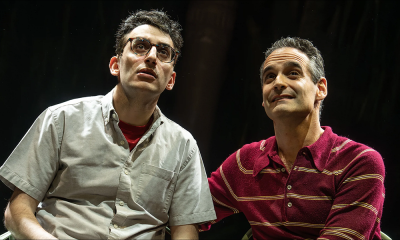
 Off Broadway5 days ago
Good Time Charlie: A Tender Portrait of the Man Who Made Room for Someone Else’s Dreams
-

 Broadway4 days ago
Pasek & Paul, Lin-Manuel Miranda and Sara Bareilles Headline Three Intimate Evenings Celebrating the Future of Musical Theater.
-

 Food and Drink5 days ago
Sunday Brunch With Prince Mario-Max: A Royal Feast at The Parliament and a Century of New York Elegance
-

 Business5 days ago
Airbnb Guests Are Paying to Stay. They Don’t Want a Chore List.
-

 Astrology4 days ago
November 2026 Astrology: The Month We Stop Looking Back and Begin Reclaiming Our Future
-

 Business4 days ago
Even Budget Airlines Are Adding Better Wi-Fi. Customer Expectations Keep Moving.
-

 Celebrity4 days ago
The Glorious Corner
-

 Entertainment5 days ago
Prince Mario-Max Schaumburg-Lippe on the Love of Saint Anthony of Padua