
Out of Town
Horrorshow Productions’ Cabaret Succeeds Delightfully & Decadently at Toronto’s Alumnae Theatre


The audience is revved up and ready for the Horrorshow Productions‘ Cabaret, and no wonder. We’re drawn intoxicatingly and immediately into the pre-show space by some very compelling characters singing classics with faux Germanesque accents that work their magic on us all. The seedy smoke lingers seductively in the air, smelling more sweet than sharp, as the magnificently curated band warms up. It’s a divinely decadent introduction, as we settle in for the ride, hoping that Toronto’s newest non-profit community theatre group rises to the occasion. I’ve seen numerous productions of the Kander and Ebb musical, made mega famous by the Fosse film that starred the incomparable Liza Minnelli. I still have wisps of that film inside me, seen on my mom’s bedroom television late one night when she wasn’t feeling well and I was keeping her company. I don’t think I was even old enough to be called a teenager back then, nor do I think she knew what she was letting her young son watch, but that film and those images were forever etched into my budding theatre junkie brain almost instantaneously, creating an energy and excitement that still rushes through my brain and body when I hear a musical’s band warming up. Much like it did last night as I waited for this Toronto production to get underway.

Taylor Long and Jessa Richer (center) with the cast of Horrorshow’s production of Cabaret at the Kit Kat Club in Toronto’s Alumnae Theatre. Photo by Josh Willick.
“Welcome to Berlin,” we are told, quite accurately numerous times during the beginning scenes of this deliciously created spectacle. Crafted together in shades of darkness and light by Jack Phoenix and Reba Pyrah, the producer and directing team behind Horrowshow Productions at Alumnae Theatre in Toronto, the overall multi-layered effect of Cabaret at the Kit Kat Club is delightfully surprising and decadently entertaining, pulling us in completely from the first note played, thanks to the music direction by Jake Schindler. The energy is sublime, electric, and engaging, even when it is served up a bit overly cooked and overwrought. Divine decadence, one might say, with its creatively expansive eyes wide open in amazement, matched by a sneaky subtle intelligence gifting us with a production that easily rises above any expectations that I had walking into the space.
I was a bit worried, I must admit, as I sat in the black box theatre for a revival of one of my all-time favorites. This was billed as a community theatre creation, made up of determined volunteers and supporters, working hard to create the kind of experience one would want and expect from this show. But in all honesty, this Cabaret sings strong, and delivers the complex framing with optimistic energy and power. Starting with a stellar enticing turn by Taylor Long (Bowtie’s Falsettos) as the black leather-clad Emcee who ushers us through the piece most menacingly. Long is a delicious dish of raw seductiveness that conducts his entrance energetically to a solid drum roll. It’s a captivating engagement, playing great homage to the past Broadway production that starred the captivating Alan Cumming, and is etched in danger, sometimes a tad explosive, but always completely captivating.

Taylor Long (center) with the cast of Horrorshow’s production of Cabaret at the Kit Kat Club in Toronto’s Alumnae Theatre. Photo by Josh Willick.
Backed by the fascinating and engaging Kit Kat Girls, this production easily beckons us in most invitingly. The girls are shockingly good and connected, sharply choreographed by Maya Lacey, who finds precision and delight in these talented actors. They are magnificently coordinated, particularly when backing the well-voiced Jessa Richer (Bad Hats’ Narnia) as the Kit Kat’s star attraction, Sally Bowles. With the audience wrapped precisely and intimately around their fingers, Long, as the ever-elusive and twisted Emcee and his Sally, drive forth a dichotomy that attempts to unearth a dangerous appeal under his wide seductive grin. Both push it a bit too far forward; Long with his outbursts and Richer with her British twang, but overall their performances hit true and vocally hard, finding layers upon layers of devilish glee at every turn of the screw. The tense engagement of the whole show is intoxicating, playing perfectly with a crew of black and white clad dancers, courtesy of the wardrobe and costuming of Mickey Agnelli, knowing with all confidence that we are roped and tied in completely by their energetic commitment.
Richer unpacks the damaged and desperate Sally well, finding the essence of this complicated creature while trying hard to never let the tension of the moment flag. She delivers on this, albeit one that could use a less frenetic engagement, but it’s her voice that really brings home this portrayal. Lit strongly by Connor Price-Kelleher, her “Maybe This Time” performance, pushed to the forefront by conductor Adam Rosenfield’s tight use of his band, gives us everything we need to know about the impatient Sally, which only makes her well-crafted “Cabaret” all the more devastating, and insightful to the pain and disengagement she feels towards Clifford, played lovingly by Emrik Burrows (TMTC’s Into The Woods).
Those three, along with the rest of the solidly connected and determined cast (George Marino as Ernst Ludwig; Alexandra Nunez as Frälein Kost; Maureen Barnes as Fritzie; Michelle Chew as Lulu; Dorian Fournier as Helga; Jennifer Gibbs-Reilly as Texas; Steven Hotchkiss as Karl; Gus Lederman as Frenchie/Gorilla; Randy Lei Chang as Herman; Robert Mackenzie-Herr as Rudy; Mai Luening as Rosie; Justin Matthews as Bobby; Michael Murphy as Max/Officer; Avi Petliar as Victor; Nicole Sherwin as Chanteuse; Kevin John Sizaon as Hans; and Lizzie Song as Heidi), elevates the space with their connection to the material, presenting this complex treat with an expertise that borders on tawdry deliciousness.
Sounding great, with a constant whim and snappy offerings, Phoenix and Pyrah’s direction is to titillate and captivate, digging into the powerful reflection of societal upheaval to serve us up every delicious crumb inside Joe Masteroff’s devious book and John Kander and Fred Ebb’s magnificent score. The final product delivers with a determined inventiveness that is both furiously entertaining and devious. The unmasked energy, while giving nods to all the previous intertwined productions, insinuates itself within like that charming smuggler, Ernst, portrayed by Marino, bringing in illegal Paris treats for his Berlin customers. The inspiration of every simple structure, including all the set pieces laid out before us, courtesy of props lead and mic assistant Kelly Walters, vibrates the musical forward with a compellingly fun energy.

Jill Louise Léger and Cyril Johnston in Horrorshow’s production of Cabaret at the Kit Kat Club in Toronto’s Alumnae Theatre. Photo by Josh Willick.
The sinister darkness isn’t always as prevalent as the music and the band, particularly when Germany’s history is unveiled and unmasked center stage to a few surprising gasps from the audience. But I also don’t recall ever being so pleasantly surprised by any off-Broadway staged rendition of Cabaret. Horrowshow Productions has certainly delivered a determined and entertainingly strong Cabaret with a clear emotional undercurrent to be reconned with, particularly when it becomes clear that “Tomorrow Belongs to..” them, and not to the sweet Fräulein Schneider, tenderly portrayed by Jill Louise Léger and her grocer, Herr Schultz, played by the gentle Cyril Johnston (BurlOak’s Little Shop of Horrors). Their pineapple engagement literally “Couldn’t Please Me More.”
That Goodbye to Berlin by Isherwood that inspired John Van Druten’s 1951 play I Am a Camera, which in turn, brought forth this brilliant musical, plays out the historic details extremely well, with passion and purpose. Léger rises to the occasion, particularly when she delivers her simple and emotional “What Would You Do.” It finds all the required sadness that is at the core of this piece. As the Christopher Isherwood stand-in, Clifford, Burrows, with that great mop of hair and open honest eyes, finds the duality of his straight man/gay man appeal and his blossoming awareness of all that is going wrong in the final days of the Weimar Republic and in Berlin itself. It works its way into our soul, as does the production as a whole. It’s not Broadway caliber, to be honest, but for a first-time production by Toronto’s newest non-profit community theatre group, Horrorshow Productions has energetically gifted us all with a stunning first-time entry into the Toronto theatre scene with this wisely crafted poverty-stricken Weimar Republic world, where a musical can be entertaining, seductive, insightful, complex, yet also historically and emotionally strong. “Life is a Cabaret, old chum.” And you really should take that to heart and “Come to the Cabaret.” That is if you can get a ticket. It will be a night you will completely enjoy, because “in here, life is beautiful“.


As a stalwart of the Philadelphia theater scene, Theatre Exile opened its 30th Season with Gruesome Playground Injuries, a dark, tragicomedy by Rajiv Joseph. A two-hander told in eight non-linear scenes, it spans 30 years wherein two childhood friends, Doug and Kayleen, cross paths in the school nurse’s office, hospital rooms and clinics.The play asks the question as to why in order to relieve pain, we manage to inflict more pain on ourselves. Doug and Kayleen are simultaneously drawn to each other and repelled at the same time. Wanting to help each other, somehow they never can reach each other at the right time. This play had its Off-Broadway debut in January 2011 at the Second Stage Theatre in New York with its Off-Broadway revival in 2025 at the Lucille Lortel Theatre in Manhattan.

Jenna Kuerz, Daniel Burgess Photo by Paola Nogueras
Jenna Kuerzi is highly convincing as the emotionally damaged Kayleen. In going from ages eight to thirty-eight not only does her hair and her demeanor change, but she manages to change her vocal range as well. Prone to stomachaches and depression, we commiserate with her when we learn of her unhappy homelife. On the other hand, we have little pity for Doug, played by live wire Daniel Burgess, as he seems to bring on his own calamities. In every scene we see him with a new wound, scar or broken limb. Coming from a normal family, we can only surmise that he is a dare-devil who tries to defy the odds at every turn.
Directed by Deborah Block, the play moves along at lightning speed with the actors moving the set pieces and changing costumes onstage. The wonderful set by Colin McIlvaine, which utilizes a real monkey bars and swing, has an ethereal quality under the blue lighting by Drew Billau. It is a calm, blue zone where the two actors meet and share all the chaos going on in their lives. Sadly, because Doug always enters with some new trauma, he never does get to swing from those monkey bars. A baseball scoreboard is cleverly used to denote the ages of the actors in each new scene. However, since there are only eight scenes and in a baseball game there are nine innings, we are left hoping that there would be one more scene. But that is not a bad thing, as it means that we were fully invested in the characters and wanted to see more.
For tickets go to boxoffice@theatreexile.org Or Call 215-218-4022
Gruesome Playground Injuries
by Rajiv Joseph
Directed by Deborah Block
Running now through November 15
Theatre Exile
1340 South 13th Street, Philadelphia, PA

“I wouldn’t scoff if I were you.” A rather ambitious request, really, when you have just invited an audience to spend an evening with a vampire whose idea of subtlety involves an aerosol cloud, a bare chest and enough theatrical self-importance to fill the entire Transylvania countryside. The Grand Theatre has opened its 2026/27 season with Dracula: A Comedy of Terrors, a gloriously cheeky, fast-moving comedy that promises “life, death, and a hot guy who takes off his shirt a lot.” Horrifying, apparently, “one way or another,” and the production wastes very little time demonstrating just how seriously we should take that warning. The story begins, as it should, with a diary entry and centuries of evil and death hanging in the air. This is all before Jesse Gervais makes his grand entrance as the Count, emerging through a spectacularly excessive mist of aerosol spray that may well be doing permanent damage to the ozone layer. We are instructed to “hold your applause,” although that seems a rather unreasonable expectation when Dracula is clearly anticipating the room falling at his feet. “Alexa, turn down the music,” he commands, and soon the children of the night are howling on cue. I have rarely been so happy to surrender my dignity, or my neck, to an evening’s entertainment.

Jesse Gervais and Nathan Howe in the Grand Theatre’s Dracula. Photo by Dahlia Katz.
Adapted by Gordon Greenberg and Steve Rosen, and directed by Krista Jackson with a wonderfully feisty feel for the absurd, this is a production that takes its Gothic source material and gleefully bites into a slew of double entendres, wordplay, and outrageous theatrical business. The jokes come thick and fast, often arriving with such shameless confidence that there is barely time to recover before the next one lands. Renfield’s delighted declaration of “it’s my cheat day” after plucking a spider from Mina’s back and eating it is a particularly inspired moment of comic appetite. Mina’s particular combination of flat feet, low self-esteem and a rather impressive sex drive gives Constant Bernard (Theatre Aquarius’s Frozen) plenty of deliciously awkward territory to explore. “Raise your hand if you’re awkward at parties,” Mina asks with a thrust and a grin, and I suspect the response might be rather more enthusiastic than she expects. The production also knows the value of a well-placed local joke, taking some delightfully cheap shots at Stratford and Grand Bend along the way. Those regional jabs land with the added pleasure of recognizing that the production knows exactly where it is playing and isn’t afraid to have a little fun at our expense.
The five-person ensemble is a marvel of comic timing, physical agility, and quick-change wizardry, with every actor throwing themselves into the many characters and outrageous situations that come flying their way. Gervais (Punctuate! Theatre’s Strife) anchors the evening with his deliciously confident Dracula, all seductive swagger, pumped-up torso, and gloriously inflated self-regard. When he tells Jonathan Harker to “loosen up a bit,” the advice is taken with fabulously entertaining consequences. As Harker, Nathan Howe (CanStage’s 1939) hilariously rides in on a bumpy carriage with an exceptionally appealing, straight-laced innocence, before unveiling a whole new level of mischievous sex appeal once the Count has had his way with him. Bringing a whole heap of terrific energy and a wonderfully sharp edge, Reena Jolly (NTS’s Cabaret) finds the essential ingredient to Lucy, while Nora McLellan (Grand’s Godspell) delivers some misogynistic mischief in a whirlwind of physical comedy, quick transformations, and perfectly pitched absurdity as Dr. Westfeldt and Renfield. Bernard, however, is a particular delight with his wonderful comic presence as Mina (and many others). His performance really unleashes the full potential of the play, finding a particularly delicious vein of coquettish awkwardness and sharp comic timing. The cast’s rapid character swaps, entrances, exits, and sudden disappearances through the windows become an essential part of the joke. There is an impressive amount of precision beneath all that apparent chaos, and watching the performers keep the whole mad enterprise in motion is a considerable part of the pleasure.

Nora McLellan, Constant Bernard, Jesse Gervais, Reena Jolly, and Nathan Howe in the Grand Theatre’s Dracula. Photo by Dahlia Katz.
That sense of controlled mayhem extends into the production’s design, which gives the cast a playground worthy of all this theatrical misbehaviour. Joshua Quinlan‘s gothic set design consistently adds to the misty air of ridiculousness, while Joseph Abetria‘s costumes help the performers spin relentlessly between characters with delightful speed, causing laughter at every turn of the head and every change of wig. Those wigs and costume changes become part of the play’s silly comic rhythm, and Leigh Ann Vardy‘s lighting keeps the action alive as the stage tilts between its many moments of madness. John Gzowski’s original music and sound design add another layer of theatrical punctuation, giving the entrances and bursts of activity just the right heightened flourish. Nothing is allowed to sit still for very long, and Jackson (StratFest’s The Diviners) keeps the whole enterprise moving with a wonderfully mischievous confidence, allowing the cast to lean into the ridiculousness while maintaining the precision that a farce this frantic demands. And while I might selfishly have wished for a little more erotic tension between Gervais and Howe once their characters’ relationship takes its delicious turn, I was having far too much fun watching the whole company work its comic magic to hold that against them for long.
With this review arriving on Halloween, October 31, it seems only right to give Dracula: A Comedy of Terrors a little extra blood-curdling attention. This is a gloriously silly, sexy and wonderfully self-aware theatrical confection, a Halloween sugar rush of hairspray, mist, mayhem and exposed skin that knows exactly how much theatrical excess an audience can happily consume. Beneath all the outrageousness is a playful appetite for desire, identity, life and death, although I wouldn’t suggest arriving in search of the solemn Gothic atmosphere that made Bela Lugosi’s Count such an enduring screen presence. This Dracula has other priorities, and a rather more enthusiastic relationship with the aerosol can. The Grand has launched its season with a production that is thoroughly in on the joke, and the cast’s commitment to every absurd twist makes it a pleasure to be swept along. I may have arrived prepared for a little Gothic horror, but I was more than happy to surrender to this particular brand of Transylvanian trouble. So, if you find yourself feeling a little light-headed on the way out, don’t panic. It could be the blood loss. It could be the hairspray. Or perhaps you’ve simply been having a bloody good time.


 For more go to frontmezzjunkies.com
Broadway
The Final Voyage of Sir Patrick Stewart: From Shakespeare to the Stars, a Legendary Life Takes Its Last Bow


Sir Patrick Stewart, the commanding British actor who took Shakespeare into the stars as Captain Jean-Luc Picard in Star Trek: The Next Generation, died October 28 at his Los Angeles home. He was 86. His death followed a period of illness involving Alzheimer’s disease and Lewy body dementia. For generations of television viewers, he was the captain of the USS Enterprise. For theater audiences, he was something equally extraordinary: one of the great classical actors of his generation.
 There was something wonderfully improbable about Patrick Stewart becoming an international science-fiction icon. Here was a Yorkshire-born Shakespearean actor, with a magnificent baritone, an unmistakable bald head, and decades of classical training, suddenly entrusted with commanding a starship in the 24th century. Yet Stewart brought something to Star Trek that no amount of futuristic technology could manufacture: moral authority, intellectual curiosity, emotional restraint, and the conviction that civilization was worth defending.

By Ken Fallin
Long before the world knew Jean-Luc Picard, Stewart belonged to the theater.

Kate Fleetwood and Patrick Stewart in Macbeth. Photo by Manuel Harlan
Born July 13, 1940, in Mirfield, West Yorkshire, Stewart grew up in a working-class household marked by financial hardship and domestic violence. His discovery of Shakespeare came through an English teacher who recognized something extraordinary in the young boy. Theater offered Stewart more than an escape. It gave him a language through which to understand human nature, power, cruelty, tenderness, and the endless contradictions of being alive.

In King Lear
After training at the Bristol Old Vic Theatre School, Stewart began his professional career in repertory theater. In 1966, he joined the Royal Shakespeare Company, beginning an association that would define much of his artistic life. Over the following decades, he tackled the great classical repertoire, including Hamlet, The Tempest, Henry V, and Antony and Cleopatra. He was equally at home with Shakespeare’s monarchs, villains, lovers, and fools, finding psychological complexity where lesser actors might have settled for grandeur.

Patrick Stewart, left, and Ian McKellen, in Harold Pinter’s play “No Man’s Land, “ Photo by Joan Marcus
His Broadway debut came in 1971 in Peter Brook’s celebrated production of A Midsummer Night’s Dream, playing Tom Snout. It was an auspicious introduction to New York theater, although Broadway audiences would wait another two decades for his return.

In A Life In The Theatre
By then, television had made him a household name.
In 1987, Stewart assumed command of the USS Enterprise-D in Star Trek: The Next Generation, a role that would transform his career. His Captain Picard was unlike William Shatner’s impulsive, charismatic James T. Kirk. Picard was contemplative, diplomatic, disciplined, and deeply principled. He preferred reason to aggression, although he could deliver a command with enough force to make the entire bridge stand at attention.
The series ran for seven seasons, from 1987 to 1994, followed by feature films and, decades later, Star Trek: Picard, which returned Stewart to his most celebrated character from 2020 to 2023. Through Picard, Stewart made intelligence heroic and compassion an expression of strength. His portrayal helped establish The Next Generation as far more than a successful revival of a beloved franchise.

Waiting For Godot Ken Fallin
Yet even as Hollywood embraced him, Stewart never abandoned the stage.
 His return to Broadway in 1991 was particularly remarkable. Rather than arriving with a conventional star vehicle, he presented his own adaptation of Charles Dickens’s A Christmas Carol, performing the entire story himself. With little more than his voice, physical precision, and astonishing command of character, Stewart inhabited Scrooge, the ghosts, and an entire Dickensian population. The production earned him a Drama Desk Award for Outstanding Solo Performance and returned to Broadway in subsequent holiday seasons, becoming one of his signature theatrical achievements.
In 1995, he returned to Shakespeare on Broadway as Prospero in The Tempest, bringing his familiar authority to a character who understands both the seductions and limitations of power. He followed with Arthur Miller’s The Ride Down Mt. Morgan in 2000, Harold Pinter’s The Caretaker in 2003, and David Mamet’s A Life in the Theatre in 2010. These were not ornamental appearances by a television celebrity. Stewart continued to pursue challenging dramatic material, often portraying men whose confidence concealed vanity, vulnerability, or moral uncertainty.

Ken Fallin & Patrick Stewart & godot
His 2008 Broadway performance in Macbeth, directed by Rupert Goold, earned Stewart a Tony Award nomination for Best Actor in a Play. The production placed Shakespeare’s tragedy within a chilling totalitarian world, allowing Stewart to explore ambition, paranoia, and the psychological disintegration of a man consumed by power. It was a formidable reminder that beneath the reassuring presence of Captain Picard stood an actor capable of terrifying darkness.

Sir Patrick Stewart and Sir Ian McKellen
One of the great pleasures of Stewart’s later theatrical career was his partnership with his close friend Sir Ian McKellen. In 2013, the two appeared together on Broadway in repertory productions of Samuel Beckett’s Waiting for Godot and Harold Pinter’s No Man’s Land. Stewart played Vladimir in Beckett’s existential masterpiece and Hirst in Pinter’s elusive drama, demonstrating an exquisite command of comedy, melancholy, and the uncomfortable silences between words.
Their friendship became almost as celebrated as their performances. Whether appearing together onstage or delighting audiences with their playful public appearances, Stewart and McKellen embodied something increasingly rare: two towering classical actors who remained curious, mischievous, and gloriously unafraid of looking ridiculous.
Stewart also reached an entirely different generation as Professor Charles Xavier in the X-Men film franchise, beginning in 2000. Once again, he portrayed a leader whose greatest strength was not physical power but his belief in humanity’s potential. His performance opposite Hugh Jackman in Logan revealed a heartbreaking vulnerability, stripping away the character’s familiar authority to expose the frailty beneath it.
His film appearances also included Excalibur, David Lynch’s Dune, and Robin Hood: Men in Tights. His distinctive voice became an instrument in its own right, appearing in animation, narration, and comedy. He possessed the unusual ability to move from Shakespearean tragedy to irreverent humor without sacrificing an ounce of credibility.
Knighted by Queen Elizabeth II in 2010 for his services to drama, Stewart also used his public standing to speak against domestic violence, drawing upon painful experiences from his childhood. His 2023 memoir, Making It So, offered a candid account of his life, career, relationships, and the extraordinary journey from Yorkshire to international stardom.
He is survived by his wife, singer-songwriter Sunny Ozell, whom he married in 2013, and his two children from his first marriage.
There is a temptation, when remembering Patrick Stewart, to speak entirely in the language of Star Trek: the final voyage, the last command, the captain leaving the bridge. The imagery is irresistible, and Stewart himself understood the affection audiences held for Jean-Luc Picard.
But his legacy reaches far beyond the Enterprise.
He belonged to a generation of British actors for whom theater was not a steppingstone to celebrity but the foundation of an artistic life. Shakespeare taught him how to command language. Beckett taught him the eloquence of uncertainty. Pinter gave him the power of silence. Dickens allowed him to become an entire world of characters. Science fiction simply gave those extraordinary gifts a universe in which to travel.
Patrick Stewart did not become a great actor because he played Captain Picard. Captain Picard became a great character because Patrick Stewart played him.
For Broadway, the West End, the Royal Shakespeare Company, and the millions who followed him across the galaxies, his departure leaves an unmistakable silence.
The captain may have left the bridge, but the actor’s work remains.
Somewhere, in the vast imaginative universe he helped create, the Enterprise continues its voyage.


G.H. Harding
CARREY IS MISSING — When The Mask came out in 1994 and introduced us to Jim Carrey, we immediately knew he was an actor of extraordinary talent. Directed by the late Chuck Russell, it was just masterful in every way. It also introduced us to a new actress named Cameron Diaz.
To be honest, I began to think of him as the best comic-actor since Andy Kauffman and then he went onto to do Man On The Moon (directed by Milos Forman) about Kauffman. Again, just a superlative role for him and a great tale about the late-comic.
The Truman Show (directed by Peter Weir) showed audiences he had just a terrific range. Not only was it a tremendous story, but again just a terrific performance. Ed Harris wasn’t that bad either!
Dumb and Dumber and Liar, Liar were great, but then he did Eternal Sunshine of a Spotless Mind which for me, proved once and for all, where he was headed. Carrey was a thinker and probably much more so than audiences thought. He paints, he draws … a true renaissance man.
But of late he’s gone silent and many say he’s departed acting for good. Sure, there’s a Grinch movie every so often, but I suspect that’s more for the huge payday, than the content.
Some personal travails have followed and probably given him even more reason for pause. The Telegraph in the U.K. ran an interesting piece the other day, which made me think about him and how much I miss him.
Take a read: https://www.telegraph.co.uk/films/2026/10/26/hollywood-extrovert-jim-carrey-fade/
Come back Jim … soon!

Tim Rice and Andrew Lloyd Webber
WEBBER VS. RICE — Andrew Lloyd Webber and Tim Rice first gained worldwide prominence with their stupendous Jesus Christ Superstar opera. in 1971 It was good, dammed good, but there was a constant rumor that side 2 was side 1 backwards. The opera had Ian Gillan as JC and Yvonne Elliman as Mary Magdalene. There even was a movie in 1973; many stage productions and a pretty grand TV production several years back.
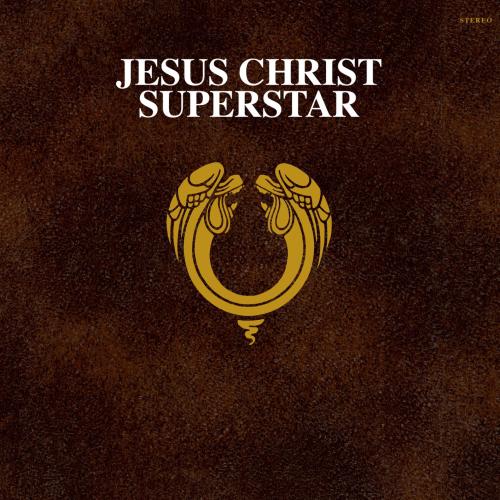 The fact remains that it’s a staggeringly good play with some terrific music. Webber and Rice would split years later but it was recently announced they’d re-group for a new work called Sherlock Homes and the 12 Days of Christmas. It would have been their first collaboration in 40 years.
Rice told the Times on Wednesday (October 21) that his former partner’s songs had been “ditched” after Lloyd Webber allegedly withdrew his score. Webber claims that Rice’s contract called for more than Webber wanted to give. It’s also note worthy that Rice’s children are producing the play.
Whatever the true reasons, this re-collaboration would have been monumental. The two have enjoyed success beyond their wildest dreams and unfortunately, with this latest development, the work they did collaborate on we won’t hear.
The play’s debut is set for late next month. Here’s more from Broadwayworld.com: https://www.broadwayworld.com/article/Andrew-Lloyd-Webbers-Songs-Cut-From-Musical-Written-With-Tim-Rice-Ahead-Of-London-Run-20261022
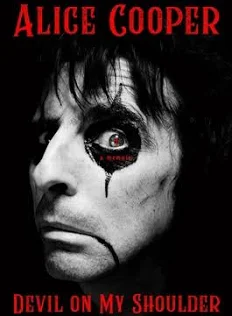 SHORT TAKES — We just got the new Alice Cooper memoir Devil On My Shoulder (Da Capo) and it looks like a great read. Stay tuned … Andy Burns from Toronto’s BiffBamPop did a superb Micky Dolenz interview. Take a read: https://biffbampop.com/2026/10/28/exclusive-interview-micky-dolenz-on-new-music-the-monkees-and-more/ … Beatles-engineer Phil McDonald has passed. From Mojo: https://www.mojo4music.com/articles/stories/the-making-of-all-things-must-pass/ … (Via Deadline) After running Star Wars for years, Kathleen Kennedy is now taking on the Olympics’ opening and closing ceremonies that aren’t anywhere near a galaxy far far away.
 In fact, with less than two years to go before LA28 kicks off on July 14, 2028 at both SoFi Stadium and the L.A. Memorial Coliseum, the former LucaFilm boss and now independent producer has to hit the ground running. As of today, multiple Oscar nominee Kennedy will take over Peter Rice’s old job as Head of Ceremonies and Content for the LA28 Olympic and Paralympic Games … RIP Kenny McPherson
NAMES IN THE NEWS — Man Parrish; Mark Berry; Raul Rodriguez; Tom & Lisa Cuddy; Ernesto Baldaro; Vinny Rich; Melissa Davis; Carol Ruth Weber; Mark Berry; Steve Thompson; Nile Rodgers; Maureen Van Zandt; Joel Diamond; Robey; Tommy Mottola; Daryl Hall; Ace Huttonson; Thomas Jay; Mike Wilkinsen; Kayla Espiritu; John Hughes; Bruce Glikas; Stormy; Vinny Rich; and BELLA!
Images on this page have been licensed under the Creative Commons Attribution-Share Alike 4.0 International license
Broadway
Theatre News: Broadway Gets Wonderful, Stella Cole Gets Happy and My Favorite Year Gets Another Year

Broadway is heading into the holidays with a little nostalgia, a lot of star power and several intriguing returns to the past.
Speaking of Broadway voices, apparently even The Gilded Age cannot resist Christmas.
Audra McDonald, Christine Baranski, Carrie Coon, Kelli O’Hara, Donna Murphy and other members of HBO’s lavish period drama have joined songwriter and producer Desmond Child for Voices of The Gilded Age: The Christmas Album, arriving November 6 through Concord Theatricals Recordings.
Among the more intriguing tracks is Stephen Sondheim’s exquisite “I Remember” from Evening Primrose, performed by McDonald, Murphy and O’Hara—a combination of voices that alone makes the album worth noticing. Carrie Coon and Morgan Spector narrate Clement Clarke Moore’s “‘Twas the Night Before Christmas” throughout the recording. Child has also contributed two original songs: “The World Needs Some Christmas,” sung by Ben Ahlers, and “It’s Been Real,” performed by Murphy.
 Lisa Rinna, Harry Hamlin, Megan Hilty, Andrew Rannells and Tituss Burgess are all Broadway-bound in It’s a Wonderful Life: A Live Radio Play, making its Broadway debut at the Broadhurst Theatre. Performances begin November 4, with opening night set for November 18, and the limited engagement running through January 3.
Directed by Jerry Zaks, Joe Landry’s 1996 play takes Frank Capra’s beloved Christmas story and returns it to the era in which George Bailey first captured America’s imagination. Rather than recreating Bedford Falls literally, the production unfolds inside a 1940s radio studio, where five actors, a Foley artist, holiday music and the mechanics of old-fashioned broadcasting bring the story to life.
Rannells takes on George Bailey, with Hilty as Mary Bailey, Burgess as Clarence, Hamlin as the formidable Mr. Potter and Rinna as Violet. It is an unusually delicious collection of personalities for material that has become nearly sacred Christmas territory, and Zaks certainly knows his way around both comedy and Broadway stars.
The play was inspired by Philip Van Doren Stern’s short story The Greatest Gift, which became the basis for Capra’s 1946 film. The Broadway production features sets and costumes by Santo Loquasto, lighting by Kenneth Posner and sound by Palmer Hefferan, with Andy Einhorn serving as musical director.

Stella Cole
Meanwhile, Maybe Happy Ending is getting a temporary new resident at the Belasco. Jazz vocalist Stella Cole will make her Broadway debut as Gil Brentley from October 20 through November 15, stepping in during original cast member Dez Duron’s month-long absence. Duron returns November 17.
Cole is an interesting choice precisely because Gil is not simply another musical-theatre role. The character belongs to the romantic world of classic jazz, and Cole has built her career interpreting exactly that repertoire. Her recordings and online performances have introduced standards to a younger audience, while her live appearances have taken her from Carnegie Hall and Madison Square Garden to TODAY, Live with Kelly and Mark and Tamron Hall. Her third album, Imagination, arrives October 30, right in the middle of her Broadway run.
The Tony-winning musical currently stars Zachary Noah Piser as Oliver and Hannah Kevitt as Claire, with Marcus Choi as James. For one month, however, audiences will get the rather charming collision of a young singer devoted to an earlier musical era appearing inside one of Broadway’s most technologically imaginative contemporary musicals.
Finally, a musical that has always seemed to deserve another look is getting one.

Ben Levi Ross
Asolo Repertory Theatre is developing a newly revised My Favorite Year, the Stephen Flaherty-Lynn Ahrens-Joseph Dougherty musical based on the wonderful 1982 film. Josh Rhodes is directing a New York workshop featuring Chris Hoch as Alan Swann, Ben Levi Ross as Benjy Stone, Julie Benko as Alice Miller, Marina Kondo as K.C. Downing, Brad Oscar as King Kaiser and Beth Leavel as Belle Carroca Steinberg.
The company also includes Orville Mendoza, Briana Carlson-Goodman, Robert Anthony Jones, Lyrica Woodruff, Stuart Zagnit and Rob Tucker.
Set in 1954, My Favorite Year follows young television comedy writer Benjy Stone, who receives the assignment from hell disguised as the opportunity of a lifetime: keep drunken, swashbuckling movie idol Alan Swann sober, functioning and out of trouble long enough to appear on a live television broadcast.
The musical originally opened at Lincoln Center Theater in 1992 and, despite a score by Ahrens and Flaherty and a Tony-winning performance by Andrea Martin, had a brief Broadway life. More than three decades later, Ahrens, Flaherty and Dougherty have returned to the material with new work developed in collaboration with Asolo Rep, which previously premiered the team’s Knoxville, later retitled All the Way Home.
There is something rather appealing about My Favorite Year getting another year. Broadway history is filled with musicals that weren’t quite finished with us when Broadway decided it was finished with them. Sometimes the most interesting second act happens decades after the first one closed.


Macy’s Thanksgiving Day Parade Celebrates 100 Years With a Star-Studded Holiday Spectacular and Performers Galore

Theatre News: Bryan Cranston Returns to Broadway, Julia Roberts Finds Silence, Alec Baldwin Heads To The Tank, Hadestown Heads Home and John Kander at 100

Prince Mario-Max Schaumburg-Lippe: MariBelle And The Chocolate Factory!

Restaurants Are Upgrading the Food. Customers Need to Taste the Difference.

Why Silicone Wedding Bands Are a Smart Pick for Active Lifestyles

What Paycom Reviews Can Reveal Before Choosing Training Software

Carlsbad’s Changing Traffic Landscape Highlights the Importance of Local Road Safety Awareness

Disability Insurance for Wall Street Executives Covers the Bonus Pay Group Plans Exclude
Macy’s Thanksgiving Day Parade Celebrates 100 Years With a Star-Studded Holiday Spectacular and Performers Galore
Theatre News: Bryan Cranston Returns to Broadway, Julia Roberts Finds Silence, Alec Baldwin Heads To The Tank, Hadestown Heads Home and John Kander at 100
Prince Mario-Max Schaumburg-Lippe: MariBelle And The Chocolate Factory!
Restaurants Are Upgrading the Food. Customers Need to Taste the Difference.
Why Silicone Wedding Bands Are a Smart Pick for Active Lifestyles
What Paycom Reviews Can Reveal Before Choosing Training Software
Carlsbad’s Changing Traffic Landscape Highlights the Importance of Local Road Safety Awareness
Disability Insurance for Wall Street Executives Covers the Bonus Pay Group Plans Exclude
-

 Entertainment5 days ago
Prince Mario-Max Schaumburg Lippe Celebrates Legendary Photographer Patrick McMullan at One Art Space Tribeca Manhattan!
-

 Out of Town5 days ago
All Playgrounds Are Fun – Gruesome Playground Injuries
-

 Cabaret5 days ago
Live From The Hotel Edison Times Square Chronicles Presents Shana Farr And Craig Rubano Talking All Things Jerome Kern
-

 Business4 days ago
Google Releases Gemini 4 Hydrogen, and It Changes the Math on Business AI Costs
-

 Business4 days ago
Prince Mario-Max Schaumburg-Lippe: How To Resolve The Microsoft Outage and Outlook Outage. Ending The Problems, We Got The Troubleshooting For You!
-

 Cabaret3 days ago
My View: Photos… “Here’s To Life”….Ann Hampton Callaway at 54 Below
-

 Business5 days ago
Secondhand Gifts Are Winning Shoppers. New Products Have to Earn the Price Gap.
-

 Broadway4 days ago
Theatre News: Broadway’s Next Big Stars, a New Home for Creativity, and Some Very Familiar Faces