
Cabaret
I Wish: The Roles that could have Been


Every actor has songs and roles they want to play and embody, unfortunately the timing, the look or the production is not being done. At Feinstein’s/54 Below; Ben Davis (The Sound of Music, Dear Evan Hansen), James Harkness (Ain’t Too Proud, Beautiful: The Carole King Musical), Roe Hartrampf (Diana, Netflix’s “Emily in Paris”), Amy Jo Jackson (Fun Home, Kinky Boots), Lauren Marcus (Be More Chill), Mauricio Martínez (On Your Feet!), Alexis Michelle (“RuPaul’s Drag Race,” TLC’s “Dragnificent!”), Presley Ryan (Beetlejuice, Fun Home) and Adam B. Shapiro (Fiddler On The Roof) let their dreams be known.
I Wish: The Roles That Could Have Been allowed for one night only an an audience to bear witness to those dreams.
Alexander Sieber wish list includes Rose in Gypsy and Maria in West Side Story. She hosted and conceived this affair
Lauren Marcus “Happily Ever After ” would be playing Princess Winnifred in Once Upon A Mattress.
Spanish heartthrob Mauricio Martínez, I think wants to play Katie Morosky in a Latin version of “The Way We Were.”
Alexis Michelle, looking like a grown up Annie would excel as Ms. Hannigan in Annie.
James Harkness gave a great rendition of ” The Devil You Know” from Side Show.
Adam B Shapiro performance made me want to see him as Shrek and made me remember what a great song “Who’d I Be” is.
Presley Ryan face a very English Mathilda and Ben Davis gave a nice rendition of “The Impossible Dream” from Man Of LaMancha.
I liked Amy Jo Jackson’s new song from her own musical Hatchetation, made me want to hear more of the show.
Prince Charles’ Roe Hartrampf brought “When Loves Comes” from the musical based on the Japanese manga series of the same name by Frank Wildhorn, Jack Murphy and Ivan Menchell, The Death Note.
All in all this was one enjoyable night of discovering.


Cabaret
My View: Times Square Entertainment At It’s Finest Where Brian J. Nash Offers Sublime Muscianship
Nash has arranged, MDd and played for so many popular artists that I wouldn’t do justice to a partial listing, but he is also considered to be part “Broadway Baby” having worked with the likes of Jennifer Holliday, Shoshanah Bean, Deborah Cox, Laura Benanti, Audra McDonald among them.

Last Night, Brian J. Nash put on a show that could have played to a full house at Radio City Music Hall and satisfied every single person present. At midtown’s GREENROOM 42, he held a rapt audience in the palm of his hand for the entire 80 minutes and proved to be a real “showman.” The bottom line is that Mr. Nash “is” music. His body language and connection to the piano are wild to watch and the guy’s got “moves.” He also loves every minute of what he’s doing.
Nash has arranged, MDd and played for so many popular artists that I wouldn’t do justice to a partial listing, but he is also considered to be part “Broadway Baby” having worked with the likes of Jennifer Holliday, Shoshanah Bean, Deborah Cox, Laura Benanti, Audra McDonald among them. He travels the world and chases the music. You can follow his adventures on social media and he is quite committed to his goals and is charming and funny. This encore engagement of the gamely titled BLUE JEAN BABY GRAND was, quite simply, a knockout, after selling out back in July. With one of the greatest bands I’ve ever seen or heard, this performer tore up the music of Elton John and Billy Joel. It was a musical education, with some great photos and an adoring attitude for his heroes, having played many of their songs over his 19 and ½ years spent in piano bars. His stories of discovery go back to his youth, when his voice changed and he could no longer sing “On My Own” from LES MISÉRABLES (in the original key) and he discovered the song “Daniel.” The show soared and soared and soared and the chemistry between the “boss man” and his musicians was built on love, respect and talent. Crazy talent. The pacing and running order of the song list was diabolical. No exaggeration. One of the reasons Eda and I were able to see it was because in July the video they filmed didn’t work, so this was a “take two” of sorts and, if tonight was captured, it will be something to behold. Bravo to all and if you see Brian J. Nash advertised to appear anywhere near where you are, RUN! You’ll thank me.
The Band: Elena Bonomo, Drums, Mohan Ritsema, Bass, Will Shishmanian, Guitar, Tom Regouski, Reeds, Andrea Neumann, Trombone, Alphonso Horne, Trumpet

BRIAN J. NASH

BRIAN J. NASH

BRIAN J. NASH

BRIAN J. NASH

BRIAN J. NASH

BRIAN J. NASH

BRIAN J. NASH

BRIAN J. NASH

BRIAN J. NASH

BRIAN J. NASH

BRIAN J. NASH


BRIAN J. NASH

CARLOS CLEMENZ

ROGER DAWLEY, NICHOLAS YENSON, BRIAN J. NASH

NATALIE DOUGLAS & BRIAN J. NASH

ANDREW LIPPA & FRIENDS

RICHARD JAY-ALEXANDER & BRIAN J. NASH

TOM REGOUSKI & ANDREW LIPPA

EDA SOROKOFF & CARLOS CLEMENZ

CAROLOS CLEMENZ, STEPHEN SOROKOFF, BRIAN J. NASH


There are few places better suited to celebrating John Kander and Fred Ebb than Dizzy’s Jazz Club. On Sunday, October 4, New York was misty beyond those magnificent windows, the room was filled with Kander and Ebb melodies, and, making the evening even more special, John Kander himself was sitting at the table directly behind me listening to his music come alive.

John Kander
Hosted and curated by Deborah Grace Winer, Songbook Sundays: Life Is Kander and Ebb brought together three very different vocalists—Karen Ziemba, Matthew Scott and Vanisha Gould—with music director and pianist Jon Weber, Mark McLean on drums, Jay Leonhart on bass and Sam Chess on trombone. The talent was unquestionable, the musicianship superb and the surroundings quintessentially New York.

Karen Ziemba
Yet I left wanting more as I know this songbook inside and out.

Vanisha Gould, Karen Ziemba, Matthew Scott Vanisha Gould
Not more talent. There was plenty of that. What I wanted was more Kander and Ebb.
Karen Ziemba opened with “Where You Are,” immediately reminding us why she has had such a remarkable career. Ziemba doesn’t merely sing a lyric; she understands what is underneath it. That quality served her particularly well throughout the show, whether she was having wicked fun with “Don’t Tell Mama,” finding the aching simplicity of “My Coloring Book,” or delivering “How Lucky Can You Get.” Kander and Ebb frequently wrote characters who perform one emotion while another one is quietly breaking through, and Ziemba knows exactly how to live in that contradiction.
Matthew Scott has a terrific voice coupled with genuine acting chops, something especially evident in “Not Every Day of the Week” and “Love and Love Alone.” When he arrived at “Theme from New York, New York,” he wisely didn’t try to compete with the ghosts surrounding one of the most recognizable songs ever written about this city. Instead, he found his own way into it, allowing us to hear the song rather than an imitation of the singers who made it famous.
Then there was Vanisha Gould, who possesses a fabulous smoky, growling voice that sounds as though it was made for the 1930s. There is something wonderfully lived-in about her sound, a little dangerous around the edges, and it gave “Funny Honey” and “All That Jazz” an entirely different texture. “Maybe This Time” allowed her to move beyond the sass and into the vulnerability underneath, where Kander and Ebb so often do their best work.
The musicians were every bit as important to the performance.
Weber knows how to support a singer without disappearing beneath one, and McLean, Leonhart and Chess gave the music the swing and bite it requires. “Sing Happy” put the band front and center, while
Leonhart—whose career has included playing for an extraordinary roster of great performers—stepped into the spotlight to deliver his own “Razzle Dazzle.” It was an irresistible reminder that sometimes the musicians have a few tricks of their own.
Ziemba and Scott joined forces for “But the World Goes ‘Round,” another quintessential Kander and Ebb song about continuing when life has other plans. “Cabaret,” naturally, also made its appearance, bringing us back to the musical that remains inseparable from the Kander and Ebb name.
Which brings me to the one thing that bothered me about an otherwise beautifully performed performance.

Jon Webber and John Kander
Perhaps having John Kander sitting directly behind me made me even more aware of the sheer size of the catalogue being celebrated. Here was one of the architects of American musical theatre, listening to songs from a collaboration that stretched across decades, and I kept thinking about everything we weren’t hearing.

Vanisha Gould, Karen Ziemba, Matthew Scott
There were three selections from Chicago and three from Cabaret, along with two each from Flora the Red Menace and New York, New York. They are terrific songs, certainly, and nobody is going to object to hearing them sung this well. But Kander and Ebb wrote so much more.

John Kander, Matthew Scott
Where was The Happy Time, Zorba, 70, Girls, 70, The Act, Woman of the Year, The Rink, Steel Pier, Curtains, or The Scottsboro Boys? There is an astonishing amount of material in that catalogue, including songs that deserve to be rediscovered rather than allowed to sit quietly in the shadow of “All That Jazz” and “Cabaret.”
That is particularly what I look for from something called Songbook Sundays. A songbook series has the opportunity not merely to celebrate the songs everybody already knows, but to open the book a little wider. Give us something we have forgotten or haven’t heard in years. Give a younger audience a song they didn’t know existed. Let us hear the journey of the writers, not simply their greatest hits.
Kander and Ebb were never just Chicago and Cabaret. Their partnership was far richer and stranger than that. They could be cynical and sentimental, sophisticated and vulgar, politically savage and heartbreakingly romantic. Again and again they wrote about people performing confidence while quietly falling apart underneath it. Their characters keep dancing, keep singing, keep putting on the makeup and facing the world because, as one of their greatest songs reminds us, the world goes ’round.
Maybe that’s why I wanted more.
What Winer gave us was beautifully sung and beautifully played. Ziemba remains a masterful interpreter, Scott impressed with both voice and dramatic instinct, and Gould made me want to hear much more from that wonderfully smoky voice. Weber and his musicians gave us sophistication, warmth and swing.
Outside those windows was a mist-covered New York, while inside sat John Kander himself listening to his songs. Really, how much more New York can you get? Except, of course, for a few more Kander and Ebb songs.
I enjoyed Life Is Kander and Ebb immensely. My complaint is actually a compliment: with a songbook this extraordinary, I didn’t want the afternoon to end with so many pages still unopened.

There are memorials that look backward, and then there are those that keep an artist’s work alive by putting it back where it belongs—onstage.
 Jeff Harnar returns to Birdland this November 9th for a special encore performance of his acclaimed I Know Things Now: My Life in Sondheim’s Words, presented in memory of the legendary Sondra Lee, who directed the show and championed it from its inception. Lee, who died in February at 97 and was subsequently honored when Broadway dimmed its marquee lights in her memory, made the deeply personal Sondheim evening one of her final directing projects.
For Harnar, bringing it back isn’t simply a revival. “The best way to keep Sondra Lee’s brilliance alive is to keep putting her work forward,” he has said. There could hardly be a more fitting tribute to a woman who spent a lifetime making theatre.
Lee’s extraordinary career stretched from Broadway to film, directing and teaching. She originated Tiger Lily opposite Mary Martin in Peter Pan and Minnie Fay opposite Carol Channing in Hello, Dolly!, appeared in more than 70 films and eventually chronicled her remarkable life in the wonderfully titled memoir I Slept With Everybody. What she brought to Harnar’s Sondheim evening was not nostalgia, but a director’s eye for discovering the story hiding inside familiar material. And I Know Things Now has quite a story to tell.
Working with Lee and brilliant jazz pianist and music director Jon Weber, Harnar takes Stephen Sondheim’s words out of their original theatrical settings and uses them to construct something entirely new: a musical self-portrait of an openly gay New Yorker. Songs written for different characters, different situations and, frequently, women become pieces of Harnar’s own emotional history. Material from Follies, Into the Woods, A Little Night Music, Road Show, Dick Tracy, Passion, Company and elsewhere is rearranged and recontextualized until Sondheim’s characters begin speaking in Harnar’s voice.
That gender fluidity is not a gimmick; it is part of what makes the evening so revealing. A great lyric does not stop belonging to us because the character who first sang it had a different gender, age or history. Strip away the original costume and circumstance and Sondheim’s observations about desire, disappointment, fear, longing and survival become startlingly universal.
Sondheim himself apparently appreciated what Harnar and Weber were doing. Upon hearing Weber’s jazz reinventions of his songs, he responded, “I liked the changes. I wished there were more!” That invitation encouraged the pair to push further, liberating songs from the theatrical circumstances for which they were written and allowing them to acquire new meanings through Harnar’s own life. The resulting show received Sondheim’s endorsement and has been licensed for theatrical production by Music Theatre International.
The critics responded with similar enthusiasm. Longtime New York Times music and film critic Stephen Holden called it “the greatest cabaret show I have ever attended,” while its London engagement earned a five-star review from Musical Theatre Review. The show was subsequently recorded for PS Classics, produced by Tommy Krasker with Ron Thomas as executive producer, and the album received the 2023 MAC Award for Major Recording.
For the Birdland encore, Harnar and Weber will be joined by Steve Doyle on bass and Ray Marchica on drums, returning the material to the intimacy of a nightclub, where Sondheim’s words can land without the protective distance of a proscenium.
Harnar is particularly suited to that intimacy. A multiple MAC, Bistro and BroadwayWorld Cabaret Award winner and recipient of the Noël Coward Foundation Cabaret Award, he has appeared at Carnegie Hall in both the Cole Porter and Noël Coward Centennial Galas and on PBS in Jeff Harnar Sings the 1959 Broadway Songbook, as well as two specials with KT Sullivan. His career has been built around the belief that interpretation is not imitation—that the American Songbook remains alive only when a singer discovers something within it that belongs to the present.
Michael Feinstein once said of Harnar, “I discover something new in a lyric every time I hear Jeff Harnar sing.”
That may also explain why I Know Things Now feels like such an appropriate way to remember Sondra Lee. A director leaves behind something different from a painting, a novel or a recording. Her art exists in choices, discoveries, performances and the artists whose work she helped shape. When the curtain comes down, much of it can disappear unless somebody chooses to carry it forward.
Jeff Harnar is doing exactly that.
He isn’t simply dedicating an evening to Sondra Lee. He is putting her work back onstage.
And for a director, there may be no lovelier memorial.

October is proving that New York’s cabaret and concert scene has no intention of quietly settling into fall. A brand-new room, The Pocket, is opening its doors, adding another intimate venue to the city’s ever-evolving nightlife landscape, while 54 Below celebrates one of musical theatre’s most distinctive contemporary voices, Jason Robert Brown. Uptown, the 92nd Street Y brings star power with Michael Douglas and Patti LuPone, while Carnegie Hall has assembled an October that practically reads like a love letter to musical theatre and film: A Celebration of Rodgers & Hart, the October 18 Falsettos 10th Anniversary Concert, and, on October 23, The New York Pops going gloriously cinematic with 007: James Bond Forever. From a new club finding its voice to Broadway royalty and one of the world’s grandest concert halls revisiting some of the music that helped define American entertainment, this is one of those months when staying home seems like an exceptionally bad idea.
54 Below: 254 West 54 St. 10/5: The New York Pops Underground with Deborah Cox; 10/6: Ali Ewoldt: When You Wish Upon a Star, feat. Jose Llana & more!; 10/7: Bells Are Ringing 70th Anniversary Concert; 10/19: BSC>NYC honoring Jason Robert Brown; 10/20 – 21 and 23 – 25: John Lloyd Young: Songs from the Road; 10/22: Jenn Colella; and 10/27 – 31: Christine Ebersole with Billy Stritch

Jason Robert Brown
92 Street Y: 1395 Lexington Ave. 10/1: Patti LuPone: A Life in Notes; 10/1: Bill Ritter, David Hyde Pierce, Dr. Scott Small, and Allison Gilbert on Alzheimer’s, Caregiving, and the Power of Community; 10/6: Michael Douglas in Conversation: One Helluva Ride; 10/8: Shark Tank Stars and Showrunner in Conversation: Season 18 Highlights Screening and Talkback; and 10/26: An Evening with Tituss Burgess

Patti LuPone
Birdland Jazz: 315 West 44 St. Every Monday Jim Caruso’s Cast party; Every Monday and Tuesday: Vince Giordano leads The Nighthawks; Every Sunday Gabrielle Stravelli Trio; 10/5: Amanda Green and Fantastic Friends; 10/12: Julie Halston and Jackie Hoffman Live Stream: 10/16 – 18: Carole J. Bufford; 10/19: Julie Benko Goes To The Movies and 10/26: Phillip Officer Sings Mabel Mercer Broadway Portfolio.

Julie Halston and Jackie Hoffman
Carnegie Hall: 881 7th Ave at 57th St. 10/5: Celebration of Rodgers and Hart; 10/18: Falsettos 10 Year Anniversary Concert and 10/23: The New York Pops 007: James Bond Forever
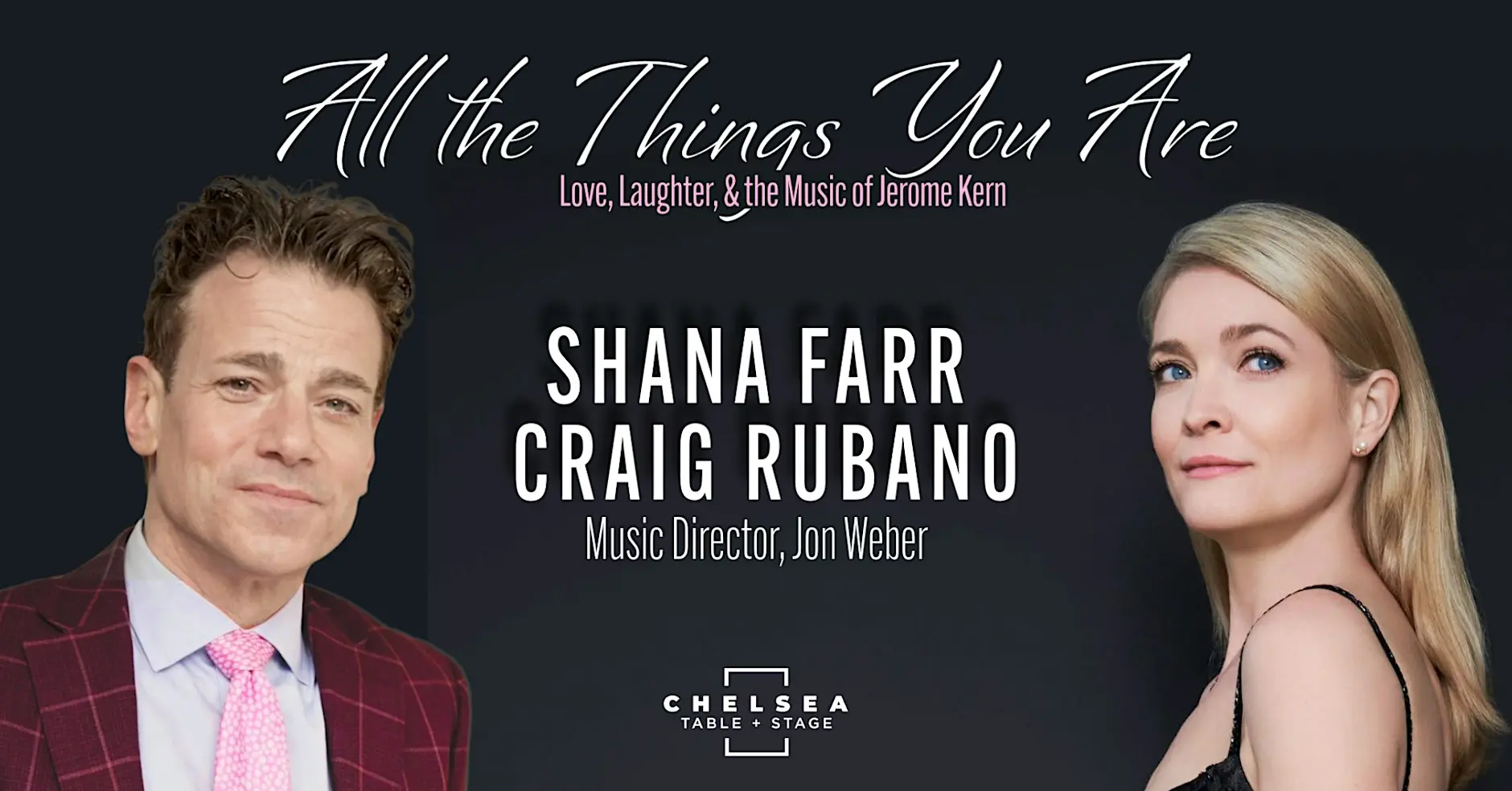
 Chelsea Table & Stage: Hilton Fashion District Hotel, 152 W 26th St. 10/26: All the Things You Are: Love, Laughter, and Music of Jerome Kern.
.Dizzys Club Coca Cola: Frederick P. Rose Hall, Broadway at 60th Street. 10/2: Catherine Russell and Friends with Special Guest; 10/4: Songbook Sundays: Kander & Ebb with Karen Ziemba; 10/13: “Once In a Blue Moon” – A Tribute to Mabel Mercer presented by The Mabel Mercer Foundation; 10/14: “Sammy: All the Way & Then Some!” – The Songs of Sammy Davis, Jr. presented by the Mabel Mercer Foundation and 10/15: “With a Song in My Heart” – A Cornucopia of Entertainment presented by The Mabel Mercer Foundation

Karen Ziemba
Don’t Tell Mama: 343 W. 46 St. 10/10 and 25: Lucille Carr-Kaffashan: Breathe; 10/27: Steven Carl McCasland: Everybody Rise! and 10/29 Tanya Moberly: Repertoire With Mark Janas

Laurie Beechman Theatre: at the West Bank Café: 407 West 42 St. 10/ 5 -6: Jackie Hoffman; 10/9: Lorna Luft; 10/10: Andrea McArdle’s Broadway On Demand; 10/15: Lauren Marcus; 10/16: Lillias White Live At The Beechman and 10/30 -31: The Joe Iconis Haunted Halloween Special
Madame George: 45 West 45th: Broadway Night Mondays.

The Café Carlyle: 35 East 76 St. at Madison Ave. 9/29 – 10/3: Ariana DeBose; 10/20 -24: Patty Smyth at Café Carlyle and 27 – 29: St. Vincent at Café Carlyle.
The Cutting Room: 44 East 32nd St.
 The DJango: 2 Avenue of the Americas. 10/16: Jason Tiemann Quinetet and 10/24 Lee Taylor.
The Green Room 42: 570 Tenth Ave 4th Floor inside Yotel Hotel. 10/13 and 27: The Lineup With Susie Mosher.
The Iridium: 1650 Broadway. 8/29: Papa Chubby
The Pierre Hotel, Two E Bar & Lounge: 2 E 61st St.
 The Pocket:130 West 36th St. Every Monday mingus big band; Every Tuesday arturo o’farrill & the afro latin jazz orchestra
Sony Hall: 235 W 46th St. 10/11: Morgan James
The Triad: 158 W. 72 St. Street.
 The Town Hall: 123 W. 43 St. 10/30: The Rocky Horror Picture Show: Original Cast Spooktacular Tour

Yesterday, T2C published Linda Amiel Burns’ account of what happened at the American Popular Song Society, an organization she helped lead for more than four decades. Burns told T2C unequivocally that she did not retire and challenged the circumstances under which Michael Lavine became the organization’s new president.
I promised Lavine the same opportunity to tell his side.
He responded with considerably more than a statement. He provided correspondence among board members dating back months, documentation concerning the July 30 board meeting, material concerning compensation discussed during the proposed transition, and supporting organizational records.
After reviewing those materials, and after speaking at length with both Lavine and Burns, I no longer see this simply as a story about someone being pushed out of an organization she spent decades building. The documentary record tells a more complicated—and in several respects different—story.
For months before the disputed July meeting, Burns and longtime treasurer Glen Charlow had themselves been raising the possibility of leaving. On March 2, Burns told board members that she and Charlow were “trying to decide if this is our last year or not and whether to continue.” She added that they did not see anyone replacing them.
On March 28, she went further. Burns wrote that Charlow “expressed a desire to retire,” asked whether anyone knew somebody who “would like to take over,” and said APSS might otherwise reduce itself to one annual event or disband altogether.
That does not constitute a formal resignation from Burns, but neither can those statements reasonably be ignored when examining what happened next.
They asked who would take over. Michael Lavine and Tom Toce answered. And that appears to be where expectations diverged.
Lavine and Toce did not simply offer to help maintain the existing arrangement. They proposed becoming the organization’s new leadership and changing its direction. Lavine was remarkably candid about that in a July 9 email to the board. He said APSS needed to move further into the 21st century and include more contemporary composers, lyricists and performers alongside the Great American Songbook. He wrote that he had approached Toce about stepping into leadership and that, after seeing membership registration had been closed, he thought they should “try and take it over” and introduce new programming.
Those words sound dramatic when isolated. In context,Lavine immediately acknowledged Burns’ and Charlow’s decades of service and said he was not attempting to push them out without recognition. He proposed a board meeting where everyone could discuss the organization’s future and vote.
There is another important correction to the record. Burns’ statement said discussions culminated in a board meeting that “did not include” her and Charlow and described it as a meeting to which not every board member was invited. The correspondence Lavine supplied shows that Burns was invited. Lavine’s July 9 email specifically told Burns and Charlow that if they did not want to attend the meeting at his apartment, they could participate by Zoom. The July 29 meeting notice was also sent to Burns and explicitly listed the election of officers on the agenda.
Whatever disagreement remains about the validity of the meeting or the election, I cannot characterize Burns as having been excluded from a meeting when the correspondence provided to T2C shows that she was invited to attend.
Money was also part of the proposed transition. Those financial discussion matters because it changes the context of what followed. This was not simply a binary choice between Burns remaining president and Burns being thrown out. There were discussions about succession, discussions about Burns and Charlow remaining during a transition, discussions about compensation, and eventually a board election.
I have known Michael Lavine for years. When Linda first told me what had happened, I found her account deeply troubling precisely because I had difficulty reconciling it with the Michael I knew. But friendship is not evidence, in either direction. That is why I asked him for his side and why I asked for documentation. He provided it.
That does not mean every question has disappeared. There is an important distinction between contemplating retirement and formally resigning an office. There is also an important distinction between being removed without an opportunity to participate and choosing not to participate in a meeting to which one was invited. After speaking with both Burns and Lavine, I believe much of this dispute grew out of that uncomfortable territory between succession as an idea and succession when it actually happens.
For years, Burns and Charlow were APSS. They kept it going. They did the work. They worried about who would replace them. They publicly contemplated retirement and asked who might take over. Then somebody did. That moment can look very different depending upon which side of the table you are sitting on.
To the people who spent decades building something, succession can feel very different when it stops being hypothetical. To the people being asked to ensure that the organization survives, repeated discussions of retirement and requests for successors can reasonably be understood as an invitation to prepare for new leadership.
I don’t believe the evidence I’ve now seen supports reducing this story to villains and victims. I believe it shows something much more human.
There was also a practical reality behind these conversations that should not be overlooked. Neither Burns nor Charlow live any longer in New York City. Burns had moved to Connecticut, while Charlow was coming in from the Baltimore area. Burns herself acknowledged the difficulty in her March 28 email, writing that Charlow “does not want to come in from Baltimore anymore” while discussing his desire to retire.
That matters. APSS is a New York-based organization whose programming requires meetings, planning, performances and considerable hands-on involvement. Running it from outside the city means travel, time and expense, and after decades of doing the work, neither Burns nor Charlow are at a stage of life where those demands were insignificant. Their discussions about retirement did not happen in a vacuum. There were real logistical reasons for questioning whether the existing arrangement could continue.
Money appears to have become part of the proposed solution. Rather than simply walking away, Burns and Charlow discussed remaining through another season as part of a transition, with Lavine saying they requested $500 per month each for nine months. A contemporaneous June 26 email from Toce refers specifically to “the $500 a month request,” so there is documentary evidence that compensation was being discussed. The cost involved is in total $9,000. A June 26 email from Toce discusses concerns about paying it when APSS publicly described itself as an organization “run entirely by volunteers.” Toce instead discussed an annual award honoring Burns with a $1,000 honorarium.
Seen in that context, the dispute begins to look less like a sudden overthrow and more like a succession process that nobody successfully defined. Burns and Charlow were openly questioning whether they could continue, looking for people to take over and confronting the practical burden of running a New York organization from outside New York. Lavine and Toce heard those discussions and stepped forward. Where the relationship appears to have fractured was over what “taking over” actually meant, when it would happen, what role Burns and Charlow would retain, and whether they would be compensated during the transition.
Two people who devoted decades to an organization began talking about leaving it. Other people listened. They stepped forward. And when the theoretical future became the actual present, the transition became painful and feelings were hurt.
That doesn’t erase what Linda Amiel Burns and Glen Charlow gave APSS. Quite the opposite. Without them, there might not have been an organization for anyone to inherit, but preserving someone’s legacy and preserving someone’s position are not necessarily the same thing.
After reviewing the correspondence, speaking to both sides and looking again at what happened, I believe the American Popular Song Society reached the succession that its longtime leadership had been warning for months was coming. The real failure was that nobody involved seems to have understood how painful that succession would become once it actually arrived.


My View: Times Square Entertainment At It’s Finest Where Brian J. Nash Offers Sublime Muscianship

Slam Frank: Brilliant, Offensive, Confusing—and Impossible to Stop Talking About

Songbook Sundays: Life Is Kander and Ebb: When the Songbook Leaves You Wanting More

The Glorious Corner

Prince Mario-Max Schaumburg-Lippe: Manhattan In New York City Is The Museum Capitol Of The World!

Google Is Narrowing Free Gemini Access on October 9. Here’s What It Means for Your Business

Ken Fallin’s Broadway: Matthew Morrison Is Just in Time for Another Broadway Encore

When The Met Meets Madison Avenue: Bobbi Brown Turns Masterpieces Into Makeup
My View: Times Square Entertainment At It’s Finest Where Brian J. Nash Offers Sublime Muscianship
Slam Frank: Brilliant, Offensive, Confusing—and Impossible to Stop Talking About
Songbook Sundays: Life Is Kander and Ebb: When the Songbook Leaves You Wanting More
The Glorious Corner
Prince Mario-Max Schaumburg-Lippe: Manhattan In New York City Is The Museum Capitol Of The World!
Google Is Narrowing Free Gemini Access on October 9. Here’s What It Means for Your Business
Ken Fallin’s Broadway: Matthew Morrison Is Just in Time for Another Broadway Encore
When The Met Meets Madison Avenue: Bobbi Brown Turns Masterpieces Into Makeup
-

 Business5 days ago
Meta Brings AI Agents to Small Businesses — and the AI Assistant Is Becoming an Operator
-

 Book Reviews5 days ago
Live From The Hotel Edison Times Square Chronicles Presents Tony-Nominated Lyricist and Book writer Bill Russell Still, Bill
-

 Broadway3 days ago
School Girls; Or, The African Mean Girls Play: Being Made to Feel Ashamed of Your Skin Color
-

 Art3 days ago
Thread Count: Akea Brionne Stitches Memory Into Gold at Arlo SoHo
-

 Business4 days ago
Nvidia Wants Banks to Treat AI Chips Like Airplanes. Wall Street Isn’t Convinced.
-

 Celebrities4 days ago
The Glorious Corner
-

 Celebrities5 days ago
Who Has the Power to Shape What Comes Next? TIME Reveals the 2026 TIME100 Next
-

 Entertainment5 days ago
A Young Man Climbs From Beneath the Snowy Silence in A Long Winter