
Out of Town
Motorcycles, Mayhem, and Macbeth Rides Strong, Reving its Engines on the Dark Streets of Stratford


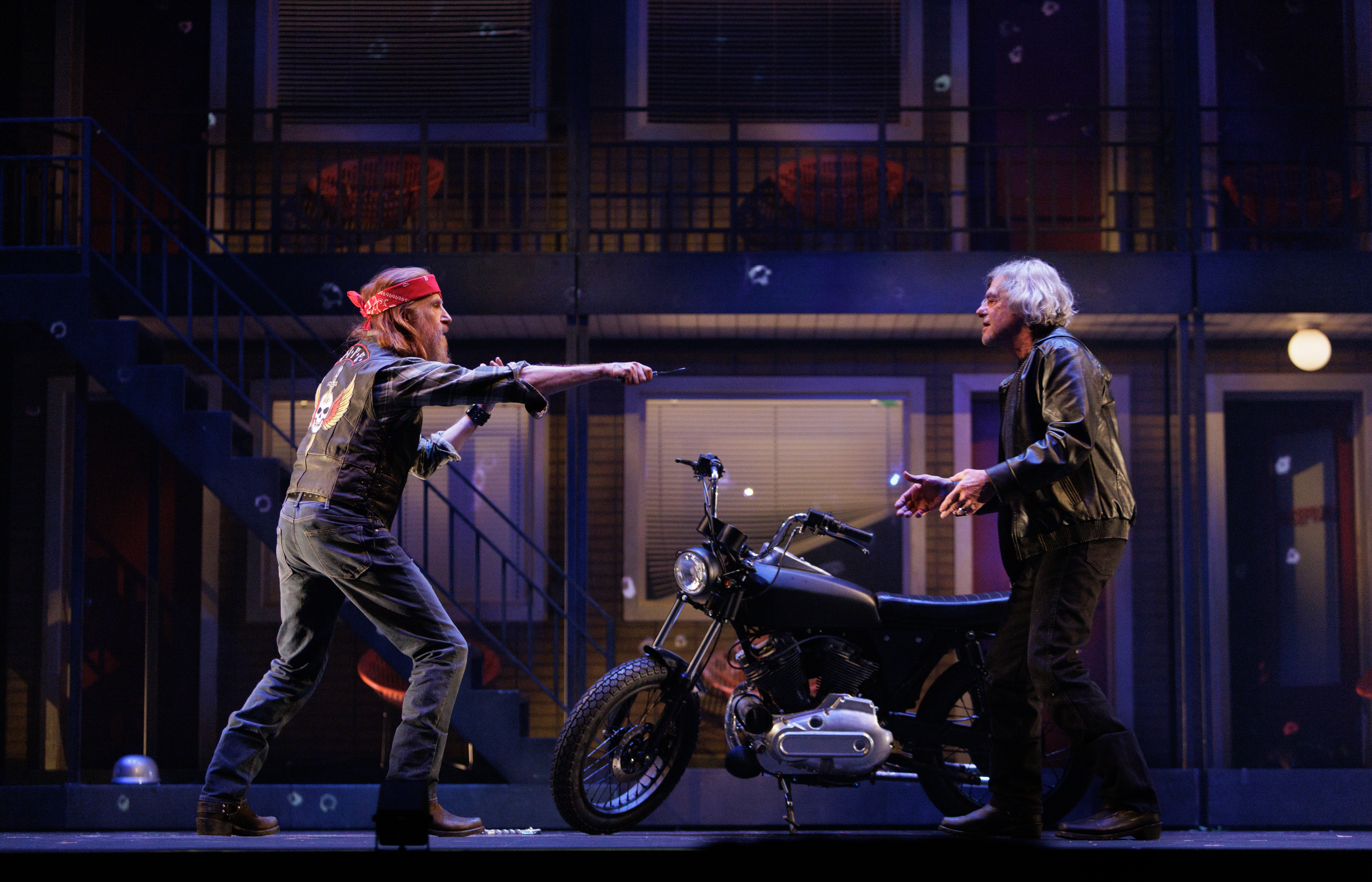
Three moonlit bodies motor out in an unexpected vehicle for a watery drop, hooded in wordless violence that sets the cinematic scene with a vengeance. It’s not the beginning that was expected in this Shakespearean rewiring, and as directed and designed by Robert Lepage (Stratford’s Coriolanus), this hard, metallic Macbeth that opened last night at the Stratford Festival‘s Avon Theatre registers in a realm outside of the norm. It’s the closest thing I’ve seen at the festival to something akin to film, giving us dynamic projected credits over a visual of disturbing depth and power, created in collaboration with Ex Machina, that it’s impossible to look away. And why would we want to? We might want to cover our eyes one or two times (as my companion revealed to me after the final curtain came down), but in terms of classic Shakespearean theatre, this production revs its engines most deliberately and excitingly, riding in a rendering that is completely strong in its rear view mirror, and powerfully sharp in its reframing.

Members of the company in Macbeth. Stratford Festival 2025. Photo: David Hou.
Giving nods to what many called the “Hamlet on Harleys”, FX’s intense motorcycle drama, “Sons of Anarchy“, and more casually, the A24’s mature cinematic engagement, The Tragedy of Macbeth film, this intoxicating reimaging of Shakespeare’s Macbeth on motorcycles quickly floors us in its stress-related knots of violence and fear. Gunning their engines forward on the leather-clad backs of this hardened gang of men and women, this crew is living life large and chaotic in a stereotypical downtrodden, two-story motel complex in lieu of a fortress, courtesy of creative director Steve Blanchet (“The Image Mill” collab with Ex Machina), and set/props designer Ariane Sauvé (Ex Machina’s SLAM!). Focused and deliberate, this Macbeth finds its steadfast formula in the compact microcosm of morally complicated bikers who “seem to be ruled by the same medieval systems of hierarchy and rank, with codes of conduct and honour” that match the Scottish royal brigade that is embedded in this famed Shakespearean text, yet Lepage’s Macbeth tries to dive in even deeper, as if attached to a concrete block, tying into the patriarchal waters of governance, respect, and loyalty to their aging male leaders, but not at all feet first and not to its detriment.
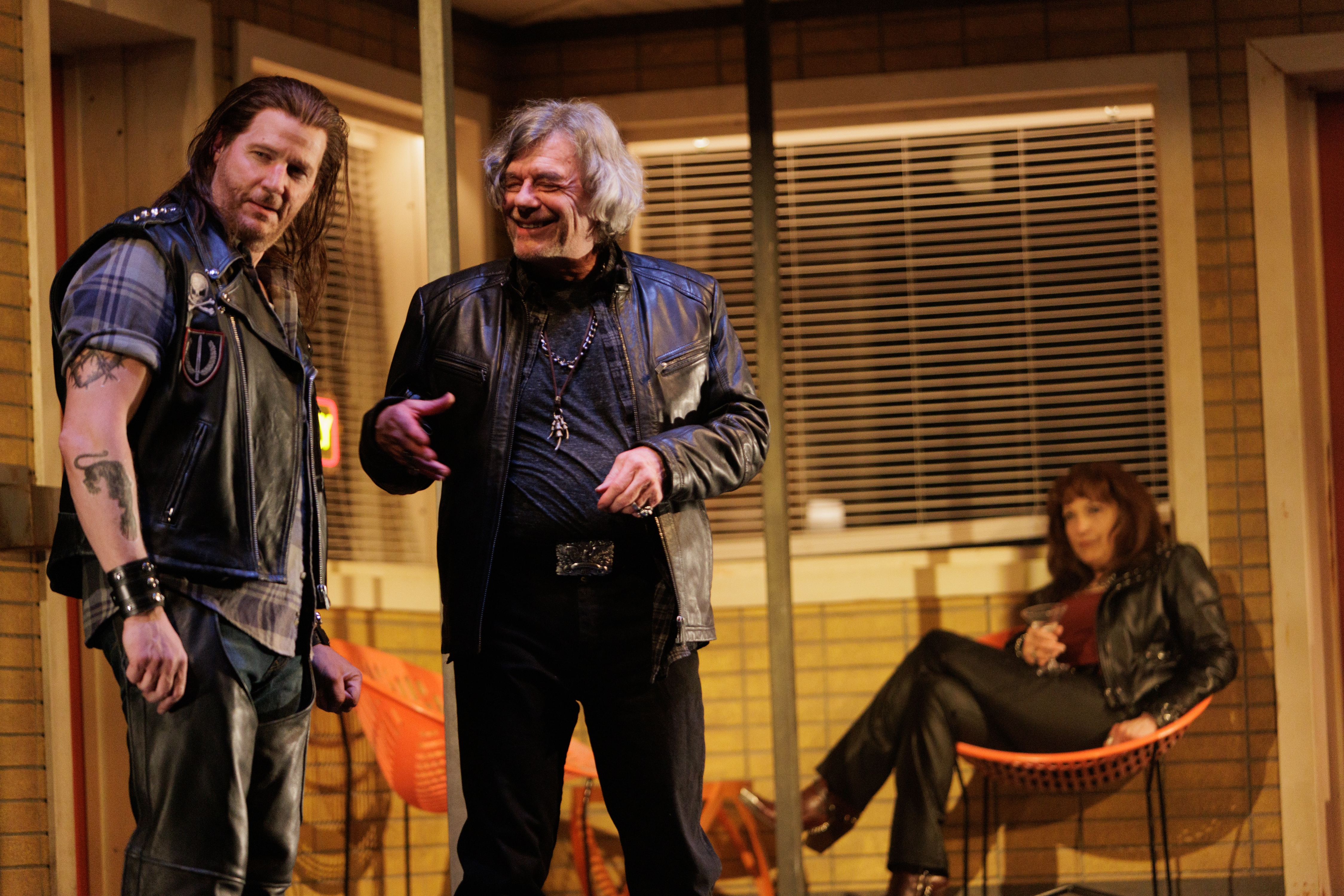
The complex soul of Macbeth, embodied magnetically by the always impressive Tom McCamus (Stratford’s Salesman in China) and backed up by a deliciously intense Lady Macbeth, powerfully portrayed by the phenomenal Lucy Peacock (Stratford’s Three Tall Women), rides in a wave of vibrating deadly energy with added badges of honor happily bestowed upon his leather jacket. It is as if the engines of those hogs are radiating far and wide, sending currents of electrical energy and dread into our seats and bones at the Avon Theatre. McCann and Peacock must have been revving their skilled engines at the idea of playing this famously corrupt couple, much like those movie stars, Denzel Washington and Frances McDormand, when they were given the chance to embody these two in that epic black and white film. Not that it feels wrong to cast these seasoned actors in the slightest, especially in the framing of this timely tale of toxic-masculine power and ambition inside a gang of thugs on wheels, costumed magnificently by Michael Gianfrancesco (Stratford’s Richard II). It fits as authentically snug on their frames as those fine, worn leather pants, with the masculine energy of these men infiltrating the theatrical air like fumes from their motorized steeds.
Similarly to McCamus’s engaging delivery of Macbeth, Peacock finds the fierce, ferocious fire in this captivating woman, giving off a determined force akin to Katey Sagal’s embodiment of Gemma on “Sons of Anarchy“, even donning a wig that cements the connection (and the hidden fragility underneath). Peacock’s queen bee of the biker gang knows her place but is also well aware of how to use the framework of toxic masculinity that beats in the hearts of these men to her best advantage. They need to be seen by every passerby as manly and virile, and she uses that sharp device as a manipulative edge to satisfy her and her husband’s venomous strivings. The two spectacularly talented actors find all the tense, captivating energy inside the Shakespearean text, pulling out all the stops to try to make us feel for them while also fearing their power-hungry appetites. And it generally works its charm upon us, although sometimes their fates felt less focused on internalized desire, recounting engagements and text, with just a faint connection to the fire within. At these moments, and there are a few, a stalled flatness prevaled, feeling forced even thought the stage itself almost overflows with Stratford talent, even in the smallest of secondary roles, like André Sills as Ross and Emilio Viera as Lennox, riding their metallic horses with an authentic biker edge that registers almost in the manner intended.
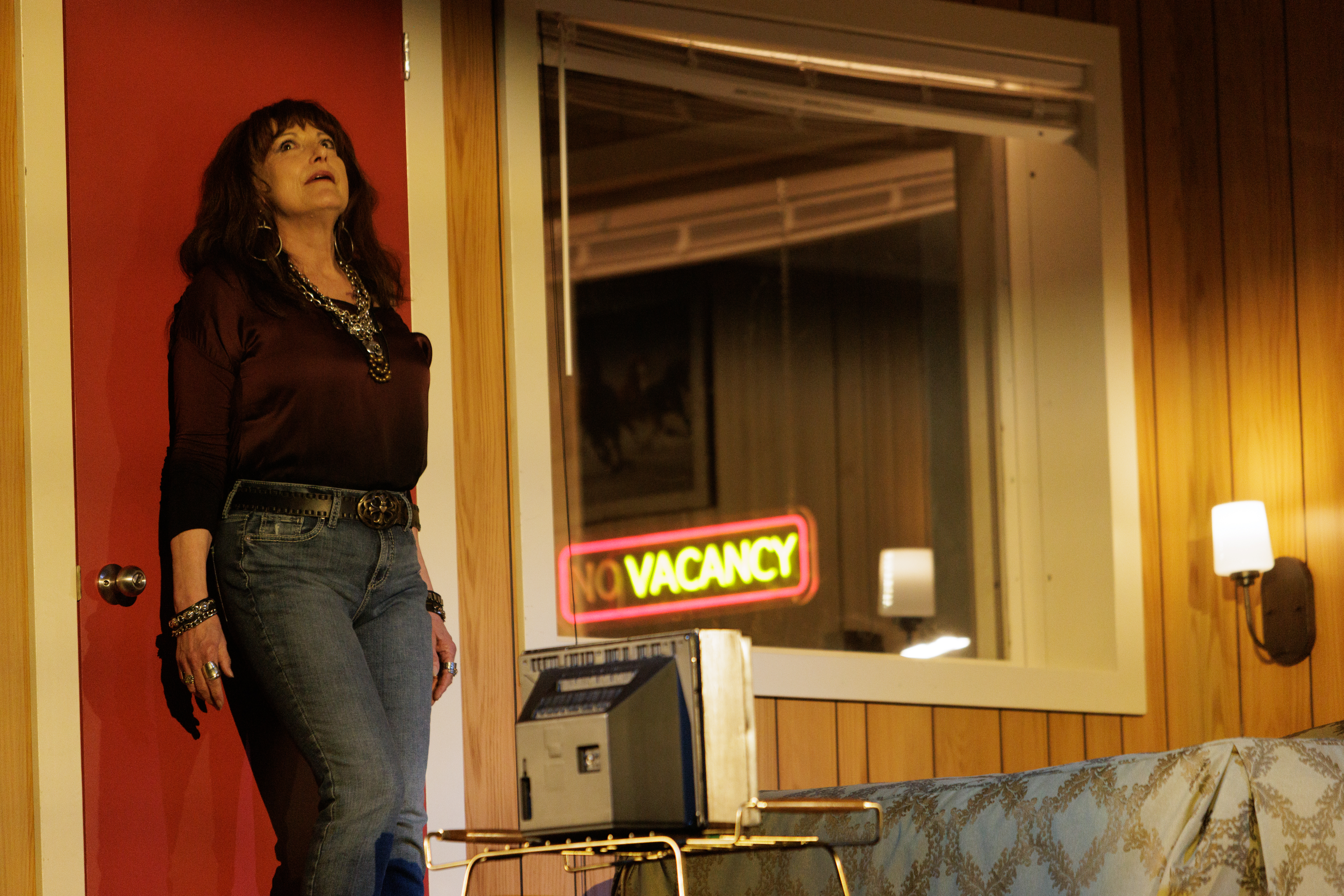
We first see Lady Macbeth staring out of the motel window, listening to the voice message left by her husband about his return and his fantastical visitation from the three witches, captivatingly embodied by Aidan DeSalaiz, Paul Dunn, and Anthony Palermo. It’s an image of isolation and intention that sets her and the scenario most sharply, and even though the formulation that rolls in is as intense as one could hope for, I could only wish that those fantastic set pieces carried with them a smoother deliverance and a wider space allotment. The rooms felt too tight and cluttered with unnecessary, albeit authentic furniture pieces, like the small television on a stand, crowding these fine actors’ movement and limiting their range, making them look stuck and tied in.
I kept waiting for the television’s visual use, like a scene lit only by its glow, but alas, those prop pieces never really found their purpose. They just sat there, locking these stellar actors into a smaller acting space than what we wanted for them. I can’t stress enough how sharply defined this creative reimagining is in its bigger picture, but I also couldn’t help but wish that those solid set pieces gave more floor space for these souls to move and connect with each other, instead of being forced to be still while trying to stay tuned into their emotional truths.I wanted those set pieces to float in like that first motorized boat, without the visual of men pushing and moving the large platforms into place to the sound of creaks, clicks, and clunks. The commotion takes us out of the tense, humid air that hangs over the harsh space, too long before the play regains its steadfast balance with its action and well-spoken dialogue. Once, the movement was so labored that it stalled us completely before finally kick-starting the proceedings once again with the perfect Banquo, authentically portrayed by Graham Abbey (Stratford’s Much Ado About Nothing), trying to connect with his vague, distant son (Anthony Frescura-Denomme; Daxton Scurr) leaning against the outside wall. The vantage point had shifted to a very cinematic, idealized peeking out through motel windows at the suspicious men engaging in dark matters on a suspense-filled night, moments before the somewhat casually conveyed floating dagger scene. It’s an overall visual that didn’t really work, feeling flat and a bit too abstract, nor did it need that timely labouring for us to see it played out this way or from this faulty front. Had we just remained within that magnificent courtyard view, we would have stayed completely tuned in, and it would have served the piece just as well. Maybe even better.
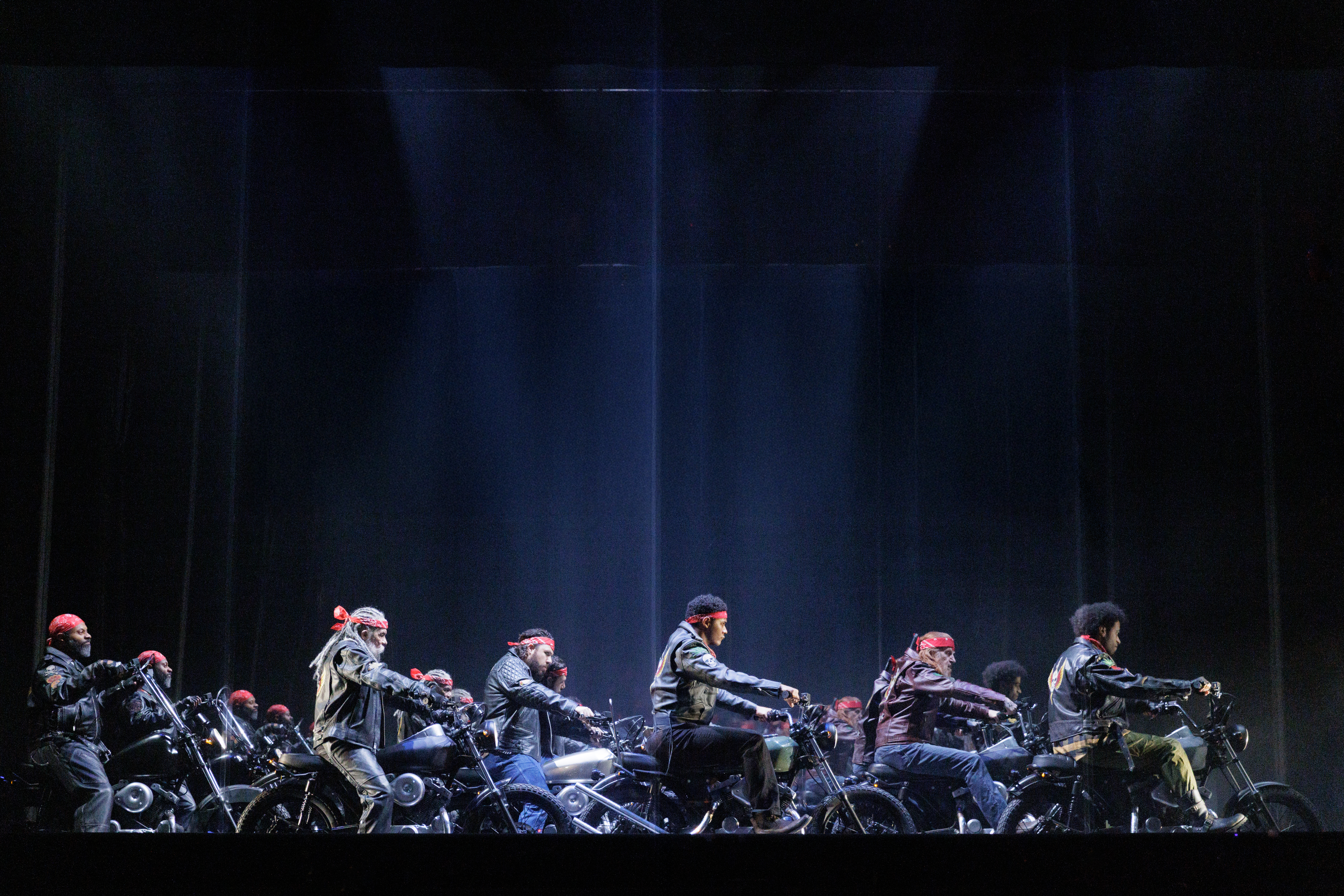
But I squabble about details that were probably outside the realm of stage size and financial possibilities, as the whole unwrapping, lit dynamically by Kimberly Purtell (Stratford’s Frankenstein Revived) with magnificent musical lead-ins composed delishedly by sound designer John Gzowski (Tarragon’s Post-Democracy), delivers a wise unwinding, conjuring up reflections of witches and the ghostly apparitions most dynamically. They register, even in the mirrored reflections of our world, with theirs. Through the abstract windowing, the witches feel like otherworldly, dumpster fire ghosts shapeshifting to great effect. And the flipping of the banquet barbeque and the return engagement of Banquo float forward, comically and heavily, materializing images and ideals of hierarchy and power, clad in leather-backed threats with large knives that vibrate with bloody death and violence. The vanishing of ghosts or the quadrupling creations of motorcycle armies that the reflecting surface gives off move and turn around the scenes, expanding or contracting like the overall scenic structures that flip with a switch from ‘no vacancy’ to the murderous alternative.
The schematic puzzle moves in and out, shape-shifting with intelligent paralleling, that keeps unpacking more and more inventive reformations, like the sharp use of the deadly lighting of the gaspump bbq by the trecherous murderers, played solidly by Dakota Jamal Wellman and Matthew Kabwe; the witty input of the paramedic (Dunn) after leaving the side of the mad queen; and most assuredly, the spectacularly clever use of the motel clerk/porter, superbly constructed by Maria Vacratsis (Soulpepper’s Mother’s Daughter). Her character fascinatingly plays both sides of the coin, being used as messenger and hostess knock-knock-knocking most brilliantly on the framing, while also sneaking in the wiretapping detective (Palermo) to bring down the house, and ultimately help usher in young Malcolm (Austin Eckert), the son and rightful heir to King Duncan (David Collins) and his motorized throne.
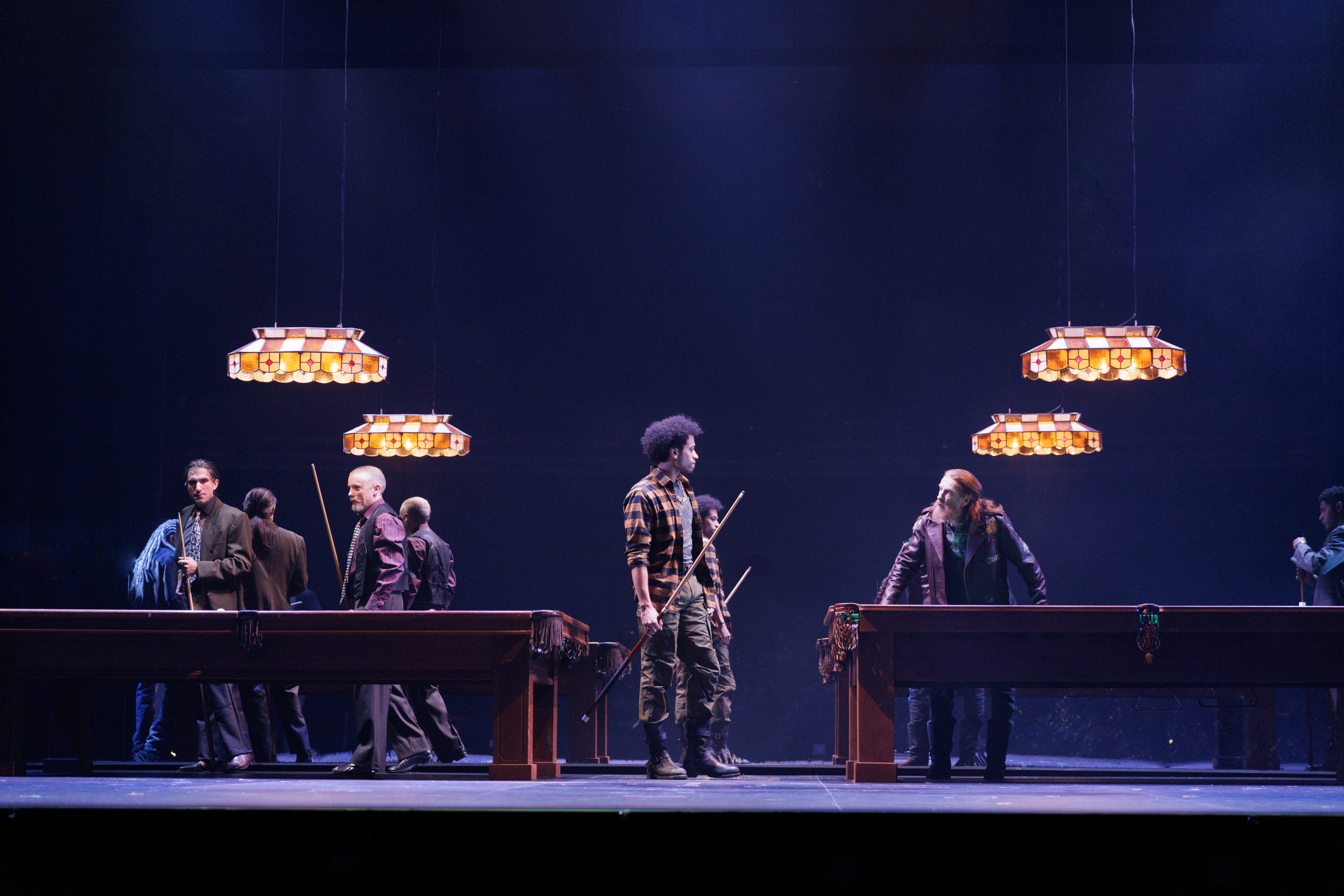
Eckert’s Malcolm does start out strong, delivering the required qualities that would infuse the steadfast Macduff, played cooly and carefully by Tom Rooney (Shaw’s My Fair Lady), with allegence, but once we rejoin with him in the secure locale of a distant pool hall, the force that was once vibrating in Malcolm seems to have faded, and been disrupted somehow. He doesn’t reflect the same level of determination, even with the arsenal hidden behind poles speaking volumes about what is to come. It’s noticeable, even within his chastising of the emotional Macduff as not rising to what he believes to be manly enough, before Macduff rightly counters his argument. But even then, the whole scene falters and remains disconnected and flat. The emotional truth and forceful energy seems to have been disarmed within the confines of the pool hall, before we return to the stand-alone headquarters of Macbeth, where we wait alongside him and few others to see exactly how Lepage has reimagined the movement of woods and the battle that will end with the beheading of our leading man, as the text would have it.
The amplification of numbers, thanks to the mirrored and deepening reflection of ourselves watching with earnest and apprehension, works its chainsaw magic on us, utilizing, with a great sense of urgency, our communal suspension of disbelief without hesitation. It’s a masterclass of inventiveness and smart deconstruction of the epic text of Macbeth, written by William Shakespeare in the year 1606, but feeling as relevant as those “Sons of Anarchy” dramatics. There are hints of the projected wisdom of director Jamie Lloyd and his powerfully unpacked and reworked Romeo & Juliet and his reimagining of Sunset Blvd, but without the obvious cameras running laps around the stage. Thankfully. But inside the unique framework, ideas, and concepts are all there, diligently worked out, through and through, elevating this leather-clad Macbeth with an urgency and druggy seediness that works better than anyone could have imagined. It doesn’t end feeling completely engaged to the text, moving with a slowness that doesn’t entirely fit the violent framing, but as driven most assuredly by a cast of pros delivering the language of Shakespeare with confidence and clarity, it shoots holes into anyone’s disgruntled complaints and stands upright, although somewhat exhausted as the curtain comes down.
For more go to frontmezzjunkies.com


As a stalwart of the Philadelphia theater scene, Theatre Exile opened its 30th Season with Gruesome Playground Injuries, a dark, tragicomedy by Rajiv Joseph. A two-hander told in eight non-linear scenes, it spans 30 years wherein two childhood friends, Doug and Kayleen, cross paths in the school nurse’s office, hospital rooms and clinics.The play asks the question as to why in order to relieve pain, we manage to inflict more pain on ourselves. Doug and Kayleen are simultaneously drawn to each other and repelled at the same time. Wanting to help each other, somehow they never can reach each other at the right time. This play had its Off-Broadway debut in January 2011 at the Second Stage Theatre in New York with its Off-Broadway revival in 2025 at the Lucille Lortel Theatre in Manhattan.

Jenna Kuerz, Daniel Burgess Photo by Paola Nogueras
Jenna Kuerzi is highly convincing as the emotionally damaged Kayleen. In going from ages eight to thirty-eight not only does her hair and her demeanor change, but she manages to change her vocal range as well. Prone to stomachaches and depression, we commiserate with her when we learn of her unhappy homelife. On the other hand, we have little pity for Doug, played by live wire Daniel Burgess, as he seems to bring on his own calamities. In every scene we see him with a new wound, scar or broken limb. Coming from a normal family, we can only surmise that he is a dare-devil who tries to defy the odds at every turn.
Directed by Deborah Block, the play moves along at lightning speed with the actors moving the set pieces and changing costumes onstage. The wonderful set by Colin McIlvaine, which utilizes a real monkey bars and swing, has an ethereal quality under the blue lighting by Drew Billau. It is a calm, blue zone where the two actors meet and share all the chaos going on in their lives. Sadly, because Doug always enters with some new trauma, he never does get to swing from those monkey bars. A baseball scoreboard is cleverly used to denote the ages of the actors in each new scene. However, since there are only eight scenes and in a baseball game there are nine innings, we are left hoping that there would be one more scene. But that is not a bad thing, as it means that we were fully invested in the characters and wanted to see more.
For tickets go to boxoffice@theatreexile.org Or Call 215-218-4022
Gruesome Playground Injuries
by Rajiv Joseph
Directed by Deborah Block
Running now through November 15
Theatre Exile
1340 South 13th Street, Philadelphia, PA

“I wouldn’t scoff if I were you.” A rather ambitious request, really, when you have just invited an audience to spend an evening with a vampire whose idea of subtlety involves an aerosol cloud, a bare chest and enough theatrical self-importance to fill the entire Transylvania countryside. The Grand Theatre has opened its 2026/27 season with Dracula: A Comedy of Terrors, a gloriously cheeky, fast-moving comedy that promises “life, death, and a hot guy who takes off his shirt a lot.” Horrifying, apparently, “one way or another,” and the production wastes very little time demonstrating just how seriously we should take that warning. The story begins, as it should, with a diary entry and centuries of evil and death hanging in the air. This is all before Jesse Gervais makes his grand entrance as the Count, emerging through a spectacularly excessive mist of aerosol spray that may well be doing permanent damage to the ozone layer. We are instructed to “hold your applause,” although that seems a rather unreasonable expectation when Dracula is clearly anticipating the room falling at his feet. “Alexa, turn down the music,” he commands, and soon the children of the night are howling on cue. I have rarely been so happy to surrender my dignity, or my neck, to an evening’s entertainment.

Jesse Gervais and Nathan Howe in the Grand Theatre’s Dracula. Photo by Dahlia Katz.
Adapted by Gordon Greenberg and Steve Rosen, and directed by Krista Jackson with a wonderfully feisty feel for the absurd, this is a production that takes its Gothic source material and gleefully bites into a slew of double entendres, wordplay, and outrageous theatrical business. The jokes come thick and fast, often arriving with such shameless confidence that there is barely time to recover before the next one lands. Renfield’s delighted declaration of “it’s my cheat day” after plucking a spider from Mina’s back and eating it is a particularly inspired moment of comic appetite. Mina’s particular combination of flat feet, low self-esteem and a rather impressive sex drive gives Constant Bernard (Theatre Aquarius’s Frozen) plenty of deliciously awkward territory to explore. “Raise your hand if you’re awkward at parties,” Mina asks with a thrust and a grin, and I suspect the response might be rather more enthusiastic than she expects. The production also knows the value of a well-placed local joke, taking some delightfully cheap shots at Stratford and Grand Bend along the way. Those regional jabs land with the added pleasure of recognizing that the production knows exactly where it is playing and isn’t afraid to have a little fun at our expense.
The five-person ensemble is a marvel of comic timing, physical agility, and quick-change wizardry, with every actor throwing themselves into the many characters and outrageous situations that come flying their way. Gervais (Punctuate! Theatre’s Strife) anchors the evening with his deliciously confident Dracula, all seductive swagger, pumped-up torso, and gloriously inflated self-regard. When he tells Jonathan Harker to “loosen up a bit,” the advice is taken with fabulously entertaining consequences. As Harker, Nathan Howe (CanStage’s 1939) hilariously rides in on a bumpy carriage with an exceptionally appealing, straight-laced innocence, before unveiling a whole new level of mischievous sex appeal once the Count has had his way with him. Bringing a whole heap of terrific energy and a wonderfully sharp edge, Reena Jolly (NTS’s Cabaret) finds the essential ingredient to Lucy, while Nora McLellan (Grand’s Godspell) delivers some misogynistic mischief in a whirlwind of physical comedy, quick transformations, and perfectly pitched absurdity as Dr. Westfeldt and Renfield. Bernard, however, is a particular delight with his wonderful comic presence as Mina (and many others). His performance really unleashes the full potential of the play, finding a particularly delicious vein of coquettish awkwardness and sharp comic timing. The cast’s rapid character swaps, entrances, exits, and sudden disappearances through the windows become an essential part of the joke. There is an impressive amount of precision beneath all that apparent chaos, and watching the performers keep the whole mad enterprise in motion is a considerable part of the pleasure.

Nora McLellan, Constant Bernard, Jesse Gervais, Reena Jolly, and Nathan Howe in the Grand Theatre’s Dracula. Photo by Dahlia Katz.
That sense of controlled mayhem extends into the production’s design, which gives the cast a playground worthy of all this theatrical misbehaviour. Joshua Quinlan‘s gothic set design consistently adds to the misty air of ridiculousness, while Joseph Abetria‘s costumes help the performers spin relentlessly between characters with delightful speed, causing laughter at every turn of the head and every change of wig. Those wigs and costume changes become part of the play’s silly comic rhythm, and Leigh Ann Vardy‘s lighting keeps the action alive as the stage tilts between its many moments of madness. John Gzowski’s original music and sound design add another layer of theatrical punctuation, giving the entrances and bursts of activity just the right heightened flourish. Nothing is allowed to sit still for very long, and Jackson (StratFest’s The Diviners) keeps the whole enterprise moving with a wonderfully mischievous confidence, allowing the cast to lean into the ridiculousness while maintaining the precision that a farce this frantic demands. And while I might selfishly have wished for a little more erotic tension between Gervais and Howe once their characters’ relationship takes its delicious turn, I was having far too much fun watching the whole company work its comic magic to hold that against them for long.
With this review arriving on Halloween, October 31, it seems only right to give Dracula: A Comedy of Terrors a little extra blood-curdling attention. This is a gloriously silly, sexy and wonderfully self-aware theatrical confection, a Halloween sugar rush of hairspray, mist, mayhem and exposed skin that knows exactly how much theatrical excess an audience can happily consume. Beneath all the outrageousness is a playful appetite for desire, identity, life and death, although I wouldn’t suggest arriving in search of the solemn Gothic atmosphere that made Bela Lugosi’s Count such an enduring screen presence. This Dracula has other priorities, and a rather more enthusiastic relationship with the aerosol can. The Grand has launched its season with a production that is thoroughly in on the joke, and the cast’s commitment to every absurd twist makes it a pleasure to be swept along. I may have arrived prepared for a little Gothic horror, but I was more than happy to surrender to this particular brand of Transylvanian trouble. So, if you find yourself feeling a little light-headed on the way out, don’t panic. It could be the blood loss. It could be the hairspray. Or perhaps you’ve simply been having a bloody good time.


 For more go to frontmezzjunkies.com
Broadway
The Final Voyage of Sir Patrick Stewart: From Shakespeare to the Stars, a Legendary Life Takes Its Last Bow


Sir Patrick Stewart, the commanding British actor who took Shakespeare into the stars as Captain Jean-Luc Picard in Star Trek: The Next Generation, died October 28 at his Los Angeles home. He was 86. His death followed a period of illness involving Alzheimer’s disease and Lewy body dementia. For generations of television viewers, he was the captain of the USS Enterprise. For theater audiences, he was something equally extraordinary: one of the great classical actors of his generation.
 There was something wonderfully improbable about Patrick Stewart becoming an international science-fiction icon. Here was a Yorkshire-born Shakespearean actor, with a magnificent baritone, an unmistakable bald head, and decades of classical training, suddenly entrusted with commanding a starship in the 24th century. Yet Stewart brought something to Star Trek that no amount of futuristic technology could manufacture: moral authority, intellectual curiosity, emotional restraint, and the conviction that civilization was worth defending.

By Ken Fallin
Long before the world knew Jean-Luc Picard, Stewart belonged to the theater.

Kate Fleetwood and Patrick Stewart in Macbeth. Photo by Manuel Harlan
Born July 13, 1940, in Mirfield, West Yorkshire, Stewart grew up in a working-class household marked by financial hardship and domestic violence. His discovery of Shakespeare came through an English teacher who recognized something extraordinary in the young boy. Theater offered Stewart more than an escape. It gave him a language through which to understand human nature, power, cruelty, tenderness, and the endless contradictions of being alive.

In King Lear
After training at the Bristol Old Vic Theatre School, Stewart began his professional career in repertory theater. In 1966, he joined the Royal Shakespeare Company, beginning an association that would define much of his artistic life. Over the following decades, he tackled the great classical repertoire, including Hamlet, The Tempest, Henry V, and Antony and Cleopatra. He was equally at home with Shakespeare’s monarchs, villains, lovers, and fools, finding psychological complexity where lesser actors might have settled for grandeur.

Patrick Stewart, left, and Ian McKellen, in Harold Pinter’s play “No Man’s Land, “ Photo by Joan Marcus
His Broadway debut came in 1971 in Peter Brook’s celebrated production of A Midsummer Night’s Dream, playing Tom Snout. It was an auspicious introduction to New York theater, although Broadway audiences would wait another two decades for his return.

In A Life In The Theatre
By then, television had made him a household name.
In 1987, Stewart assumed command of the USS Enterprise-D in Star Trek: The Next Generation, a role that would transform his career. His Captain Picard was unlike William Shatner’s impulsive, charismatic James T. Kirk. Picard was contemplative, diplomatic, disciplined, and deeply principled. He preferred reason to aggression, although he could deliver a command with enough force to make the entire bridge stand at attention.
The series ran for seven seasons, from 1987 to 1994, followed by feature films and, decades later, Star Trek: Picard, which returned Stewart to his most celebrated character from 2020 to 2023. Through Picard, Stewart made intelligence heroic and compassion an expression of strength. His portrayal helped establish The Next Generation as far more than a successful revival of a beloved franchise.

Waiting For Godot Ken Fallin
Yet even as Hollywood embraced him, Stewart never abandoned the stage.
 His return to Broadway in 1991 was particularly remarkable. Rather than arriving with a conventional star vehicle, he presented his own adaptation of Charles Dickens’s A Christmas Carol, performing the entire story himself. With little more than his voice, physical precision, and astonishing command of character, Stewart inhabited Scrooge, the ghosts, and an entire Dickensian population. The production earned him a Drama Desk Award for Outstanding Solo Performance and returned to Broadway in subsequent holiday seasons, becoming one of his signature theatrical achievements.
In 1995, he returned to Shakespeare on Broadway as Prospero in The Tempest, bringing his familiar authority to a character who understands both the seductions and limitations of power. He followed with Arthur Miller’s The Ride Down Mt. Morgan in 2000, Harold Pinter’s The Caretaker in 2003, and David Mamet’s A Life in the Theatre in 2010. These were not ornamental appearances by a television celebrity. Stewart continued to pursue challenging dramatic material, often portraying men whose confidence concealed vanity, vulnerability, or moral uncertainty.

Ken Fallin & Patrick Stewart & godot
His 2008 Broadway performance in Macbeth, directed by Rupert Goold, earned Stewart a Tony Award nomination for Best Actor in a Play. The production placed Shakespeare’s tragedy within a chilling totalitarian world, allowing Stewart to explore ambition, paranoia, and the psychological disintegration of a man consumed by power. It was a formidable reminder that beneath the reassuring presence of Captain Picard stood an actor capable of terrifying darkness.

Sir Patrick Stewart and Sir Ian McKellen
One of the great pleasures of Stewart’s later theatrical career was his partnership with his close friend Sir Ian McKellen. In 2013, the two appeared together on Broadway in repertory productions of Samuel Beckett’s Waiting for Godot and Harold Pinter’s No Man’s Land. Stewart played Vladimir in Beckett’s existential masterpiece and Hirst in Pinter’s elusive drama, demonstrating an exquisite command of comedy, melancholy, and the uncomfortable silences between words.
Their friendship became almost as celebrated as their performances. Whether appearing together onstage or delighting audiences with their playful public appearances, Stewart and McKellen embodied something increasingly rare: two towering classical actors who remained curious, mischievous, and gloriously unafraid of looking ridiculous.
Stewart also reached an entirely different generation as Professor Charles Xavier in the X-Men film franchise, beginning in 2000. Once again, he portrayed a leader whose greatest strength was not physical power but his belief in humanity’s potential. His performance opposite Hugh Jackman in Logan revealed a heartbreaking vulnerability, stripping away the character’s familiar authority to expose the frailty beneath it.
His film appearances also included Excalibur, David Lynch’s Dune, and Robin Hood: Men in Tights. His distinctive voice became an instrument in its own right, appearing in animation, narration, and comedy. He possessed the unusual ability to move from Shakespearean tragedy to irreverent humor without sacrificing an ounce of credibility.
Knighted by Queen Elizabeth II in 2010 for his services to drama, Stewart also used his public standing to speak against domestic violence, drawing upon painful experiences from his childhood. His 2023 memoir, Making It So, offered a candid account of his life, career, relationships, and the extraordinary journey from Yorkshire to international stardom.
He is survived by his wife, singer-songwriter Sunny Ozell, whom he married in 2013, and his two children from his first marriage.
There is a temptation, when remembering Patrick Stewart, to speak entirely in the language of Star Trek: the final voyage, the last command, the captain leaving the bridge. The imagery is irresistible, and Stewart himself understood the affection audiences held for Jean-Luc Picard.
But his legacy reaches far beyond the Enterprise.
He belonged to a generation of British actors for whom theater was not a steppingstone to celebrity but the foundation of an artistic life. Shakespeare taught him how to command language. Beckett taught him the eloquence of uncertainty. Pinter gave him the power of silence. Dickens allowed him to become an entire world of characters. Science fiction simply gave those extraordinary gifts a universe in which to travel.
Patrick Stewart did not become a great actor because he played Captain Picard. Captain Picard became a great character because Patrick Stewart played him.
For Broadway, the West End, the Royal Shakespeare Company, and the millions who followed him across the galaxies, his departure leaves an unmistakable silence.
The captain may have left the bridge, but the actor’s work remains.
Somewhere, in the vast imaginative universe he helped create, the Enterprise continues its voyage.


G.H. Harding
CARREY IS MISSING — When The Mask came out in 1994 and introduced us to Jim Carrey, we immediately knew he was an actor of extraordinary talent. Directed by the late Chuck Russell, it was just masterful in every way. It also introduced us to a new actress named Cameron Diaz.
To be honest, I began to think of him as the best comic-actor since Andy Kauffman and then he went onto to do Man On The Moon (directed by Milos Forman) about Kauffman. Again, just a superlative role for him and a great tale about the late-comic.
The Truman Show (directed by Peter Weir) showed audiences he had just a terrific range. Not only was it a tremendous story, but again just a terrific performance. Ed Harris wasn’t that bad either!
Dumb and Dumber and Liar, Liar were great, but then he did Eternal Sunshine of a Spotless Mind which for me, proved once and for all, where he was headed. Carrey was a thinker and probably much more so than audiences thought. He paints, he draws … a true renaissance man.
But of late he’s gone silent and many say he’s departed acting for good. Sure, there’s a Grinch movie every so often, but I suspect that’s more for the huge payday, than the content.
Some personal travails have followed and probably given him even more reason for pause. The Telegraph in the U.K. ran an interesting piece the other day, which made me think about him and how much I miss him.
Take a read: https://www.telegraph.co.uk/films/2026/10/26/hollywood-extrovert-jim-carrey-fade/
Come back Jim … soon!

Tim Rice and Andrew Lloyd Webber
WEBBER VS. RICE — Andrew Lloyd Webber and Tim Rice first gained worldwide prominence with their stupendous Jesus Christ Superstar opera. in 1971 It was good, dammed good, but there was a constant rumor that side 2 was side 1 backwards. The opera had Ian Gillan as JC and Yvonne Elliman as Mary Magdalene. There even was a movie in 1973; many stage productions and a pretty grand TV production several years back.
 The fact remains that it’s a staggeringly good play with some terrific music. Webber and Rice would split years later but it was recently announced they’d re-group for a new work called Sherlock Homes and the 12 Days of Christmas. It would have been their first collaboration in 40 years.
Rice told the Times on Wednesday (October 21) that his former partner’s songs had been “ditched” after Lloyd Webber allegedly withdrew his score. Webber claims that Rice’s contract called for more than Webber wanted to give. It’s also note worthy that Rice’s children are producing the play.
Whatever the true reasons, this re-collaboration would have been monumental. The two have enjoyed success beyond their wildest dreams and unfortunately, with this latest development, the work they did collaborate on we won’t hear.
The play’s debut is set for late next month. Here’s more from Broadwayworld.com: https://www.broadwayworld.com/article/Andrew-Lloyd-Webbers-Songs-Cut-From-Musical-Written-With-Tim-Rice-Ahead-Of-London-Run-20261022
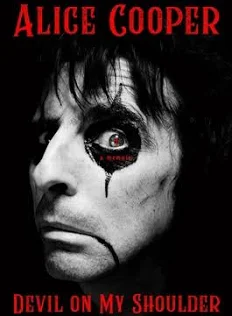 SHORT TAKES — We just got the new Alice Cooper memoir Devil On My Shoulder (Da Capo) and it looks like a great read. Stay tuned … Andy Burns from Toronto’s BiffBamPop did a superb Micky Dolenz interview. Take a read: https://biffbampop.com/2026/10/28/exclusive-interview-micky-dolenz-on-new-music-the-monkees-and-more/ … Beatles-engineer Phil McDonald has passed. From Mojo: https://www.mojo4music.com/articles/stories/the-making-of-all-things-must-pass/ … (Via Deadline) After running Star Wars for years, Kathleen Kennedy is now taking on the Olympics’ opening and closing ceremonies that aren’t anywhere near a galaxy far far away.
 In fact, with less than two years to go before LA28 kicks off on July 14, 2028 at both SoFi Stadium and the L.A. Memorial Coliseum, the former LucaFilm boss and now independent producer has to hit the ground running. As of today, multiple Oscar nominee Kennedy will take over Peter Rice’s old job as Head of Ceremonies and Content for the LA28 Olympic and Paralympic Games … RIP Kenny McPherson
NAMES IN THE NEWS — Man Parrish; Mark Berry; Raul Rodriguez; Tom & Lisa Cuddy; Ernesto Baldaro; Vinny Rich; Melissa Davis; Carol Ruth Weber; Mark Berry; Steve Thompson; Nile Rodgers; Maureen Van Zandt; Joel Diamond; Robey; Tommy Mottola; Daryl Hall; Ace Huttonson; Thomas Jay; Mike Wilkinsen; Kayla Espiritu; John Hughes; Bruce Glikas; Stormy; Vinny Rich; and BELLA!
Images on this page have been licensed under the Creative Commons Attribution-Share Alike 4.0 International license
Broadway
Theatre News: Broadway Gets Wonderful, Stella Cole Gets Happy and My Favorite Year Gets Another Year

Broadway is heading into the holidays with a little nostalgia, a lot of star power and several intriguing returns to the past.
Speaking of Broadway voices, apparently even The Gilded Age cannot resist Christmas.
Audra McDonald, Christine Baranski, Carrie Coon, Kelli O’Hara, Donna Murphy and other members of HBO’s lavish period drama have joined songwriter and producer Desmond Child for Voices of The Gilded Age: The Christmas Album, arriving November 6 through Concord Theatricals Recordings.
Among the more intriguing tracks is Stephen Sondheim’s exquisite “I Remember” from Evening Primrose, performed by McDonald, Murphy and O’Hara—a combination of voices that alone makes the album worth noticing. Carrie Coon and Morgan Spector narrate Clement Clarke Moore’s “‘Twas the Night Before Christmas” throughout the recording. Child has also contributed two original songs: “The World Needs Some Christmas,” sung by Ben Ahlers, and “It’s Been Real,” performed by Murphy.
 Lisa Rinna, Harry Hamlin, Megan Hilty, Andrew Rannells and Tituss Burgess are all Broadway-bound in It’s a Wonderful Life: A Live Radio Play, making its Broadway debut at the Broadhurst Theatre. Performances begin November 4, with opening night set for November 18, and the limited engagement running through January 3.
Directed by Jerry Zaks, Joe Landry’s 1996 play takes Frank Capra’s beloved Christmas story and returns it to the era in which George Bailey first captured America’s imagination. Rather than recreating Bedford Falls literally, the production unfolds inside a 1940s radio studio, where five actors, a Foley artist, holiday music and the mechanics of old-fashioned broadcasting bring the story to life.
Rannells takes on George Bailey, with Hilty as Mary Bailey, Burgess as Clarence, Hamlin as the formidable Mr. Potter and Rinna as Violet. It is an unusually delicious collection of personalities for material that has become nearly sacred Christmas territory, and Zaks certainly knows his way around both comedy and Broadway stars.
The play was inspired by Philip Van Doren Stern’s short story The Greatest Gift, which became the basis for Capra’s 1946 film. The Broadway production features sets and costumes by Santo Loquasto, lighting by Kenneth Posner and sound by Palmer Hefferan, with Andy Einhorn serving as musical director.

Stella Cole
Meanwhile, Maybe Happy Ending is getting a temporary new resident at the Belasco. Jazz vocalist Stella Cole will make her Broadway debut as Gil Brentley from October 20 through November 15, stepping in during original cast member Dez Duron’s month-long absence. Duron returns November 17.
Cole is an interesting choice precisely because Gil is not simply another musical-theatre role. The character belongs to the romantic world of classic jazz, and Cole has built her career interpreting exactly that repertoire. Her recordings and online performances have introduced standards to a younger audience, while her live appearances have taken her from Carnegie Hall and Madison Square Garden to TODAY, Live with Kelly and Mark and Tamron Hall. Her third album, Imagination, arrives October 30, right in the middle of her Broadway run.
The Tony-winning musical currently stars Zachary Noah Piser as Oliver and Hannah Kevitt as Claire, with Marcus Choi as James. For one month, however, audiences will get the rather charming collision of a young singer devoted to an earlier musical era appearing inside one of Broadway’s most technologically imaginative contemporary musicals.
Finally, a musical that has always seemed to deserve another look is getting one.

Ben Levi Ross
Asolo Repertory Theatre is developing a newly revised My Favorite Year, the Stephen Flaherty-Lynn Ahrens-Joseph Dougherty musical based on the wonderful 1982 film. Josh Rhodes is directing a New York workshop featuring Chris Hoch as Alan Swann, Ben Levi Ross as Benjy Stone, Julie Benko as Alice Miller, Marina Kondo as K.C. Downing, Brad Oscar as King Kaiser and Beth Leavel as Belle Carroca Steinberg.
The company also includes Orville Mendoza, Briana Carlson-Goodman, Robert Anthony Jones, Lyrica Woodruff, Stuart Zagnit and Rob Tucker.
Set in 1954, My Favorite Year follows young television comedy writer Benjy Stone, who receives the assignment from hell disguised as the opportunity of a lifetime: keep drunken, swashbuckling movie idol Alan Swann sober, functioning and out of trouble long enough to appear on a live television broadcast.
The musical originally opened at Lincoln Center Theater in 1992 and, despite a score by Ahrens and Flaherty and a Tony-winning performance by Andrea Martin, had a brief Broadway life. More than three decades later, Ahrens, Flaherty and Dougherty have returned to the material with new work developed in collaboration with Asolo Rep, which previously premiered the team’s Knoxville, later retitled All the Way Home.
There is something rather appealing about My Favorite Year getting another year. Broadway history is filled with musicals that weren’t quite finished with us when Broadway decided it was finished with them. Sometimes the most interesting second act happens decades after the first one closed.


My View: Photos… “Here’s To Life”….Ann Hampton Callaway at 54 Below

The Curious Case of Benjamin Button: A Heartbreaking Reminder That Love Should See Beyond Appearances

A Century of Wonder: Macy’s 100th Thanksgiving Day Parade Takes New York to Extraordinary Heights

Theatre News: Broadway’s Next Big Stars, a New Home for Creativity, and Some Very Familiar Faces

Prince Mario Max Schaumburg Lippe: Bal Impérial: A Magnificent Celebration of French Heritage!

Google Releases Gemini 4 Hydrogen, and It Changes the Math on Business AI Costs

Prince Mario-Max Schaumburg-Lippe: How To Resolve The Microsoft Outage and Outlook Outage. Ending The Problems, We Got The Troubleshooting For You!

Live From The Hotel Edison Times Square Chronicles Presents Shana Farr And Craig Rubano Talking All Things Jerome Kern
My View: Photos… “Here’s To Life”….Ann Hampton Callaway at 54 Below
The Curious Case of Benjamin Button: A Heartbreaking Reminder That Love Should See Beyond Appearances
A Century of Wonder: Macy’s 100th Thanksgiving Day Parade Takes New York to Extraordinary Heights
Theatre News: Broadway’s Next Big Stars, a New Home for Creativity, and Some Very Familiar Faces
Prince Mario Max Schaumburg Lippe: Bal Impérial: A Magnificent Celebration of French Heritage!
Google Releases Gemini 4 Hydrogen, and It Changes the Math on Business AI Costs
Prince Mario-Max Schaumburg-Lippe: How To Resolve The Microsoft Outage and Outlook Outage. Ending The Problems, We Got The Troubleshooting For You!
Live From The Hotel Edison Times Square Chronicles Presents Shana Farr And Craig Rubano Talking All Things Jerome Kern
-

 Cabaret5 days ago
My View: If The Photos On The Walls Of Birdland Could Talk…”There Has Never Been A Night Like Last Night” Tedd Firth’s 50th Birthday
-

 Book Reviews5 days ago
The Girl’s Guide to Guts: Chloe Melas and Judy Batalion Are Breaking the Silence on Women’s Health
-

 Entertainment5 days ago
Prince Mario-Max Schaumburg-Lippe: Why You Should Start Your New York City Christmas Trip RIGHT NOW in November!
-

 Broadway4 days ago
A Second Look at Schmigadoon!: New Faces, Sharper Comedy, and a Company Finding Its Rhythm
-

 Broadway5 days ago
Broadway’s Got Guts! Part 1 Offers a First Look at Dolly as Broadway Celebrates Medical Pioneers
-

 Celebrity5 days ago
The Glorious Corner
-

 Entertainment3 days ago
Prince Mario-Max Schaumburg-Lippe New York City – Best Museums For Free – And They Are Americas Best!
-

 Entertainment4 days ago
Prince Mario-Max Schaumburg-Lippe: NYC’s Best Luxury Spas, Pools, Saunas and Cold Plunges!