
Family
Pedestrian Accident Attorney in San Diego: 9 Questions to Ask Before Hiring One


Most people hire the first firm that answers the phone. That is understandable after a serious injury, and it is also how good claims end up undervalued. Consultations in San Diego are free and firms expect to be interviewed, so treat the meeting as one. These nine questions separate a firm that genuinely handles pedestrian claims from one that treats yours like a rear-end collision with a bigger hospital bill.
Question 1: How many pedestrian cases have you handled, specifically?
Car crash volume does not translate. Pedestrian claims turn on sight lines, lighting, crossing behavior, and vehicle speed rather than skid marks and property damage. Listen for: real examples and named corridors. Firms with a dedicated pedestrian accident attorney in San Diego practice, such as HHJ Trial Attorneys, cite specific county data, including the eight corridors where roughly 30 percent of these crashes happen. Long-established firms such as CaseyGerry can point to decades of similar files.
Question 2: Will you retain a reconstruction expert, and when?
Vehicle damage is repaired, video is overwritten, and signal timing records get purged. Listen for: a firm that talks about preservation letters and scene inspection in the first weeks, not after the demand is rejected.
Question 3: Who will actually work on my file?
You may meet a partner and never speak to one again. Listen for: a named attorney and a named case manager, plus a straight answer on response times.
Question 4: How will you handle the claim that I crossed outside a crosswalk?
Since the Freedom to Walk Act took effect in 2023, crossing outside a crosswalk is no longer routinely ticketed in California, but insurers still raise it to argue comparative fault and cut the payout. Listen for: a concrete plan, usually driver speed analysis, visibility distance, and whether the driver was distracted.
Question 5: Could a government entity share responsibility?
Faded markings, a burned-out streetlight, an obstructed sign, or a badly timed signal can put the city or county in the case. Listen for: awareness that claims against public entities generally require a government claim within six months, not the usual two years.
Question 6: Have you looked at my own auto policy?
Many pedestrians never think of this. In California, uninsured and underinsured motorist coverage on your own auto policy applies when you are struck as a pedestrian, and it often covers household family members too. Listen for: a firm that asks for your declarations page at the first meeting.
Question 7: What exactly are your fees and costs?
Under Business and Professions Code 6147, a contingency agreement must be in writing, must state the rate, must explain how costs affect your net recovery, and must state that the fee is not set by law and is negotiable. An agreement missing those elements is voidable by the client. Listen for: a clear percentage, whether it rises if suit is filed, and who advances expert costs.
Question 8: How do my medical bills get handled meanwhile?
Unpaid bills going to collections while a case is pending is one of the most common complaints injured people have. Listen for: a firm that coordinates health insurance, hospital liens, and treatment on a lien basis where needed, and that explains how those liens get negotiated down before you see your share.
Before you sign anything
Take the fee agreement home and read it. Ask for the answers to questions 5, 6, and 7 in writing. Interview two firms rather than one, since the difference in approach usually becomes obvious side by side.
Pedestrian injuries are among the most severe on San Diego roads, and the first offer rarely reflects future surgeries, lost earning capacity, or long-term care. HHJ Trial Attorneys and the other established firms in the county all offer free consultations, so asking these nine questions costs you nothing but an hour. Ask them before the insurer’s deadline pressure starts, not after.


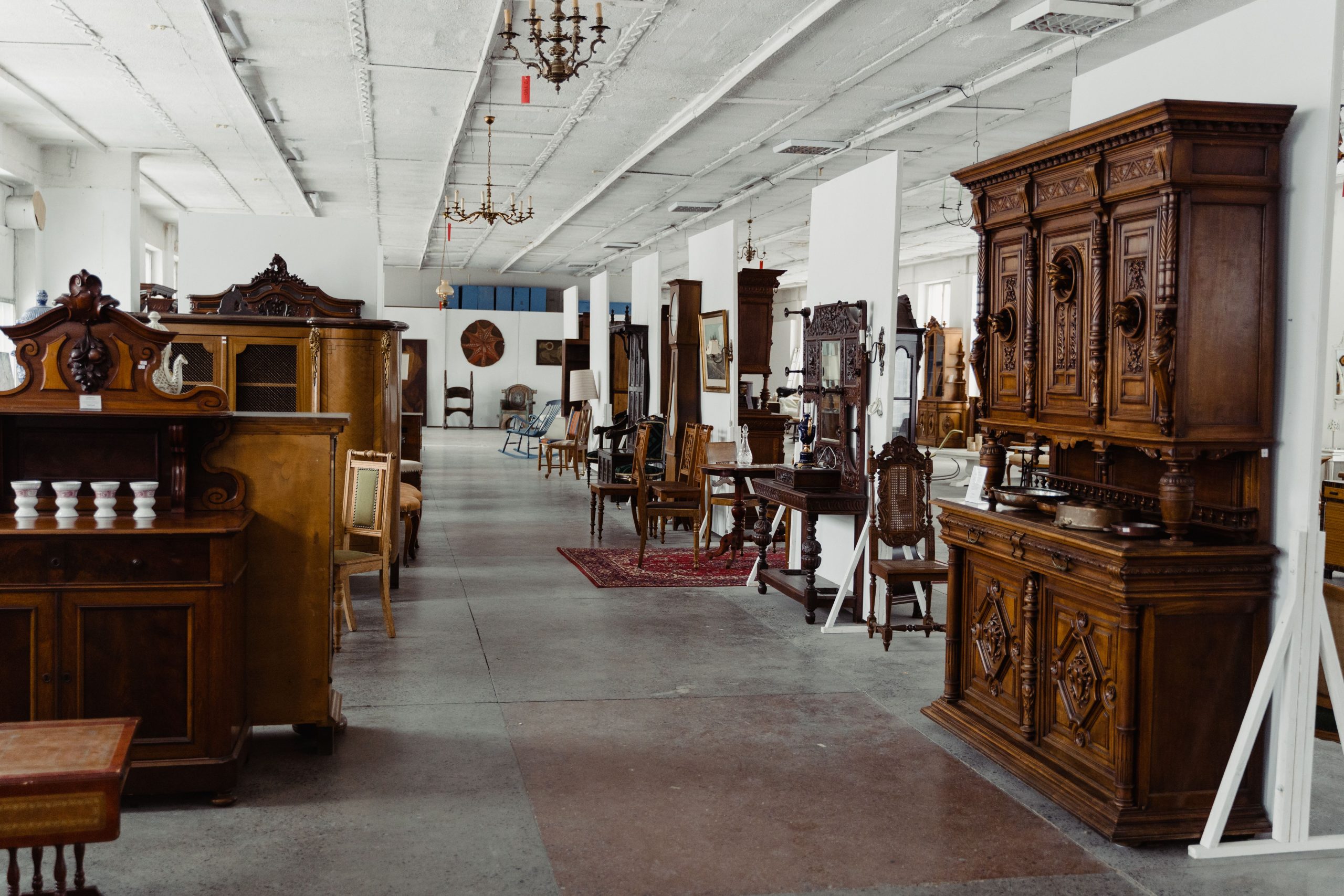
Big-box showrooms once dominated furniture shopping because they offered a wide selection of products in one location. Today, shoppers expect a more focused experience, clearer design direction, and faster answers about size, materials, delivery, and fit.
Modern furniture buyers also compare options online before visiting a store, which changes the value of a large sales floor. These shifts explain why specialized retailers are gaining attention in South Florida and beyond, beginning with the way shoppers define useful selection.
Selection Matters More Than Floor Space
A large showroom can display hundreds of items, yet quantity does not guarantee a useful choice. Shoppers often need furniture that suits a specific room size, design style, and daily routine.
Specialized retailers organize collections around modern living, dining, bedroom, outdoor, and office spaces. That structure reduces visual noise and helps customers compare related pieces without walking through unrelated departments.
For local shoppers, top modern furniture stores in Fort Lauderdale, FL, provide a practical starting point for comparing modern sofas, dining tables, bedroom furniture, and outdoor pieces in one regional search.
Modern Shoppers Research Before Visiting
Furniture shopping now often begins with measurements, room photos, and online product research. A shopper can check dimensions, review available categories, and narrow a style preference before entering a showroom.
That preparation changes the purpose of an in-person visit. Customers need to inspect comfort, scale, finish, and construction rather than browse without a plan. A focused store supports this process by presenting coordinated collections that make comparisons easier.
The online-to-store connection also reduces wasted trips. Shoppers can identify whether a retailer carries the needed category before driving across town. This matters in South Florida, where traffic and distance influence how people schedule showroom visits.
Coordinated Rooms Solve Practical Problems
Big-box stores often present individual products across separate departments. That approach forces shoppers to imagine how unrelated pieces will work together at home.
Modern furniture specialists show how a sofa relates to a coffee table, media unit, rug, and lounge chair. Dining areas receive the same treatment through coordinated tables, chairs, buffets, lighting, and accessories. These arrangements help customers judge proportion before making a purchase.
Room coordination also limits expensive mistakes. A dining table that looks appropriate online can overwhelm a small room. A sectional can block walking paths, while a low media unit can create awkward sightlines. Seeing related pieces together gives shoppers better context.
Service Now Includes Planning and Delivery
Furniture purchases involve more than choosing a silhouette. Customers need information about availability, delivery timing, installation, financing, and room placement.
A specialized showroom can address those details during the same conversation as style and sizing. The Fort Lauderdale showroom listed on the inspected MH2G page includes indoor furniture, design services, and categories for living, dining, bedroom, outdoor, office, and decor needs. The page also states that in-stock items receive fast delivery and that design consultants are available through chat.
Those services answer practical questions that product rows cannot solve. A shopper can discuss a room plan, confirm measurements, and arrange delivery with fewer handoffs.
Local Access Beats Generic Browsing
A regional showroom provides information that national websites cannot always supply. Local shoppers can assess traffic, parking, delivery coverage, and appointment needs before visiting.
The inspected page lists a Fort Lauderdale location on North Federal Highway, along with weekday, Saturday, and Sunday showroom hours. It also identifies surrounding service areas such as Pompano, Boca Raton, Weston, and Palm Beach. These details help shoppers plan a visit around work, construction schedules, and delivery requirements.
Local access also makes follow-up simpler. Customers can return to review a finish, confirm a measurement, or discuss a replacement piece without starting the search again.
Price Comparison Now Includes Total Value
A lower sticker price does not always produce a lower final cost. Shoppers must consider delivery charges, installation, availability, financing terms, and the cost of replacing poorly sized furniture.
Big-box stores often compete through broad inventory and frequent promotions. Specialized retailers compete through more relevant collections, room planning, and stock visibility. Customers can compare those factors instead of judging price alone.
The inspected MH2G page offers financing for up to 36 months with interest-free terms. Buyers should confirm current eligibility, exact terms, delivery fees, and installation details before ordering.
Big-box showrooms remain useful for broad browsing, but modern furniture shoppers increasingly value relevance, room coordination, local access, and clear service details. A focused showroom reduces the time spent sorting through unrelated products and gives customers better context for each decision.
Before visiting, shoppers should measure the room, photograph existing finishes, list required pieces, and confirm inventory or delivery information. That preparation turns a showroom trip into a targeted design appointment rather than another long search.
Food and Drink
Sunday Brunch With Prince Mario-Max: A Royal Feast at The Parliament and a Century of New York Elegance


There is something rather wonderful about discovering that a restaurant you have admired for years is even better when you finally sit down to enjoy a proper meal. For the second installment of my Sunday Brunch series with Prince Mario-Max, we headed to The Parliament, located at 557 Lexington Avenue at 50th Street, inside The Benjamin Royal Sonesta New York. Having attended several events at The Parliament, where the food was consistently spectacular, I had long wanted to review the restaurant. When I missed The Benjamin’s centennial celebration kickoff, brunch seemed the perfect way to make up for lost time. And what a delicious decision that turned out to be.

 The timing could hardly have been more appropriate. The Benjamin Royal Sonesta is beginning a year-long celebration leading up to its 100th anniversary in 2027, honoring a century of New York architecture, hospitality and history. Originally opened in 1927 as the Hotel Beverly, this Midtown landmark was designed by Emery Roth, the celebrated architect whose buildings helped define the Manhattan skyline. Its neo-Romanesque design, distinctive octagonal tower and sculptural owls are reminders of an era when New York buildings were created not simply to occupy space, but to make a statement.
 The hotel’s architectural significance extends well beyond its elegant exterior. Georgia O’Keeffe immortalized the building in her 1929 painting New York, Night, capturing its illuminated presence against the Manhattan skyline. Designated a New York City landmark in 2017, The Benjamin underwent a $25 million renovation completed in 2024, refreshing its accommodations while preserving the residential sophistication that has distinguished it for nearly a century. The property was subsequently named Hotel of the Year by the New York chapter of the Hospitality Sales and Marketing Association International in 2025.

 The Benjamin’s history is filled with wonderfully New York characters and establishments. Kaufman Pharmacy, which opened in the building in 1946, became a Manhattan institution, while Kenny’s Steak Pub, established in 1961, attracted New York Giants players and hosted NFL Pro Football Luncheons. Television personality Robert Q. Lewis also called the hotel home, reportedly staging publicity photographs on the terrace of his Suite 18A. These are the details that make a building more than a landmark. They give it a personality.

 The centennial festivities began with an October reception in partnership with Untapped New York and Robyn Roth-Moise, Emery Roth’s great-granddaughter, offering a look at the architect’s legacy through archival photographs, original drawings and historical artifacts. Throughout 2027, guests can look forward to special experiences inspired by the hotel’s past, including terrace tea recalling a 1927 advertisement, historically inspired cocktails at The Parliament and even a commemorative anniversary pillow joining the hotel’s celebrated pillow menu. Leave it to a grand New York hotel to understand that history should be experienced as well as admired.
 But back to brunch, because the food deserves its own standing ovation.
 We began with a $7 cold brew and $7 hot tea, and I also sampled a mocktail made with Passionfruit and ginger beer ($15).
 Prince Mario-Max, who has a particular affection for fresh fruit, ordered the Fresh Cut Seasonal Fruit ($16), presented with clover honey, mint and an extraordinary fresh apple sorbet. The presentation resembled an elegant sundae, but it was the sorbet that stole the show. Light, refreshing and bursting with apple flavor, it was out-of-this-world delicious. It takes considerable imagination to make a fruit course memorable, and The Parliament accomplished exactly that.

Served the way he likes it
For his main course, the Prince selected the Smoked Salmon Benedict ($28), featuring Catsmo smoked salmon, spinach, a cage-free egg, hollandaise, Parmesan and breakfast potatoes. It was a sophisticated interpretation of a brunch classic, with the richness of the salmon and hollandaise balanced by the spinach and Parmesan.
 I chose the Golden Vanilla French Toast ($21), accompanied by warm strawberries, caramelized banana, hazelnut crumble and whipped cream. Now, French toast is hardly an unfamiliar dish, but this was something special. The fruit brought warmth and sweetness, the hazelnut crumble added texture, and the entire creation was indulgent without losing its elegance. It was so delicious that after I finished mine, Prince Mario-Max ordered one for himself. There is no greater endorsement of a dish than watching your dining companion abandon all restraint and order exactly what you just enjoyed.
 I also ordered the Thick Cut Bacon ($15), although calling it bacon almost seems inadequate. This was closer to a steak, substantial, beautifully prepared and utterly satisfying. Anyone accustomed to a few thin, forgettable strips on the side of a breakfast plate is in for a delightful surprise.
 Since the Prince had decided that a second entrée was absolutely necessary, our wonderful server, Rezour, brought me the Almond Pot de Crème ($18), with smoked vanilla bean and citrus. This dessert was sheer perfection. Topped with vanilla-caramelized mandarin oranges and featuring the unmistakable richness of fresh vanilla bean, it had a wonderfully smooth texture and a citrus finish that brought the entire meal into balance. After the richness of brunch, it was precisely what I wanted without having known I wanted it.
Then there was the service. Rezour was exceptional, delivering what I can only describe as six-star hospitality. Attentive, gracious and genuinely invested in making the experience memorable, Rezour exemplified the kind of service that distinguishes a lovely meal from an occasion worth writing about.
Special thanks also go to Ivan and Misfittoys for arranging our visit at the last minute. Their efforts made this second installment of Sunday Brunch with Prince Mario-Max an especially delightful experience.
I should confess something. Breakfast has never been my favorite meal, and the prospect of getting up early on a Sunday has never filled me with enthusiasm. I generally believe Sunday mornings were invented for sleeping in, not making reservations. But The Parliament has me seriously reconsidering that philosophy. Between the remarkable French toast, unforgettable apple sorbet, substantial bacon, exquisite dessert and exceptional hospitality, I found myself thinking that perhaps Sunday mornings deserve a second chance.
As The Benjamin Royal Sonesta prepares to celebrate a century of New York history, The Parliament offers a delicious reminder that great hospitality is not merely about preserving the past. It is about creating experiences people will remember long after the plates have been cleared.
And if Prince Mario-Max ordering a second French toast is any indication, this particular brunch was a royal success.
The Parliament, 557 Lexington Avenue at East 50th Street, New York City. Weekend brunch is served Saturday and Sunday, 8 a.m.–2 p.m. Also open for
Breakfast
Monday – Friday, 7am – 10:30am
Lunch
Mon – Fri, 11:30am – 3pm
Dinner
Mon – Sat, 4pm – 10:30pm
Sunday, 2pm – 9pm *limited bar menu
Bar Hours
Mon – Sat, 11:30am – 12am
Sunday, 12pm – 9pm

Part Two of Four — Dental Tourism: The Price of a Beautiful Smile Could Be Far More Than You Bargained For
There is something profoundly wrong with a healthcare system in which saving your teeth can cost as much as a luxury automobile. I have since thought that I have bought a Ferrari and when you think about it you drive this car 24/7.
So far, my dental treatment has cost $41,000. I have just learned that I need another procedure, adding approximately $13,000 to the bill. That brings my total to $54,000. Fifty-four thousand dollars. For my mouth. Sometimes I think it takes a village if not a country to raise me. All I have to say is Thank-God for friends.
Here is the part nobody seems to discuss enough: you have to come up with the money before the work is done. It is not as though most people have an extra $54,000 sitting in a checking account, waiting for a dental emergency. Yet when your teeth are deteriorating, infections are threatening your health, and treatment can no longer be postponed, what exactly are you supposed to do?
That is how dental tourism begins to look attractive.
I seriously considered Turkey. I also looked at Portugal. In Turkey, I was looking at a price of approximately $18,000 for the extensive work I needed. Compared with $54,000 in America, that represents a difference of $36,000. Thirty-six thousand dollars is not pocket change. It is enough to change someone’s life.
Now let’s get to the reality and really do the math. Hypothetically, Fourteen round-trip flights from New York to Istanbul, at approximately $900 each, would cost $12,600. Add $5,250 for hotels, another $2,100 for meals and transportation, and suddenly I am spending nearly $20,000 just getting back and forth. But here’s where the supposed bargain becomes even more questionable. If each of those fourteen dental visits carries a price tag of $4,000 to $5,000, that’s another $56,000 to $70,000 in dental expenses. My total would climb to approximately $76,000 to $90,000, assuming those charges replace the original $18,000 estimate. If they are additional, the figure becomes a staggering $94,000 to $108,000. Compare that with the $54,000 my treatment cost in America. Suddenly, dental tourism doesn’t look like such a bargain. Of course, an overseas clinic might consolidate treatments into fewer visits, but that raises another question: how long would I have to remain in another country, waiting for my mouth to heal? What happens when something goes wrong after I return home? The advertised price is only the beginning of the story. The real cost is what it takes to finish the treatment safely.
I want to tell you something that I learned, the price of dental work is not the same as the cost of completing dental treatment.
When I first considered traveling overseas, I was thinking about the procedure itself. What I wasn’t fully considering was everything that happens before, during, and after that procedure.
I have already been to the dentist nine times. I still have five appointments ahead of me. Fourteen visits in total, assuming nothing else needs attention. Fourteen. Imagine trying to manage that from another country.
Now, I am not suggesting that every overseas treatment plan requires fourteen separate international trips. Many dental tourism clinics organize multiple procedures into longer visits, followed by a return trip months later. However treatments required repeated assessments, adjustments, healing periods, and additional work. That is never really discussed. It is not one appointment, one procedure, and one triumphant flight home.
If I had attempted to reproduce my current schedule through separate overseas visits, the travel alone would have been absurd.
For a case as complicated as mine, I would have needed to consider staying abroad for weeks, possibly longer, depending on the procedures and healing required, because it would have been fatal if I just came and went.. Some stages of reconstruction cannot safely be rushed into a single week, let alone a month. Bone grafting, implants, infection control, and final restorations may require months between stages.
Then there is the question nobody wants to ask while looking at glossy photographs of perfect smiles. What happens if something goes wrong? Suppose an implant fails. Suppose an infection develops. Suppose your bite is wrong, a restoration breaks, or the work simply doesn’t fit properly. Who fixes it?
A clinic overseas may offer a warranty or promise corrective treatment, but that doesn’t necessarily include airfare, accommodation, lost income, or the expense of another trip. A guarantee is only as useful as your ability to return and have the problem corrected.
You may discover that finding a dentist at home willing to take over someone else’s complicated reconstruction is difficult. American dentists are not universally unwilling to treat patients who have received care abroad, but some decline to assume responsibility for unfamiliar implant systems, incomplete records, or restorations they did not design. Others will provide emergency treatment but require a new assessment and charge separately for corrective work. If you thought the first part was expensive, now the costs really climb.
You can find yourself caught between two countries, two dental practices, and two sets of expenses, with neither side responsible for the entire outcome. That is a frightening position when the problem is inside your mouth.
In my case, the situation was even more complicated. I had fourteen dental infections. My health had deteriorated to the point where several organs were already giving me problems. I was exhausted beyond anything I had previously experienced. I had a persistent cough that had lasted more than three years. My body was struggling. Traveling internationally for extensive dental surgery under those circumstances would have been a terrible gamble.
What I needed was not simply someone who could give me new teeth. I needed professionals who could recognize the seriousness of the infections, coordinate treatment, respond to complications, and follow my recovery closely.
One of the most important moments in my entire journey occurred when a dentist recognized that an infection required urgent attention. Within two hours, I was referred to a maxillofacial surgeon because of concern about dangerous spread toward my brain. Imagine being in another country when that happens.
It is not that excellent dentists do not exist in Turkey, Portugal, Mexico, Costa Rica, Hungary, or the many other countries attracting Americans seeking affordable treatment. They absolutely do. Nor is every American dentist excellent simply because the practice is located in the United States. The question is whether a particular treatment plan is appropriate for a particular patient, especially when that patient has complicated medical problems, active infections, or extensive reconstruction ahead.
Dental tourism is frequently marketed through the language of transformation. Before-and-after photographs. Beautiful white teeth. Luxury accommodations. Airport transfers. Sometimes an entire vacation built around a new smile. It sounds wonderful, but dentistry is not a souvenir you bring home in your suitcase.
A mouth is a living, changing part of the body. Gums heal, bone remodels, implants need time to integrate. Temporary restorations may need adjustments. Infection can delay procedures. Even a carefully planned reconstruction may require additional treatment once the dentist discovers what is happening beneath the surface. I know that last part particularly well.
I thought I understood what my treatment would cost. Then I learned I needed something else. Another $13,000. That is the reality of complicated dental care. You can begin with an estimate, but the mouth sometimes has other plans.
If you are thousands of miles away from the dentist who performed the original work, those surprises become far more difficult to manage.
There is another issue that concerns me: the pressure to complete extensive treatment quickly. Some clinics offer accelerated full-mouth transformations, and certain procedures can indeed be performed efficiently when the patient is an appropriate candidate. Not every mouth is ready for immediate implants or permanent restorations. Active infections, inadequate bone, uncontrolled medical conditions, or the need for grafting can make a staged approach necessary. A schedule designed around a return flight should never dictate the medical treatment.
Patients also need to understand exactly what they are purchasing. Does the quoted price include extractions, infection treatment, bone grafts, sinus lifts, temporary teeth, implants, abutments, final restorations, imaging, medication, and follow-up appointments? What happens if the surgeon discovers additional bone loss? Are the implant components available in the United States? Will the clinic provide complete records in English? Who pays if the treatment fails?
These are not small details. They can determine whether an apparent bargain remains a bargain.
I think about the people who travel because they genuinely have no other choice. They are not foolish. They are not irresponsible. They are trying to obtain treatment they cannot afford at home. That is what makes this situation so infuriating.
Why should someone who has worked their entire life have to choose between draining their savings and flying thousands of miles to save their teeth? Why is extensive dental reconstruction financially out of reach for so many Americans? Why do we continue treating dentistry as though it were an optional luxury when serious oral infections can threaten a person’s health?
We have created a system in which the financial barrier to getting treatment can become almost as frightening as the disease itself.
I understand the temptation of that $18,000 estimate, which for me was already high. Believe me, I understand it. I would have loved to save $36,000. I had to be extremely creative in coming up with that amount. The Barry Manilow song “Friends” is now imprintedi in my head, because they came through and helped.
Looking at my situation now, I realize that the lower price would not necessarily have represented a lower cost. I needed fourteen appointments. I needed close monitoring. I needed a surgeon. I needed the ability to return when something changed, without purchasing another airline ticket or booking another hotel.
Most importantly, I needed treatment that accommodated the condition of my entire body, not just the appearance of my teeth.
For someone needing a straightforward procedure, with excellent medical health, a thoroughly researched clinic, and a realistic follow-up plan, treatment abroad may work well. For the rest of us, anyone contemplating major reconstruction, especially while dealing with serious infections or other illnesses, I would urge extreme caution.
Then there is the question nobody wants to ask: how many people have died pursuing cheaper dental treatment abroad? The disturbing answer is that nobody has a reliable worldwide number. In March 2024, the British government acknowledged 28 British deaths in Turkey following elective medical procedures since 2019. Another seven British nationals were reported to have died following medical procedures there in 2025. Ireland has also documented deaths involving medical and dental tourism, including a man who died during a dental procedure in Turkey in May 2023. Why is there no comprehensive accounting of how many people die or suffer serious complications? Before anyone books a flight for a cheaper smile, shouldn’t that information be available?
Do not be seduced by a photograph of a perfect smile. Find out who will be treating you. Verify their qualifications. Ask about the materials and implant systems. Obtain a complete written treatment plan. Understand what is excluded from the estimate. Ask what happens if something fails six months after you return home. Before traveling, find a dentist in your own country who is willing and equipped to provide follow-up care. If you cannot get satisfactory answers, do not go.
After everything I have been through, I am grateful that my treatment is happening where I can return for the next appointment, the next adjustment, or the next unexpected discovery. I have learned that the real question is not simply, “Where can I get the cheapest teeth?” It is, “Who will be there when those teeth need help?”
A beautiful smile is not worth much if the treatment behind it puts the rest of your health at risk.
Entertainment
Events for November: Marathons, Movies, Music, Thanksgiving Magic and the Holidays Arrive

November is when New York changes costumes. The pumpkins disappear, the holiday lights begin to sparkle, and the city trades Halloween mischief for marathon madness, documentary premieres, world-class comedy, spectacular performances and one of the most beloved parades on the planet. It is a month when Fifth Avenue belongs to runners, veterans and giant balloons, sometimes within weeks of one another, while the city’s cultural institutions remind us that New York never needs a holiday to put on a show.
This year brings an especially festive milestone: the 100th Macy’s Thanksgiving Day Parade. Add the Rockettes, the return of the holiday markets, botanical gardens transformed into illuminated wonderlands, and enough entertainment to make staying home seem positively antisocial. Here is what November 2026 has in store, in chronological order.

Guests enjoy food and drink in their own igloo at Cozy Igloos in Bank of America Winter Village at Bryant Park in New York City during the 2024 holiday season.
Continuing until 2/28: Bank of America Winter Village at Bryant Park November begins with one of Manhattan’s favorite holiday traditions already in full swing. Celebrating its 25th season, the Bank of America Winter Village features a 17,000-square-foot skating rink, more than 180 holiday shopping kiosks, festive food and the sort of atmosphere that makes Midtown feel like a European Christmas market. Admission to the rink is free for those bringing their own skates, while rentals are available. The Holiday Shops remain open through January 3, with skating continuing through February 28.
 Until –11/9: Canstruction at Brookfield Place Who says canned food cannot become high art? At Brookfield Place, architects, engineers and designers transform thousands of unopened food cans into extraordinary sculptures for Canstruction, an imaginative exhibition benefiting City Harvest. The displays are free to admire, and the cans are donated to help feed New Yorkers when the exhibition concludes. Creativity with a conscience is always fashionable.
 11/1: TCS New York City Marathon The first Sunday of November belongs to the extraordinary athletes who turn 26.2 miles of New York streets into a celebration of determination, endurance and occasionally questionable sanity. The TCS New York City Marathon carries runners through all five boroughs, beginning on Staten Island and ending triumphantly in Central Park. With tens of thousands of participants and enormous crowds lining the route, it remains one of the city’s most exhilarating free spectator experiences.
 11/4–1/4: Christmas Spectacular Starring the Radio City Rockettes Nobody does Christmas quite like the Rockettes. The legendary precision dancers return to Radio City Music Hall with the Christmas Spectacular, bringing their famous synchronized kicks, elaborate costumes, dazzling stagecraft and nostalgic New York holiday glamour. Whether you have seen it once or twenty times, there is something wonderfully reassuring about a tradition that still knows how to deliver a spectacular entrance.
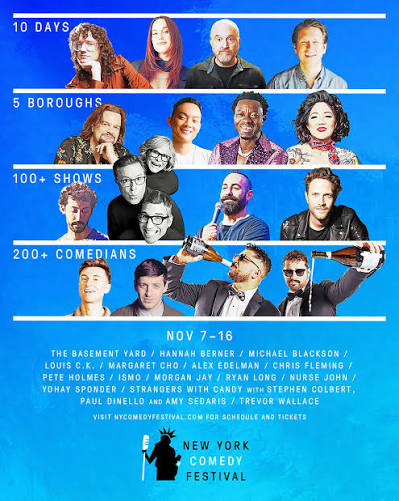
 11/6–11/15: New York Comedy Festival New York has never been short on opinions, attitude or people who think they’re funny, but the New York Comedy Festival brings the professionals. More than 200 comedians take over clubs and theaters throughout the city for ten days of stand-up, storytelling, improvisation and unapologetically sharp humor. From established headliners to emerging talents, the festival proves that laughter remains one of New York’s most valuable cultural exports.
 11/6 Onward: Gingerbread NYC at the Museum of the City of New York Architecture becomes deliciously imaginative when the Museum of the City of New York presents the fifth edition of Gingerbread NYC: The Great Borough Bake-Off. This year’s theme, “Iconic New York,” challenges bakers to recreate familiar landmarks using gingerbread, icing, candy and considerable engineering ingenuity. Visitors can admire the edible cityscape and vote for the People’s Choice award. It is the rare architectural exhibition where resisting the urge to take a bite becomes part of the experience.
 11/7: Rockefeller Center Christmas Tree Arrival Christmas officially begins making its entrance when the magnificent Rockefeller Center tree arrives in Midtown. The enormous evergreen is hoisted into place, beginning its transformation into one of the world’s most recognizable holiday symbols. The lights will not be switched on until December 2, but watching the tree settle into its temporary Manhattan home is a beloved New York ritual in its own right.
 11/9–12/24: Grand Central Holiday Fair Holiday shopping becomes considerably more civilized beneath the magnificent ceilings of Grand Central Terminal. The annual Grand Central Holiday Fair fills Vanderbilt Hall with artisan gifts, jewelry, accessories, home décor and distinctive handcrafted creations. Unlike its outdoor counterparts, this market offers the considerable luxury of warmth, making it ideal for anyone who prefers their Christmas shopping without frostbite.
 11/11: New York City Veterans Day Parade Fifth Avenue becomes a place of remembrance and gratitude as New York honors those who have served in the United States Armed Forces. The annual Veterans Day Parade brings veterans, military units, marching bands and civic organizations together for one of the country’s largest celebrations of military service. The procession begins at approximately 12:30 p.m., offering New Yorkers an opportunity to acknowledge the sacrifices behind the freedoms so often taken for granted.
 11/11–11/19: DOC NYC Documentary filmmaking takes center stage as DOC NYC returns with compelling nonfiction cinema, filmmaker conversations, premieres and stories that examine the world from perspectives both familiar and unexpected. Screenings take place at venues including the IFC Center, SVA Theatre, The New School and Village East by Angelika. For audiences unable to attend in person, online programming continues through November 29. At its best, documentary filmmaking does more than inform. It changes the questions we ask.
 11/14–1/10: New York Botanical Garden Holiday Train Show One of the city’s most enchanting seasonal traditions returns to the Bronx as miniature trains travel through an extraordinary landscape of nearly 200 New York landmarks constructed from natural materials. Inside the Enid A. Haupt Conservatory, familiar skyscrapers, bridges and architectural treasures are recreated using bark, leaves, pinecones and other botanical elements. New this year is a miniature One Vanderbilt, adding another unmistakable silhouette to this delightful interpretation of the city.
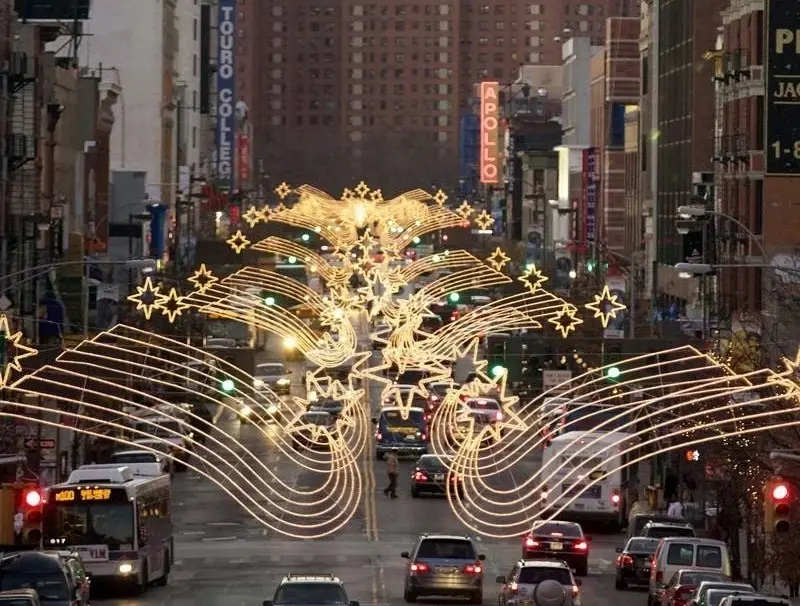 11/17: Harlem Holiday Lights Harlem gets its own dazzling welcome to the holiday season as illuminated floats, music and performances take over West 125th Street. Harlem Holiday Lights celebrates the neighborhood’s cultural energy and community spirit, turning one of Manhattan’s most historic thoroughfares into a festive gathering place.

Curtsey of Brooklyn Botanic Garden’s
11/20–1/3: Lightscape at Brooklyn Botanic Garden Brooklyn becomes an illuminated fantasy as more than a million lights transform the Botanic Garden into a nighttime wonderland. Lightscape features extraordinary installations by international and local artists, including the spectacular Winter Cathedral, glowing botanical displays and enchanting pathways accompanied by music. Add hot chocolate, seasonal treats and a little winter romance, and this becomes one of the city’s most atmospheric evening excursions.
 11/20: One Night Only: An Evening with Denée Benton and Jordan Donica and the New York Pops. Co-stars in HBO’s hit show The Gilded Age Denée Benton and Jordan Donica join The New York Pops for a new program that highlights favorites from their careers—including selections from The Phantom of the Opera, Sunday in the Park with George, Camelot, and Aida—and the Great American Songbook
 11/21–1/3: Bronx Zoo Holiday Lights The Bronx Zoo trades daylight adventures for a spectacular illuminated wildlife experience. More than 400 animal-themed lanterns transform the grounds, accompanied by light displays, a holiday train, ice carving, entertainment and seasonal treats. This year’s expanded experience also includes nighttime access to selected animal exhibits, offering families a chance to experience the zoo from a very different perspective.
 11/25: Macy’s Thanksgiving Parade Balloon Inflation Before the giant balloons float down Manhattan’s avenues, they spend an evening preparing for their close-ups. The traditional Thanksgiving Eve balloon inflation around the American Museum of Natural History offers New Yorkers a wonderfully peculiar sight: enormous cartoon characters gradually coming to life at street level. The viewing experience has become a holiday tradition in its own right, although exact 2026 public access arrangements and hours should be confirmed with Macy’s.
 11/26: The 100th Macy’s Thanksgiving Day Parade One hundred parades, countless memories, and enough helium to give Manhattan a personality all its own. The Macy’s Thanksgiving Day Parade celebrates its centennial edition with enormous character balloons, spectacular floats, marching bands, Broadway performances, celebrity appearances and the traditional arrival of Santa Claus. Beginning at West 77th Street and Central Park West, the procession makes its way to Herald Square in one of America’s most cherished holiday spectacles. This is more than a parade. It is a century of New York showmanship, and the city has every reason to celebrate.
Throughout November: Rockefeller Center Skating and Holiday Experiences The Rink at Rockefeller Center celebrates its 90th anniversary season, with holiday chalets returning November 6, a new Skate House debuting November 14, and special anniversary lodges arriving November 20. Even before the Christmas tree is illuminated, Rockefeller Plaza offers an irresistible combination of skating, shopping, seasonal refreshments and quintessential Manhattan glamour.
By the time November draws to a close, New York will have transformed itself from an autumn city into a glittering holiday spectacle. The runners will have crossed their finish line, the documentary audiences will have debated what they’ve seen, the comedians will have delivered their punchlines, and the giant balloons will have made their annual journey down Manhattan’s streets. Yet the real pleasure of November is the extraordinary variety of experiences that unfold between those major moments. Whether your idea of a perfect evening involves jazz at Lincoln Center, skating beneath the stars, a film that changes your perspective or simply wandering through a beautifully illuminated garden, New York has an invitation waiting.
And December? Well, the city is only getting warmed up.
Entertainment
Pumpkin Point Returns to Governors Island: 10,000 Pumpkins, Ghostly Adventures and a Little Autumn Magic

New York knows how to celebrate autumn, but there is something particularly charming about escaping the city’s concrete canyons for a ferry ride, a little fresh air, and a sea of pumpkins. On Saturday, October 24, Governors Island transforms into a seasonal playground as Pumpkin Point returns to Nolan Park, bringing more than 10,000 free pumpkins, festive entertainment, and enough Halloween spirit to make even the most sophisticated Manhattanite embrace their inner child.
Against a backdrop of historic houses, leafy pathways, and spectacular harbor views, Pumpkin Point offers a quintessential New York autumn experience without the trek to an upstate pumpkin patch. Here, the skyline replaces the rolling countryside, and the journey begins with a ferry rather than a hayride.
The festivities extend beyond choosing the perfect pumpkin. Visitors can unleash their artistic ambitions with pumpkin painting, wander through the island’s natural beauty on guided nature walks, or embrace its more mysterious side with ghost tours that add a deliciously spooky twist to the afternoon. Community activities, live entertainment, and seasonal food vendors round out the celebration, creating an atmosphere that is equal parts harvest festival and Halloween party.
Then there are the pumpkins. More than 10,000 of them, free for the taking under the festival’s distribution rules, make this one of the city’s more generous seasonal traditions. Whether your aesthetic leans toward a perfectly polished jack-o’-lantern or something delightfully crooked and full of personality, there’s a pumpkin waiting to become part of your Halloween décor.
What makes Pumpkin Point especially appealing is its setting. Governors Island has long been one of New York’s most delightful escapes, a place where the city’s relentless pace gives way to open lawns, winding paths, and the pleasure of simply wandering. Add autumn foliage, costumed children, creative activities, and the occasional ghost story, and the result is a fall outing with genuine character.
In a city where seasonal entertainment can come with frightening price tags, Pumpkin Point offers something refreshingly uncomplicated: a beautiful setting, a little imagination, and the pleasure of celebrating autumn together.
After all, sometimes the best New York adventures begin by leaving Manhattan behind.
October 24–25, 2026 | 10 a.m.–5 p.m. | Nolan Park, Governors Island
One useful detail from the official announcement: the festival runs both Saturday and Sunday, and visitors should bring a reusable bag. Pumpkins are limited to one per person per household, while supplies last. The festival is free, although ferry transportation may cost extra.


My View: Mikayla Smith Brings Love, Dreams & Me To The Maltz Theatre…A Story Worth Following

My View: The Dutch Treat Club… Where Every Table Can Be a Star-Studded Affair!

Barbara Barrie, Broadway’s Original Sarah in Companyand Oscar-Nominated Actress, Dies at 95

The Glorious Corner

Bryant Park Brings the Magic Back: Winter Village Opens and Sets Its 2026 Christmas Tree Lighting Date

Prince Mario-Max Schaumburg-Lippe Graces Dan’s Papers Royal Cover

Walmart Already Delivers the Groceries. Now It Wants the Dinner Order.

My View: Christine Ebersole With Billy Stritch…… A Fine Pairing
My View: Mikayla Smith Brings Love, Dreams & Me To The Maltz Theatre…A Story Worth Following
My View: The Dutch Treat Club… Where Every Table Can Be a Star-Studded Affair!
Barbara Barrie, Broadway’s Original Sarah in Companyand Oscar-Nominated Actress, Dies at 95
The Glorious Corner
Bryant Park Brings the Magic Back: Winter Village Opens and Sets Its 2026 Christmas Tree Lighting Date
Prince Mario-Max Schaumburg-Lippe Graces Dan’s Papers Royal Cover
Walmart Already Delivers the Groceries. Now It Wants the Dinner Order.
My View: Christine Ebersole With Billy Stritch…… A Fine Pairing
-

 Business5 days ago
Canada’s Maple Syrup Reserve Is Running Down. Businesses Should Understand Why.
-

 Cabaret5 days ago
Cabaret and Talks For November
-

 Entertainment5 days ago
Nobody Does It Better: Steven Reineke, Lena Hall and The New York Pops Bring James Bond to Carnegie Hall
-

 Entertainment5 days ago
Events for November: Marathons, Movies, Music, Thanksgiving Magic and the Holidays Arrive
-
 Off Broadway4 days ago
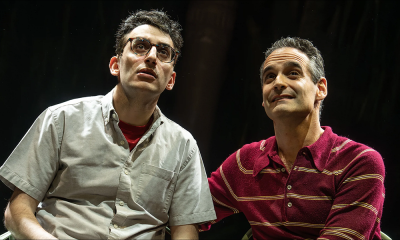
Good Time Charlie: A Tender Portrait of the Man Who Made Room for Someone Else’s Dreams
-
 Entertainment5 days ago
Prince Mario-Max Schaumburg-Lippe: Why Manhattan In New York City Is The Epicenter Of The Guilded Age
-

 Broadway3 days ago
Pasek & Paul, Lin-Manuel Miranda and Sara Bareilles Headline Three Intimate Evenings Celebrating the Future of Musical Theater.
-

 Food and Drink4 days ago
Sunday Brunch With Prince Mario-Max: A Royal Feast at The Parliament and a Century of New York Elegance