
Theater
Power in Plain Passive Sight: “Public Charge” Finds Its Drama in the Work of Governing


They file in like a think-tank assembly, taking their positions for an intellectual discussion at the highest level. And then it shifts, slapping us hard with lines that resonate, pulled straight out of the racist world we are dealing with daily. “In America,” he says, meaning the United States, though the distinction matters, “we speak English,” as well as “we have enough people like her on food stamps.” This dual dynamic is one of the first things that strikes hard with the Public Theater‘s Public Charge, and it’s the angle that gives the play its depth.

Marinda Anderson and Zabryna Guevara in PUBLIC CHARGE at The Public Theater. Photo credit: Joan Marcus.
It doesn’t shy away from the hard truths. It digs into these emotional moments of drama and discord with a sense of steady accumulation and thought. Scene by scene, conversation by conversation, the play builds, not toward a single explosive event, but toward a more complex and interpersonal understanding of how power operates within numerous systems that rarely reveal themselves to the public or to each other.
Written with purpose by Julissa Reynoso and Michael J. Chepiga, this world premiere finds its footing less as a thriller and more as an informative docudrama, tracing Reynoso’s path from a young immigrant from the Dominican Republic, initially denied entry into the United States, to a key figure in that same country’s State Department. It is a compelling and somewhat emotional story that moves across time and geography, from personal memory to global policy, that does a good job grounding its complex narrative in lived experience rather than theatrical spectacle.

Zabryna Guevara, Marinda Anderson, Armando Riesco, and Maggie Bofill in PUBLIC CHARGE at The Public Theater. Photo credit: Joan Marcus.
At the centre is Julissa, portrayed at this performance by Yesenia Iglesias, stepping in for Zabryna Guevara. The performance is composed and attentive, shaped by a quiet intelligence that allows the character to listen as much as she speaks. That quality gives the role a grounded presence, particularly in moments where the weight of decision-making begins to settle in. It is a performance built on restraint, one that finds its ultimate strength in observation rather than declaration, although, as written, the role sometimes feels overly passive in its creation, even when passion is required.
The rest of the cast fills out this world, “flipping between presidents” and time frames with ease, unveiling both expansive and tightly controlled arenas and conflicts. Marinda Anderson (Broadway’s Yellow Face) as Cheryl Mills brings clarity and authority to the floor as outside-the-box decisions are proposed, paused, and take shape. Dan Domingues (Public’s Wild Goose Dreams) provides a compelling counterpoint as Ricardo Zuniga, playing with the rigidness and righteousness of the establishment, as Al Rodrigo (Broadway’s Open Admissions) offers up a connecting and memorable turn as Uruguayan President José Mujica, capturing both the gravity and the unexpected warmth of the role. Barbara Walsh (CSC’s Macbeth) and the rest of the ensemble forcefully add the other layers needed, moving fluidly between characters, and help map the shifting terrain of international diplomacy with precision and focus.
The play, as directed with a clarity of vision and insight by Doug Hughes (Broadway’s The Father), moves through a series of key moments drawn from Reynoso’s career, including the response to the 2010 earthquake in Haiti, negotiations surrounding the release of American contractor Alan Gross from a Cuban prison, and diplomatic efforts involving Guantanamo Bay detainees. These are events that carry enormous weight, and the play approaches them with a careful attention to detail, allowing the audience to see how decisions are shaped by conversation, negotiation, and persistence. This is where the production finds both its strength and its limitations.
The writing is compelling and intellectually engaging. It offers a window into a world that is rarely dramatized with this level of specificity. The interplay between personal history and global responsibility gives the piece a distinct perspective, framing diplomacy as something lived in rather than observed from a distance. At the same time, the structure leans heavily on information. Scenes often unfold as exchanges of facts, strategies, and outcomes, and while they remain interesting, they do not always generate the kind of dramatic tension that the material seems to invite.

Armando Riesco, Zabryna Guevara, and Al Rodrigo in PUBLIC CHARGE at The Public Theater. Photo credit: Joan Marcus.
The staging, as designed by Arnulfo Maldonado (Broadway’s Buena Vista Social Club), reflects this measured approach. Platforms map the shifting geography of the story, mirroring the institutional world being portrayed. But the approach also creates an awkward distance between the individual performers, their intimate conversations, and ultimately, the audience. Even with the superb lighting by Ben Stanton (Broadway’s Maybe Happy Ending) and video by Lucy MacKinnon (Public’s White Noise), the layout keeps the emotional core just out of reach.
Yet, within that constructed restraint, the play never completely loses its grip. Something compelling remains within reach, and we stay tuned in to watching the mechanics of governance unfold in real time, especially when filtered through an interpersonal lens. The decisions being made may not always erupt into visible conflict, but they carry consequences that extend far beyond the stage. The play invites us to lean into the work that happens behind closed doors, the conversations that shape outcomes, and the people who navigate those spaces with a sense of responsibility that is both professional and deeply personal.
Public Charge is not about a single moment, but the accumulation of many, woven together to create a tapestry of politics and purpose, shaped by movement between countries, between roles, between private memory and public duty. That opening image of a young girl arriving in a new country echoes throughout the play right up to the video Obama moment, reframed again and again by the experiences that follow.
Like a continuous negotiation of identity, purpose, and belief, Public Charge does not rely on a grand spectacle to make its case. It builds its argument through detail, through conversation, and through the steady presence of a central figure who refuses to disappear within the systems she helps shape. And in that quiet persistence, around problematic bandages, visitations, and trades, the play finds its most compelling voice.

Marinda Anderson, Armando Riesco, Zabryna Guevara, and Dan Domingues in PUBLIC CHARGE at The Public Theater. Photo credit: Joan Marcus. For more information and tickets, click here.
For more information and tickets, click here.
For more go to frontmezzjunkies.com


“Make ’Em Laugh” and “I Could Have Danced All Night” are the sort of movie-musical melodies that can transport us into that familiar movie-musical dream, where every backyard is a stage and every performance deserves an audience. In Ryan J. Haddad’s Good Time Charlie at The Public Theater, that dream takes shape in a lush Japanese garden, an unexpected and delightful setting for a play about the movie musicals that help shape a life. Ryan’s childhood performances at home, with his aunt and uncle taking lead roles in Brandy’s Cinderella, provide the opening scene for this tender two-act play. The Charlie at its centre is the younger Charlie, Charlie Jr., not Ryan’s Uncle Charlie, and Jonathan Raviv (ATC’s The Band’s Visit) gives him an infectious theatrical exuberance. Directed by Danny Sharron (PH’s Hold Me in the Water by Haddad), the play follows Charlie and Ryan across decades, celebrating the queer mentors who open doors to a world of show tunes, cultural icons, and the kind of education no school could provide.

Ryan J. Haddad and Jonathan Raviv in Public Theater’s Good Time Charlie. Photo by Joan Marcus.
Haddad is wonderfully, sometimes hilariously, aware that he is making a play, and Ryan keeps us in on the process. He addresses the audience, talks to the other actors, and tries to get everyone to perform the scenes as written, with decidedly mixed results. When Charlie launches into half a verse of “It’s Today” from Mame, Ryan interrupts to explain that they didn’t get the rights. Later, when a dysregulated Charlie no longer wants to continue a scene near the end of Act One, Ryan compassionately offers to stop the play right there, observing that “everyone loves a one act.” It’s a terrific moment of cheeky theatrical self-preservation. Haddad tells us early on that he is attempting a bigger, broader play than his usual one-person shows, and then cheerfully lets us watch him wrestle with the consequences. As Aunt Janice, Beth Malone (Transport Group’s The Unsinkable Molly Brown) gives the comedy another human centre in the LGBTQ+ alphabet, letting the humour land without making the characters feel like pawns in Haddad’s theatrical games.

Nael Nacer, Artemis Pebdani, and Ryan J. Haddad in Public Theater’s Good Time Charlie. Photo by Joan Marcus.
The production’s design gives Haddad’s shifting memories and theatrical interruptions a vivid visual and sonic world. The lush garden designed by Afsoon Pajoufar gives this family history an unexpectedly beautiful setting, while Enver Chakartash’s costumes help establish the people and periods the play moves through. Barbara Samuels’s lighting supports the shifts from comic recollection to the more vulnerable moments, and Ryan Gamblin’s sound design and composition help sustain a world in which movie-musical memories are woven into the characters’ lives. Jennifer Rias’s choreography helps carry the production between spoken recollection, musical moments, and Haddad’s playful interruptions. Together, these elements allow the play to move between memory, musical fantasy, and family history without losing sight of the people at its centre
Beneath all of Ryan’s theatrical mischief, Charlie’s family history delivers the play’s hardest blow. His parents repeatedly pressure him to change himself, with the rejection finally arriving in the words, “If you’re not going to change, your father doesn’t want to see you.” I find stories like this heartbreaking, particularly when rejection comes with the demand that someone change an essential part of themselves. The pain is especially sharp here because Ryan’s own coming-out experience in suburban Ohio in 2008 is relatively kind by comparison. Charlie and his partner Lou, played with grounded warmth by Tim Bagley (“Hacks“), spend years building a life together while waiting for Charlie’s family to accept them. The play gives this history the time it needs, allowing the hurt to register without rushing to smooth it over. Sheldon, played wonderfully by Michael Cristofer (Broadway’s A View from the Bridge), enters as the man who introduced Charlie, and later Ryan, to the world of movie musicals. His friendship with both men is one of the play’s most charming connections, and his love of movie musicals becomes part of the bond they share. The connection he helps create beautifully gives another important strand of family, one built through shared passions and affection rather than obligation.

Jonathan Raviv, Tim Badley, and Michael Cristofer in Public Theater’s Good Time Charlie. Photo by Joan Marcus.
Act Two hits a little harder. Well, a lot harder. Sheldon suffers a stroke and begins using a walker, and the decline of this beloved mentor and friend changes the emotional temperature of the play. The man who helped open the world of movie musicals to Charlie and Ryan now needs care himself, and the prospect of losing him is all the more alarming because we have seen how much he means to both. Ryan, who has cerebral palsy, must confront his own discomfort and uncertainty as Sheldon’s physical needs change. Haddad allows the subject to carry humour alongside genuine unease, opening difficult questions about disability, caregiving, and what happens when the people who once guided us need our help. The well-placed line, “I wish I could change the ending,” lands with a growing sense of dread. Cristofer brings a moving gravity to Sheldon, while Nael Nacer and Artemis Pebdani help create two family dynamics whose connections extend beyond any single scene. The play also makes room for older queer characters to remain loved and essential in a culture that can place far too much emphasis on youth and physical desirability.
Haddad’s warmth and metatheatrical mischief give Good Time Charlie much of its charm, even when its ambition to turn personal memories into a broader narrative leaves the plot feeling somewhat loose. Some scenes are beautifully done, with the other characters watching from the sidelines in open adoration, and those moments allow affection to register without the play needing to explain it. The movie-musical melodies may begin by inviting us into a familiar dream, but the relationships give that dream its emotional stakes. Charlie and Ryan inherit songs, stories, and a way of seeing themselves through the people who love them. As the mentors grow older and begin to need care, we must consider what we owe the people who first opened those doors for us. It is a tender, funny, sometimes uneven tribute to the family we find through shared passions, and to the difficult work of staying beside one another as life changes.

Ryan J. Haddad, Tim Badley, Beth Malone, Jonathan Raviv, and Michael Cristofer in Public Theater’s Good Time Charlie. Photo by Joan Marcus.
For more go to frontmezzjunkies.com
Music
Midnight: Todrick Hall Has Created a Musical Masterpiece That Broadway Cannot Afford to Ignore

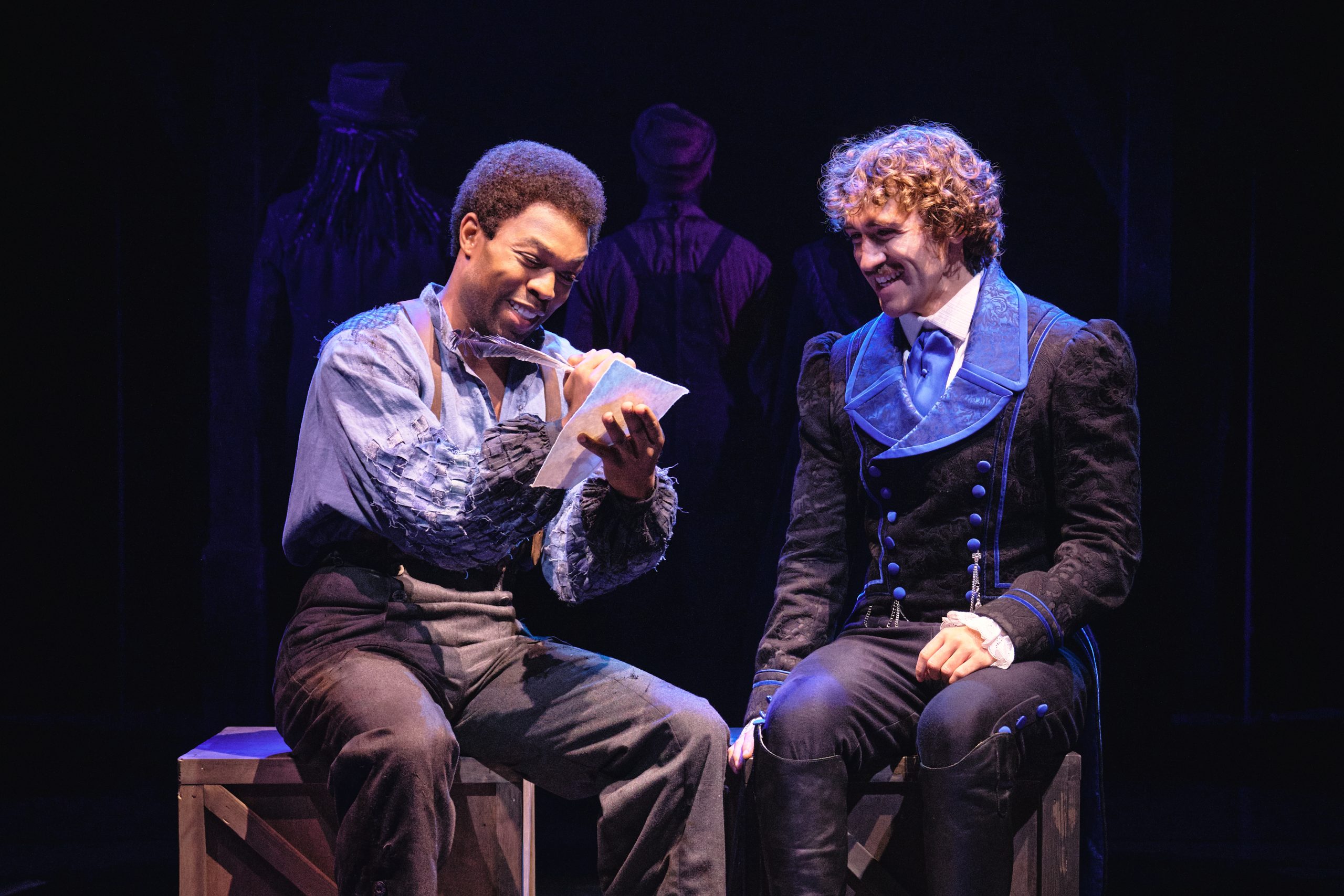
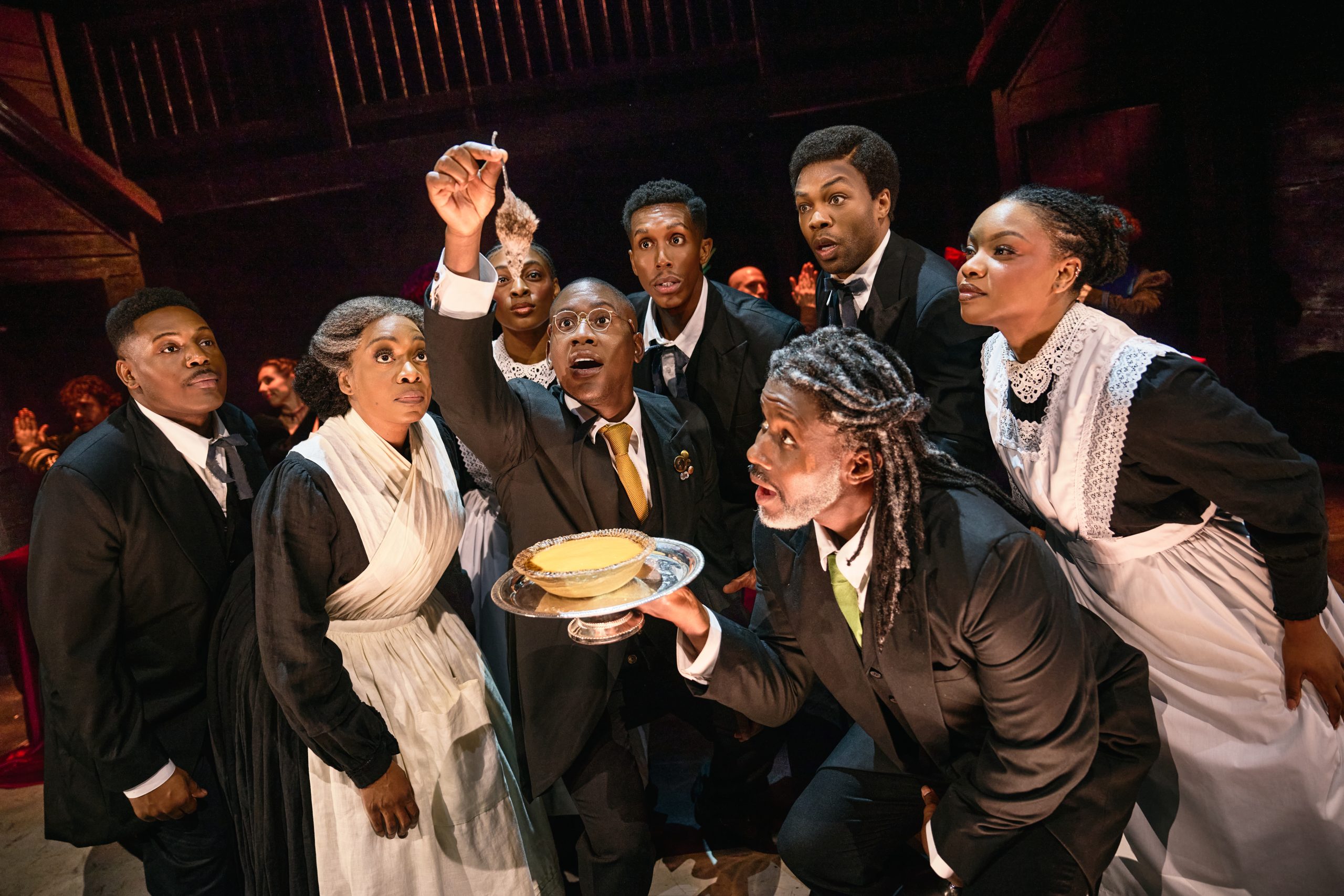
The Company of Midnight Photo by Valerie Terranova
Every so often, a musical comes along that reminds me why I fell in love with theater in the first place. Not because it is perfect, not because it follows the rules, but because it possesses that rare, electrifying combination of originality, extraordinary talent, emotional intelligence, and sheer theatrical audacity. Midnight, written, directed, choreographed, and starring Todrick Hall, is that musical. Currently playing at the Daryl Roth Theatre, it is, hands down, the best new musical I have seen this season. Frankly, I cannot imagine what could possibly surpass it.
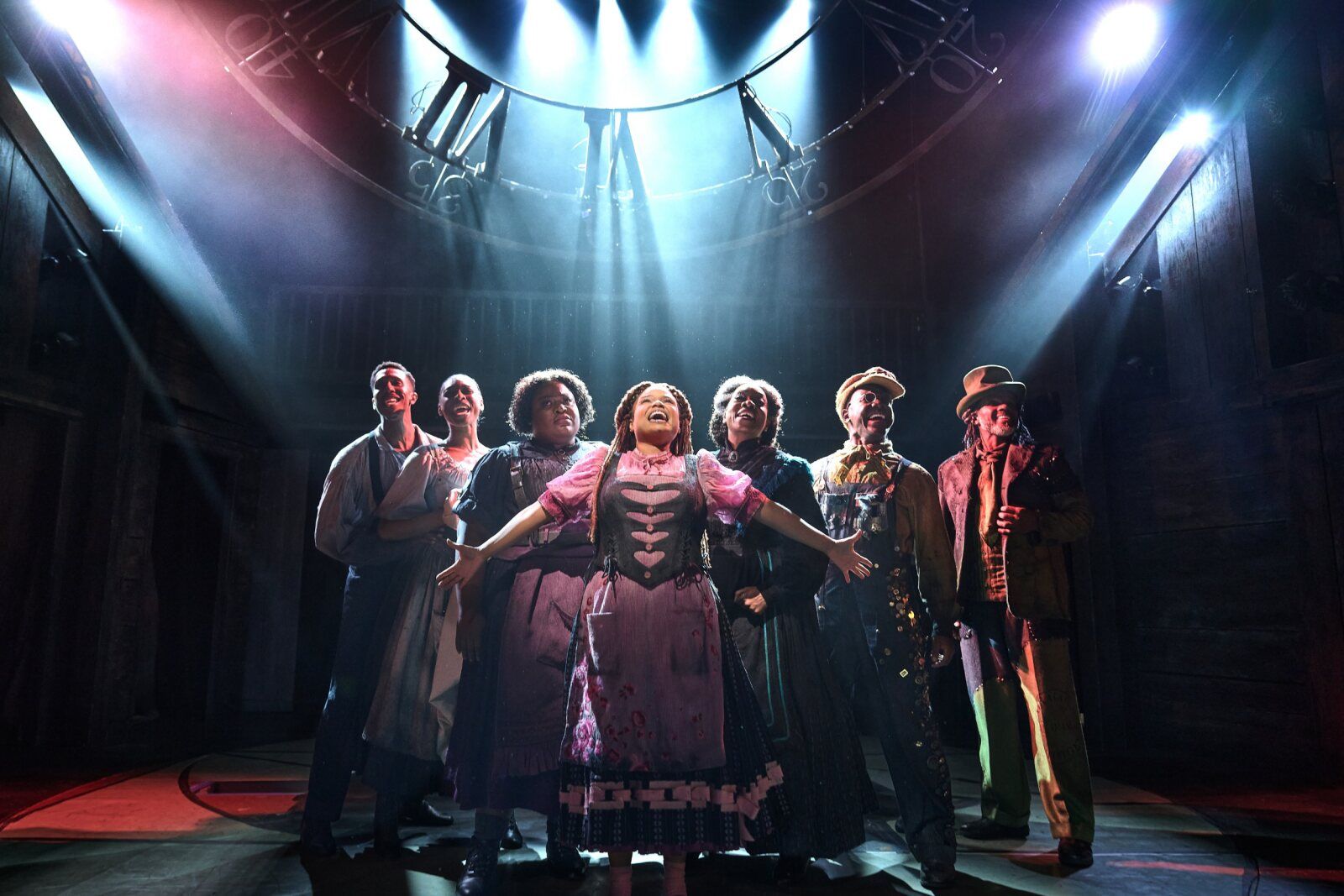
Charlotte Odusanya and the Company Of Midnight Photo by Valerie Terranova
I have been a fan of Hall’s since his brilliantly inventive Beauty and the Beat video. His imagination, musicality, humor, and ability to transform popular culture into something uniquely his own have always fascinated me. But nothing, and I mean nothing, prepared me for what is happening at 101 East 15th Street.
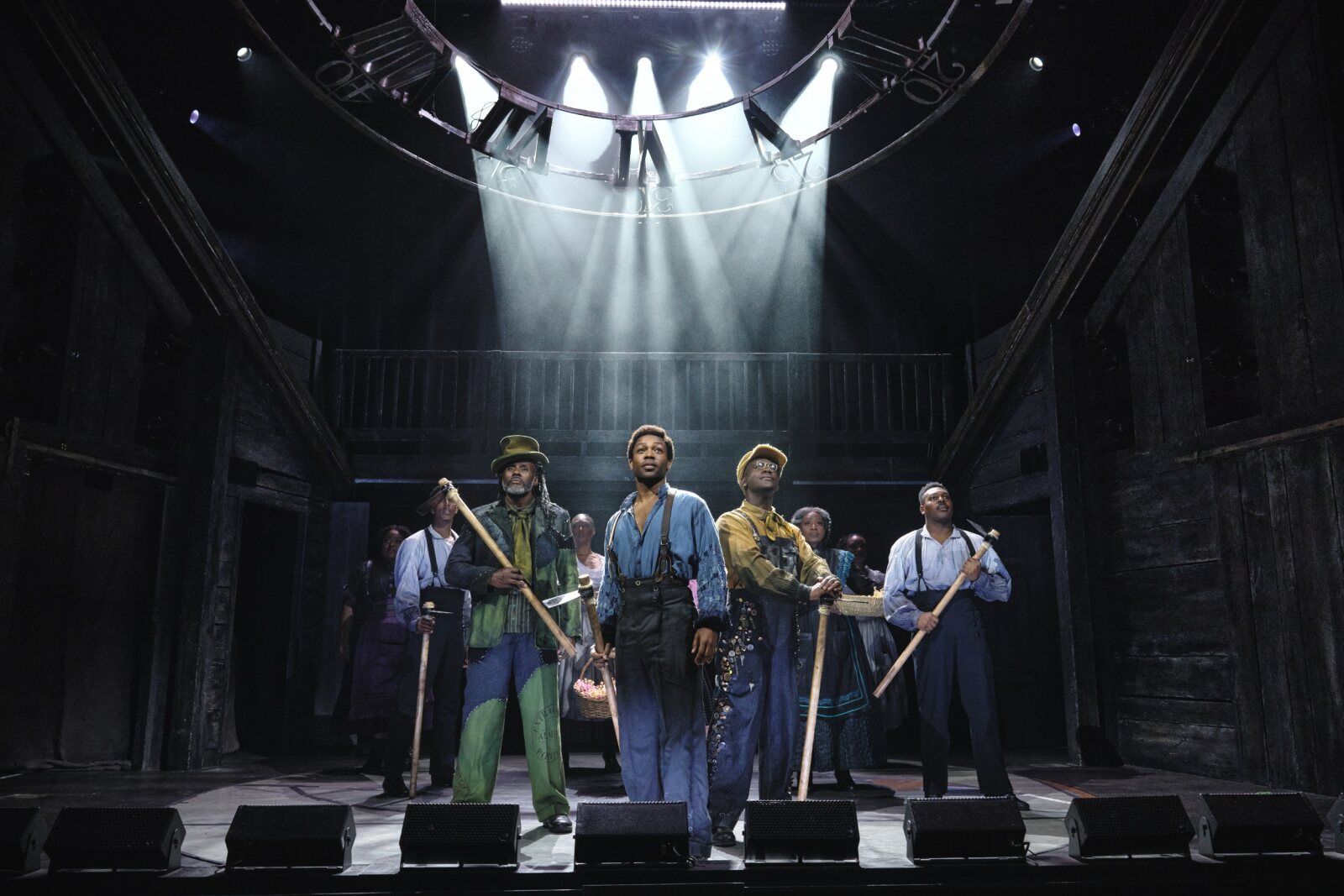
Todrick Hall and. the Company Of Midnight Photo by Valerie Terranova
First, there is the score. Gospel, rhythm and blues, soul, pop, rock, folk, and even opera collide in a glorious explosion of musical styles. This is a sung-through musical, with no spoken dialogue, and the vocal and instrumental arrangements are nothing short of extraordinary. Multiple harmonies overlap, voices soar into unexpected intervals, and riffs build upon riffs until the entire theater seems to vibrate with sound. The musical sophistication is staggering. I found myself sitting there in a state of absolute bliss, wondering how Hall had managed to assemble so many extraordinary voices in one production.
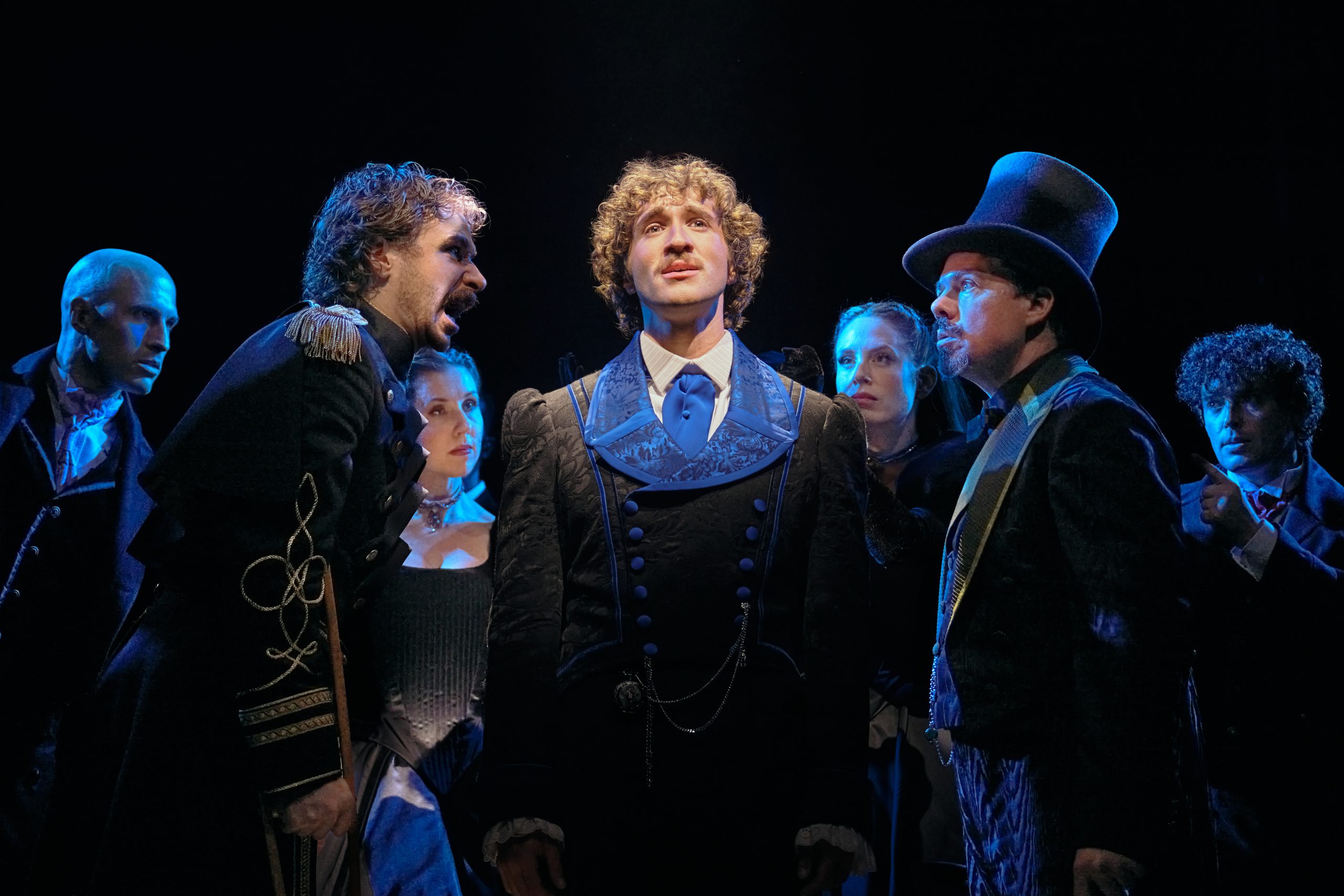
Jimmy Brewer, Jeremy Beloate and Ciarán McCarthy The Company of Midnight photo by Valerie Terranova
Set in the nineteenth-century American South, Midnight follows twelve interconnected characters, six Black and six white, whose lives are defined by race, class, power, identity, and the complicated nature of love. At its center is Rail, a young enslaved Black man portrayed by Hall, whose emotional world becomes increasingly complicated by Lily Rose, played with irresistible sweetness by Charlotte Odusanya affection, and his forbidden attraction to Richard, a wealthy white neighbor portrayed by the phenomenally gifted Jeremy Beloate.
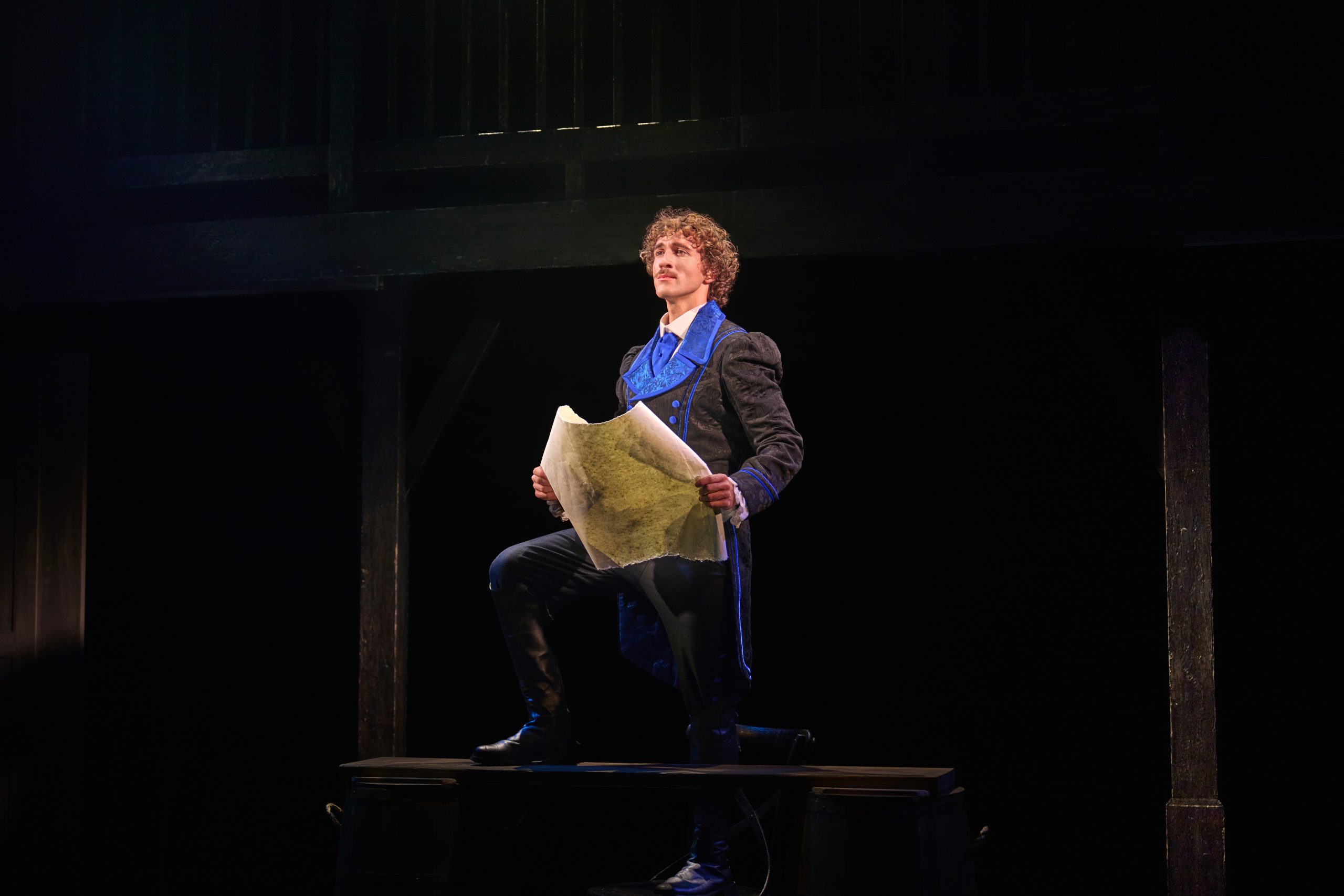
Jeremy Beloate photo by Valerie Terranova
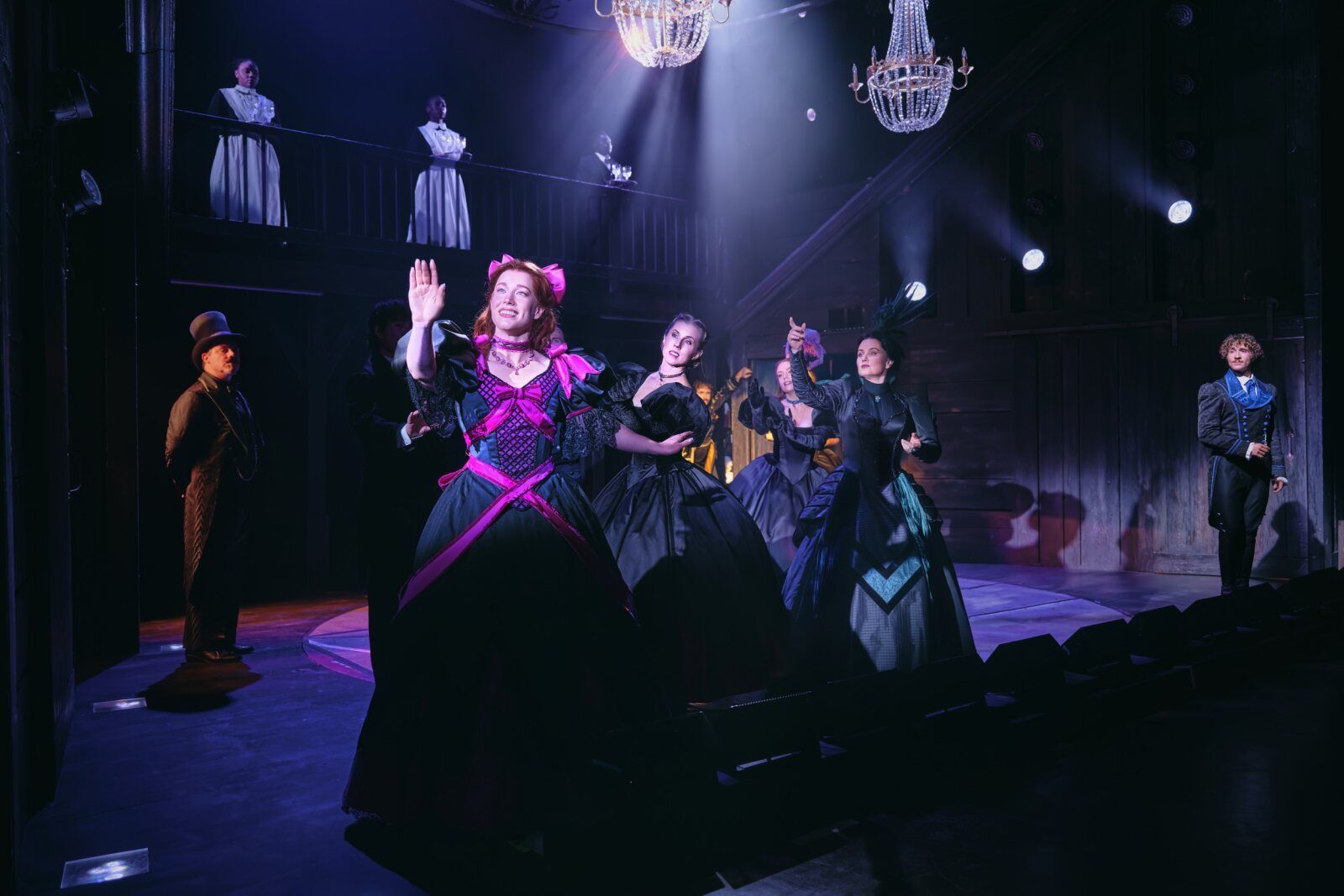
Kennedy Caughell and the company of midnight Photo by Valerie Terranova
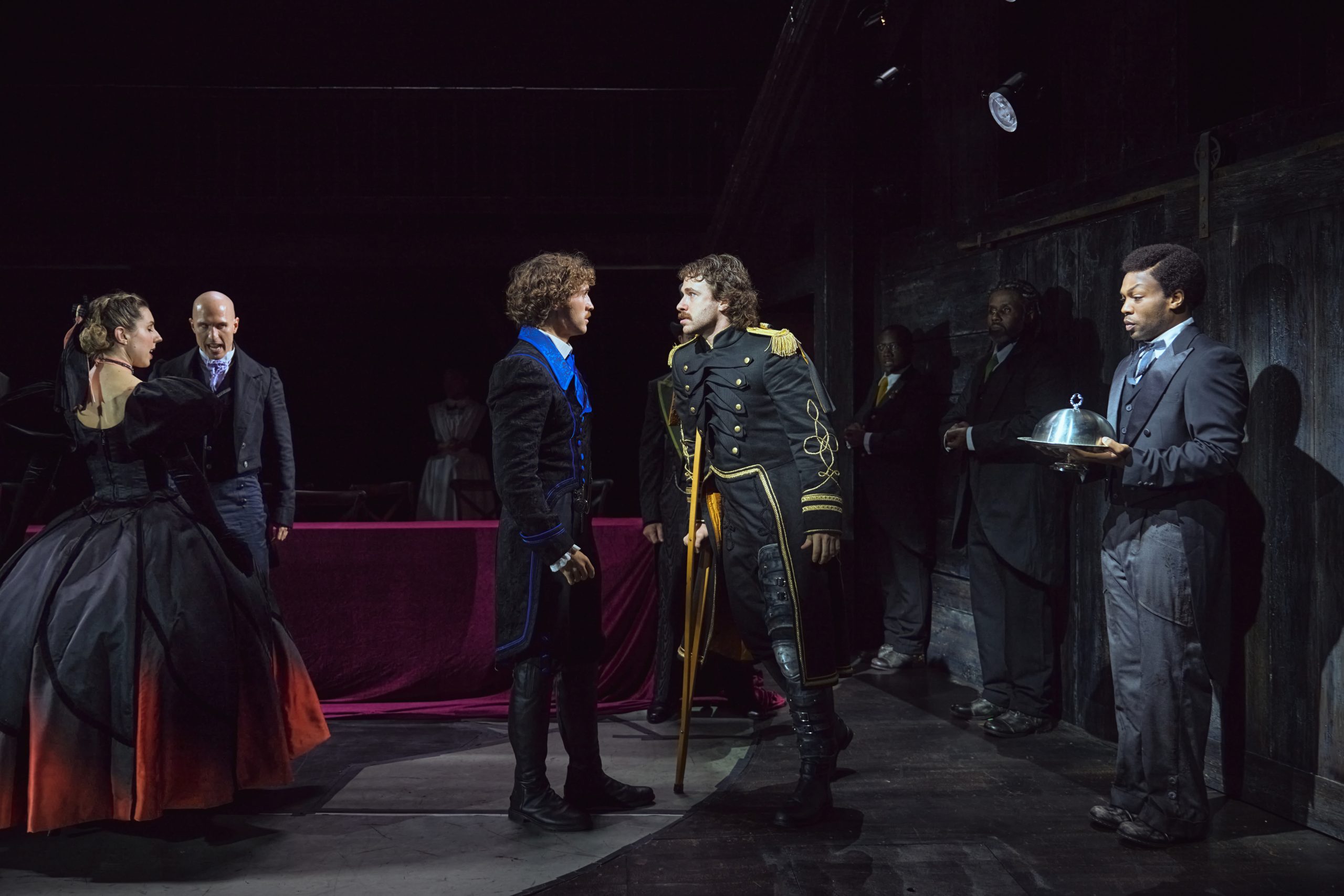
Jimmy Brewer, Jeremy Beloate, Todrick Hall Photo by Valerie Terranova
What makes this so effective is that Hall does not simply ask us to imagine injustice. He makes us watch familiar characters experience it from the opposite side. The reversal exposes the arbitrary cruelty of a system in which one person’s humanity is determined by another person’s authority. It is bold, unsettling, and theatrically ingenious.
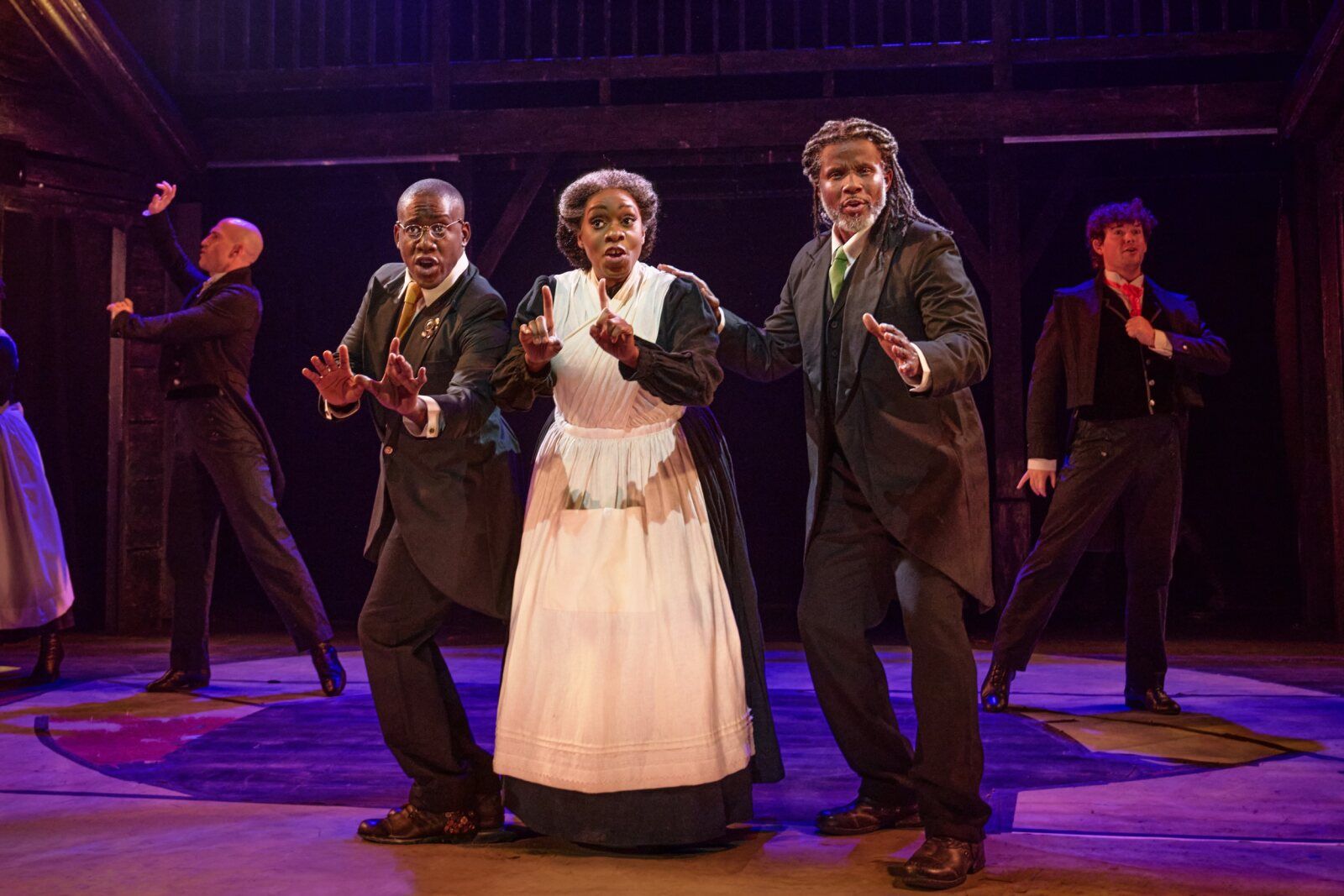
Sidney Dupont, Ayana George, and Dwayne Clark Photo by Valerie Terranova
Ayana George, as Ethel, serves as one of the musical’s principal narrators, and her voice is simply magnificent. She possesses the kind of vocal authority that makes an audience surrender from the first note. There is richness, power, and emotional command in everything she sings, and she anchors the production with remarkable assurance.
Charlotte Odusanya brings warmth and charm to Lily Rose, making her far more than a romantic counterpoint to Rail’s complicated desires. There is an innocence to her performance, but also an emotional intelligence that keeps the character from becoming sentimental.
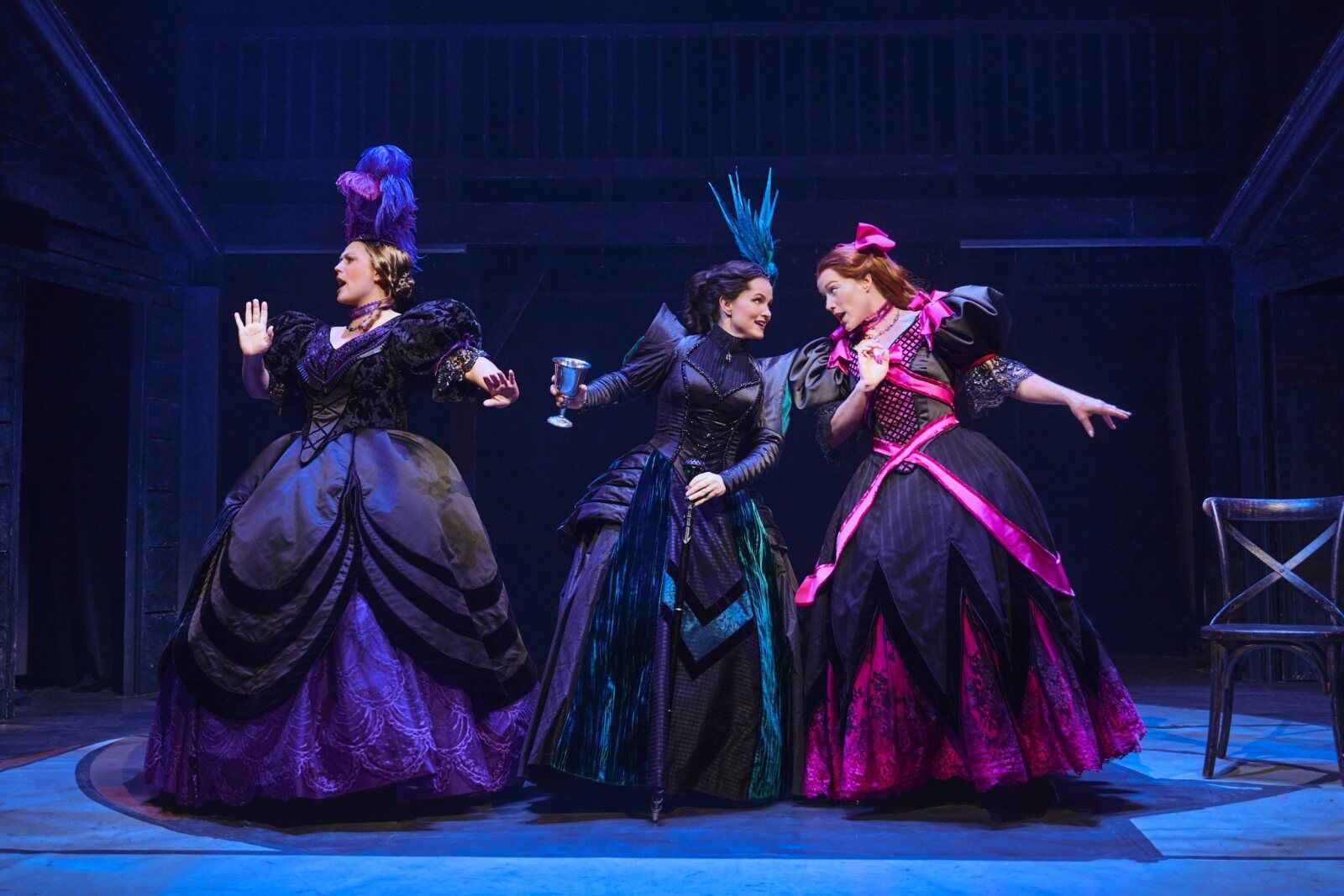
Bella Coppola, Autumn Hurlbert and Kennedy Caughell Photo by Valerie Terranova
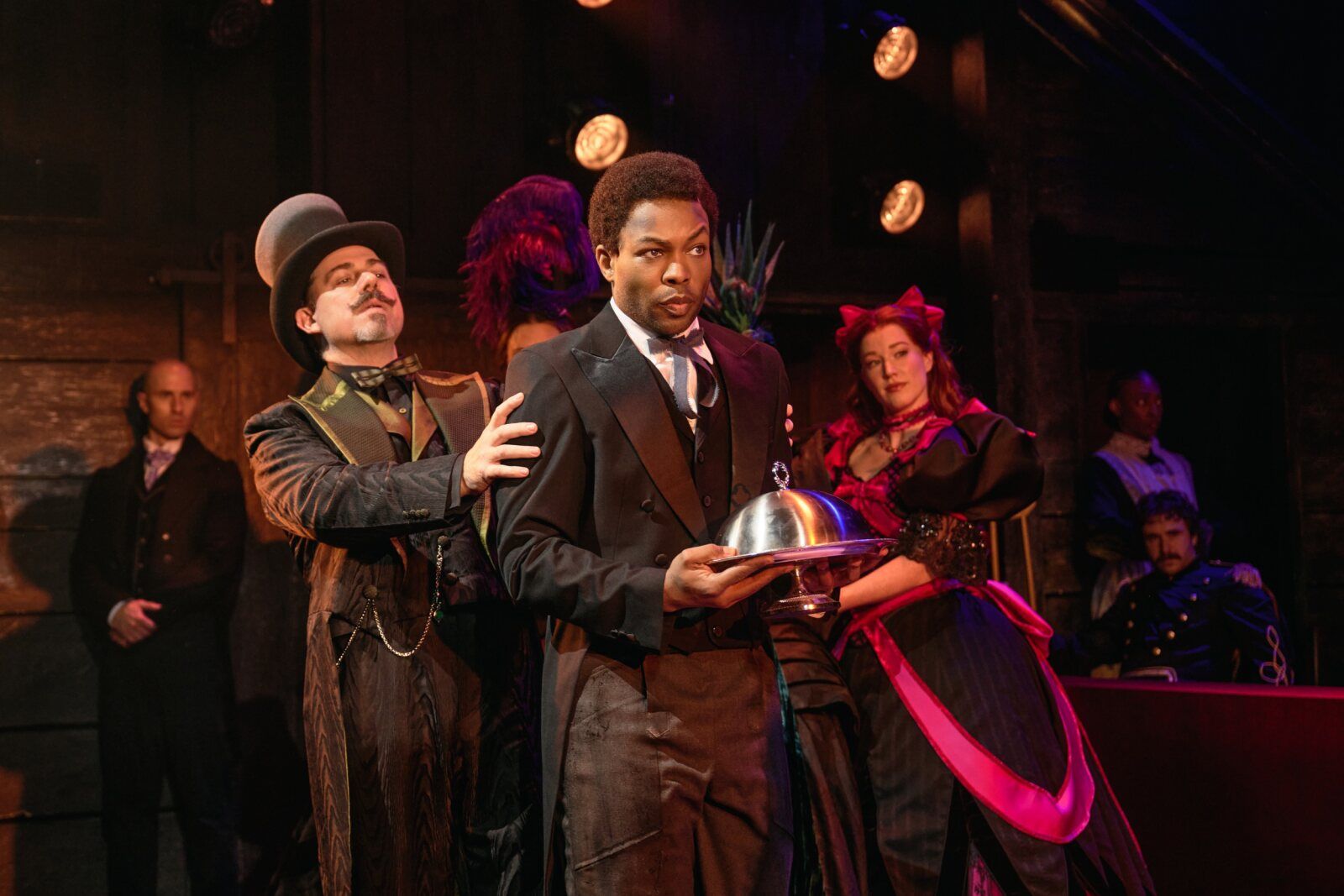
Ciaran McCarthy, Todrick Hall, Kennedy Caughell and the company of midnight Photo by Valerie Terranova
What Hall has accomplished vocally is especially impressive because the musical demands so much more than beautiful singing. The performers must negotiate complicated harmonies, shifting musical styles, demanding choreography, and emotionally charged storytelling without the relief of spoken dialogue. There is nowhere to hide. Every thought, every confrontation, and every revelation must be communicated through music and movement. My only criticism is diction.
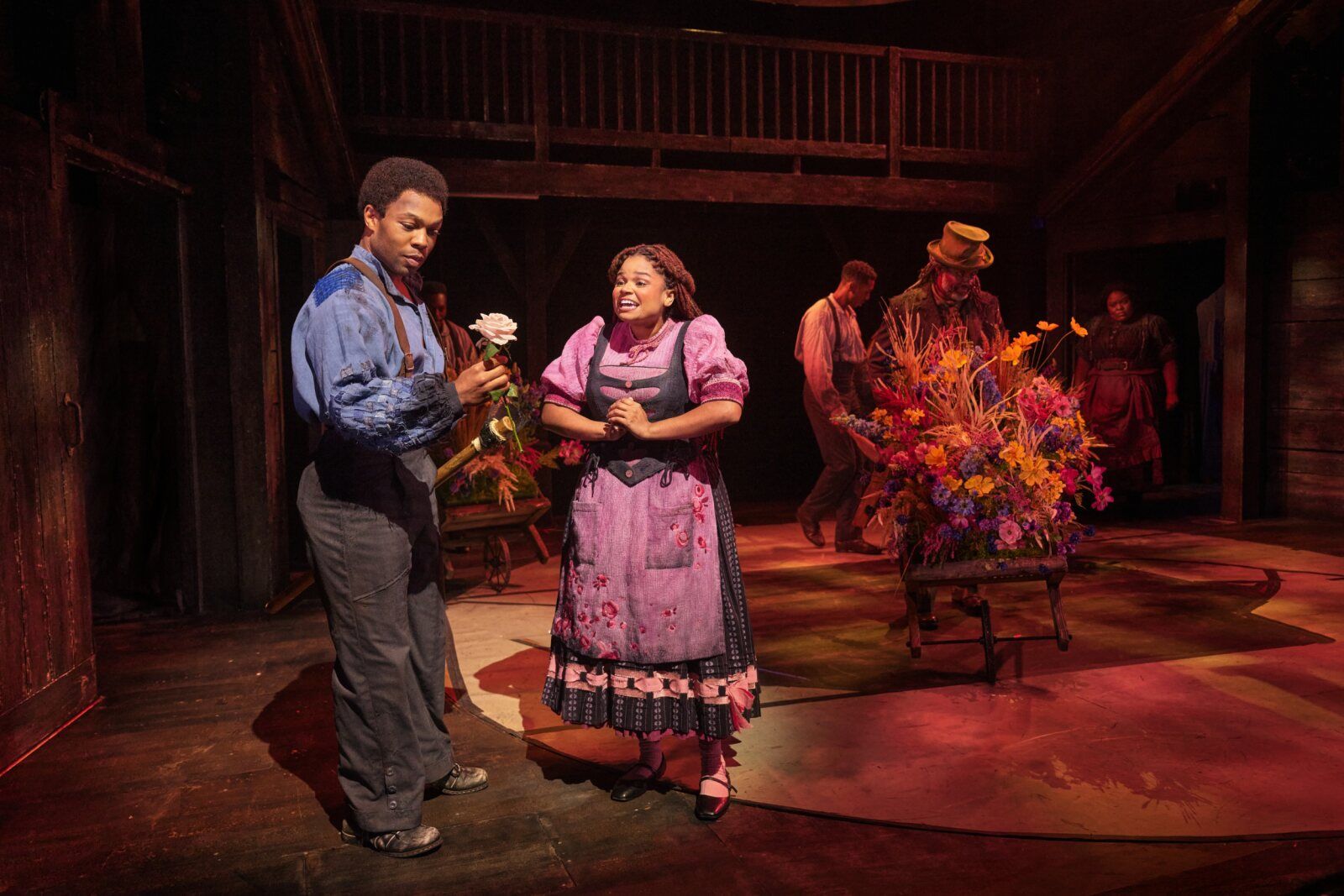
Todrick Hall and Charlotte Odusanya and the Company of Midnight Photo by Valerie Terranova
Hall himself is a magnetic performer, bringing charisma, vulnerability, humor, and tremendous physical energy to Rail. He commands the stage with the confidence of someone who knows precisely what he wants his audience to experience. Yet he is also the one person who might benefit most from an editor. Sometimes less really is more.
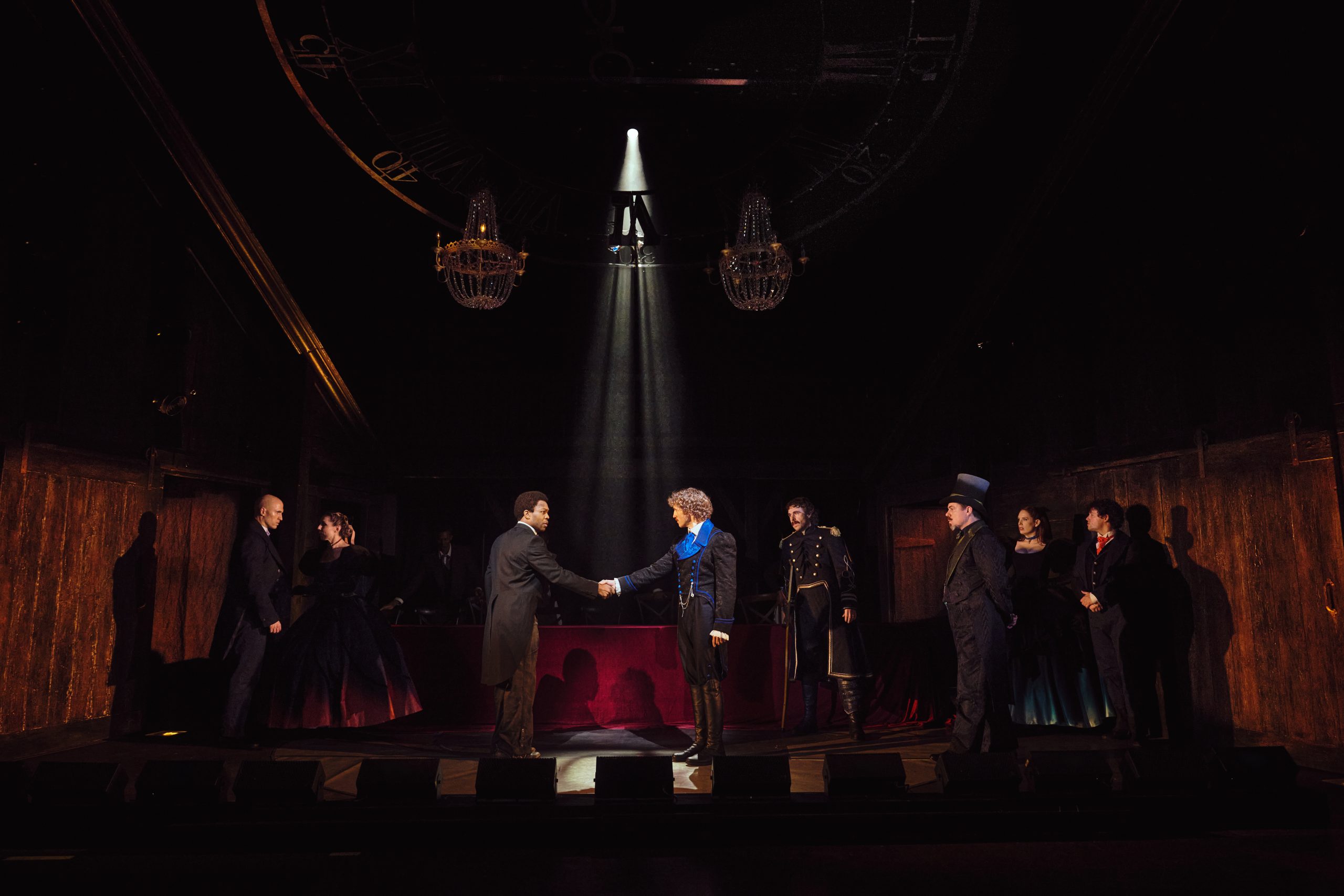
Todrick Hall, Jeremy Beloate and the Company of Midnight Photo by Valerie Terranova
Morgan Large’s scenic design provides a theatrical environment capable of moving between historical realism and the production’s increasingly surreal landscape. Beck Jones’s costumes establish the divisions of class and status that become so essential to the story, while Jake DeGroot’s lighting gives the production both its visual grandeur and its darker emotional textures.
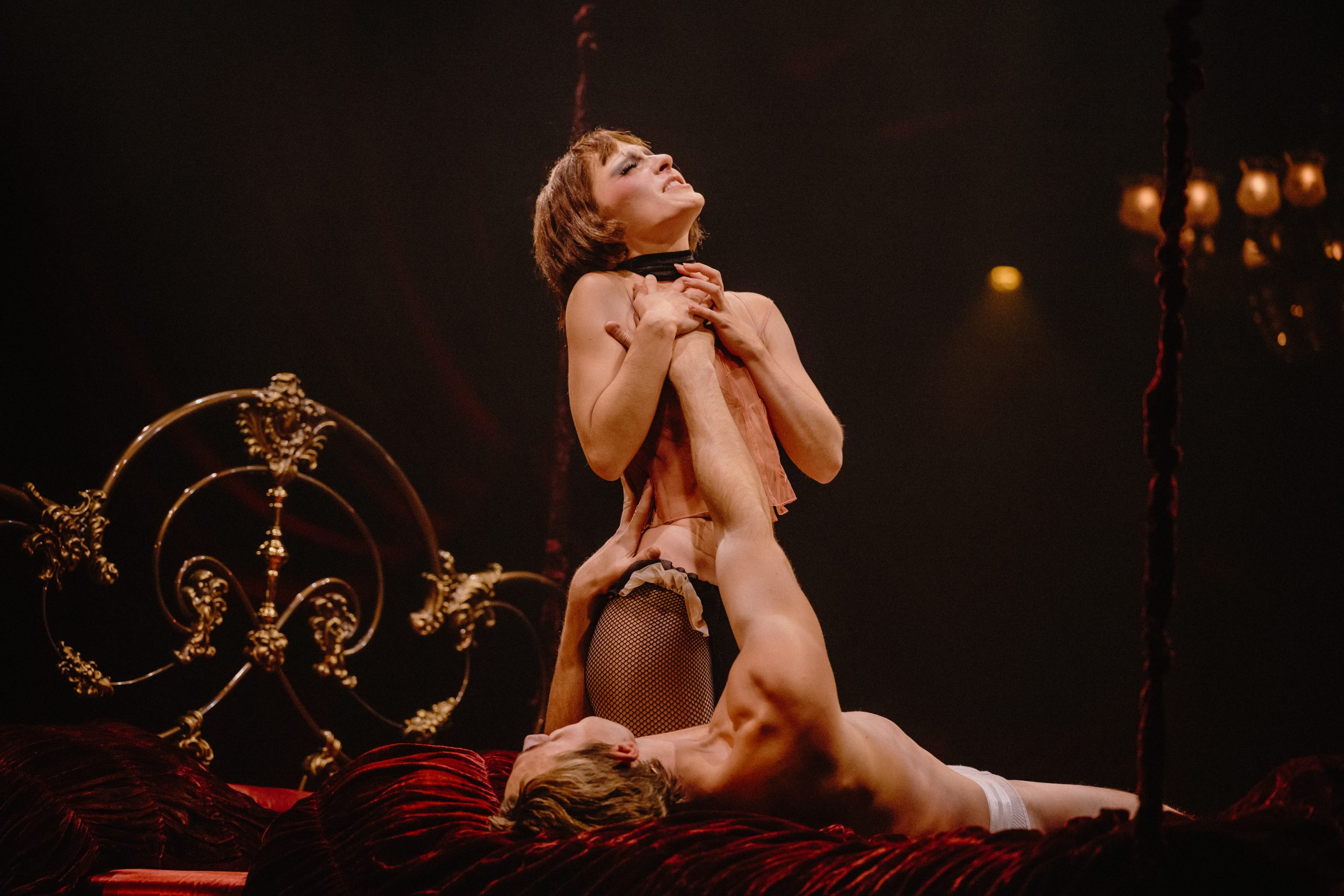
Sophia Anne Caruso delivers a mesmerizing performance in Duncan Sheik’s haunting new musical, where exquisite beauty conceals a far more disturbing reality.
There is something particularly poignant about watching Memoirs of Amorous Gentlemen, one of Duncan Sheik’s final theatrical works, arriving onstage in the shadow of his death. The composer who helped redefine contemporary musical theater with Spring Awakening has left us another haunting score, one whose melodic beauty and emotional darkness seem all the more affecting now that its creator is gone.
Now playing at The Night Egg at The Culture Club, 530 West 27th Street. Imagine the immersive seduction of Sleep No More, filtered through the eroticism of a Parisian brothel, and you begin to understand the atmosphere. This is a production that invites you to look, encourages you to linger, and then makes you question precisely what you have been watching.
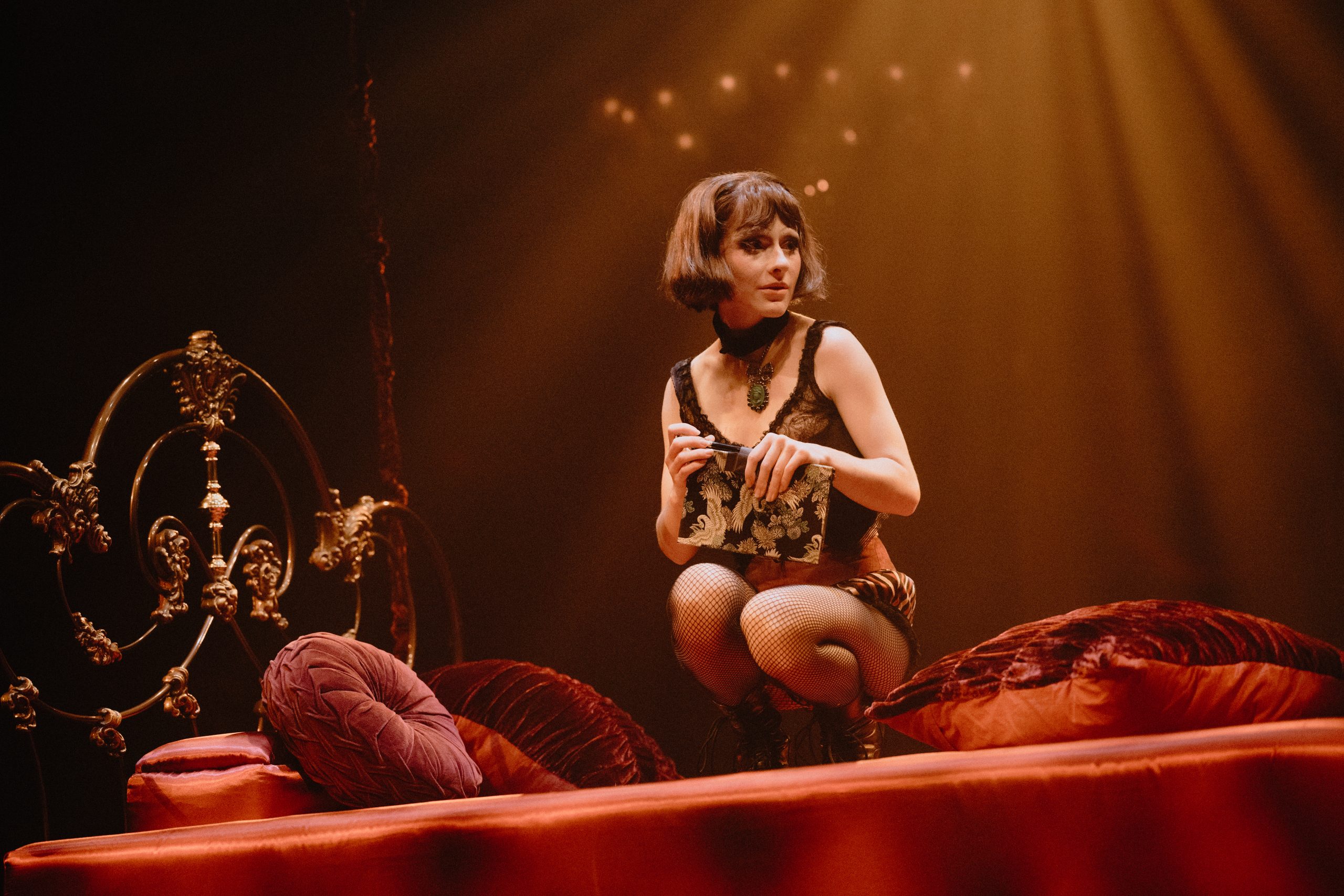
Sophia Anne Caruso photo by Andy Henderson
Make no mistake, this is essentially beautiful soft pornography onstage, wrapped in some of the most exquisite theatrical design currently on display. It is also a production with a frustratingly familiar story, an insufficiently developed book, and one extraordinary young actress who makes the entire evening worth experiencing.
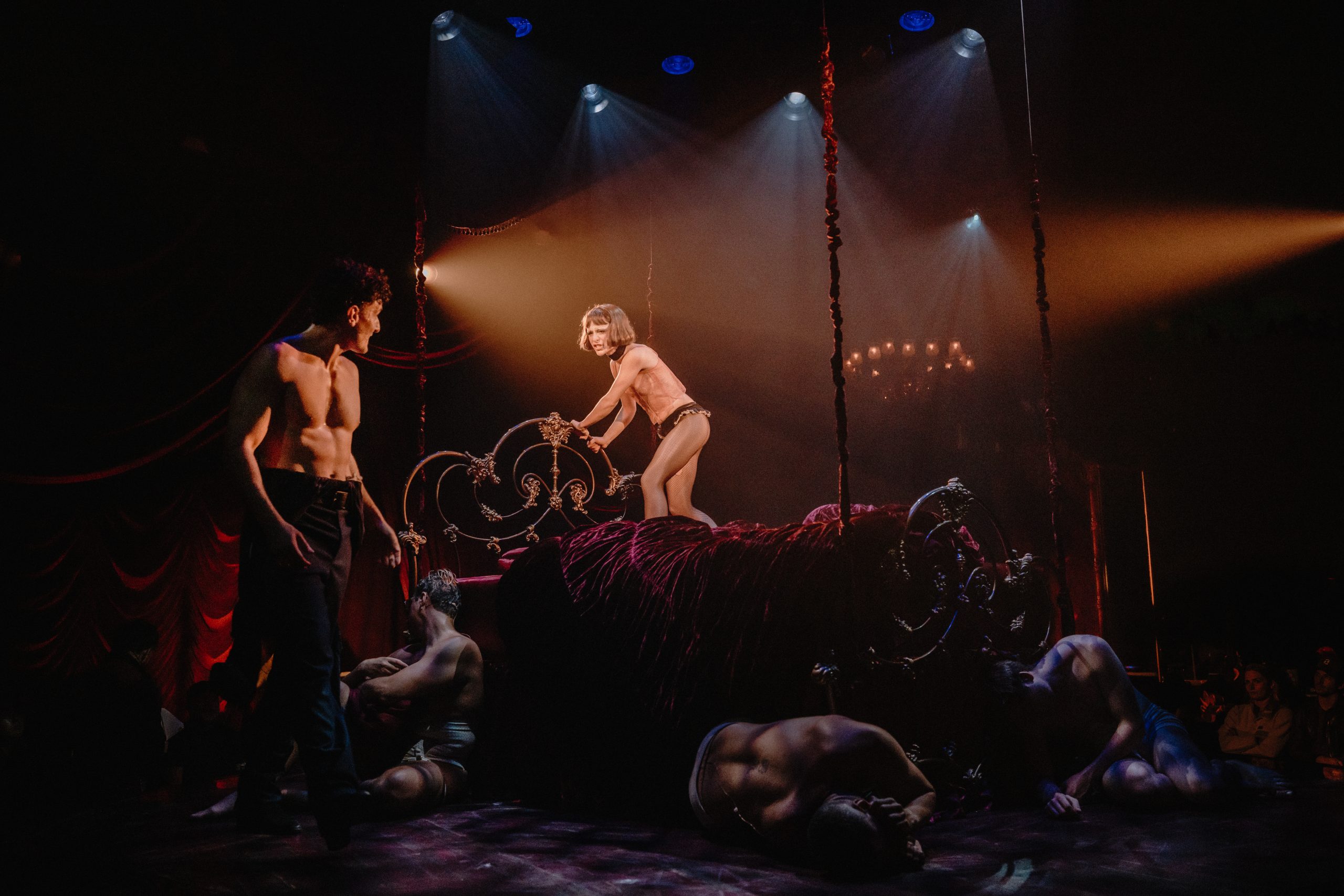
Cory Jeacoma and Sophia Anne Caruso photo by Andy Henderson
Based on Moyoco Anno’s award-winning Japanese manga, with a book by Leah Nanako Winkler, Memoirs of Amorous Gentlemen transports us to a decadent Parisian maison close known as the Night Egg. Here, desire is currency, intimacy is transactional, and the women who inhabit this seductive underworld survive by learning the difference between what men want and what men are willing to give.
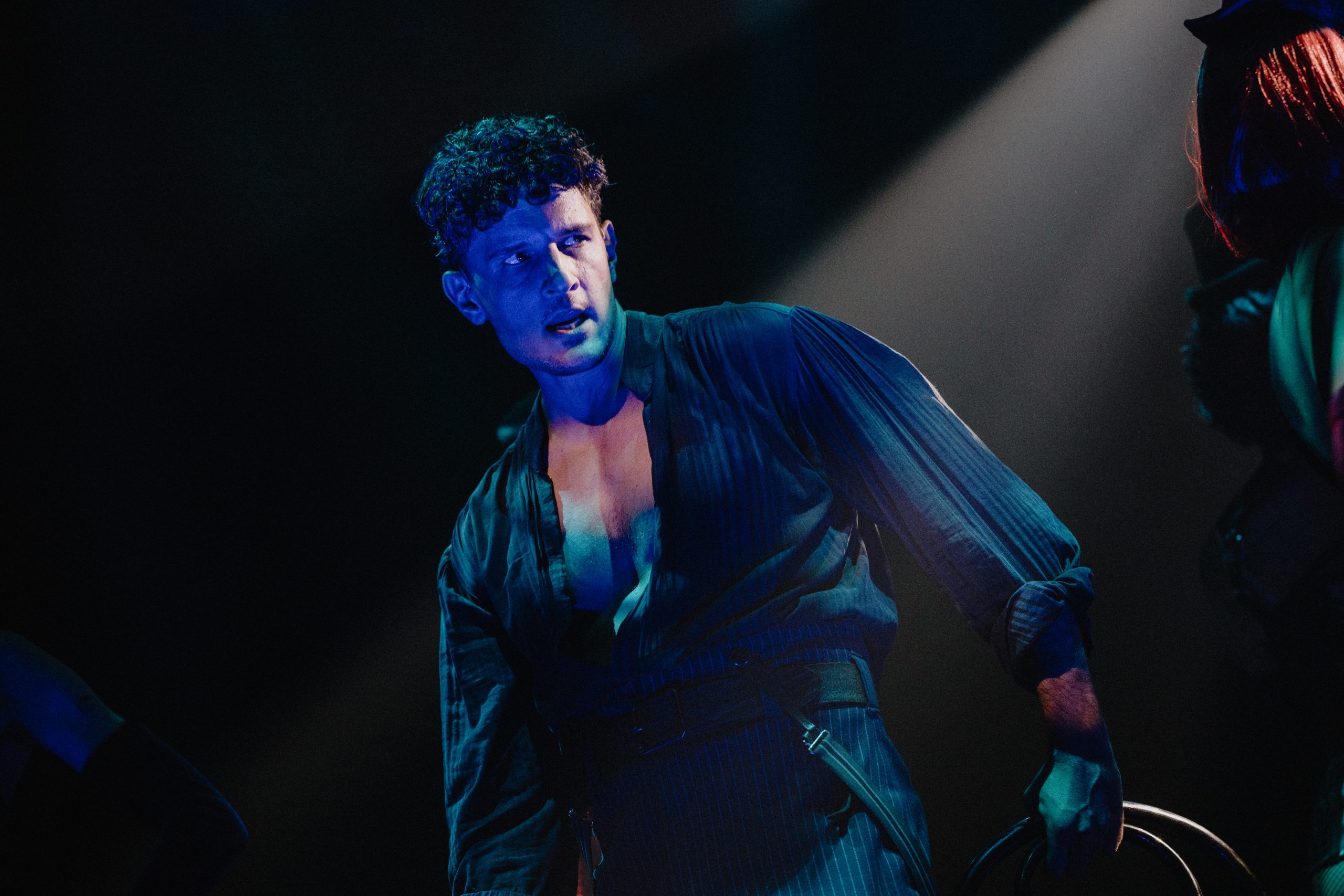
Cory Jeacoma photo by Andy Henderson
At its center is Colette, a young aspiring writer portrayed by the astonishing Sophia Anne Caruso. Colette works within this elaborate world of fantasy while remaining emotionally entangled with Léon (a rake that Cory Jeacoma makes you want o hear more of), her childhood love, a man whose affections prove considerably less dependable than her devotion.
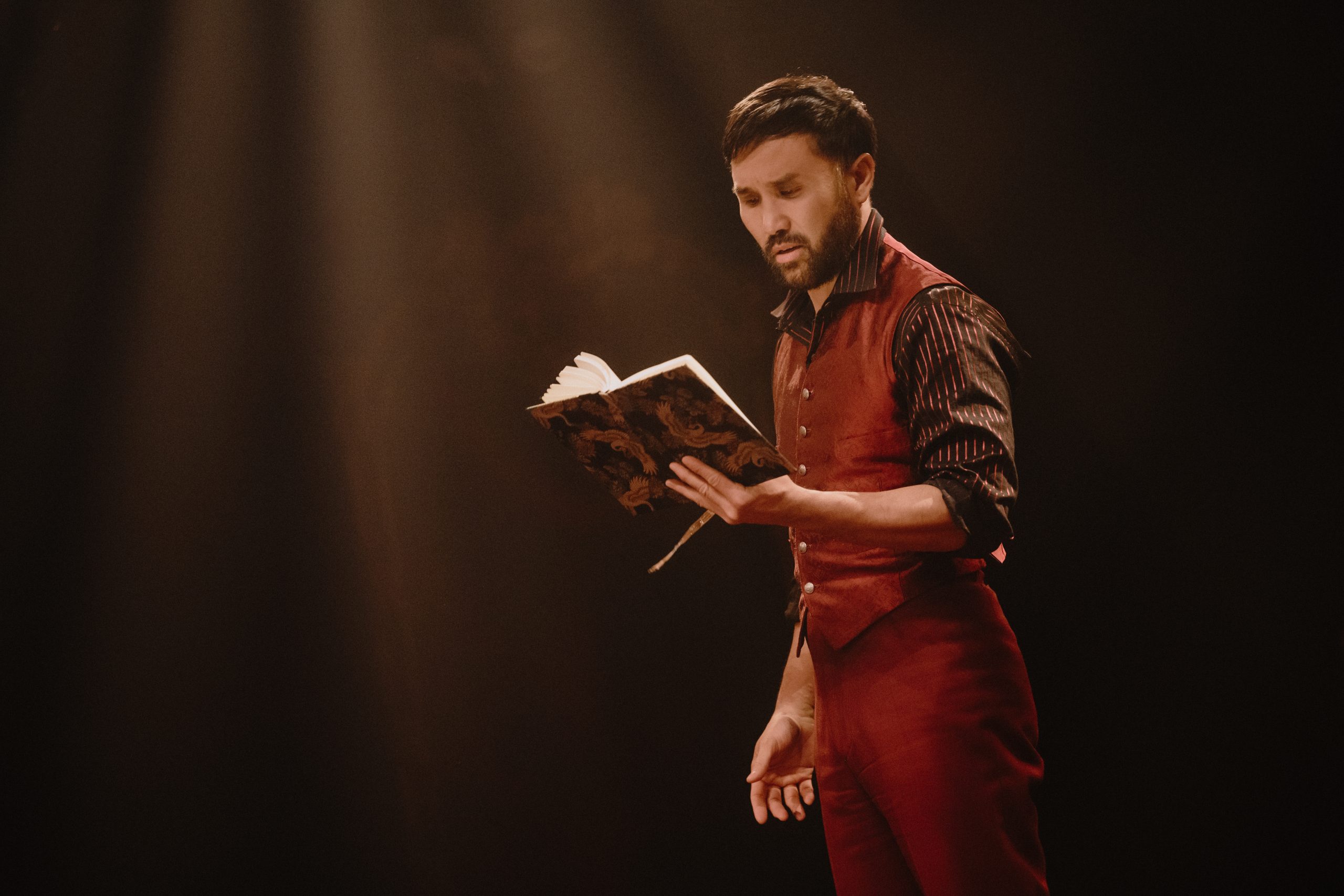
Marc delaCruz photo by Andy Henderson
When a client, Sakae (Marc delaCruz), encourages Colette to put pen to paper, she begins recording the intimate confessions, peculiar fantasies, and private sorrows of the men who frequent the establishment. Through writing, she discovers a means of reclaiming her identity. No longer merely someone to be observed, she becomes the observer, transforming the perversions of others into art.
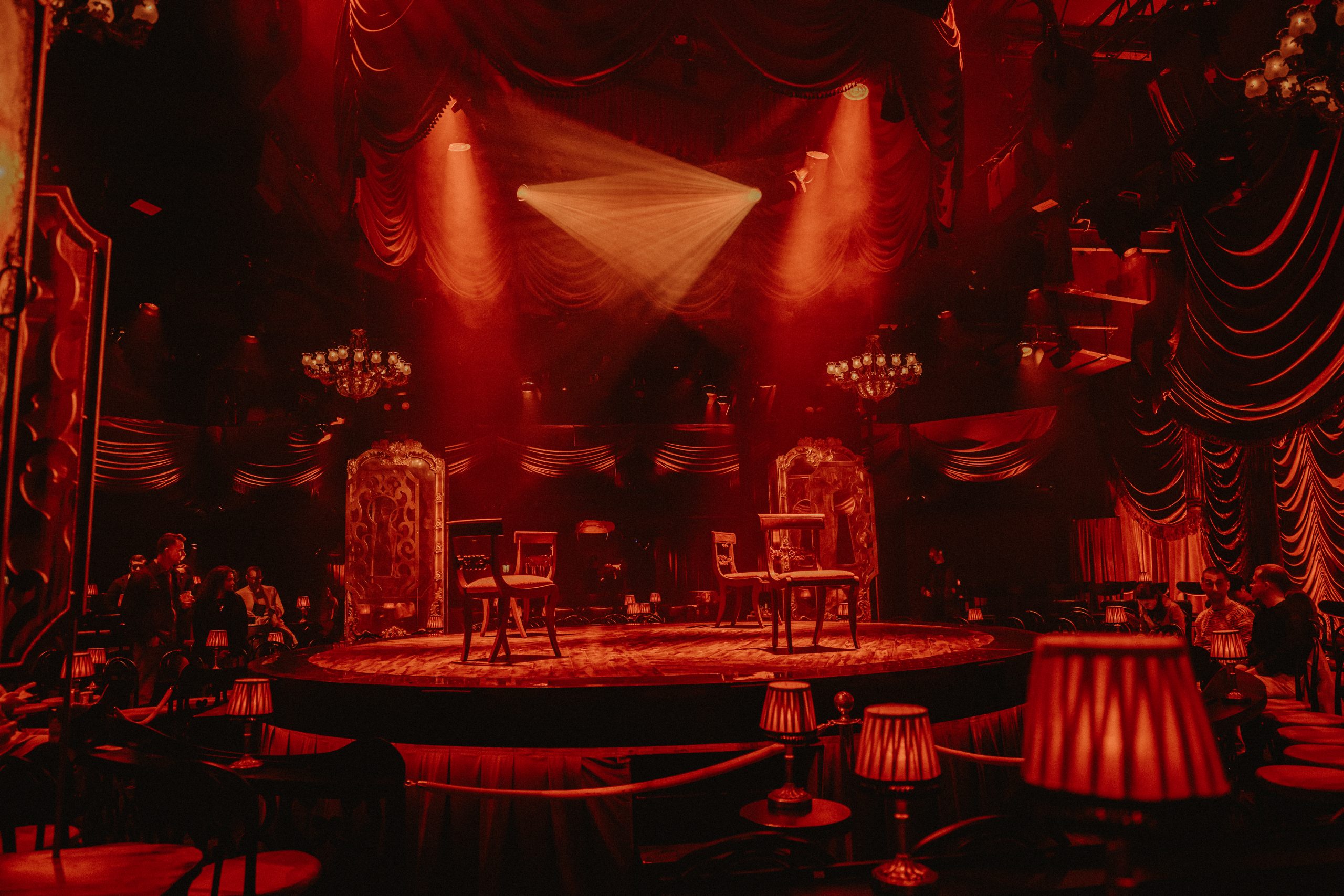
The Night Egg at the Culture Club photo by Andy Henderson
It is a promising premise, but one that feels distressingly familiar. The prostitute with a literary soul, the emotionally unavailable lover, the exploitation masquerading as affection, and the eventual discovery of personal agency are all recognizable dramatic territory. Winkler’s book never quite finds the originality or psychological complexity necessary to elevate these elements into something genuinely revelatory.
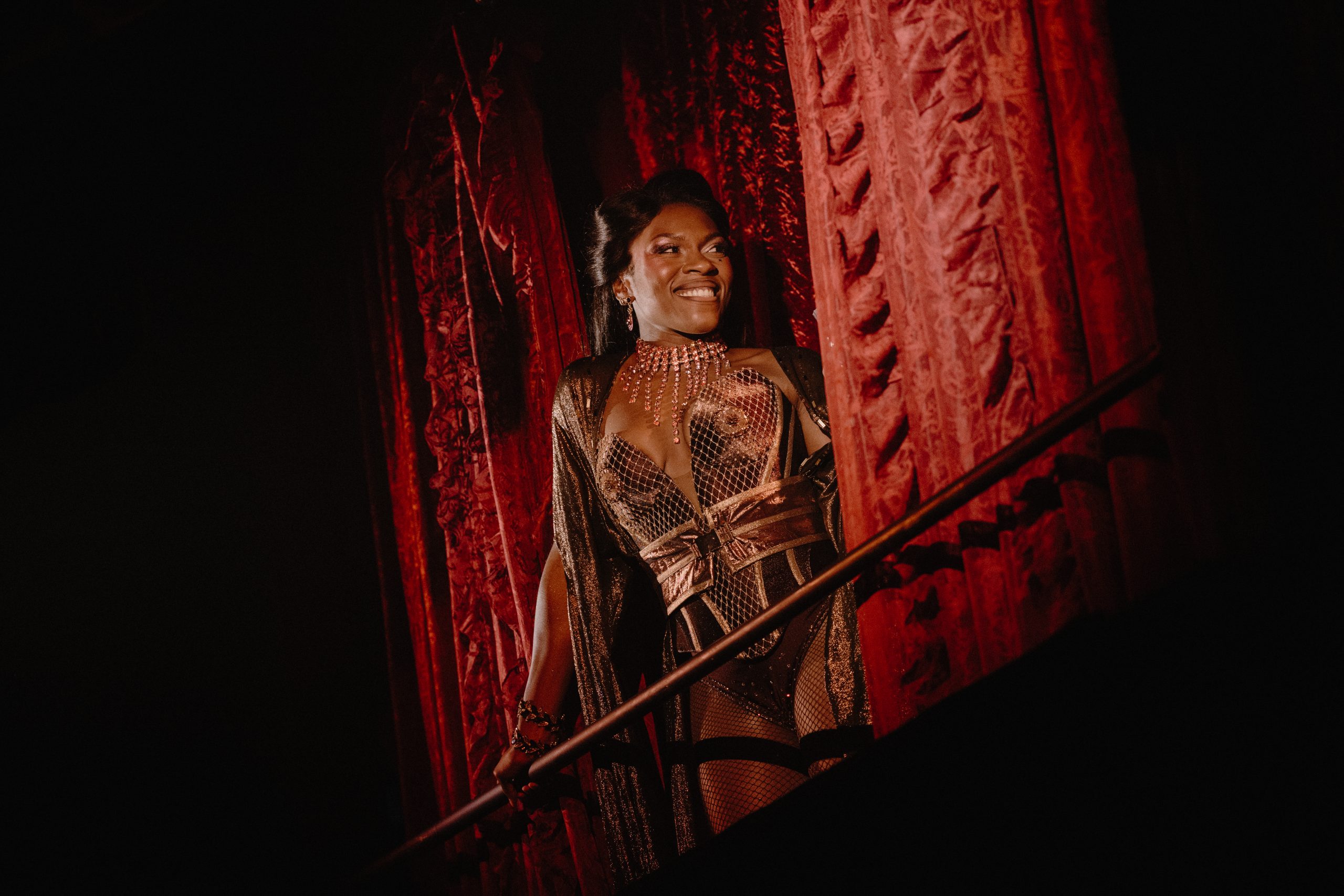
Nkeki Obi-Melekwe photo by Andy Henderson
Léon, meanwhile, exploits Colette’s devotion while directing his money and attention toward Nana, played by Nkeki Obi-Melekwe of Tina: The Tina Turner Musical. Colette continues believing in him long after the audience has recognized the futility of that belief. There is emotional truth in such self-deception, but the writing does not explore it deeply enough to make the relationship as compelling as it should be.
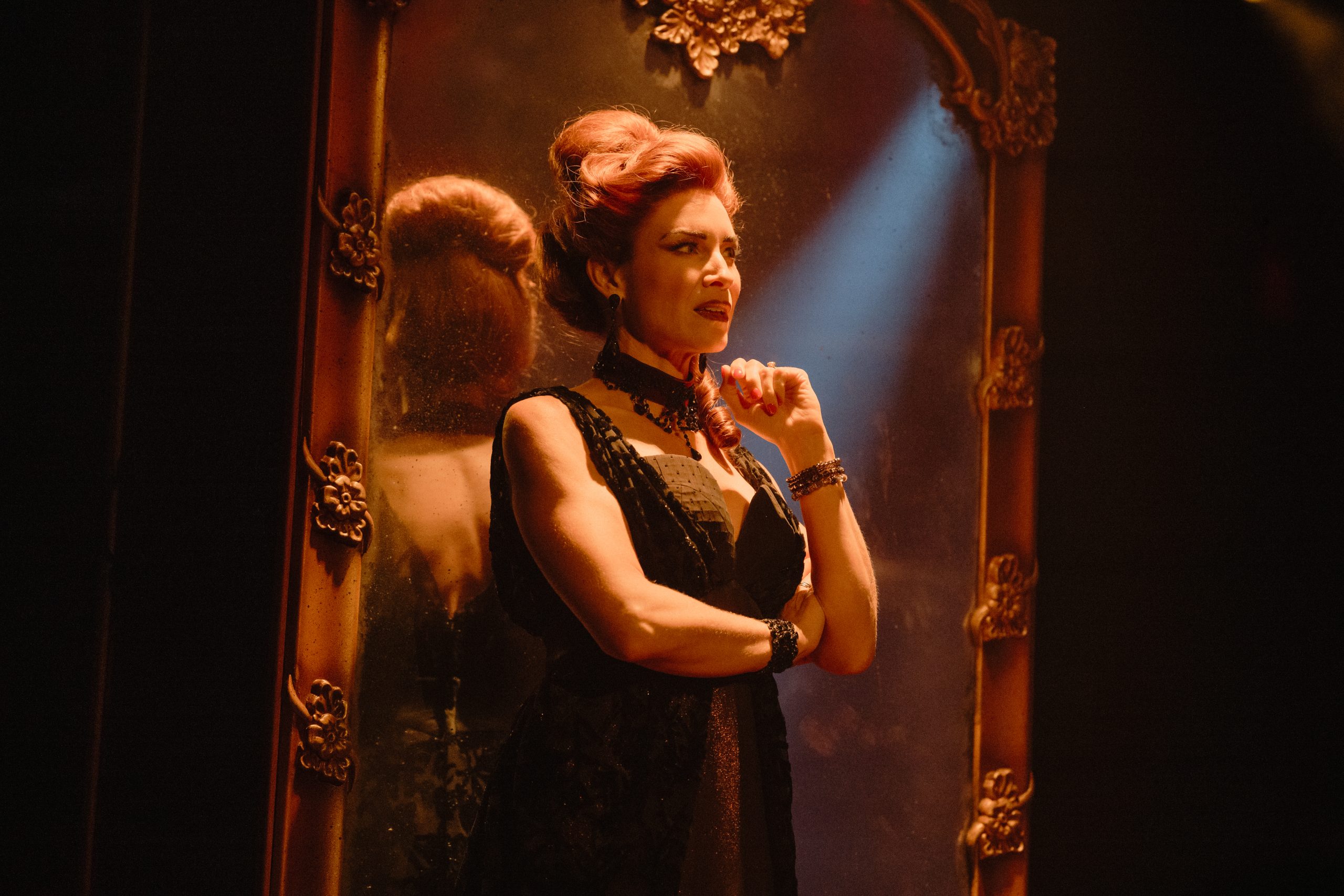
Jenny Powers photo by Andy Henderson
Jenny Powers brings an appropriately chilling authority to Madame, whose coldhearted management of the establishment reminds us that beneath the elaborate costumes and seductive rituals lies a business built upon the commodification of human desire.
What makes the production so compelling is the extraordinary visual and musical world constructed around this underdeveloped narrative.
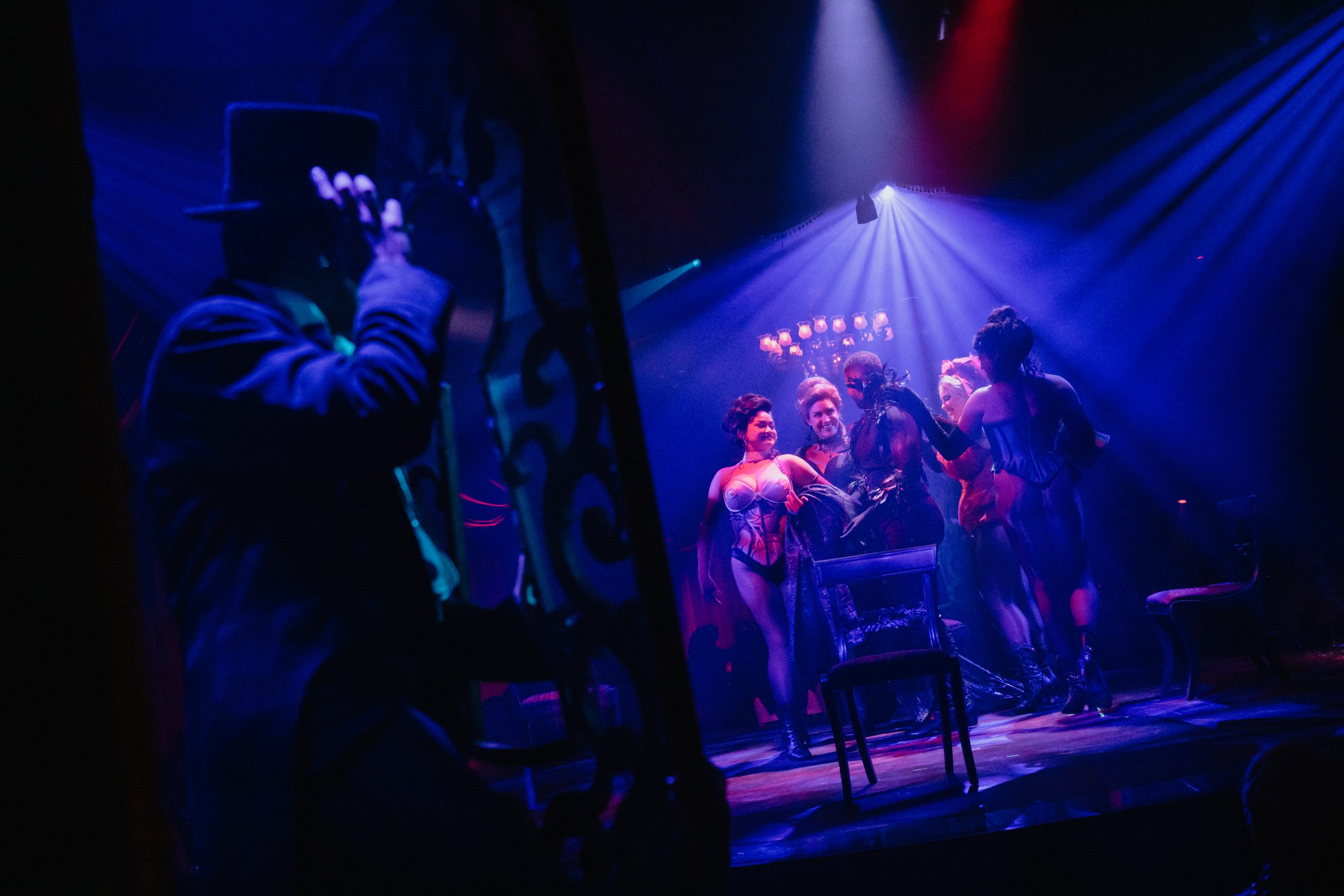
photo by Andy Henderson
Director and choreographer Rob Ashford understands seduction as a theatrical language. His staging is fluid, sensual, and meticulously composed, creating an atmosphere in which movement becomes as expressive as dialogue. The choreography is not simply decorative; it is part of the establishment’s machinery, drawing the audience into a world where beauty and exploitation exist in disturbing proximity.
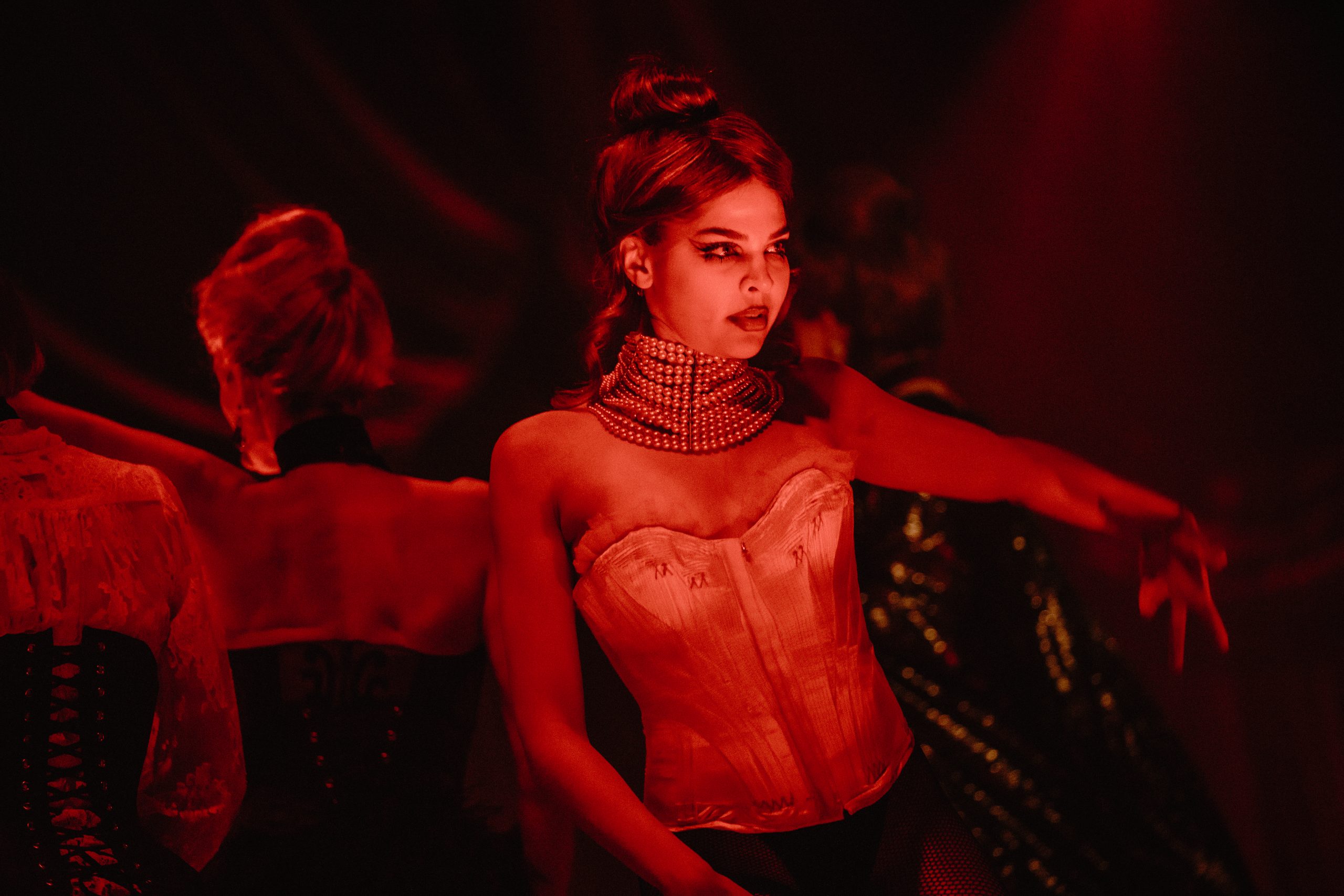
Nika Lindsay photo by Andy Henderson
Scott Pask’s scenic design transforms the space into a decadent Parisian playground, while Catherine Zuber’s costumes are so ravishing that I found myself wanting to purchase practically the entire wardrobe. The textures, silhouettes, and sensual extravagance create a visual feast. If the production occasionally feels more invested in its appearance than its narrative, it is difficult to complain while looking at something this gorgeous.
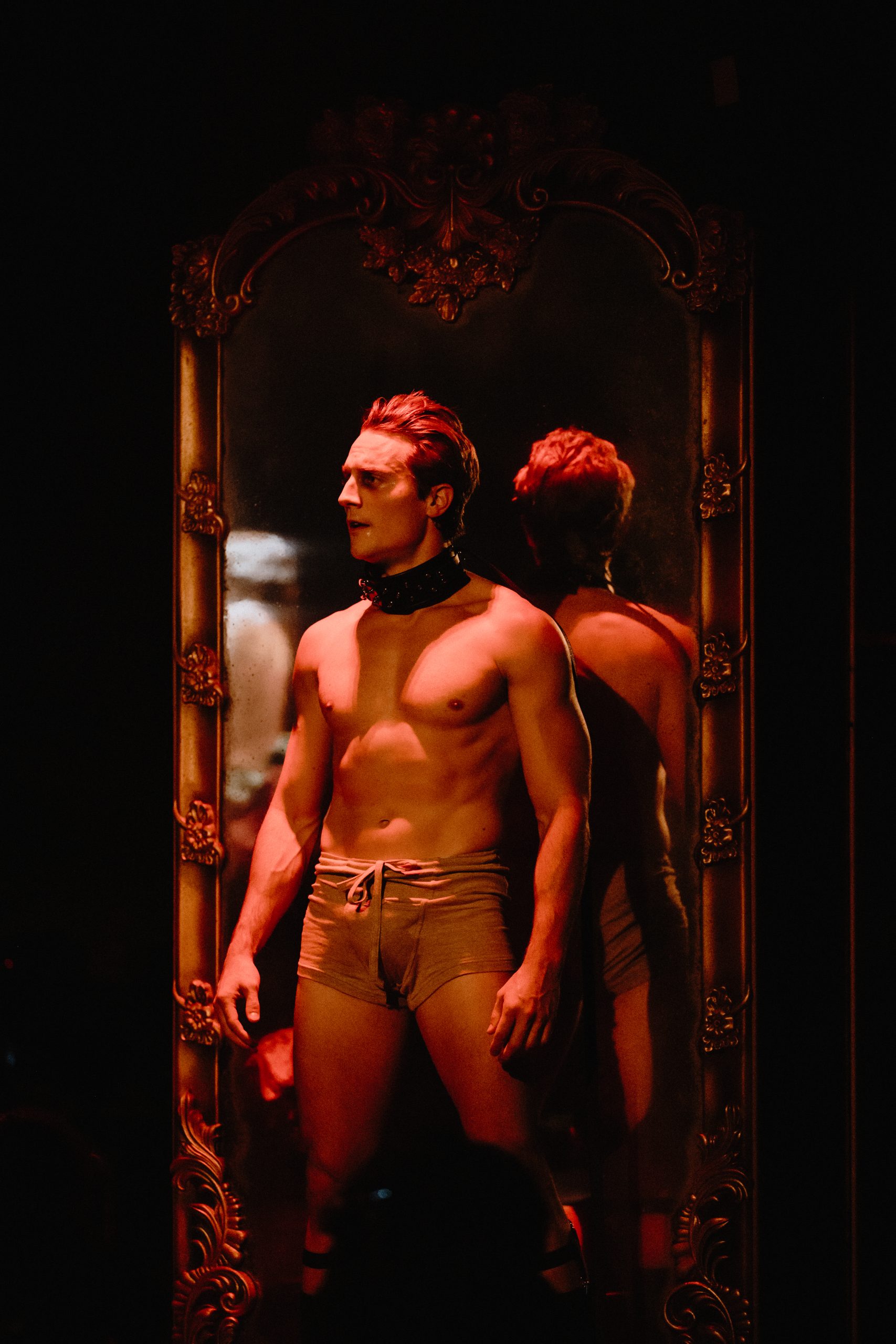
Michael Starr photo by Andy Henderson
Yet that beauty is also the point. The Night Egg is designed to conceal the ugliness of what takes place within its walls. Look from a distance, and everything glitters. Look too closely, and the illusion begins to decay.
Duncan Sheik’s music and lyrics provide the evening with its most haunting dimension. Melodic, atmospheric, and often achingly beautiful, the score has a hypnotic quality that recalls, in spirit, Stephen Sondheim’s Passion. Both works explore the unsettling territory where love becomes obsession and desire slips into emotional captivity.
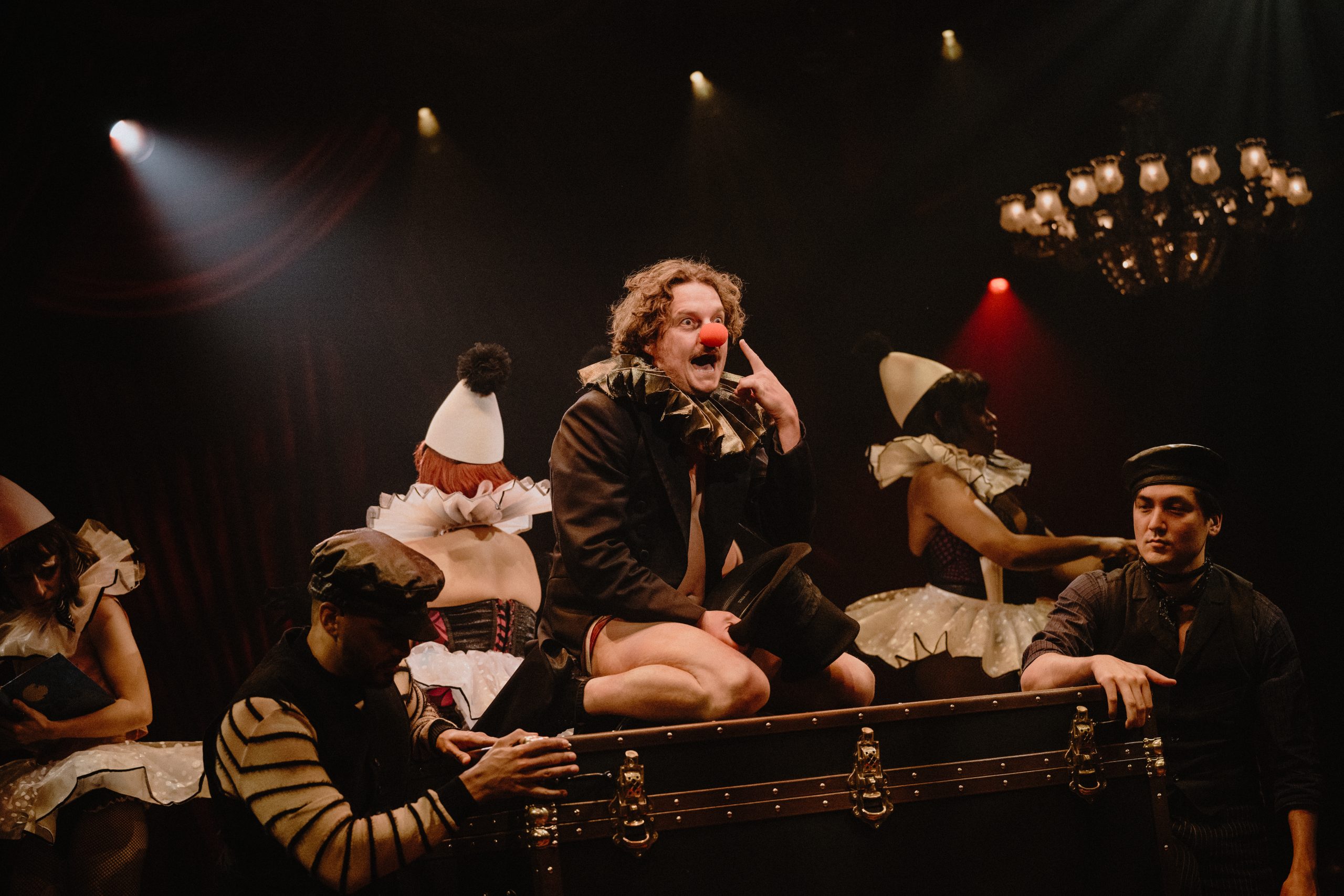
Austin Lesch photo by Andy Henderson
Sheik’s music does not merely accompany the story. It seems to seep through the walls of the Night Egg, making the establishment itself feel alive. There is something almost witchlike about the combination of music, singing, and movement. The melodies draw us inward, creating a seductive spell that makes the eventual recognition of the characters’ suffering all the more unsettling.
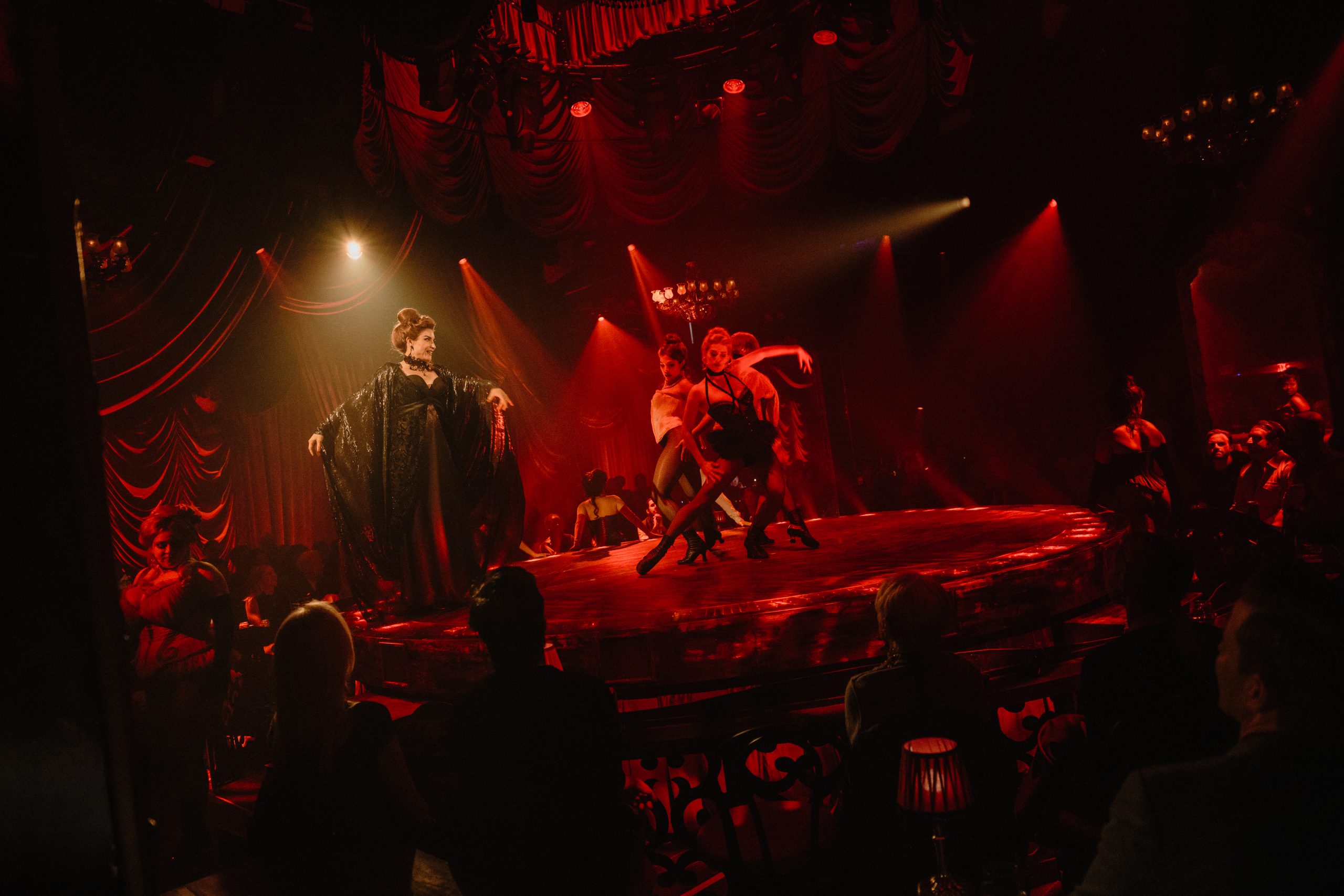
Jenny Powers photo by Andy Henderson
The score is considerably more sophisticated than the book surrounding it. One wishes the writing possessed the same emotional depth and complexity as the music.
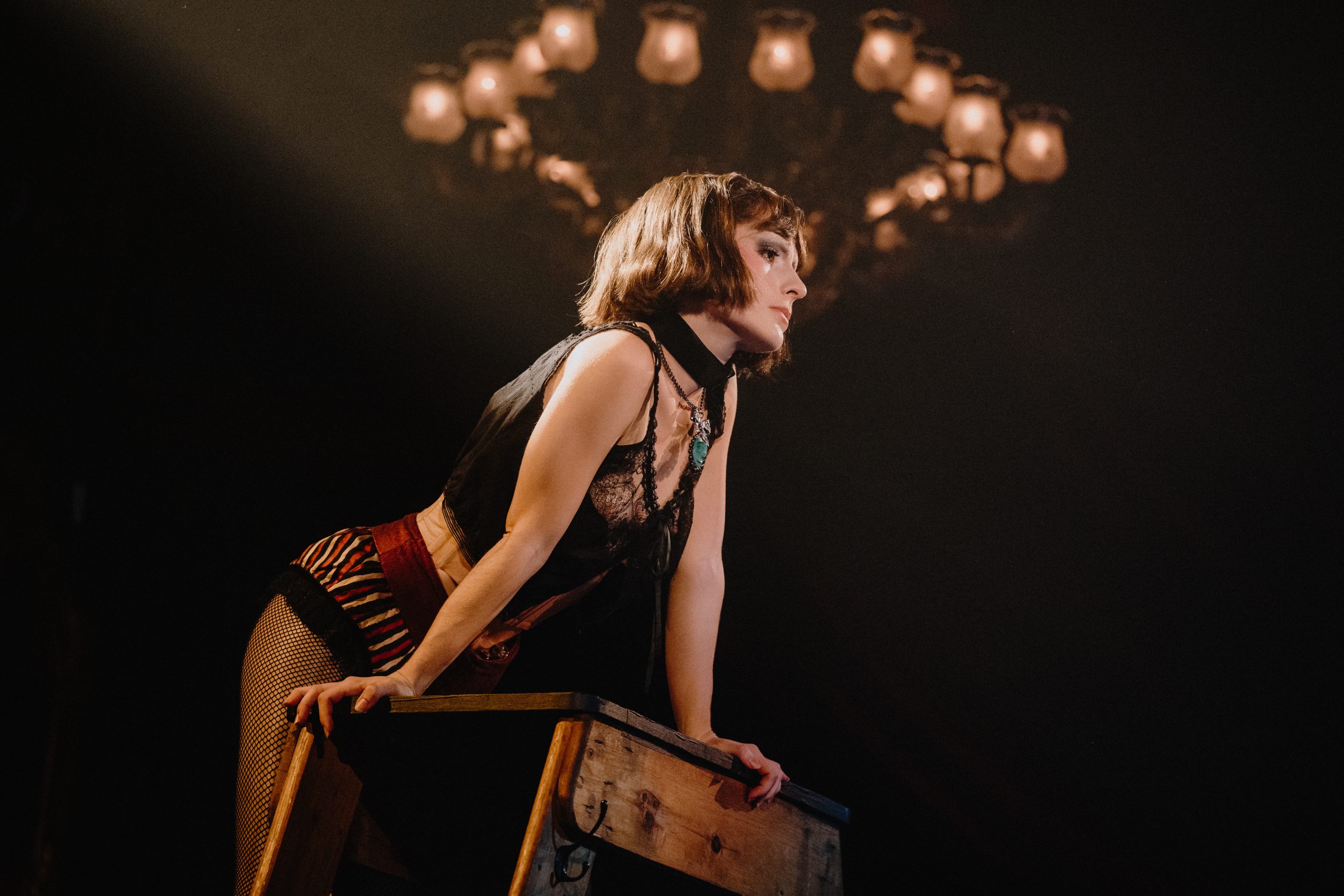
Sophia Anne Caruso photo by Andy Henderson
Then there is Sophia Anne Caruso.
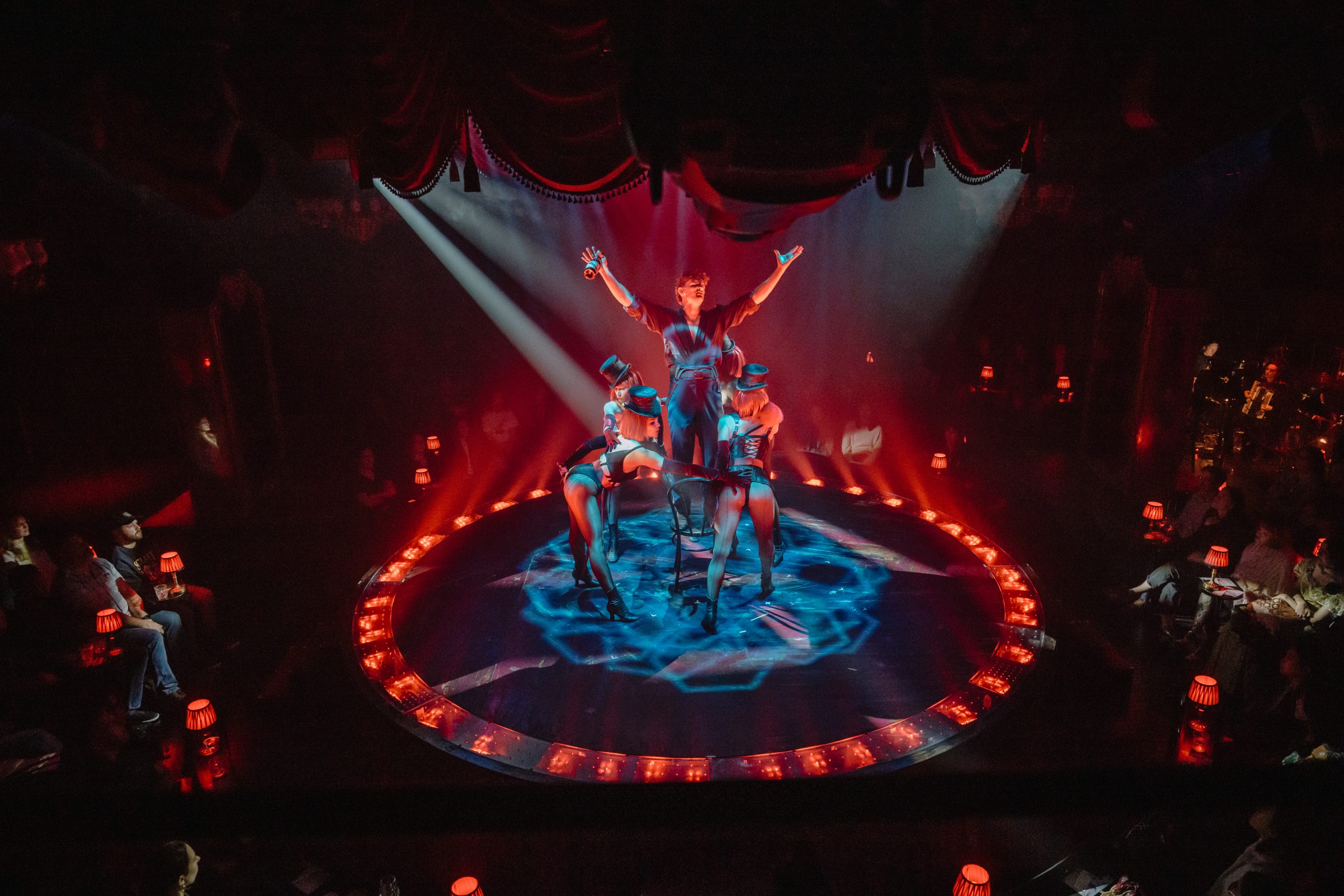
Cory Jeacoma photo by Andy Henderson
I have followed Caruso’s career for years, dating back to The Nether, and watching her artistic development has been a remarkable experience. She has always possessed an arresting theatrical presence, but what she brings to Colette confirms something I have believed for a long time: this young woman is a genuine star.
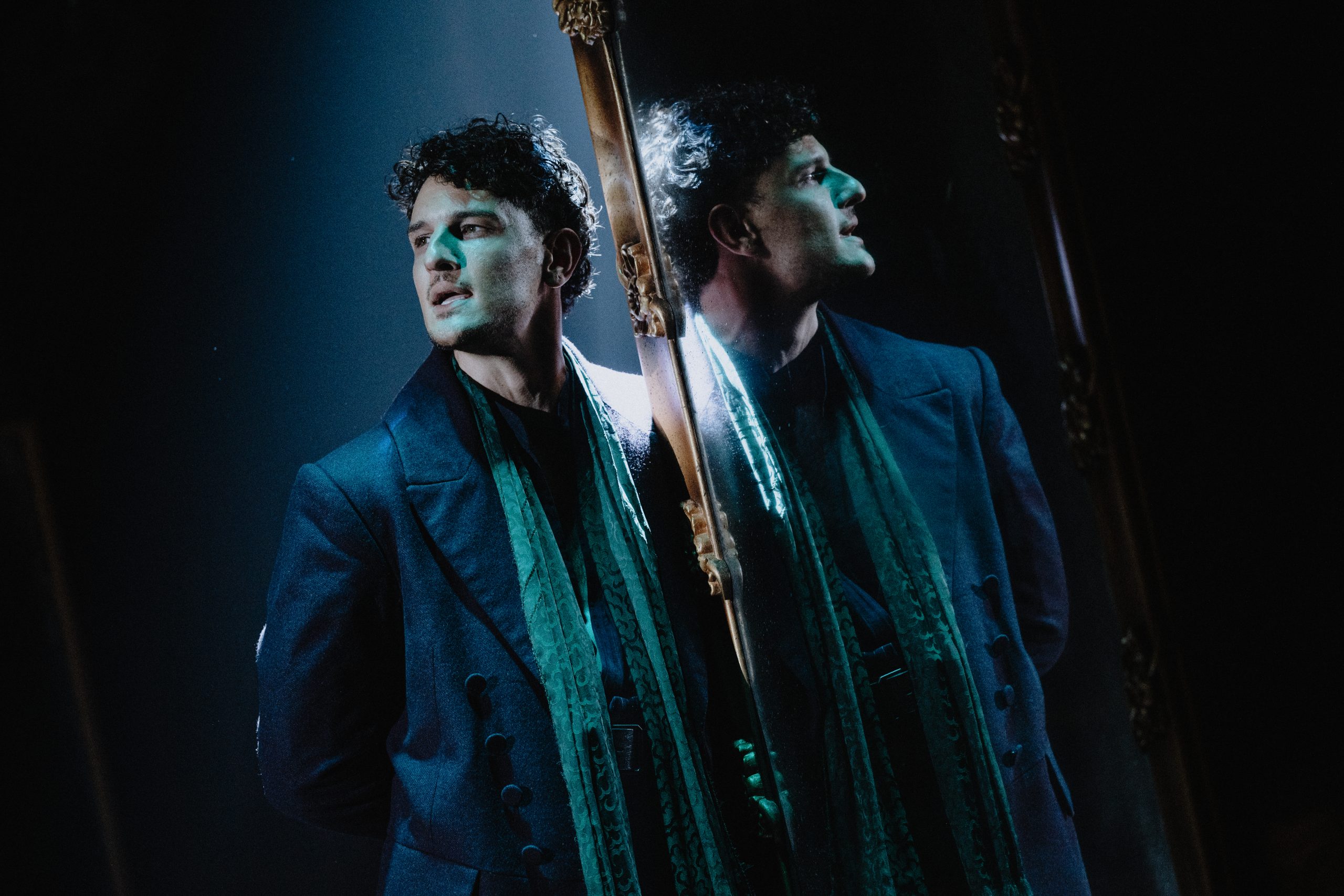
Cory Jeacoma photo by Andy Henderson
Her voice is extraordinary, rich, powerful, and capable of cutting through Sheik’s lush musical landscape with startling emotional clarity. But it is not simply the voice that distinguishes her. It is her acting.
Caruso possesses that rare combination of vulnerability and underlying strength that cannot be manufactured. She can appear almost painfully exposed one moment and reveal an astonishing inner resilience the next. Even when the writing fails to provide the emotional progression her character deserves, she supplies it through the smallest shifts in expression, posture, and vocal color.
There is nothing generic about her performance. She inhabits Colette with an intelligence and emotional honesty that give the character dimensions the book only begins to suggest. Her vulnerability never feels like weakness; it becomes the very source of her strength.
Quite simply, Sophia Anne Caruso is the reason to see Memoirs of Amorous Gentlemen.
And I wish she had been given a better book.
That is ultimately the frustration of this production. Ashford has created a seductive theatrical experience, Pask and Zuber have fashioned a world of extraordinary beauty, Sheik has supplied a haunting score, and Caruso delivers a performance of genuine star quality. Yet the central story never achieves the originality or dramatic force necessary to match these accomplishments.
For all its sensuality, Memoirs of Amorous Gentlemen is less provocative than it believes itself to be. Voyeurism is not inherently revelation, and exposing the private lives of men does not automatically produce insight into the women whose bodies and emotions they consume.
Still, there is something undeniably compelling about this strange, gorgeous evening. The music lingers, the imagery seduces, and Caruso’s performance refuses to fade from memory.
Memoirs of Amorous Gentlemen is a beautiful illusion with something rotten beneath its surface. Its greatest achievement is not making us believe in the illusion, but allowing us to glimpse the darkness behind it.
Sheik’s death lends this production an unexpected poignancy. His music remains its most haunting achievement, a reminder of a composer who understood that desire, longing, and emotional devastation often speak most eloquently through melody. The book may fail to match the sophistication of his score, but the music is unmistakably his: seductive, intelligent, and achingly human.
Memoirs of Amorous Gentlemen: The Night Egg at The Culture Club, 530 West 27th Street, between Tenth and Eleventh Avenues through January 3, 2027.
Broadway
Tom Hiddleston and Hayley Atwell Are Bringing Shakespeare’s Battle of the Sexes to Broadway
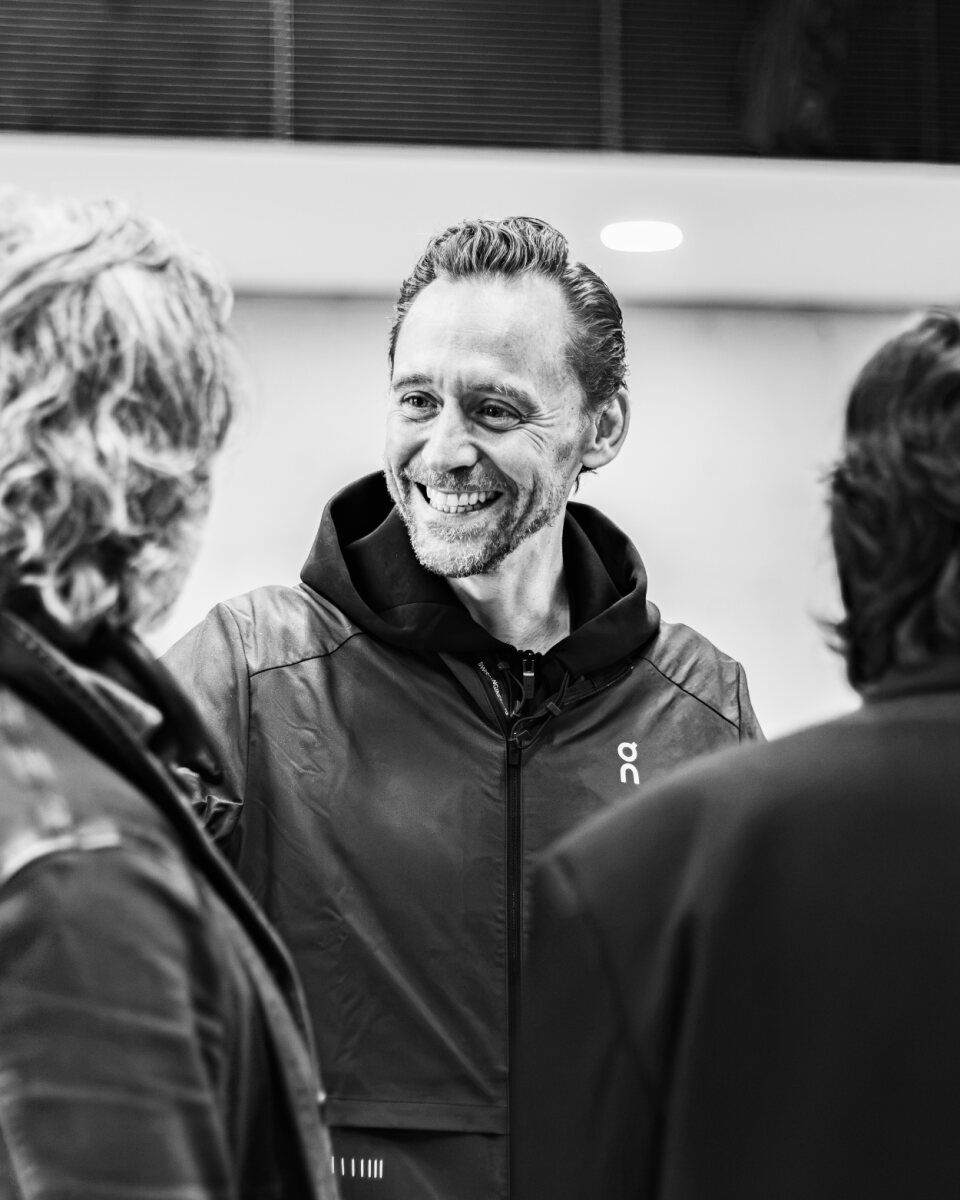
Jamie Lloyd’s Much Ado About Nothing begins rehearsals in London before its hotly anticipated New York engagement at the Winter Garden Theatre.
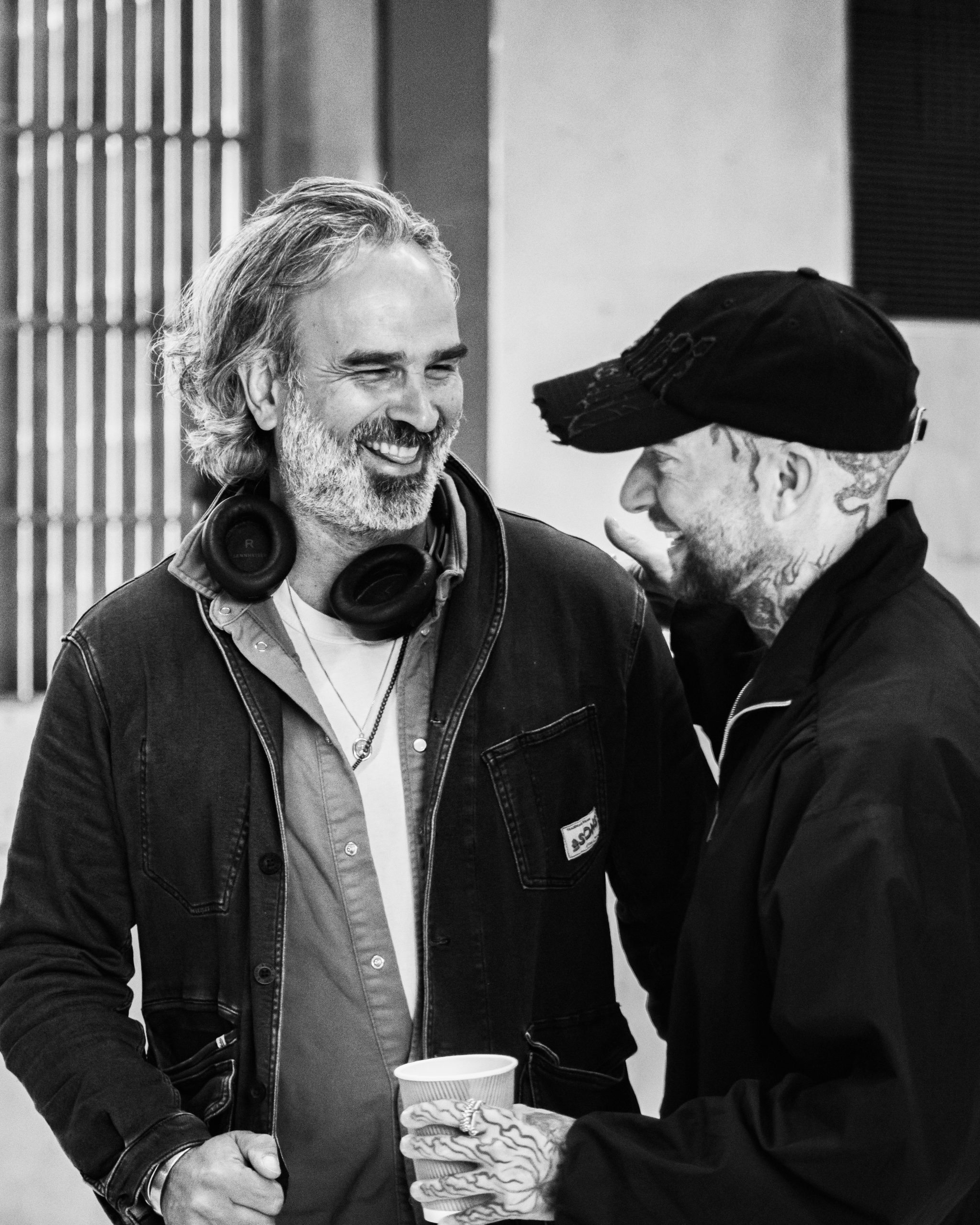
Gerald Kyd, Jamie Lloyd Photo by Justine Matthew
Broadway is about to get a delicious dose of Shakespearean sparring, and the combatants are rather irresistible.
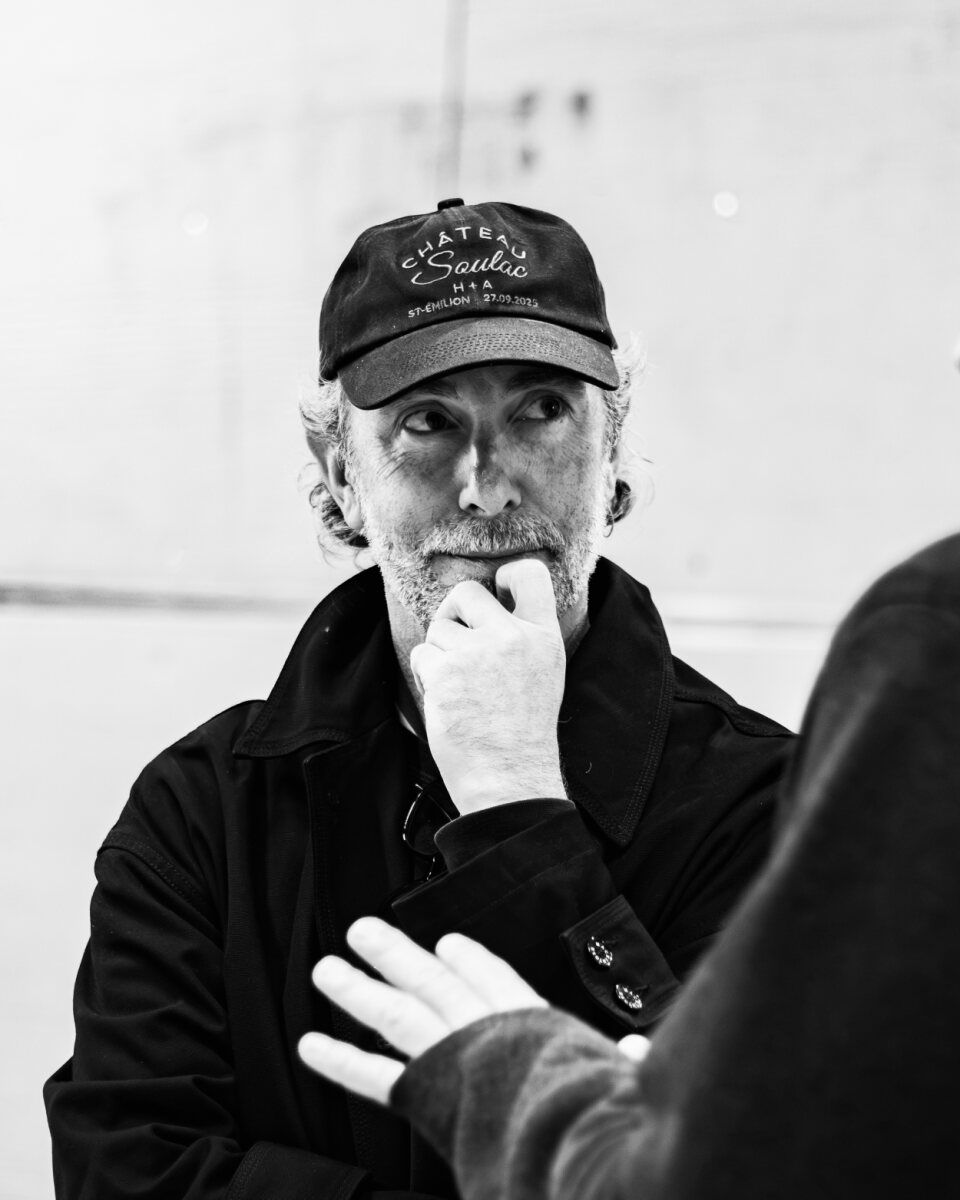
Tom Hiddleston photo by Justine Matthew
Tom Hiddleston
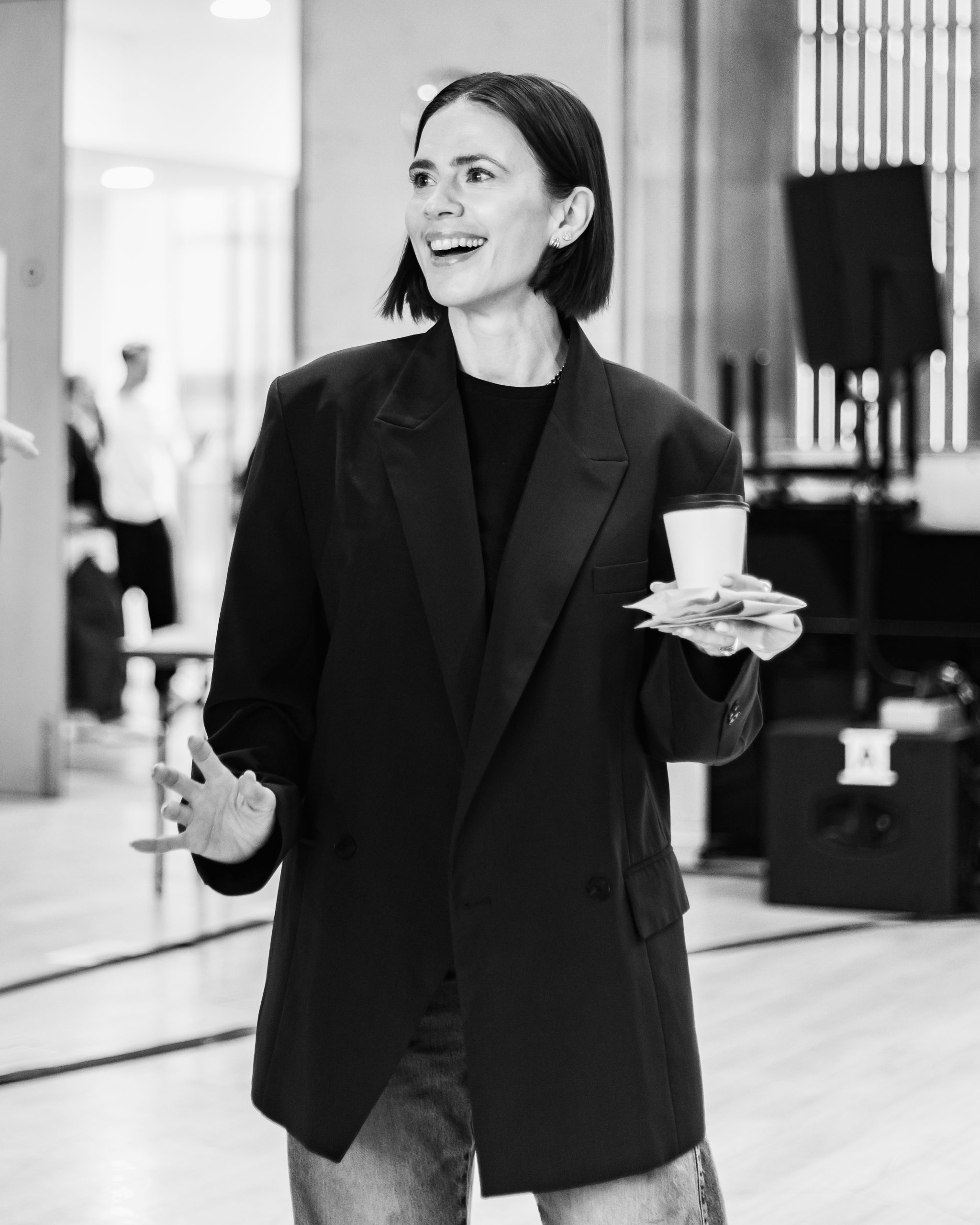
Hayley Atwell Photo by Justine Matthew
and Hayley Atwell are preparing to go head-to-head in Much Ado About Nothing, bringing two formidable British talents, considerable star power and what promises to be some spectacular verbal warfare to the Winter Garden Theatre.
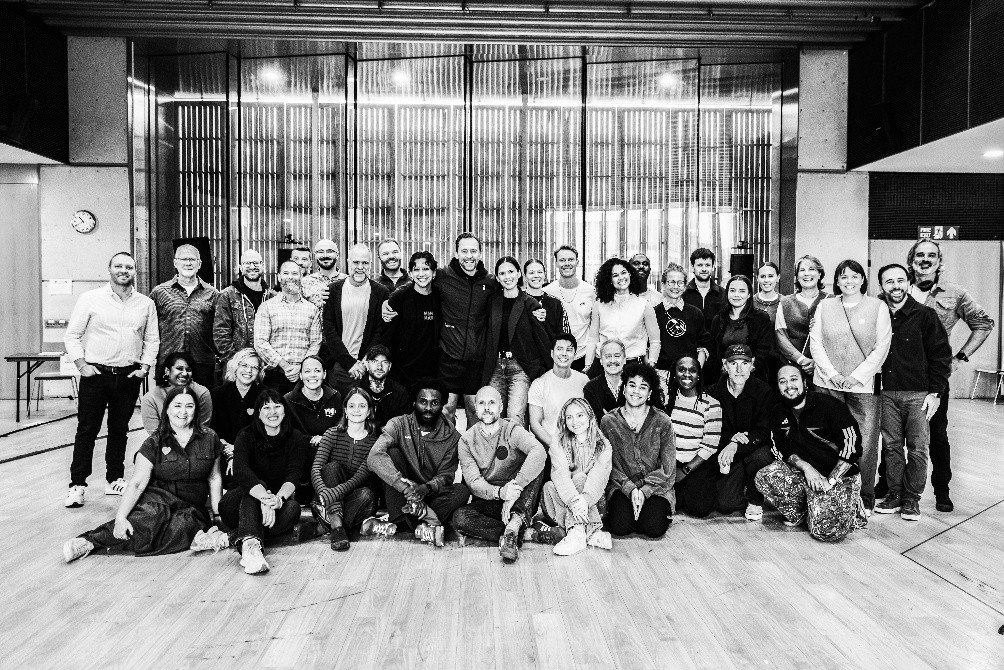
Cast and crew photo by Justine Matthew
Under the direction of the ever-provocative Jamie Lloyd, rehearsals are officially underway in London for the strictly limited Broadway engagement, which begins previews October 31, opens November 19 and runs through January 10, 2027.
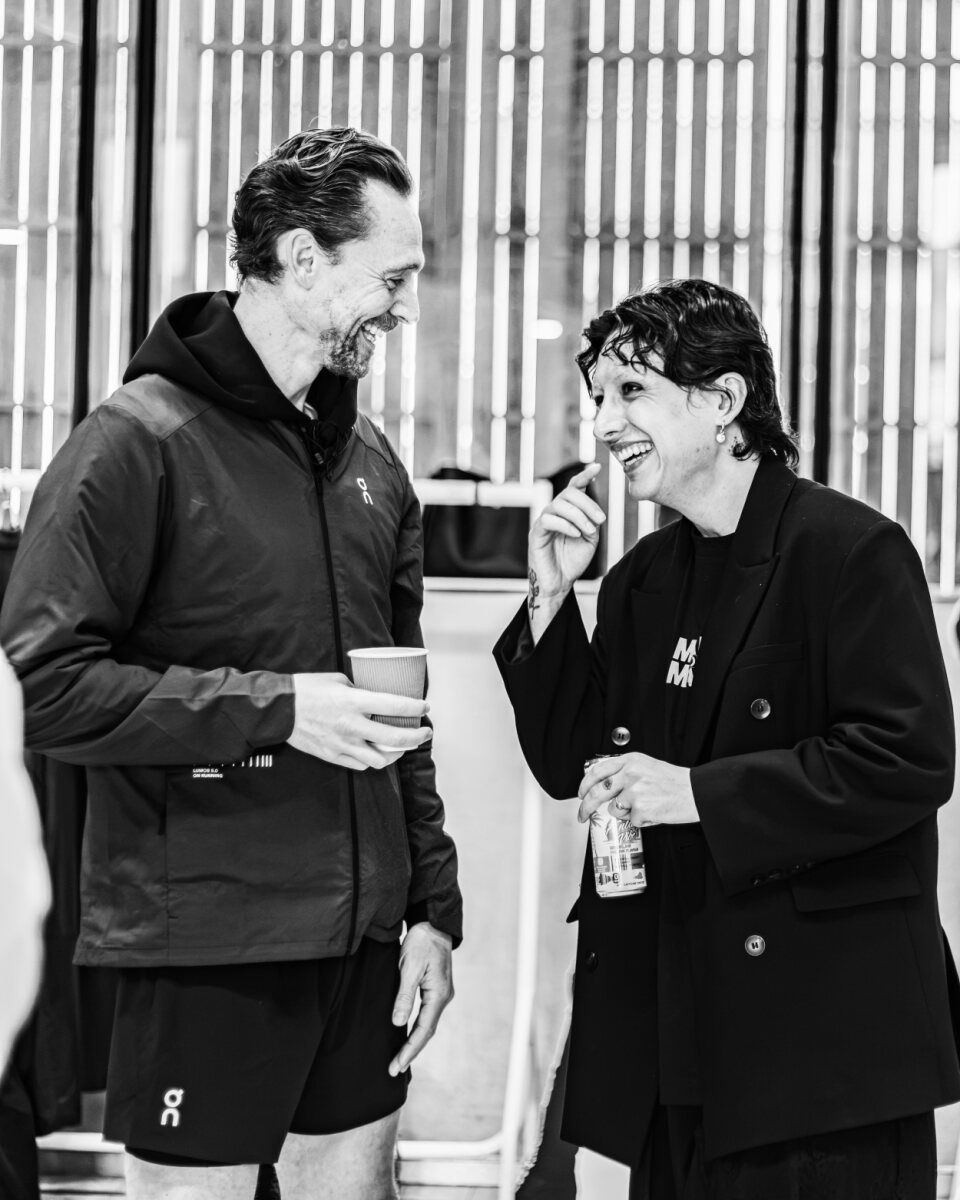
Tom Hiddleston, Mason Alexander Park photo by Justine Matthew
Frankly, who better to play Shakespeare’s most gloriously argumentative couple?
Hiddleston, whose effortless sophistication and mischievous charm have made him equally compelling on stage and screen, takes on Benedick, the confirmed bachelor who considers himself far too clever to fall in love. Audiences know him as Marvel’s deliciously unpredictable Loki, but theatre devotees know that beneath the cinematic charisma is a classically trained actor with serious Shakespearean credentials. An Olivier Award winner, Tony nominee and Golden Globe winner, Hiddleston has the intelligence, precision and impeccable comic instincts to make Benedick’s verbal gymnastics particularly entertaining.
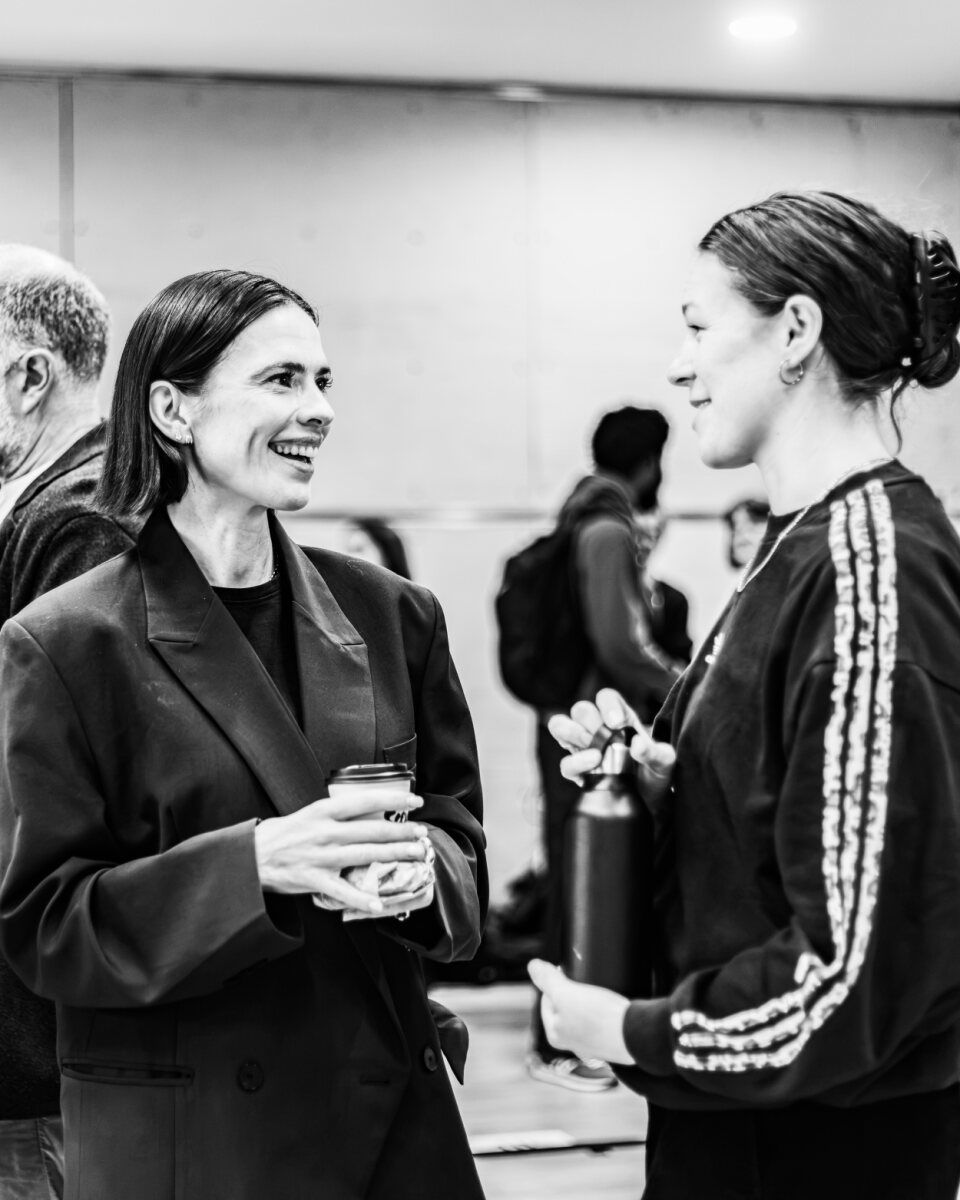
Hayley Atwell photo by Justine Matthew
Opposite him is Hayley Atwell, making her Broadway debut as Beatrice, one of Shakespeare’s most brilliantly outspoken women. Best known internationally for her portrayal of Peggy Carter in the Marvel universe, Atwell is also a three-time Olivier Award nominee whose theatrical career has demonstrated a remarkable combination of emotional depth, razor-sharp wit and commanding presence. Beatrice requires an actress who can turn a cutting remark into an art form while revealing the vulnerability beneath the bravado. Atwell seems particularly well suited to the challenge.
Then there is the irresistible prospect of seeing these two Marvel veterans trading Shakespearean insults instead of saving the universe. One suspects their weapons of choice will be considerably more entertaining than anything found in an Avengers arsenal.
For the uninitiated, Much Ado About Nothing revolves around Benedick and Beatrice, two fiercely independent personalities who insist they have absolutely no interest in romance, particularly with each other. Naturally, everyone around them knows better. Their friends conspire to bring them together, setting off a cascade of misunderstandings, romantic intrigue, wounded pride and some of the most dazzling dialogue Shakespeare ever wrote.
Beneath the comedy lies a surprisingly modern examination of reputation, public humiliation, deception and the dangerous ease with which appearances can be mistaken for truth. In an age of social media, instant judgment and reputations destroyed at breathtaking speed, Shakespeare’s observations about human behavior feel remarkably contemporary.
That tension between sparkling comedy and darker emotional undercurrents should prove fertile territory for Jamie Lloyd, whose theatrical imagination has made him one of the most talked-about directors working today. A Tony Award winner and multiple Olivier Award recipient, Lloyd is known for stripping familiar classics down to their emotional essentials, creating productions that challenge expectations while placing extraordinary demands on their performers.
His approach to Much Ado About Nothing is likely to make this far more than a conventional evening of Elizabethan romance. With Lloyd at the helm, the question is not simply whether Benedick and Beatrice will fall in love, but how their pride, defenses and carefully constructed identities will survive the experience.

Mara Huf photo by Justine Matthew
Joining Hiddleston and Atwell is an accomplished ensemble featuring Mara Huf as Hero
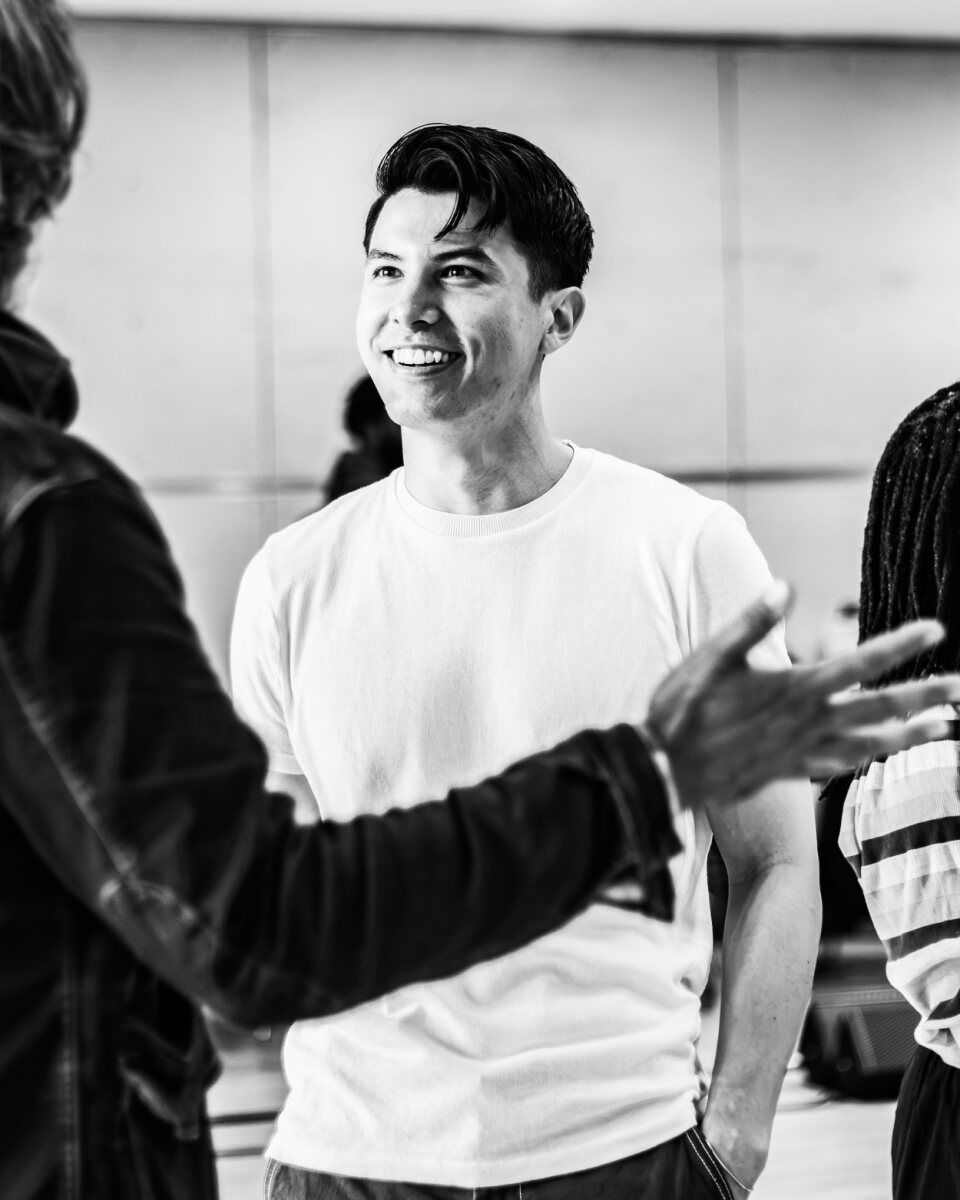
James Phoon photo by Justine Matthew
James Phoon as Claudio, Gerald Kyd as Don Pedro, Forbes Masson as Leonato, Tim Steed as Don John, Mika Onyx Johnson as Borachio,
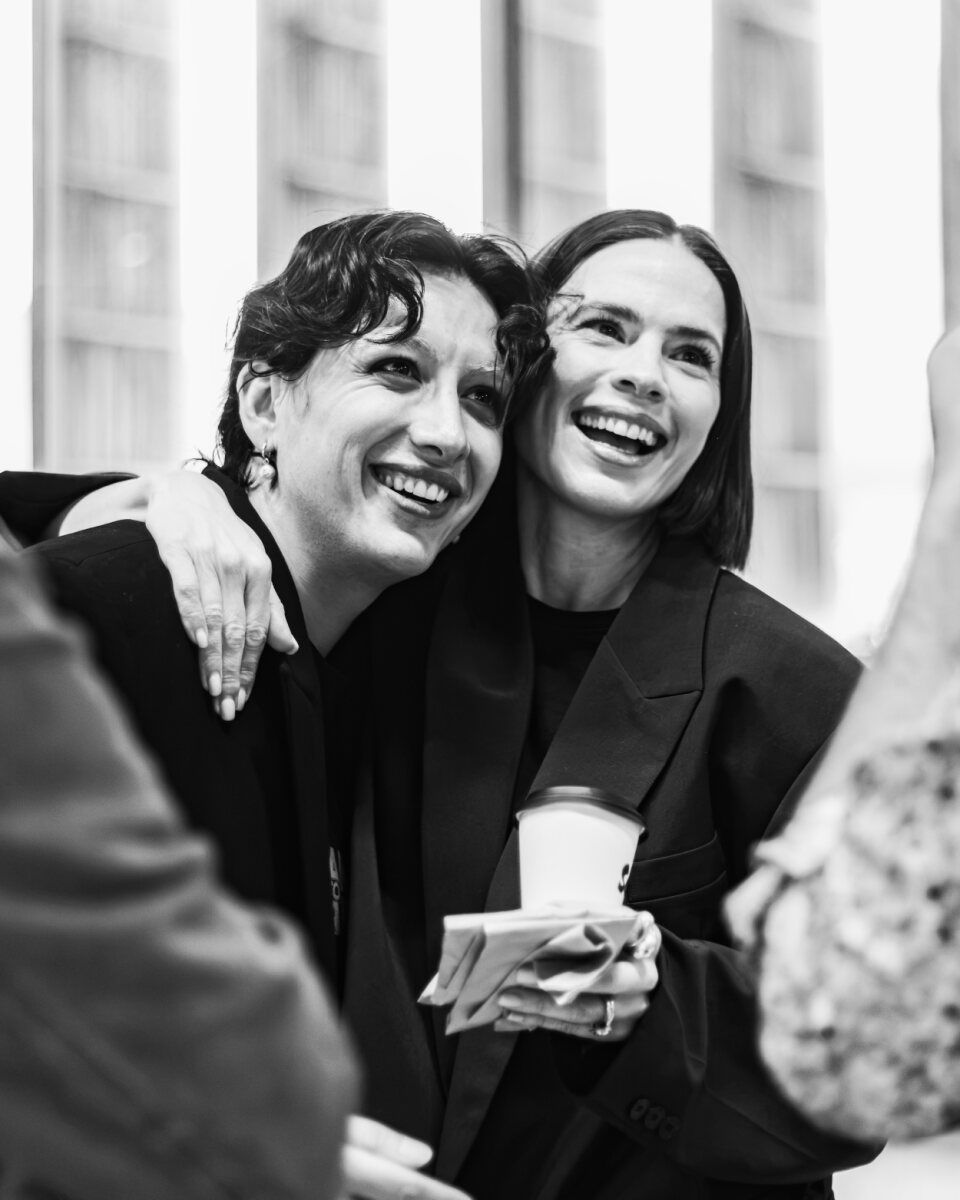
Mason Alexander Park, Hayley Atwell photo by Justine Matthew
Mason Alexander Park as Margaret
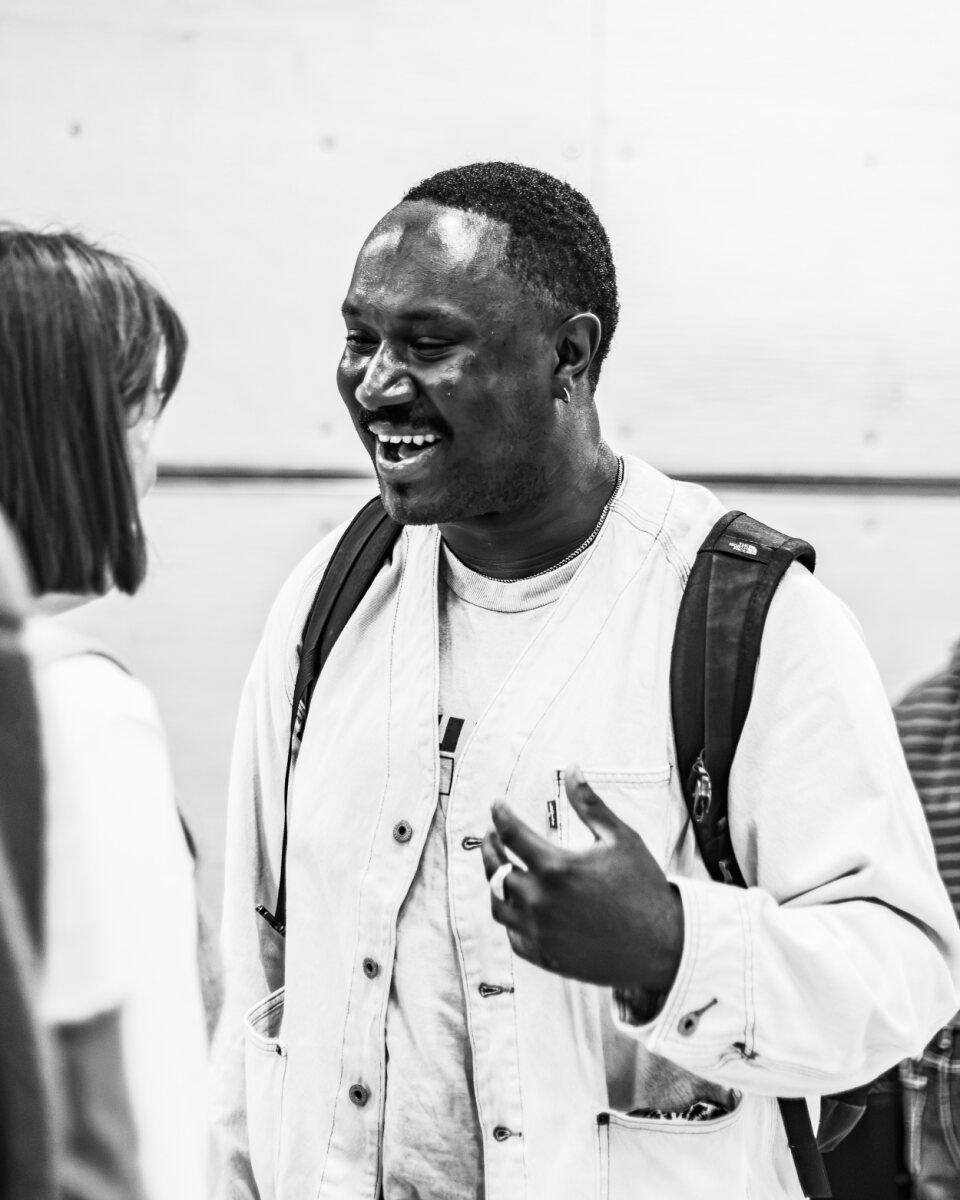
Phillip Olagoke photo by Justine Matthew
and Phillip Olagoke as Friar Francis. Newly announced understudies include
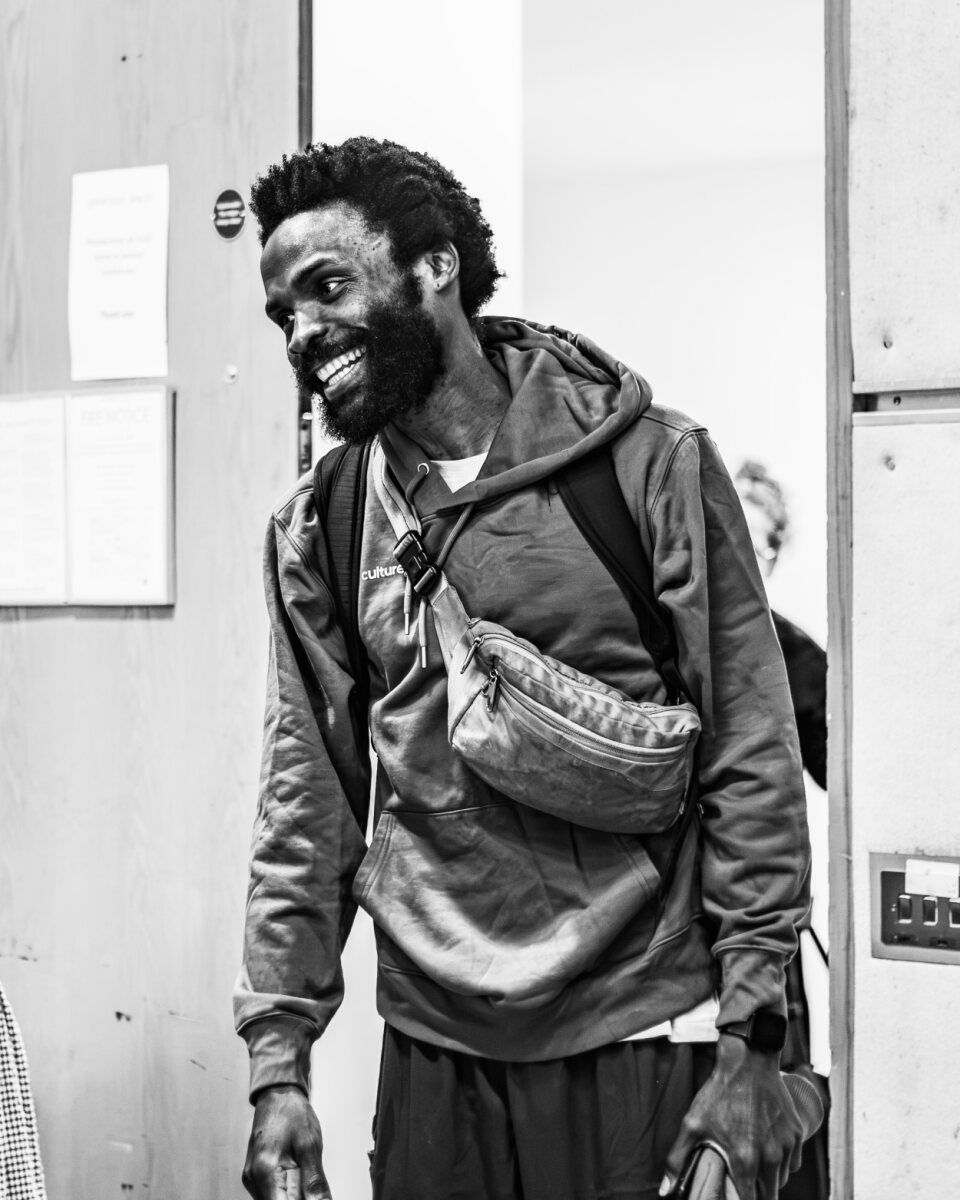
Franklin Bongjio photo by Justine Matthew
Franklin Bongjio
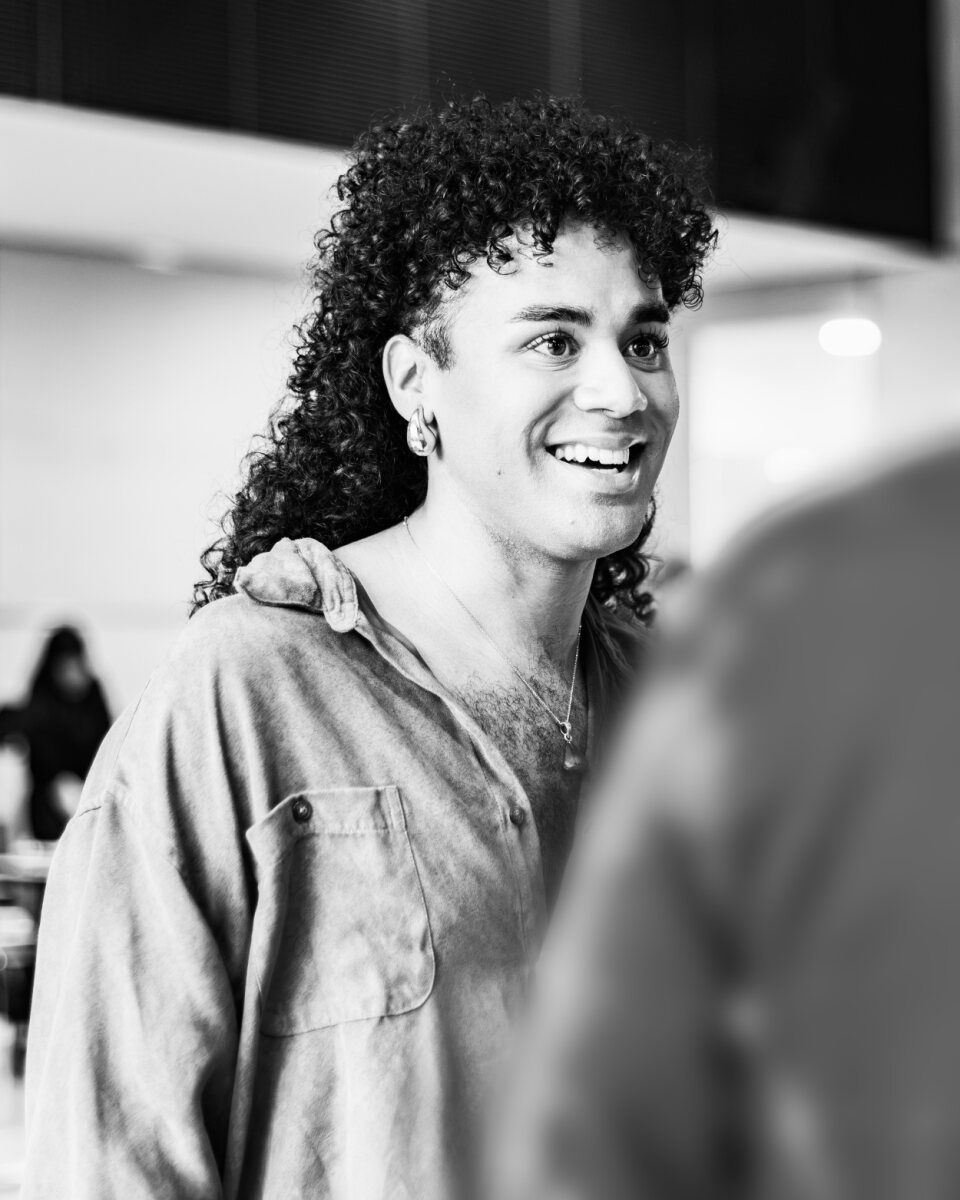
Michael Iván Carrier photo by Justine Matthew
Michael Iván Carrier
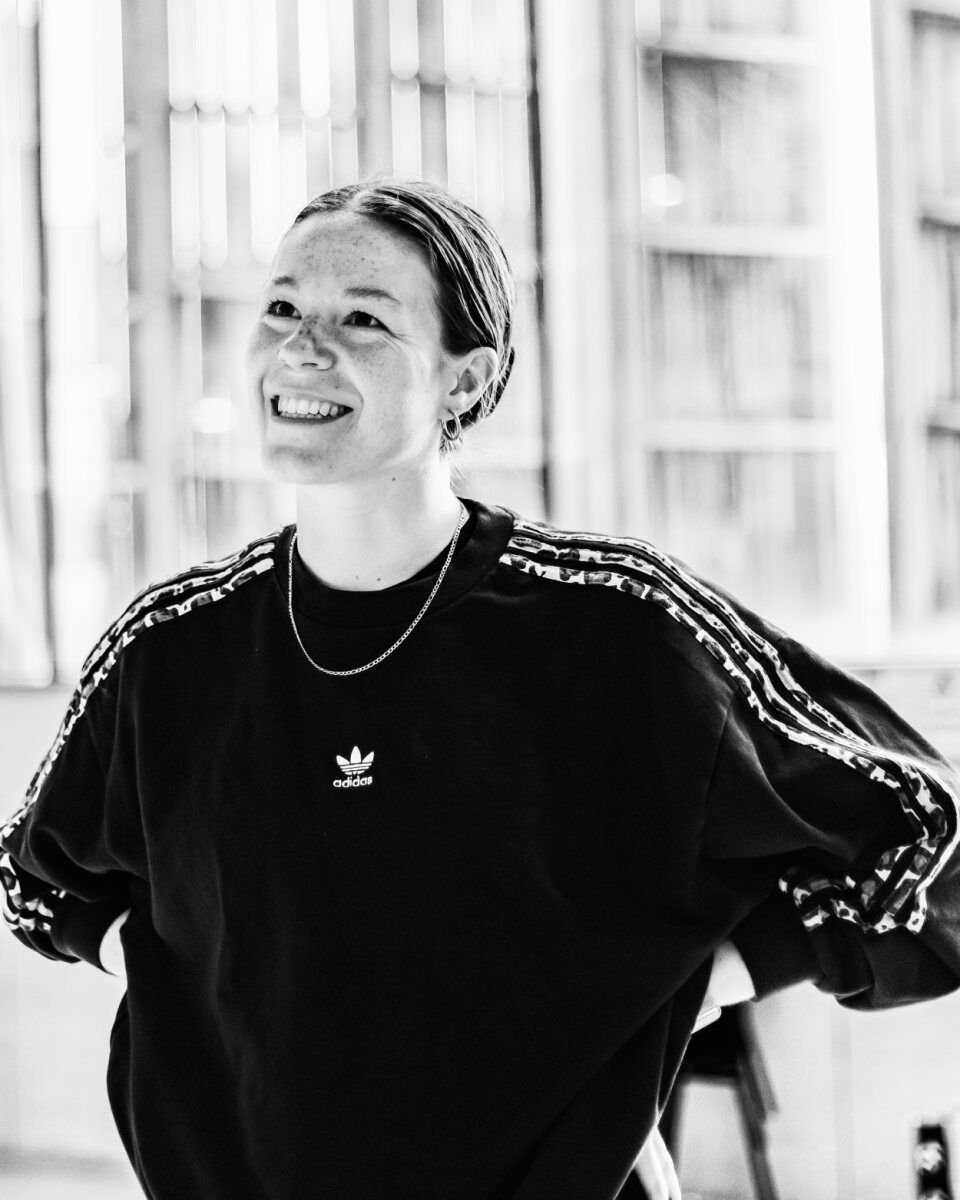
Beth Elliott photo by Justine Matthew
Beth Elliott, Marlon Alexander Vargas
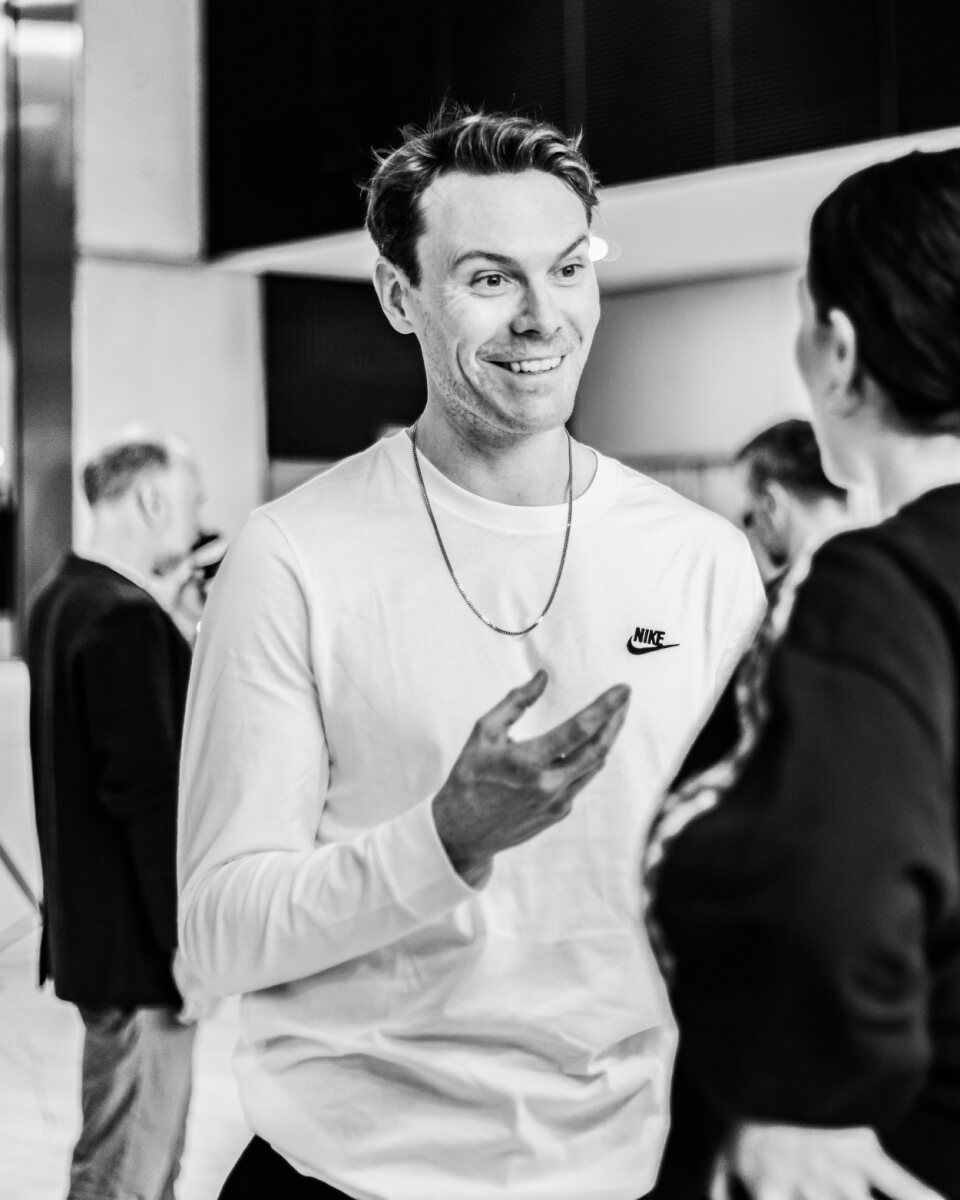
Ed White photo by Justine Matthew
and Ed White.
The first rehearsal photographs, captured in London by Justine Matthew, offer an early glimpse of the company coming together ahead of what is certain to be one of Broadway’s most closely watched fall openings.
There is something especially appealing about a production that reunites Hiddleston and Atwell within Shakespeare’s universe of wit, romance and emotional warfare. Both possess the kind of intelligence and theatrical confidence that can make a familiar text feel spontaneous, and Much Ado About Nothing depends upon precisely that quality. Benedick and Beatrice must appear capable of outthinking everyone in the room, even as they remain spectacularly incapable of understanding their own hearts.
Broadway has no shortage of love stories, but few offer the delicious pleasure of watching two people argue themselves into romance.
With Tom Hiddleston and Hayley Atwell leading the charge, this particular battle of the sexes may be worth every insult.
Much Ado About Nothing begins previews October 31 at Broadway’s Winter Garden Theatre, 1634 Broadway, officially opens November 19 and continues through January 10, 2027, only.

Live From The Hotel Edison Times Square Chronicles Presents, is filmed from the Hotel Edison and is a podcast extension of T2C. We are back after a small hiatus.
Today on Live From The Hotel Edison Times Square Chronicles Presents Our Sinatra’s Christopher Gines. Our Sinatra, a Musical Celebration brings back the original creators/performers – Eric Comstock, Christopher Gines and Hilary Kole. This trio reunites after a quarter century after performing Our Sinatra at the Oak Room in December 1999
Gines has released solo music including his album The Way It Goes, featuring classic standards and theater tunes. Beyond singing, he has worked as an author, playwright, show creator, and nightclub promoter/owner in New York
See Christopher in Our Sinatra at the Marjorie S. Deane Little Theatre running through November 29th.

I am so grateful to Christopher Gines for his conversation, his candidness and his art that captures the imagination.
We are so proud because the show and our guests are featured on the TV screens in the lobby and the hotel rooms.
Thank-you Magda Katz for videoing and creating the content to go live, Rommel Gopez and The Hotel Edison for their kindness and hospitality, Broadway HD and Dr K and at 200 West 54th Street for giving me back my health and my smile.
We have been named by Variety Entertainment News as one of Summer’s Best Picks in the category of Best Television, Radio, Podcasts. The company we are in, has made us so humbled, grateful and motivated to continue.
“The Daily Geek Report” named host Suzanna Bowling on the list of Most Engaging Hosts.
You can catch us on the following platforms:
Spotify:
Apple Podcasts:


Jesse Eisenberg’ s A24’s The Debut Sends a Housewife’s Community Theatre Dreams Gloriously Off the Rails

Good Time Charlie Knows Everyone Loves a One-Act Play

Paws, Claws and Haute Dog Couture: The East Village Goes to the Dogs This Halloween

Prince Mario-Max Schaumburg-Lippe: How The Balanchine Ball Shows Ballet is Trending!

Temu’s Low Prices Come With Another Business Question: Customer Data

My View: Backstage at the Cabaret Convention

Midnight: Todrick Hall Has Created a Musical Masterpiece That Broadway Cannot Afford to Ignore

Memoirs of Amorous Gentlemen: A Beautifully Decadent World With a Star at Its Center
Jesse Eisenberg’ s A24’s The Debut Sends a Housewife’s Community Theatre Dreams Gloriously Off the Rails
Good Time Charlie Knows Everyone Loves a One-Act Play
Paws, Claws and Haute Dog Couture: The East Village Goes to the Dogs This Halloween
Prince Mario-Max Schaumburg-Lippe: How The Balanchine Ball Shows Ballet is Trending!
Temu’s Low Prices Come With Another Business Question: Customer Data
My View: Backstage at the Cabaret Convention
Midnight: Todrick Hall Has Created a Musical Masterpiece That Broadway Cannot Afford to Ignore
Memoirs of Amorous Gentlemen: A Beautifully Decadent World With a Star at Its Center
-

 Celebrity3 days ago
The Glorious Corner
-

 Celebrity5 days ago
The Glorious Corner
-

 Events5 days ago
Zohran Mamdani, Mayor of New York—Terms and Conditions Apply
-

 Business5 days ago
Hackers Aren’t Just Stealing Data. They’re Spoiling the Food.
-

 Events5 days ago
The Algonquin Hotel Thinks Pink: A Toast to Hope, Broadway and Breast Cancer Awareness
-

 Cabaret3 days ago
My View: Backstage at the Cabaret Convention: OPENING NIGHT
-

 Entertainment5 days ago
Prince Mario-Max Schaumburg-Lippe: Leandro and Denise Rizzuto Shine at New York’s Columbus Day Celebration!
-

 Broadway4 days ago
Tom Hiddleston and Hayley Atwell Are Bringing Shakespeare’s Battle of the Sexes to Broadway