
Entertainment
Prince Mario-Max Schaumburg-Lippe: My Favorite Hungarian Piarist Debutante Ball NYC Returns in 2027!


The Hungarian Piarist Debutante Ball in New York City returns on January 30, 2027, bringing tradition, elegance, live music, dancing, and a meaningful cultural cause back to one of the city’s most distinctive formal evenings.
There are events that return with a date, a venue, and a ticket link, and then there are events that return with a feeling. The Hungarian Piarist Debutante Ball in New York City belongs to the second kind. Its announcement for January 30, 2027, carries the polished confidence of a beloved tradition stepping once again into the social calendar, inviting guests into an evening shaped by heritage, ceremony, music, and the pleasure of gathering beautifully.
The image announcing the ball is immediately clear in its message. Tickets are now available. The date is set. New York City is once again the stage. At the center of it all is the Hungarian Piarist Debutante Ball, a formal celebration that brings together community, culture, and philanthropy in a setting devoted to dignity and shared joy.
For admirers of grand social traditions, the return feels especially welcome. Debutante balls occupy a particular place in cultural life because they are never simply parties. At their best, they are ceremonies of continuity. They carry families, patrons, young participants, musicians, volunteers, and guests into a shared ritual that honors the past while remaining alive in the present. The Hungarian Piarist Debutante Ball embraces that role with unmistakable pride.
The visual language of the announcement speaks fluently in the vocabulary of formal celebration. Deep burgundy, warm gold, refined typography, a stylized New York skyline, and images of guests in elegant dress come together to create a sense of occasion. It is aspirational without being distant, ornate without feeling inaccessible, and traditional without losing its contemporary energy.
The event’s promise is direct and inviting. Guests are encouraged to join an unforgettable evening of tradition, elegance, and celebration at the Hungarian Piarist Debutante Ball in New York City. The announcement highlights beautiful company, live music and dancing, a cherished tradition, and support for a meaningful cause. In a city filled with gala invitations, those four pillars give the ball a clear identity.
The Return of a Cherished New York Tradition
New York has always been a city where immigrant heritage, old-world ceremony, and modern civic life meet in memorable ways. Within that landscape, Hungarian cultural events have long offered a distinctive sense of formality, warmth, and pride. The Hungarian Piarist Debutante Ball stands within that tradition, presenting an evening that is social, cultural, and charitable at once.
A ball of this kind asks guests to participate, not merely attend. The attire matters. The music matters. The entrance, the dancing, the conversation, and the shared sense of purpose all contribute to the experience. It is an evening built through gestures, some formal and some intimate, that remind guests of the value of gathering with intention.
The debutante tradition has endured because it adapts while retaining its ceremonial heart. In contemporary New York, such an evening is less about rigid society codes and more about community continuity, family pride, cultural education, and the public celebration of young people stepping into a meaningful social role. The result is an event that feels rooted rather than dated.
The Hungarian Piarist Debutante Ball carries the added resonance of the Piarist legacy, a tradition associated with education, faith, service, and intellectual formation. Even for guests who come first for the dancing, the evening’s charitable and cultural foundation gives the celebration substance. It is not an event built only around spectacle. It is built around purpose.
That combination helps explain why the ball inspires such affection among returning supporters. The phrase “my absolute favorite is back” captures the emotional place this event holds for those who have experienced it. Favorite events become favorites because they deliver more than a beautiful room. They create recognition, belonging, and a sense that one has stepped into something worth preserving.
The announcement’s imagery reinforces that appeal. The left side presents a warmly lit ballroom scene with guests dressed for ceremony and celebration. One figure wears a green and gold gown with a sash and tiara, another appears in a white formal jacket and red floor-length skirt, and another wears black with a bright blue sash and decorative medals. The composition conveys movement, poise, and a sense of participation in a living tradition.
The ballroom setting shown in the image suggests the kind of architectural grandeur that suits a debutante ball. Wood-paneled interiors, chandeliers, framed artwork, formal seating, and gilded details all contribute to the atmosphere. It is the sort of environment where evening dress feels appropriate and where every detail supports the larger ceremony of the night.
Yet the announcement does not rely on nostalgia alone. Its design includes a modern call to action, with a prominent invitation to purchase tickets at piaristballnyc.com. The effect is practical and polished. The ball is presented not as a distant private custom, but as an active civic and cultural event ready to welcome its next circle of guests.
Elegance With a Social Purpose
The strongest formal evenings are sustained by more than beautiful clothes and polished rooms. They endure because people believe in what they support. The Hungarian Piarist Debutante Ball emphasizes that guests will support a meaningful cause, placing philanthropy at the center of the evening’s appeal.
That philanthropic dimension gives the ball its contemporary relevance. In a city where benefit galas and cultural fundraisers fill the calendar, a successful event must communicate why attendance matters. Here, the answer lies in the connection between celebration and stewardship. Guests are invited to enjoy the evening while helping sustain a tradition that has educational, cultural, and community significance.
Live music and dancing are essential to the promise. They transform the event from a seated gathering into a shared experience. Dance remains one of the most enduring languages of formal society because it requires presence, attention, and grace. It gives structure to an evening while allowing guests to participate in something joyful and visible.
The debutante ball format naturally elevates that sense of participation. For debutantes and their families, the evening can become a milestone. For supporters, it becomes an affirmation of continuity. For guests from the wider New York community, it becomes an introduction to a cultural world where hospitality and ceremony remain carefully honored.
The image’s emphasis on “beautiful company” is especially apt. A ball is defined as much by its guests as by its program. The most memorable evenings are those where people arrive prepared to be gracious, engaged, and present. The Hungarian Piarist Debutante Ball appears to understand this well. It offers a room, a program, music, dancing, and a cause, but the true experience is created by the people who gather there.
New York City provides a fitting setting. The skyline illustration at the bottom of the announcement situates the event unmistakably in the city, with bridges and towers drawn in gold linework. The imagery links European-rooted ceremony with the energy of New York, creating a visual bridge between heritage and place. It is a reminder that cultural traditions often thrive most vividly when carried across borders and renewed in a new home.
The city’s social calendar is broad, but the Hungarian Piarist Debutante Ball has a clear niche. It appeals to those who value formal tradition, Hungarian heritage, Catholic and educational legacies, family-centered celebration, European cultural customs, and philanthropic evenings with a strong sense of identity. That specificity gives the event strength.
There is also a visual confidence in the announcement’s use of burgundy and gold. Burgundy suggests formality and warmth. Gold suggests ceremony and celebration. Together, they create a palette often associated with heritage events, grand interiors, and evening dress. The design does what effective gala design should do. It tells guests how the evening will feel before they arrive.
A Night Built Around Music, Dancing, and Heritage
The promise of live music and dancing is more than entertainment. It is central to the social architecture of the night. Music sets the rhythm of the evening, and dancing gives guests a reason to move through the room, meet one another, and participate in the formal life of the event. In an age when many gatherings can feel informal or fragmented, a ball preserves the pleasure of shared structure.
For debutantes, that structure can be especially meaningful. The ritual of preparation, presentation, and dancing creates a memory that belongs both to the individual and to the community. It is a public acknowledgment of growth, family, and tradition. In the context of the Hungarian Piarist Debutante Ball, it also connects participants to a wider cultural story.
The announcement’s photographs suggest that the ball welcomes a multigenerational community. This matters because formal traditions remain strongest when they are shared across age groups. Younger participants bring energy and continuity. Elders and long-standing supporters bring memory and context. Guests in between carry the tradition forward through attendance, patronage, and enthusiasm.
The sashes and ceremonial adornments shown in the image add a distinctive note. They speak to honor, affiliation, and formal identity. In a debutante ball setting, such details help distinguish the evening from a general gala. They give the event a visual language that guests can recognize and remember.
The event also offers a version of elegance that is active rather than decorative. Guests are not merely asked to admire a tradition. They are asked to join it. To purchase a ticket, dress for the occasion, attend, listen, dance, converse, and support the cause is to become part of the ball’s continuing story.
This is why the return of the event feels personal to those who love it. Favorite cultural evenings are rarely interchangeable. They have a cadence, a community, and a set of rituals that people anticipate. The Hungarian Piarist Debutante Ball appears to offer exactly that, a recognizable experience with enough beauty and purpose to make its return feel significant.
The date, January 30, 2027, gives the announcement a sense of anticipation. Formal events of this scale benefit from time. Guests plan their attire, tables come together, families coordinate, committees prepare, musicians rehearse, and supporters spread the word. The long lead time allows the ball to grow in expectation before the doors open.
The ticket announcement is also a marker of confidence. To say that tickets are now available is to move from intention to invitation. It tells the community that the next chapter is underway and that guests can now take their place in it. For an event centered on tradition, that act of invitation is part of the ceremony.
The online ticket destination, piaristballnyc.com, is presented prominently, making the path to participation clear. The design places it in a burgundy box bordered in gold, giving the practical information the same formal treatment as the rest of the announcement. Even the ticket link feels integrated into the larger identity of the event.
What makes the Hungarian Piarist Debutante Ball especially appealing is its balance. It is elegant, but the invitation feels warm. It is traditional, but the announcement feels current. It is charitable, but it does not reduce the evening to fundraising alone. It promises beauty, company, music, dancing, heritage, and purpose in one carefully framed night.
The phrase “unforgettable evening” is often used in event language, but here it has a credible foundation. Formal balls become unforgettable when they combine personal milestones with collective memory. A debutante’s entrance, a family’s pride, a dance floor filling, a guest reconnecting with old friends, a community supporting its cause, these are the elements that remain after the evening ends.
The Hungarian Piarist Debutante Ball understands that elegance is sustained through care. It appears in the dress code, the music, the pacing, the printed and digital materials, the ceremonial details, and the way guests are welcomed into a shared purpose. The announcement reflects that care, offering a polished first glimpse of what the 2027 evening intends to be.
For New Yorkers drawn to heritage events, the ball offers a rare kind of cultural specificity. It is not a generic black-tie evening. It has a name, a tradition, a community, and a cause. It carries Hungarian identity into the city’s formal life and invites a wider circle to recognize and celebrate it.
That openness is important. Cultural events thrive when they are both rooted and welcoming. The Hungarian Piarist Debutante Ball presents itself as a gathering for those who cherish the tradition and for those who may be encountering it for the first time. Its appeal rests in that generous combination.
The image’s smaller circular portraits near the bottom add another personal layer, suggesting friends, supporters, or members of the broader community celebrating the announcement. Their placement beside the skyline reinforces the feeling that this is not simply an institutional event. It is a social world made visible through people who care about it.
Every detail points toward a night designed to be remembered with affection. The gowns, the sashes, the music note icon, the church icon, the heart icon, the champagne glasses, the skyline, the burgundy ticket panel, and the formal typography all work together to create a coherent sense of occasion. It is a public invitation with the polish of a keepsake.
As January 30, 2027, approaches, the return of the Hungarian Piarist Debutante Ball is likely to gather momentum among those who value cultural celebration with substance. It offers the pleasure of dressing beautifully, the joy of live music, the grace of dancing, and the satisfaction of supporting a meaningful cause. In New York City, where tradition is constantly being renewed by the people who choose to carry it forward, the ball’s return feels both timely and deeply welcome.
The Hungarian Piarist Debutante Ball is back, and its invitation is clear. Come for the elegance, come for the dancing, come for the company, and come for the tradition that continues to make this New York evening such a favorite.
Hungarian Piarist Debutante Ball, Piarist Ball NYC, New York City gala, debutante ball, Hungarian culture, Hungarian heritage, NYC society events, charity ball, formal events, live music, ballroom dancing, cultural philanthropy, European tradition, black tie New York, debutante tradition, Hungarian American community, Piarist tradition, elegant events, 2027 NYC events, January 2027 events, heritage celebration, gala tickets, New York ballroom, society ball, cultural celebration, meaningful cause, formal dancing, luxury culture, refined entertaining, community tradition, piaristballnyc.com


Cabaret
My View: Mikayla Smith Brings Love, Dreams & Me To The Maltz Theatre…A Story Worth Following

Every artist has a story, but few tell it quite like Mikayla Smith. On October 23, the rising vocalist delivered an extraordinary evening of music, memories, and emotion with Love, Dreams & Me, her third consecutive sold-out concert at the Maltz Jupiter Theatre. What unfolded was far more than a concert. It was an intimate musical journey celebrating the people, places, and artists who helped shape one of South Florida’s most promising young talents.
The evening began with a beautifully produced video montage featuring childhood memories, family photographs, and performances alongside celebrated artists including Wendy Moten and Joshua Henry, as well as moments with jazz sensation Samara Joy. Particularly touching was footage of a young Mikayla, barely more than a toddler, already displaying her love for music at a keyboard. “Before I wrote my own music or found my own voice, I was listening to someone else’s,” Smith explained. “Every artist has a story. This is mine.”
And what a story it was!
Accompanied by her outstanding professional trio, musical director and pianist Juan Tobon, drummer Carlos Rodriguez, and bassist Jamie Ousley, Smith opened with a beautifully expressive rendition of “I Wish You Love.” The chemistry between these accomplished musicians was exceptional, with Tobon’s masterful arrangements and expressive solos providing a brilliant foundation throughout the evening.
The concert also marked a poignant homecoming. After relocating from Southwest Louisiana to South Florida for her senior year of high school, Smith found both a musical home and her voice as a jazz vocalist with The King’s Academy Jazz Ensemble under the direction of Wes Lowe. Now, as she prepares to graduate from Palm Beach Atlantic University, reuniting with the very ensemble where her jazz journey began brought her story full circle. Their spirited performances of “Straighten Up and Fly Right” and “Everybody Wants to Be a Cat” filled the theatre with the energy of a swinging big band. Among the ensemble’s standout young musicians were tenor saxophonist Liam Shane and trombonist Aiden Phillips, whose impressive solos and sensitive contributions alongside Smith during several intimate selections demonstrated remarkable musicianship.
Smith’s versatility was on full display as she moved effortlessly from a sophisticated French rendition of “La Vie en Rose” to a soul-stirring performance of “Angels,” featuring her younger brother, William Smith. An award-winning young trumpeter, William is currently an 11th-grade member of The King’s Academy Jazz Ensemble with aspirations of pursuing music professionally. His performance was another reminder of the extraordinary young talent represented onstage. Smith continued with classics by Ray Charles and Al Green before joining celebrated guitarist and mentor Ted Perlman for an electrifying performance of Alicia Keys’ “Fallin’.” Smith even picked up the guitar herself, revealing yet another dimension of her artistry.
But perhaps the evening’s greatest revelation came when Smith introduced her original compositions, “Scary” and “Time.” Until that moment, audiences had experienced her remarkable interpretations of familiar music. Now they were hearing the power of her own pen. Both compositions revealed a confident, thoughtful songwriter with a distinctive artistic voice. Smith is clearly more than an exceptional interpreter of the Great American Songbook. She is an emerging artist with something original to say.
A deeply moving reimagining of Louis Armstrong’s “What a Wonderful World” followed, before Smith briefly surrendered the spotlight to her younger brother for a delightful rendition of Stevie Wonder’s “Isn’t She Lovely.”
The evening reached another unforgettable high point with Smith’s original composition “Home,” a heartfelt tribute to her Louisiana roots. The song transitioned into a jubilant New Orleans-style second-line celebration of “When the Saints Go Marching In,” bringing the audience to its feet as handkerchiefs waved throughout the theatre. For a few magical moments, Jupiter, Florida, felt like the streets of New Orleans!
A touching presentation of roses from Smith’s father added another emotional moment before the young vocalist returned to a standing ovation and delivered a profoundly moving encore of “The Rainbow Connection.”
What made Love, Dreams & Me exceptional was the way Smith combined first-class musicianship with genuine intimacy. The evening moved seamlessly between laughter and tears, sophistication and celebration, powerful vocals and delicate storytelling. Every song felt purposeful, every moment personal.
Three consecutive sold-out performances at the Maltz Jupiter Theatre are impressive for any artist, particularly one just beginning her professional career. Yet what makes Mikayla Smith so compelling is not simply her remarkable voice, but her ability to make audiences feel connected to the music and to one another.
The Great American Songbook has inspired generations of extraordinary performers. Mikayla Smith honors that tradition while confidently beginning to write her own chapter. And judging by this unforgettable evening, hers is a story worth following.
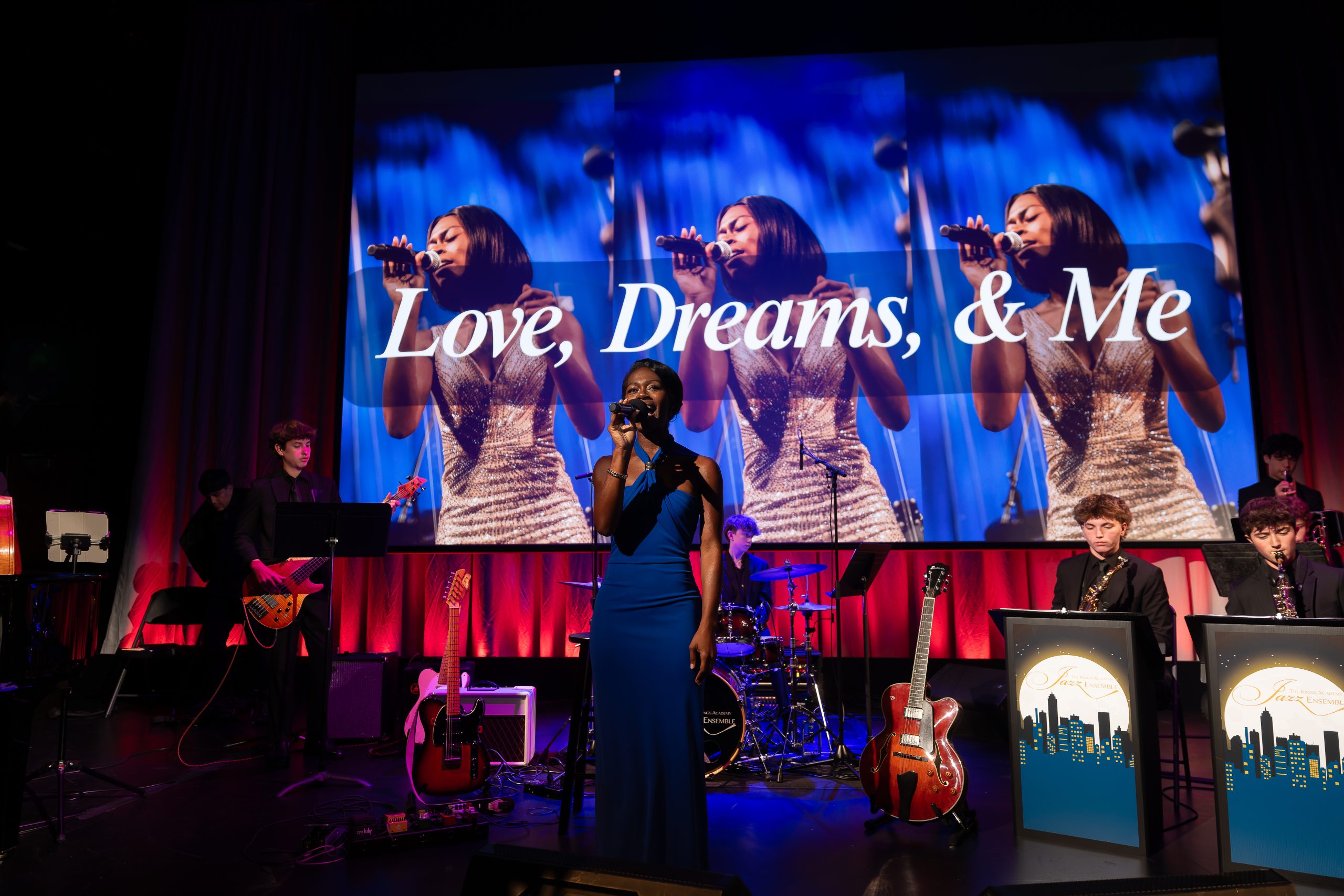
MIKAYLA SMITH
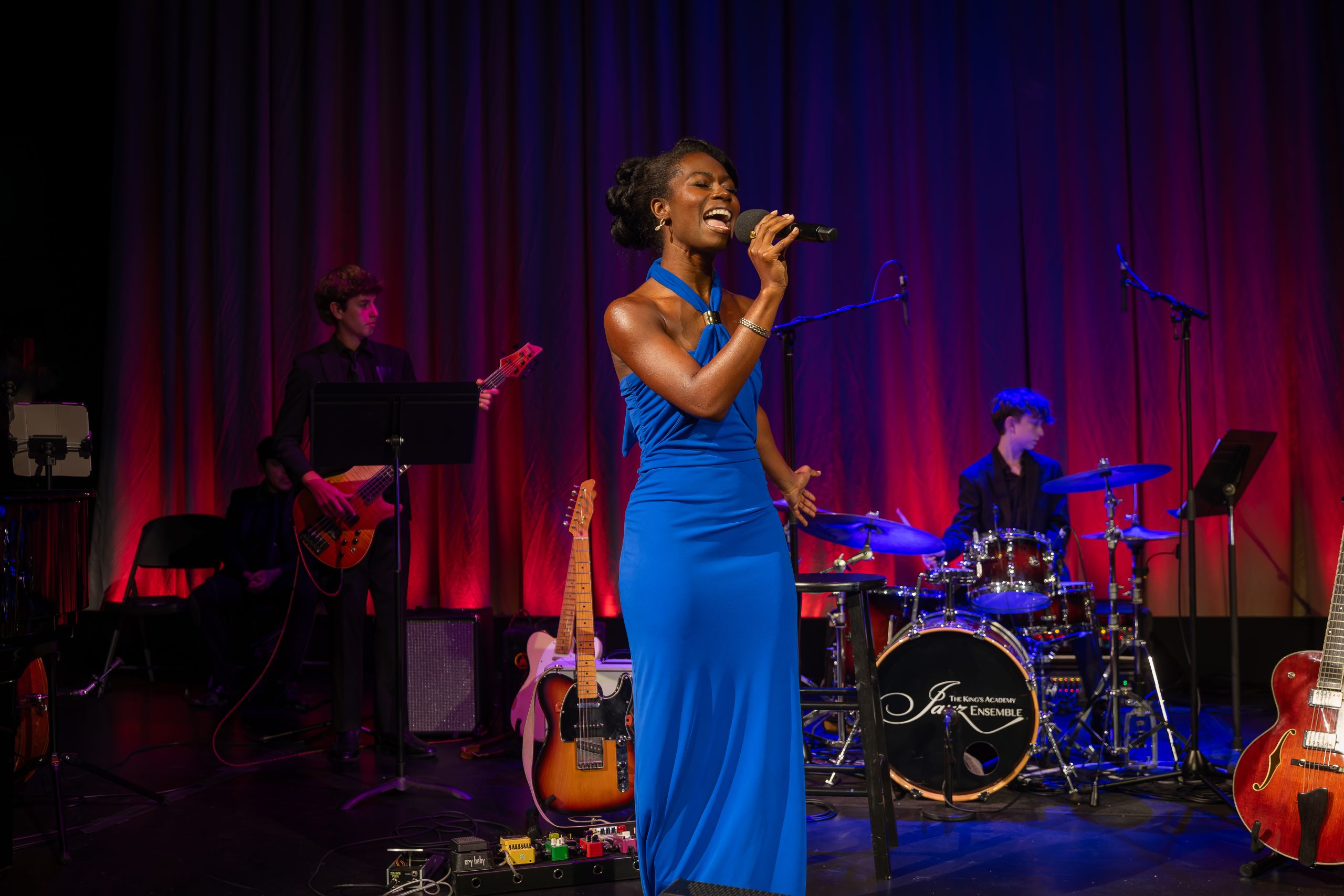
MIKAYLA SMITH

MIKAYLA SMITH & THE KINGS ACADEMY JAZZ ENSEMBLE
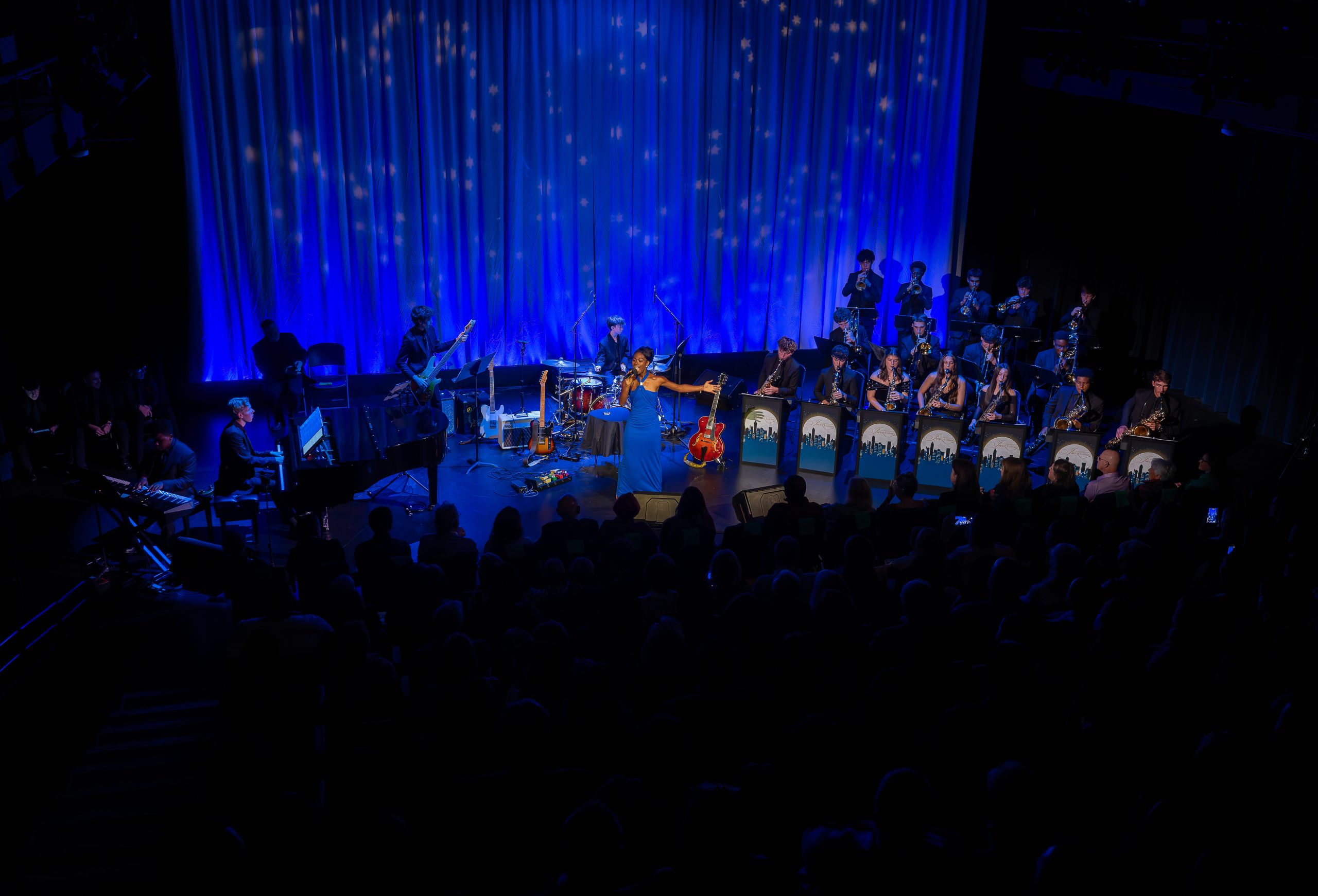
MIKAYLA SMITH

MIKAYLA SMITH
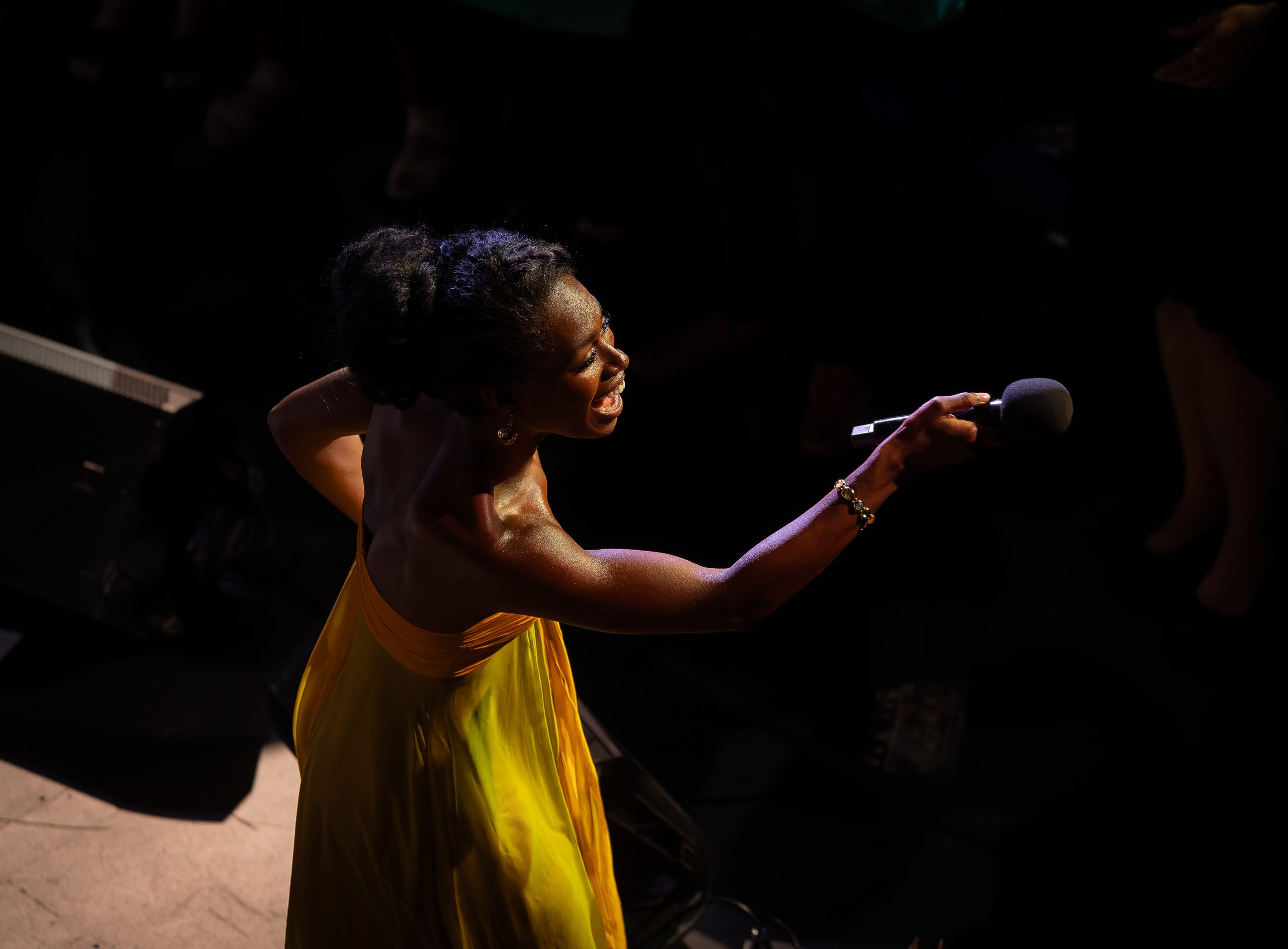
MIKAYLA SMITH

MIKAYLA SMITH
The Dutch Treat Club consistently delivers terrific guest speakers and entertainers, but the Tuesday Dutch Treat lunches have another delightful distinction: the impressive guests members invite. The October 27 gathering was a perfect example, with author James Gavin and jazz singer Anaïs Reno the headlined entertainment, while among the members’ special guests was none other than Tony- and Emmy-nominated Broadway/Television star Michele Lee. She joined in the festivities with characteristic warmth and graciously posed for selfies with fellow Dutch Treaters, making an already memorable afternoon even more special!
James Gavin, called “a killer biographer” by The Hollywood Reporter, started his presentation at the Dutch Treat Club with a vintage video of jazz legend, Anita O’Day, the subject of his latest biography, Cool Heat: The Dangerous Jazz Life of Anita O’Day. It was a fascinating glimpse into the life of this incredibly talented and troubled performer. Gavin related how she went from near death due to heroin addiction, to headlining at the JVC Jass Festival. We learned that her doctors had to manage her substance abuse, by keeping her on a codeine laced cough syrup for the rest of her life, after she lived through 13 years of heroin addiction, followed by alcohol and marijuana, all while keeping up a brutal performing pace with cheer and stunning vocals. The particularly fun surprise in Gavin’s talk, was the inclusion of a video featuring Sidney Myer, interviewing O’Day at Michael’s Pub. Myer, legendary, long-time booking manager, host, and award-winning cabaret artist, was in attendance on Tuesday, and added his remembrances of a rainy night where only 6 people were in the audience. Concerned, because of O’Day’s addiction reputation, he soon had nothing to fear, because she said she was a band singer and had a job to do. Myer said, “She wanted to lift up her audience whether there were 6 or 60, and she did!”
A Grammy nominee and two-time recipient of the ASCAP Deems Taylor-Virgil Thomson Award, Gavin is also a celebrated music journalist and worldwide public speaker. His writing has appeared in The New York Times, Vanity Fair, the Los Angeles Times, and other major publications, and he has made hundreds of radio and television appearances, including on NPR, the BBC, Today, Good Morning America, and PBS NewsHour.
Gavin then presented the dynamic young jazz interpreter, Anaïs Reno, a New York City-based singer and composer, who has headlined and been featured in venues such as Birdland, Dizzy’s, Ronnie Scott’s and the Edinburgh Jazz Festival. In 2021, she released her debut album, “Lovesome Thing,” celebrating Ellington and Strayhorn, and she recently released her second studio album titled “Lady of the Lavender Mist”. Accompanied on bass by the incredibly talented Sameer Shankar, you could have heard a pin drop as she commanded the space with a polish far beyond her years, on gorgeous arrangements of “Night and Day”, “A Nightingale Sang in Berkley Square” and “As Long As I Live”. Reno told us that she was intimidated to discover that she was the ONLY singer Gavin had requested for this day, and related that although she did not share the addictions of O’Day, she was inspired by her in many ways – but Reno clearly has her very own delightful charm and authenticity, holding us all spellbound as she wove a magical spell with her unique style and lush vocals.

SIDNEY MYER, EDA SOROKOFF, RAISSA KATONA BENNETT, MICHELE LEE
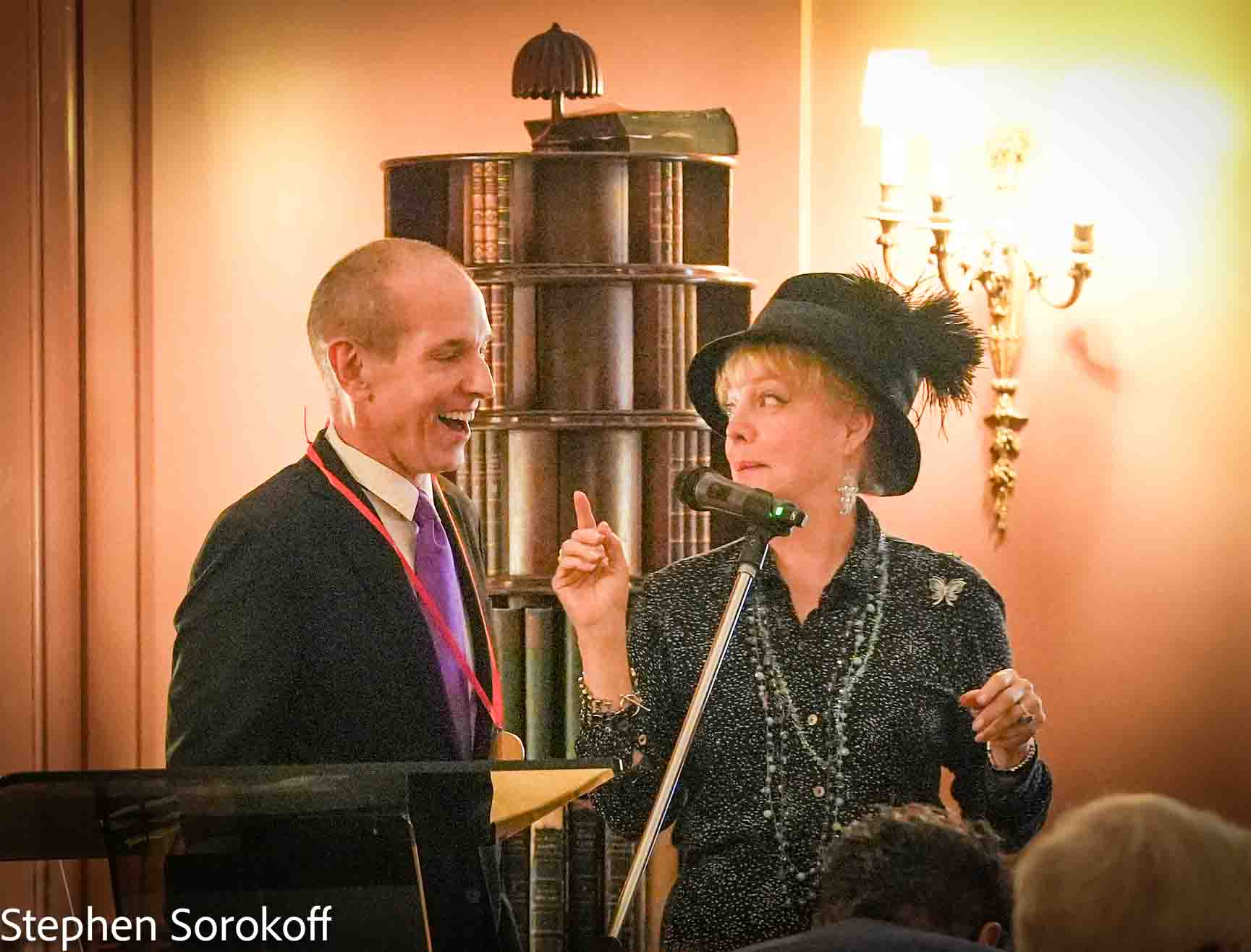
JAMES GAVIN & KT SULLIVAN
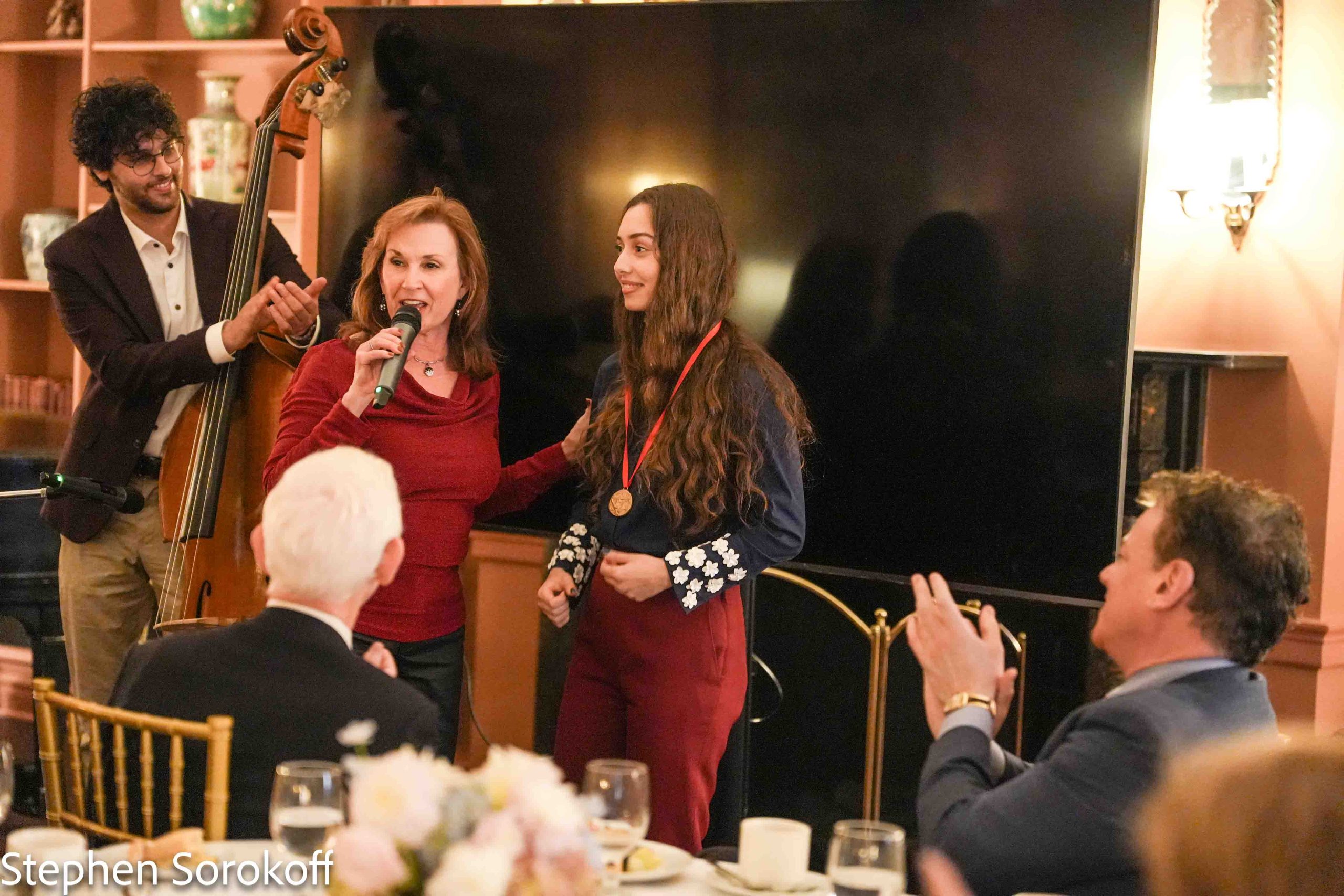
RAISSA KATONA BENNETT & ANAÏS RENO

JAMES GAVIN

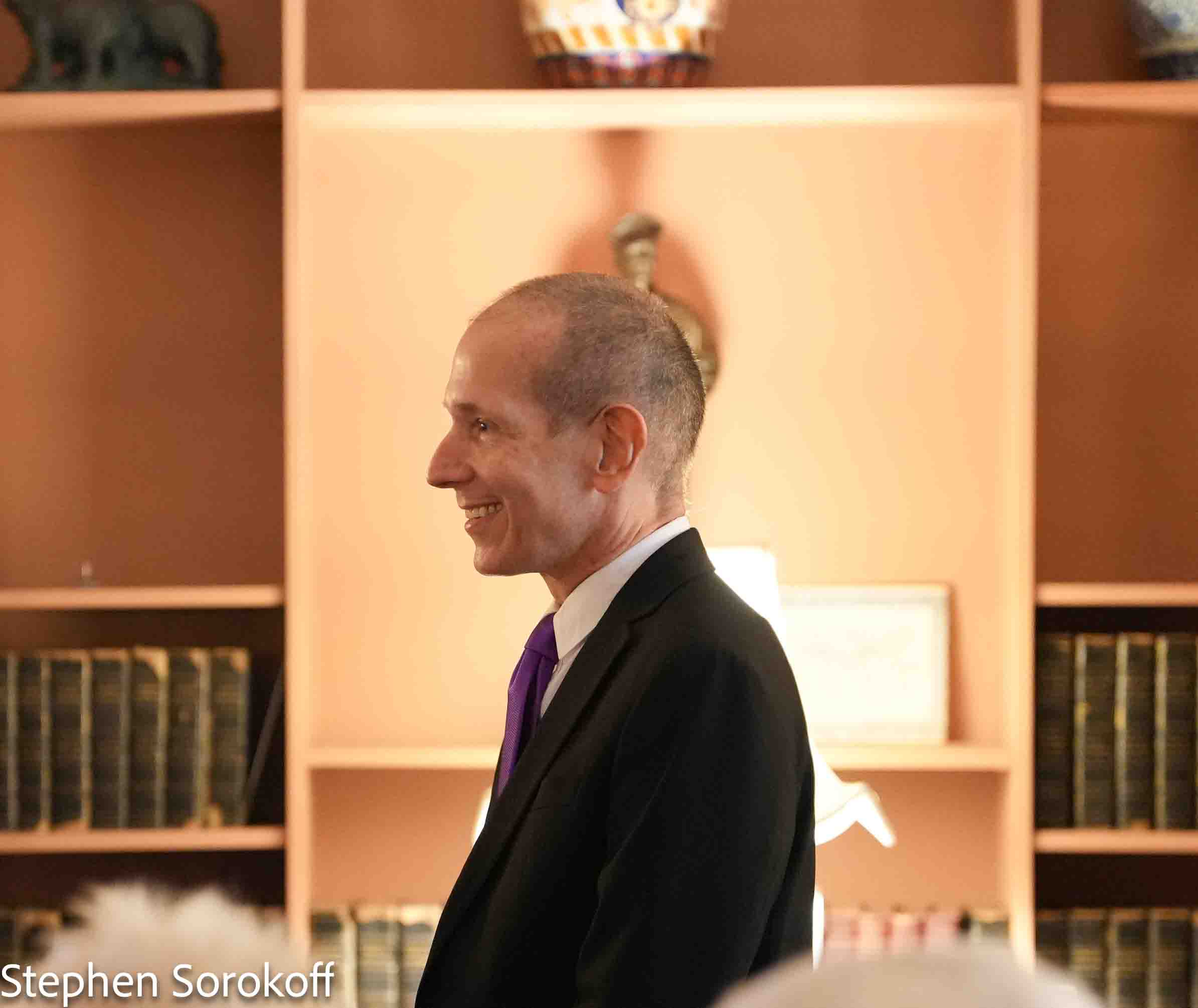
JAMES GAVIN

SAMEER SHANKAR & ANAÏS RENO

ANAÏS RENO
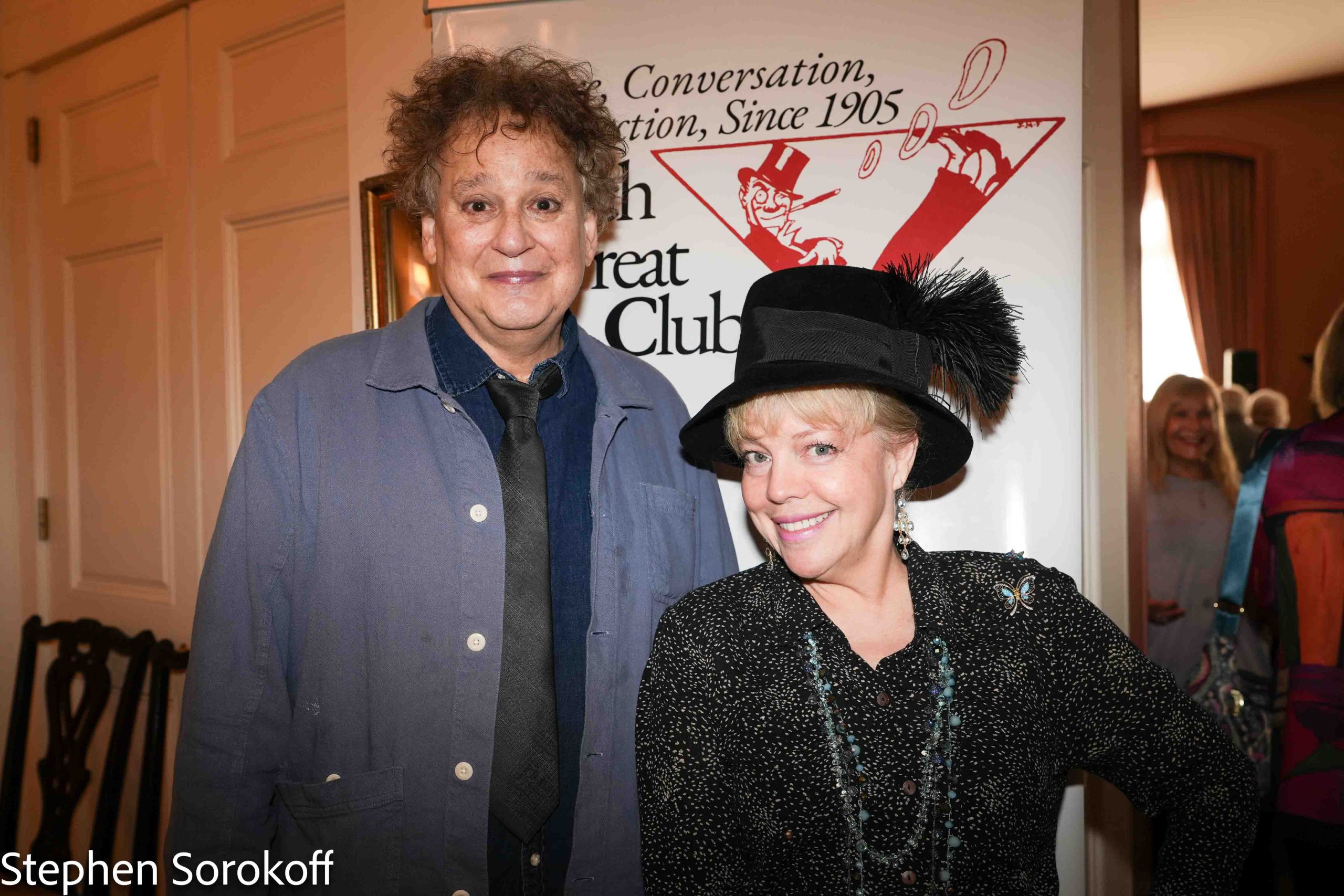
SIDNEY MYER & KT SULLIVAN

NANCY McGRAW & JAMES GAVIN

MICHELE LEE & ANAÏS RENO

SAMEER SHANKAR & ANAÏS RENO
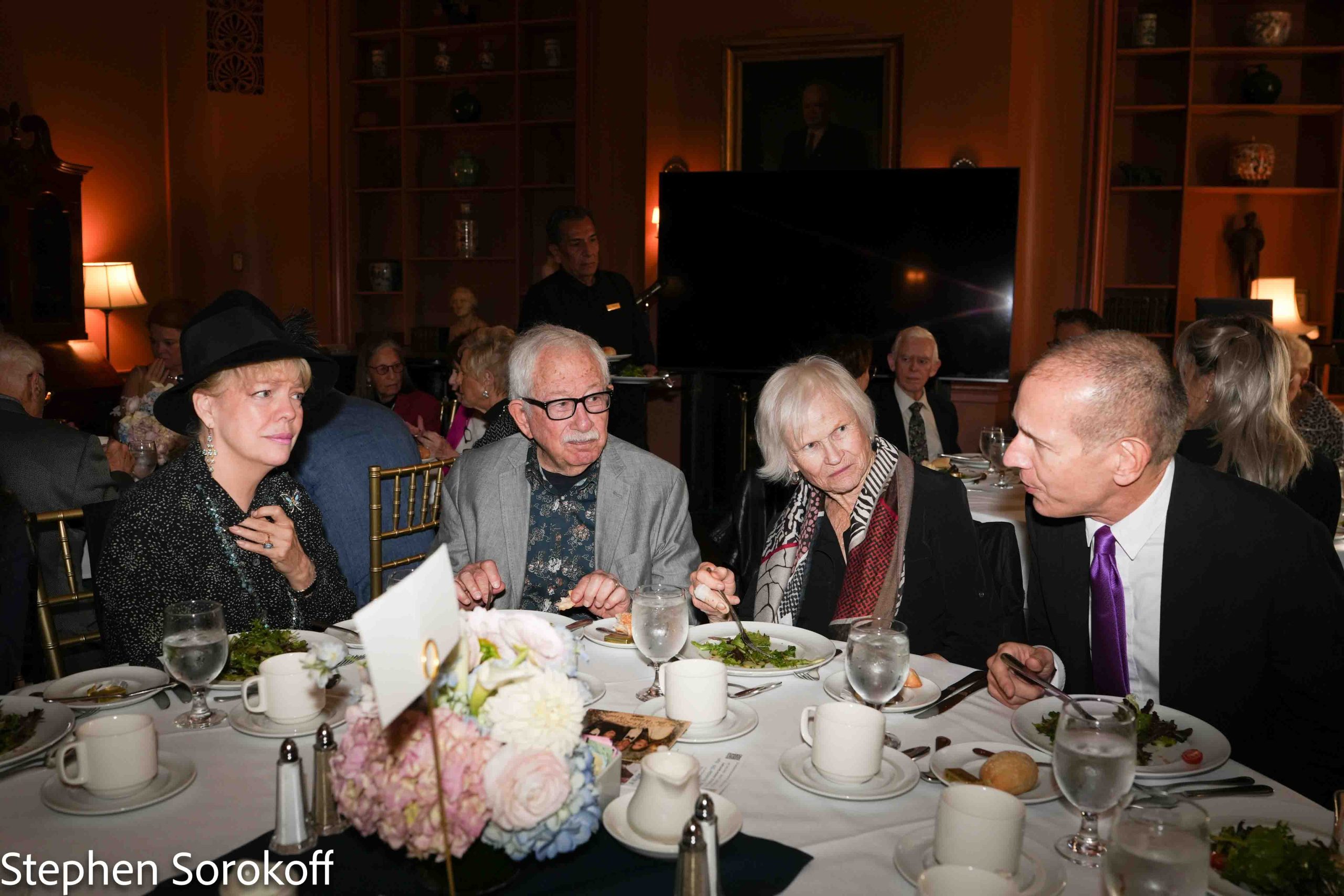
THE DUTCH TREAT CLUB

KT SULLIVAN & JAMES GAVIN
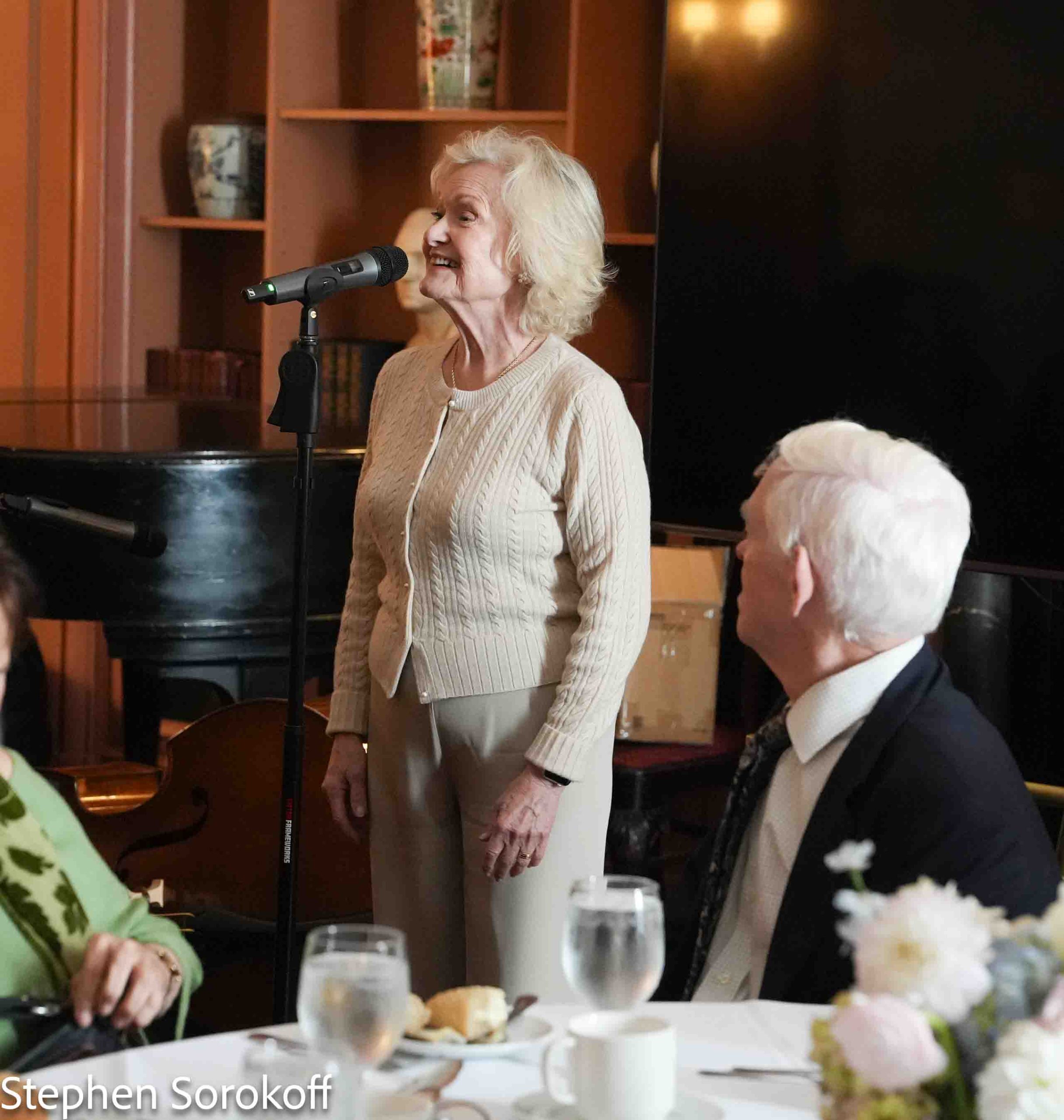
NANCY McGRAW
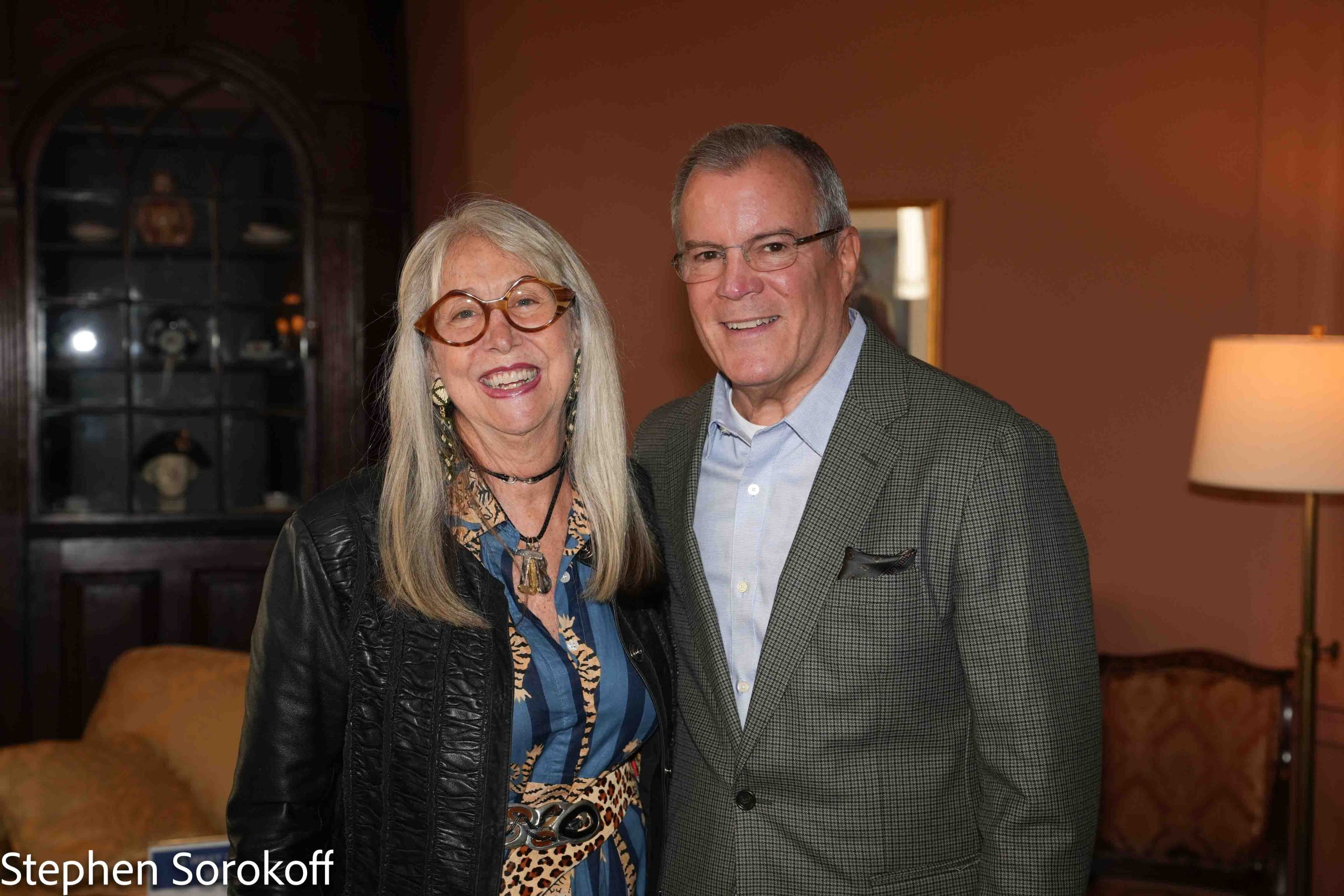
BONNE ROSEMAN & JERRY JOHNSON

Broadway
Barbara Barrie, Broadway’s Original Sarah in Companyand Oscar-Nominated Actress, Dies at 95


Photo curtsey of ©WARNER BROS
 From Stephen Sondheim to Neil Simon, Harvey Fierstein to Hollywood, Barbara Barrie built an extraordinary career defined by intelligence, emotional honesty and an unmistakable humanity.
 Barbara Barrie, the Tony-nominated Broadway actress whose remarkable career encompassed the original production of Stephen Sondheim’s Company, Neil Simon’s California Suite, Harvey Fierstein’s Torch Song Trilogy and an Academy Award-nominated performance in Breaking Away, died October 28 at her Manhattan home. She was 95.
 Her daughter, Jane Harnick, confirmed that Barrie, who had been diagnosed with terminal cancer, died with medical assistance. The actress had long advocated for the right of terminally ill patients to make decisions about their final days, an extension of the independence and candor that characterized much of her life.
 For more than six decades, Barrie occupied a distinctive place in American entertainment. She was never an actress who needed to dominate a scene to command attention. Her gift was subtler and ultimately more enduring: she could make ordinary people extraordinary simply by revealing the complicated emotions beneath their everyday lives.
 Born Barbara Ann Berman on May 23, 1931, in Chicago, she grew up in Corpus Christi, Texas, and studied drama at the University of Texas before moving to New York. She made her Broadway debut in 1955 as Janey Stewart in The Wooden Dish, beginning a theatrical career that would span generations of American playwrights and some of Broadway’s most consequential productions.
 She returned to Broadway in the 1959 revival of George Farquhar’s The Beaux’ Stratagem, playing Cherry, and in 1966 starred as Joan Mills in Happily Never After. But it was in 1970 that Barrie became part of Broadway history.
Cast as Sarah in the original production of Stephen Sondheim and George Furth’s Company, directed by Harold Prince, Barrie helped introduce audiences to a musical that would fundamentally change the way Broadway examined marriage, relationships and modern loneliness.
As Sarah, the competitive, perpetually dieting wife of Harry, Barrie found the comedy and discomfort in a marriage sustained by affection, rivalry and carefully negotiated imperfections. Her performance earned her a 1971 Tony Award nomination for Best Featured Actress in a Musical. The production won the Tony for Best Musical and became one of the defining works of the American musical theater.
Barrie’s Sarah was not simply a comic character. She belonged to the new theatrical world Sondheim and Prince were creating, one in which marriage was neither a fairy-tale destination nor an automatic guarantee of happiness. Beneath the laughter were people struggling to understand themselves and one another, a territory Barrie navigated with exceptional assurance.
Her Broadway career continued in 1972 with The Selling of the President, in which she played Grace Mason, followed by Neil Simon’s The Prisoner of Second Avenue, where she took over the role of Edna Edison. In 1976, she originated the roles of Millie Michaels and Beth Hollender in Simon’s California Suite, demonstrating her ability to move effortlessly between comedy, vulnerability and the emotional disappointments of ordinary life.
In 1983, she stepped into the role of Mrs. Beckoff, Arnold’s formidable mother, in Harvey Fierstein’s landmark Torch Song Trilogy. It was another production that challenged conventional ideas about family, love and acceptance, and another opportunity for Barrie to bring complexity to a woman who could easily have become a caricature.
She returned to Company for its 1993 Broadway benefit performance, reprising Sarah more than two decades after helping create the role. She was also associated with the 2004 Broadway revival of Fiddler on the Roof as Yente during its preview period, although she did not remain with the production through its official opening.
Her final Broadway appearance came in 2017 in Joshua Harmon’s Significant Other, playing Helene Berman, the grandmother of a young gay man navigating friendship, romance and the loneliness of watching everyone around him find a partner. It was a fitting final Broadway role for an actress whose career had so often explored the distance between the relationships we imagine and those we actually experience.
Her theatrical accomplishments extended well beyond Broadway. At the Public Theater, her performance in The Killdeerearned both Obie and Drama Desk Awards in 1974. She performed Shakespeare at the Delacorte Theater, including Helena in All’s Well That Ends Well and Viola in Twelfth Night, and appeared in numerous Off-Broadway productions, among them I Remember Mama, The Vagina Monologues, After-Play, Isn’t It Romantic? and Love Letters.
While theater remained central to her artistic identity, Barrie achieved international recognition through film.
In 1964, she won the Best Actress Award at the Cannes Film Festival for One Potato, Two Potato, portraying a white woman whose marriage to a Black man confronts the racial prejudices of American society. Released before interracial marriage was legalized nationwide, the film addressed a subject that mainstream Hollywood was still largely unwilling to confront.
Fifteen years later, she received an Academy Award nomination for Best Supporting Actress for Peter Yates’ beloved 1979 film Breaking Away. As Evelyn Stohler, the mother of a working-class Indiana teenager obsessed with Italian cycling, Barrie gave the film much of its emotional foundation. Her performance was affectionate without sentimentality, quietly funny and filled with the frustrations and hopes of a woman who had not entirely abandoned her own dreams.
She reprised the role in the television adaptation, earning an Emmy nomination.
Television audiences also knew her as Elizabeth Miller, the wife of Hal Linden’s detective in Barney Miller, and later as Helen “Nana” Keane on Suddenly Susan, opposite Brooke Shields. Her extensive television work included The Twilight Zone, Naked City, The Defenders, Family Ties, thirtysomething, Law & Order, Law & Order: Special Victims Unit, Nurse Jackie and Enlightened.
 Her film appearances included Private Benjamin, The Bell Jar, Judy Berlin and Disney’s animated Hercules, in which she voiced Alcmene, the title character’s adoptive mother.
Barrie was also an accomplished author whose willingness to address difficult subjects extended far beyond the stage. Following a diagnosis of rectal cancer in 1994, she underwent surgery and began speaking publicly about living with a colostomy, a subject often surrounded by unnecessary embarrassment and silence.
She wrote Second Act in 1997 and Don’t Die of Embarrassment: Life After Colostomy and Other Adventures in 1999, confronting illness with the same intelligence, humor and refusal to sentimentalize that distinguished her performances. She also wrote books for younger readers, including Adam Zigzag and Lone Star.
In 2014, Barrie revealed that she had been diagnosed with idiopathic pulmonary fibrosis, a progressive lung disease. Her later years reflected the resilience of a woman who had spent much of her life refusing to let convention determine what could or could not be discussed.
She married actor, director and producer Jay Harnick in 1964. Harnick, a founder of Theatreworks/USA and the brother of lyricist Sheldon Harnick, died in 2007. Barrie is survived by their children, Jane and Aaron, and three granddaughters.
What distinguished Barbara Barrie was never simply the number of roles she played, although the range was remarkable. It was her ability to inhabit women who were imperfect, contradictory, stubborn, loving, disappointed and deeply recognizable. She understood that humanity rarely announces itself in grand gestures. More often, it appears in a glance, a hesitation, an unexpected laugh or a moment when someone finally allows the truth to show.
She belonged to a generation of actors who understood that the theater’s greatest power lies not in spectacle but in recognition. Audiences saw themselves in her characters, sometimes more clearly than they wished.
For Broadway, she will always be part of the original Company, a production that changed the American musical. For film audiences, she will remain the unforgettable mother in Breaking Away. For those who followed her entire career, she represented something rarer: an actress whose talent deepened with age and whose humanity never disappeared behind the performance.
Barbara Barrie did not merely play memorable women. She made us understand them. And that is an achievement that outlives the final curtain.


G.H. Harding
CARREY IS MISSING — When The Mask came out in 1994 and introduced us to Jim Carrey, we immediately knew he was an actor of extraordinary talent. Directed by the late Chuck Russell, it was just masterful in every way. It also introduced us to a new actress named Cameron Diaz.
To be honest, I began to think of him as the best comic-actor since Andy Kauffman and then he went onto to do Man On The Moon (directed by Milos Forman) about Kauffman. Again, just a superlative role for him and a great tale about the late-comic.
The Truman Show (directed by Peter Weir) showed audiences he had just a terrific range. Not only was it a tremendous story, but again just a terrific performance. Ed Harris wasn’t that bad either!
Dumb and Dumber and Liar, Liar were great, but then he did Eternal Sunshine of a Spotless Mind which for me, proved once and for all, where he was headed. Carrey was a thinker and probably much more so than audiences thought. He paints, he draws … a true renaissance man.
But of late he’s gone silent and many say he’s departed acting for good. Sure, there’s a Grinch movie every so often, but I suspect that’s more for the huge payday, than the content.
Some personal travails have followed and probably given him even more reason for pause. The Telegraph in the U.K. ran an interesting piece the other day, which made me think about him and how much I miss him.
Take a read: https://www.telegraph.co.uk/films/2026/10/26/hollywood-extrovert-jim-carrey-fade/
Come back Jim … soon!

Tim Rice and Andrew Lloyd Webber
WEBBER VS. RICE — Andrew Lloyd Webber and Tim Rice first gained worldwide prominence with their stupendous Jesus Christ Superstar opera. in 1971 It was good, dammed good, but there was a constant rumor that side 2 was side 1 backwards. The opera had Ian Gillan as JC and Yvonne Elliman as Mary Magdalene. There even was a movie in 1973; many stage productions and a pretty grand TV production several years back.
 The fact remains that it’s a staggeringly good play with some terrific music. Webber and Rice would split years later but it was recently announced they’d re-group for a new work called Sherlock Homes and the 12 Days of Christmas. It would have been their first collaboration in 40 years.
Rice told the Times on Wednesday (October 21) that his former partner’s songs had been “ditched” after Lloyd Webber allegedly withdrew his score. Webber claims that Rice’s contract called for more than Webber wanted to give. It’s also note worthy that Rice’s children are producing the play.
Whatever the true reasons, this re-collaboration would have been monumental. The two have enjoyed success beyond their wildest dreams and unfortunately, with this latest development, the work they did collaborate on we won’t hear.
The play’s debut is set for late next month. Here’s more from Broadwayworld.com: https://www.broadwayworld.com/article/Andrew-Lloyd-Webbers-Songs-Cut-From-Musical-Written-With-Tim-Rice-Ahead-Of-London-Run-20261022
 SHORT TAKES — We just got the new Alice Cooper memoir Devil On My Shoulder (Da Capo) and it looks like a great read. Stay tuned … Andy Burns from Toronto’s BiffBamPop did a superb Micky Dolenz interview. Take a read: https://biffbampop.com/2026/10/28/exclusive-interview-micky-dolenz-on-new-music-the-monkees-and-more/ … Beatles-engineer Phil McDonald has passed. From Mojo: https://www.mojo4music.com/articles/stories/the-making-of-all-things-must-pass/ … (Via Deadline) After running Star Wars for years, Kathleen Kennedy is now taking on the Olympics’ opening and closing ceremonies that aren’t anywhere near a galaxy far far away.
 In fact, with less than two years to go before LA28 kicks off on July 14, 2028 at both SoFi Stadium and the L.A. Memorial Coliseum, the former LucaFilm boss and now independent producer has to hit the ground running. As of today, multiple Oscar nominee Kennedy will take over Peter Rice’s old job as Head of Ceremonies and Content for the LA28 Olympic and Paralympic Games … RIP Kenny McPherson
NAMES IN THE NEWS — Man Parrish; Mark Berry; Raul Rodriguez; Tom & Lisa Cuddy; Ernesto Baldaro; Vinny Rich; Melissa Davis; Carol Ruth Weber; Mark Berry; Steve Thompson; Nile Rodgers; Maureen Van Zandt; Joel Diamond; Robey; Tommy Mottola; Daryl Hall; Ace Huttonson; Thomas Jay; Mike Wilkinsen; Kayla Espiritu; John Hughes; Bruce Glikas; Stormy; Vinny Rich; and BELLA!
Images on this page have been licensed under the Creative Commons Attribution-Share Alike 4.0 International license

An extraordinary artistic tribute by celebrated artist Roger “MaXi” Sichel places H.H. Dr. Prince Mario-Max Schaumburg-Lippe on the cover of Dan’s Papers, celebrating royal elegance, contemporary pop art, and the cultural spirit of the Hamptons under the publishing leadership of my friend the amazing media powerhouse Vicki Schneps-Yunis.
Royal Art collector and filmmaker Princes Antonia sums it up regal: “My favorite cover, art and hamptons magazine, true media excellence with Rogers portrait my and Prince Waldemar’s son. We knew about his special charisma since we welcomed Prince Mario-Max at his birth! His grandmother Her Royal Highness Princess Feodora of Denmark would be so proud of him, as she was such a remarkable artist just like my husband”, so the Royal Princess. The born royal is a beloved noble Cover face and has been on covers of ECHO Newsmagazine, Beautiful Life, ACCA Beverly Hills and many more.
The prestigious Hamptons publication Dan’s Papers has unveiled a striking new cover featuring H.H. Dr. Prince Mario-Max Schaumburg-Lippe, portrayed in a vibrant royal portrait by internationally recognized artist Roger “MaXi” Sichel. The October 30, 2026, issue presents a colorful celebration of art, individuality, heritage, and the enduring appeal of contemporary royalty.
The cover, entitled “Someday My Prince Will Come!”, features Prince Mario-Max wearing a magnificent golden crown and an elaborately decorated ceremonial uniform. Against a dynamic composition of blue, red, yellow, and white, the portrait combines traditional royal imagery with the expressive visual language of contemporary pop art.
For Prince Mario-Max, the artistic recognition represents a meaningful personal and cultural honor. His appearance on the cover of one of the Hamptons’ most recognizable publications brings together his public identity, the creative vision of Roger Sichel, and the distinguished publishing tradition associated with Dan’s Papers.
The prince has expressed his appreciation for the recognition and the opportunity to appear in a publication associated with the Hamptons’ cultural and social community. He regards the cover as a special honor and an acknowledgment of the artistic creativity behind the portrait.
The occasion also draws attention to the influential publishing presence of Vicki Schneps-Yunis, the prominent media executive associated with Schneps Media. Her leadership in regional journalism and community publishing has helped establish a substantial platform for personalities, artists, entrepreneurs, and cultural figures across New York and the Hamptons.
A Royal Portrait for the Hamptons
The cover artwork immediately establishes a distinctive visual identity. Prince Mario-Max is presented in an upright, dignified pose, with a jeweled crown above his blond hair and a ceremonial uniform adorned with intricate golden detailing.
Roger Sichel has approached the portrait with a contemporary artistic sensibility, giving the traditional symbols of royalty a vivid and accessible presentation. The strong colors and graphic composition create a memorable image designed for the front page of a publication with an established interest in the arts.
The painting also carries a recognizable element of popular culture. Its title, “Someday My Prince Will Come!”, introduces a familiar romantic theme while inviting readers to consider the image through the perspectives of imagination, optimism, and modern celebrity.
Prince Mario-Max’s portrait is particularly suited to the editorial environment of the Hamptons, where visual art, philanthropy, fashion, entertainment, and society regularly intersect. The region has long attracted individuals whose interests extend across creative and professional disciplines.
In this setting, the cover becomes a celebration of an artist’s interpretation of a contemporary public figure. It reflects Sichel’s interest in creating imagery that communicates directly with audiences while retaining a strong individual signature.
The publication identifies the artwork as a creation by Roger Sichel, whose artistic practice spans photography, painting, digital techniques, and contemporary visual culture.
Roger “MaXi” Sichel and a Remarkable Artistic Journey
The accompanying Arts & Entertainment feature, appearing on page 36 of the October 30 edition, introduces readers to Roger “MaXi” Sichel’s creative career under the headline “Roger ‘MaXi’ Sichel: From Woodstock to the Moon.”
Written by Oliver Peterson, the article explores the artist’s development from his early work in photography to his contemporary paintings and projects involving space-related exhibitions.
A central part of Sichel’s artistic identity is his original photograph “Smokin’ Hot Kiss,” captured at Woodstock in 1969. The black-and-white photograph depicts a young couple kissing during the historic music festival, preserving an intimate human moment associated with a defining period of American cultural history.
The image remains an important reference point in Sichel’s work. Its themes of affection, spontaneity, and human connection continue to inform his creative outlook decades after the photograph was taken.
The artist’s journey has subsequently expanded into contemporary painting, digital manipulation, and works that incorporate modern technologies. His approach brings together photographic observation and imaginative artistic development.
Sichel’s recent work also embraces the possibilities of artificial intelligence as part of the creative process. He combines traditional artistic methods with digital techniques, developing compositions that retain his personal visual style.
The artist’s interest in the relationship between technology and human expression is especially relevant to the evolving contemporary art world. His practice reflects the growing presence of digital tools within galleries, private collections, and multimedia exhibitions.
For the Dan’s Papers cover, Sichel selected Prince Mario-Max as the subject of a painting that draws upon the prince’s public identity and the symbolic traditions of royalty.
The result is an artwork that carries the recognizable characteristics of Sichel’s colorful contemporary style while maintaining a clear focus on its subject.
Prince Mario-Max and the Meaning of Modern Royalty
H.H. Dr. Prince Mario-Max Schaumburg-Lippe has cultivated a public profile that includes appearances in media, entertainment, cultural events, and international society.
His presence in the public eye has frequently brought attention to the relationship between historic royal traditions and contemporary forms of communication and visibility.
The Dan’s Papers cover offers a particularly expressive interpretation of this relationship. Rather than relying on a conventional photographic portrait, the publication presents the prince through an artist’s colorful and imaginative representation.
The jeweled crown, ornamental uniform, and elaborate gold detailing establish the royal theme, while the energetic composition places the subject within a distinctly modern artistic setting.
Prince Mario-Max’s appreciation for the cover reflects the significance he attaches to being portrayed by an established artist and recognized by a respected Hamptons publication.
The issue also illustrates how contemporary artists can reinterpret historic visual traditions for audiences accustomed to photography, digital media, and popular culture.
Royal portraiture has a long history within European art. Across generations, artists have used formal clothing, ceremonial objects, and carefully arranged compositions to communicate public identity and heritage.
Sichel’s portrait incorporates several of these familiar elements through a contemporary graphic approach. The painting preserves the ceremonial qualities of the subject while introducing the vibrant color and expressive energy associated with the artist’s broader work.
For readers of Dan’s Papers, the cover provides an accessible introduction to this artistic interpretation and to the personalities involved in its creation.
Vicki Schneps-Yunis and the Publishing Legacy of Dan’s Papers
The appearance of Prince Mario-Max on the cover also highlights the continuing cultural role of Dan’s Papers and the publishing organization associated with Vicki Schneps-Yunis.
A distinguished figure in New York media, Schneps-Yunis has built an extensive publishing career centered on local journalism, community engagement, business coverage, and the recognition of notable personalities.
Through Schneps Media, she has helped develop a portfolio of publications serving diverse communities and readerships. Her work has contributed to the visibility of local achievements, cultural events, and entrepreneurial initiatives.
Dan’s Papers occupies a distinctive position within this publishing environment. Its coverage of the Hamptons includes arts and entertainment, society, real estate, dining, cultural happenings, and the personalities who contribute to the region’s identity.
The publication has become familiar to residents and visitors interested in the East End’s cultural life. Its illustrated covers form an important part of its editorial presentation, frequently showcasing creative work that connects artists with the wider community.
The October 30 issue continues that tradition by placing Sichel’s portrait of Prince Mario-Max at the center of its visual identity.
The prince’s recognition of Vicki Schneps-Yunis reflects his appreciation for the publication’s standing and the editorial platform it provides to artists and cultural personalities.
Within the Hamptons, where the arts have an established presence in galleries, private homes, charitable events, and seasonal gatherings, such editorial recognition carries particular significance.
The publication’s decision to feature a contemporary royal portrait demonstrates its continued interest in creative subjects with connections to entertainment, society, and international culture.
From Woodstock to Contemporary Art and Space
Beyond the royal portrait, the accompanying feature presents Sichel as an artist whose creative interests have evolved across several decades.
His early experiences photographing Woodstock remain foundational to his artistic narrative. The festival’s cultural significance and its association with peace, music, and personal freedom continue to resonate within his work.
His contemporary practice extends into paintings inspired by people, landscapes, and recognizable cultural imagery. The Dan’s Papers interview describes a creative process that begins with observation and develops through digital composition and physical artistic techniques.
Sichel’s artistic interests also reach into space-related projects. The article discusses works associated with the Lunarprise Lunar Museum and a virtual Meta-verse Moon Museum presented in connection with the Faena hotel in Miami Beach.
These projects reflect his willingness to explore new settings for artistic expression and to participate in creative initiatives beyond conventional exhibition spaces.
His work has also appeared in gallery and hospitality environments, bringing his distinctive style to audiences with interests in collecting, design, and contemporary art.
The article identifies Romany Kramoris Gallery at 41 Main Street in Sag Harbor as a location where his artwork can be found. It also discusses his participation in events and exhibitions connected with the Hamptons.
One of the featured events is an exhibition at The HUB in Bridgehampton, built around Sichel’s Woodstock photography and recent paintings, including the portrait of Prince Mario-Max.
This combination of historic photography and contemporary painting offers visitors an opportunity to experience different periods of the artist’s career within a shared exhibition setting.
The royal portrait therefore belongs to a larger creative narrative that includes American cultural history, contemporary technology, and the ongoing development of a highly personal artistic style.
An Artistic Honor Celebrating Creativity and Cultural Connection
For H.H. Dr. Prince Mario-Max Schaumburg-Lippe, the Dan’s Papers cover is a welcome recognition within a publication closely associated with the cultural life of the Hamptons.
The prince’s appreciation for the honor extends to Roger Sichel’s artistic achievement and to the publishing leadership of Vicki Schneps-Yunis.
The image itself provides a clear expression of Sichel’s approach to contemporary portraiture. Its vivid colors, formal royal symbols, and carefully composed facial details establish a recognizable and memorable presentation.
The cover also demonstrates the continuing importance of visual art in magazine publishing. A compelling illustrated cover can introduce readers to an artist, communicate the identity of a featured personality, and establish the character of an entire issue.
For Dan’s Papers, the October 30 edition brings these elements together through a collaboration involving a contemporary artist, a prominent public figure, and an established regional publication.
For Roger “MaXi” Sichel, it represents another chapter in a career that has moved from the historic scenes of Woodstock into the evolving landscape of modern art.
For Vicki Schneps-Yunis and the Dan’s Papers publishing tradition, it reflects an ongoing commitment to recognizing creativity, personality, and cultural achievement.
And for Prince Mario-Max Schaumburg-Lippe, the cover stands as a distinguished artistic tribute, one he receives with gratitude and pride.
The finished painting, with its golden crown, royal regalia, and vibrant contemporary composition, captures a moment of recognition that connects the traditions of royal portraiture with the expressive possibilities of modern art. Its appearance on the cover of Dan’s Papers adds a memorable image to the publication’s illustrated history and celebrates the creative partnership between Prince Mario-Max Schaumburg-Lippe and Roger Sichel.
* His Highness and Excellency Global Peace Ambassador Dr. PRINCE MARIO-MAX SCHAUMBURG-LIPPE is a working Royal, award winning TV- and Event-Host, Bertelsmann Randomhouse author, Public Speaker and Philanthropist ♔ Prince Mario-Max is the son of Royal Dignitaries H.H. Dr.h.c. Prince Waldemar and H.H. Dr. Princess Antonia of Schaumburg-Lippe. His Grandmother is H.R.H. Princess Feodora of Denmark. Therefore they are the Royal Danish Nachod Line of The Princes of Schaumburg-Lippe, the Founding Family of Hamburg, Lübeck and Kiel. ♔ Instagram https://www.instagram.com/princemariomax/ Website http://www.schaumburglippe.org Facebook https://www.facebook.com/zuschaumburglippe X-Twitter https://twitter.com/schaumburglippe Linkedin https://www.linkedin.com/in/prince-mario-max-schaumburg-lippe-1879978a


My View: Mikayla Smith Brings Love, Dreams & Me To The Maltz Theatre…A Story Worth Following

My View: The Dutch Treat Club… Where Every Table Can Be a Star-Studded Affair!

Barbara Barrie, Broadway’s Original Sarah in Companyand Oscar-Nominated Actress, Dies at 95

The Glorious Corner

Bryant Park Brings the Magic Back: Winter Village Opens and Sets Its 2026 Christmas Tree Lighting Date

Prince Mario-Max Schaumburg-Lippe Graces Dan’s Papers Royal Cover

Walmart Already Delivers the Groceries. Now It Wants the Dinner Order.

My View: Christine Ebersole With Billy Stritch…… A Fine Pairing
My View: Mikayla Smith Brings Love, Dreams & Me To The Maltz Theatre…A Story Worth Following
My View: The Dutch Treat Club… Where Every Table Can Be a Star-Studded Affair!
Barbara Barrie, Broadway’s Original Sarah in Companyand Oscar-Nominated Actress, Dies at 95
The Glorious Corner
Bryant Park Brings the Magic Back: Winter Village Opens and Sets Its 2026 Christmas Tree Lighting Date
Prince Mario-Max Schaumburg-Lippe Graces Dan’s Papers Royal Cover
Walmart Already Delivers the Groceries. Now It Wants the Dinner Order.
My View: Christine Ebersole With Billy Stritch…… A Fine Pairing
-

 Business5 days ago
Canada’s Maple Syrup Reserve Is Running Down. Businesses Should Understand Why.
-

 Cabaret5 days ago
Cabaret and Talks For November
-

 Entertainment5 days ago
Nobody Does It Better: Steven Reineke, Lena Hall and The New York Pops Bring James Bond to Carnegie Hall
-

 Entertainment5 days ago
Events for November: Marathons, Movies, Music, Thanksgiving Magic and the Holidays Arrive
-
 Off Broadway4 days ago
Good Time Charlie: A Tender Portrait of the Man Who Made Room for Someone Else’s Dreams
-
 Entertainment5 days ago
Prince Mario-Max Schaumburg-Lippe: Why Manhattan In New York City Is The Epicenter Of The Guilded Age
-

 Broadway3 days ago
Pasek & Paul, Lin-Manuel Miranda and Sara Bareilles Headline Three Intimate Evenings Celebrating the Future of Musical Theater.
-

 Food and Drink4 days ago
Sunday Brunch With Prince Mario-Max: A Royal Feast at The Parliament and a Century of New York Elegance