
Entertainment
Prince Mario-Max Schaumburg-Lippe: TÜSİAD & C. Müjdat Altay New York Network Hosts a Landmark MIT Evening!


A private reception at The Union League Club brought senior leaders, entrepreneurs, investors, and friends of the TÜSİAD New York Network together for a polished evening centered on science, leadership, and the future of Türkiye’s global innovation ties. Thanks to Top Scientist David Gabriel Schauer for this amazing connection.
On October 1, 2026, the TÜSİAD New York Network gathered a distinguished circle of senior executives, entrepreneurs, investors, technologists, and friends of the Network for an elegant private reception at The Union League Club in New York, creating an evening that reflected the growing confidence and international reach of Türkiye’s business and innovation community.
Set in the Main Lounge of one of New York’s most established private clubs, the reception carried the tone of a purposeful gathering rather than a conventional business event. The setting at 38 East 37th Street offered a fitting backdrop for an evening designed around conversation, connection, and exchange, bringing together people whose work spans corporate leadership, investment, technology, entrepreneurship, research, and global advisory roles.


Hosted by the TÜSİAD New York Network, the event underscored the importance of building bridges between Türkiye and the United States at a time when entrepreneurship, science, and technology are increasingly shaping international business relationships. The Network’s mission was visible throughout the evening, bringing together professionals who are positioned across New York City and the broader eastern United States, while strengthening channels of communication with TÜSİAD members in Türkiye and international counterparts.
The evening began with a networking cocktail reception at 6:30 PM, allowing guests to connect in a relaxed but polished atmosphere. The business attire dress code reflected the character of the gathering, refined, professional, and serious in purpose, while still allowing for the warmth and familiarity that have become a hallmark of the TÜSİAD New York Network’s community.
What made the reception especially meaningful was its focus on the path from scientific breakthrough to tangible human impact. The featured fireside conversation with Prof. Canan Dağdeviren of MIT placed the evening squarely at the intersection of advanced research, entrepreneurship, and real-world application, a subject that resonates deeply with business leaders who understand that innovation must eventually leave the laboratory and reach people’s lives.
After the opening reception, the program moved into its formal portion at 8:00 PM with introductory remarks by C. Müjdat Altay, Chairman of the TÜSİAD New York Network. His presence gave the evening a clear sense of leadership continuity, connecting Türkiye’s established industrial and technology expertise with the next generation of global innovation conversations taking place in New York.
A Network Built for Global Connection
The TÜSİAD New York Network has emerged as an important platform for professionals and entrepreneurs working across the business, investment, and technology ecosystems of New York City and the broader eastern United States. Its purpose is both practical and strategic, creating a space where relationships can form, ideas can travel, and opportunities can be explored between Türkiye and the United States.
At its best, the Network functions as a living bridge. It connects TÜSİAD members in Türkiye with business professionals in New York, while also encouraging collaboration with international counterparts. This kind of platform is increasingly valuable as companies, founders, investors, and researchers search for partnerships that can move across borders and disciplines.
The October 1 reception captured that purpose with notable clarity. Rather than centering the evening only on business development, the program placed science and social impact at the heart of the discussion. That choice reflected a broader understanding of what modern leadership now requires. Business communities are no longer defined solely by capital, markets, and operations. They are also shaped by the ability to recognize promising technologies, support talent, and create the conditions for ideas to become solutions.
The presence of Prof. Canan Dağdeviren gave the evening a rare intellectual energy. As an Associate Professor of Media Arts and Sciences at the MIT Media Lab, where she leads the Conformable Decoders research group, she represents a generation of scientists whose work is both technically advanced and deeply human in its purpose. Her research focuses on mechanically adaptive, body-integrated technologies that translate physical patterns from the human body and the natural world into meaningful signals, therapeutic action, and usable energy.
The fireside conversation, titled From Lab to Market: Turning Breakthrough Science into Real-world Impact, invited guests to consider the long journey between discovery and adoption. Scientific discovery can begin with a powerful insight, but innovation requires sustained effort, interdisciplinary collaboration, thoughtful investment, and an understanding of how technology will be used by real people. The evening gave that journey the attention it deserves.
Prof. Dağdeviren’s work at MIT offered a compelling lens through which to explore these questions. Her team develops next-generation wearable and adaptable technologies designed to work with the human body, translating advances in materials and electronics into new possibilities for sensing, diagnosis, monitoring, and treatment. In a room filled with leaders who understand the demands of growth, scale, and execution, the conversation connected scientific imagination with the realities of implementation.
The Human Side of Breakthrough Science
The evening’s central theme was powerful because it moved beyond the glamour of invention. Breakthrough science is often celebrated at the moment of discovery, yet the path to application can be far more difficult. Technologies must be tested, refined, funded, manufactured, regulated, adopted, and trusted. They must meet clinical, commercial, and social realities. They must leave the controlled environment of the lab and enter the complexity of the world.
That is why the discussion around Prof. Dağdeviren’s work felt especially relevant. Her research sits at the convergence of materials science, electronics, health, and human-centered design. These are not abstract technologies designed only for publication or demonstration. They point toward practical possibilities in how the body can be monitored, how illness can be detected, how treatment can become more responsive, and how energy and signals can be understood in new ways.
As faculty lead for the MIT Media Lab’s Women’s Health Program, WHx, Prof. Dağdeviren also brings attention to a field that has historically required far greater investment, visibility, and scientific focus. The presence of that work within the evening’s program gave the reception a forward-looking dimension. It suggested that innovation is most meaningful when it expands access, improves understanding, and addresses real human needs.
Her academic path also added depth to the conversation. Prof. Dağdeviren received her PhD in Materials Science and Engineering from the University of Illinois Urbana-Champaign. Before joining MIT as a faculty member, she was a Junior Fellow of the Harvard Society of Fellows and conducted postdoctoral research at the MIT David H. Koch Institute for Integrative Cancer Research. Her international recognition and many honors reflect the strength of her contributions to science and innovation.
For the TÜSİAD New York Network, featuring a scientist of this caliber created an event that was both intellectually substantial and culturally significant. It highlighted the global achievements of Turkish talent while situating those achievements within one of the world’s leading innovation ecosystems. In doing so, the evening became more than a reception. It became a statement about the importance of connecting excellence across borders.
The conversation was moderated by Ümran Beba, Partner at August Leadership, whose own career brought considerable authority to the evening. With nearly 35 years of experience in the consumer products sector, including 25 years at PepsiCo, Beba has held senior leadership positions across Istanbul, Hong Kong, Dubai, and New York. Her perspective is global, operational, and deeply informed by the realities of leading organizations through complexity.
Beba’s background made her a particularly fitting moderator for a discussion about transforming ideas into impact. As former President of PepsiCo’s Asia Pacific Region, where she oversaw operations across 25 countries, she understands what it means to scale ideas across markets, cultures, and organizational systems. Her experience as Chief Human Resources Officer and Chief Diversity Officer also gave the conversation an added leadership dimension, emphasizing that innovation depends on talent, culture, and inclusion as much as technology.
Leadership, Legacy, and the Türkiye Connection
The evening also reflected the leadership of C. Müjdat Altay, Chairman of the TÜSİAD New York Network. Altay’s own professional background sits squarely within the technology and infrastructure story that Türkiye has been building for decades. As former CEO of NETAŞ, a leading R&D and technology company known for integrated communication solutions and digital transformation projects across regions extending from North Africa to Central Asia, he brings a deep understanding of how technology companies grow across geographies.
Altay’s current board roles at Aydem Energy and ATP, a leading enterprise IT solutions provider, further connect him to sectors that are central to contemporary business transformation. His educational background, with a BA from Istanbul Technical University, a master’s degree in Electrical and Electronics Engineering from Boğaziçi University, and an honorary doctorate from Istanbul Technical University, reflects the engineering and leadership foundation that shaped his career.
His role in the evening was important because the event was rooted in continuity. It connected generations of Turkish excellence, from established corporate and technology leadership to frontier scientific research at MIT, while placing both in conversation with New York’s investment and business communities. That combination gave the reception a distinctive identity.
The presence of Ümran Beba added another layer of cross-border leadership. As Co-Founder of the Beba Innovation & Entrepreneurship Foundation, Vice Chair of the International Youth Foundation, a member of the Advisory Board of Mercy University Business School, and a board member of BIS Integrated Solutions in Türkiye, she has continued to invest her expertise in talent, education, entrepreneurship, and organizational development. Since July 1, 2026, she has also joined the board of TRUBAR, a North American company recently acquired by ETİ.
Beba’s career has been recognized by Fortune and Forbes for her influence in the global business community. As co-author of Leaders with Purpose with Arzu Cekirge Paksoy, she has also contributed to the broader conversation about values-based leadership, a theme that fit naturally with an evening focused on turning ideas into meaningful outcomes.
Taken together, the three central figures of the program created an unusually strong leadership triangle. Altay represented institutional vision and technology leadership. Dağdeviren represented frontier science and human-centered invention. Beba represented global executive leadership and the disciplined work of building organizations that can carry ideas into the world.
That combination gave the event its distinctive strength. It was not built around a single industry or a single message. It brought together science, business, leadership, investment, and national connection in a way that felt aligned with the realities of the current innovation economy.
The setting of The Union League Club helped reinforce that sense of occasion. A private networking reception in the Main Lounge offered enough formality to honor the significance of the program, while allowing the evening to retain an intimate quality. Guests were invited into a space where conversation could develop naturally, where introductions could become relationships, and where ideas could move from formal remarks into private dialogue.
The Power of Purposeful Convening
Successful business gatherings are often measured by who attends, but the most memorable ones are defined by what they make possible. The TÜSİAD New York Network’s October 1 reception stood out because it created the conditions for meaningful exchange. It gathered people who are already active in the business, investment, and technology ecosystems, then gave them a subject that reached beyond routine networking.
The question at the center of the evening was direct and essential. Why do some scientific breakthroughs move successfully from discovery to adoption while others never cross the gap between research and application? For entrepreneurs, investors, executives, and policymakers, this is one of the defining questions of the innovation age.
The answer is rarely simple. It involves capital, institutional support, manufacturing pathways, intellectual property, regulation, talent, timing, market readiness, and public trust. It also involves the personal determination of scientists and founders who are willing to take ideas through uncertain stages of development. By placing this question at the center of the event, the TÜSİAD New York Network created a discussion with practical relevance for both the United States and Türkiye.
The conversation also considered what lessons this innovation journey offers for Türkiye. That point was especially important. Türkiye has a strong base of engineering talent, entrepreneurial ambition, and international business leadership. Events like this help frame the next stage of opportunity, showing how networks abroad can support knowledge exchange, investment visibility, and collaborative thinking.
For Turkish professionals in New York and the eastern United States, the evening reinforced a sense of shared purpose. Many in this community operate at the intersection of cultures, markets, and disciplines. They understand both the promise and the complexity of building between countries. The TÜSİAD New York Network gives that community a platform through which its collective experience can be channeled into connection and impact.
For friends of the Network, the reception offered a refined introduction to the depth and sophistication of Türkiye’s global business and innovation presence. It showed a community that is confident, internationally engaged, and focused on substantive themes. It also demonstrated that Türkiye’s contribution to global innovation is not limited to one sector, one generation, or one geography.
The selection of Prof. Dağdeviren as the evening’s featured speaker carried symbolic weight. Her career reflects the power of advanced scientific training, international research institutions, and a commitment to technologies that address human needs. Her work at MIT stands at the edge of what is possible in wearable and adaptable systems, while her presence before the TÜSİAD New York Network connected that frontier to a broader Turkish and international audience.
The event’s strongest quality was its sense of grounded optimism. It did not celebrate innovation as a vague idea. It examined the work required to move from laboratory insight to real-world use. It recognized that impact is built through systems, partnerships, and persistence. It also honored the people who dedicate their careers to making that transition possible.
An Evening That Reflected Global Turkish Excellence
By the close of the evening, the reception had offered more than a polished program. It had created a vivid portrait of a community committed to global relevance, intellectual seriousness, and meaningful connection. The TÜSİAD New York Network brought together people who understand that leadership today requires both technical fluency and human perspective.
The event’s agenda was intentionally concise, but its implications were broad. A networking cocktail reception opened the evening, introductory remarks established the institutional frame, and the fireside chat gave the gathering its intellectual center. Within that structure, guests had space to connect personally while engaging with themes that matter to business and society.
The presence of senior leaders and friends of the Network gave the evening an elevated character. These were guests with the experience to appreciate the long arc between invention and adoption. For them, the discussion of breakthrough science was not remote or theoretical. It connected directly to the questions they navigate in boardrooms, investment committees, corporate strategy sessions, academic partnerships, and entrepreneurial ventures.
The reception also highlighted the value of diaspora and international professional networks. In cities like New York, where business, finance, technology, research, and culture intersect daily, networks such as TÜSİAD’s can play an important role in translating relationships into opportunity. They can identify common priorities, create trust, and make introductions that might otherwise take years to form.
The evening’s focus on collaboration between Türkiye and the United States was especially timely. As innovation becomes more interdisciplinary and more global, countries benefit when their business communities remain connected to leading research ecosystems. The TÜSİAD New York Network’s platform helps make those connections more visible and more intentional.
The event also demonstrated the importance of leadership with range. Altay’s technology and governance experience, Beba’s global executive and advisory background, and Dağdeviren’s scientific achievements each represented a different form of excellence. Together, they showed how impact is built when technical depth, organizational leadership, and international networks work in concert.
There was also a generational message embedded in the evening. The path from lab to market is not only a challenge for today’s scientists and executives. It is a blueprint for future founders, researchers, students, and investors who will shape the next era of innovation. By bringing this subject into a high-level networking environment, the TÜSİAD New York Network helped make that blueprint more tangible.
The reception’s elegance came from its clarity of purpose. It did not need spectacle to feel significant. Its strength rested in the caliber of the people, the relevance of the subject, and the seriousness with which the Network approached its mission. It was a business evening with cultural resonance, a science conversation with commercial relevance, and a networking reception with a larger civic and international meaning.
For those who attended, the evening offered the pleasure of connection and the substance of ideas. For the TÜSİAD New York Network, it reinforced the organization’s role as a convener of high-level dialogue between Türkiye and the United States. For the wider community, it stood as a polished example of how professional networks can create spaces where innovation is discussed with both ambition and discipline.
The October 1 gathering at The Union League Club will be remembered as an elegant and meaningful expression of what the TÜSİAD New York Network does best. It connected accomplished people across sectors, elevated a globally respected scientist, and framed innovation as a journey that requires leadership, collaboration, and resolve.
In a city defined by movement, ambition, and international exchange, the evening felt fully at home. It brought Türkiye’s business and innovation community into conversation with one of the world’s great centers of science and enterprise, and it did so with warmth, polish, and purpose.


Music
Midnight: Todrick Hall Has Created a Musical Masterpiece That Broadway Cannot Afford to Ignore

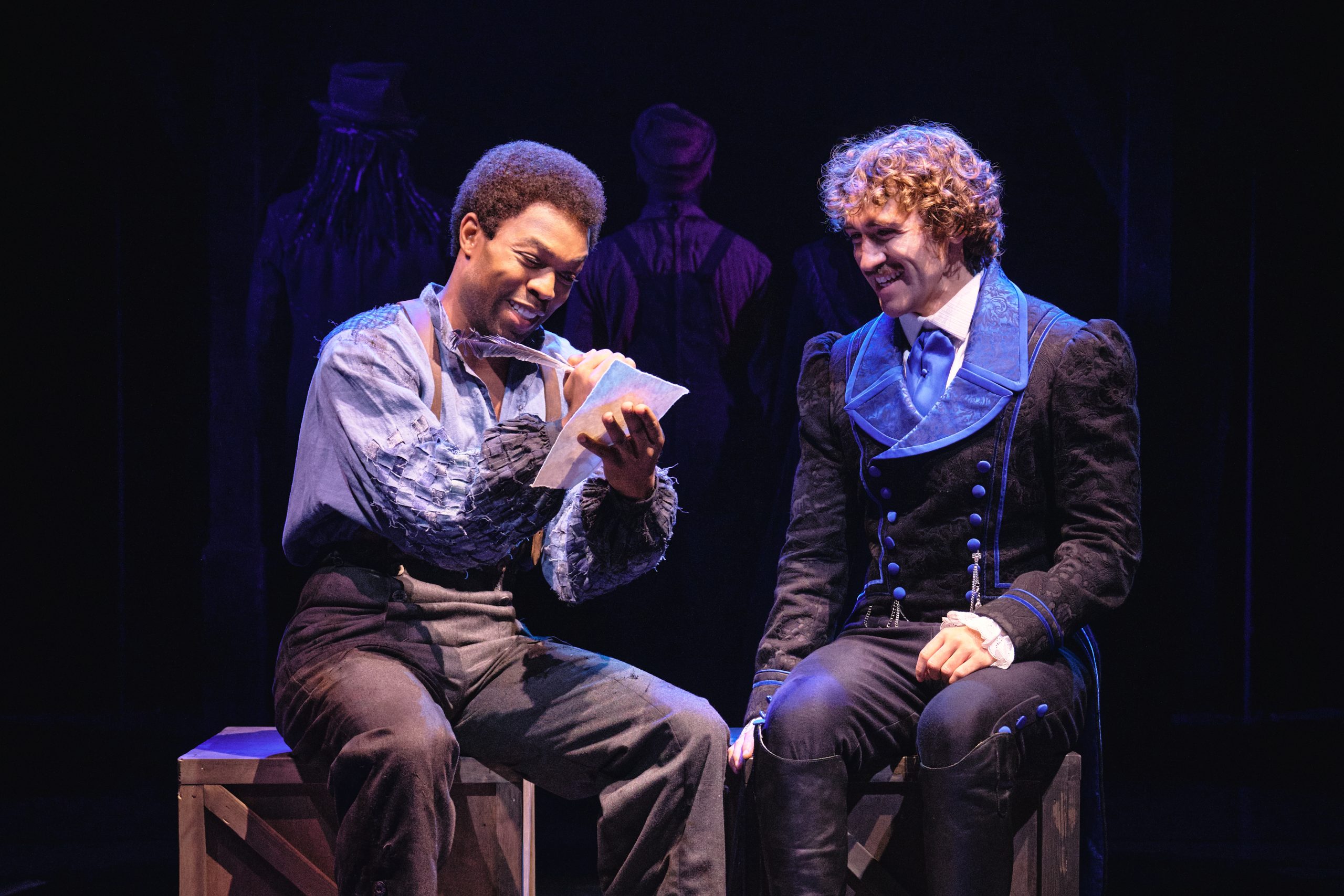
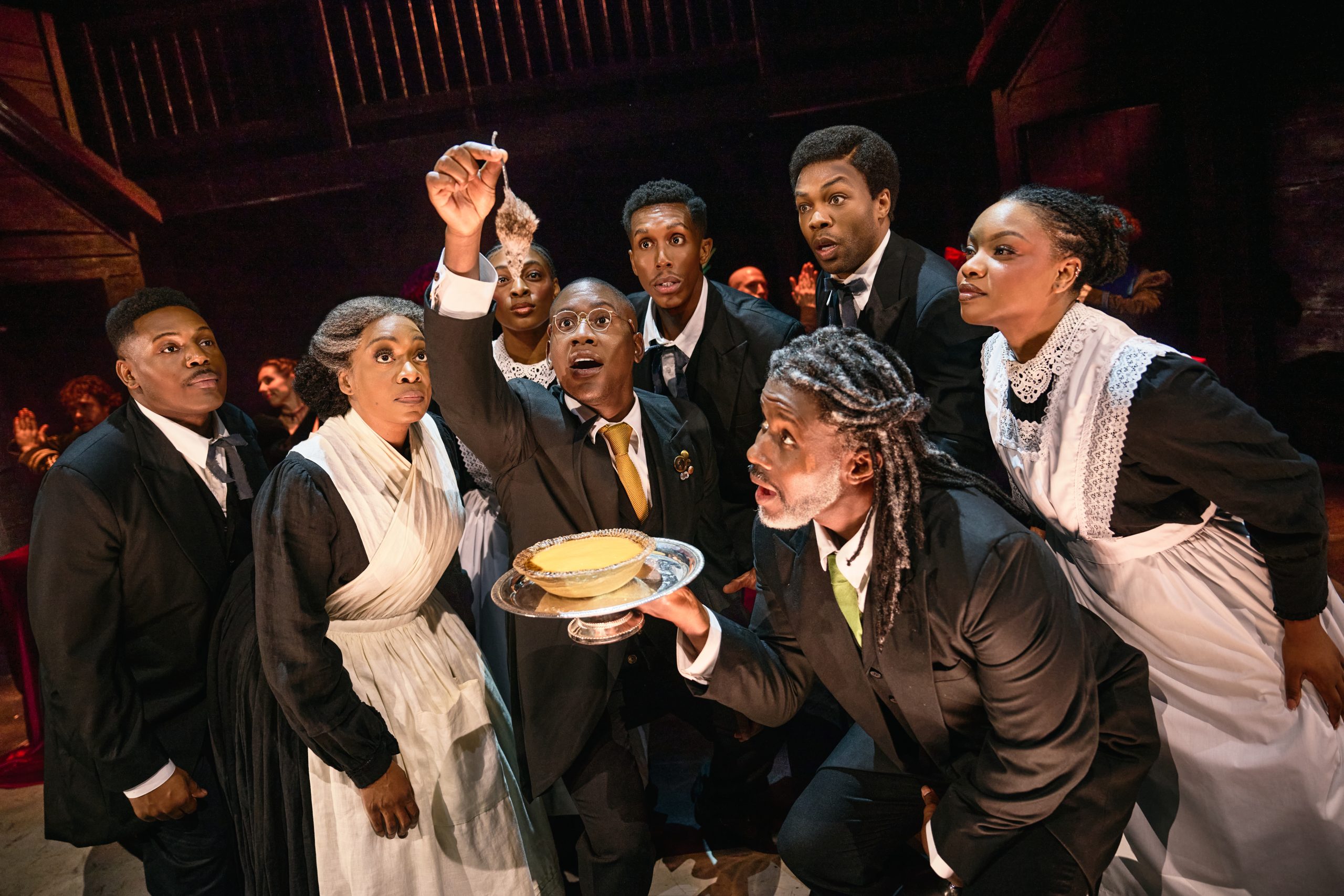
The Company of Midnight Photo by Valerie Terranova
Every so often, a musical comes along that reminds me why I fell in love with theater in the first place. Not because it is perfect, not because it follows the rules, but because it possesses that rare, electrifying combination of originality, extraordinary talent, emotional intelligence, and sheer theatrical audacity. Midnight, written, directed, choreographed, and starring Todrick Hall, is that musical. Currently playing at the Daryl Roth Theatre, it is, hands down, the best new musical I have seen this season. Frankly, I cannot imagine what could possibly surpass it.
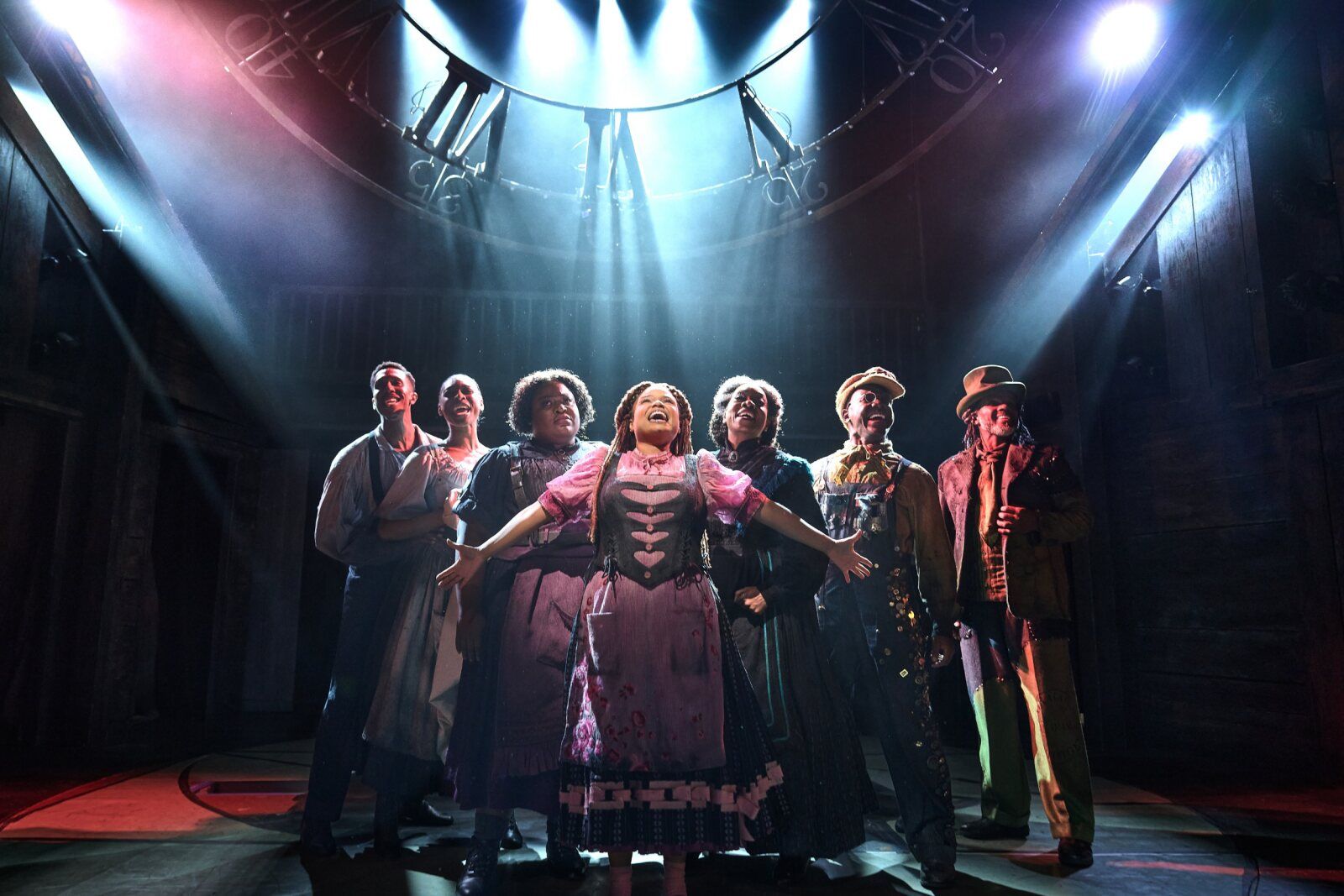
Charlotte Odusanya and the Company Of Midnight Photo by Valerie Terranova
I have been a fan of Hall’s since his brilliantly inventive Beauty and the Beat video. His imagination, musicality, humor, and ability to transform popular culture into something uniquely his own have always fascinated me. But nothing, and I mean nothing, prepared me for what is happening at 101 East 15th Street.
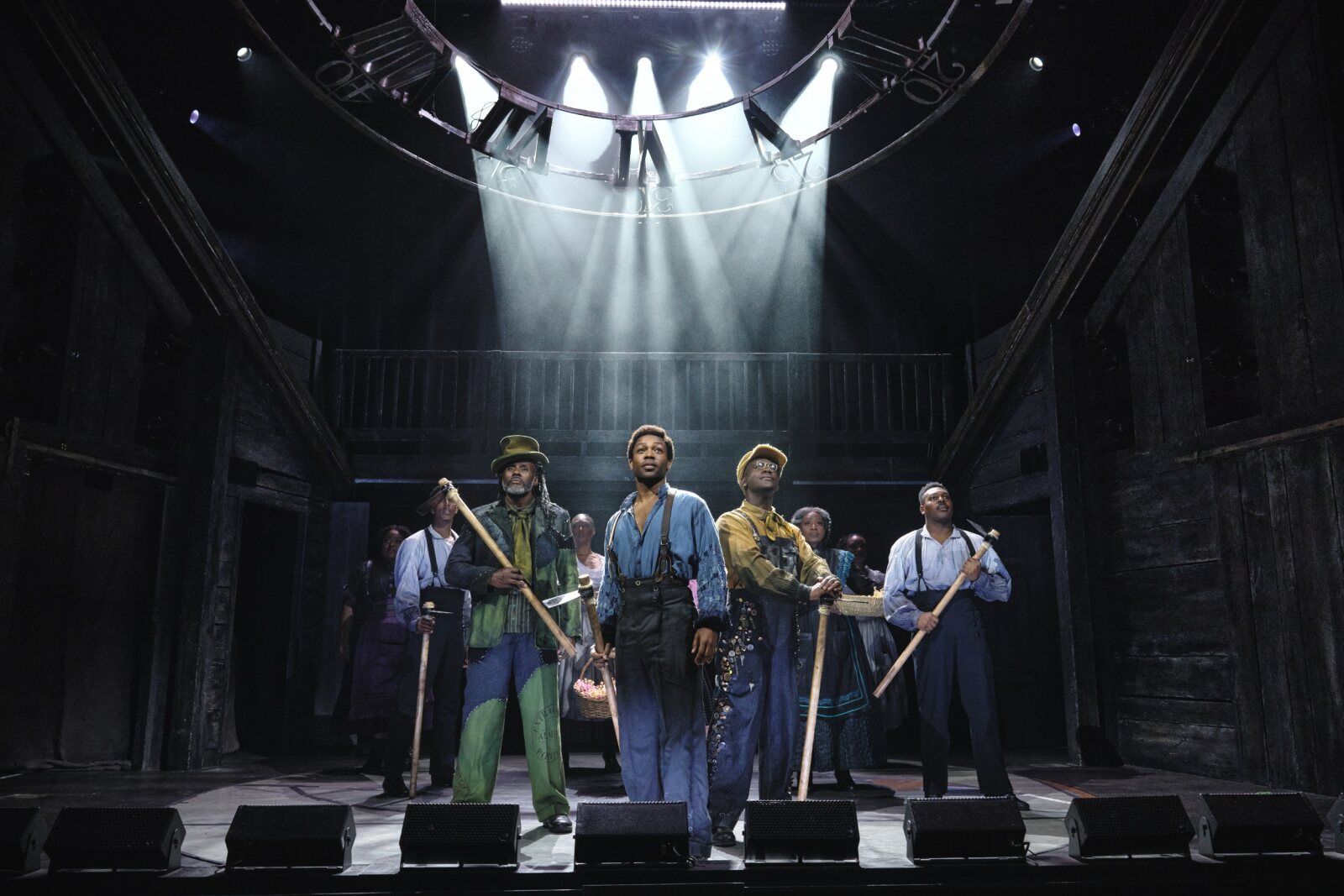
Todrick Hall and. the Company Of Midnight Photo by Valerie Terranova
First, there is the score. Gospel, rhythm and blues, soul, pop, rock, folk, and even opera collide in a glorious explosion of musical styles. This is a sung-through musical, with no spoken dialogue, and the vocal and instrumental arrangements are nothing short of extraordinary. Multiple harmonies overlap, voices soar into unexpected intervals, and riffs build upon riffs until the entire theater seems to vibrate with sound. The musical sophistication is staggering. I found myself sitting there in a state of absolute bliss, wondering how Hall had managed to assemble so many extraordinary voices in one production.
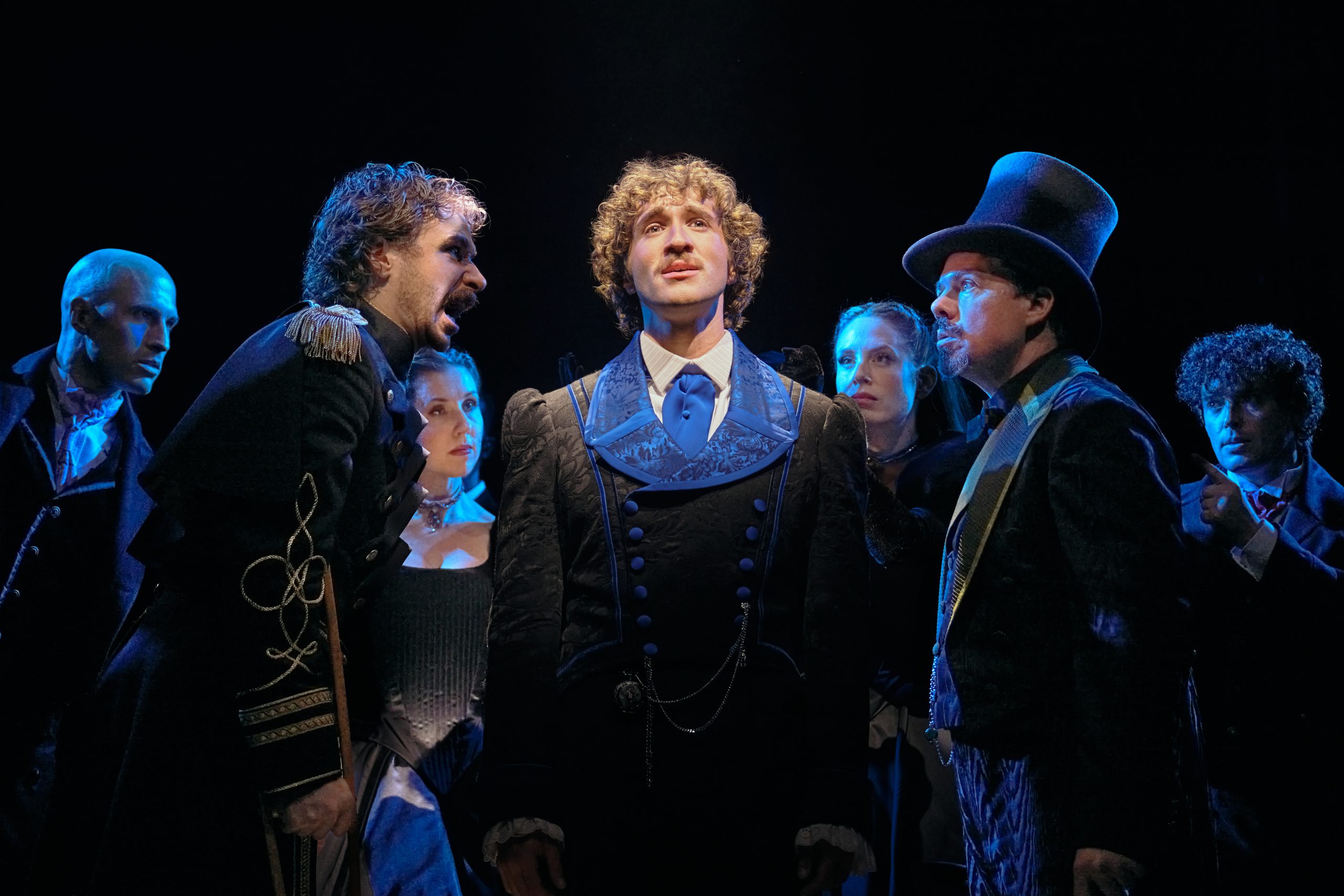
Jimmy Brewer, Jeremy Beloate and Ciarán McCarthy The Company of Midnight photo by Valerie Terranova
Set in the nineteenth-century American South, Midnight follows twelve interconnected characters, six Black and six white, whose lives are defined by race, class, power, identity, and the complicated nature of love. At its center is Rail, a young enslaved Black man portrayed by Hall, whose emotional world becomes increasingly complicated by Lily Rose, played with irresistible sweetness by Charlotte Odusanya affection, and his forbidden attraction to Richard, a wealthy white neighbor portrayed by the phenomenally gifted Jeremy Beloate.
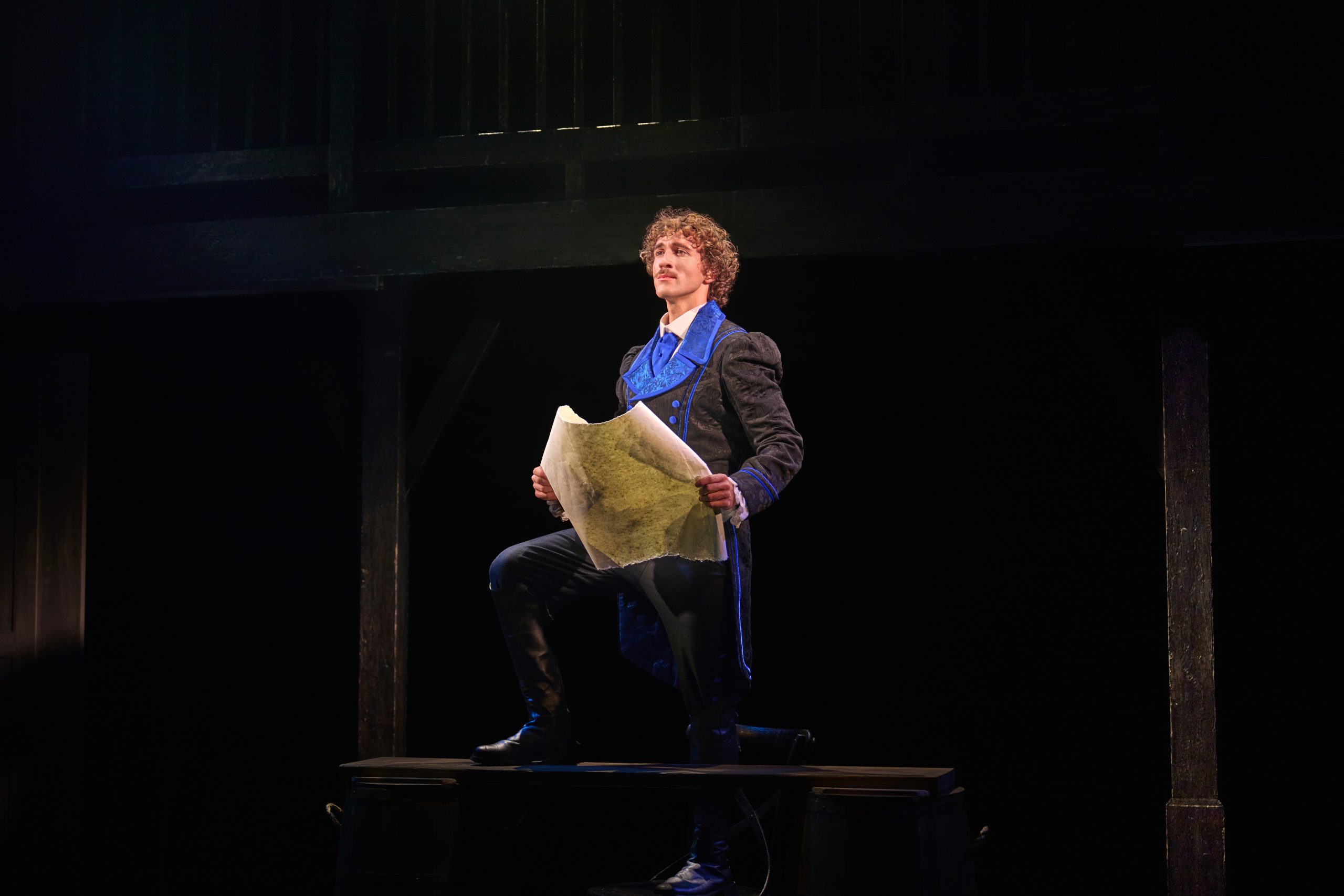
Jeremy Beloate photo by Valerie Terranova
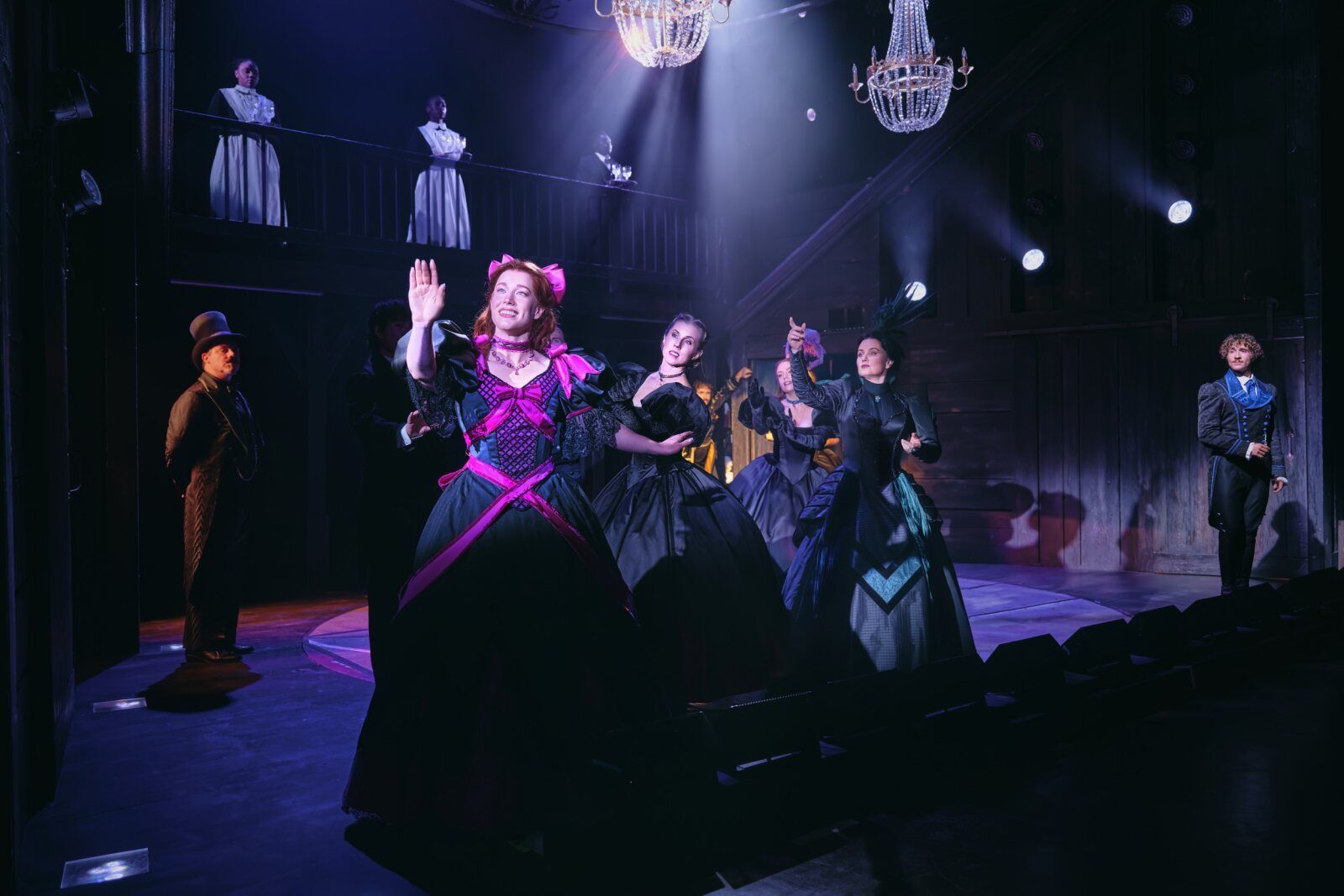
Kennedy Caughell and the company of midnight Photo by Valerie Terranova
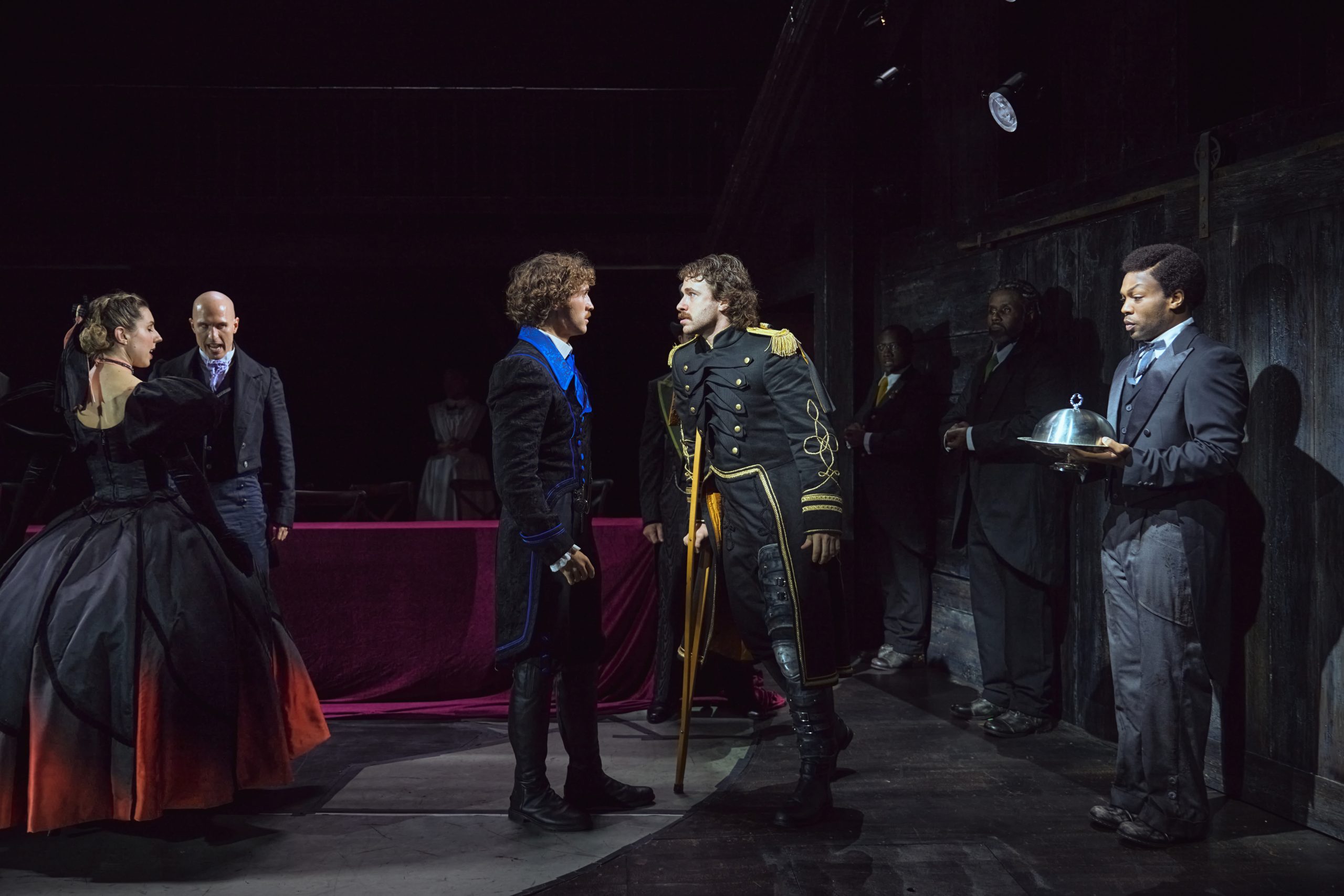
Jimmy Brewer, Jeremy Beloate, Todrick Hall Photo by Valerie Terranova
What makes this so effective is that Hall does not simply ask us to imagine injustice. He makes us watch familiar characters experience it from the opposite side. The reversal exposes the arbitrary cruelty of a system in which one person’s humanity is determined by another person’s authority. It is bold, unsettling, and theatrically ingenious.
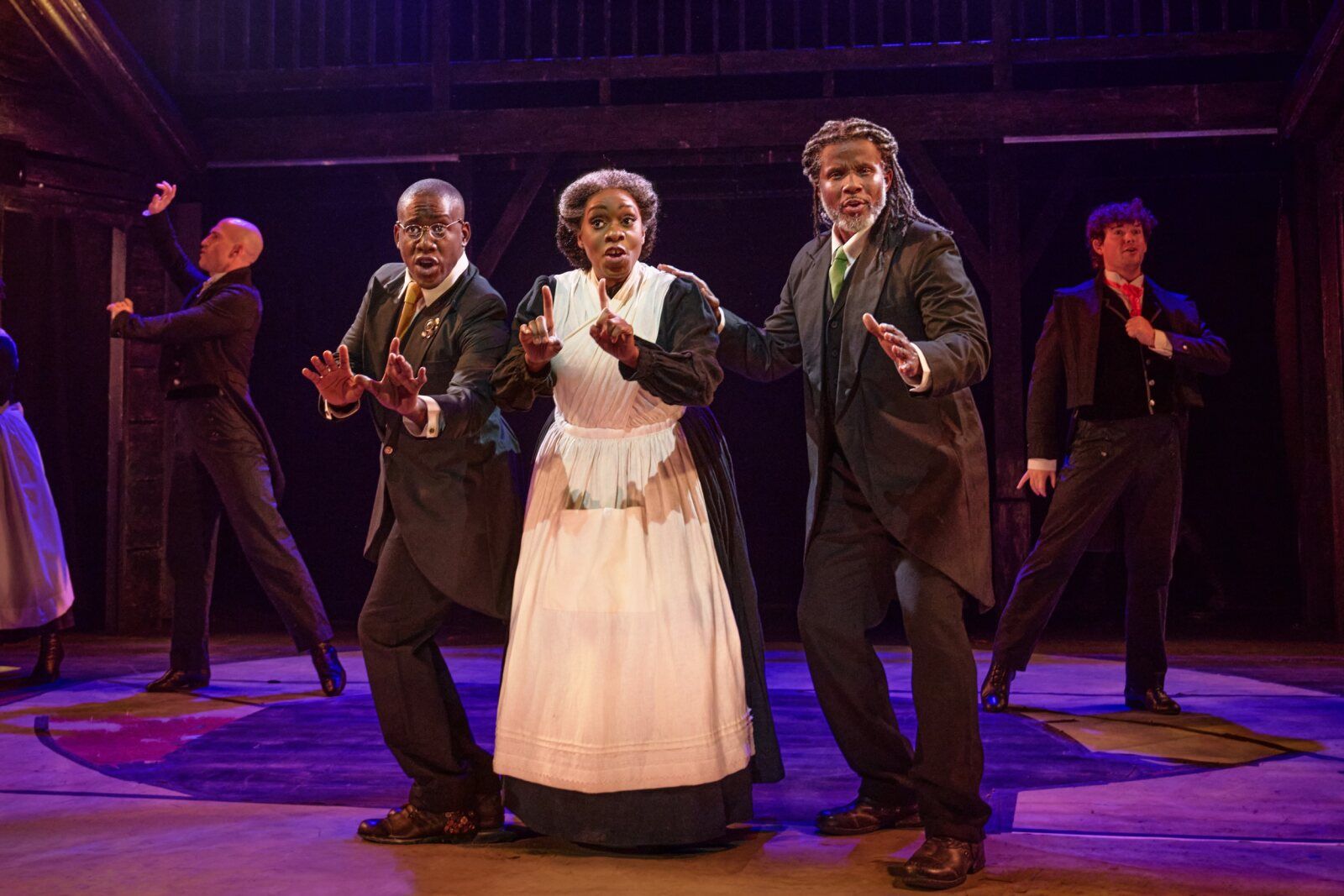
Sidney Dupont, Ayana George, and Dwayne Clark Photo by Valerie Terranova
Ayana George, as Ethel, serves as one of the musical’s principal narrators, and her voice is simply magnificent. She possesses the kind of vocal authority that makes an audience surrender from the first note. There is richness, power, and emotional command in everything she sings, and she anchors the production with remarkable assurance.
Charlotte Odusanya brings warmth and charm to Lily Rose, making her far more than a romantic counterpoint to Rail’s complicated desires. There is an innocence to her performance, but also an emotional intelligence that keeps the character from becoming sentimental.
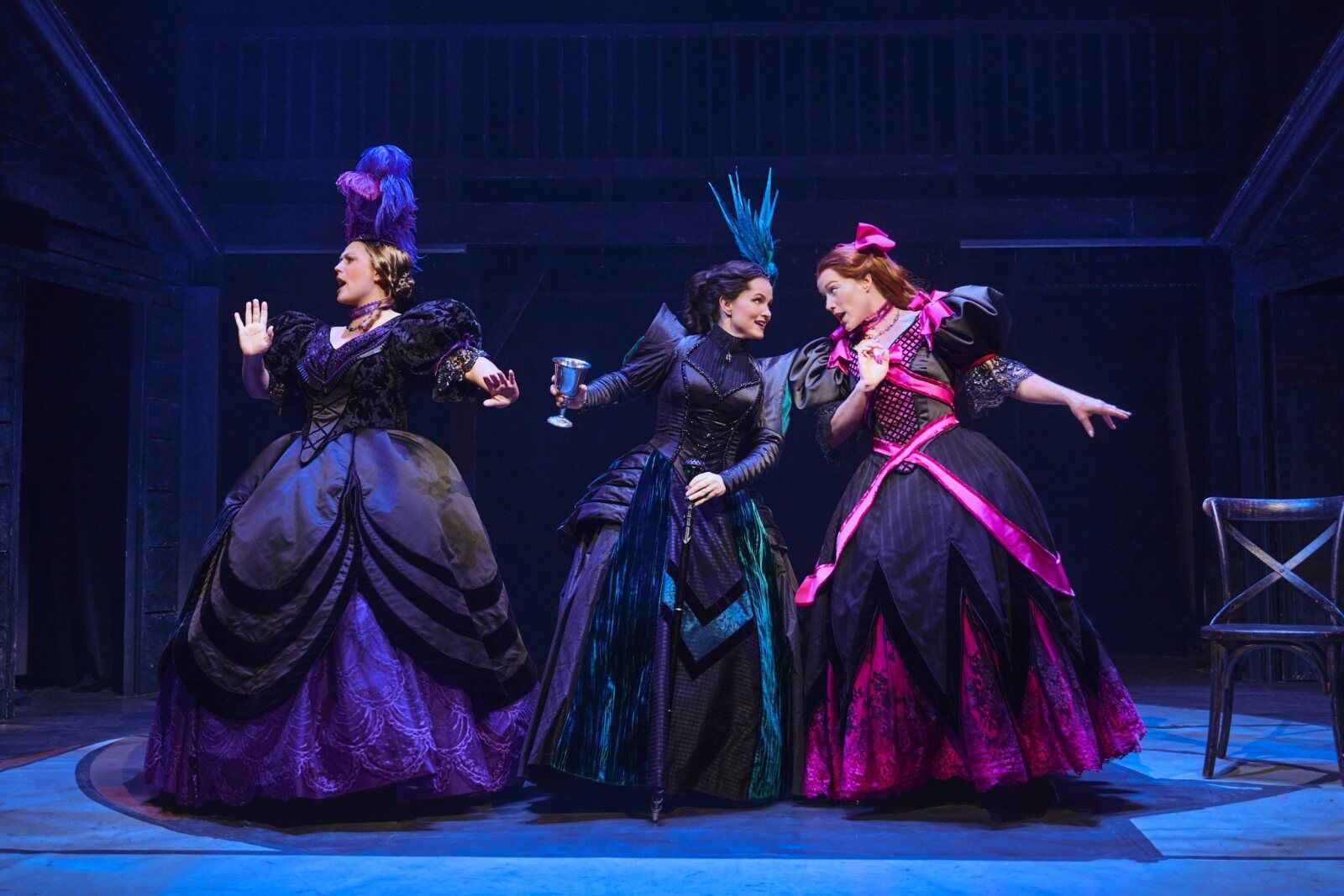
Bella Coppola, Autumn Hurlbert and Kennedy Caughell Photo by Valerie Terranova
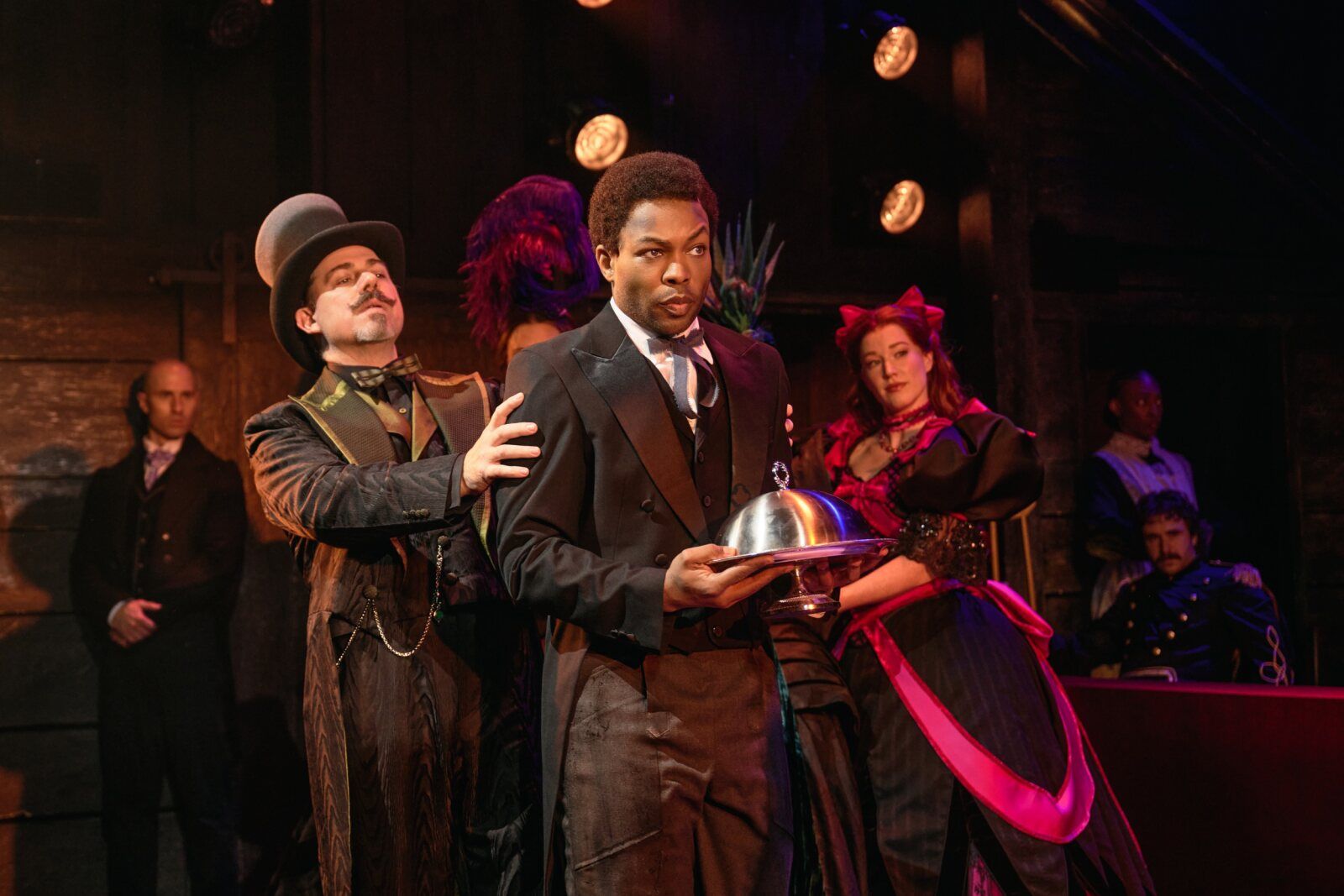
Ciaran McCarthy, Todrick Hall, Kennedy Caughell and the company of midnight Photo by Valerie Terranova
What Hall has accomplished vocally is especially impressive because the musical demands so much more than beautiful singing. The performers must negotiate complicated harmonies, shifting musical styles, demanding choreography, and emotionally charged storytelling without the relief of spoken dialogue. There is nowhere to hide. Every thought, every confrontation, and every revelation must be communicated through music and movement. My only criticism is diction.
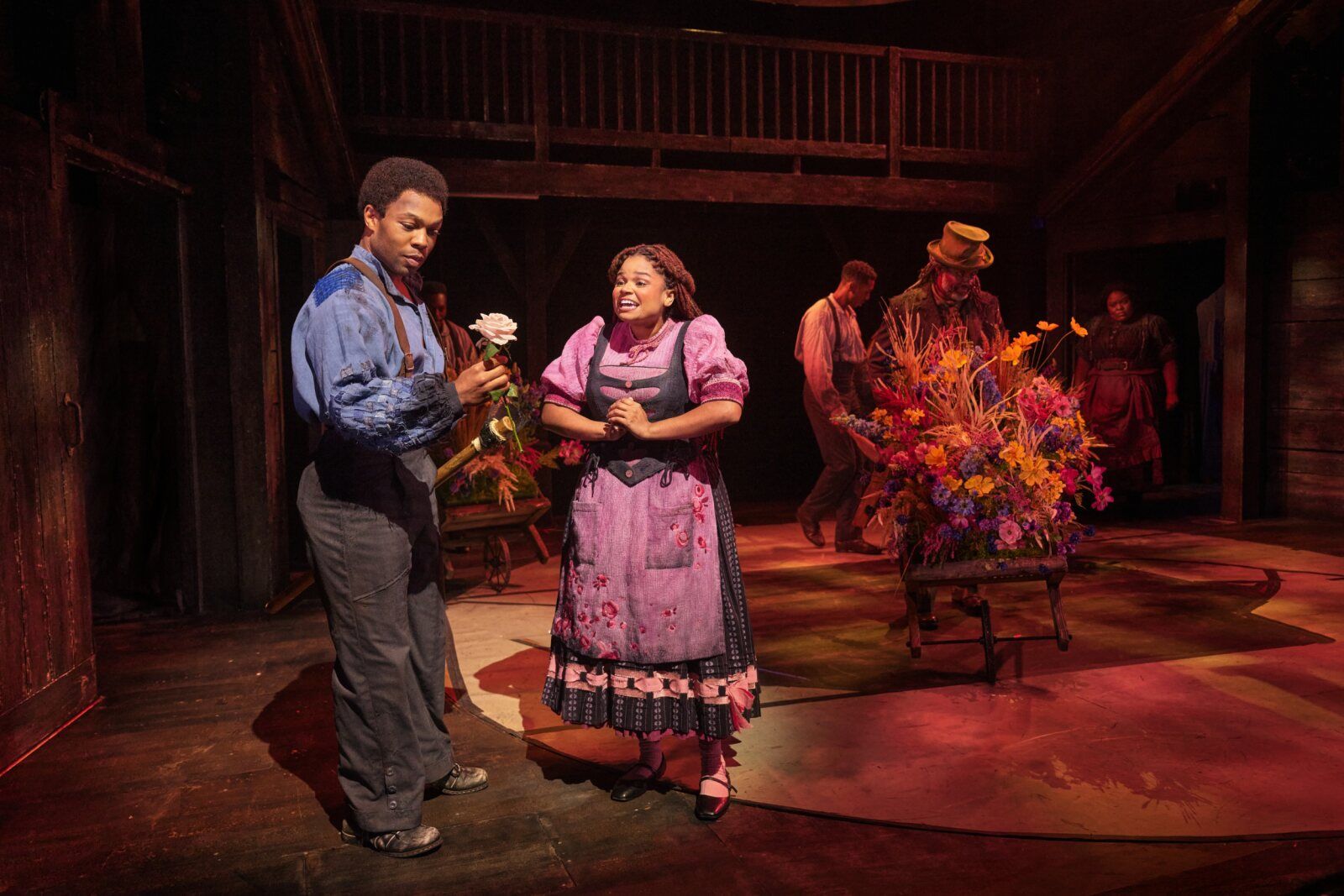
Todrick Hall and Charlotte Odusanya and the Company of Midnight Photo by Valerie Terranova
Hall himself is a magnetic performer, bringing charisma, vulnerability, humor, and tremendous physical energy to Rail. He commands the stage with the confidence of someone who knows precisely what he wants his audience to experience. Yet he is also the one person who might benefit most from an editor. Sometimes less really is more.
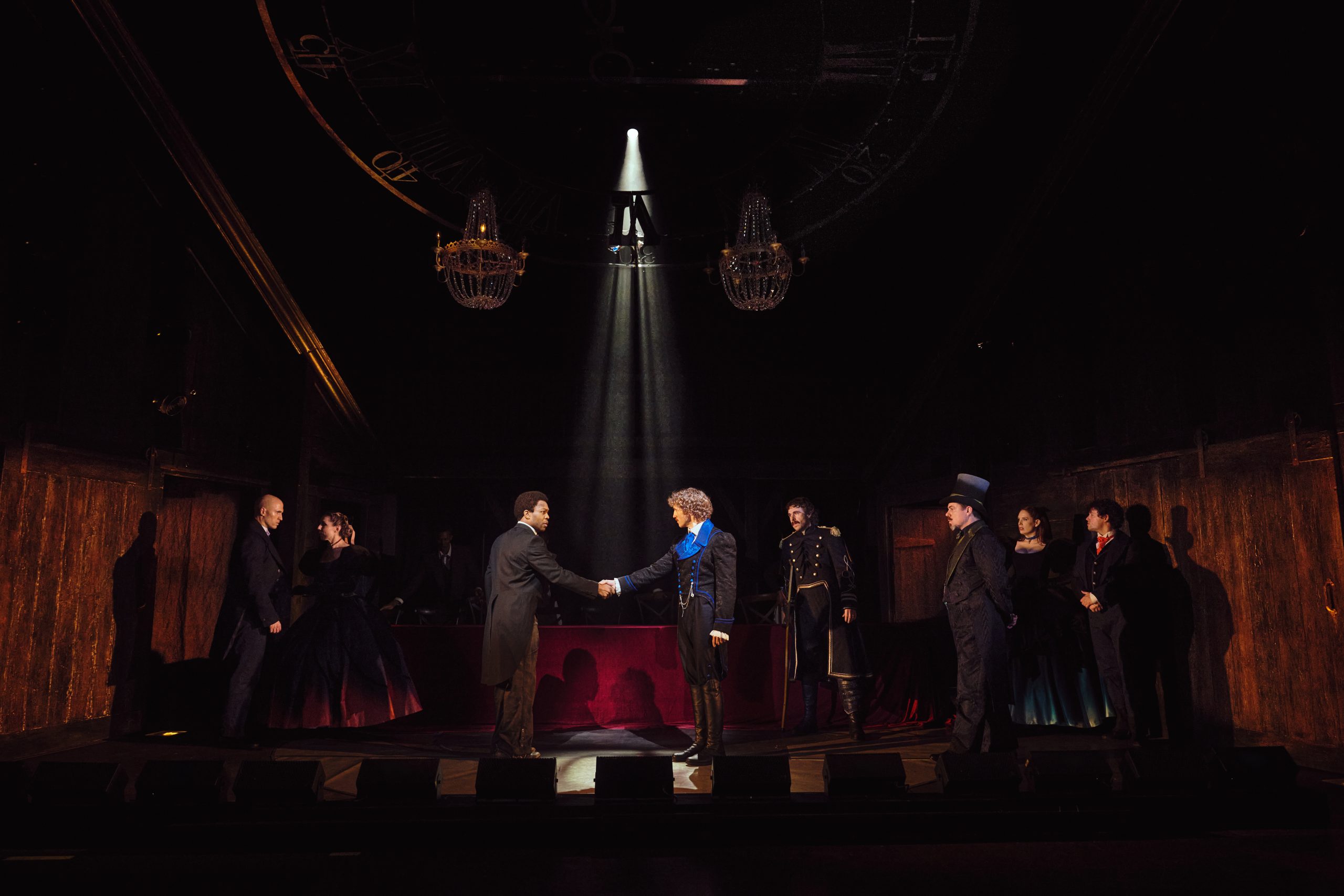
Todrick Hall, Jeremy Beloate and the Company of Midnight Photo by Valerie Terranova
Morgan Large’s scenic design provides a theatrical environment capable of moving between historical realism and the production’s increasingly surreal landscape. Beck Jones’s costumes establish the divisions of class and status that become so essential to the story, while Jake DeGroot’s lighting gives the production both its visual grandeur and its darker emotional textures.
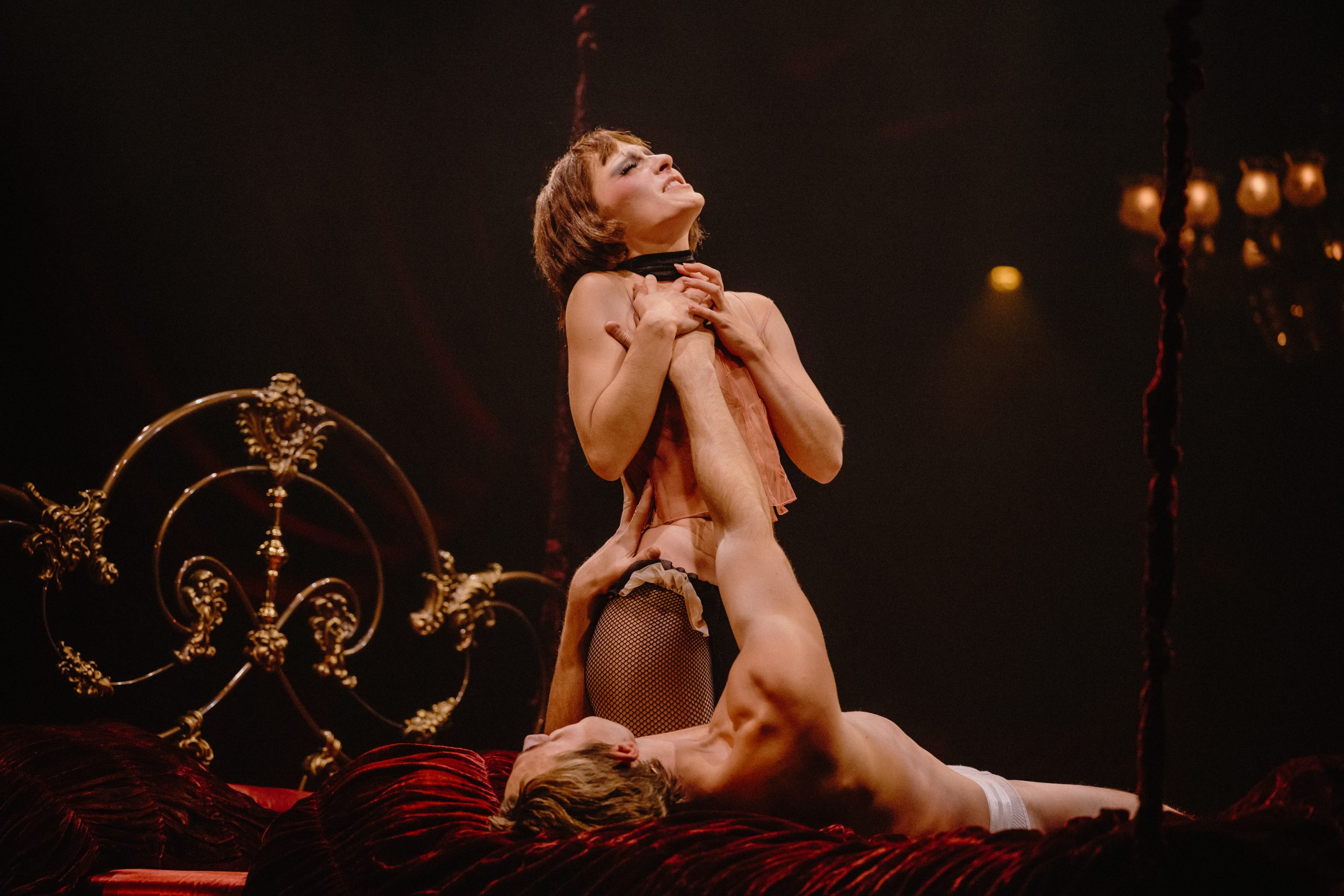
Sophia Anne Caruso delivers a mesmerizing performance in Duncan Sheik’s haunting new musical, where exquisite beauty conceals a far more disturbing reality.
There is something particularly poignant about watching Memoirs of Amorous Gentlemen, one of Duncan Sheik’s final theatrical works, arriving onstage in the shadow of his death. The composer who helped redefine contemporary musical theater with Spring Awakening has left us another haunting score, one whose melodic beauty and emotional darkness seem all the more affecting now that its creator is gone.
Now playing at The Night Egg at The Culture Club, 530 West 27th Street. Imagine the immersive seduction of Sleep No More, filtered through the eroticism of a Parisian brothel, and you begin to understand the atmosphere. This is a production that invites you to look, encourages you to linger, and then makes you question precisely what you have been watching.

Sophia Anne Caruso photo by Andy Henderson
Make no mistake, this is essentially beautiful soft pornography onstage, wrapped in some of the most exquisite theatrical design currently on display. It is also a production with a frustratingly familiar story, an insufficiently developed book, and one extraordinary young actress who makes the entire evening worth experiencing.
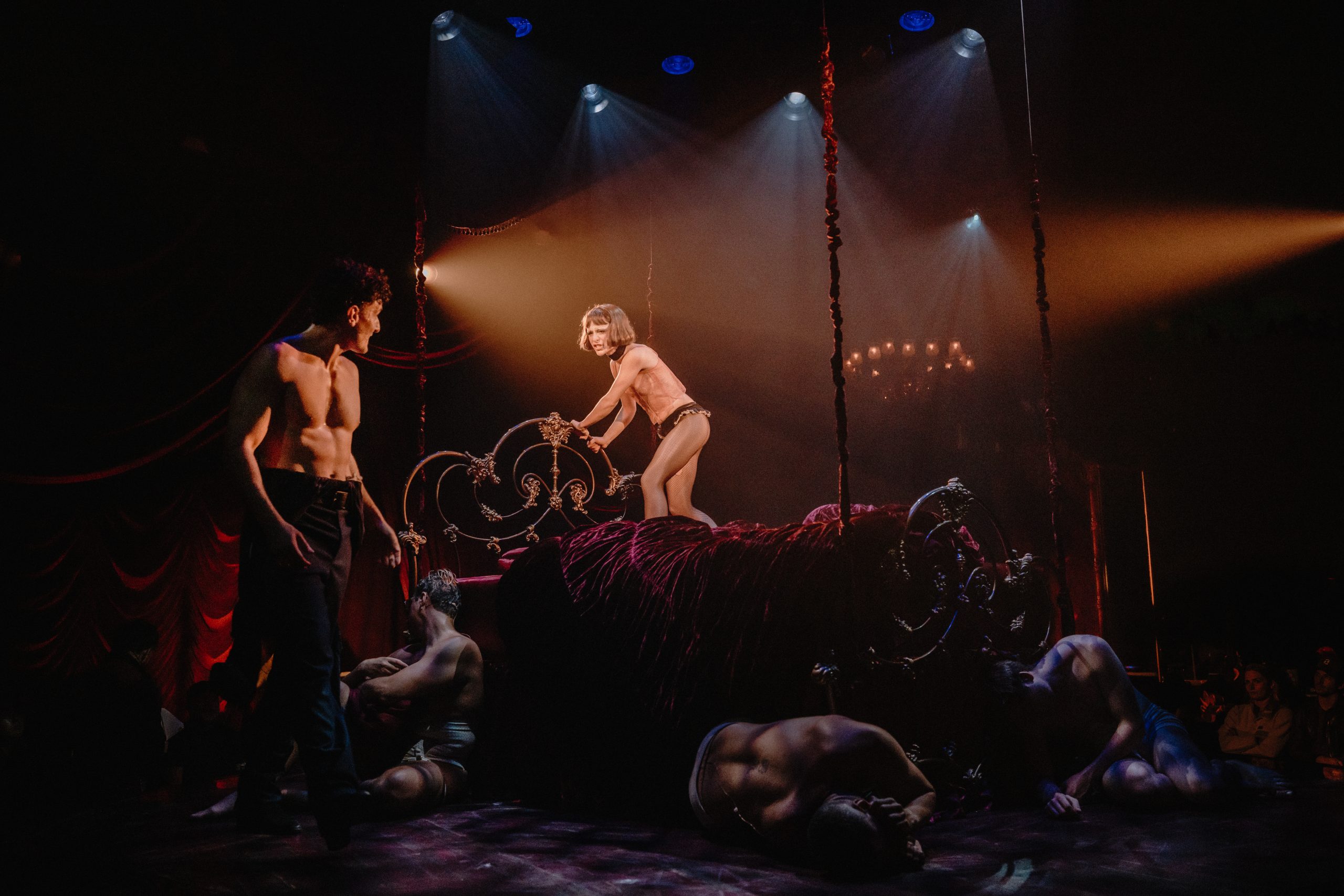
Cory Jeacoma and Sophia Anne Caruso photo by Andy Henderson
Based on Moyoco Anno’s award-winning Japanese manga, with a book by Leah Nanako Winkler, Memoirs of Amorous Gentlemen transports us to a decadent Parisian maison close known as the Night Egg. Here, desire is currency, intimacy is transactional, and the women who inhabit this seductive underworld survive by learning the difference between what men want and what men are willing to give.

Cory Jeacoma photo by Andy Henderson
At its center is Colette, a young aspiring writer portrayed by the astonishing Sophia Anne Caruso. Colette works within this elaborate world of fantasy while remaining emotionally entangled with Léon (a rake that Cory Jeacoma makes you want o hear more of), her childhood love, a man whose affections prove considerably less dependable than her devotion.

Marc delaCruz photo by Andy Henderson
When a client, Sakae (Marc delaCruz), encourages Colette to put pen to paper, she begins recording the intimate confessions, peculiar fantasies, and private sorrows of the men who frequent the establishment. Through writing, she discovers a means of reclaiming her identity. No longer merely someone to be observed, she becomes the observer, transforming the perversions of others into art.

The Night Egg at the Culture Club photo by Andy Henderson
It is a promising premise, but one that feels distressingly familiar. The prostitute with a literary soul, the emotionally unavailable lover, the exploitation masquerading as affection, and the eventual discovery of personal agency are all recognizable dramatic territory. Winkler’s book never quite finds the originality or psychological complexity necessary to elevate these elements into something genuinely revelatory.
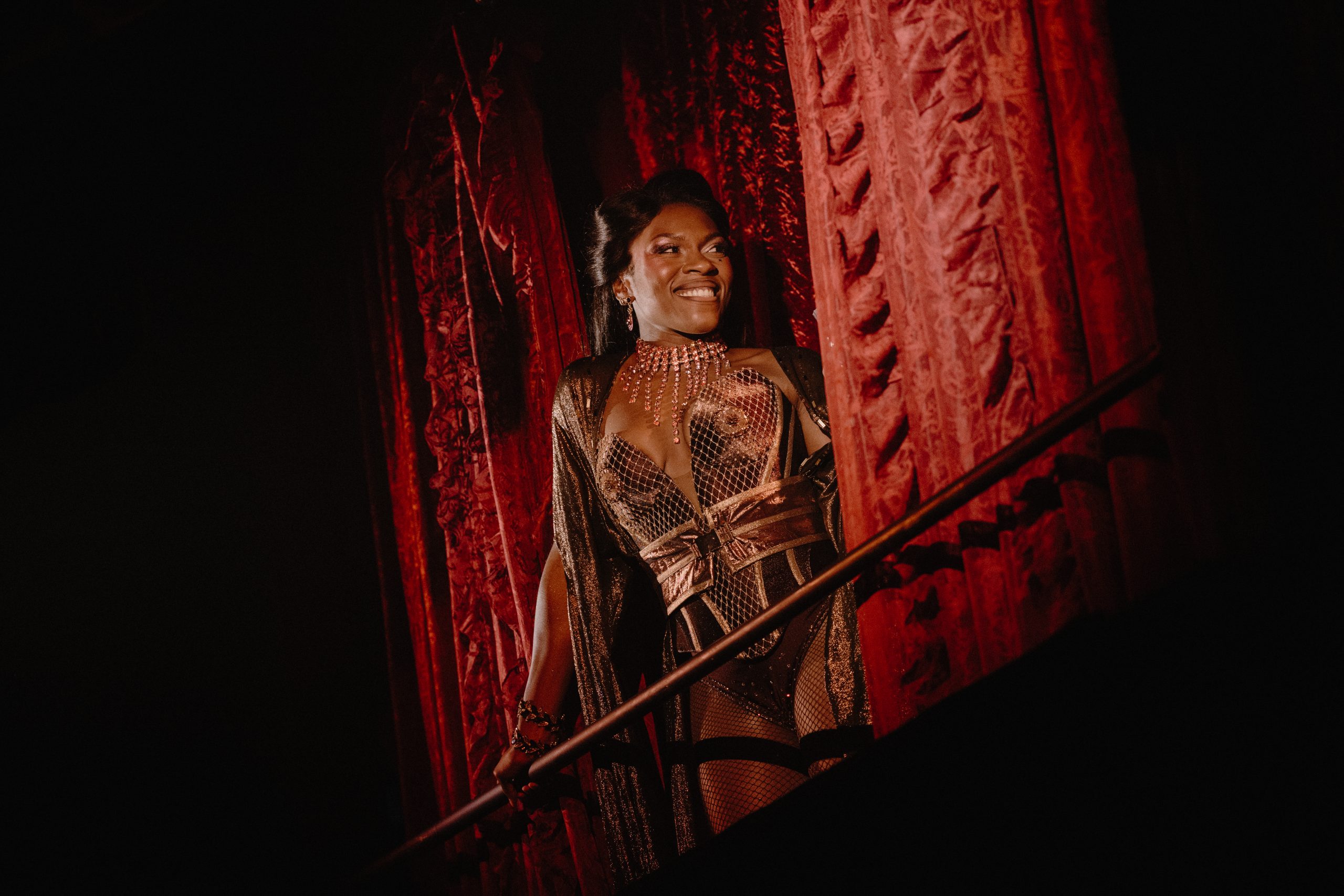
Nkeki Obi-Melekwe photo by Andy Henderson
Léon, meanwhile, exploits Colette’s devotion while directing his money and attention toward Nana, played by Nkeki Obi-Melekwe of Tina: The Tina Turner Musical. Colette continues believing in him long after the audience has recognized the futility of that belief. There is emotional truth in such self-deception, but the writing does not explore it deeply enough to make the relationship as compelling as it should be.
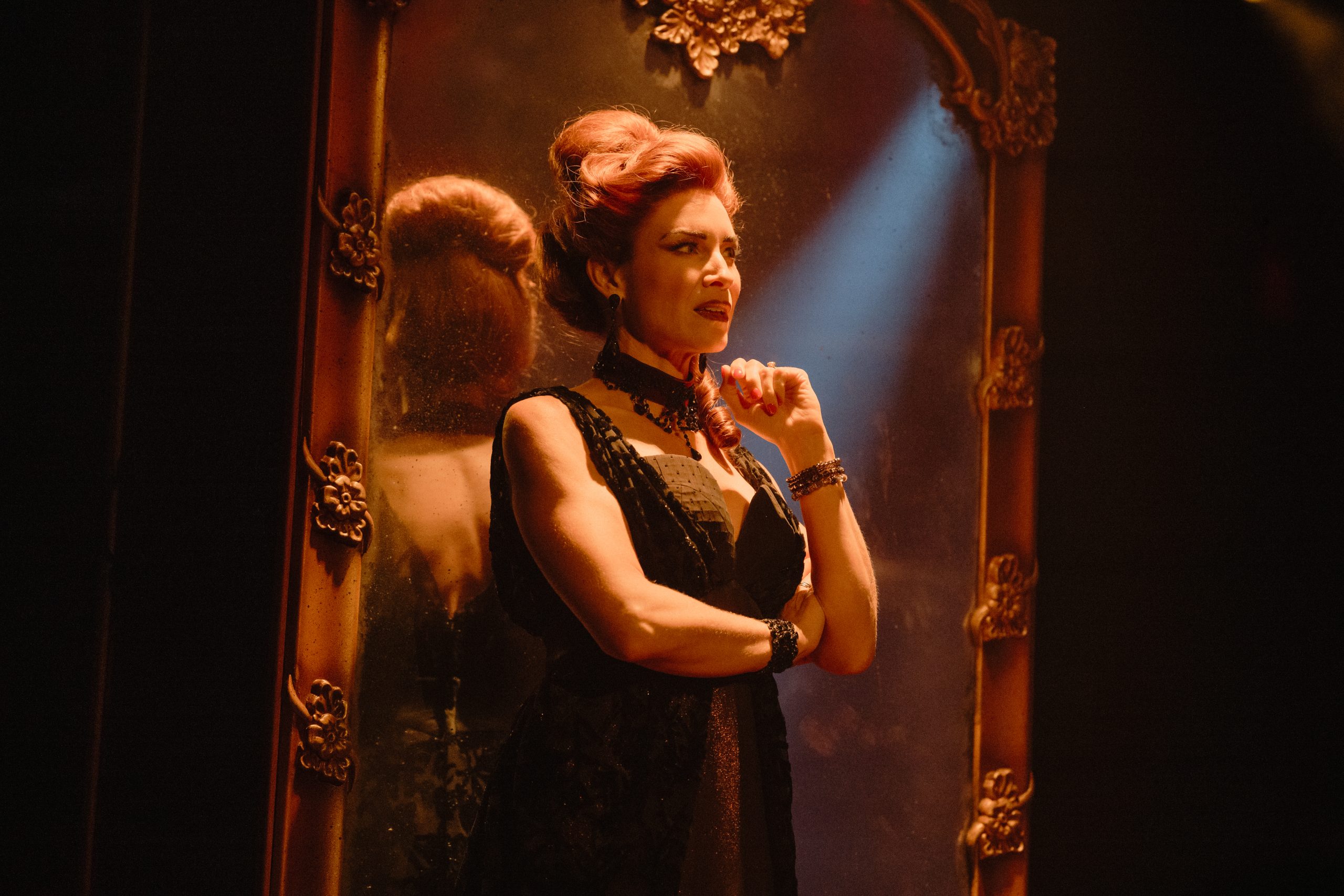
Jenny Powers photo by Andy Henderson
Jenny Powers brings an appropriately chilling authority to Madame, whose coldhearted management of the establishment reminds us that beneath the elaborate costumes and seductive rituals lies a business built upon the commodification of human desire.
What makes the production so compelling is the extraordinary visual and musical world constructed around this underdeveloped narrative.
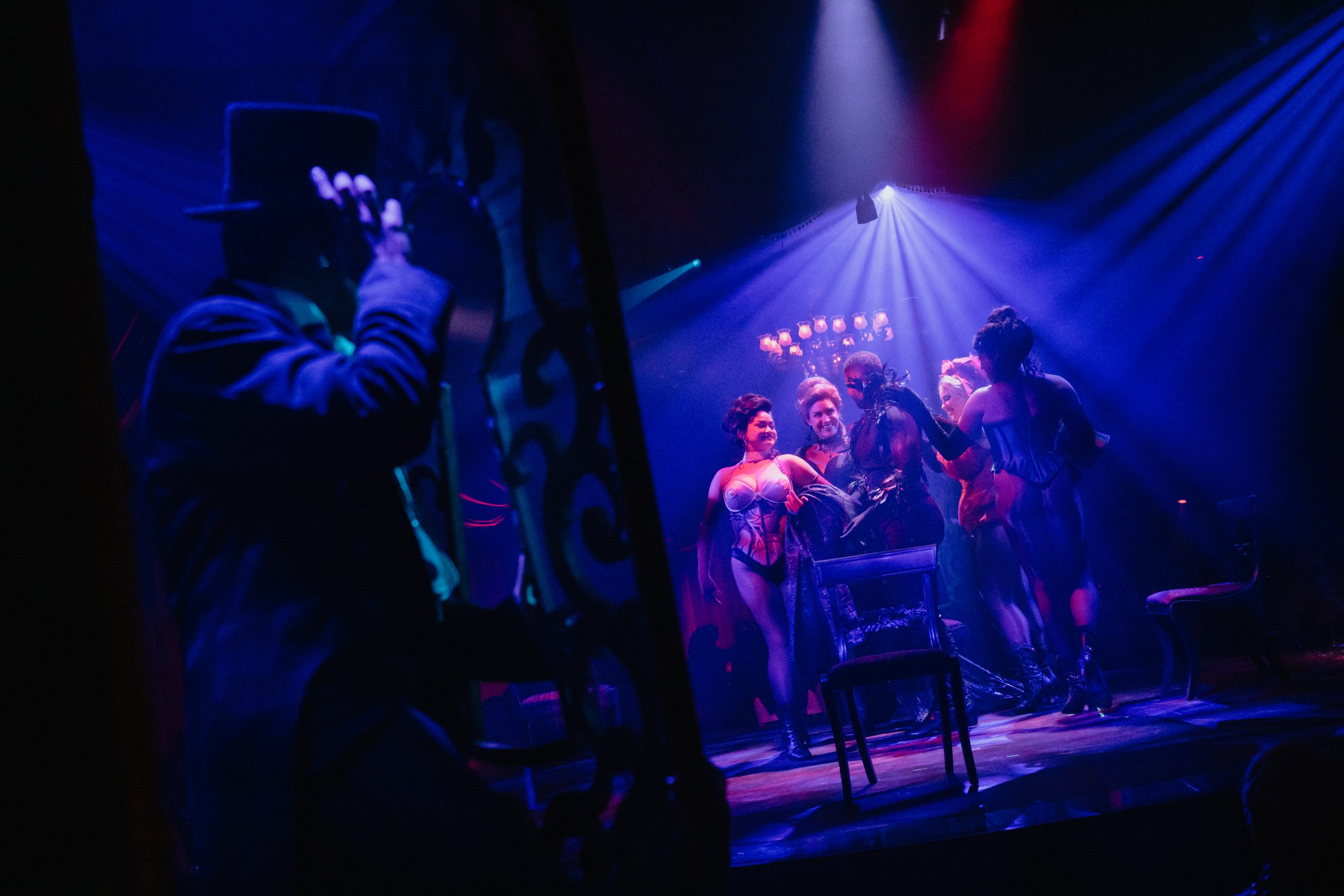
photo by Andy Henderson
Director and choreographer Rob Ashford understands seduction as a theatrical language. His staging is fluid, sensual, and meticulously composed, creating an atmosphere in which movement becomes as expressive as dialogue. The choreography is not simply decorative; it is part of the establishment’s machinery, drawing the audience into a world where beauty and exploitation exist in disturbing proximity.
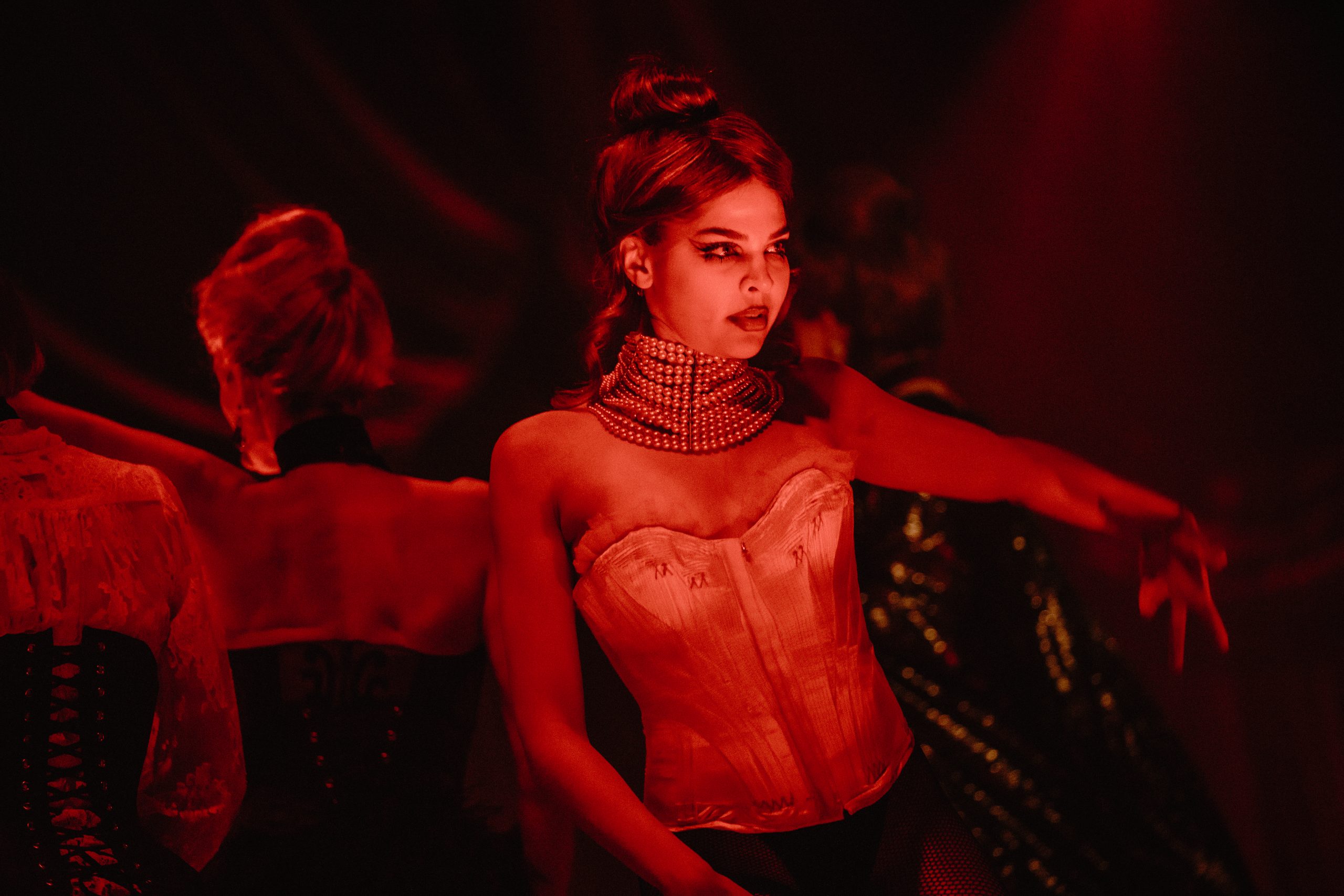
Nika Lindsay photo by Andy Henderson
Scott Pask’s scenic design transforms the space into a decadent Parisian playground, while Catherine Zuber’s costumes are so ravishing that I found myself wanting to purchase practically the entire wardrobe. The textures, silhouettes, and sensual extravagance create a visual feast. If the production occasionally feels more invested in its appearance than its narrative, it is difficult to complain while looking at something this gorgeous.
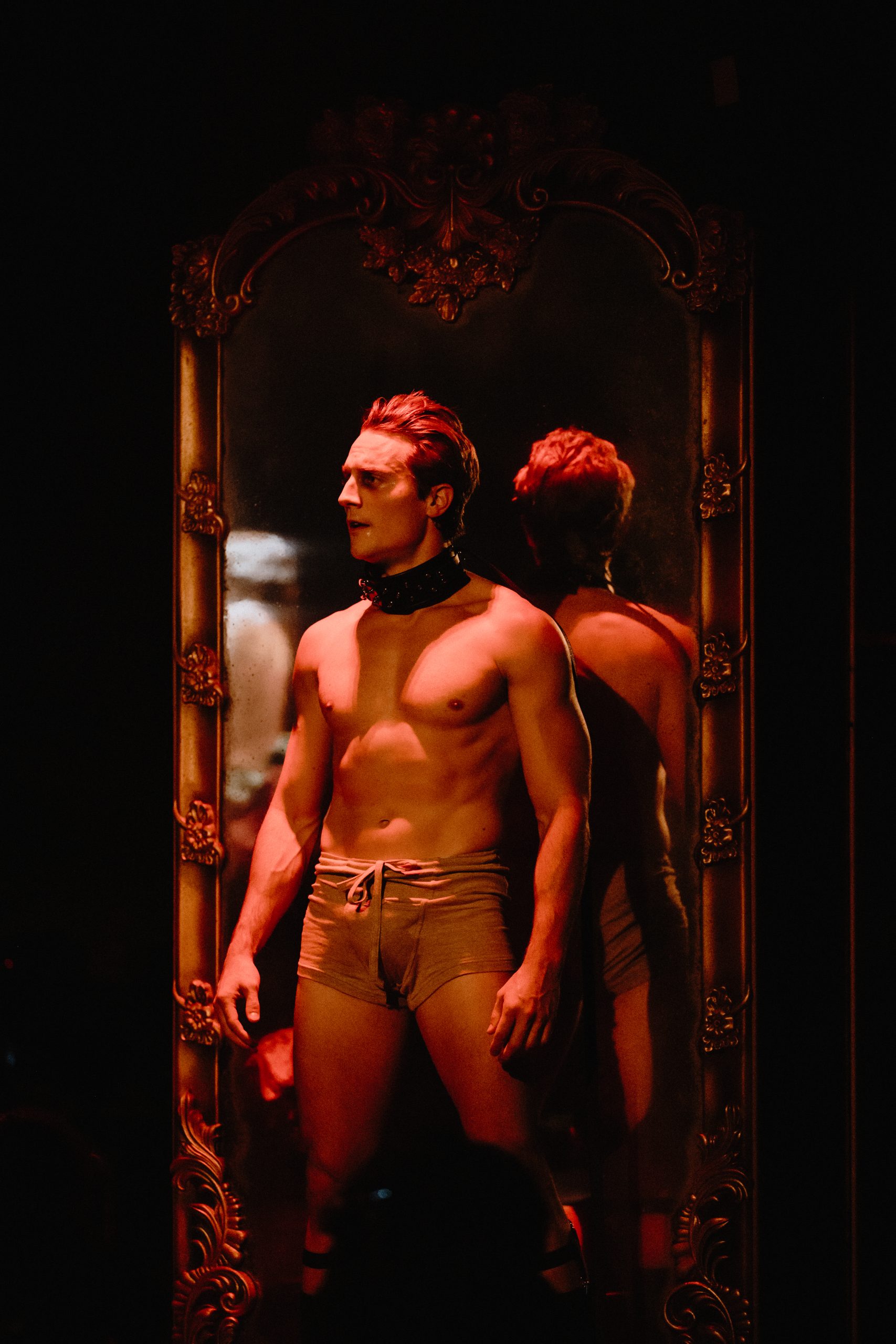
Michael Starr photo by Andy Henderson
Yet that beauty is also the point. The Night Egg is designed to conceal the ugliness of what takes place within its walls. Look from a distance, and everything glitters. Look too closely, and the illusion begins to decay.
Duncan Sheik’s music and lyrics provide the evening with its most haunting dimension. Melodic, atmospheric, and often achingly beautiful, the score has a hypnotic quality that recalls, in spirit, Stephen Sondheim’s Passion. Both works explore the unsettling territory where love becomes obsession and desire slips into emotional captivity.
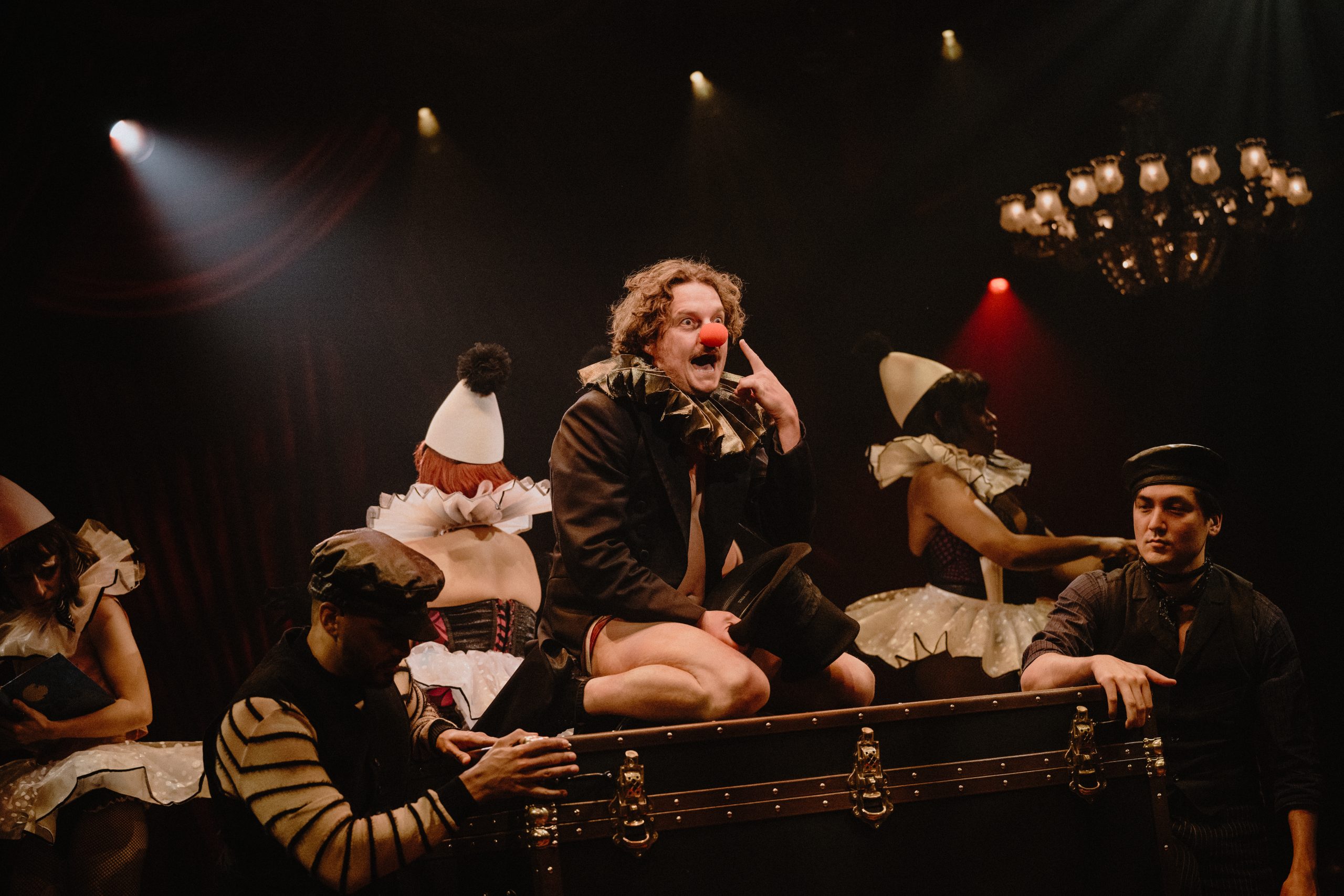
Austin Lesch photo by Andy Henderson
Sheik’s music does not merely accompany the story. It seems to seep through the walls of the Night Egg, making the establishment itself feel alive. There is something almost witchlike about the combination of music, singing, and movement. The melodies draw us inward, creating a seductive spell that makes the eventual recognition of the characters’ suffering all the more unsettling.
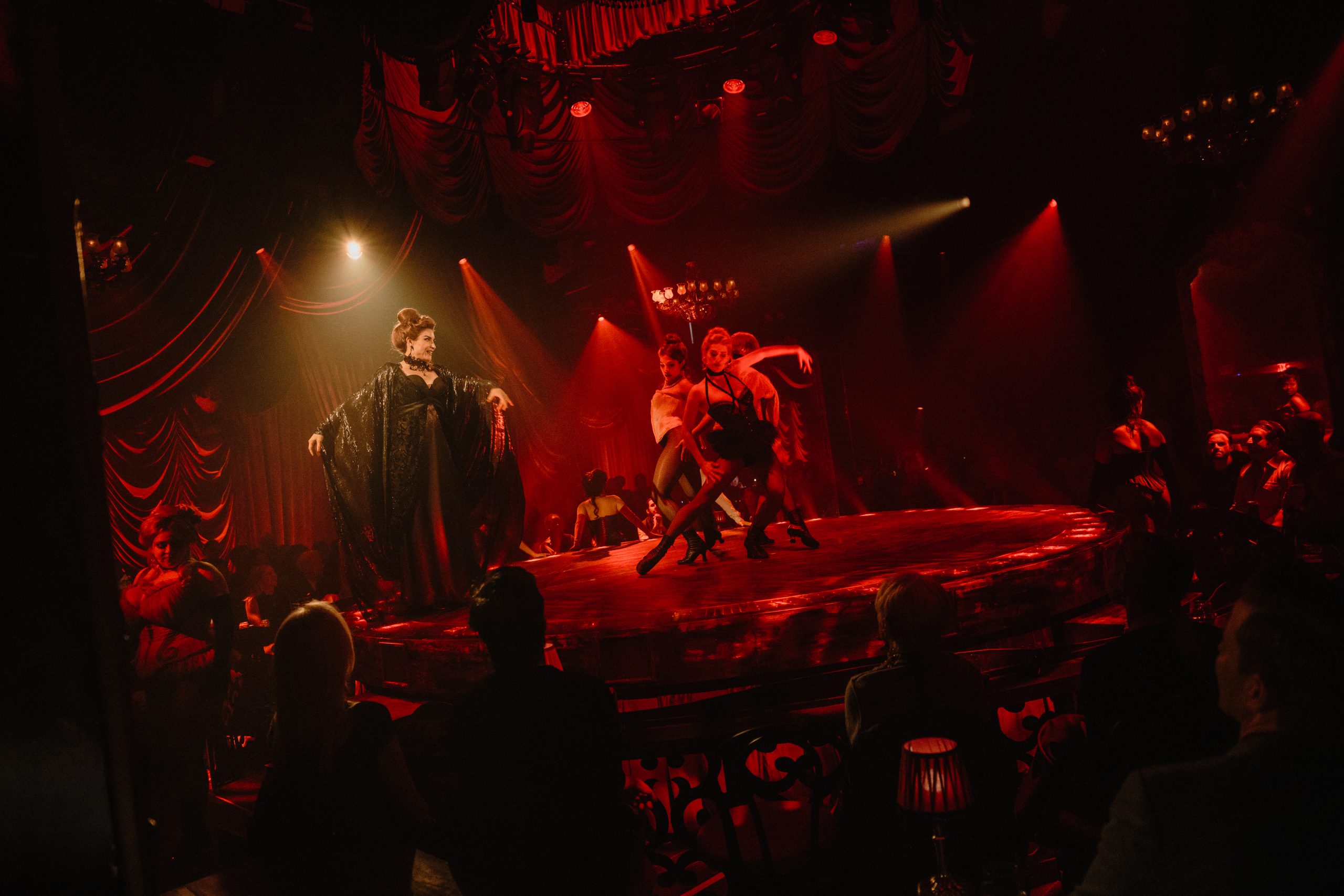
Jenny Powers photo by Andy Henderson
The score is considerably more sophisticated than the book surrounding it. One wishes the writing possessed the same emotional depth and complexity as the music.

Sophia Anne Caruso photo by Andy Henderson
Then there is Sophia Anne Caruso.
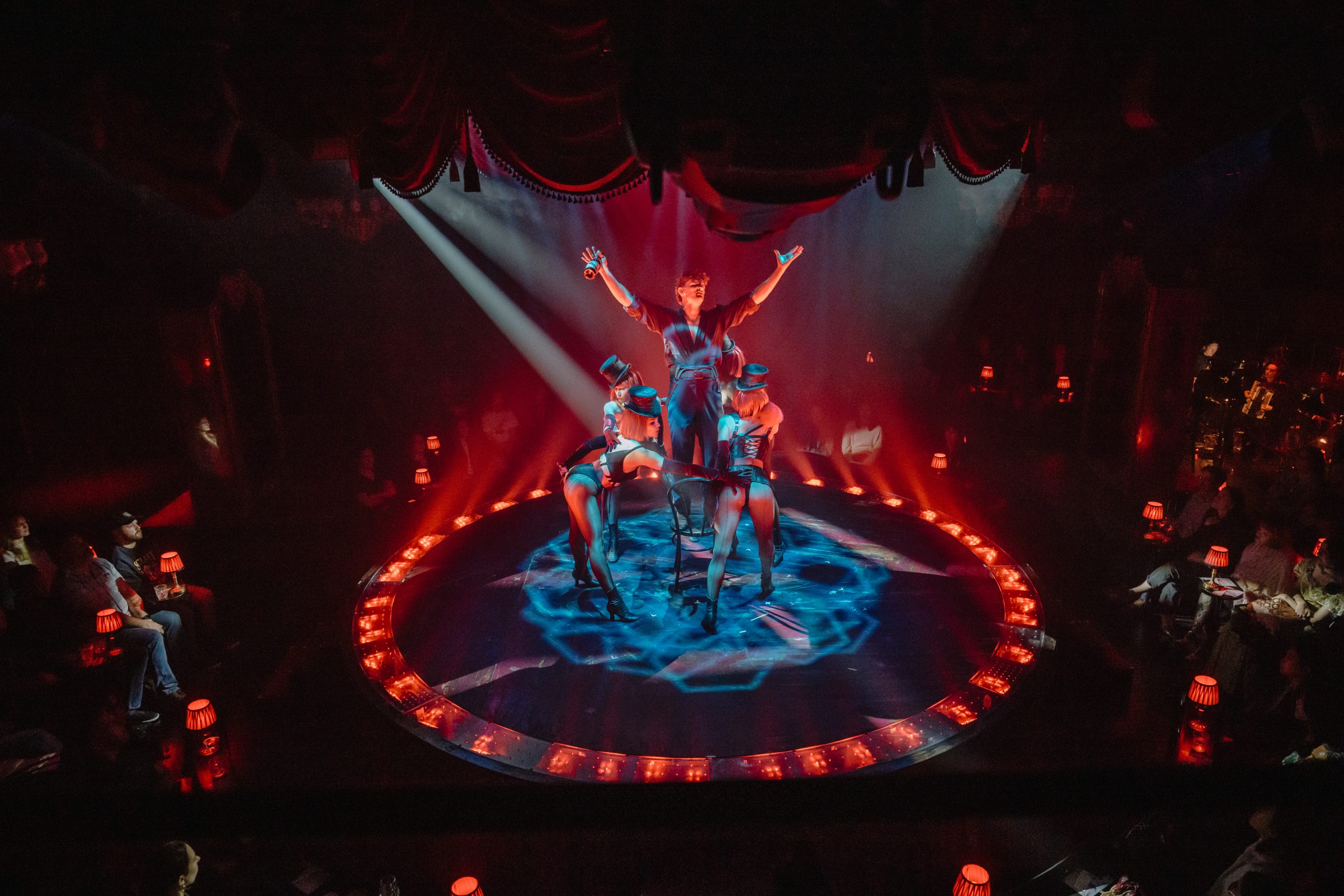
Cory Jeacoma photo by Andy Henderson
I have followed Caruso’s career for years, dating back to The Nether, and watching her artistic development has been a remarkable experience. She has always possessed an arresting theatrical presence, but what she brings to Colette confirms something I have believed for a long time: this young woman is a genuine star.
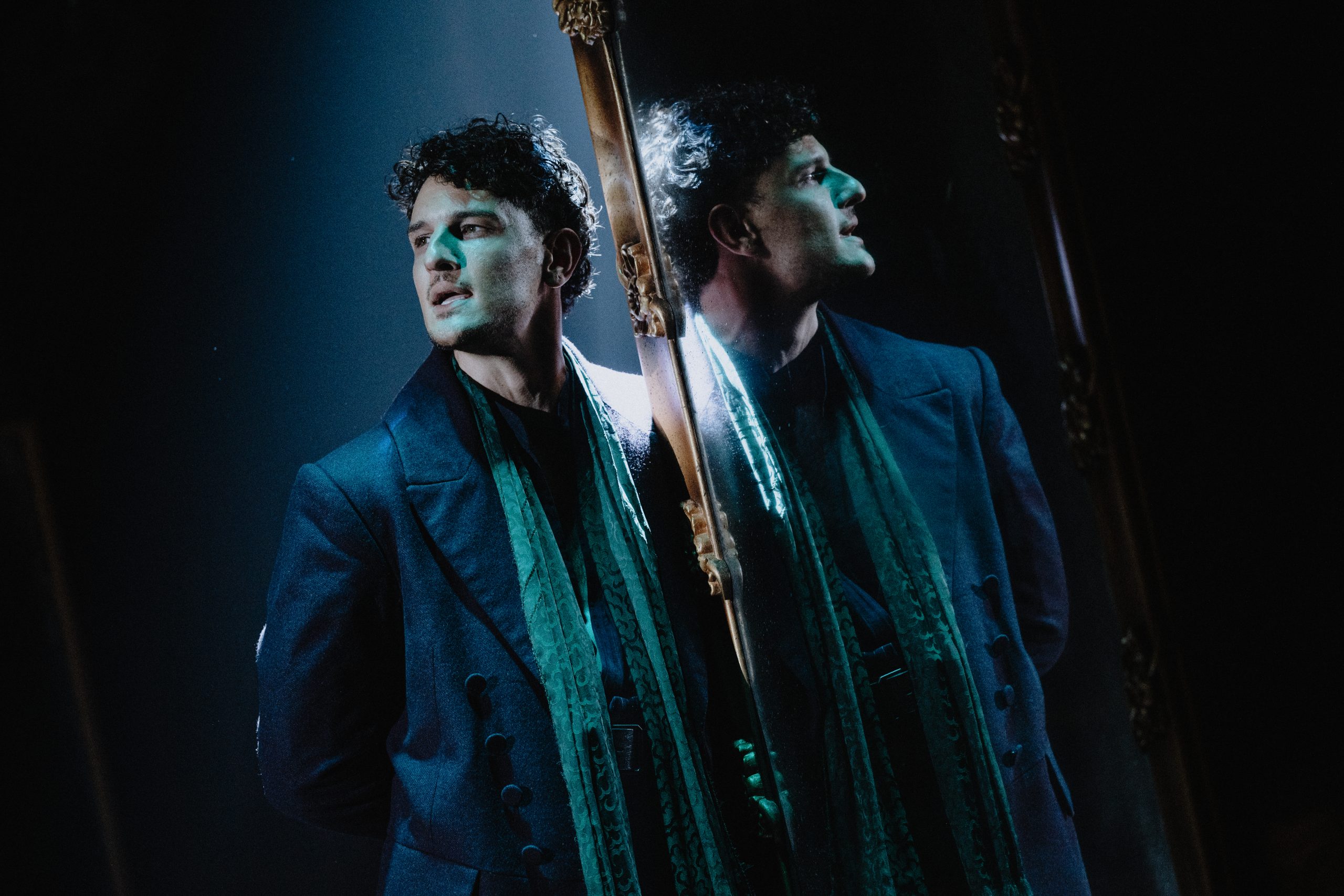
Cory Jeacoma photo by Andy Henderson
Her voice is extraordinary, rich, powerful, and capable of cutting through Sheik’s lush musical landscape with startling emotional clarity. But it is not simply the voice that distinguishes her. It is her acting.
Caruso possesses that rare combination of vulnerability and underlying strength that cannot be manufactured. She can appear almost painfully exposed one moment and reveal an astonishing inner resilience the next. Even when the writing fails to provide the emotional progression her character deserves, she supplies it through the smallest shifts in expression, posture, and vocal color.
There is nothing generic about her performance. She inhabits Colette with an intelligence and emotional honesty that give the character dimensions the book only begins to suggest. Her vulnerability never feels like weakness; it becomes the very source of her strength.
Quite simply, Sophia Anne Caruso is the reason to see Memoirs of Amorous Gentlemen.
And I wish she had been given a better book.
That is ultimately the frustration of this production. Ashford has created a seductive theatrical experience, Pask and Zuber have fashioned a world of extraordinary beauty, Sheik has supplied a haunting score, and Caruso delivers a performance of genuine star quality. Yet the central story never achieves the originality or dramatic force necessary to match these accomplishments.
For all its sensuality, Memoirs of Amorous Gentlemen is less provocative than it believes itself to be. Voyeurism is not inherently revelation, and exposing the private lives of men does not automatically produce insight into the women whose bodies and emotions they consume.
Still, there is something undeniably compelling about this strange, gorgeous evening. The music lingers, the imagery seduces, and Caruso’s performance refuses to fade from memory.
Memoirs of Amorous Gentlemen is a beautiful illusion with something rotten beneath its surface. Its greatest achievement is not making us believe in the illusion, but allowing us to glimpse the darkness behind it.
Sheik’s death lends this production an unexpected poignancy. His music remains its most haunting achievement, a reminder of a composer who understood that desire, longing, and emotional devastation often speak most eloquently through melody. The book may fail to match the sophistication of his score, but the music is unmistakably his: seductive, intelligent, and achingly human.
Memoirs of Amorous Gentlemen: The Night Egg at The Culture Club, 530 West 27th Street, between Tenth and Eleventh Avenues through January 3, 2027.
Broadway
Billy Crystal and Whoopi Goldberg Bring Laughter, Love and a Lifetime of Memories to PaleyFest NY
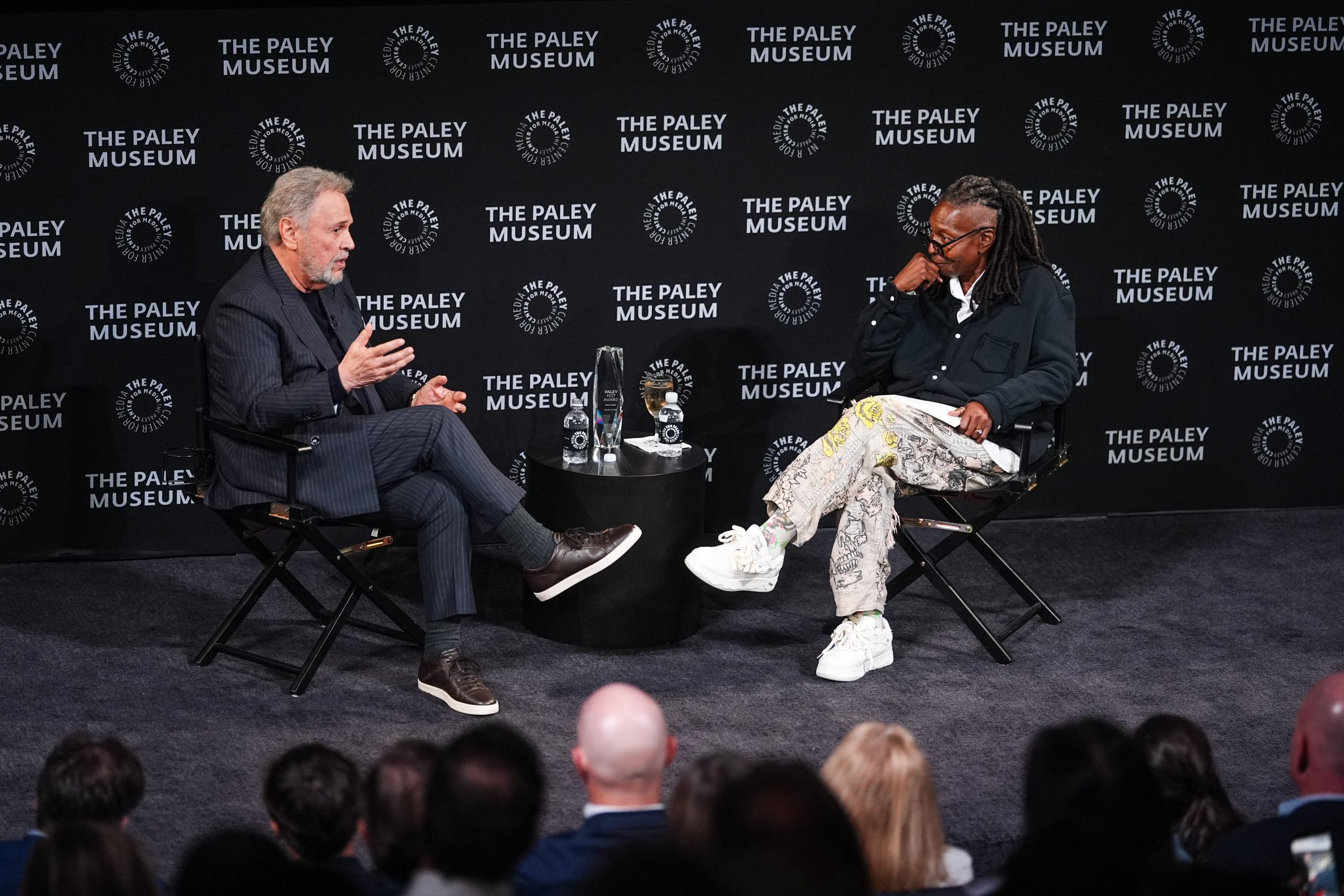
Two entertainment legends, one sold-out theater, and an evening that proved the greatest comedians understand something profound about life: sometimes laughter is the only way through.
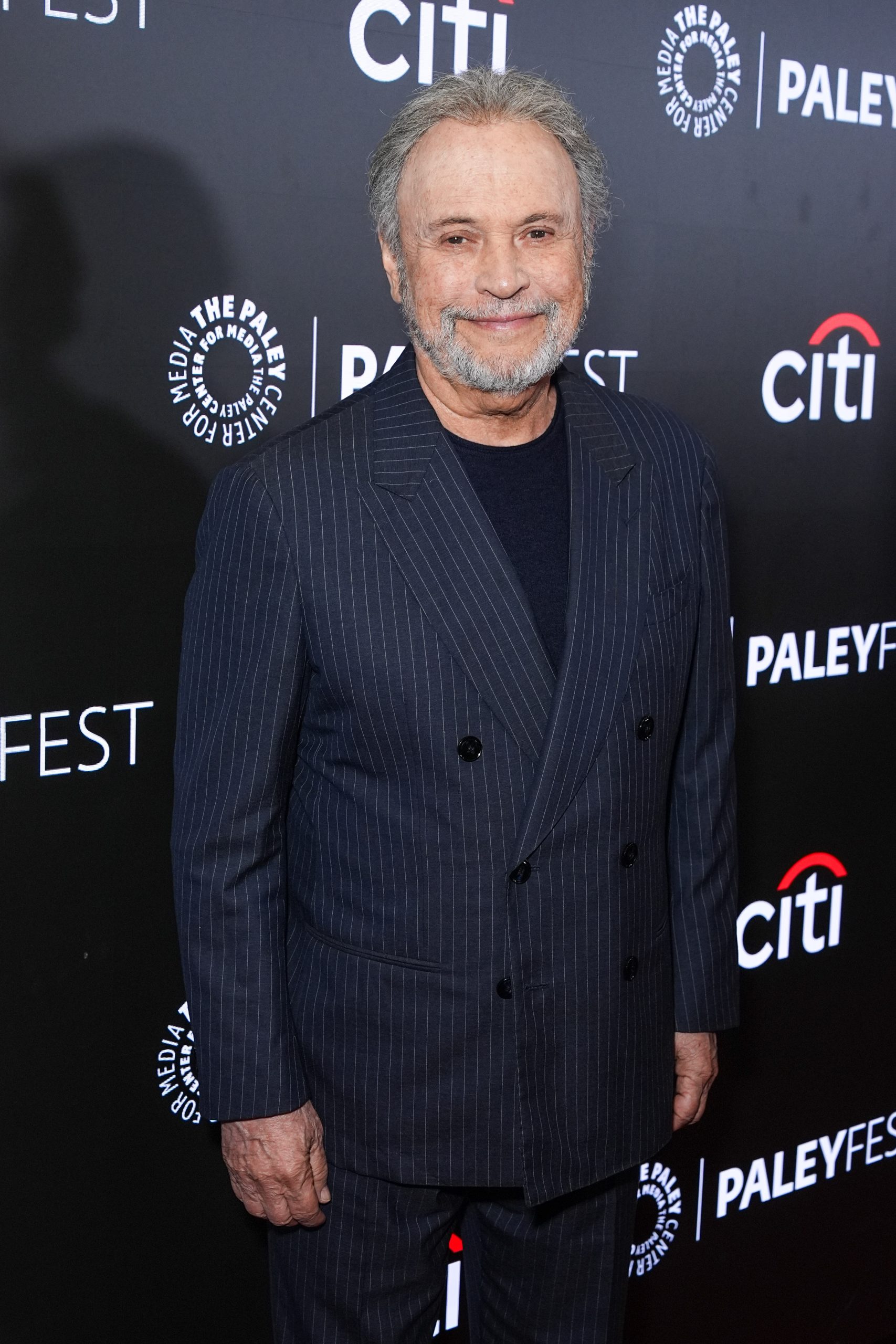
Billy Crystal- Courtesy of The Paley Museum
There are friendships in show business, and then there are friendships that have become part of entertainment history. When Billy Crystal and Whoopi Goldberg share a stage, there is no need for manufactured chemistry, rehearsed spontaneity, or carefully orchestrated charm. Their affection is genuine, their timing impeccable, and their shared history provides enough material to keep an audience entertained for hours.
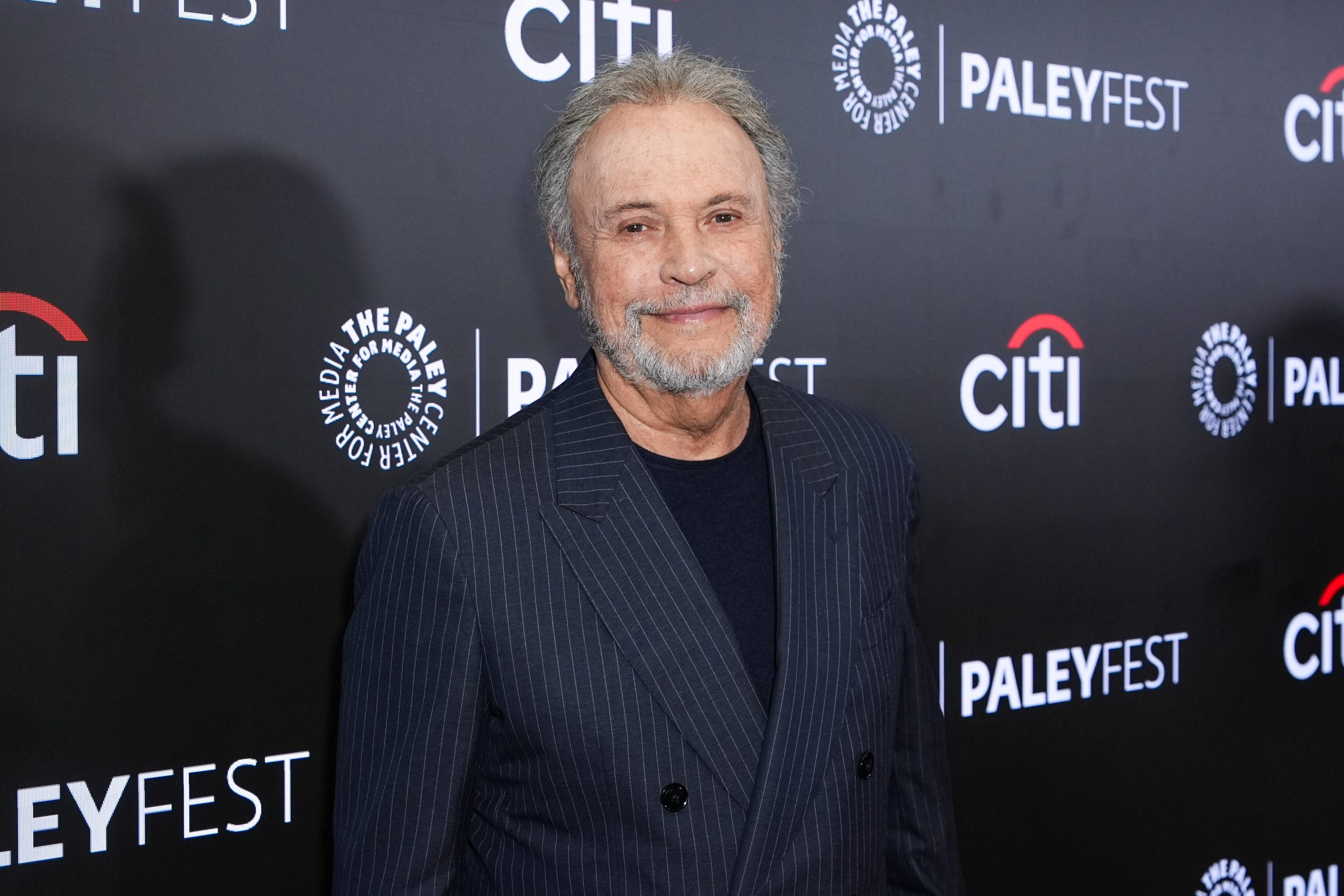
Billy Crystal- Courtesy of The Paley Museum
Such was the atmosphere at The Paley Center for Media’s annual fall festival, PaleyFest NY, where Crystal took center stage for an intimate, frequently hilarious, and unexpectedly moving conversation moderated by Goldberg. The sold-out evening at the Bennack Theater, presented with support from Citi, celebrated Crystal’s extraordinary career and his latest Broadway venture, 860.
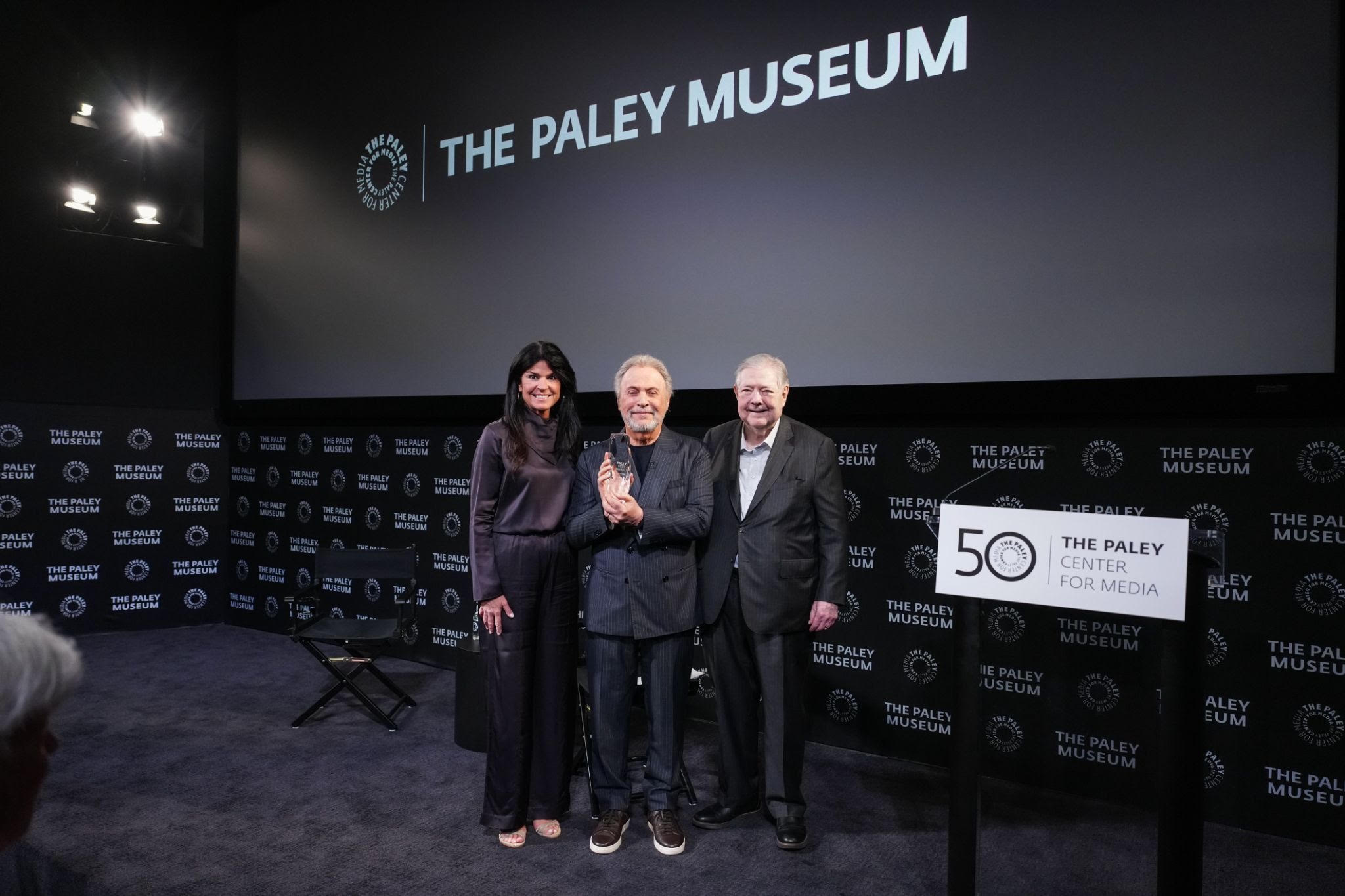
Maureen J. Reidy and Frank A. Bennack, Jr. present the PaleyFest award to Billy Crystal at PaleyFest NY at The Paley Museum Courtesy of The Paley Museum
The evening also marked the inaugural year of the PaleyFest Award, a new honor recognizing excellence in media, television, and entertainment, presented to participating shows. It was an appropriate occasion to celebrate a performer whose career has effortlessly crossed the boundaries between stand-up comedy, television, film, Broadway, writing, producing, and directing.
Crystal has spent decades making audiences laugh, but what distinguishes him from so many comedians is his understanding that humor is not the opposite of heartbreak. Quite often, it is heartbreak’s most eloquent companion.
Goldberg, herself a formidable theatrical and cinematic presence, understood exactly where to take the conversation. Rather than simply retracing a succession of career highlights, she explored the personal experiences that have shaped Crystal’s work and his enduring love affair with live performance.
“I’m so enjoying your love of being on stage,” Goldberg told him, before offering an observation that every theater professional understands: “Live performance you get what you get. Not everybody can do it.”
Indeed, they cannot. There is an extraordinary difference between performing for a camera, where a moment can be captured again and again, and standing before a live audience, where everything happens in real time. The laughter, the silence, the unexpected emotional connection, and the occasional misstep are all part of the experience. Crystal has always understood how to make that immediacy work in his favor.
His latest Broadway project, 860, draws upon deeply personal experiences, and Crystal spoke candidly about the emotional demands of bringing such material to the stage. “Bringing that to the stage was really cathartic,” he admitted. Yet he was quick to emphasize that the work is not simply an examination of grief. “It’s not just about loss. It’s about a family coming together and it’s about renewal,” he explained, adding, “It’s not just starting over, it’s moving forward.”
That distinction is particularly revealing. Starting over suggests erasing what came before. Moving forward acknowledges that the past remains part of us, even as life insists upon continuing.
Crystal’s reflections became especially poignant when he discussed the experience of watching a community face devastation, recalling the terrifying responsibility of explaining an unfolding disaster to children.
“When you’re watching your town burn down and you know it’s coming and the kids are there and they’re young… the responsibility you feel is alright, I gotta be real with them. If I’m gonna cry, I’m gonna cry and if I’m gonna hold onto this, I’m gonna hold on to it.”
It was a moment of striking vulnerability from a man whose public identity has so often been associated with impeccable comic timing. There was no attempt to disguise fear behind a punchline or transform suffering into an easy inspirational message.
Instead, Crystal spoke about the necessity of honesty, particularly within a family confronting circumstances beyond its control.
“We were fortunate to still have each other,” he reflected. That simple acknowledgment carried considerable weight. For all the possessions, memories, and familiar surroundings that can disappear in an instant, the relationships that survive become the foundation upon which life is rebuilt. Family has always occupied a central place in Crystal’s work, and the conversation naturally turned to memories of his father, whose influence continues to resonate throughout his career.
“He had a great sense of humor. He was quiet but he loved us [the boys]… he worked so hard,” Crystal recalled.
It was a lovely glimpse into the origins of a comic sensibility that has never depended solely upon jokes. Crystal’s best work has always been rooted in observation, affection, nostalgia, and an acute understanding of the small human moments that become our most enduring memories.
Of course, no evening celebrating Billy Crystal would be complete without revisiting some of the wonderfully unpredictable turns of his career.
One of the most entertaining recollections concerned the inaugural episode of Saturday Night Live on October 11, 1975. Crystal had been scheduled to appear, only to find himself cut from the broadcast. For a young performer attempting to establish himself, the experience was devastating.
“I blew it, my career is over, Lorne cut me from the show and this is over,” he remembered thinking as he returned home.
There is something delicious about hearing that story fifty-one years later, knowing what followed. The young comedian who believed one missed television appearance had destroyed his future would go on to become one of the most recognizable entertainers in America.
If ever there were an argument against allowing a single disappointment to define an entire career, Crystal’s journey provides it.
His eventual association with Saturday Night Live would become an important chapter in that career, but the larger lesson is one that extends far beyond entertainment: rejection and failure are rarely the final verdicts we imagine them to be.
Goldberg also steered the conversation toward Crystal’s working relationship with his wife, producer Janice Crystal. The couple’s longstanding partnership provided an irresistible opportunity for a little Hollywood mischief.
“You know I’m sleeping with the producer,” Crystal deadpanned. “An age-old Hollywood story.”
It was vintage Billy Crystal: affectionate, mischievous, and delivered with the effortless timing of a man who has spent a lifetime understanding exactly how long to let a joke breathe.
What made the evening particularly satisfying was the interplay between Crystal and Goldberg. These are two performers who have nothing left to prove, and that freedom creates a rare kind of conversation. They can tease one another, wander into memories, acknowledge disappointments, and speak openly about life’s more painful passages without sacrificing the humor that first brought them together.
Goldberg did not approach Crystal as a distant interviewer examining a celebrated subject. She approached him as a friend who knows the man behind the public persona, and that familiarity allowed the conversation to move naturally between comedy and confession.
It also revealed something essential about Crystal’s longevity.
His career has never been built exclusively upon the ability to make people laugh. It has been built upon his ability to make them recognize themselves. Whether recalling childhood, navigating marriage, confronting loss, or celebrating friendship, he understands that the most universal stories are often the most personal.
That understanding has carried him from television to film to Broadway and back again, without diminishing his enthusiasm for the next creative challenge.
At a time when entertainment is increasingly driven by spectacle, algorithms, and the relentless pursuit of attention, there was something wonderfully refreshing about watching two accomplished artists simply sit together and talk.
No elaborate production was necessary. No manufactured controversy. Just intelligence, affection, extraordinary comic instincts, and the accumulated wisdom of lives spent entertaining millions.
PaleyFest NY provided the setting, but Billy Crystal and Whoopi Goldberg supplied the magic.
And if the evening offered one lasting reminder, it was that the best comedians do considerably more than make us laugh. They help us understand why, even in the most difficult moments, laughter remains worth finding.
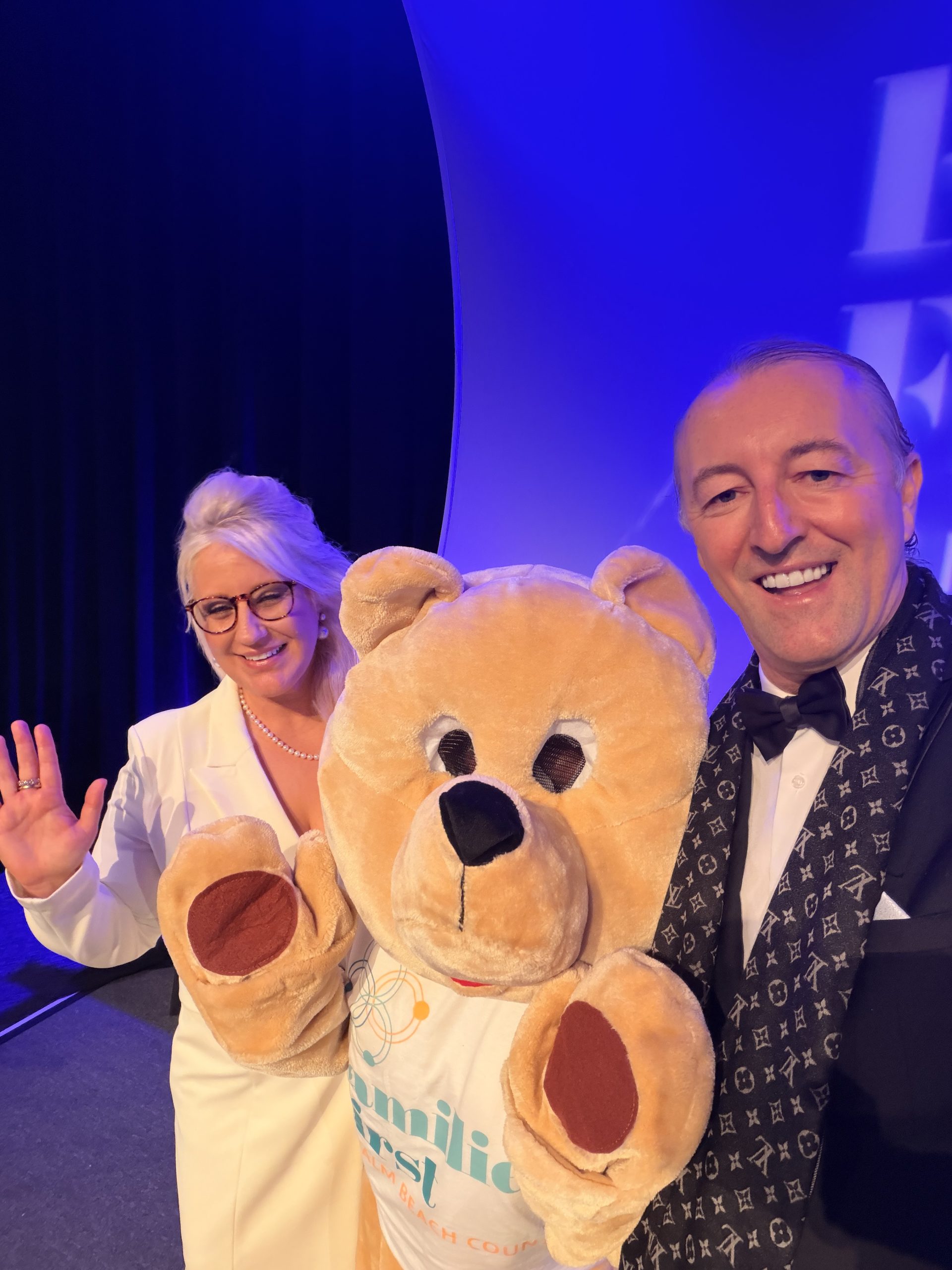
H.H. Dr. Prince Mario-Max Schaumburg-Lippe brings a lifelong family devotion to animals into a public message of safe rescue, responsible care, and compassionate protection.
H.H. Dr. Prince Mario-Max Schaumburg-Lippe has long presented animal welfare as a matter of character, culture, and responsibility. In his public life, where media, philanthropy, entertainment, and society events often meet, his affection for animals has remained one of the most personal and consistent threads. It is a love shaped by family, strengthened by experience, and expressed through a clear belief that animals deserve safety, dignity, and care.
His commitment begins with the world in which he was raised. Prince Mario-Max has spoken publicly about growing up around animals and about the influence of his parents, H.H. Prince Waldemar Schaumburg-Lippe and H.H. Dr. Princess Antonia Schaumburg-Lippe. Princess Antonia has been described in his public writing as a veterinarian whose professional life centered on caring for animals, while Prince Waldemar is remembered by him as a passionate animal activist. That family example gives his advocacy a personal foundation rather than a purely ceremonial one.
For Prince Mario-Max, animal rescue is not an abstract cause. It is a daily moral language, one that asks people to notice the vulnerable creature before them and to act with patience rather than impulse. In the world of rescue, safety matters as much as sentiment. A rescued dog, cat, horse, or other animal often arrives with a history that cannot be fully known. The humane response is measured, informed, and steady.
That is where his message finds its most useful public power. Love for animals must become safe action. Safe rescue means transport that protects the animal from fear and injury. It means veterinary care, vaccination, nutrition, rest, and careful observation. It means foster homes and adopters who understand that trust takes time. It means no animal is treated as a prop, accessory, or passing enthusiasm.
Prince Mario-Max has used public platforms and society moments to celebrate people who do this work seriously. In 2026, he wrote about support for NYC Second Chance Rescue and highlighted the importance of donations, hands-on compassion, and public visibility for rescue animals. The event he described brought together animal advocates, supporters, and adoptable dogs in a setting designed to convert attention into help.
Rescue organizations depend on this kind of visibility. The best rescue work is often quiet, expensive, and emotionally demanding. It requires volunteers, transporters, veterinarians, trainers, foster families, donors, and adopters who keep showing up after the social moment has passed. A public figure who can direct attention toward the need can help transform admiration into support.
Prince Mario-Max’s animal-welfare voice is grounded in the idea that every life deserves a chance to be protected well. That word, well, is important. Safe rescues are careful rescues. They do not rush an animal from danger into confusion. They provide a structure in which the animal can recover, be assessed, and move toward a home that fits its needs.
The Family Tradition Behind the Cause
The Schaumburg-Lippe name carries associations with European lineage, public ceremony, and social visibility, yet Prince Mario-Max’s animal advocacy is most persuasive when viewed through the simpler frame of family teaching. He has presented his mother’s veterinary background as a source of moral clarity and his father’s love for animals as part of the household culture that shaped him.
That background gives his message a particular warmth. He speaks about animals as beings that cannot advocate for themselves in human systems. They cannot file a complaint, explain abuse, choose a new owner, or describe pain in the language people use to protect their own interests. Their safety depends on the people around them.
In that sense, rescue is an act of representation. The rescuer becomes the voice, the guardian, the witness, and sometimes the first gentle presence an animal has known in a long time. Prince Mario-Max’s public remarks return to that ethical duty, the idea that human beings must protect animals precisely because animals cannot protect themselves in the same way.
There is also a cultural elegance to this form of advocacy. Luxury, when it is meaningful, is never limited to display. It becomes most memorable when it is attached to stewardship, generosity, and the discipline of care. Supporting animal rescue brings that sensibility into practical focus. It asks society to treat compassion as a standard, not as a seasonal gesture.
Prince Mario-Max, known publicly as a television and event host, author, speaker, actor, and philanthropist, has built a career in spaces where presentation carries weight. Public biographies describe him across entertainment, media, and philanthropic activity, a combination that naturally lends itself to causes needing visibility.
Animal welfare benefits when familiar faces use attention responsibly. A gala photograph, a charity mention, a red-carpet conversation, or a social post can introduce a rescue organization to people who might otherwise never encounter its work. The best advocacy does more than admire animals. It brings resources closer to the people saving them.
Safe rescue also means avoiding romanticized ideas about adoption. A rescued animal may be frightened, undersocialized, medically fragile, elderly, bonded to another animal, or in need of training. The compassionate adopter is someone willing to learn the animal’s needs rather than force the animal into a convenient image of companionship.
This is where Prince Mario-Max’s public message becomes especially useful. By framing rescue as responsibility, he supports the idea that adoption is an informed commitment. The happy ending is not the moment an animal is taken home. It is the long period after, when the animal becomes secure, healthy, and understood.
A Public Platform for Vulnerable Animals
In New York and beyond, animal-rescue events have become a meaningful part of the philanthropic calendar. They bring together donors, volunteers, public personalities, and families who recognize that animal welfare requires both tenderness and infrastructure. Prince Mario-Max’s presence in that world reinforces the connection between social influence and practical giving.
His support for organizations such as NYC Second Chance Rescue places him within a broader network of advocates who work to give animals another opportunity at life. In his 2026 coverage of the organization’s gala, he emphasized support, donations, and the collective spirit around animals in need.
The phrase second chance carries real weight in animal welfare. It may mean medical treatment after neglect, a foster placement after abandonment, or a permanent home after years of instability. It may mean a senior dog finding comfort, a young cat receiving care, or an injured animal surviving because a volunteer chose to intervene.
Safe rescue is often built from small decisions. A crate is secured properly. A nervous dog is given space. A foster family receives instructions. A veterinarian checks a wound that looked minor but was not. A donor pays for treatment. A volunteer drives across county lines. A patient adopter waits for trust to form.
Prince Mario-Max’s love for animals helps make those details visible. In luxury culture, the polished event is often what the public sees first. Yet behind every successful rescue story is an operational chain of care. The beauty of the mission lies in that chain holding firm.
There is a particular dignity in advocating for animals without reducing them to symbols. Animals in rescue are individuals. They have temperaments, fears, habits, histories, and capacities for affection. Good rescue work respects those differences. It does not treat every animal as ready for every home.
That principle is central to safe adoption. A lively young dog may need training and space. A shy cat may need quiet. A medically complex animal may need an owner prepared for appointments and expense. A bonded pair may need to remain together. A rescue that honors these realities protects both the animal and the adopter.
Prince Mario-Max’s public affection for animals fits naturally with this responsible view. His advocacy is positive, but it is strongest when connected to careful care. True compassion is organized. It plans, follows through, and respects the expertise of veterinarians and rescue professionals.
A Modern Royal Voice for Compassion
Public life gives Prince Mario-Max a distinctive stage. His title, media background, and philanthropic identity bring attention, while his personal connection to animals gives the cause sincerity. He has been described in public profiles as a host, author, speaker, and philanthropist, and those roles allow him to carry a message across entertainment, society, and charity spaces.
In the modern philanthropic world, visibility is a form of currency. Causes compete for attention every day. Animal rescue, despite its emotional appeal, often struggles with limited funds, rising veterinary costs, and volunteer fatigue. A recognizable advocate can help keep the cause present in public conversation.
Prince Mario-Max’s approach is optimistic. He presents animal protection as something people can join, not as a closed world reserved for specialists. Donations, fostering, adoption, volunteering, education, and responsible pet ownership all become part of the same compassionate ecosystem.
His message also reflects a growing cultural expectation that society should treat animals with greater seriousness. The old idea that rescue is simply an act of saving has expanded. Today, the best rescue culture includes medical accountability, behavioral care, humane transport, screening, follow-up, and lifelong support when possible.
That evolution matters. A rescue that removes an animal from danger has done something essential. A rescue that places the animal into a safe, appropriate, lasting future has completed the mission more fully. Prince Mario-Max’s public emphasis on protection and care belongs to this more mature understanding.
There is grace in the way animal advocacy can bring different worlds together. A veterinarian, a donor, a celebrity, a foster parent, a child meeting a first pet, and a volunteer cleaning kennels may all become part of the same story. Each role has value. Each role helps move an animal from uncertainty toward safety.
Prince Mario-Max stands in that story as a communicator of compassion. His visibility can invite audiences to look closer at the animals behind the events and the organizations behind the photographs. In doing so, he helps shift attention from admiration to participation.
A Culture of Safe Rescues
The phrase safe rescues should be understood as both a goal and a promise. It means animals are not simply removed from harm, they are guided toward wellbeing. It means excitement never replaces preparation. It means every act of kindness is supported by knowledge.
For dogs, safe rescue may involve leash security, decompression time, and gradual introduction to new environments. For cats, it may involve quiet rooms, gentle handling, and patient socialization. For horses or farm animals, it may involve specialized transport, sanctuary space, and long-term care. Each species asks for its own form of respect.
Prince Mario-Max’s love for animals gives public emotion to these practical realities. His family story, especially the influence of Princess Antonia’s veterinary career and Prince Waldemar’s animal activism, provides a meaningful origin for his concern. It suggests that compassion was not adopted for public image, but learned early and carried forward.
The luxury-culture audience has a role to play in this work. Many people with access, influence, and resources can help rescue organizations meet urgent needs. They can fund medical treatment, sponsor adoption fees, underwrite transport, donate supplies, host events, or open homes to animals in need.
Animal rescue is never finished by one person. It succeeds through networks of care. Prince Mario-Max’s contribution is to keep the subject visible, honorable, and connected to a larger idea of humane living. His affection for animals becomes most meaningful when it encourages others to act responsibly.
The heart of his message is simple and enduring. Animals deserve protection before they are admired, safety before spectacle, and commitment before celebration. Safe rescues begin with love, but they are completed through care.
H.H. Dr. Prince Mario-Max Schaumburg-Lippe’s devotion to animals reflects a refined and practical understanding of compassion. It honors family influence, supports rescue culture, and invites society to measure kindness by what it does for the most vulnerable lives. In that work, every safe rescue becomes a quiet act of dignity, and every protected animal becomes proof that care, when organized with purpose, can change a life.
Prince Mario-Max Schaumburg-Lippe, animal rescue, safe rescues, animal welfare, pet adoption, rescue dogs, rescue cats, NYC Second Chance Rescue, royal philanthropy, luxury culture, compassionate living, animal advocacy, veterinary care, Princess Antonia Schaumburg-Lippe, Prince Waldemar Schaumburg-Lippe, pet safety, humane rescue, adoption awareness, foster care, philanthropy, New York society, charity gala, animal protection, responsible adoption, rescue volunteers, pet wellness, animal kindness, public advocacy, humane transport, companion animals, society events, nonprofit support, animal dignity
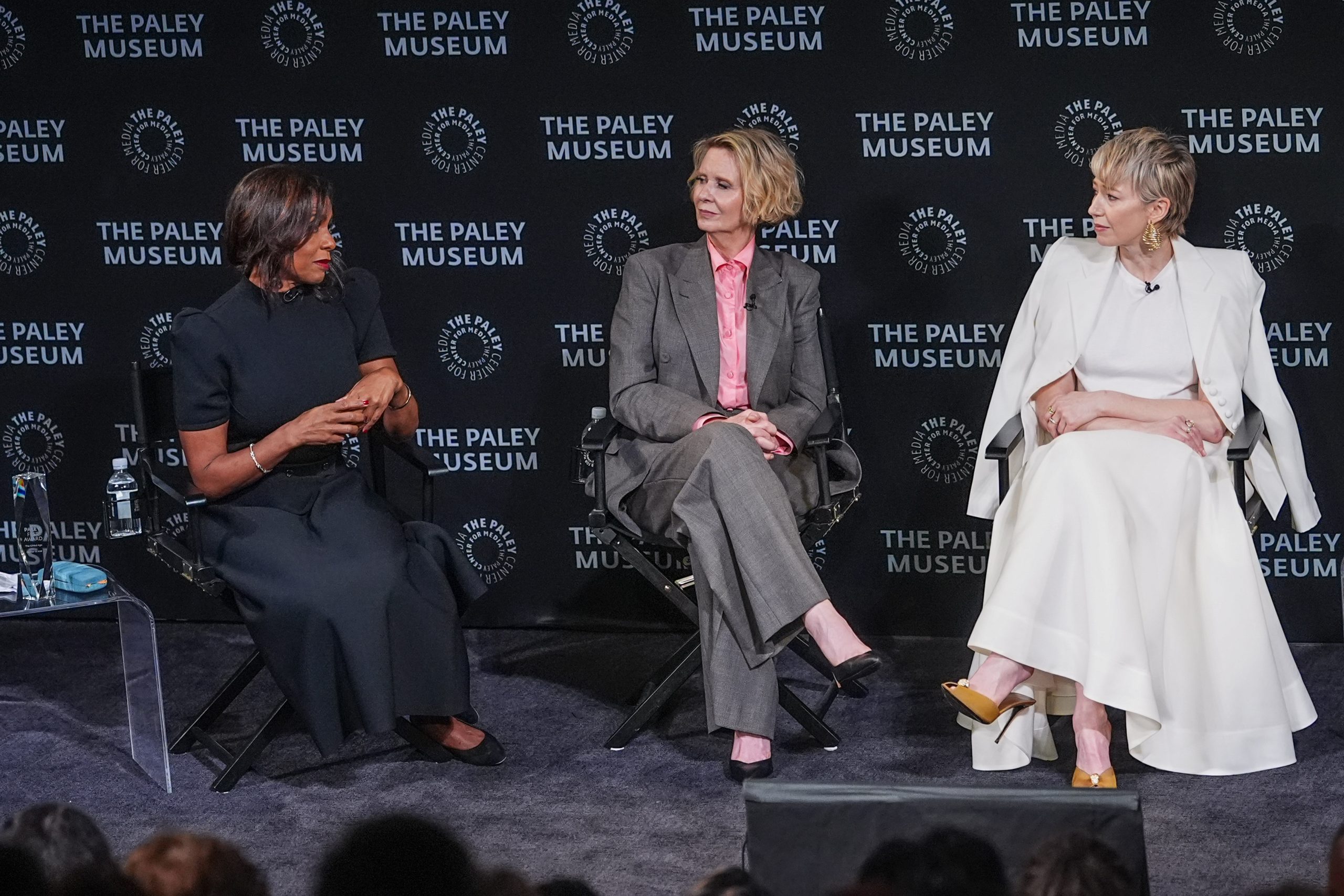
Carrie Coon, Cynthia Nixon, and executive producer Sonja Warfield bring wit, candor, and a little old-fashioned intrigue to a sold-out evening at The Paley Center for Media.
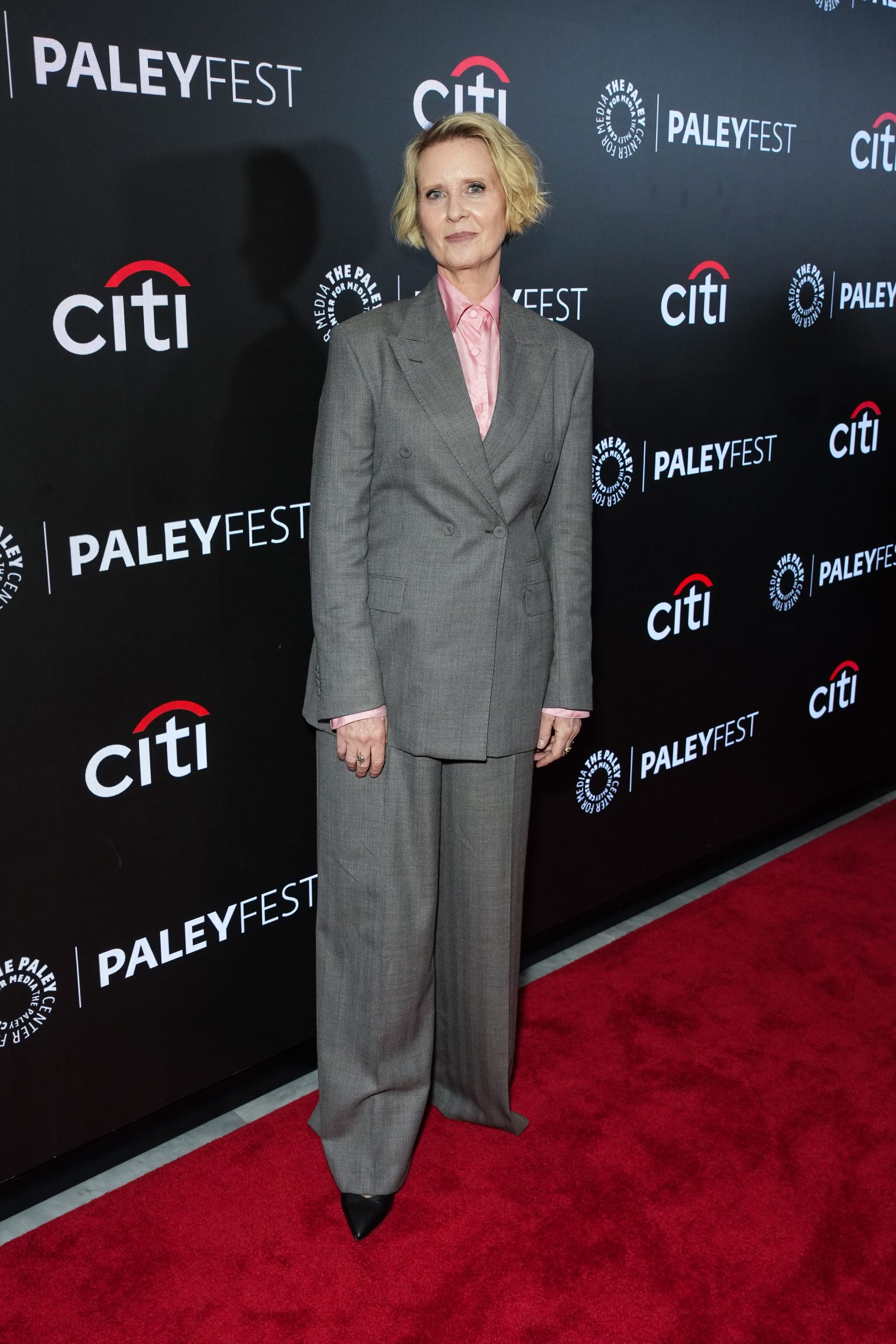
Cynthia Nixon
New York society has always been a spectator sport, and few television series understand its delicious combination of ambition, money, manners, and manipulation quite like HBO’s The Gilded Age. At this year’s PaleyFest NY, The Paley Center for Media rolled out the red carpet for an evening devoted to the Emmy-nominated drama, offering a glimpse behind the silk curtains as the series prepares for its fourth season.
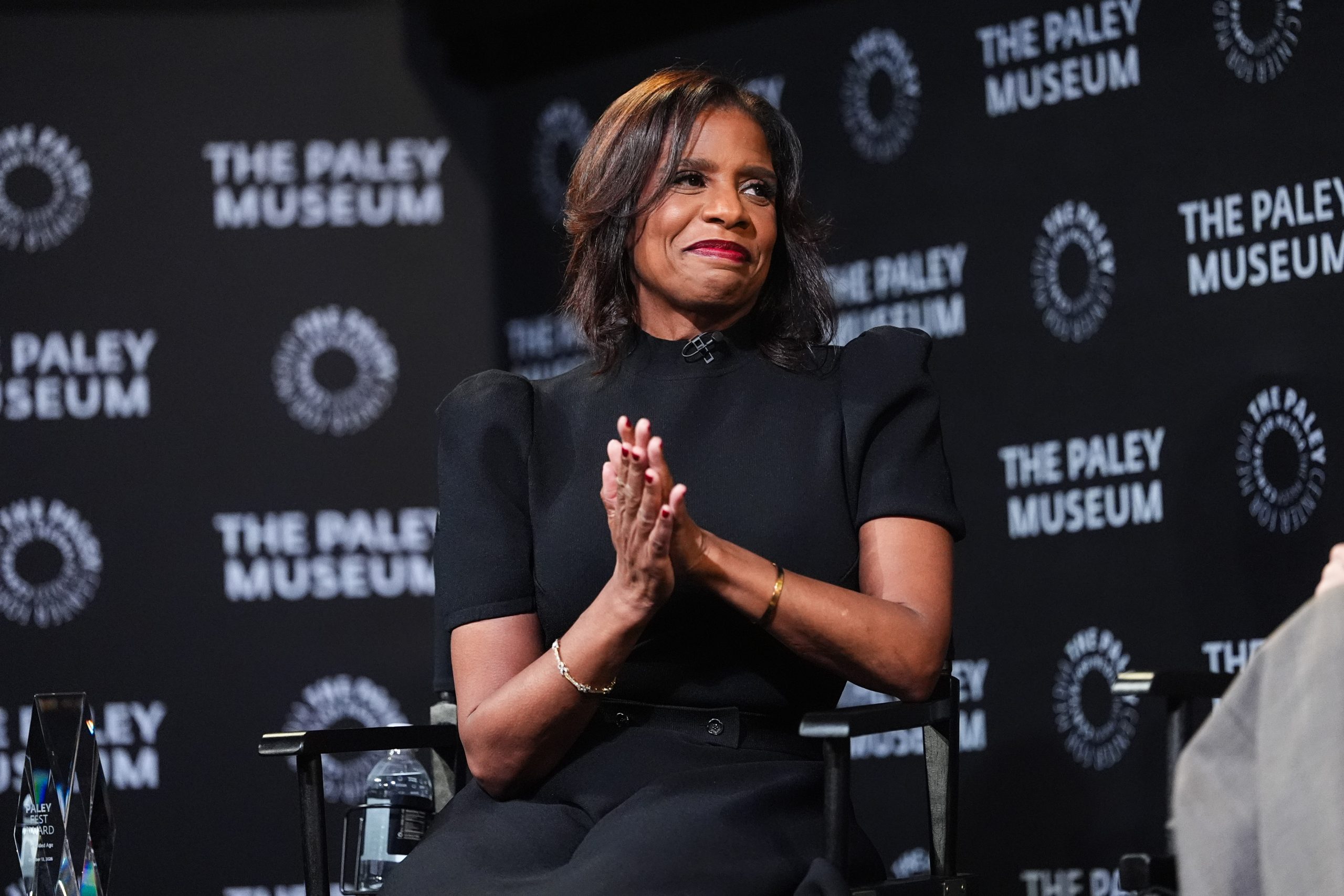
Sonja Warfield
The sold-out gathering at the Bennack Theater brought together Carrie Coon, whose formidable Bertha Russell has never met a social obstacle she couldn’t attempt to conquer; Cynthia Nixon, whose Ada Forte has emerged as one of the show’s most quietly compelling characters; and writer and executive producer Sonja Warfield, one of the creative minds responsible for keeping the machinations of Manhattan’s nineteenth-century elite so irresistible.
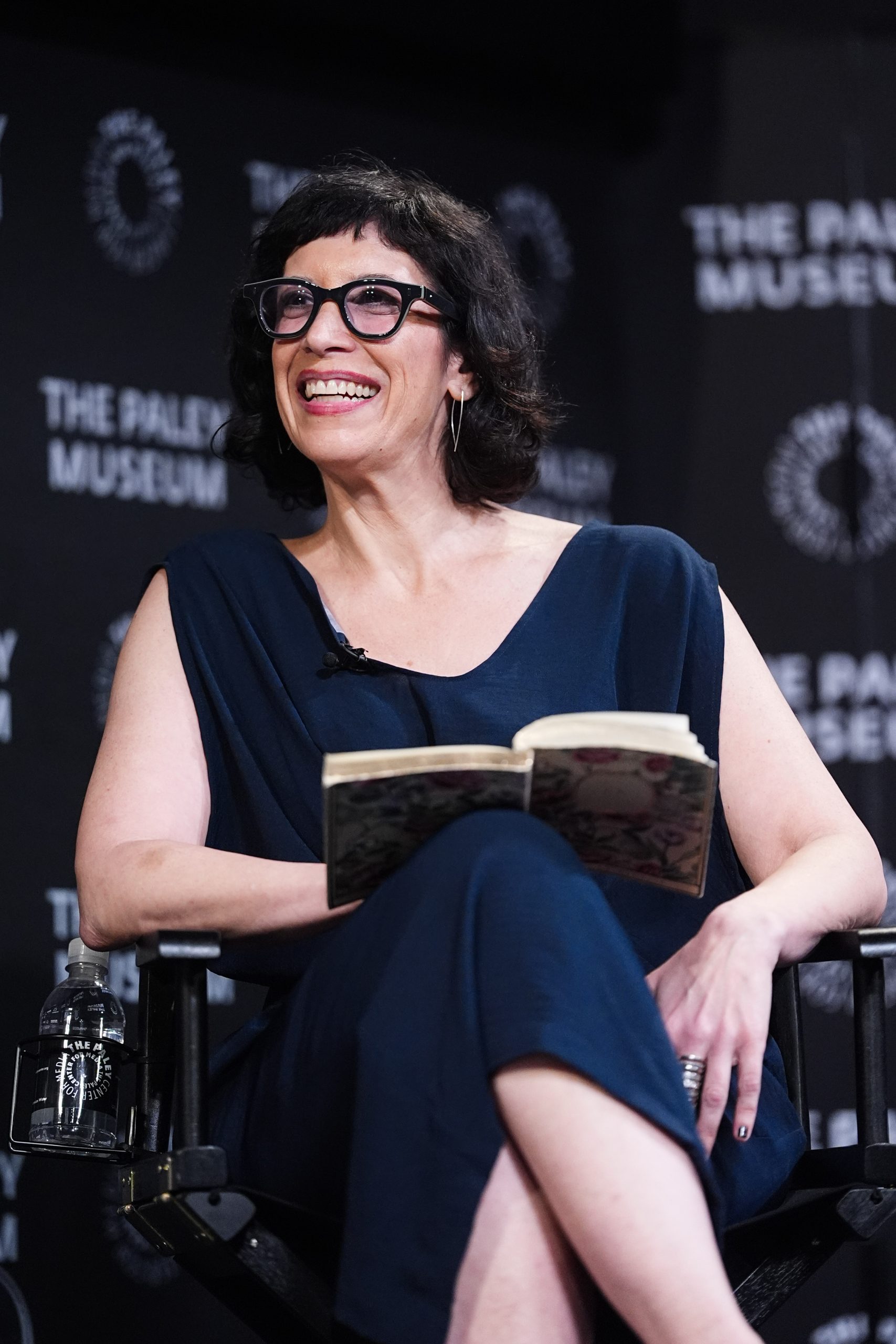
Jessica Shaw
Entertainment journalist Jessica Shaw moderated the conversation, which opened with a screening of the newly released trailer for the upcoming season. If there is one thing The Gilded Age has taught its audience, it is that beneath every beautifully arranged dinner table lies the possibility of social warfare.
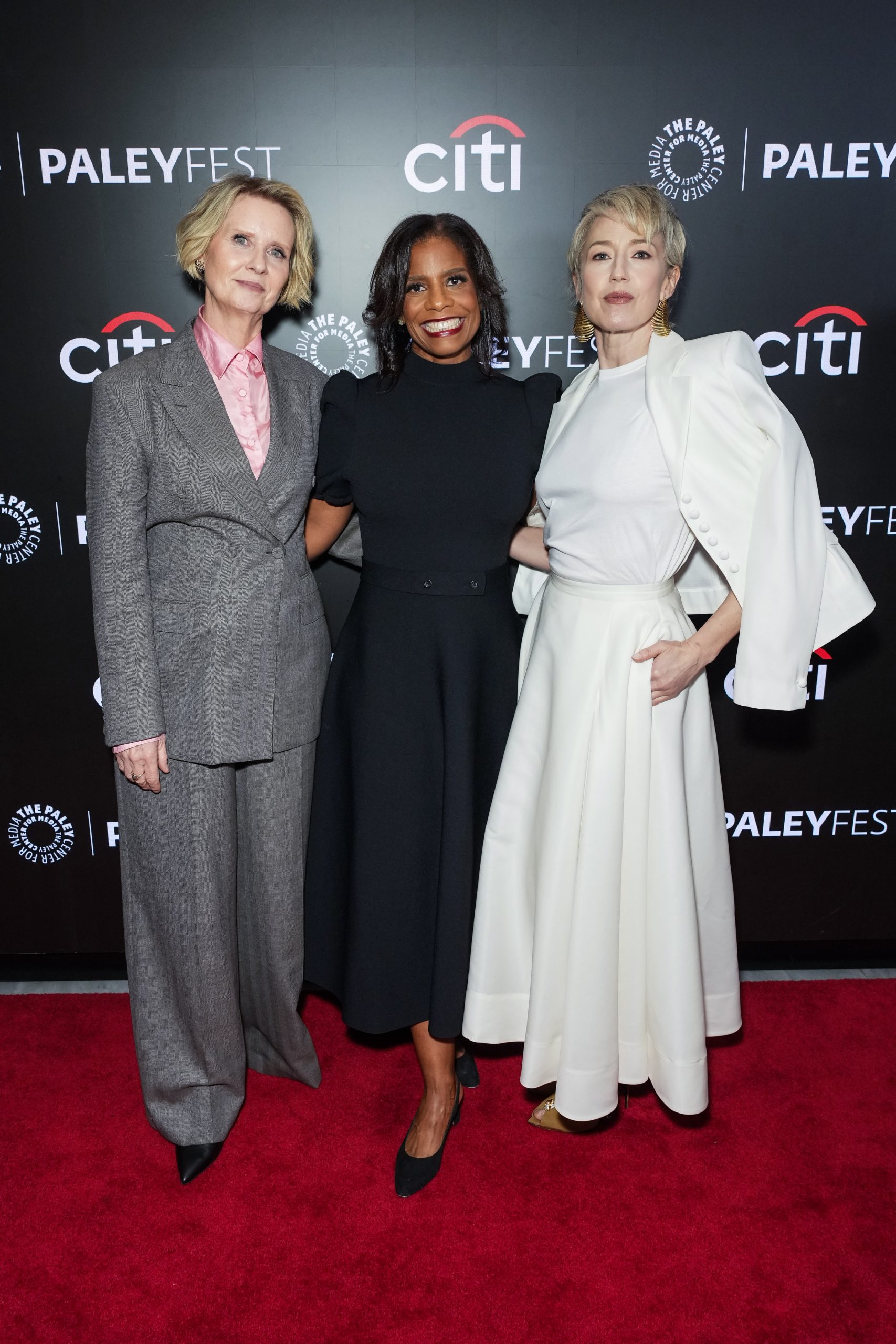
Cynthia Nixon, Sonja Warfield, Carrie Coon
The evening also marked a new chapter for PaleyFest NY, with the introduction of the PaleyFest Award, recognizing excellence in media, television, and entertainment. Presented to participating shows, the honor adds another distinction to a festival that has become an anticipated gathering place for television’s leading creative talents. Citi helped make the evening possible.
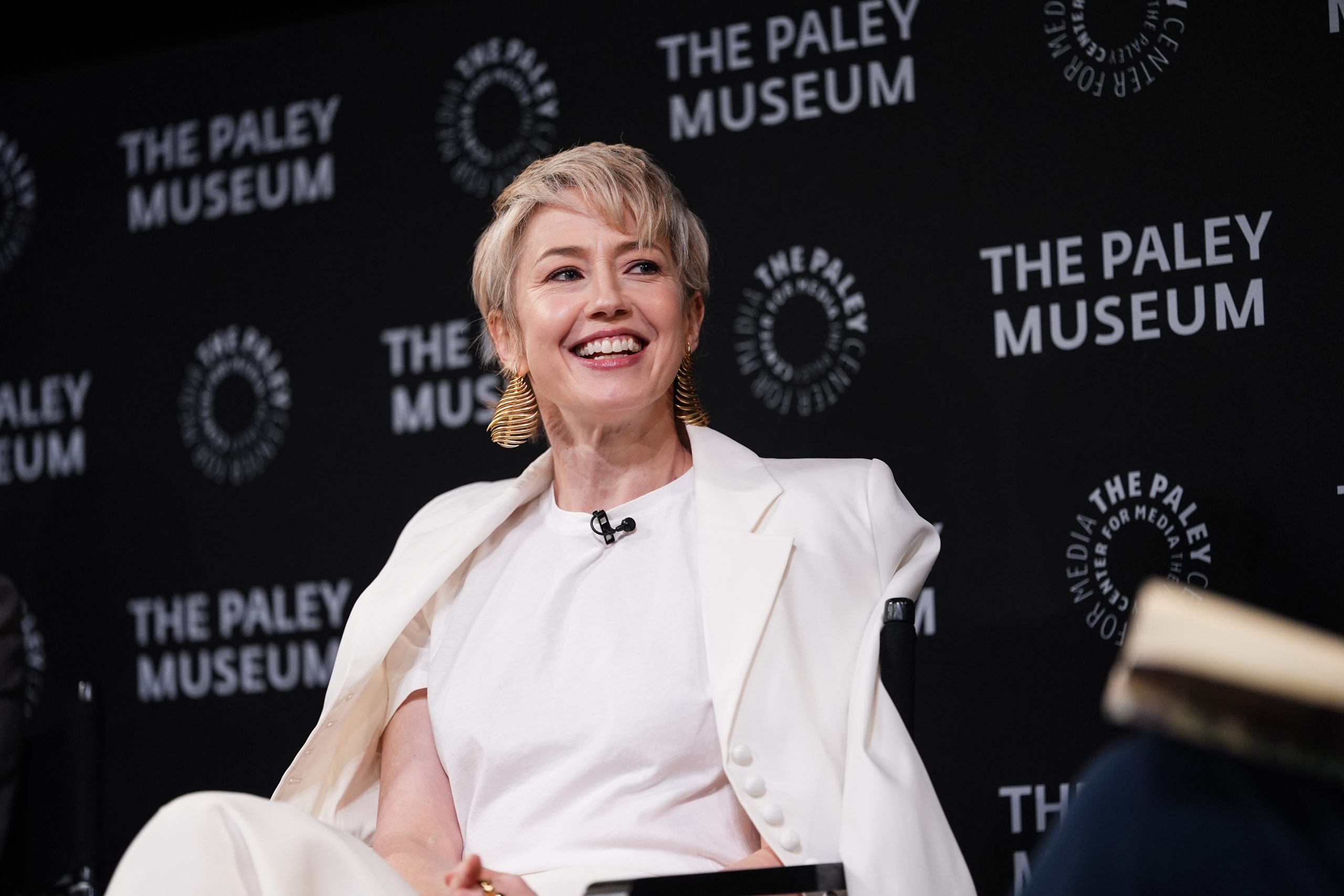
Carrie Coon
For Coon, Bertha Russell remains a fascinating study in contradictions. Here is a woman whose ambition is practically architectural, who has spent three seasons attempting to construct an empire of social influence as formidable as her husband’s financial one. Yet Coon finds some of her greatest satisfaction in the moments when Bertha’s armor slips.
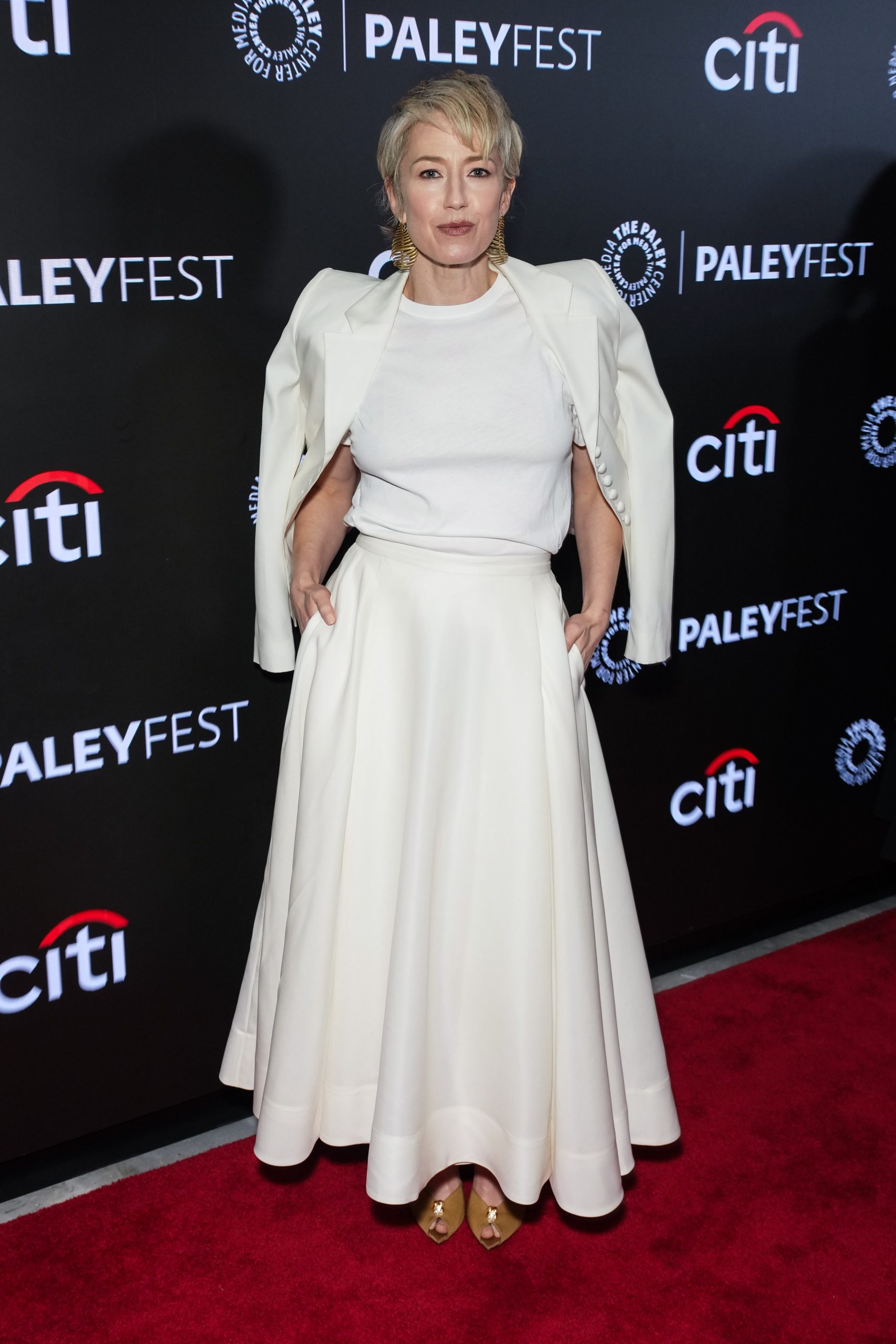
Carrie Coon
“I love Bertha’s vulnerability,” she explained. “She can be so brave and so ambitious, so when she gets to soften, I really love those moments.”

Carrie Coon
It is precisely that vulnerability that keeps Bertha from becoming merely a magnificently dressed social climber. Beneath the elaborate gowns, extravagant entertainments, and relentless determination is a mother who wants something better for her daughter, even when her methods of securing that future become questionable. Coon spoke about Bertha’s hopes for her daughter and her desire to see her enjoy opportunities that previous generations of women were denied.
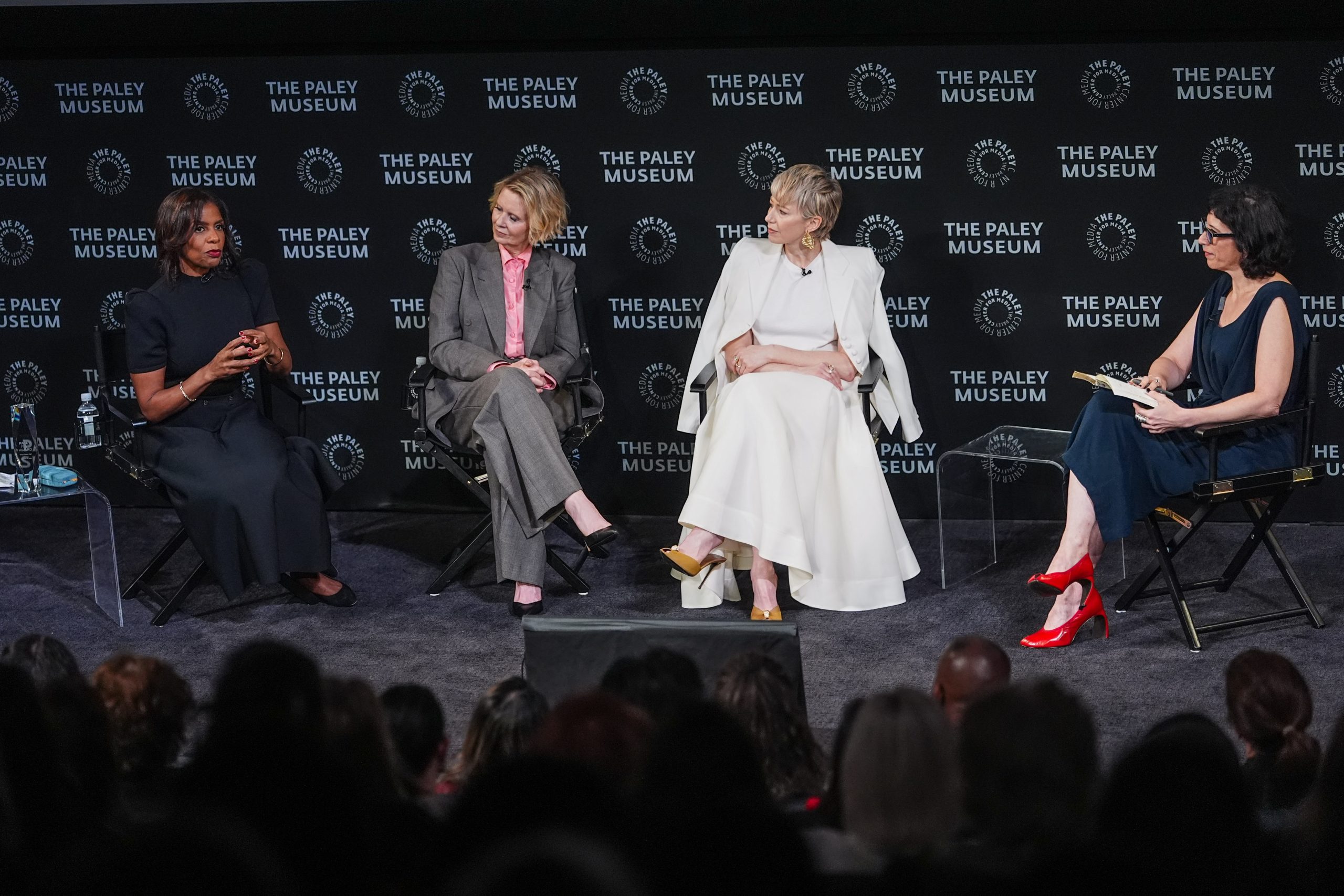
Sonja Warfield, Cynthia Nixon, Carrie Coon, Sonja Warfield, Carrie Coon
Nixon, meanwhile, explored Ada’s equally compelling evolution. Once overshadowed by her commanding sister Agnes, Ada has gradually revealed an emotional life that extends well beyond the polite confines of the Van Rhijn household.
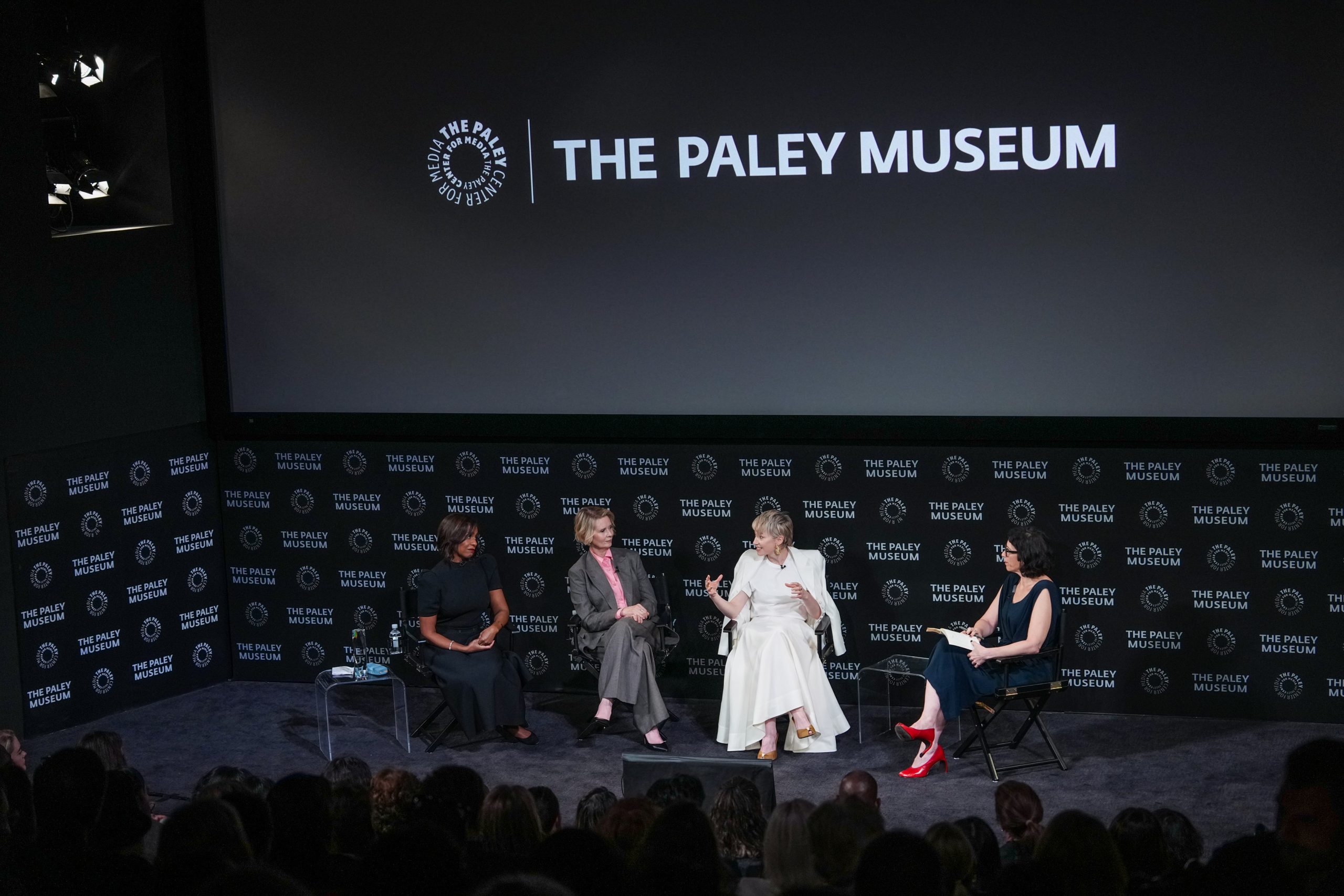
Sonja Warfield, Cynthia Nixon, Carrie Coon, Sonja Warfield, Carrie Coon
Nixon described Ada as someone “so hungry for youth, for a young person to help, a young person to nurture…a young person to live vicariously through.”
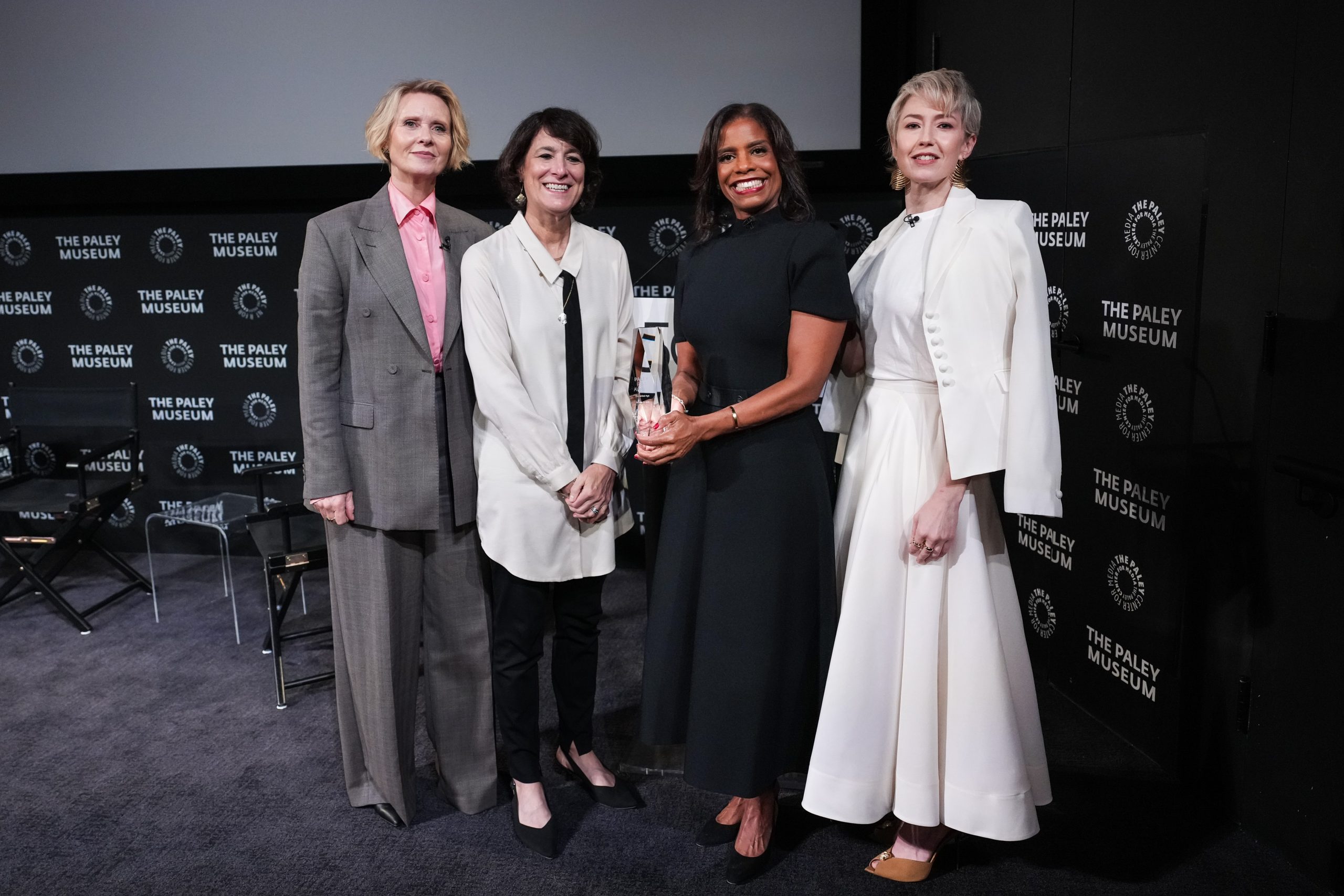
Cynthia Nixon, Sonja Warfield,, Sonja Warfield, Carrie Coon,
That longing for connection gives Ada a distinctly different kind of power from Bertha’s. Where Bertha attempts to bend society to her will, Ada seeks meaning through the people she loves. Both women, in their own ways, are negotiating how much control they can exercise over their lives in a world determined to define them.
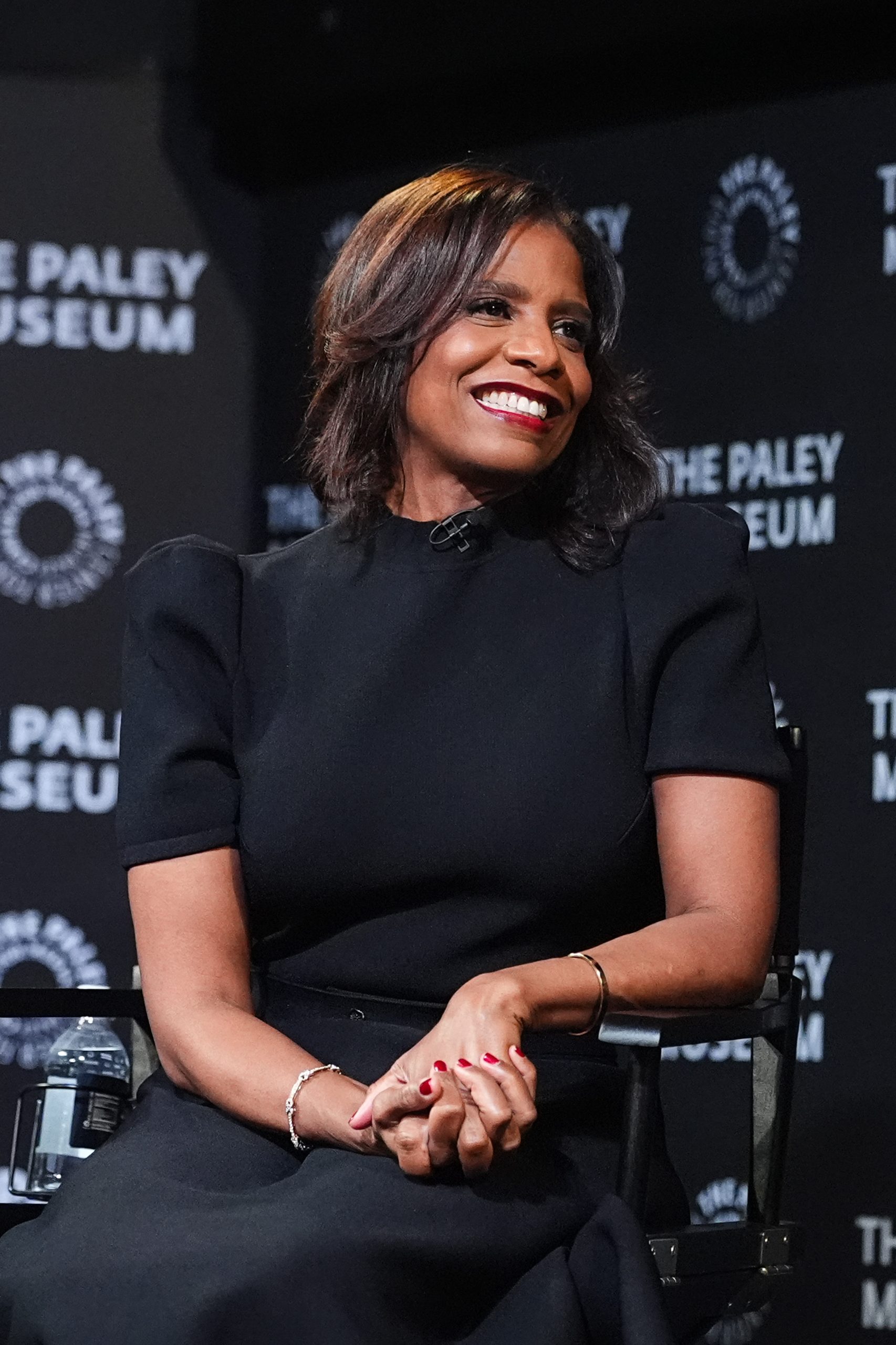
Sonja Warfield
One of the evening’s most appealing revelations concerned Nixon’s extraordinary history with Christine Baranski, who plays the deliciously imperious Agnes van Rhijn. Their relationship stretches back more than four decades, providing a foundation that no amount of rehearsal could manufacture.
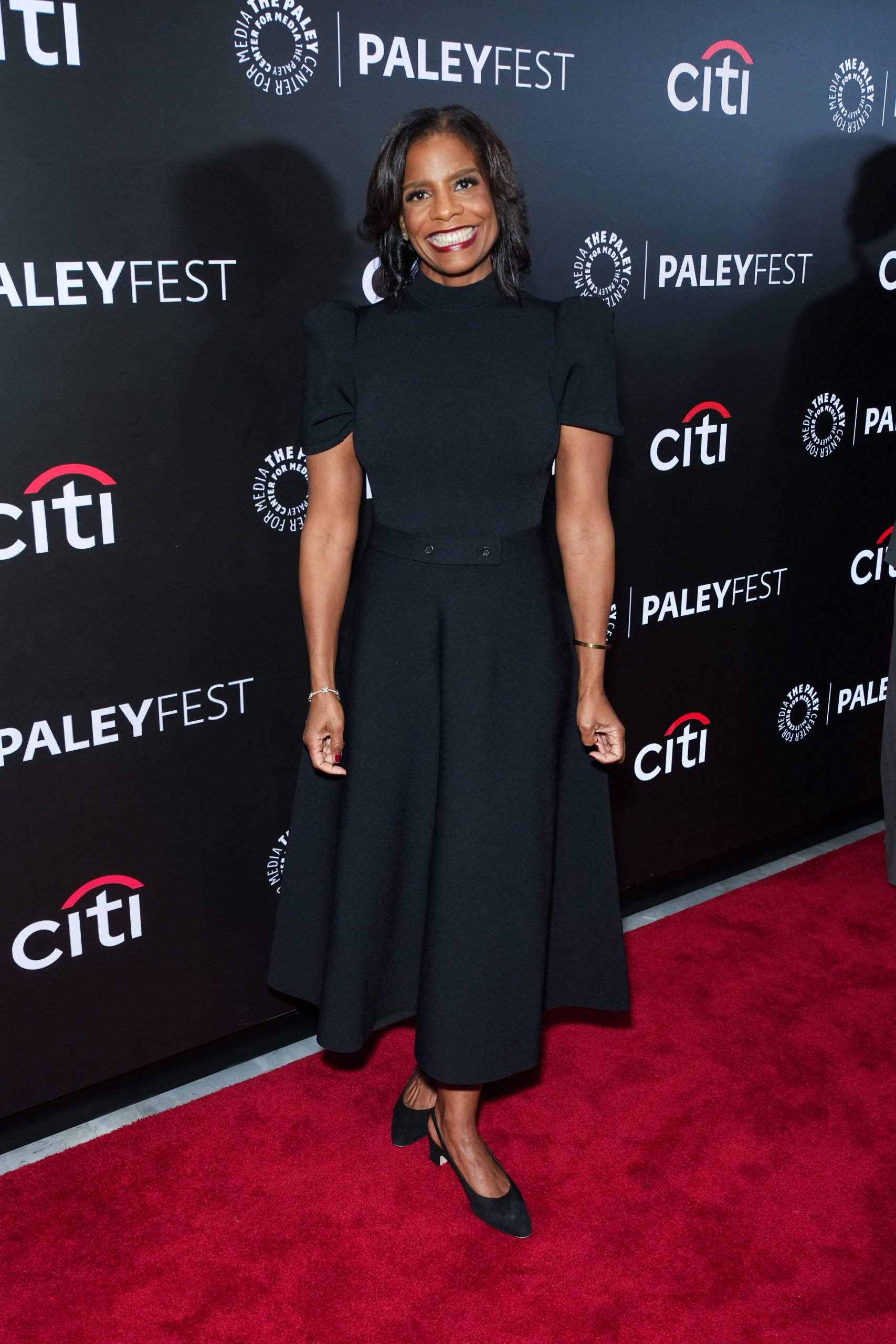
Sonja Warfield
“We are very lucky that we have our prior relationship. That we’ve known each other for 40 plus years… we don’t have to fake the intimacy,” Nixon observed.
That familiarity is evident onscreen. The sisters’ exchanges, whether affectionate, exasperated, or sharpened to a fine point, possess the effortless rhythm of two women who know exactly how to get under each other’s skin.
Behind the scenes, Warfield offered insight into the formidable task of keeping so many intertwined lives moving forward. With the third season leaving numerous storylines unresolved, the writers were hardly facing a shortage of material.
“There were so many threads that we left open in Season 3, so we knew we had a lot of supply,” she said.
And when the conversation turned to which characters come most naturally to her, Warfield singled out Agnes, whose aristocratic certainty and impeccable sense of social hierarchy apparently feel rather familiar.
“She is essentially my mother… I kind of grew up in that boujee world,” Warfield revealed.
It was a wonderfully revealing observation. The show’s humor works because its characters take their social rituals with deadly seriousness, while the audience is permitted to appreciate just how absurd those rituals can be.
Shaw captured that peculiar pleasure with a confession that surely resonated throughout the theater.
“I always love thinking about this show because I always start thinking about things I never thought I’d care about, like tassels.”
Indeed, The Gilded Age has accomplished the seemingly impossible: making the placement of a dinner guest, the acceptance of an invitation, or the details of a drawing room feel like matters of international diplomacy.
But its enduring appeal goes well beyond the spectacular costumes and lavish interiors. At its heart, the series is about power: who possesses it, who inherits it, who marries into it, and who is determined to seize it regardless of what society thinks.
For all its nineteenth-century elegance, those questions remain remarkably contemporary. The fortunes may be different, the rules of engagement more discreet, and the gowns considerably more elaborate, but the battle for influence is one New Yorkers still recognize.
As The Gilded Age looks toward its fourth season, the PaleyFest NY conversation offered an entertaining reminder of why audiences remain so invested in the fortunes of the Russells, the Van Rhijns, and their ever-expanding circle of allies and adversaries.
After all, in New York society, the only thing more entertaining than watching someone climb the social ladder is discovering who intends to pull it out from under them.
All photo’s Courtesy of The Paley Museum


My View: Backstage at the Cabaret Convention

Midnight: Todrick Hall Has Created a Musical Masterpiece That Broadway Cannot Afford to Ignore

Memoirs of Amorous Gentlemen: A Beautifully Decadent World With a Star at Its Center

Billy Crystal and Whoopi Goldberg Bring Laughter, Love and a Lifetime of Memories to PaleyFest NY

Prince Mario-Max Schaumburg-Lippe Champions Animal Rescue

Retail Sales Are Rising. That Doesn’t Mean Customers Are Buying More.

High Society, Higher Stakes: The Gilded Age Takes Center Stage at PaleyFest NY

Live From The Hotel Edison Times Square Chronicles Presents The Day With No End a Film Directed by Portrait Photographer Alistair Morrison
My View: Backstage at the Cabaret Convention
Midnight: Todrick Hall Has Created a Musical Masterpiece That Broadway Cannot Afford to Ignore
Memoirs of Amorous Gentlemen: A Beautifully Decadent World With a Star at Its Center
Billy Crystal and Whoopi Goldberg Bring Laughter, Love and a Lifetime of Memories to PaleyFest NY
Prince Mario-Max Schaumburg-Lippe Champions Animal Rescue
Retail Sales Are Rising. That Doesn’t Mean Customers Are Buying More.
High Society, Higher Stakes: The Gilded Age Takes Center Stage at PaleyFest NY
Live From The Hotel Edison Times Square Chronicles Presents The Day With No End a Film Directed by Portrait Photographer Alistair Morrison
-

 Art5 days ago
Haring Under Glass: Monaco Meets Manhattan in Memory Of Places
-

 Entertainment5 days ago
Prince Mario-Max Schaumburg-Lippe & Mariel Padilla – Hollywood & Philippines Movie Stars Receive Honors By UN Icon Ambassador Monica Sanchez At A Tablet For Dream Gala In NYC!
-

 Cabaret5 days ago
Hello, Macon! A Musical Tribute to Jerry Herman
-

 Business5 days ago
Amazon Built Its Tablet Business on Cheap. Now It Wants Customers to Pay More.
-

 Broadway5 days ago
Falsettos Is Having a Love Affair With Its Audience—and Now It’s Going International
-

 Celebrity2 days ago
The Glorious Corner
-

 Events4 days ago
Zohran Mamdani, Mayor of New York—Terms and Conditions Apply
-

 Celebrity4 days ago
The Glorious Corner