
News
Who Will Speak for The Children? Fauci Also Experimented on the Homeless Children of New York


In 2004 a journalist named Liam Scheff wrote an article called “The House That AIDS Built.” In it it stated in Washington Heights the Incarnation Childrens Center (ICC), which was formally a convent house, had a revolving stable of children who had been removed from their own homes by the Agency for Child Services. These children were black, Hispanic and poor. Many of their mothers had a history of drug abuse and have died. Once
taken into ICC, the children become subjects of drug trials sponsored by NIAID (National
Institute of Allergies and Infectious Disease, a division of the NIH), NICHD (the National Institute of Child Health and Human Development) in conjunction with some of the worlds largest pharmaceutical companies GlaxoSmithKline, Pfizer, Genentech, Chiron/Biocine and others. In other words Dr. Fauci!

The drugs being given to the children were toxic known to cause genetic mutation, organ failure, bone marrow death, bodily deformations, brain damage and fatal skin disorders. If the children refuse the drugs, they were held down and force fed. If the children continue to resist, they were taken to Columbia Presbyterian hospital where a surgeon put a plastic tube through their abdominal wall into their stomachs. From then on, the drugs were injected directly into their intestines.
In 2003, two children, ages 6 and 12, had debilitating strokes due to drug toxicities. The 6-year-old went blind. They both died shortly after. Another 14-year old died. An 8-year-old boy had two plastic surgeries to remove large, fatty, drug-induced lumps from his neck. This was AIDS research. The children at ICC were born to mothers who tested HIV positive, or who themselves tested positive. However, neither parents nor children were told a crucial fact — HIV tests are extremely inaccurate.
To read more of the story a copy lives here, here, here and more here and here.

I remember reading this story back in 2004, when the story broke wide open in the New York Post and the New York Press. It served as the basis of investigation for the BBC film “Guinea Pig Kids,” and prompted further investigation by the Associated Press. Naturally the New York Times tried to debunk the story.
Now the NIH is now accused of spending $100 million more of taxpayer’s money on torturing lab monkeys with ACID and snakes. To see the disgusting video click here and then watch this one.
What will it take for the world to admit Anthony Fauci is a murder, a psychopath and needs to be put down.

Are you as mad as me yet?


A low price can make an unfamiliar retailer worth trying. It can persuade someone to download an app, browse a few products, and place a first order. But that purchase also begins a relationship involving personal information. Temu’s agreement to settle Texas privacy claims puts that side of online shopping under scrutiny. The company agreed to restrictions on handling shoppers’ data while denying wrongdoing. The business issue extends beyond one platform: attracting customers through savings and earning their confidence require different kinds of work.
For shoppers, the benefit of a discount is immediate and easy to understand. A product costs less, leaving more money available for something else. Data practices are harder to evaluate. Customers may understand why a retailer needs a delivery address or payment information, yet have little visibility into where other information goes or how long it remains accessible. That gap can leave people making decisions about convenience without fully understanding the relationship behind it.
Texas’s settlement addresses how Temu stores and transfers personal information, including limits on sending data to China beyond what is necessary to complete transactions. The agreement also requires an independent cybersecurity review of the app. These measures resolve allegations rather than establish an admission that the company acted unlawfully. They nevertheless show how the handling of customer information can become an operational issue that demands changes to a retailer’s systems.
For any online business, collecting data can improve the shopping experience. Remembering preferences, showing relevant products, and making checkout easier can give customers useful benefits. The challenge is deciding what information is necessary and explaining its use clearly. Asking for more information than a customer expects can create friction, especially when the reason is difficult to find or understand. A convenient transaction can become less appealing if it leaves unanswered questions.
Trust also develops across the entire experience. A customer who receives accurate product information, a dependable delivery, and straightforward support has reasons to return. Clear privacy controls contribute to that same relationship. They give people a better sense of what they are agreeing to and how they can change their preferences. For businesses, that means privacy deserves attention alongside the product page and checkout process, where decisions directly affect whether shoppers feel comfortable continuing.
Smaller companies face their own version of this challenge. Their websites may use advertising tools, customer databases, booking systems, and outside payment services. Each connection can introduce another place where customer information is processed. Owners benefit from understanding those relationships before making promises about privacy. A reassuring statement on a website has limited value if the business cannot explain what its own tools actually do.
Temu’s settlement highlights a question every retailer has to answer over time: what makes customers comfortable coming back? Price can provide a compelling reason to place an order, but a lasting relationship depends on the experience surrounding it. Businesses that make information practices understandable give customers another basis for confidence. The savings may win their attention. Clear expectations and dependable treatment help earn their next purchase.


KT SULLIVAN
In 2008, Eda and I booked a themed cruise, “Sail with Cabaret Performers,” hosted by Donald F. Smith, founder of the Mabel Mercer Foundation. Since photography had long been a hobby of mine, I brought my camera along to capture the sights along the way, including Barcelona’s magnificent architecture. I also found myself taking plenty of candid shots of the performers as they relaxed and mingled during our days at sea.
When I showed the photographs to Donald, he said, “These are so great, you should come to the Cabaret Convention and do this backstage.”
Backstage! The very word had always held a special fascination for me. So, without hesitation, I happily traded my seat in the audience for a place behind the scenes. What began as a suggestion on a cruise in 2008 became a passion that has continued ever since, where Eda & I got to see many favorites and be introduced to new and are exciting singers.
For me, it has always been to witness and capture “how the magic happens.” Backstage, rehearsals, sound checks, invited dress rehearsals, active hallways…all of it! Those are the real excitement for me. It probably began when my first piano teacher, Dave Roberts, who was a staff musician at CBS and NBC, invited this 13-year-old student to tag along and watch some TV musical show rehearsals in the ‘50s.
At 16, I landed a summer job at ABC delivering “teletype” messages to the executives. The job had its perks. It also gave me opportunities to sneak into rehearsals and watch the creation unfold. The ‘60s found me one night at the Copacabana, backstage, with my musical hero Buddy Greco. During the summers and college vacations, I worked as a pianist in the Borscht Belt, located in the Catskills, where my living quarter was a small room tucked away backstage. Touring entertainers often asked to use my modest space as a place to change before their performances. After all, these hotels had nothing resembling the dressing rooms we associate with show business today.
For the young me, the excitement was dizzying. I found myself chatting with some of the biggest stars of the day as they dressed and prepared to take the stage. Those backstage encounters were unforgettable— Billy Eckstine once even borrowed my tie and Jackie Mason would ask me what jokes the comic who appeared the previous night had told!
Today, and many cameras later, I’m delighted, and proud, to share with you a glimpse of the magic unfolding behind the scenes at this year’s 37th New York Cabaret Convention.

KT SULLIVAN

KT SULLIVAN

SUSAN MACK, ANN KITTREDGE, RIASSA KATONA BENNETT

KT SULLIVAN

KT SULLIVAN

ERIC YVES GARCIA

STEPHANIE POPE & CLINT HOLMES

ROBERT CUCCIOLI

ROBERT CUCCIOLI

RAISSA KATONA BENNETT

MADELINE JOY TRAVIS

SHANNA FARR

SHANNA FARR & CRAIG RUBANO

BRYAN ENG

BARBARA FASANO & ERIC COMSTOCK

RAISSA KATONA BENNETT & SUSAN MACK

GABRIELLE STRAVELLI & BARBARA FASANO

NATALIE DOUGLAS

NATALIE DOUGLAS & CLINT HOLMES

CRAIG RUBANO

JONATHAN ARONS

SEAN HARKNESS

DIVA LaMARR

T. OLIVER REID

MARIEANN MERINGOLO

JON WEBER & STEVE ROSS

RAISSA KATONA BENNETT & ARBENDER ROBINSON

CELIA BERK

KT SULLIVAN

KT SULLIVAN

RICK MEADOWS

SAM JEWISON

MELODIE WOLFORD

BEN JONES

MARK NADLER

MARK NADLER

MARK NADLER

MARK NADLER

MARK NADLER & KT SULLIVAN


A bigger receipt does not always mean a fuller shopping basket. U.S. retail sales increased 0.8% in September, but higher gasoline prices contributed substantially to that growth. Because the headline figures are not adjusted for inflation, an increase in spending does not necessarily mean customers purchased more. Households can hand over more money while getting the same amount, or even less, in return.
That distinction changes how a sales report should be understood. Revenue can rise because more customers are shopping, because existing customers are buying additional items, or because prices have increased. Each situation tells a different story about demand. A higher dollar total provides useful information, but it cannot explain the health of a business on its own.
Imagine a store that sells 100 products at $10 each, generating $1,000. The following month, it raises the price to $11 and sells 95 products. Revenue reaches $1,045, an increase of 4.5%, even though the store sold 5% fewer items. The owner collected more money, but the underlying sales activity weakened. Whether the business earned more profit depends on what happened to inventory costs and operating expenses.
Fuel spending illustrates the same issue in everyday life. When filling a tank becomes more expensive, the driver’s spending increases without providing any additional fuel. That expense also reduces the money available for other purchases. A household might spend more overall while cutting back on clothing, entertainment, or restaurant visits. From the customer’s perspective, the higher total can feel like a loss of purchasing power rather than a sign of financial confidence.
For business owners, rising revenue can therefore hide changes worth investigating. Customers may visit less often, choose cheaper alternatives, or leave out items they previously purchased without much thought. Price increases can temporarily conceal those shifts in the monthly sales total. Tracking transaction counts, units sold, repeat visits, and profit margins helps reveal whether customers are buying more or simply paying more.
Understanding the cause also helps determine the response. A retailer seeing fewer units sold should be cautious about increasing inventory solely because revenue has grown. A business serving budget-conscious customers might benefit from smaller packages, useful bundles, or a clearer range of price options. Discounts require the same attention. Bringing in additional purchases helps only when those sales contribute enough to cover the costs of serving them.
The September figures offer a practical reminder to look beneath the headline. Higher spending can coexist with tighter household budgets and cautious purchasing decisions. Businesses need to understand how much growth comes from prices, how much comes from demand, and how much remains after expenses. A rising sales total becomes meaningful when it reflects a business customers continue to choose and an operation that earns enough to keep moving forward.

Some store names bring back a feeling before they bring back a product. Toys R Us is one of them. For people who remember visiting as children, the name can mean excitement, possibility, and a building filled with things they wanted to take home. Now the brand is expanding its physical presence again, with plans announced for additional standalone stores ahead of the holiday season. Its return raises an interesting business question: how much can customers’ memories contribute to a comeback?
I used to go to Toys R Us as a child, and I still have memories of visiting that big toy store. That is part of what makes this comeback interesting to me personally. Hearing the name again brings back something familiar. I can understand why adults who remember those visits would want to walk into a store again, perhaps this time with children of their own.
That emotional connection gives the brand an advantage. Many new retailers have to spend heavily just to introduce themselves. A familiar name already has a place in people’s minds. Customers may notice an opening, tell someone about it, or make a special trip because they remember what the store meant to them. For a returning brand, those memories can help create an audience before the doors open.
But getting people through the door once is different from earning their next visit. Parents shopping today can compare prices, check availability, and order a toy without leaving home. A recognizable sign will not remove those alternatives. The store needs to offer something that makes the trip worthwhile, whether that is discovering an unexpected product, getting helpful guidance, or giving children an enjoyable place to explore.
A toy store has a natural opportunity to make shopping feel like an experience. Children can encounter something they did not know to search for. Parents can see the size and quality of an item before buying it. A well-designed visit can become part of a family outing rather than another task to finish. That gives a physical retailer room to compete on more than convenience, provided the experience feels worth the time and money.
There is also a delicate balance between honoring the past and serving the present. Adults may arrive with memories of enormous aisles and seemingly endless choices. Their children arrive with no obligation to feel the same way. The returning business has to appeal to both. It needs enough familiarity to reconnect with longtime customers and enough relevance to earn the interest of a generation discovering it for the first time.
That is the broader lesson in the Toys R Us comeback. A beloved name gives a business a valuable starting point, but customers still judge what happens when they visit. Selection, pricing, service, and atmosphere determine whether their curiosity becomes a habit. Nostalgia can give parents a reason to bring their children through the door. What those children experience inside will determine whether they ask to come back.
In 2008, Eda and I booked a themed cruise, “Sail with Cabaret Performers,” hosted by Donald F. Smith, founder of the Mabel Mercer Foundation. Since photography had long been a hobby of mine, I brought my camera along to capture the sights along the way, including Barcelona’s magnificent architecture. I also found myself taking plenty of candid shots of the performers as they relaxed and mingled during our days at sea.
When I showed the photographs to Donald, he said, “These are so great, you should come to the Cabaret Convention and do this backstage.”
Backstage! The very word had always held a special fascination for me. So, without hesitation, I happily traded my seat in the audience for a place behind the scenes. What began as a suggestion on a cruise in 2008 became a passion that has continued ever since, where Eda & I got to see many favorites and be introduced to new and exciting singers.
For me, it has always been to witness and capture “how the magic happens.” Backstage, rehearsals, sound checks, invited dress rehearsals, active hallways…all of it! Those are the real excitement for me. It probably began when my first piano teacher, Dave Roberts, who was a staff musician at CBS and NBC, invited this 13-year-old student to tag along and watch some TV musical show rehearsals in the ‘50s.
At 16, I landed a summer job at ABC delivering “teletype” messages to the executives. The job had its perks. It also gave me opportunities to sneak into rehearsals and watch the creation unfold. The ‘60s found me one night at the Copacabana, backstage, with my musical hero Buddy Greco. During the summers and college vacations, I worked as a pianist in the Borscht Belt, located in the Catskills, where my living quarter was a small room tucked away backstage. Touring entertainers often asked to use my modest space as a place to change before their performances. After all, these hotels had nothing resembling the dressing rooms we associate with show business today.
For the young me, the excitement was dizzying. I found myself chatting with some of the biggest stars of the day as they dressed and prepared to take the stage. Those backstage encounters were unforgettable— Billy Eckstine once even borrowed my tie and Jackie Mason would ask me what jokes the comic who appeared the previous night had told!
Today, and many cameras later, I’m delighted, and proud, to share with you a glimpse of the magic unfolding behind the scenes at this year’s 37th New York Cabaret Convention.

MARILYN MAYE

MARILYN MAYE & TEDD FIRTH

TOVAH FELDSHUH

TOVAH FELDSHUH

MARILYN MAYE & CLINT HOLMES

MARILYN MAYE & CLINT HOLMES

PHILIP OFFICER

SIDNEY MYER

JEFF HARNAR

BARBARA BRUSSELL

AMANDA McBROOM

MOIPEI

AVERY SOMMERS

KAREN AKERS & STACY SULLIVAN

RITT HINN & JOHN WEBER

EDA SOROKOFF & KT SULLIVAN

JEFF HARNAR & ANDREA MARCOVICCI

ANDREA MARCOVICCI & JEFF HARNAR

TOVAH FELDSHUH

TOVAH FELDSHUH

PHILIP OFFICER

MARILYN MAYE

MARILYN MAYE

MARILYN MAYE & JASON MARTIN

STEPHEN SOROKOFF, TOVAH FELDSHUH, MARILYN MAYE, CHARLES BUSCH

TOVAH FELDSHUH, MARILYN MAYE, CHARLES BUSCH

STAGE RIGHT

AMANDA McBROOM & CLINT HOLMES

CHARLES BUSCH, MARILYN MAYE, TOVAH FELDSHUH

STEPHEN SOROKOFF & DONALD F. SMITH, CABARET CONVENTION 2008

STEPHEN SOROKOFF & BUDDY GRECO, BACKSTAGE COPACABANA 60’S


Jesse Eisenberg’ s A24’s The Debut Sends a Housewife’s Community Theatre Dreams Gloriously Off the Rails

Good Time Charlie Knows Everyone Loves a One-Act Play

Paws, Claws and Haute Dog Couture: The East Village Goes to the Dogs This Halloween

Prince Mario-Max Schaumburg-Lippe: How The Balanchine Ball Shows Ballet is Trending!

Temu’s Low Prices Come With Another Business Question: Customer Data

My View: Backstage at the Cabaret Convention

Midnight: Todrick Hall Has Created a Musical Masterpiece That Broadway Cannot Afford to Ignore

Memoirs of Amorous Gentlemen: A Beautifully Decadent World With a Star at Its Center
Jesse Eisenberg’ s A24’s The Debut Sends a Housewife’s Community Theatre Dreams Gloriously Off the Rails
Good Time Charlie Knows Everyone Loves a One-Act Play
Paws, Claws and Haute Dog Couture: The East Village Goes to the Dogs This Halloween
Prince Mario-Max Schaumburg-Lippe: How The Balanchine Ball Shows Ballet is Trending!
Temu’s Low Prices Come With Another Business Question: Customer Data
My View: Backstage at the Cabaret Convention
Midnight: Todrick Hall Has Created a Musical Masterpiece That Broadway Cannot Afford to Ignore
Memoirs of Amorous Gentlemen: A Beautifully Decadent World With a Star at Its Center
-

 Celebrity3 days ago
The Glorious Corner
-

 Celebrity5 days ago
The Glorious Corner
-

 Events5 days ago
Zohran Mamdani, Mayor of New York—Terms and Conditions Apply
-

 Business5 days ago
Hackers Aren’t Just Stealing Data. They’re Spoiling the Food.
-

 Events5 days ago
The Algonquin Hotel Thinks Pink: A Toast to Hope, Broadway and Breast Cancer Awareness
-

 Cabaret4 days ago
My View: Backstage at the Cabaret Convention: OPENING NIGHT
-
 Entertainment5 days ago
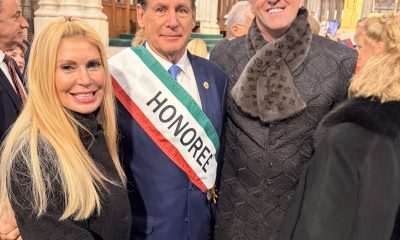
Prince Mario-Max Schaumburg-Lippe: Leandro and Denise Rizzuto Shine at New York’s Columbus Day Celebration!
-

 Broadway4 days ago
Tom Hiddleston and Hayley Atwell Are Bringing Shakespeare’s Battle of the Sexes to Broadway