
Music
Ben Platt is Back With a New Video


Ben Platt’s long-awaited solo album Sing To Me Instead will be released March 29th. The former Dear Evan Hansen star marked the occasion by singing on The Today Show’s Citi Concert Series. The star sang “Grow As We Go,” having previously released the music video, and a first public performance of “Older.”
Platt has been slowly releasing multiple singles from the album—including “Bad Habit,”“Ease My Mind,”—since February, but now the full album is available on shelves, for digital download, and streaming. Overnight, the album jumped into the frontrunners of iTunes Top Charts for pop.
Platt heads out on a solo tour in May. The tour will make stops in Chicago, Detroit, Toronto, Boston, Washington DC, Philadelphia, New York, Atlanta, Austin, Irving (TX), San Francisco, and Los Angeles.


Twenty-five years after Our Sinatra became one of Off-Broadway’s unexpected musical pleasures, Eric Comstock, Christopher Gines and Hilary Kole have returned to the material that started it all. What is remarkable is how little dust has gathered on either the songs or the performers.
Our Sinatra: A Musical Celebration, now at the Marjorie S. Deane Little Theater, isn’t an impersonation show. Nobody is trying to become Frank Sinatra, and that is precisely why the evening works. Instead, three exceptionally accomplished interpreters take on the extraordinary catalogue Sinatra made famous and allow the songs to breathe in their own voices. “Fly Me to the Moon,” “The Way You Look Tonight,” “Come Fly with Me,” “The Best Is Yet to Come,” “I’ve Got You Under My Skin,” “Where or When,” “One for My Baby” and “The Lady Is a Tramp” arrive carrying all the memories we associate with Sinatra, without becoming museum pieces. Ironically missing is “My Way.”

Eric Comstock, Hilary Kole, Christopher Gines Photo Genevieve Rafter Keddy
The chemistry among Comstock, Gines and Kole is the evening’s greatest asset. After all these years, they fit together musically with an ease that cannot be manufactured. In harmony, their voices match beautifully, yet individually they couldn’t be more distinct. That contrast keeps the evening alive.

Eric Comstock Photo Genevieve Rafter Keddy
At the piano, Comstock is brilliant, with the kind of musical intelligence that makes everything look considerably easier than it is. As musical director, his choices feel intuitive and instinctive rather than arranged within an inch of their lives. As a singer, he is suave, personable and completely at home in this material. His patter is equally important. Comstock understands that Sinatra’s catalogue came from a world in which the space between the songs mattered almost as much as the songs themselves.
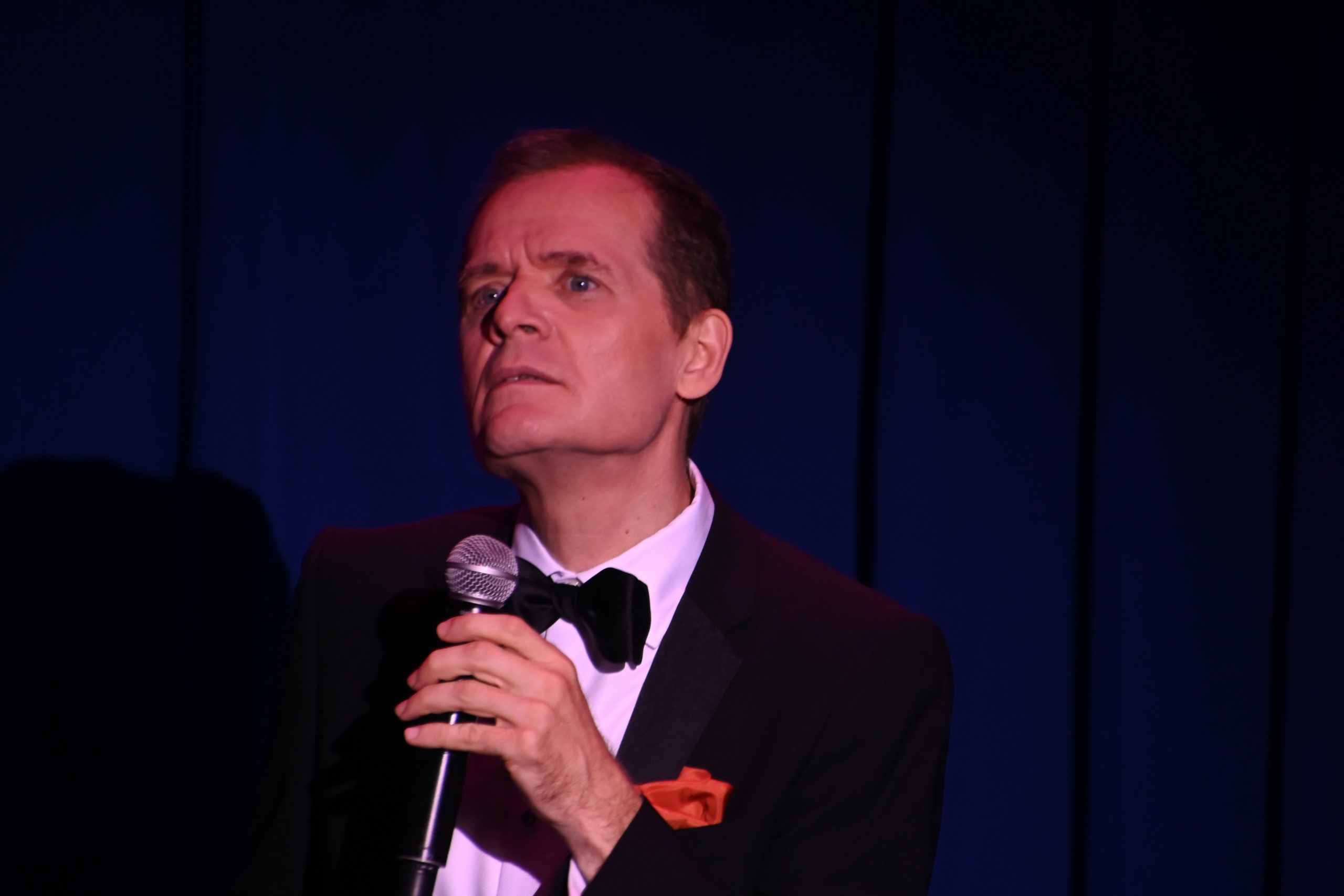
Christopher Gines Photo Genevieve Rafter Keddy
Gines brings a wonderfully smooth, creamy vocal quality that simply melts you. There is warmth in his singing without sentimentality, and he understands the conversational nature of this music. Sinatra’s greatest performances never sounded as though he were demonstrating how beautifully he could sing; they sounded as though he had something to tell you. Gines understands that distinction.
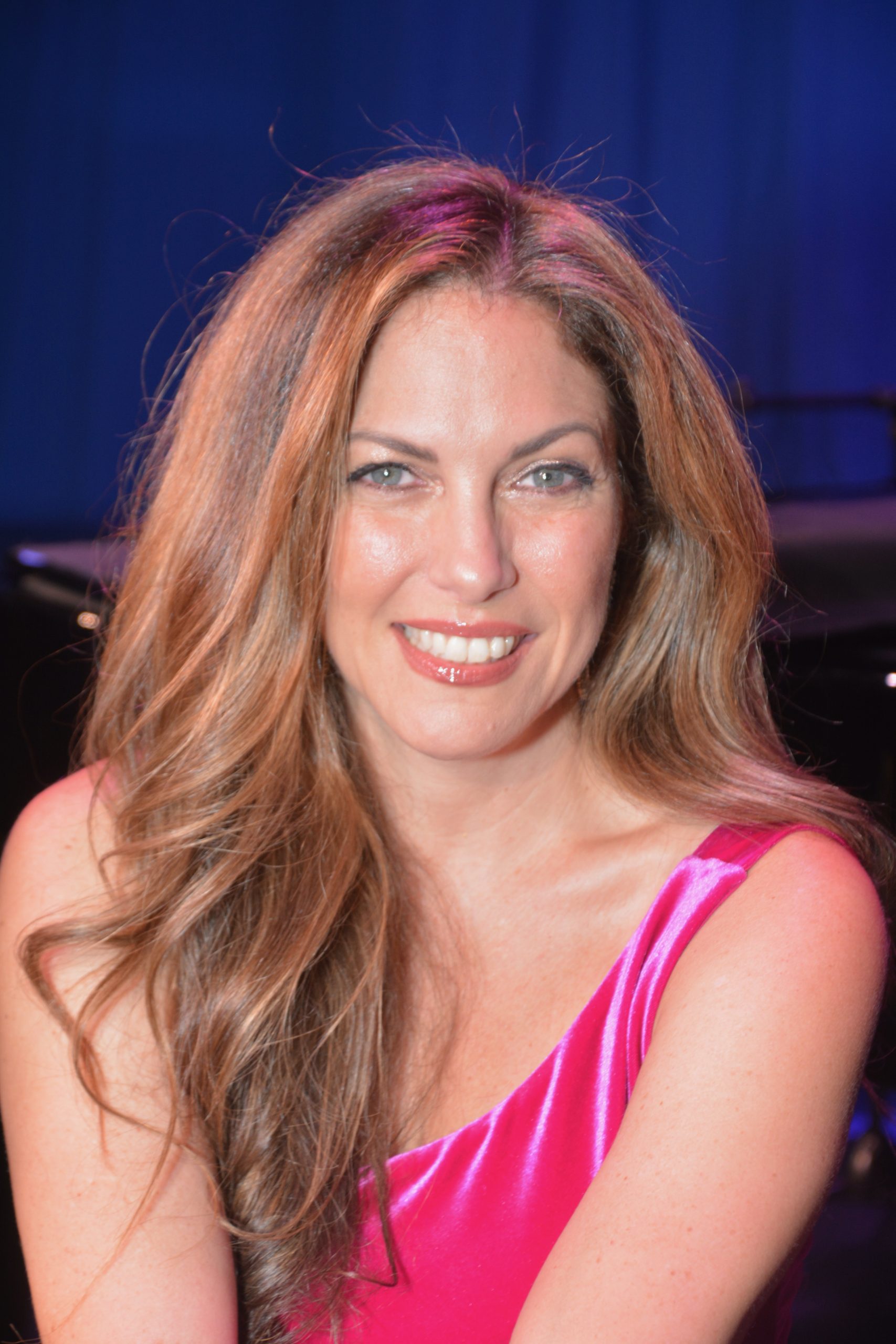
Hilary Kole Photo Genevieve Rafter Keddy
Then there is Hilary Kole, whose sophisticated jazz sensibility makes her particularly thrilling in this material. She honors the Sinatra sound without ever becoming imprisoned by it. Her scatting on “I’ve Got the World on a String” is worth the evening by itself. It is playful, technically dazzling and completely alive—a performer taking a familiar song and reminding us that a standard becomes a standard precisely because there is always another way into it.
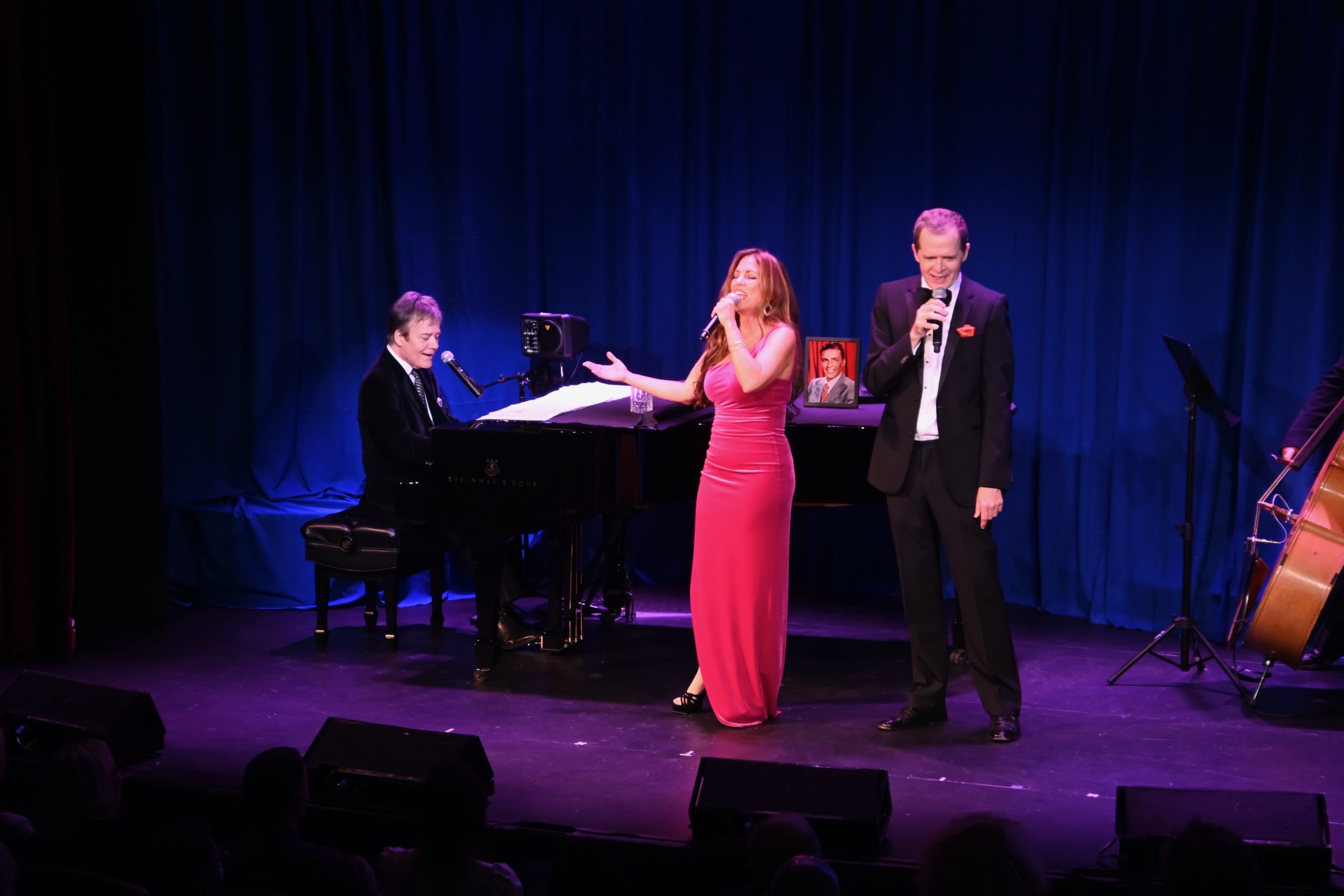
Eric Comstock,m Hilary Kole, Christopher Gines Photo Genevieve Rafter Keddy
That is what makes Our Sinatra so fabulous. These performers aren’t trying to preserve the songs under glass. They make them their own.
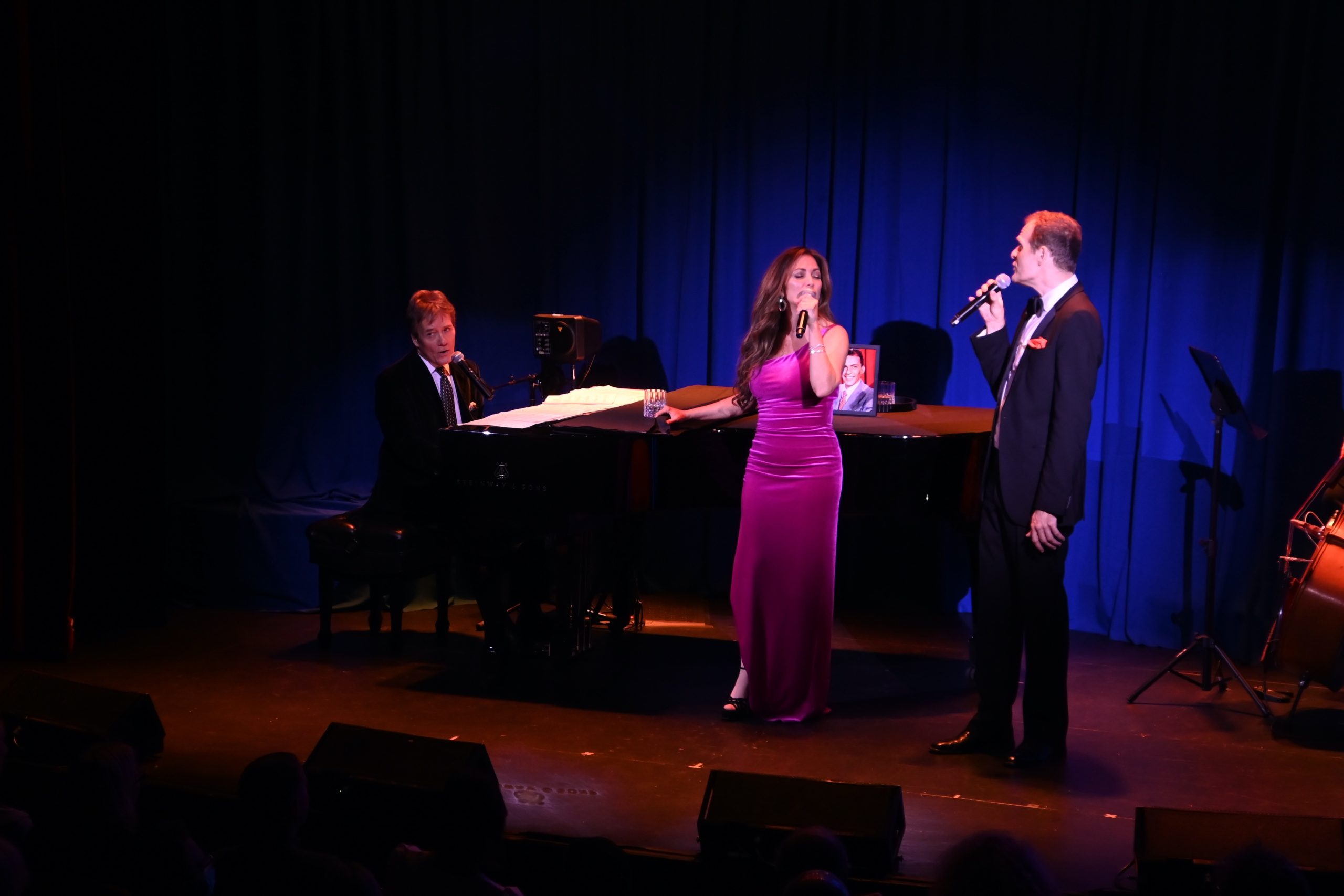
Eric Comstock, Hilary Kole, Christopher Gines Photo Genevieve Rafter Keddy
Kole’s stories about her father and Sinatra give the evening an unexpectedly personal dimension, while Comstock’s patter provides both history and humor. Those stories matter because Sinatra wasn’t simply a singer with an enviable songbook. He represented an era when popular music was built around lyricists and composers who assumed an audience was listening to the words. Cole Porter, Rodgers and Hart, Sammy Cahn, Jimmy Van Heusen and the other writers whose work became inseparable from Sinatra understood sophistication without mistaking it for pretension.
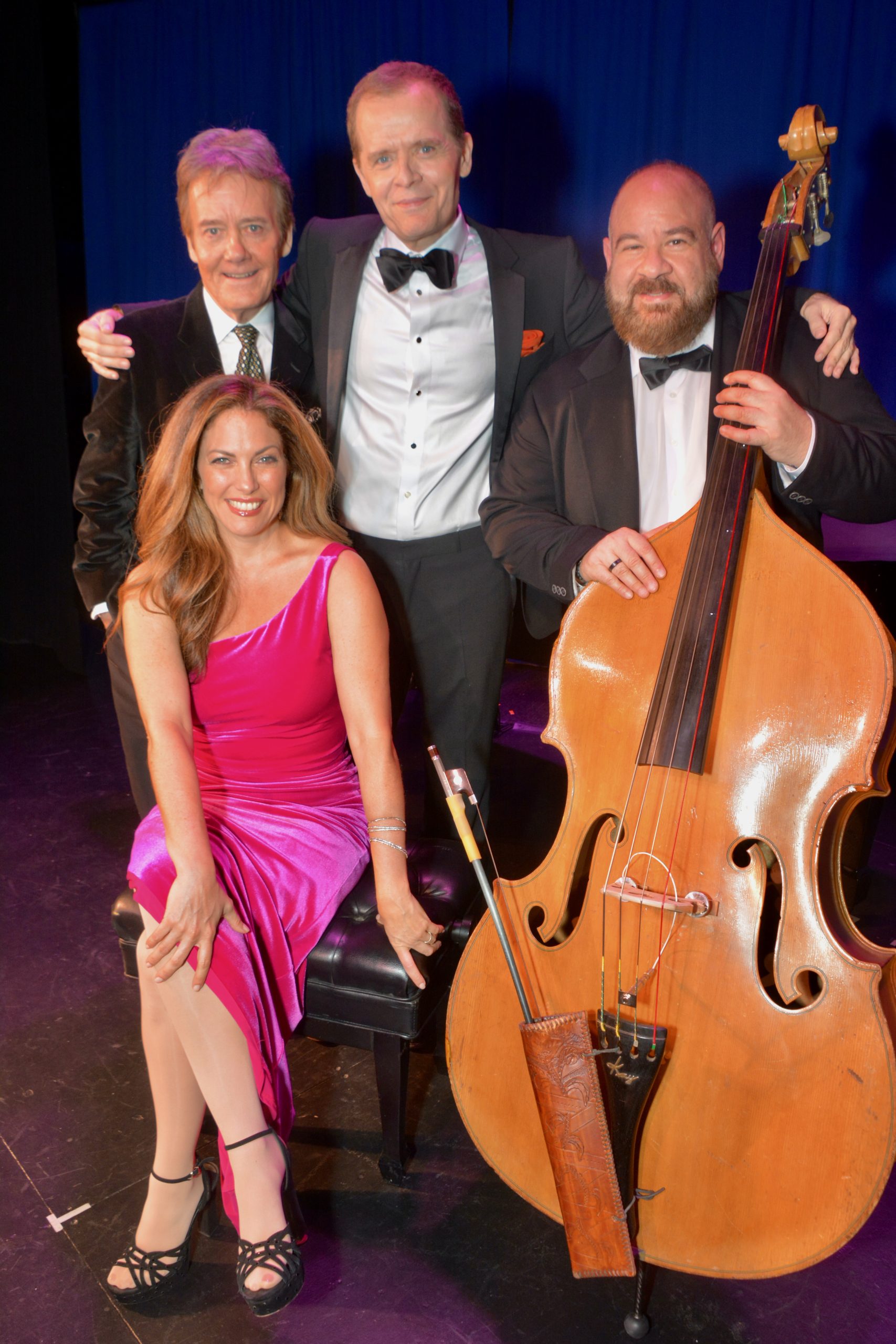 The musical economy of the production is another pleasure.
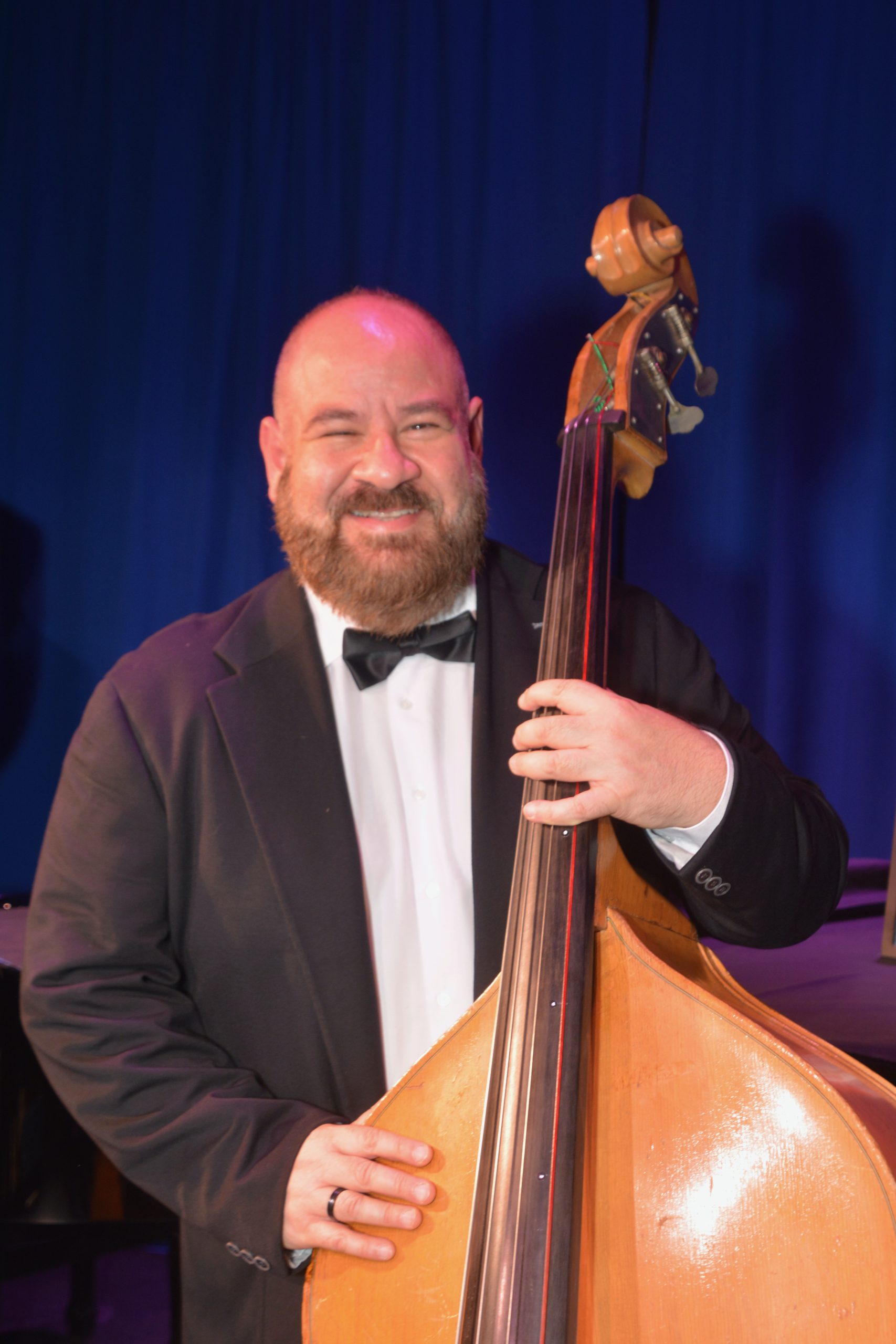
Marco Panascia Photo Genevieve Rafter Keddy
Backed only by the superb bassist Marco Panascia, Comstock’s piano provides everything these singers require. There is nowhere to hide in an arrangement this exposed, but there is also nothing unnecessary competing with the lyric. The result has the intimacy of a great New York supper club—the kind of room where the performer wasn’t some distant figure across an arena, but someone telling a story a few feet away.

Richard Maltby Jr. Photo Genevieve Rafter Keddy
That intimacy is particularly appropriate because Our Sinatra began in precisely that world. Created by Comstock, Gines and Kole, the revue premiered in 1999 at the legendary Algonquin Oak Room before moving into a commercial run in 2000, first at the Blue Angel Theatre and later the Reprise Room. It ultimately played more than 1,000 performances during its two-year run, followed by national tours and regional productions. Now the original trio has come home to celebrate its 25th anniversary, with Richard Maltby Jr. supervising the production and Kurt Stamm directing.
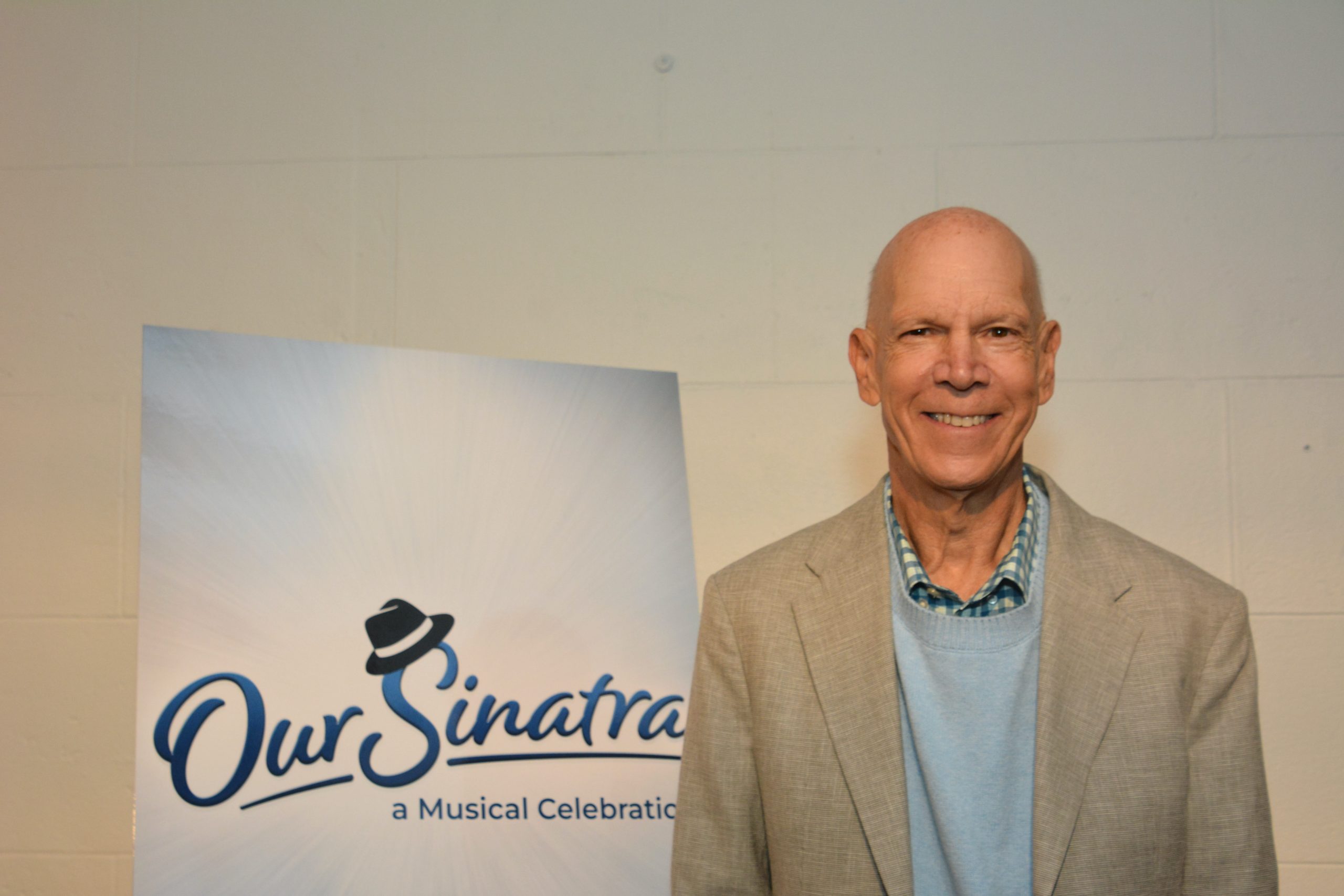
David Zippel Photo Genevieve Rafter Keddy
There is inevitably nostalgia in Our Sinatra, but nostalgia isn’t what makes the show work. The songs do. In an age when so much music is produced, processed and digitally perfected, there is something wonderfully luxurious about sitting in a small theatre listening to three singers, a pianist and a bassist trust melody, lyric and musicianship to do the work. And they do.
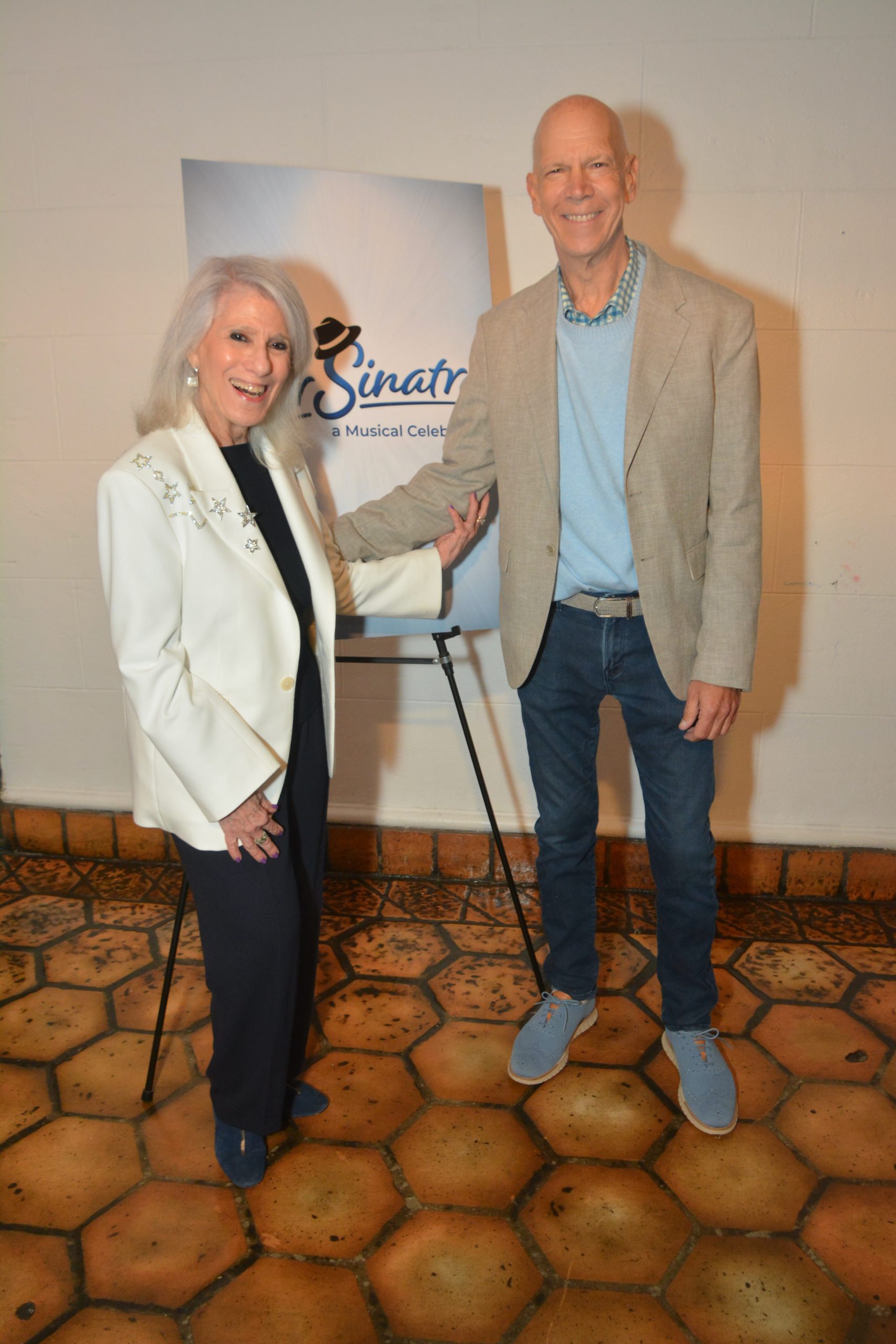
Jamie de Roy and David Zippel Photo Genevieve Rafter Keddy
Our Sinatra takes us back to another time, but it doesn’t feel embalmed by that time. Comstock, Gines and Kole remind us why these songs survived in the first place: extraordinary writing becomes new again when extraordinary musicians know what to do with it.
Twenty-five years later, Our Sinatra is very welcome back.
Our Sinatra: at the Marjorie S. Deane Little Theater, 10 West 64th Street, through November 29th. The regular performance schedule is Tuesday at 7:30PM, Saturday at 5PM and Sunday at 1:30PM.

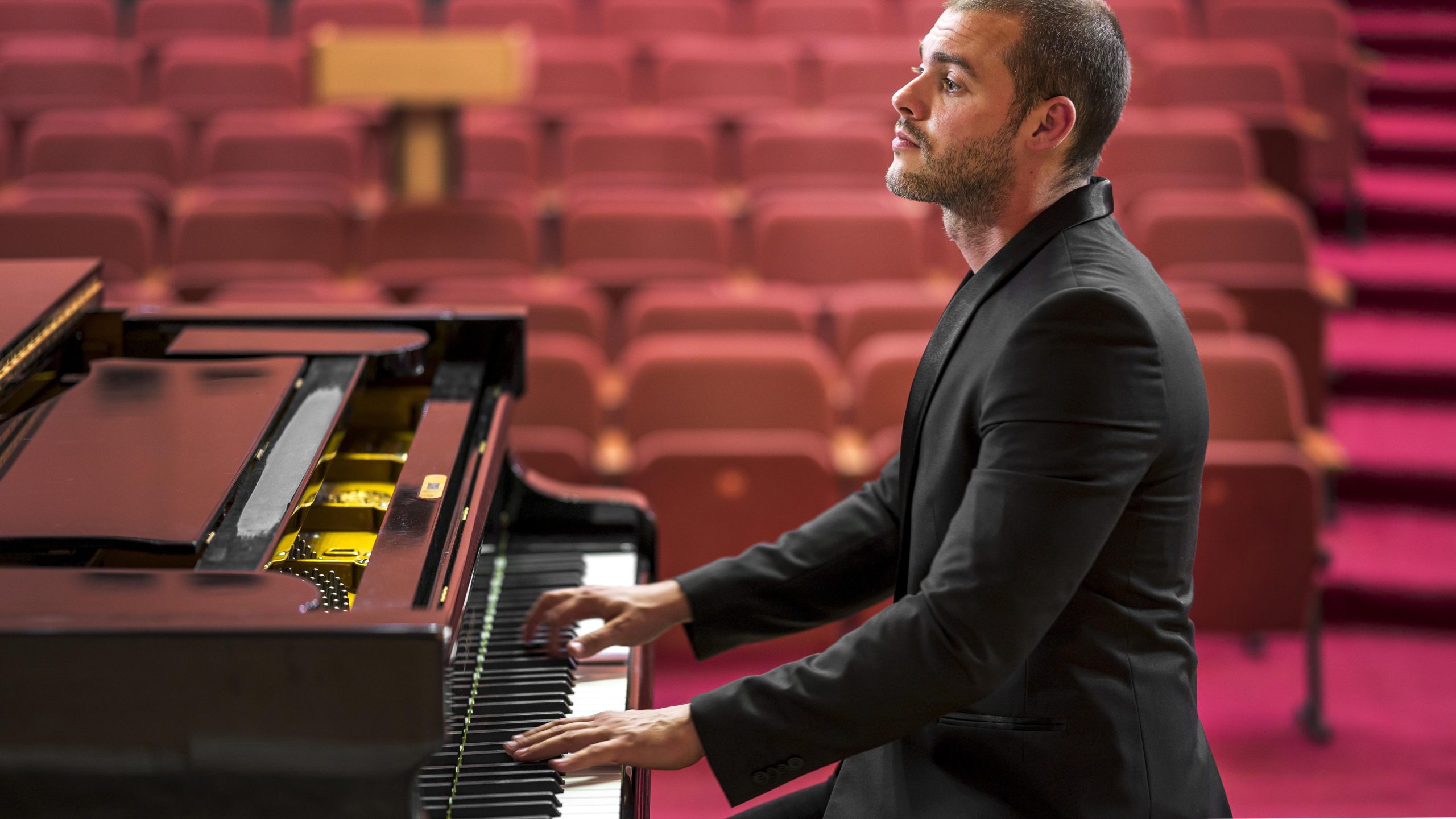
Moving a piano in Christchurch looks different this year. Households, schools, and venues are asking for tighter timing, better protection, and clearer planning before a lift begins. That shift reflects higher transport costs, denser traffic around key suburbs, and greater care for valuable instruments during short and long moves. As a result, piano relocation now depends less on brute force and more on assessment, route control, and disciplined handling from pickup to placement.
Higher Standards Before the Move
One clear change is the demand for specialist crews that understand shape, weight, and balance before moving starts. Many residents now compare access planning, wrapping methods, and stair strategy before booking piano movers in Christchurch, because poor preparation can damage pedals, legs, casters, or nearby walls within minutes.
Clients also expect a more detailed site check than they did last year. A proper review now covers doorway width, floor grip, driveway slope, trailer height, and the final room layout. That extra detail helps avoid rushed lifting decisions once the piano is already in motion.
Protection Has Become More Important
A piano is not just heavy. It is also sensitive to knocks, pressure points, and moisture. That is why better wrapping has become a bigger part of the process this year. Thick moving blankets, secure strapping, and clean loading surfaces reduce cosmetic damage and lower the chance of internal movement during transport.
Weather planning matters more as well. Christchurch can shift from dry to wet conditions quickly, which raises the risk of surface marks and slippery entry paths. Crews now need to think about timing, cover, and vehicle positioning well before loading begins.
Different Pianos Need Different Handling
Upright pianos often seem simpler, yet they still create risks in narrow halls or on sharp turns. Grand pianos need even more planning because of their size, leg structure, and weight distribution. Digital models are lighter, though they still require careful packing to protect casing, keys, and electronic parts.
Access Challenges Are Driving Better Planning
Access has become a bigger issue across Christchurch homes and commercial sites. More moves involve compact driveways, tighter townhouses, and renovated interiors with less spare space. In those settings, the hardest part is often not the road journey. It is getting the instrument safely out of one building and into another.
That is why route mapping has become a practical step rather than an optional one. Teams now look at gate clearance, steps, landings, and turning space in advance. Where access is limited, a small mistake can slow the entire job and increase handling risk.
Timing and Coordination Matter More
Scheduling has also changed this year. Customers want narrower arrival windows and quicker completion, especially when a piano move is part of a larger house relocation. Schools and community spaces often need work around lessons, rehearsals, or events, which leaves less room for delays.
This pushes movers to coordinate transport and lifting more carefully. A well-run job now depends on accurate booking details, realistic time estimates, and clear communication about what will happen on site. That level of coordination helps prevent rushed unloading, which is where avoidable damage often occurs.
Experience Is Valued More Than Price Alone
Price still matters, but buyers are looking harder at method and experience. That is a sensible shift. A cheap quote can become expensive if the piano is scratched, dropped, or placed badly inside the new property. This year, many Christchurch customers appear more willing to pay for careful handling than to accept preventable risk.
That change also reflects the emotional value attached to these instruments. Some are family pieces. Others are used for teaching, worship, or performance. In each case, the move is about more than transport. It is about preserving function, finish, and trust.
Piano moving in Christchurch has changed because expectations have risen at every stage of the job. Better planning, stronger protection, smarter access checks, and tighter scheduling now shape a safe move far more than raw lifting effort. For residents and organisations alike, the lesson is clear: careful preparation reduces risk, saves time, and protects an instrument that often carries financial, practical, and personal value well beyond its size.
Broadway
Lea Michele and Aaron Tveit Bring Two Broadway Careers Together for One Night at the Beacon

For nearly two decades, Lea Michele and Aaron Tveit have been traveling remarkably parallel Broadway roads. They arrived as young performers at almost exactly the same moment, became identified with some of the defining musicals of their generation and repeatedly found themselves performing within blocks of one another without actually sharing a Broadway stage.
That finally changed with Chess. Now Michele and Tveit are taking the partnership beyond the musical with Lea Michele and Aaron Tveit: Live in Concert, a one-night-only event at the Beacon Theatre on Thursday, November 19.
It is a pairing that makes almost absurd sense when their careers are placed side by side. In 2006, Michele was preparing to break through as Wendla in Spring Awakening while Tveit was making his Broadway debut in Hairspray. Both became part of a generation of musical-theatre performers who developed enormous followings just before social media fundamentally changed the relationship between Broadway stars and their audiences.
Michele, of course, had been on Broadway long before Spring Awakening. She made her debut as a child in Les Misérables, followed by Ragtime and Fiddler on the Roof, before originating Wendla and subsequently becoming internationally known as Rachel Berry on Glee. Her return to Broadway in the 2022 revival of Funny Girl proved that television fame had done nothing to diminish the instrument that made Broadway notice her in the first place. Her Fanny Brice became one of the theatrical events of the season and helped transform the revival at the box office.
Tveit’s Broadway trajectory followed a different route but produced an equally formidable résumé. After Hairspray came Wicked, followed by originating Gabe in Next to Normal and Frank Abagnale Jr. in Catch Me If You Can. Then came Christian in Moulin Rouge! The Musical, earning Tveit the Tony Award for Best Actor in a Musical. He later returned to Broadway as Sweeney Todd, demonstrating that the polished leading man possessed a considerably darker theatrical edge than some audiences had previously seen.
For years, the two careers kept almost touching.
Then came the Broadway revival of Chess, with Michele as Florence Vassy opposite Tveit’s Freddie Trumper and Nicholas Christopher’s Anatoly Sergievsky. It was the first time Michele and Tveit had actually worked together after spending so much of their careers occupying the same Broadway universe.
More importantly, Chess revealed what happens when two singers with that kind of vocal power are placed opposite one another. Neither performer has to compensate for the other. Tveit can meet Michele’s considerable vocal force, Michele can meet his, and both have enough stage experience to understand that a duet isn’t a competition for the final note. The electricity comes from having two performers capable of pushing each other without overwhelming the music.
The Beacon concert will allow them to take that chemistry somewhere Chess could not. Rather than being confined to one score and two characters, Michele and Tveit will draw upon nearly 20 years of Broadway and popular music, performing separately and together while revisiting songs associated with their individual careers. They are also expected to venture into each other’s musical territory, which may prove to be one of the evening’s more intriguing pleasures.
And there is plenty of territory.
Between Spring Awakening, Funny Girl, Glee, Next to Normal, Catch Me If You Can, Moulin Rouge!, Sweeney Todd and Chess, Michele and Tveit have accumulated an extraordinary contemporary songbook. There is even considerable crossover between Michele’s Glee repertoire and the pop catalogue woven through Moulin Rouge!, opening the door to combinations audiences have never heard from the pair.
Apparently the greater problem will be deciding what not to sing. The amount of material already under consideration has reportedly grown large enough that an intermission may be necessary—which seems entirely appropriate when attempting to compress two decades of two Broadway careers into a single evening.
What makes the concert particularly interesting, however, isn’t simply the possibility of hearing familiar songs sung exceptionally well. Michele and Tveit represent a very specific Broadway generation. They emerged at a moment when Spring Awakening, Next to Normal and eventually Glee were changing how younger audiences encountered musical theatre. Broadway fandom was becoming something different, but it had not yet become completely inseparable from Instagram, TikTok and the machinery of instantaneous celebrity.
Their audiences grew up with them. Now those same audiences have watched Michele return triumphantly to Broadway, Tveit move from contemporary romantic leads into Sondheim and both finally collide in Chess. The Beacon concert effectively turns that shared history into its own theatrical event.
There may be surprise guests. There will certainly be Broadway. There will be pop. And considering the vocal firepower involved, there is very little chance anyone will leave complaining that the evening needed a bigger finish.
Lea Michele and Aaron Tveit: Live in Concert plays the Beacon Theatre for one night only on Thursday, November 19. Presales begin Tuesday, September 15 at 10 a.m., with the general public sale beginning Friday, September 18 at 10 a.m.
After nearly 20 years of performing a few blocks apart, Michele and Tveit have finally discovered something considerably more interesting than parallel careers:
what happens when those two lines finally meet.


G.H. Harding
A KIMMEL COLD? — Jimmy Kimmel came back from his summer vacation Tuesday night to rumors that ABC/Disney was canceling his show. Could it be Trump? That FCC guy Brendan Carr? Believe me, the crazy is definitely out there!
By morning’s light, it was flagged as just a bad, bad rumor. I mean, could Trump have won?
Kimmel, coming back from a two-month summer vacation, could definitely could have used the added juice, but Kimmel didn’t address it at all. Rather, he cited all the things that had gone wrong when he left when … and that they are pretty much still in play. In other words, he essentially stayed the same too!

Johnny Carson
When Kimmel was silenced the first time, I knew it was a bad thing, but that said, he does seem to go a tad overboard. I’ve said it before and I’ll say it again; I miss Carson; Cavett; and Letterman and, yes, even Merv! As these four were really masters of their craft and try as the new kids on the block might, it’s nowhere the same and ultimately a bit embarrassing.
SHORT TAKES — Believe me, nothing makes pundits like myself happier, than skewering the major corporations like Netflix; Fox; Disney; or Universal. Usually it’s just good clean fun, but who doesn’t like to poke the bear? Roger Friedman’s item on the new Netflix Brad Pitt movie in his brilliant Showbiz 411, had me in stiches. Take a read: https://www.showbiz411.com/2026/09/08/brad-pitts-big-further-mi …

Henry Diltz; Alison Martino and Micky Dolenz
Hollywood’s own Alison Martino introduces Micky Dolenz tonight at his “official”60th Monkees Anniversary Show at The Downtown United Theater. Henry Diltz who just turned 88 will be there too … (Via Deadline)

Michael Kelly
When the Paramount+ series Landman returns with its third season, it will feature the show’s newest series regular, Michael Kelly (Lioness, The Penguin). He will portray William Crockett, the leader of the largest oil management firm in the world. He is a titan of industry, and everything about him exudes efficiency and money. Set in the proverbial boomtowns of West Texas, Landman is a modern-day tale of fortune-seeking in the world of oil rigs. Based on the 11-part podcast “Boomtown,” the series is an upstairs/downstairs story of roughnecks and wildcat billionaires fueling a boom so big, it’s reshaping our climate, our economy, and our geopolitics. Kelly was also sensational in Netflix’s House of Cards … Stephen Spielberg’s Disclosure Day hits Peacock, on June. I loved it … (Via Forgotten Hits)

Tom Jones
Tom Jones is saying that he was fired from the U.K. version of “The Voice” after nine seasons. What on earth are they thinking? Jones was the ONLY reason to watch the show, often coming up to sing with some of the contestants or on his own … truly a joy to watch as his voice hasn’t lost any of its magic over the years. The general consensus seems to be that their feeling was Tom was getting “too old” … at one point, a comment was even made that he was uninsurable. I say, buy the program right out from under ‘em, Tom … and sack the whole lot. Then, go out and hire Lulu, Barry Gibb and Donovan Leitch to be your co-coaches / judges / and mentors and watch the program soar … prove to the entertainment world once and for all that there is no substitute for talent (both having it and recognizing it), knowledge and wisdom … just imagine what this panel could do to inspire tomorrow’s wannabes!) Sir Tom is that rare exception to the rule of an 86-year-old who can still belt them out with the best of them. He certainly deserves better than this. Amen Kent! … Happy Bday Vinny Rich; Joyce Moore; and Will Lee.
9/11 — I live right over the Brooklyn Bridge and right before 9/11 happened, I was actually summoned to a meeting a few blocks from the World Trade Center. When the attacked happened, I clearly didn’t go, but picked up my daughter up from school safely. As I entered the school, which was in a state of shock, I saw kids distraught everywhere and I girl I knew came up to and asked why it was snowing. I had never experienced anything like this.
In fact, no one had.
I ambled up to my roof and watched for a mere second what was evolving and turned away. It was a day that changed everything.
That night, I walked around and everything was covered in soot. It was something out of a horror movie. I could only bear it for seconds.
COVID was the next step. There were similarities, but somehow, I knew it would be resolved.
I heard that 1/3 of all people are now told the 9/11 story as they weren’t alive then.
I can’t quite believe it’s been 25 years; as sometimes it feels like yesterday. I try not to think about it, but how can you not. The reasons why are still murky and I guess they aways will be, but should something like that even deserved to have happened?
NAMES IN THE NEWS —Donnie Kehr; Cori Gardner; Randy Alexander; Markos Papadatos; Anthony Pomes; Ty Biggs; Steve Walter; Eppy; Jim Morrison; Fred Greenburg; Thomas Jay; Sharon White; Jim Burgess; Vito Bruno; Alison Martini; Joel Diamond; Bhaskar Menon; Joe Smith; Bob Feiden; Monica Lynch; Melissa Davis; and ZIGGY!
Images on this page have been licensed under the Creative Commons Attribution-Share Alike 4.0 International license

For composer and musical theatre artist Jaime Lozano, immigration is not an abstract political conversation. It is part of his own New York story. The Mexican immigrant artist arrived in the city in 2007 and has lived through different immigration statuses and the complications that accompany them. Today he holds a Green Card, but he hasn’t forgotten what came before it—or the advantages he believes his career and appearance have sometimes afforded him.
“My songs and my art have always been my way to fight and speak up,” Lozano says, “and I strongly believe art can save lives and change minds and hearts.”
Now Lozano and his wife and longtime artistic collaborator, Florencia Cuenca, are turning that belief into something tangible. Together they have created The Familia, a new organization designed to foster community and provide support for Latine immigrant artists and audiences. The organization is preparing for its official launch during Hispanic Heritage Month, but Lozano and Cuenca haven’t exactly been waiting around for a launch party to begin the work.
The Familia has already organized gatherings for Latine musical theatre artists and created When Voices Rise, a national songwriting competition that received more than 200 submissions from across the country and culminated in a concert featuring the finalists at Joe’s Pub. The organization has also brought immigrant and student audiences to Broadway shows free of charge and launched a series of conversations in collaboration with the Dramatists Guild Foundation.
The idea running through all of it is deceptively simple: access matters, but so does belonging. It is one thing to encourage immigrant artists to enter the American theatre. It is another to build the community, professional relationships and audiences that can help those artists remain there long enough to have their voices heard.
Lozano and Cuenca know that journey firsthand. Their work has consistently centered Mexican and immigrant stories while refusing to treat those identities as theatrical decoration. The Familia feels like a natural extension of that work—moving beyond creating stories about community to creating the infrastructure for an actual one.
There is, however, an unusual complication. According to Lozano, because he and Cuenca are not yet U.S. citizens, they have not been able to establish The Familia as an official nonprofit organization. Their intention is to get there. In the meantime, they are moving forward with the work they can do now rather than waiting for everything to become administratively perfect.
And they are launching with a rather extraordinary show of Broadway solidarity.
To celebrate The Familia during Hispanic Heritage Month, Lozano has assembled 100 Latine Broadway and Off-Broadway performers to record a new song and video benefiting the organization and introducing its mission to a larger audience. Among those lending their voices are Eva Noblezada, Daphne Rubin-Vega, Melissa Barrera, Joel Perez, Linedy Genao, Brian Quijada, Krystina Alabado, Gabrielle Ruiz, Cherry Torres, Angel Sigala, Eliseo Román, Florencia Cuenca and James Olivas.
The performers are donating their voices and time. Concord Theatricals Recordings is supporting the project by releasing and promoting the finished track. What remains is the decidedly less glamorous part of creating art: paying for it.
Lozano is currently seeking approximately $4,000 to cover recording-studio and video-production expenses. It isn’t an enormous amount by theatrical standards, particularly for a project involving 100 performers, but raising it would allow the organization to complete the recording without diverting resources from the work The Familia is being created to do.
There is something worth noticing here beyond one fundraising campaign. At a moment when the American theatre spends considerable time talking about representation, Lozano and Cuenca are attempting to create representation from the ground up. Not simply by asking institutions to make room at an existing table, but by building another table and inviting people to sit down.
“We believe this industry will be better if we work together,” Lozano says.
That may ultimately be The Familia’s most important idea. Theatre has always depended upon communities forming around a shared act of creation. Writers need performers. Performers need musicians. Productions need audiences. Young artists need someone willing to open the first door.
For immigrant artists, sometimes that door is considerably harder to find.
Jaime Lozano and Florencia Cuenca have decided to build one.
Zelle: alonzolozano@gmail.com


Our Sinatra Returns With the People Who Made It Sing

Broadway’s Biggest Treasure Hunt Returns as Flea Market Auction Bidding Opens

Who Let The Dogs Out? CatWalk FurBaby Kicks off NYFW

Prince Mario-Max Schaumburg-Lippe: Royal Attends Privé Dinner At Ultra Exclusive Moss Club 5th Avenue NYC

Meta Is About to Find Out Whether People Will Pay for Better Social Media

How Piano Moving in Christchurch Has Changed This Year

The Appeal of Halo Collectibles for Gamers

Bob Mackie, Who Made the World More Glamorous, Dies at 87
Our Sinatra Returns With the People Who Made It Sing
Broadway’s Biggest Treasure Hunt Returns as Flea Market Auction Bidding Opens
Who Let The Dogs Out? CatWalk FurBaby Kicks off NYFW
Prince Mario-Max Schaumburg-Lippe: Royal Attends Privé Dinner At Ultra Exclusive Moss Club 5th Avenue NYC
Meta Is About to Find Out Whether People Will Pay for Better Social Media
How Piano Moving in Christchurch Has Changed This Year
The Appeal of Halo Collectibles for Gamers
Bob Mackie, Who Made the World More Glamorous, Dies at 87
-

 Art4 days ago
Hare Apparent: Hunt Slonem Multiplies at One Art Space
-

 Cabaret4 days ago
My View: Charles Busch Sings Johnny Mercer at 54 Below….A Master at Theatrical and Musical Melodrama
-

 Events5 days ago
Victor de Souza Brings a Decadent Court to New York Fashion Week
-

 Business5 days ago
AI Surveillance Has a Marketing Problem: The Technology Works, but Younger Customers Don’t Want It
-

 Business4 days ago
AI’s Race Is Starting to Meet Its Safety Limits
-

 Entertainment4 days ago
I Love Jewish Girls Makes History at New York Fashion Week
-

 Family5 days ago
Linda Purl Takes on 16 Characters in Crazy Mama Off-Broadway
-

 Celebrity5 days ago
The Glorious Corner