
Latest News
The Lawsuit That Forgot Ruby Garcia


Should a previously deported man who entered and remained in the United States unlawfully, who brutally murdered a young American woman, wh purchased a firearm illegally, who is now serving a decades-long prison sentence, be allowed to demand $75.5 million, a public apology from the President of the United States, and American citizenship from the very country whose laws he violated? If that question sounds unbelievable, welcome to one of the most astonishing lawsuits America has seen in recent memory.
The American legal system allows almost anyone to file a lawsuit. That principle exists for a reason. The courthouse doors do not open only for the innocent. However there is another question this case forces us to ask. Who has become the focus?
Brandon Ortiz-Vite is serving a 39 – 102 year prison sentence after pleading guilty to killing Ruby Garcia in Grand Rapids in March 2024. He claims President Trump’s campaign remarks caused him emotional distress and damaged his reputation. Emotional distress. Let those words sit for a moment. Caused him emotional distress and damaged his reputation.
Read that again.
Ruby Garcia was shot multiple times. Her future was erased. Her family will carry that loss for the rest of their lives. Against that reality, his complaint about reputational harm is difficult to reconcile with the irreversible harm he admitted causing.
The conversation has shifted from a young woman whose life ended violently to the man who admitted taking it. That inversion says something troubling about modern America.
There is nothing unusual about a prisoner filing a lawsuit. There is nothing unusual about a court receiving it. That is how our judicial system works. What is unusual is the moral disconnect.

25-year-old Ruby Garcia )
Ruby Garcia will never file another lawsuit. She will never ask for an apology. She will never tell her story again. Every legal filing submitted by the man who killed her inevitably receives attention that she no longer can.
Whether this lawsuit survives is almost beside the point. Former federal prosecutors have already said it is unlikely to survive the court’s initial review because public embarrassment alone generally does not establish a constitutional claim, and courts routinely screen prisoner lawsuits before they proceed.
The larger question is cultural. When do we stop centering the perpetrator and start remembering the victim?
The justice system exists to ensure due process, even for people accused or convicted of terrible crimes. That principle protects everyone. But due process is not the same thing as moral equivalence.
Ruby Garcia deserved to become old. Instead, the national conversation is once again revolving around the man who admitted killing her.
That should trouble every one of us.


Business
AI Shopping Agents Are Now Buying From Business Websites, and Bot Rules Could Cost You Holiday Sales


A new report from Cequence Security shows that artificial intelligence agents have moved from browsing business websites to acting on them. The company’s first Agentic AI Security Index, released Monday, found that the share of AI agent visits that signed in, booked, bought or managed an account rose from 1.4 percent to 13 percent between May 16 and November 15, 2026. Visits that only read or browsed fell 73 percent over the same period.
The holiday numbers are the ones to watch. At the retailers Cequence tracked, the share of agent visits that ended in a purchase rose from 0.2 percent to 3.0 percent during early holiday deals. Cequence also reported that Meta’s Muse agent accounted for 40 percent of the agent visits that went beyond browsing in its first 30 days.
There is a security side to this. Traffic from bots pretending to be AI agents while probing for secrets grew 2,600 percent, and nearly two in three of those visits posed as Perplexity agents. Real shopping agents and fake ones now look similar at the login page, and that is where the business risk sits.
Here is the problem for owners. Many companies will respond to the spike in impersonation by tightening bot rules. A rule built to stop a fake agent can also block a legitimate agent trying to complete a customer’s order. In most organizations the security team writes those rules, and the marketing or sales team finds out later from the conversion report. A simple example shows the stakes. A retailer that sees 400,000 agent visits over Black Friday through Cyber Monday and converts 3 percent would see about 12,000 orders. If new rules challenge a quarter of those agent sessions, roughly 3,000 orders disappear. That is an illustration, not a figure from the report.
This fits a wider pattern from the past two weeks. OpenAI launched Businesses in ChatGPT, which lets companies claim a profile and set up an agent to answer shopper questions, and it added ChatGPT Wallet, which lets agents complete purchases once a user approves them. Customers are starting to send software to do the shopping, calling and booking for them.
A few cautions apply. Cequence drew its data from the websites and apps it protects across six industries and did not publish a total visit count, so the percentages describe its own customer base and not the whole internet. The 3.0 percent purchase rate also comes from early holiday deals and may not hold for every business.
What businesses should do this week is practical. Have the person who runs your website or online sales sit down with whoever manages security or your hosting provider before Black Friday on November 27. Decide which verified AI agents are allowed to sign in and check out, and check agent traffic and agent orders daily through Cyber Monday. Service businesses that take bookings or answer customer questions online should ask the same thing about their own forms and scheduling pages. The goal is to keep the fake agents out without turning away the real ones that are ready to pay.

On November 17, Google announced that its Tasks feature in the Gemini app is now free for adults with personal Google accounts in the United States, Canada, Australia, India, Japan and Korea. The headline for business owners is a US-only capability: Gemini can now phone businesses on a customer’s behalf to check availability, get quotes, and book appointments, then add the booking to the customer’s calendar. Google also says Gemini can complete supported purchases through Google Pay after the user confirms.
In the example Google’s Josh Woodward shared, Gemini called two car dealerships at once to find a service slot for his minivan. Google says Gemini identifies itself as an AI at the start of the call, and businesses can opt out of receiving these automated calls. With the feature free and reaching hundreds of millions of people, this is no longer a pilot for early adopters.
What this means for businesses is that your phone line is about to have a new kind of caller. Until now, a person who wanted an appointment either called, filled out a web form, or booked online. Now a customer can hand that job to an assistant that calls several providers in a row, compares who can fit them in soonest, and picks one. The business that answers fast and clearly wins the booking. The business that sends the caller to voicemail may never get a second chance, because the assistant simply moves on to the next name on the list.
This changes the math on missed calls. A missed call from a human customer was already costly. A missed call from an AI comparison shopper is worse, because it is often calling several of your competitors in the same minute. Speed of response and the ability to give a clean answer on price, hours, and open slots are now competitive advantages in a very direct sense.
It also raises a practical question every owner should answer this week: how should your staff handle an AI caller? Some businesses will welcome them, since they book cleanly and do not waste time. Others will want to opt out. Either way, decide on purpose rather than by accident. A simple test is to call your own business using Gemini and see what happens. Watch whether the call is answered, how long it takes, and whether your team can give the information an automated caller needs.
For small and mid-sized companies, the takeaway is to make your business easy to book by machine as well as by people. Keep your hours, services, and pricing accurate in Google Business Profile. Make sure your calendar and booking tools are connected and current. And consider whether an always-on receptionist, human or AI, is covering the hours when your front desk is not. When customers send an assistant to do the calling, the first business to pick up usually gets the job.

A security experiment released this week suggests that the AI services many businesses rely on may be less private than their settings claim. Researchers at the industrial security firm Dragos, led by HD Moore, sent nearly two million AI prompts containing unique, trackable secrets to AI providers, then watched where those secrets surfaced. The bait included fake cloud keys, passwords and private links.
The results were uncomfortable. The experiment found active breaches at three hosting providers that run AI models for other businesses, and none of the providers were aware until Dragos notified them. Resellers in the inference market were also found logging prompts and passing them along, and some providers ignored zero data retention flags. Stolen bait AWS keys generated tens of thousands of API calls. The bait was mixed in with real traffic, so those real customer requests were almost certainly copied too.
The fallout has already started. OpenRouter has off-boarded three inference providers and removed 125 endpoints from Zero Data Retention. Dragos did not name the affected providers, which means many companies cannot yet tell whether their own data passed through one of them.
For businesses, the lesson is that a privacy setting is a promise, not proof. Many companies reach AI models through a chain of routers, resellers and hosting firms, and each link can log or lose what you send. A zero data retention label means little if a middleman ignores it or an attacker sits inside it.
There are practical steps to take now. First, never paste passwords, API keys or credentials into prompts, and rotate any that may have been. Second, build a simple list of every AI vendor and intermediary your team uses, including the ones hidden behind your software tools. Third, ask vendors for specifics on where prompts are stored and who can see them, rather than accepting a checkbox. Fourth, consider planting your own canary credentials, the same technique Dragos used, so you get an alert if something leaks.
Small businesses that use AI for customer calls, lending files or client records should pay the most attention. Those prompts often hold names, financial details and account information, and a leak there carries legal and reputational costs well beyond a rotated key. The companies that treat prompts as sensitive data now will be better placed as regulators and customers start asking harder questions about AI supply chains.
Cabaret
My View: What Happened In The Friars Still Happens In The Friars….Honoring Barry Dougherty at The Triad Theater

I’ve reached the age where passwords and credit card numbers constantly slip my mind, yet the most meaningful numbers remain permanently etched in my memory. Old phone numbers, childhood addresses, my Social Security number—and one special code that unlocks a flood of unforgettable entertainment and camaraderie: S7471, my Friars Club membership. The physical card may be long gone, but the memories are still vivid.
Likewise, while the legendary show-business institution founded in 1907 and brought to an untimely close in 2024 may no longer occupy its former home at the famed “Monastery” on 55th Street, its spirit has found a new place to call home. Determined not to let the cherished traditions of the Friars fade into memory, a group of former members, led by Rehanna Almestica, came together to establish The New York Friar Society—ensuring that the friendships, fellowship, laughter, and unmistakable Friars spirit continue to thrive.
The New York Friar Society an outgrowth of the famed Friars Club gathered at The Triad Theatre Sunday November 22 for a celebration honoring Barry Dougherty, who for 25 years was the historian of the Friars Club. True to the great Friars tradition, the evening had its share of laughs, tears, and those moments that, as every Friar knows, are best left with the words: ‘What happens in the Friars, stays in the Friars!’
Statement from The New York Friar Society:
“It is with profound sorrow—and enduring love—that The New York Friar Society shares the passing of our beloved friend, Advisory Board member, and inaugural Keeper of the Flame honoree, Barry Dougherty.
For twenty-five years as the historian of the Friars Club, Barry was the living memory and unmistakable wit of our community. He guarded our stories, sharpened our punchlines, and reminded us that show business, at its finest, is simply another word for family.
This Sunday, November 22, we were preparing to gather at The Triad Theater for a celebration with Barry in the wings. Instead, we will shift the room into a living memorial in his honor—a place where grief and laughter sit side by side, and where every joke and every story lands with real weight because he lived it.”
True to the enduring show-business spirit of “the show must go on,” the Friars once again did what they have done for 120 years: entertained themselves with an extraordinary lineup of performers and speakers in an afternoon that was a wonderful reminder of what show business is really all about. Had Barry Dougherty been writing this chapter of the club’s history, he would surely have done so with the wit, warmth, and flair that made his writing so special.”
I can’t use S7471 to charge a drink anymore, but it still has plenty of credit when it comes to ordering up memories. The New York Friars Society’s afternoon at The Triad brought them all rushing back.
Lou Vogel accepted the Keeper Of The Flame Award for Barry, which was presented by Rehanna and Dara Gottfried.
The Show, produced and hosted by Bob Spiotto:
Rehana Almestica,, Bob Spiotto, Jamie deRoy, Bill Boggs, Judy Gold, Billy Reece, Steven Scott, Bill Zeffiro, Bob Greenberg, Sandy Ehlers, Cory Kahaney, Sean Harkness, Marcus Goldhaber, Stone Brothers, Marieann Meringolo, Will Friedwald, Dave Konig, Alex Forstenhausler, Amadeo Fusca, John Pizzi, Laura Slutsky.

BOB SPIOTTO

REHANNA ALMESTICA

JAMIE deROY

BILL BOGGS

JUDY GOLD

BILLY RECCE

BILL ZEFFIRO

BOB GREENBERG

SANDY EHLERS

SEAN HARKNESS

STONE & STONE

MARIEANN MERINGOLO

WILL FRIEDWALD

DAVE KONIG

ALEX FORSTENHAUSLER

COREY KAHANEY

TOMMY FLAMMIA & ERIC LESSER

MARCUS GOLDHABER

AMADEO FUSCA

JOHN PIZZA

LAURA SLUTSKY

LOU VOGEL & DARA GOTTFRIED

BILLY CRYSTAL & BARRY DOUGHERTY

KATIE COURIC & BARRY DOUGHERTY

BARRY DOUGHERTY & JERRY LEWIS


BOB SPIOTTO

How do you find new and different words to celebrate an artist whose extraordinary talent has been praised and admired for decades? For anyone fortunate enough to be part of New York City’s Broadway and cabaret community you know what I’m talking about. Marilyn Maye has thrilled us, dazzled us, delighted us, and left us continually in awe of her remarkable voice, impeccable phrasing, effortless swing, and humorous storytelling.
Marilyn is far more than a legendary performer. She is a force of nature, a master of her craft, and an irreplaceable treasure whose artistry has enriched the nightclub and concert stages for generations. And the most remarkable thing of all? After all these years, she still has the ability to make every performance feel magical, fresh, and unforgettable. So, what made last night’s Marilyn Maye performance at 54 Below different for Eda and me? It was the sheer pleasure of watching the reactions, expressions, and spontaneous comments of a musically sophisticated couple in our party who, remarkably, had never before experienced an entire Marilyn Maye cabaret performance. Seeing her through their eyes—and witnessing their discovery of an extraordinary artist—added an entirely new dimension to an evening we already knew would be special. So I will leave you with the words of our table mate Nadine Wong, Board Member of the American Theatre Wing and The New York Pops…” this was a night I will remember and treasure forever”.
If you’re of a certain age, chances are you remember seeing Marilyn Maye on television when Johnny Carson welcomed her to The Tonight Show in 1966, the beginning of an extraordinary run of 76 appearances. If you missed those television moments, you’ll have another opportunity to catch Marilyn on your (computer) screen November 28, 2026 when 54 Below live-streams her current show. From Carson’s couch to yours — quite a video timeline for Marilyn Maye.

MARILYN MAYE

MARILYN MAYE

54 BELOW

MARILYN MAYE

MARILYN MAYE

TEDD FIRTH & MARILYN MAYE

TEDD FIRTH

MARK McLEAN

MARILYN MAYE

MARILYN MAYE

TOM HUBBARD, MARILYN MAYE, MARK McLEAN

MARILYN MAYE

MARILYN MAYE & STEPHEN SOROKOFF

MACON PRICKETT, MARILYN MAYE, AMANDA RAYMOND

EDA SOROKOFF, NADINE WONG, DAVID, MARIA VON NICOLAI
MARIA VON NICOLAI, EDA SOROKOFF, NADINE WONG


December Events 2026: New York City Dressed in Holiday Splendor

Cabaret and Talks For December

Countdown to Christmas: 27 Days to Go — The Gift of Gorgeous Skin

Black Friday Spending Rose Online. Store Visits Went the Other Way.

From Macy’s Holiday Magic to Black Tap’s Gourmet Indulgence: A New York Experience

December 2026 Astrology: Between What We Believe and What We Build

Countdown to Christmas: 28 Days to Go — The Gift of a Fabulous Lip

Prince Mario-Max Schaumburg-Lippe: Macaulay Culkin Is Back And We Got The Exclusive Scenes Tour For You!
December Events 2026: New York City Dressed in Holiday Splendor
Cabaret and Talks For December
Countdown to Christmas: 27 Days to Go — The Gift of Gorgeous Skin
Black Friday Spending Rose Online. Store Visits Went the Other Way.
From Macy’s Holiday Magic to Black Tap’s Gourmet Indulgence: A New York Experience
December 2026 Astrology: Between What We Believe and What We Build
Countdown to Christmas: 28 Days to Go — The Gift of a Fabulous Lip
Prince Mario-Max Schaumburg-Lippe: Macaulay Culkin Is Back And We Got The Exclusive Scenes Tour For You!
-
 Events3 days ago
Thanksgiving Day Playlist
-
 Events3 days ago
Happy Thanksgiving From T2C
-
 Events4 days ago
Count Down To Thanksgiving: Bourbon Pecan Pie With Or Without Chocolate
-

 Broadway4 days ago
The Fantasticks: Broadway Discovers a Whole New Kind of Magic
-

 Business4 days ago
AI Shopping Agents Are Now Buying From Business Websites, and Bot Rules Could Cost You Holiday Sales
-

 Broadway3 days ago
Macy’s Historic 100th Thanksgiving Day Parade Postponed: Exclusive Rehearsal Photos and Can Broadway Still Deliver?
-
 Entertainment3 days ago
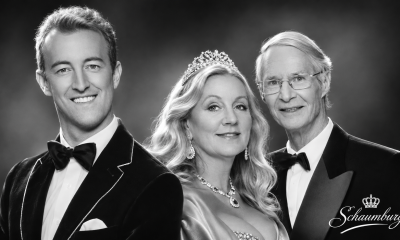
Prince Mario-Max zu Schaumburg-Lippe & His Royal Family Wish America A Happy Thanksgiving!
-

 Entertainment2 days ago
Live From The Hotel Edison Times Square Chronicles Presents Actor Performer and New Composer Oliver Richman