
News
Those We Lost in 2023


December
Michael Blakemore on the West End, directed Noël Coward’s Design for Living starring Vanessa Redgrave, David Hare’s Knuckle, and Arthur Miller’s The Ride Down Mt. Morgan, before turning his sights on New York, making a notable Broadway splash throughout the 1990’s as the director of City of Angels, Peter Shaffer’s Lettice and Lovage starring Maggie Smith and Margaret Tyzack, The Life, and, finally, the 1999 revival of Kiss Me, Kate.
Andre Braugher, known for his roles on acclaimed crime series such as Homicide: Life on the Street and Brooklyn Nine-Nine, died after a recent illness.
Vinie Burrows made her Broadway debut in 1950 in The Wisteria Trees. Her Broadway credits include The Skin of Our Teeth, The Green Pastures, Mrs. Patterson, The Ponder Heart, and Mandingo. Her 1968 Off-Broadway production of Walk Together Children became the longest-running Off-Broadway one woman show at the time. She was also an activist for Civil Rights and women’s rights, serving as a United Nations NGO.
Anna “Chickadee” Cardwell, the oldest daughter of reality TV star Mama June Shannon, died at age 29.
Dancer, choreographer and actor Maurice Hines died on Friday at 80 years old. The Broadway star often appeared alongside his younger brother Gregory Hines during the first part of his career. The siblings most famously co-starred in the 1984 Francis Ford Coppola movie, Cotton Club. He made his debut in 1954 in the musical The Girl in Pink Tights, and went on to star in productions of Guys and Dolls, Eubie! and Uptown…It’s Hot!, for which he won a Tony Award nomination for best actor in a musical.Hines was also an in-demand choreographer and director. His credits include the national tour of the Louis Armstrong musical biography Satchmo, and the Earth Wind and Fire musical Hot Feet, which he conceived, choreographed and directed in 2006.
Lee Sun-kyun, starred in the 2019 Oscar-winning film Parasite, died at age 48.
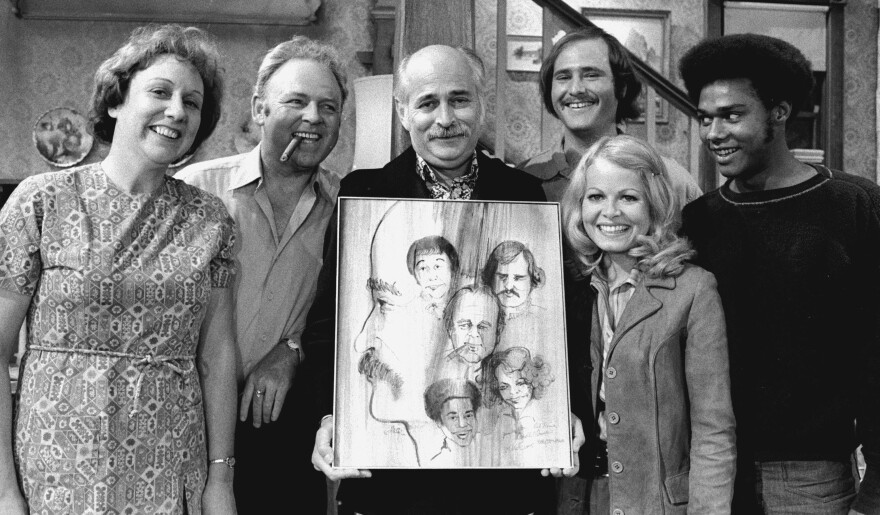 Norman Lear — the award-winning American television writer, film producer and activist best known for creating All in the Family — died at the age of 101.
Raised in the heart of Zululand during Apartheid, Mbonegeni Ngema was the creative mind behind the musical Sarafina!, Coming to Broadway in 1988, Mr. Ngema directed and wrote the book for the musical and co-wrote the music and lyrics with Hugh Masekela.
 Ryan O’Neal, the iconic actor who was Oscar-nominated for his role in the 1970 romance Love Story, died at age 82.
Tom Smothers, one half of the Smothers Brothers comedy duo, died at age 86 from cancer.
November
Rosalynn Carter, a lifelong advocate for mental health and human rights, died at 96.
Shelia Smith made her Broadway debut in 1963’s Hot Spot opposite Judy Holliday. As of 2023, Ms. Smith was one of the few performers left from the original Broadway production of Mame, where she served as the standby for both Angela Lansbury as Mame and Bea Arthur as Vera. For her efforts, Ms. Smith was awarded the Theater World Award. And at various periods in 1967, Ms. Smith took over for both Lansbury and Arthur to great acclaim.
 Frances Sternhagen, appeared on Broadway in 26 plays and musicals including The Carefree Tree, Viva Madison Avenue!, Great Day in the Morning, The Right Honourable Gentleman, You Know I Can’t Hear You When the Water’s Running, The Cocktail Party, and Cock-a-Doodle Dandy. The award-winning actress best known for her roles on Cheers and Sex and the City, died at age 93.
October
Haydn Gwynne starred in Tom Bolton’s Hedda Gabler, Richard Cheshire’s Way of the World, played Billie Burke in the West End production of Ziegfeld, and starred in the original West End company of City of Angels. But it was Billy Elliot the Musical that would immortalize her for a generation. For her efforts in the West End production, she was nominated for an Olivier award. And for her reprisal of the role on Broadway, she received the Outer Critics Circle award, the Theatre World award, and the Drama Desk award, in addition to a Tony nomination.
Steven Lutvak was a singer-songwriter, who performed across the country, including successful New York engagements at Carnegie Hall. From this solo material, Mr. Lutvak released two albums, The Time It Takeand Ahead of My Heart, all the while continuing to pursue his collaborative musical theatre dreams. Mr. Lutvak made his Broadway debut with A Gentleman’s Guide to Love and Murder in 2014, for which he supplied the music, and co-wrote the lyrics with Robert L. Freedman. The musical won the Drama League, Outer Critics Circle, Drama Desk and Tony Awards for Best Musical.
Joanna Merlin began her career as an actor. She appeared in Cecil B. DeMille’s 1956 remake of The Ten Commandments as Jethro’s Daughter before making her Broadway debut in Becket. Her most notable stage role would come in 1964, when she created the role of Tevye’s eldest daughter Tzeitel in the original company of Fiddler on the Roof. As a casting director, she cast Hal Prince’s entire string of 1970s landmark Stephen Sondheim musicals, including Company, Follies, A Little Night Music, Pacific Overtures, Sweeney Todd, and Merrily We Roll Along.
Richard Moll, the actor best known for his role on Night Court, died at age 80.
 Matthew Perry was best known for playing Chandler Bing on Friends, died in his 50’s.
 Suzanne Somers, best known for her roles on Three’s Company and Step by Step, died at age 76.
September

Jimmy Buffet
Jimmy Buffett, the musician and mogul whose easy-breezy hit “Margaritaville” became a way of life for legions of devoted Parrotheads, died at age 76.
Sir Michael Gambon, the Irish-born British actor of the stage and screen known for playing Dumbledore in the Harry Potter films died at age 82. He had 13 Olivier nominations, bringing home the top prize in 1985 for A Chorus of Disapproval, in 1987 for A View From the Bridge, and in 1990 for Man of the Moment. Mr. Gambon made his Broadway debut in Michael Hare’s Skylight, receiving a Tony nomination for his efforts.
David McCallum, who was best known for playing Dr. Donald “Ducky” Mallard on NCIS. He was 90 years old.

Michael McGrath
Michael McGrath was a prolific comedic character actor, appearing in 14 shows with a career that spanned more than three decades. He made his Broadway debut in the ensemble of My Favorite Year in 1992, and went on to appear in The Goodbye Girl, Swinging On a Star, Little Me, Wonderful Town, Spamalot, Is He Dead?, Memphis, Born Yesterday, Nice Work if You Can Get It, On the Twentieth Century, She Loves Me, Tootsie, and, most recently, Plaza Suite.
Retired NFL wide receiver Mike Williams died after suffering what his family described as “massive” head injury at a construction. He was 36.
August
Bob Barker, the legendary host of The Price Is Right, died at age 99.
Walter Charles made his Broadway debut in the original production of Grease, as the replacement for the character Vince Fontaine. He next opened 1600 Pennsylvania Avenue in the original cast. His career flourished throughout the following decade, where he appeared in the original casts of beloved and history-making Broadway musicals like Sweeney Todd, Cats, and La Cage Aux Folles.
Tina Howe wrote 14 full-length plays, including Closing Time, The Nest, Birth and After Birth, Museum, The Art of Dining, Painting Churches, Coastal Disturbances, Approaching Zanzibar, One Shoe Off, East of the Sun and West of the Moon, Pride’s Crossing, Rembrandt’s Gift, Chasing Manet, and Cheri. Both Painting Churches and Pride’s Crossing were finalists for the Pulitzer Prize for Drama, with Coastal Disturbances netting a Tony nomination.

Ron Cephas Jones
Award-winning actor Ron Cephas Jones was well-known for his role on This Is Us, died at age 66.
Tom Jones was a legendary lyricist and librettist who, with the late composer Harvey Schmidt, created the longest-running musical in theatre history: The Fantasticks. The musical ran until January 13, 2002, playing 17,162 performances—the longest continuous run of any show in American history, and the longest continuous run of any musical in the world.
Chris Peluso, an actor and singer known for his theater work including Mamma Mia! on Broadway, died at 40.
Robbie Robertson, one of rock’s greatest storytellers and The Band’s guitarist and primary songwriter, died at age 80.
July
 The music legend, Tony Bennett, had been quietly living with Alzheimer’s disease since 2016, died at age 96.
 Pamela Blair made her Broadway debut at the age of 19 in the ensemble of Promises, Promises, which would turn out to be the first of many associations with choreographer Michael Bennett. She was also the original Val in the Tony-winning musical A Chorus Line.
Jane Birkin, known for her song “Je T’Aime… Moi Non Plus,” died at age 76.
Jeffrey Carlson, who played the groundbreaking transgender character Zoe in All My Children, died at age 48. On the Broadway stage, he starred in Edward Albee’s The Goat or Who is Sylvia?, a revival of Molière’s Tartuffe, and in Boy George’s Broadway musical Taboo.
Bill Cunningham, the original voice of Barbie’s boyfriend Ken for Mattel during the early 1960s. The singer-turned-talent agency founder died at age 96.
Elise Finch, a longtime and Emmy-winning meteorologist for CBS New York affiliate WCBS-TV, died at age 51.
Ellen Fitzhugh was best known for her work as lyricist for the Broadway musical Grind, which earned her a Tony nomination for Best Original Score and a Drama Desk nomination for Best Lyrics, both in 1985. Her additional stage work includes Paradise Found with Richard Nelson co-directed by Harold Prince and Susan Stroman; Herringbone with Tom Cone and Skip Kennon; Muscle with Lapine and William Finn; book and lyrics to Los Otros and The Nine Fathers of Ariel with Michael John LaChiusa. Her most recent musical was Los Otros, written with LaChiusa, which played Off-Broadway in 2022.
Bo Goldman, a two-time Oscar-winning screenwriter best known for co-writing One Flew Over the Cuckoo’s Nest, died at age 90.
Carlin Glynn was the Tony-winning star of Broadway’s The Best Little Whorehouse in Texas, and the mother of stage and screen star Mary Stuart Masterson. Whorehouse came along shortly after Glynn made her big screen debut as Mae Barber in Three Days of the Condor in 1975. She also made memorable appearances in Sixteen Candles and The Trip to Bountiful.
Sinéad O’Connor, the Irish singer whose legacy with hits like “Nothing Compares 2 U” was complicated by her outspoken dedication to various social issues and a series of mental health struggles, died at age 56.
 Paul Reubens, the actor, best known for playing Pee-wee Herman, died at age 70.
June
Alan Arkin, the Oscar-winning actor died at age 89.
John Deyle was in the original Broadway production of Annie, the 1980 revival of Camelot, the original Broadway company of Footloose, and Urinetown. On tour, Mr. Deyle played Bert Bratt in the 1996 production of How to Succeed in Business Without Really Trying, and he appeared in three different tours of Camelot in various roles, including Forest Merlyn.
Astrud Gilberto, the singer who made “The Girl from Ipanema” a global hit, died at the age of 83.
 Sheldon Harnick, alongside composer Jerry Bock, forged one of Broadway’s most successful composing teams, responsible for such classics as Fiddler on the Roof and She Loves Me. Mr. Harnick and Mr. Bock were nominated for Tony Awards for Fiddler on the Roof and She Loves Me, as well as Fiorello!, a musical about New York City Mayor Fiorello LaGuardia; The Apple Tree, a triptych of short musicals about the complicated relationship between man and woman; and The Rothschilds, about the famed Jewish family of financiers. They won for Fiorello! and Fiddler. Other works included Portofino and Tenderloin.
Jim Hines, the U.S. Olympian known for being the first man to run the 100m race in 10 seconds, died at the age of 76.
Cynthia Weil trained as an actress and singer before turning to songwriting, where she was a protégé of Frank Loesser. In the summer of 1961, Ms. Weill married Barry Mann, a fellow songwriter, cementing an artistic collaboration that would become one of the most influential in the mid-century era of rock and pop music in the United States. Of the duo’s many successful songs, some of their most popular included “On Broadway,” “Walking in the Rain,” “You’ve Lost That Lovin’ Feelin’,” “We Gotta Get out of This Place,” “(You’re My) Soul and Inspiration,” “Make Your Own Kind of Music,” and “Here You Come Again.”
Paxton Whitehead was an actor, writer, and dramaturg, Mr. Whitehead worked on nearly 20 Broadway productions, ranging from George Bernard Shaw’s Candida to Theresa Rebeck’s Bernhardt/Hamlet in 2018. In 1980, Mr. Whitehead obtained both a Tony and Drama Desk nomination for his performance as Pellinore opposite Richard Burton in Camelot.

Kevin Kline, Treat Williams in Pirates of Penzance
Treat Williams, made his Broadway debut as a replacement Danny Zuko in the original run of Grease, which was shortly followed by his film debut in the thriller Deadly Hero, opposite James Earl Jones. He maintained careers both on screen and the stage, playing Michael Brick in the film adaptation of Terrence McNally’s The Ritz, Jerry Hyland in a rare Broadway revival of Kaufman and Hart’s Once in a Lifetime, and Berger in the film adaptation of the culture-defining musical Hair. He was the star of Everwood and Hair, died after being involved in a motorcycle accident. He was 71.
May
Barbara Bryne was a regular fixture of Ontario’s Stratford Shakespeare Festival and Minneapolis, Minnesota’s Guthrie Theater, performing in a wide range of Shakespearean productions, including starring roles in King Lear, Richard III, A Midsummer Night’s Dream, and more. On Broadway, she was George’s mother in Sunday in the Park with George, and Jack’s Mother in Into The Woods.
Olympic track and field champion Tori Bowie died at age 32.
NFL legend Jim Brown, best known for playing on the Cleveland Browns, died at age 87.

Glenda Jackson
Glenda Jackson was a Tony, Oscar, Emmy, and BAFTA winner. She originated the role of Charlotte Corday in Marat/Sade, appeared on Broadway in the plays Rose, Strange Interlude, and Macbeth. She also became a Member of Parliament.
Laura Pels gave so much to the International Foundation for Theatre, with which Ms. Pels formed the goal of nurturing “serious theatre”. She prioritized finding plays that supported classic theatre, advanced the work of great playwrights, and made theatre more accessible to the general public.
Joaquin Romaguera made his Broadway debut as Pirelli, in Sweeney Todd. Mr. Romaguera was a member of the New York City Opera company, where he created roles in several NYCO world premieres, including The Dead Man in Hugo Weisgall’s Nine Rivers from Jordan, and Professor Risselberg in Gian Carlo Menotti’s The Most Important Man.
Jacklyn Zeman, best known for her role as Bobbie Spencer on General Hospital, died at age 70.
 Tina Turner the legendary singer, known as the Queen of Rock ‘n’ Roll, died after a long illness at her home.
April
 Harry Belafonte was a cultural icon and civil rights activist starring and composing for his Broadway debut in John Murray Anderson’s Almanac, for which he received both a Theatre World Award and 1954’s Tony Award for Best Featured Actor in a Musical. That same year, Mr. Belafonte starred in the film adaptation of Oscar Hammerstein II’s Carmen Jones, opposite Dorothy Dandridge.
Todd Haimes was the longtime artistic director and guiding light of Roundabout Theatre Company, leading the company for 39 years. His tireless work transformed Roundabout from a 150-seat Off-Broadway company into one of the largest not-for-profit theatres in the United States.
Barry Humphries career spanned over seven-decades. He created the roles of “Dame Edna Everage,” “Sir Les Patterson,” “Sandy Stone,” “Barry McKenzie,” and many more. His characters largely served as social commentary on Australian culture.
 Jerry Springer lead an eclectic life which brought him to the Broadway boards twice, as the slippery lawyer Billy Flynn in Chicago, and the Narrator in The Rocky Horror Show. His self-titled tabloid talk show was considered sensationalism, atits best.
Don Sebesky was a legend in the music arena. He was nominated for an eye-popping 31 Grammys throughout his career, winning three. For his television work, he received three Emmy nominations, and he was nominated four times for Best Orchestrations at the Tony Awards, winning twice for his work on Kiss Me, Kate and An American in Paris.
March
Lance Reddick known for The Wire died at the age of 60.

Liam Neeson, Tom Sizemore, Bruce Greenwood, Michael C. Hall, Brian d’Arcy James, Josh Lucas,
Tom Sizemore, best known for his roles in military action dramas Saving Private Ryan and Black Hawk Down.
Chaim Topol, the Israeli actor behind the iconic portrayal of Tevye in Fiddler On the Roof died at age 87.
February

Burt Bacharach
Burt Bacharach, the legendary songwriter behind hits like “Walk on By,” “Do You Know the Way to San Jose” and “I Say a Little Prayer,” died at 94.
Richard Belzer, the actor, comedian and author known for starring in Law & Order: Special Victims Unit, died at age 78.
Acclaimed film director Hugh Hudson, best known for directing the Oscar-winning film Chariots of Fire, died at the age of 86.
Eugene Lee was four-times Tony nominated, winning thrice for his work on Candide, Sweeney Todd, and Wicked, with his designs for the musical Ragtime netting his fourth nomination.
Golden Globe-winning actress Stella Stevens died at the age of 84.
 Raquel Welch died at age 82.
January
Guitarist Jeff Beck, who rose to fame in the English rock band The Yardbirds, died on at age 78.
The Wire actor Al Brown died at age 83.
Actress Carole Cook, was a protégé of Lucille Ball, assuming the role of Dolly Levi from Carol Channing; she was the first to play the title role in the musical Hello, Dolly! after Ms. Channing. Additionally, she originated the role of Maggie Jones in 42nd Street, and was a fierce advocate for AIDS research and support for those affected by the disease. She was well-known for her role in Sixteen Candles, a died a few days before her 99th birthday.
David Crosby, a founding member of bands Byrds and Crosby, Stills & Nash, died at age 81.
Melinda Dillion was Tony-nominated for her portrayal of Honey in Edward Albee’s classic play Who’s Afraid of Virginia Woolf?, made her Broadway debut in the play at 23, leading to a vibrant Broadway career that included starring roles in You Know I Can’t Hear You When The Water’s Running, A Way of Life, Paul Sills’ Story Theatre, and Ovid’s Metamorphoses.
American Idol alum C.J. Harris, who placed sixth on the show’s 13th season in 2014, died at age 31.
Bernard Kalb — a celebrated journalist who reported for NBC, CBS, CNN and The New York Times— died at the age of 100.

Beth Howland and Charles Kimbrough
Charles Kimbrough was a Tony nominee, known for starring in TV’s Murphy Brown and his appearances in the original Broadway productions of Stephen Sondheim’s Company and Sunday in the Park with George. On screen, Mr. Kimbrough was Chef Boyardee in a series of commercials for the canned spaghetti and meatball product, and the voice of mature gargoyle Victor in Disney’s The Hunchback of Notre Dame.
Lisa Loring, the actress who played Wednesday Addams on the original 1960s TV adaptation of The Addams Family, died at age 64.
Ben Masters The Passions actor died from COVID-19 complications at 75.
 After she was rushed to the hospital for a possible cardiac arrest earlier that morning, Lisa Marie Presley died at age 54.
Adam Rich, the former child star who played Nicholas Bradford in ABC’s Eight Is Enough, died at age 54.
Annie Wersching, known for her roles in 24, Star Trek: Picard, Bosch and Timeless, died at the age of 45.
Earth, Wind and Fire’s Fred White had died at the age of 67.
Cindy Williams, best known for her portrayal of the character Shirley Feeney on the sitcom Laverne & Shirley, died at age 75.


Black Friday brought a spending increase that retailers would normally welcome, but the activity did not move evenly across their businesses. U.S. shoppers spent $13.1 billion online, an increase of 11% from a year earlier. Meanwhile, measured visits to physical stores fell 2.2%. Customers were still willing to buy, even as fewer visits were recorded at store entrances. For retailers planning staffing, inventory, and holiday promotions, that difference matters almost as much as the sales total.
The figures need to be read carefully because online spending and store traffic measure different things. A decline in visits does not automatically mean that store sales declined, since customers who entered could have spent more per purchase. Higher online revenue also does not establish how many additional products were sold or how much profit retailers kept. These results describe one major shopping day, rather than proving a permanent change in customer behavior. They do, however, give businesses a reason to examine whether their operating plans match where purchases are happening.
What customers bought adds another layer to the story. Electronics and gaming products performed strongly, but shoppers also used promotions to buy cleaning supplies, pet care products, and personal hygiene items. Some of that spending was therefore going toward ordinary household needs alongside holiday gifts and entertainment. A retailer can attract substantial sales by offering a compelling discount on something customers already intended to purchase. The harder question is whether that promotion creates additional profitable business or simply brings a future purchase forward at a lower price.
Physical stores still have several ways to contribute when the transaction begins online. A customer might check local availability, collect an order, exchange a purchase, or ask an employee for help before deciding. Those activities require inventory accuracy, accessible merchandise, and employees who can handle several kinds of work. Cutting staffing solely because fewer people pass through the entrance could create delays elsewhere in the operation. Retailers need to understand what their locations are doing for customers before deciding how much labor or space those locations need.
Online growth brings its own expenses, which can be easy to overlook beside a record spending figure. Someone still has to locate the product, pack it, arrange delivery, and deal with any return. Discounts, advertising, packaging, and shipping can reduce the amount a business keeps from each order. A store purchase and a delivered purchase of the same item may therefore produce different financial results. Moving more sales online helps most when the retailer can fulfill those purchases efficiently and give customers a reason to return without another expensive promotion.
The useful response is to connect the sales report to the work happening behind it. Retailers should compare purchases, pickup demand, fulfillment costs, and profit across their stores and websites before making major operating changes. One location may need more employees preparing orders, while another benefits from knowledgeable staff helping customers choose higher-value products. The right investment depends on how each part of the business contributes to a completed, profitable purchase. Black Friday’s results make that allocation more pressing: the money and the foot traffic are no longer moving in the same direction.

Los Angeles Unified has temporarily disabled Google’s AI-generated search summaries on school-issued devices, bringing a dispute over classroom technology into sharper focus. The district, which serves roughly half a million students, says it suspended the feature to keep student experiences appropriate and safe. Its decision follows restrictions on generative AI while educators develop policies for its use. Google, meanwhile, maintains that AI is integrated into its search product. The disagreement raises a practical question: can schools keep a familiar research tool while rejecting the automated answers now built into it?
The restriction concerns AI Overviews, the summaries that appear alongside conventional search results. Los Angeles had already disabled Google’s conversational AI Mode on student devices earlier in the school year. These measures do not amount to abandoning every Google product or establishing that students have already lost all search access. Google has said schools rejecting AI would lose access to its search service under its approach to student accounts. The district’s workaround and the company’s product policy therefore remain separate parts of an unresolved dispute.
Google has announced changes that it says will give school administrators greater control. Access to Search and several AI products will be switched off for school student accounts until administrators explicitly enable them, with further rollout details to follow. The company is also introducing Guided Learning features designed to help students work through problems using prompts and explanations. Its stated aim is to support learning while addressing concerns about students taking shortcuts. Those changes still leave schools asking whether they can choose conventional search without accepting the AI features attached to it.
That question matters commercially because Google’s relationship with schools extends well beyond the search box. Chromebooks, Classroom, Docs and other services are embedded in daily routines involving assignments, communication and student work. Reconsidering one product can therefore involve a much larger technology arrangement. For a supplier, that integration can make its services convenient and difficult to replace. It can also create friction when customers believe a product change interferes with the way they need to operate.
Los Angeles officials have indicated that alternatives remain available, including changing the default search engine. Such a change could be simpler than replacing an entire classroom technology system, although schools would still need to evaluate the replacement. Educators must consider student access, privacy, teaching requirements and the work involved in supporting another service. Google must decide how far to adapt a product it increasingly defines around AI. Each side has reasons to maintain the relationship, but they disagree about which choices that relationship should preserve.
The dispute shows how adding AI can change the terms of an established customer relationship. A school choosing a search service years ago may have been buying access to information, with teachers deciding how students should use it. Automated summaries introduce another layer between the student and the material being researched. Whether that layer supports a lesson depends partly on the task, the student and the teacher’s approach. Google’s challenge is to make its AI useful enough for schools to choose while addressing the concerns of customers asking for a way to switch it off.

The weather has disrupted one of America’s most dependable holiday traditions, and the consequences reach beyond disappointed spectators. Macy’s postponed its 100th Thanksgiving Day Parade until Saturday, November 28, with an 8:30 a.m. Eastern start, because of the severe weather forecast for New York. Powerful winds and rain made Thursday’s planned celebration unsafe for participants and crowds along the route. It is the first postponement in the parade’s history. For businesses preparing around the event, the announcement turns a familiar holiday schedule into a last-minute operational problem.
Moving the parade involves far more than changing the date on an advertisement. Performers, marching bands, production crews and city services all have schedules that must be reconciled. Some Broadway performers and the University of Connecticut’s marching band confirmed they could participate Saturday. The University of Alabama’s band, however, is returning home for a football game. That scheduling conflict illustrates the difficulty facing any event organizer: availability on the original date does not guarantee availability two days later.
Nearby businesses face their own version of that problem. A café expecting early Thursday crowds may already have ordered food and scheduled employees around the anticipated rush. A hotel guest who booked specifically for the parade may have a Friday flight home and little flexibility to extend the visit. Those are potential consequences of the change, rather than confirmed losses across the city. The financial effect will depend on which visitors stay, which arrive for Saturday and how businesses adjust their staffing and stock.
The new date also places the parade on the Saturday immediately after Black Friday, changing its position within an already busy shopping weekend. That could bring additional visitors to stores and restaurants near the route, particularly people who were not in New York on Thanksgiving morning. It could also complicate deliveries, employee travel and access for customers with other plans. A business that benefits from the original parade crowds might encounter a different mix of customers on Saturday. Moving an event can redistribute spending between days and locations without reproducing the original commercial opportunity.
For Macy’s, the disruption also affects a major piece of holiday marketing. The parade puts the retailer’s name in front of an audience far beyond the people gathered in Manhattan. NBC is airing the 2025 parade on Thanksgiving morning, while the rescheduled celebration will air Saturday on NBC and stream on Peacock. That preserves a broadcast opportunity, although Saturday’s audience will be watching under different circumstances from the traditional Thanksgiving morning gathering. Any effect on viewing figures or shopping behavior remains to be seen.
The immediate task for businesses is to rebuild their plans around the revised schedule. That can mean updating reservations, contacting customers, checking supplier arrangements and deciding how to cover Saturday without wasting preparations made for Thursday. The safety decision protects the people who make the event possible, while still leaving practical costs and scheduling problems to resolve. Saturday gives the parade another opportunity to deliver its celebration and bring visitors into the city. It cannot guarantee that every booking, work shift or expected sale will move neatly with it.

Amtrak carried more passengers than ever during its latest fiscal year, but the financial result still included an operating loss. The railroad reported 37.1 million customer trips for the year ended September 30, an increase of 7.4%. Operating revenue reached $4.1 billion, while its adjusted operating loss narrowed to $492.7 million, an improvement of almost 19%. These preliminary, unaudited results show a business attracting more demand and improving its finances. They also demonstrate why record customer numbers and profitability remain separate achievements.
The revenue figures help explain that distinction. Total operating revenue increased 4.9% and included payments from state partners supporting certain routes. Gross ticket revenue reached $3 billion, rising 1% from the previous year. Customer trips therefore grew faster than either measure of revenue. That does not establish the reason for the difference, but it does show why passenger growth alone cannot explain the financial performance.
For a railroad, carrying additional passengers can make better use of an expensive service already operating. A train needs equipment, staff, maintenance and access to tracks whether every seat is occupied or some remain empty. Selling another seat can help spread those costs across more customers. Expanding capacity, however, may require additional departures, equipment and employees, creating new expenses alongside the revenue opportunity. The financial benefit depends on where demand appears and what serving it requires.
Amtrak is also investing heavily in the system that supports future travel. It reported more than $5 billion in capital investment for the second consecutive year, covering infrastructure, stations, maintenance facilities and other projects. Capital investment and adjusted operating earnings measure different things, so that spending should not simply be treated as the explanation for the reported operating loss. New trains and infrastructure improvements can support reliability and capacity over many years. Their business value depends on whether those improvements deliver a better service at a sustainable cost.
Amtrak’s national transportation role also makes its results more complicated than those of a conventional private business. It connects communities through services supported by a combination of customer revenue and public funding. A network-wide passenger record does not reveal the financial performance of every route or the wider value of the connections provided. Evaluating its progress requires attention to service quality, reliability, costs and the funding needed to maintain the network. The smaller adjusted operating loss is evidence of improvement, while the remaining gap shows that stronger demand has not yet produced an operating surplus on that measure.
For business owners, the useful lesson is to look beyond the activity that makes a company appear successful. More appointments, orders or customers can improve results, but only when the revenue and cost of serving them work together. Owners need to understand what each additional sale contributes and when growth requires another increase in capacity. Amtrak’s results show both sides of that calculation: record demand and a meaningful financial improvement, alongside a continuing loss. Growth becomes more useful when management can explain how it moves the business toward covering its costs.
Business
AI Shopping Agents Are Now Buying From Business Websites, and Bot Rules Could Cost You Holiday Sales


A new report from Cequence Security shows that artificial intelligence agents have moved from browsing business websites to acting on them. The company’s first Agentic AI Security Index, released Monday, found that the share of AI agent visits that signed in, booked, bought or managed an account rose from 1.4 percent to 13 percent between May 16 and November 15, 2026. Visits that only read or browsed fell 73 percent over the same period.
The holiday numbers are the ones to watch. At the retailers Cequence tracked, the share of agent visits that ended in a purchase rose from 0.2 percent to 3.0 percent during early holiday deals. Cequence also reported that Meta’s Muse agent accounted for 40 percent of the agent visits that went beyond browsing in its first 30 days.
There is a security side to this. Traffic from bots pretending to be AI agents while probing for secrets grew 2,600 percent, and nearly two in three of those visits posed as Perplexity agents. Real shopping agents and fake ones now look similar at the login page, and that is where the business risk sits.
Here is the problem for owners. Many companies will respond to the spike in impersonation by tightening bot rules. A rule built to stop a fake agent can also block a legitimate agent trying to complete a customer’s order. In most organizations the security team writes those rules, and the marketing or sales team finds out later from the conversion report. A simple example shows the stakes. A retailer that sees 400,000 agent visits over Black Friday through Cyber Monday and converts 3 percent would see about 12,000 orders. If new rules challenge a quarter of those agent sessions, roughly 3,000 orders disappear. That is an illustration, not a figure from the report.
This fits a wider pattern from the past two weeks. OpenAI launched Businesses in ChatGPT, which lets companies claim a profile and set up an agent to answer shopper questions, and it added ChatGPT Wallet, which lets agents complete purchases once a user approves them. Customers are starting to send software to do the shopping, calling and booking for them.
A few cautions apply. Cequence drew its data from the websites and apps it protects across six industries and did not publish a total visit count, so the percentages describe its own customer base and not the whole internet. The 3.0 percent purchase rate also comes from early holiday deals and may not hold for every business.
What businesses should do this week is practical. Have the person who runs your website or online sales sit down with whoever manages security or your hosting provider before Black Friday on November 27. Decide which verified AI agents are allowed to sign in and check out, and check agent traffic and agent orders daily through Cyber Monday. Service businesses that take bookings or answer customer questions online should ask the same thing about their own forms and scheduling pages. The goal is to keep the fake agents out without turning away the real ones that are ready to pay.


December Events 2026: New York City Dressed in Holiday Splendor

Cabaret and Talks For December

Countdown to Christmas: 27 Days to Go — The Gift of Gorgeous Skin

Black Friday Spending Rose Online. Store Visits Went the Other Way.

From Macy’s Holiday Magic to Black Tap’s Gourmet Indulgence: A New York Experience

December 2026 Astrology: Between What We Believe and What We Build

Countdown to Christmas: 28 Days to Go — The Gift of a Fabulous Lip

Prince Mario-Max Schaumburg-Lippe: Macaulay Culkin Is Back And We Got The Exclusive Scenes Tour For You!
December Events 2026: New York City Dressed in Holiday Splendor
Cabaret and Talks For December
Countdown to Christmas: 27 Days to Go — The Gift of Gorgeous Skin
Black Friday Spending Rose Online. Store Visits Went the Other Way.
From Macy’s Holiday Magic to Black Tap’s Gourmet Indulgence: A New York Experience
December 2026 Astrology: Between What We Believe and What We Build
Countdown to Christmas: 28 Days to Go — The Gift of a Fabulous Lip
Prince Mario-Max Schaumburg-Lippe: Macaulay Culkin Is Back And We Got The Exclusive Scenes Tour For You!
-
 Events4 days ago
Thanksgiving Day Playlist
-
 Events4 days ago
Happy Thanksgiving From T2C
-
 Events5 days ago
Count Down To Thanksgiving: Bourbon Pecan Pie With Or Without Chocolate
-

 Broadway5 days ago
The Fantasticks: Broadway Discovers a Whole New Kind of Magic
-

 Business5 days ago
AI Shopping Agents Are Now Buying From Business Websites, and Bot Rules Could Cost You Holiday Sales
-

 Broadway4 days ago
Macy’s Historic 100th Thanksgiving Day Parade Postponed: Exclusive Rehearsal Photos and Can Broadway Still Deliver?
-
 Entertainment4 days ago
Prince Mario-Max zu Schaumburg-Lippe & His Royal Family Wish America A Happy Thanksgiving!
-

 Entertainment3 days ago
Live From The Hotel Edison Times Square Chronicles Presents Actor Performer and New Composer Oliver Richman