
Theatre
Last Chance To Join Echoes Writers Group


Entertainment
Live From The Hotel Edison Times Square Chronicles Presents Actor Performer and New Composer Oliver Richman

Welcome to Live From the Hotel Edison, where we celebrate the extraordinary talent that makes New York City one of the most exciting cultural capitals in the world.
On Live From The Hotel Edison Times Square Chronicles Presents, we sat down with actor, singer, songwriter, director and emerging composer who has caught the attention of two of contemporary musical theatre’s most celebrated songwriters, Benj Pasek and Justin Paul. On Monday, November 30, Oliver Richman will take his place on the stage of the Vivian Beaumont Theater as one of the emerging composers personally selected by the Oscar, Grammy, Emmy and Tony Award-winning songwriting team to participate in Lincoln Center Theater’s inaugural The Composer Series.
Oliver Richman comes from an extraordinary artistic lineage. His grandfather, legendary Motown songwriter Ron Miller, gave us such timeless classics as “For Once in My Life,” “Touch Me in the Morning” and “Someday at Christmas.” His paternal grandfather was the accomplished actor Peter Mark Richman, and his mother is singer, songwriter and producer Lisa Dawn Miller.
At just ten years old, Oliver was personally invited by Stevie Wonder to share the stage, earning a standing ovation before an audience of more than 7,500. He went on to graduate with honors from NYU’s Tisch School of the Arts.
In January 2024, Oliver embarked on an extraordinary creative experiment: writing a song every single day. That journey has taken him to a thousand songs, an international social media following and performances at Joe’s Pub, with compositions including “The Ballad of Phil and Phyllis” and “Bunnies.”
He recently starred as Jonah in the Off-Broadway premiere of Nick Blaemire’s musical Soon, and his recording projects include Yesteryear and January.
While Oliver has inherited an extraordinary musical legacy, what excites me most is the distinctive artistic voice he is developing entirely his own. He represents a new generation of composers who are redefining how music is created, discovered and shared.
I am so grateful to Oliver Richman, for sharing his incredible talent.
 We are so proud because the show and our guests are featured on the TV screens in the lobby and the hotel rooms.
Thank-you Magda Katz for videoing and creating the content to go live, Rommel Gopez and The Hotel Edison for their kindness and hospitality, Broadway HD and Dr K and at 200 West 54th Street for giving me back my health and my smile.
We have been named by Variety Entertainment News as one of Summer’s Best Picks in the category of Best Television, Radio, Podcasts. The company we are in, has made us so humbled, grateful and motivated to continue.
“The Daily Geek Report” named host Suzanna Bowling on the list of Most Engaging Hosts.
You can catch us on the following platforms:
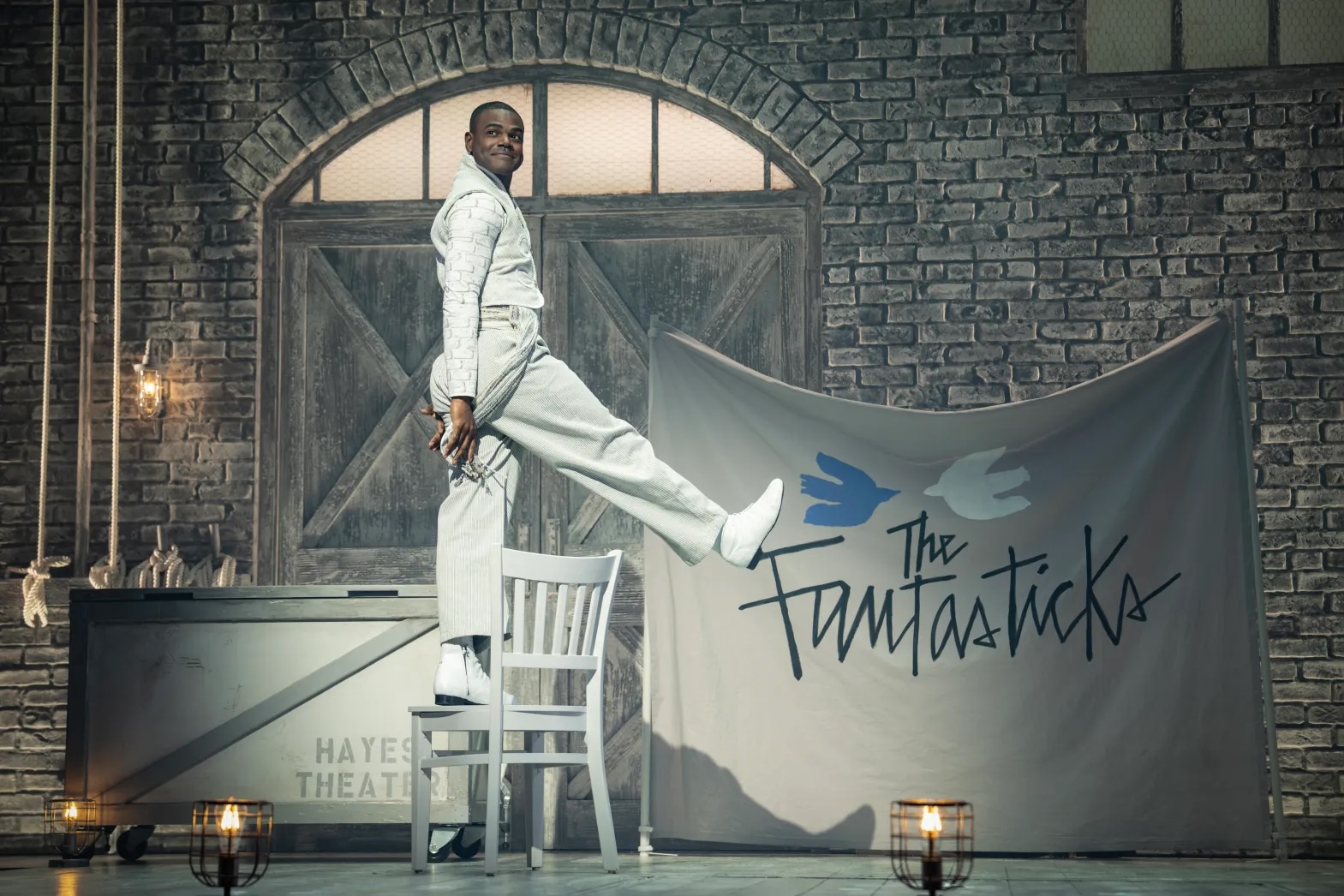
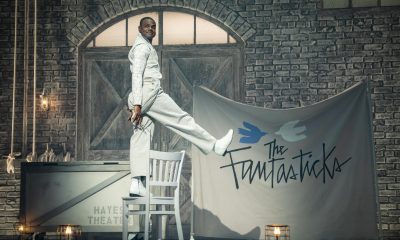
Having done Tom Jones and Harvey Schmidt’s The Fantasticks four times, I have a rather intimate relationship with this musical. Its score is extraordinarily close to my heart, and I confess I approached Second Stage Theater’s Broadway premiere with considerable trepidation. I was not convinced that a musical whose very identity was rooted in simplicity and intimacy needed reinventing. Christopher Gattelli has not only proven me wrong, but has given me an entirely new appreciation for a show I thought I knew inside and out. This production is positively magical.
When The Fantasticks opened in 1960 at the diminutive 135-seat Sullivan Street Playhouse, no one could have anticipated its extraordinary 17,162-performance run. In 2006, the musical found another home at the Jerry Orbach Theater, where it played an additional 4,390 performances. Generations of high school students, college performers and community theatre actors have discovered its charms. Its modest production requirements made it accessible, but it was the extraordinary marriage of Jones’ poetic lyrics and Schmidt’s exquisite melodies that made it immortal. Sixty-six years after its New York debut, The Fantasticks has finally arrived on Broadway at the Hayes Theater.
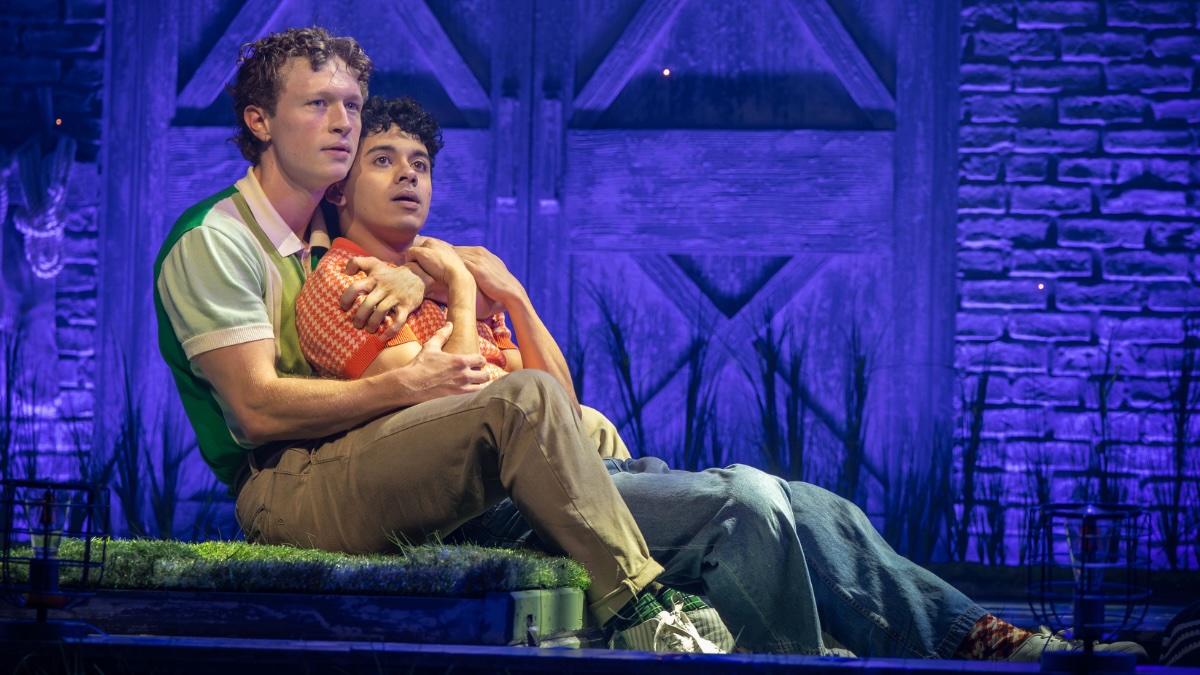
Maxim Chlumecky, Nathan Levy Photo by Joan Marcus
For this incarnation, Jones himself reconceived the musical’s central romance. Matt and Luisa have become Matt and Lewis, while their ostensibly feuding fathers have been transformed into two deliciously manipulative mothers. The premise remains intact. Two neighboring parents manufacture a feud, erect a wall between their properties and employ reverse psychology to encourage their children to fall in love. An elaborate staged abduction seals the romance, but what happens when the moonlight fades and the realities of daylight intrude is where the musical acquires its emotional depth.
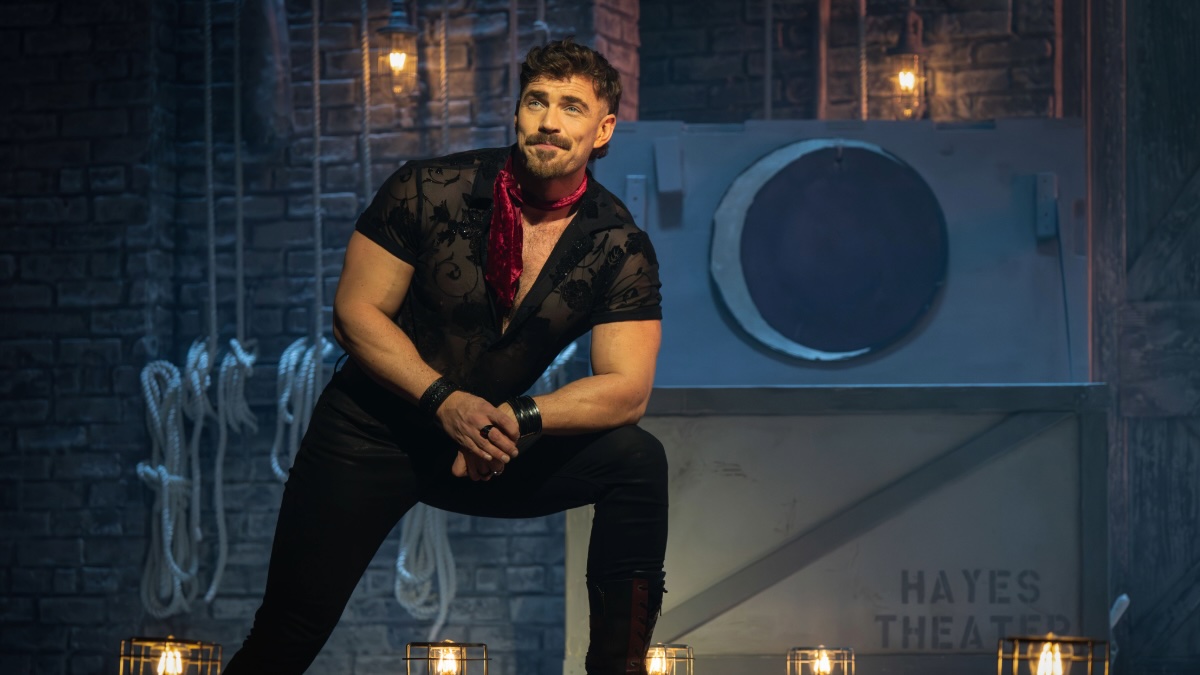
Zane Phillips Photo by Joan Marcus
What is so refreshing about this reinterpretation is that the relationship between two young men never feels imposed upon the material. The universality of first love, romantic idealism, disillusionment and ultimately reconciliation remains beautifully intact. Love is love, but this production understands that the journey from innocence to experience is considerably more complicated than that familiar declaration suggests.
Maxim Chlumecky as Matt is nothing short of brilliant. There is an endearing vulnerability to his performance, an exuberance that captures the intoxicating recklessness of youth and an emotional honesty that makes his journey particularly affecting. Nathan Levy’s Lewis is equally adorable, and together they possess the youthful charm necessary to make us invest in this improbable romance. Their delightfully giddy “Metaphor” captures the sheer absurdity of two young people discovering that ordinary language is insufficient to describe what they are feeling.
Then comes “Soon It’s Gonna Rain.” I have lived with this song for decades, performed it and heard countless interpretations, yet I will never look at it quite the same way again. Gattelli’s direction, Jason Sherwood’s scenic design and Jen Schriever’s exquisite lighting converge to create one of those rare theatrical moments when the individual elements cease to exist independently and become something transcendent. It is romantic, visually intoxicating and breathtakingly beautiful. This is what musical theatre can accomplish when music, movement, light and storytelling speak the same language.
Schmidt’s score has always possessed an extraordinary musical architecture beneath its seemingly uncomplicated melodies. Sam Davis’ lovely new orchestrations expand the musical accompaniment to eight players without sacrificing the delicacy that made the original so distinctive. Under Rick Hip-Flores’ musical direction, the score retains its intimacy while acquiring additional colors and textures. From the familiar strains of “Try to Remember” to the aching tenderness of “They Were You,” this is music that deserves to be heard and savored.
There were, however, moments when the balance between the voices and the expanded musical accompaniment needed greater attention. Whether the performers were minimally amplified or the sound design was deliberately attempting to replicate the acoustic intimacy of the original, the result was generally refreshing in an era of frequently overamplified Broadway musicals. Occasionally, however, the lyrics and vocal interplay became casualties of that approach. This was particularly apparent in “This Plum Is Too Ripe,” one of my favorite numbers in the score, where the addition of tap dancing, entertaining as it was, further obscured the vocals. Several of the duets suffered similarly. With a lyricist as clever as Tom Jones and a composer as musically inventive as Harvey Schmidt, every word and every musical counterpoint deserves to be heard.
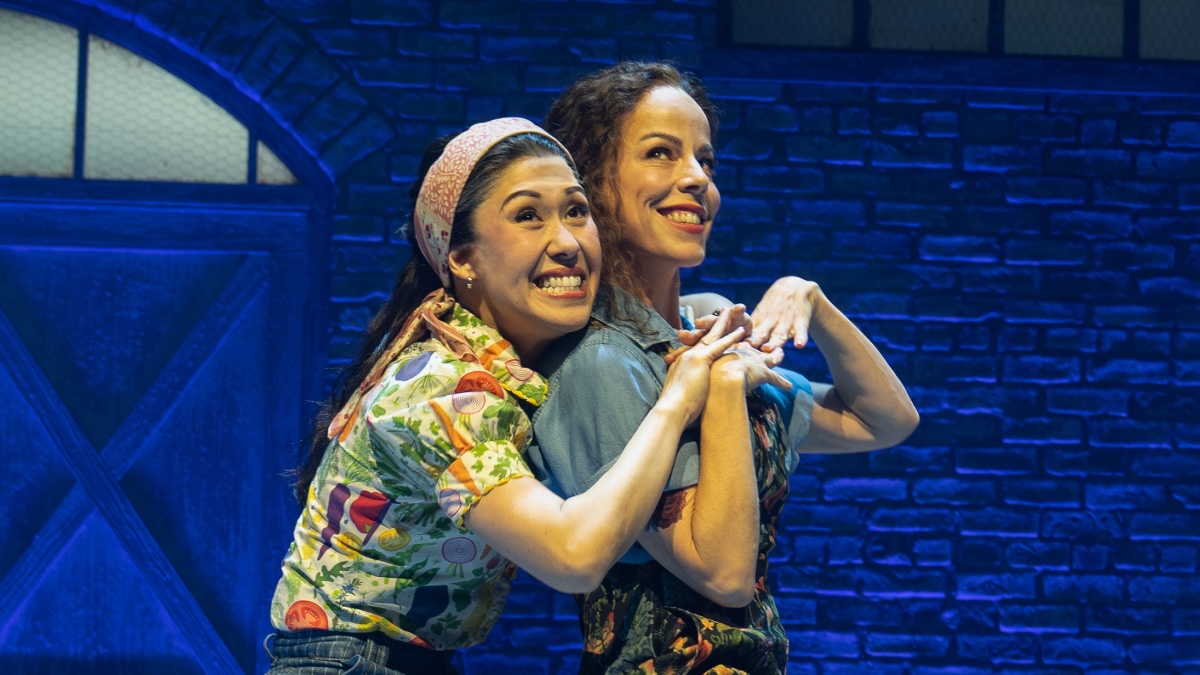
Leslie Rodriguez Kritzer, Ruthie Ann Miles Photo by Joan Marcus)
One of the greatest revelations of this production is Leslie Rodriguez Kritzer and Ruthie Ann Miles as the mothers. I have never been particularly enamored of the fathers in the original musical, nor have their musical numbers ranked among my favorites. Kritzer and Miles have completely altered that assessment. Their comic timing, musical intelligence and gloriously conspiratorial relationship nearly allow them to abscond with the entire production. “Never Say No” and “Plant a Radish” become vaudevillian gems in the hands of these two consummate performers. Who knew horticulture could be this entertaining? Jones’ deliciously inventive lyrics have found two actresses who know precisely how to exploit every comic possibility without sacrificing the musicality.
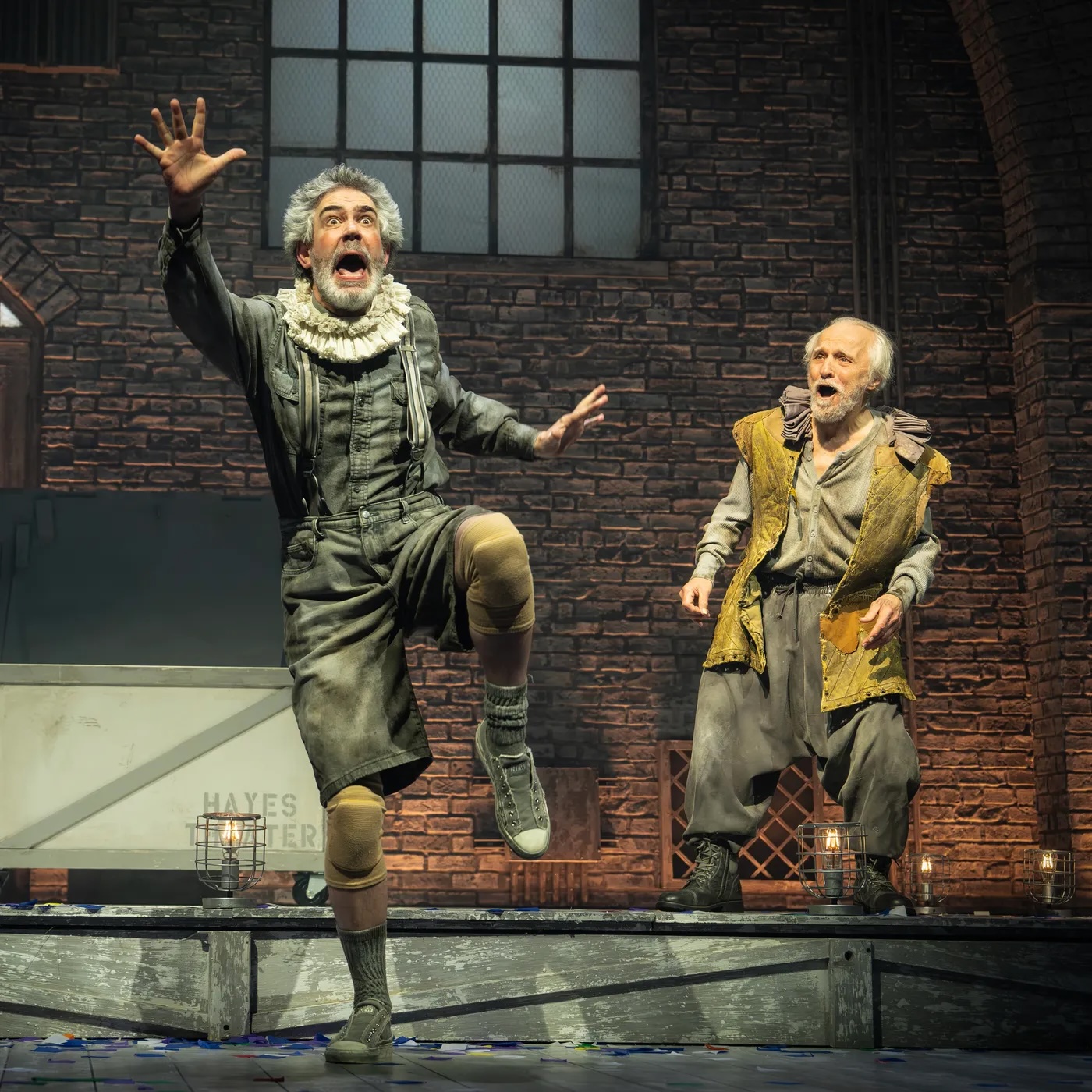
Kevin Del Aguila, David Patrick Kelly Photo: Joan Marcus
Equally delightful are David Patrick Kelly as Henry, the Old Actor, and Kevin Del Aguila as Mortimer, the Man Who Dies. Kelly is the quintessential character actor, while Del Aguila possesses the kind of comic instincts that make even the most ridiculous theatrical conceits irresistible. Together they celebrate the glorious absurdity of theatre itself.
For me, however, one of the evening’s most extraordinary performances belongs to the one character who never utters a word. Ahmad Simmons as the Mute is simply fabulous. With his expressive physicality, incandescent smile and remarkable stage presence, Simmons communicates volumes without the benefit of dialogue. His ability to command attention while remaining an integral part of the storytelling is mesmerizing. Watching him, I found myself mentally casting him as the Leading Player in Pippin. If he possesses the vocal prowess to match his extraordinary physical expressiveness, somebody needs to make that happen.
Zane Phillips, making his Broadway debut as El Gallo, initially left me less enamored. Phillips did not immediately possess the enigmatic allure I associate with this character. El Gallo requires an intriguing combination of seduction, danger, theatrical authority and worldly wisdom. Phillips gradually grew on me as the evening progressed, although his performance was the one element that did not entirely captivate me.
Gattelli’s affection for the original is evident throughout, right down to the reproduction of Harvey Schmidt’s distinctive handwritten logo. What he understands, however, is that honoring a classic does not mean preserving it under glass. Sherwood’s scenery, Schriever’s luminous transitions from moonlight to sunrise, Linda Cho’s costumes and Nevin Steinberg’s sound design create an environment in which theatrical imagination can flourish. The production expands the visual vocabulary of the musical without losing the essential simplicity of its storytelling.
Gay audiences from here to God’s half acre are going to adore this production. It is gay musical theatre heaven, unapologetically romantic, gloriously theatrical and blessed with one of the most beautiful scores in the American musical theatre canon. Its appeal, however, extends far beyond the community it so joyously embraces. Anyone who has ever fallen in love, had their illusions shattered and discovered something more meaningful on the other side will recognize themselves in this story.
After four productions and decades of loving this musical, I thought I had discovered everything The Fantasticks had to offer. Christopher Gattelli and this remarkable company have reminded me that great musical theatre, like love itself, still has the capacity to surprise us.
Try to remember? I suspect this time I will find it impossible to forget.
The Fantasticks: Second Stage Theater, Hayes Theater, 240 West 44th Street. Through February 7, 2027.
Live from The Hotel Edison Times Square Chronicles Presents
Live From The Hotel Edison Times Square Chronicles Presents Going Bachrach’s Meecah

Welcome to Live From the Hotel Edison, where we celebrate the extraordinary talent that makes New York City one of the most exciting cultural capitals in the world.
On Live From The Hotel Edison Times Square Chronicles Presents, we sat down with the powerhouse vocalist, actress, songwriter and recording artist who refuses to be defined by a single genre Meecah. Meecah is nominated for Best Performance In A Musical (Off-Broadway) at the 2026 BroadwayWorld Off-Broadway Awards for her role in Going Bacharach. She is also competing in a fan-voted music contest for iHeartRadio’s “Next Big Music Star.
Meecah grew up singing in church, developing a sound that embraces gospel, soul, R&B, pop and the theatrical. A graduate of Pace University’s musical theatre program, Meecah took on the remarkable challenge of covering all three Schuyler sisters in the national tour of Hamilton. She went on to star as Elsa in the world premiere of The Harder They Come at The Public Theater and has appeared on television in Power Book III: Raising Kanan.
As a recording artist, her EP Eclipse, her single Answers and her sold-out appearance at Joe’s Pub reveal an artist with a distinctive musical identity and something personal to say.
Now, she brings that extraordinary voice to the sophisticated musical world of Burt Bacharach in the Off-Broadway production of Going Bacharach.
I am so grateful to Meecah, for sharing her incredable talent.
Going Bachrach continues its limited engagement at Marjorie S. Deane Little Theater (10 W. 64th Street, New York, NY 10023) until November 29th.
 We are so proud because the show and our guests are featured on the TV screens in the lobby and the hotel rooms.
Thank-you Magda Katz for videoing and creating the content to go live, Rommel Gopez and The Hotel Edison for their kindness and hospitality, Broadway HD and Dr K and at 200 West 54th Street for giving me back my health and my smile.
We have been named by Variety Entertainment News as one of Summer’s Best Picks in the category of Best Television, Radio, Podcasts. The company we are in, has made us so humbled, grateful and motivated to continue.
“The Daily Geek Report” named host Suzanna Bowling on the list of Most Engaging Hosts.
You can catch us on the following platforms:
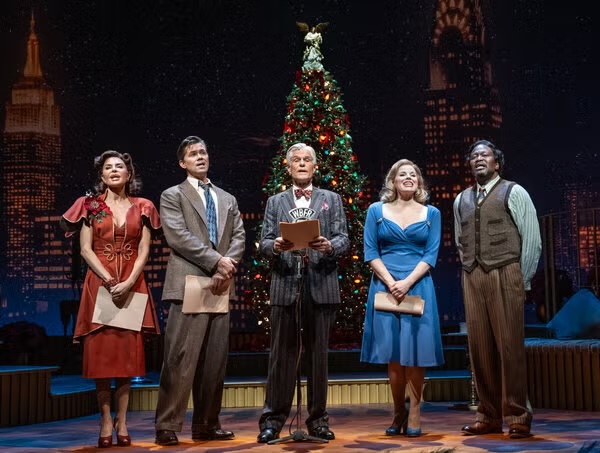
There is something wonderfully comforting about stepping into the Broadhurst Theatre this holiday season. Before a single line of dialogue is spoken, It’s a Wonderful Life: A Live Radio Play transports us to a time when Christmas seemed a little less commercial, a little more intimate and infinitely more magical. Frank Capra’s beloved 1946 film, adapted for the stage by Joe Landry and directed by the incomparable Jerry Zaks, reminds us that sometimes the greatest gifts are the ones we fail to recognize.
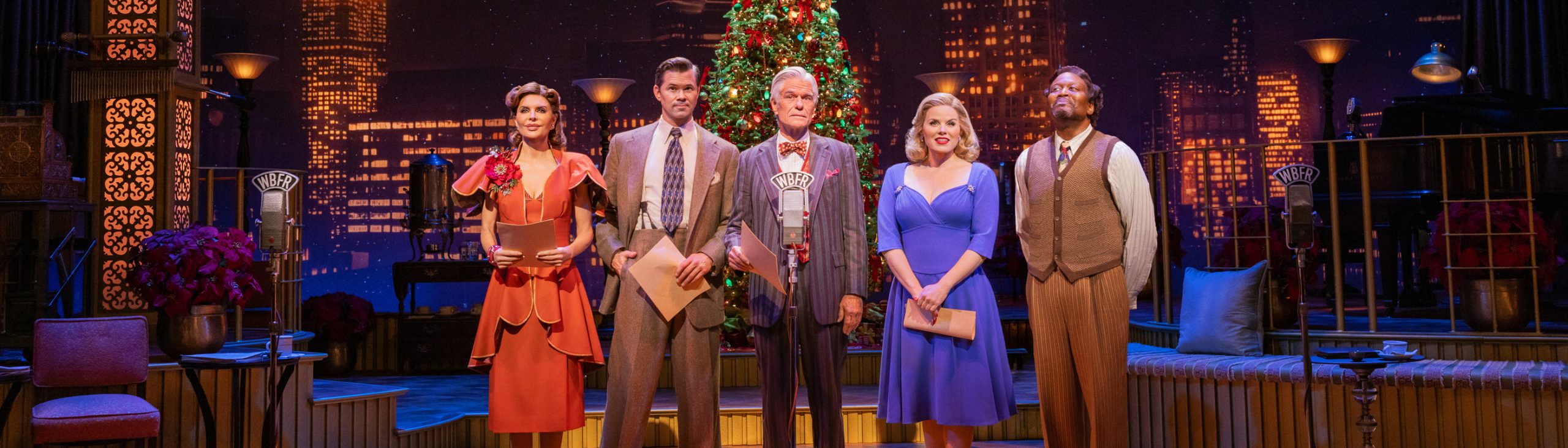
Lisa Rinna, Andrew Rannells, Harry Hamlin, Megan Hilty, Tituss Burgess, Photo by Matthew Murphy and Evan Zimmerman
They have hauled out the holly, and thanks to the artistry of scenic and costume designer Santo Loquasto, a 1940s Manhattan radio broadcast comes enchantingly to life. Period costumes, festive decorations, beautifully rendered holiday carols under the musical direction of Andy Einhorn
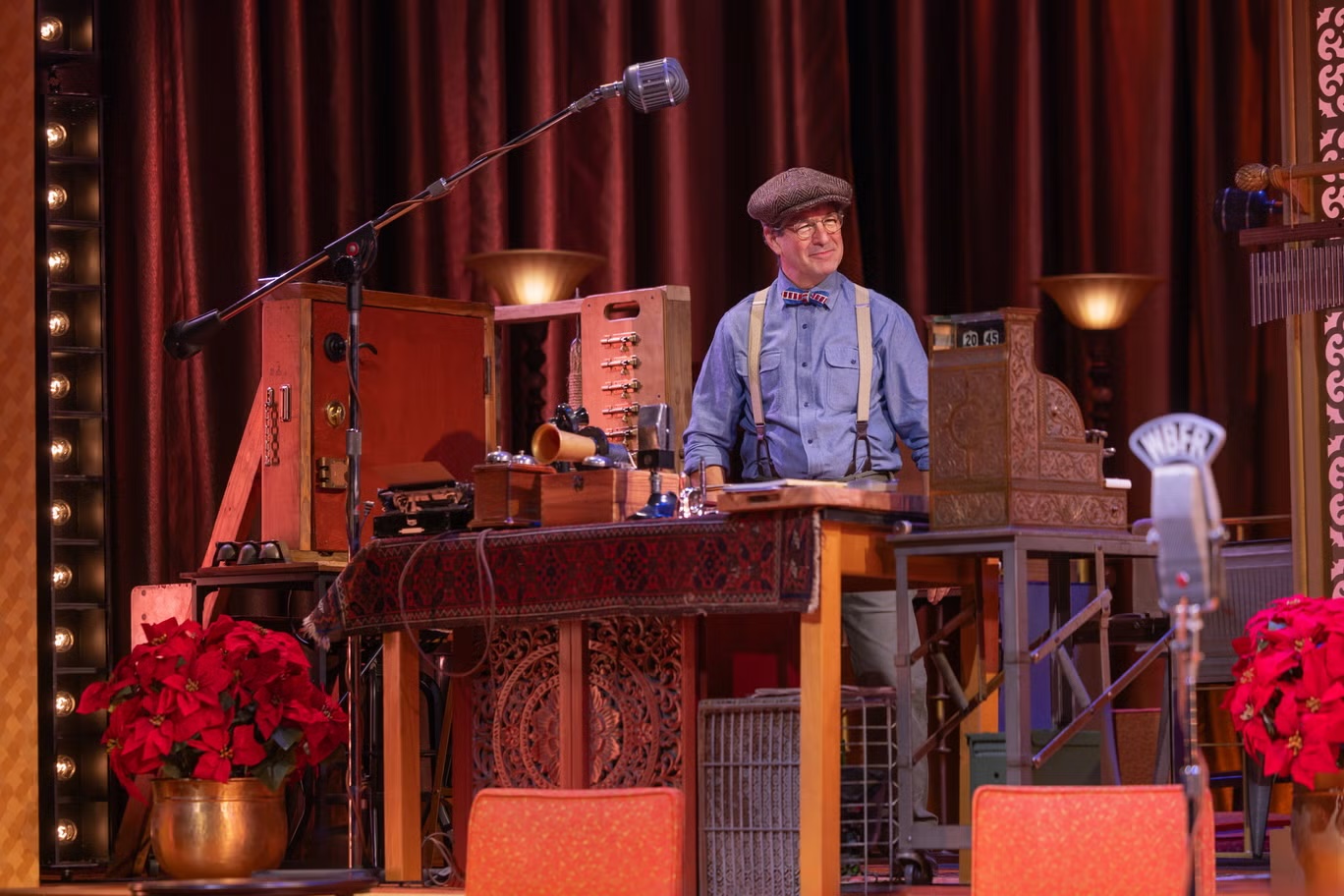
Leslie Bloom Photo by Matthew Murphy and Evan Zimmerman
and the ingenious live sound effects of Leslie Bloom create an atmosphere steeped in nostalgia. Watching the mechanics of radio storytelling unfold is a delight in itself, reminding us how much imagination can accomplish without the elaborate technology upon which contemporary entertainment has become so dependent.
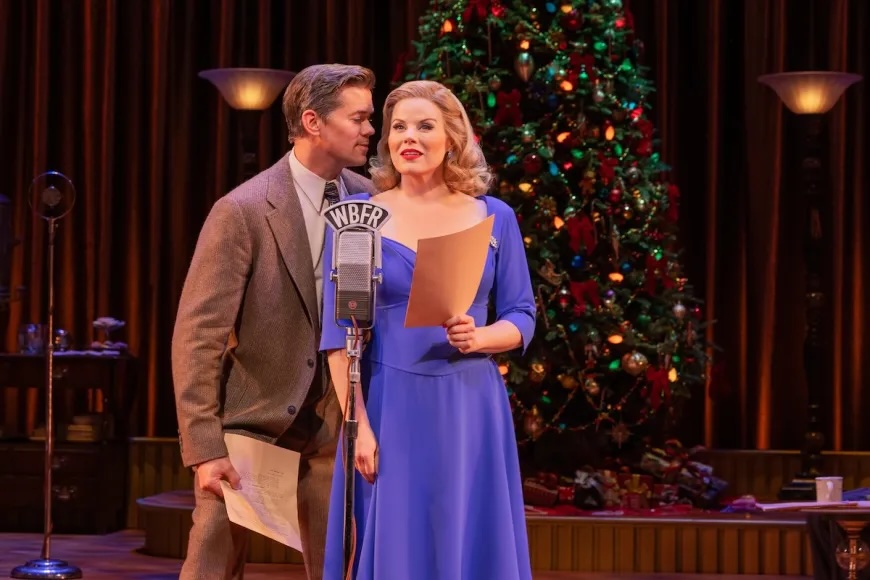
Andrew Rannells, Megan Hilty, Photo by Matthew Murphy and Evan Zimmerman
For those unfamiliar with the story, George Bailey is a man whose dreams of escaping the small town of Bedford Falls are continually sacrificed for the welfare of others. When financial disaster threatens everything he has built, George questions the value of his own existence. Enter Clarence, an Angel Second Class who must demonstrate to George what the world would have been like had he never been born, in the process earning his long-awaited wings.
Zaks has assembled a star-studded cast featuring Andrew Rannells as George Bailey, Megan Hilty as Mary Hatch, Tituss Burgess as Clarence and others, Harry Hamlin as Freddy Fillmore, Mr. Potter and assorted characters, and Lisa Rinna as Lana Sherwood, Violet and a delightful assortment of Bedford Falls residents.
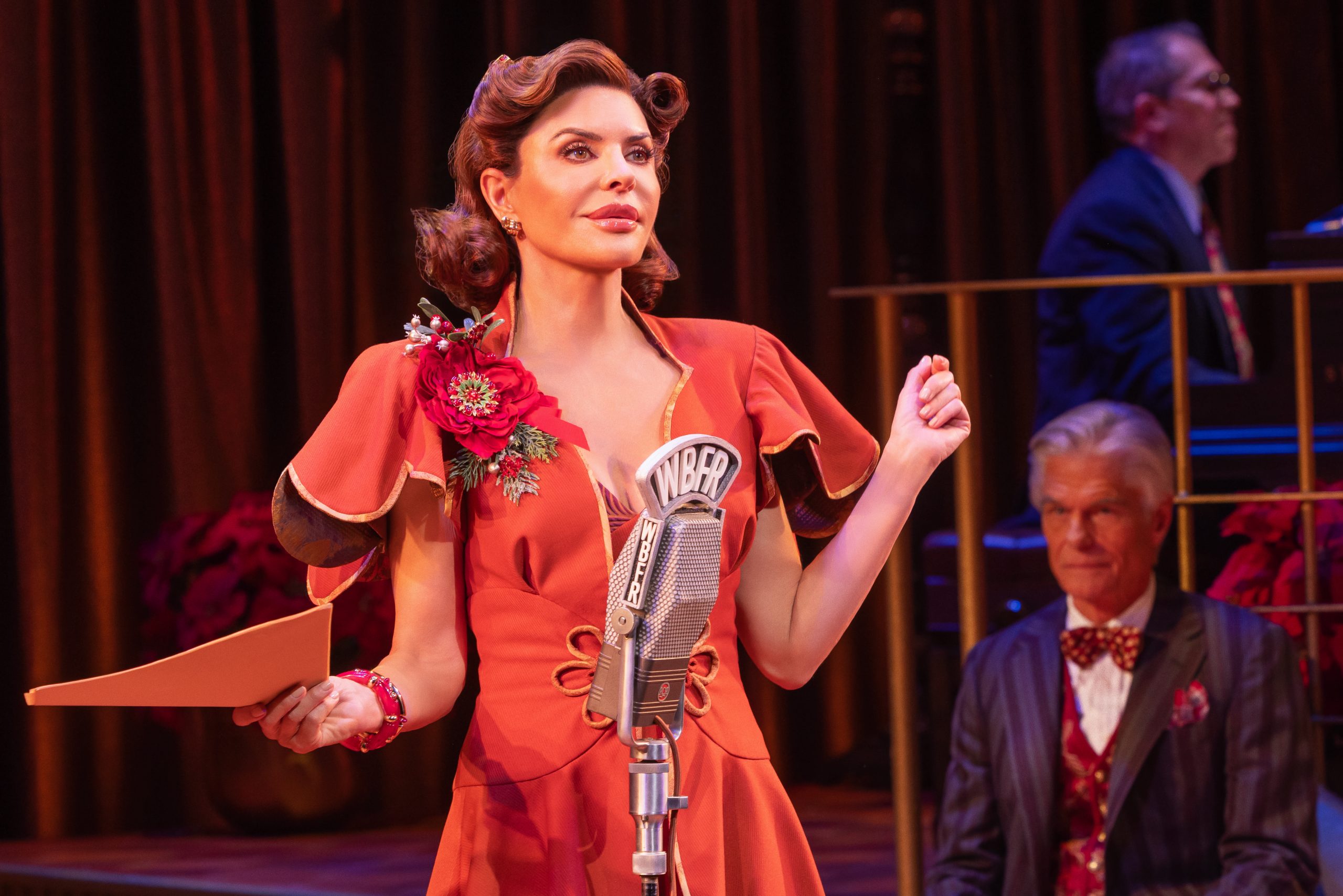
Lisa Rinna Photo by Matthew Murphy and Evan Zimmerman
The evening’s unexpected revelation is Rinna, who practically walks away with the broadcast. From the flirtatious, boy-crazy Violet to the utterly adorable little Zuzu, Rinna demonstrates an impressive facility for vocal characterization. Men, women and children emerge with distinct personalities, rhythms and inflections, each instantly recognizable. There is an infectious relish in her performance and an understanding that radio acting requires far more than simply changing the pitch of one’s voice. She is everything one could wish for in a voice actor.
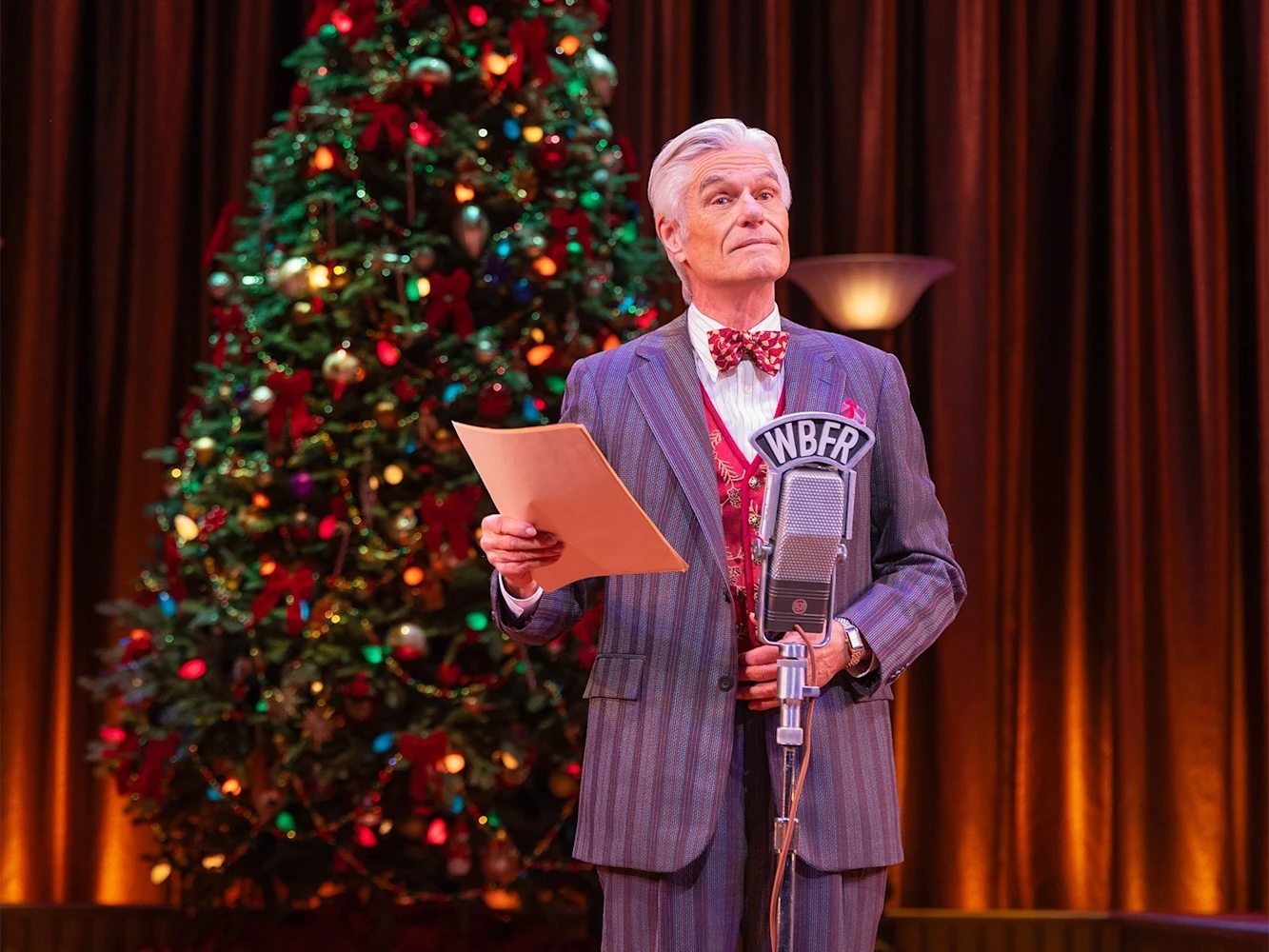
Harry Hamlin Photo by Matthew Murphy and Evan Zimmerman
Her real-life husband, Harry Hamlin, is considerably less adept at navigating multiple characters. Where Rinna creates an entire population through vocal dexterity, Hamlin lacks the differentiation necessary to make his various personalities equally convincing.
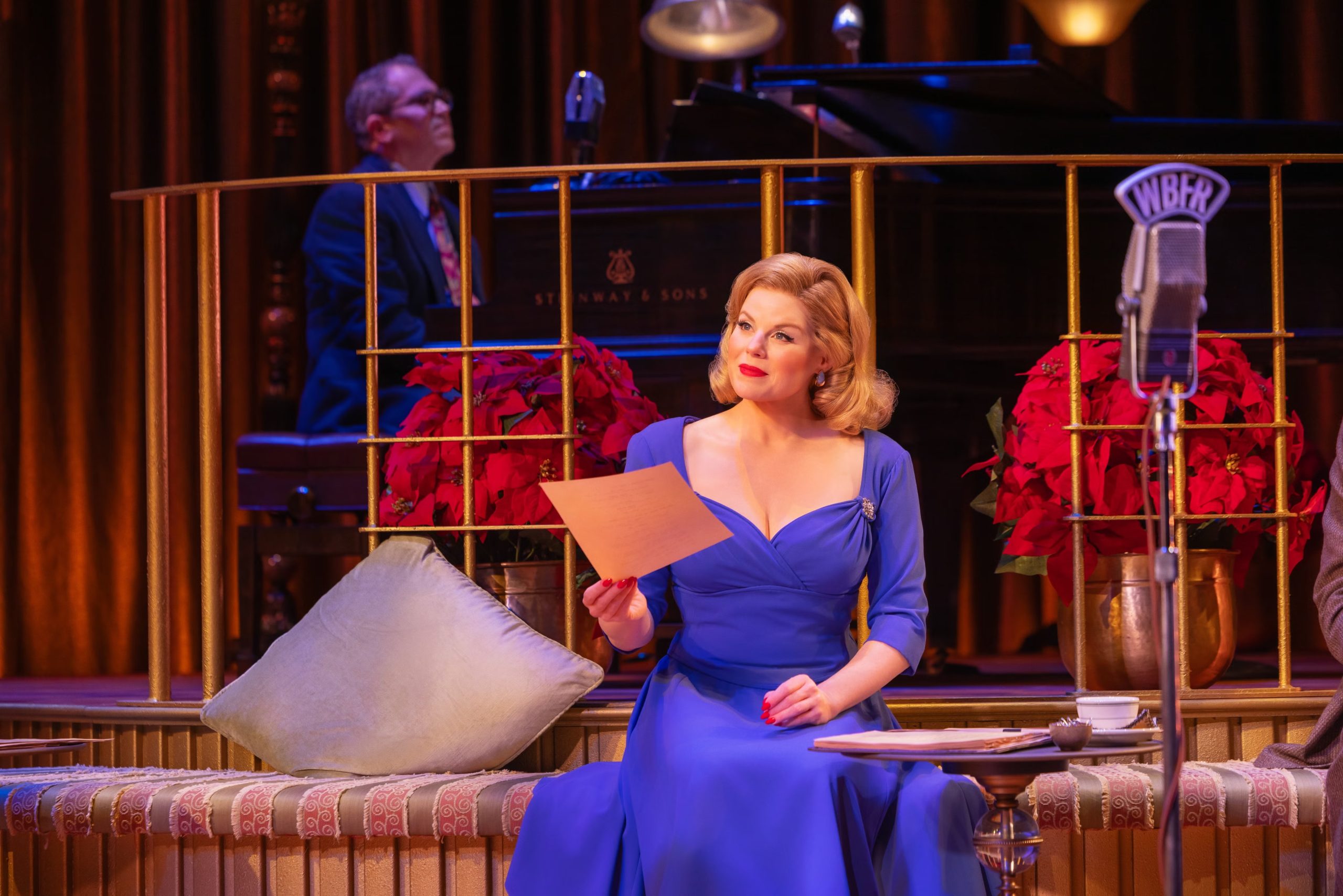
Megan Hilty Photo by Matthew Murphy and Evan Zimmerman
Rannells effectively captures George’s mounting desperation, eliciting sympathy as a lifetime of deferred dreams and self-sacrifice threatens to overwhelm him. Hilty, an actress and vocalist of considerable gifts, is frustratingly underutilized. Mary is something of a thankless role in this adaptation, leaving one wishing the material afforded Hilty more opportunities to exercise her considerable talents.
Burgess brings his considerable comic instincts to Clarence, although I missed the endearing haplessness of an Angel Second Class who has spent more than two centuries trying to earn his wings. There is an innocence and bewilderment inherent in Clarence that makes his eventual triumph particularly touching. Burgess is entertaining, but that essential vulnerability is less apparent.
Despite these reservations, the production accomplishes precisely what it sets out to do. It made me cry, and it put me in the Christmas spirit. There is something particularly poignant about revisiting a story that measures the worth of a life not by wealth, celebrity or professional achievement, but by the lives that existence has touched. In an increasingly transactional world, George Bailey’s discovery feels more relevant than ever.
Jerry Zaks understands the emotional architecture of this enduring story, allowing its sentiment to emerge without overwhelming it. The beauty of the radio-play format is that it invites us to participate in the storytelling, supplying through our own imaginations what the microphones, voices and sound effects suggest.
For all its nostalgia, It’s a Wonderful Life offers a decidedly contemporary reminder that kindness has consequences, generosity leaves an imprint and the significance of our lives cannot always be measured by what we can see.
Besides, in a world that seems increasingly determined to extinguish our sense of wonder, couldn’t we all use a little Christmas?
It’s a Wonderful Life: A Live Radio Play: Broadhurst Theatre, 235 West 44th Street. Opened November 23, 2026, and runs through January 3, 2027.

Desire has never been particularly interested in good judgment, and when the Greek gods intervene, the consequences are rarely civilized. Manhattan Theatre Club is assembling a formidable trio of actors for one of the more intriguing theatrical offerings of 2027, as two-time Obie Award winner April Matthis and the distinguished Campbell Scott join Academy Award winner Julianne Moore in the world premiere of Sarah Ruhl’s Faydra, directed by Tony Award nominee Les Waters.
 Performances begin February 2, 2027, with an official opening on February 25 at New York City Center Stage I. The production brings together artists whose collective theatrical pedigree promises something considerably more provocative than a conventional retelling of Greek mythology.
In Ruhl’s reimagining of the ancient myth of Phaedra, Aphrodite unleashes an arrow of love with devastating precision. Its recipient, Faydra (Moore), finds herself consumed by desire for the one man she should not want: her soon-to-be stepson. Matthis takes on the role of Oenone, Faydra’s confidante, while Scott portrays Theseus. Casting for the pivotal role of Hippolytus remains to be announced.
In the hands of Ruhl, a playwright whose work navigates the delicate territory between the metaphysical and the intimately human, this centuries-old tragedy becomes an examination of the collision between reason and desire, morality and appetite, female autonomy and the consequences of refusing to suppress one’s longing. The Greeks understood that desire could dismantle kingdoms. Ruhl brings that dangerous proposition into a contemporary conversation.
Moore, whose cinematic career has been distinguished by an extraordinary ability to illuminate the complexities of women living beneath the weight of expectation, seems particularly well suited to the material. From Far from Heaven, The Hours and The End of the Affair to her Oscar-winning performance in Still Alice and her unsettling turn in May December, Moore has made an art of revealing the emotional architecture beneath a character’s carefully constructed exterior. Her return to the New York stage is an event in itself.
Matthis, one of the most compelling actresses working in the American theatre, brings considerable intellectual and emotional precision to the proceedings. Her Broadway appearances in Amy Herzog’s Mary Jane and August Wilson’s The Piano Lesson, alongside her extraordinary title performance in Toni Stone and work in the Pulitzer Prize-winning plays Primary Trust and Fairview, have established her as an artist of exceptional versatility.
Scott, equally accomplished onstage and onscreen, brings a formidable classical and contemporary theatrical sensibility to Theseus. His Broadway credits include Long Day’s Journey Into Night, The Real Thing, Noises Off and A Christmas Carol, while his Drama Desk-nominated solo performance in The Atheist demonstrated his command of psychologically intricate material. His film work includes Longtime Companion, Roger Dodger and the exquisite Big Night, which he also co-directed.
Equally enticing is the reunion of Ruhl and Waters, whose artistic partnership has yielded such distinctive theatrical experiences as Eurydice, For Peter Pan on Her 70th Birthday and the Tony Award-nominated In the Next Room (or the vibrator play). The production also reunites Waters with Moore, more than three decades after their collaboration on Caryl Churchill’s Ice Cream with Hot Fudge at the Public Theater in 1990.
There is something particularly timely about revisiting a myth that has fascinated dramatists from Euripides and Seneca to Racine. What happens when desire refuses to obey the social order? Who bears responsibility when longing becomes destructive? Is acknowledging desire an act of liberation, or does freedom reside in determining what we do with it? These are questions the ancient Greeks understood all too well, and contemporary society has hardly resolved.
With Ruhl’s singular imagination, Waters’ theatrical intelligence and three actors of this caliber, Faydra already ranks among the most anticipated Off-Broadway premieres of the coming year.
Presented by Manhattan Theatre Club, under Artistic Director Nicki Hunter and Executive Director Chris Jennings, in association with No Guarantees Productions, Faydra will play a strictly limited engagement at New York City Center Stage I, 131 West 55th Street.
Tickets are currently available exclusively to MTC subscribers and patrons. For information, call 212-399-3050 or visit ManhattanTheatreClub.com.


December Events 2026: New York City Dressed in Holiday Splendor

Cabaret and Talks For December

Countdown to Christmas: 27 Days to Go — The Gift of Gorgeous Skin

Black Friday Spending Rose Online. Store Visits Went the Other Way.

From Macy’s Holiday Magic to Black Tap’s Gourmet Indulgence: A New York Experience

December 2026 Astrology: Between What We Believe and What We Build

Countdown to Christmas: 28 Days to Go — The Gift of a Fabulous Lip

Prince Mario-Max Schaumburg-Lippe: Macaulay Culkin Is Back And We Got The Exclusive Scenes Tour For You!
December Events 2026: New York City Dressed in Holiday Splendor
Cabaret and Talks For December
Countdown to Christmas: 27 Days to Go — The Gift of Gorgeous Skin
Black Friday Spending Rose Online. Store Visits Went the Other Way.
From Macy’s Holiday Magic to Black Tap’s Gourmet Indulgence: A New York Experience
December 2026 Astrology: Between What We Believe and What We Build
Countdown to Christmas: 28 Days to Go — The Gift of a Fabulous Lip
Prince Mario-Max Schaumburg-Lippe: Macaulay Culkin Is Back And We Got The Exclusive Scenes Tour For You!
-
 Events4 days ago
Thanksgiving Day Playlist
-
 Events4 days ago
Happy Thanksgiving From T2C
-
 Events5 days ago
Count Down To Thanksgiving: Bourbon Pecan Pie With Or Without Chocolate
-
 Broadway5 days ago
The Fantasticks: Broadway Discovers a Whole New Kind of Magic
-

 Business5 days ago
AI Shopping Agents Are Now Buying From Business Websites, and Bot Rules Could Cost You Holiday Sales
-

 Broadway3 days ago
Macy’s Historic 100th Thanksgiving Day Parade Postponed: Exclusive Rehearsal Photos and Can Broadway Still Deliver?
-
 Entertainment4 days ago
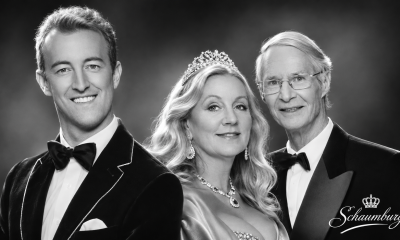
Prince Mario-Max zu Schaumburg-Lippe & His Royal Family Wish America A Happy Thanksgiving!
-
 Entertainment3 days ago
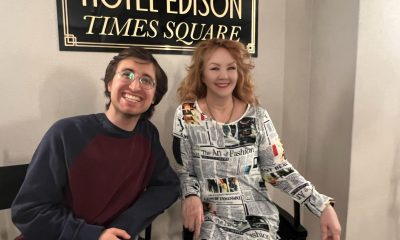
Live From The Hotel Edison Times Square Chronicles Presents Actor Performer and New Composer Oliver Richman